Wender·Vista
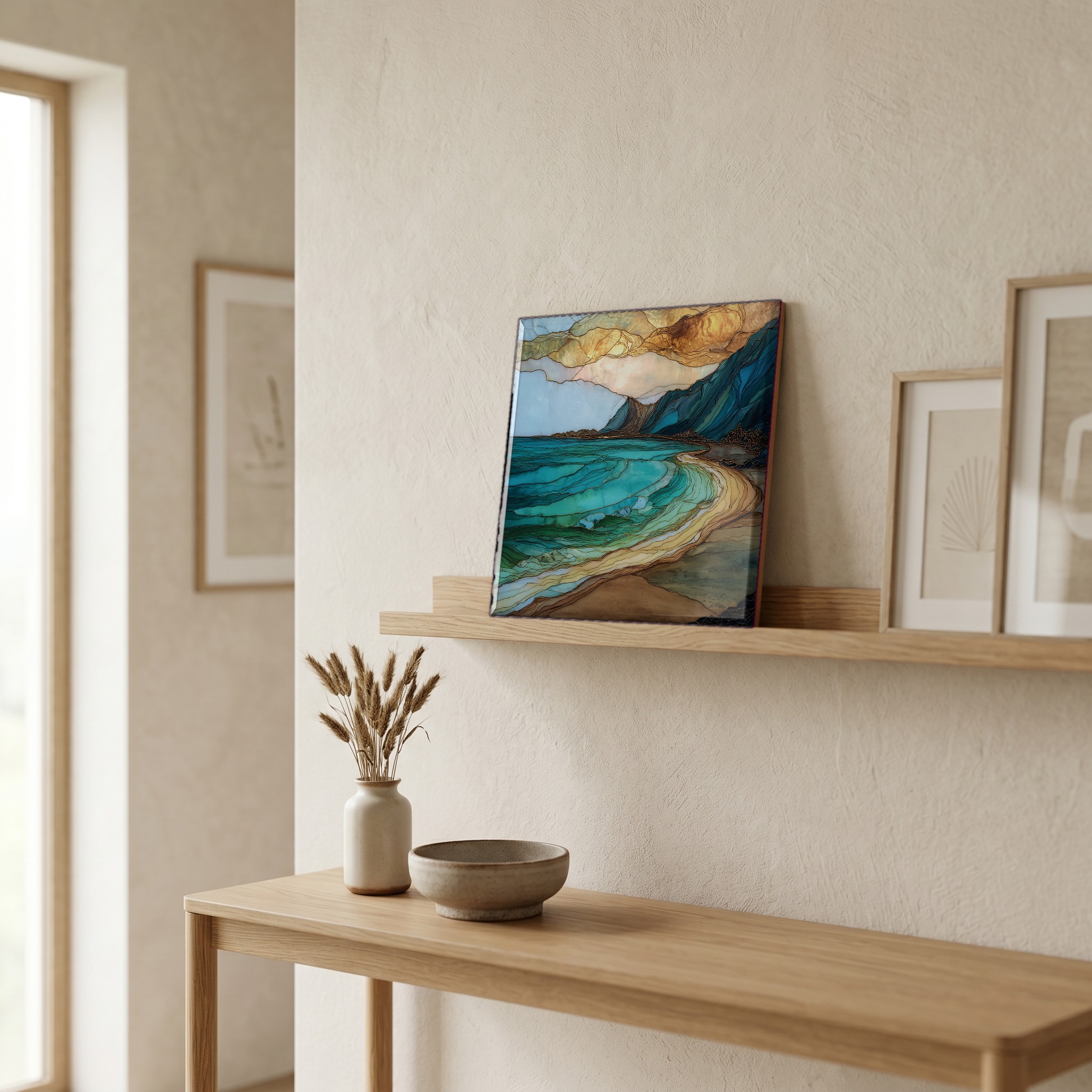
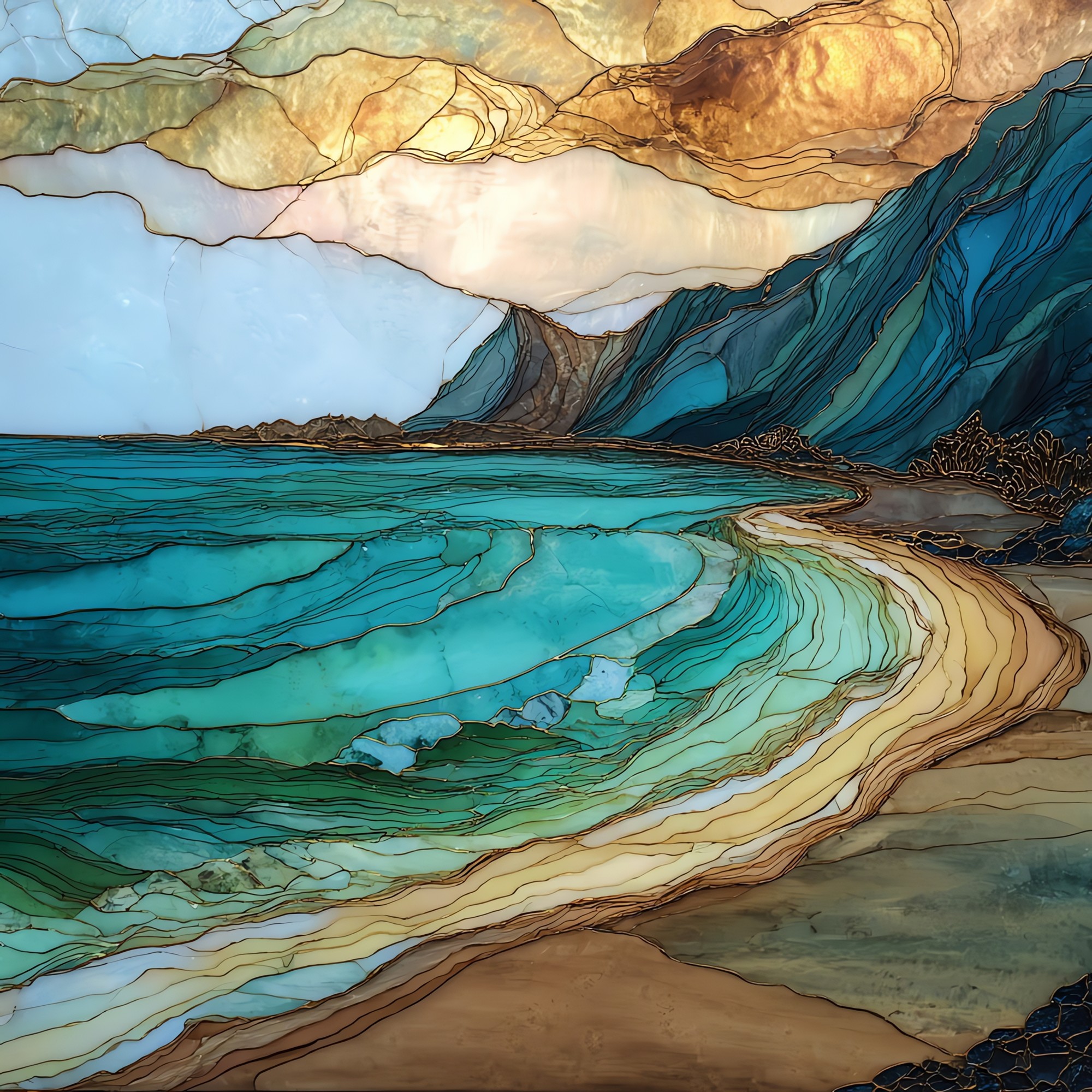
Yokohama Bay Oahu Ceramic Art Tile
shown on ceramic, 12-inch tileHawaii · United States
at the far western corner of O'ahu

Yokohama Bay Oahu Ceramic Art Tile

the last beach before the road runs out.

Where it lives

Not only on a wall.

A small tile on the nightstand catching the morning. A larger one above the fire. Yours, wherever you spend the slow hours.
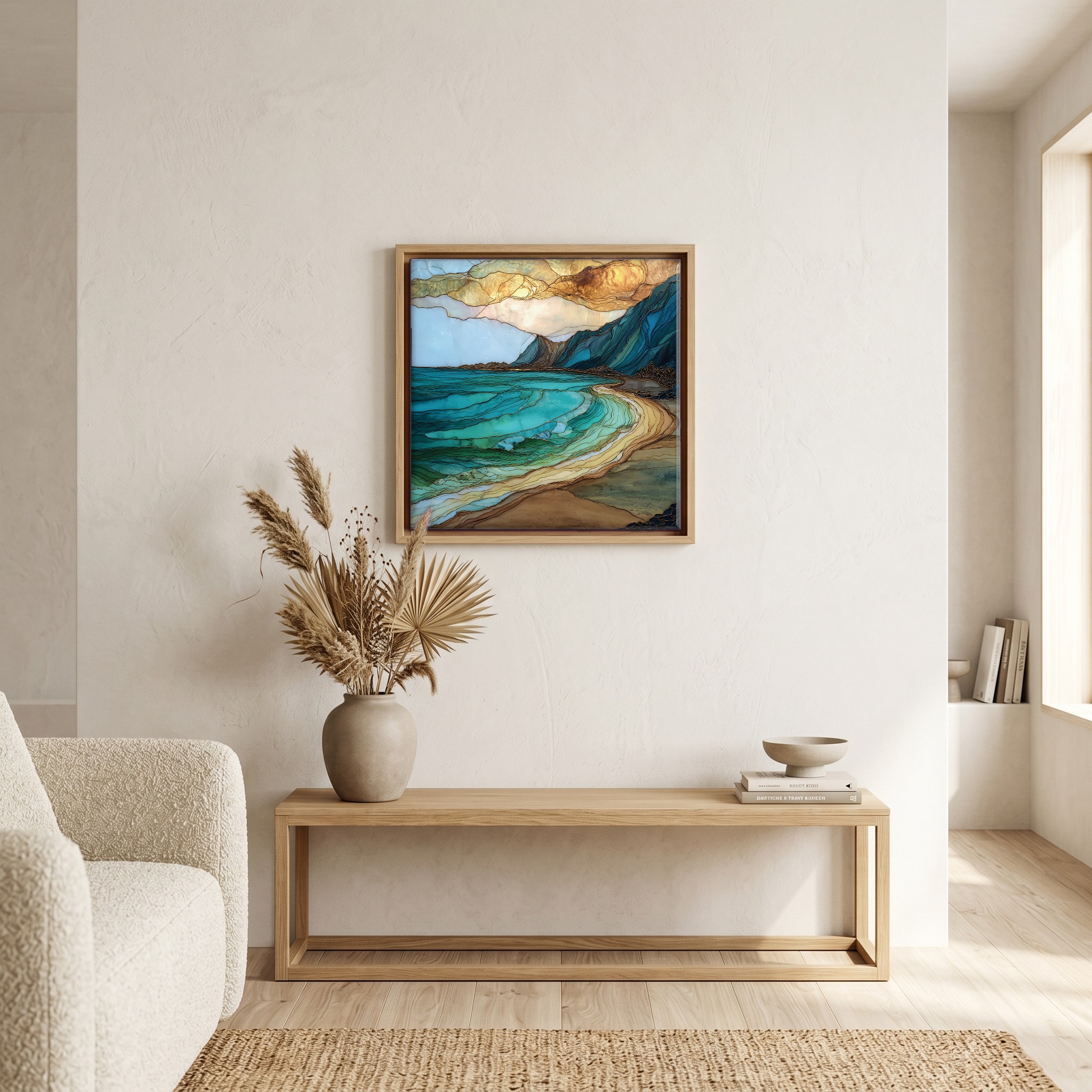
Above the bench, in a warm oak surround.
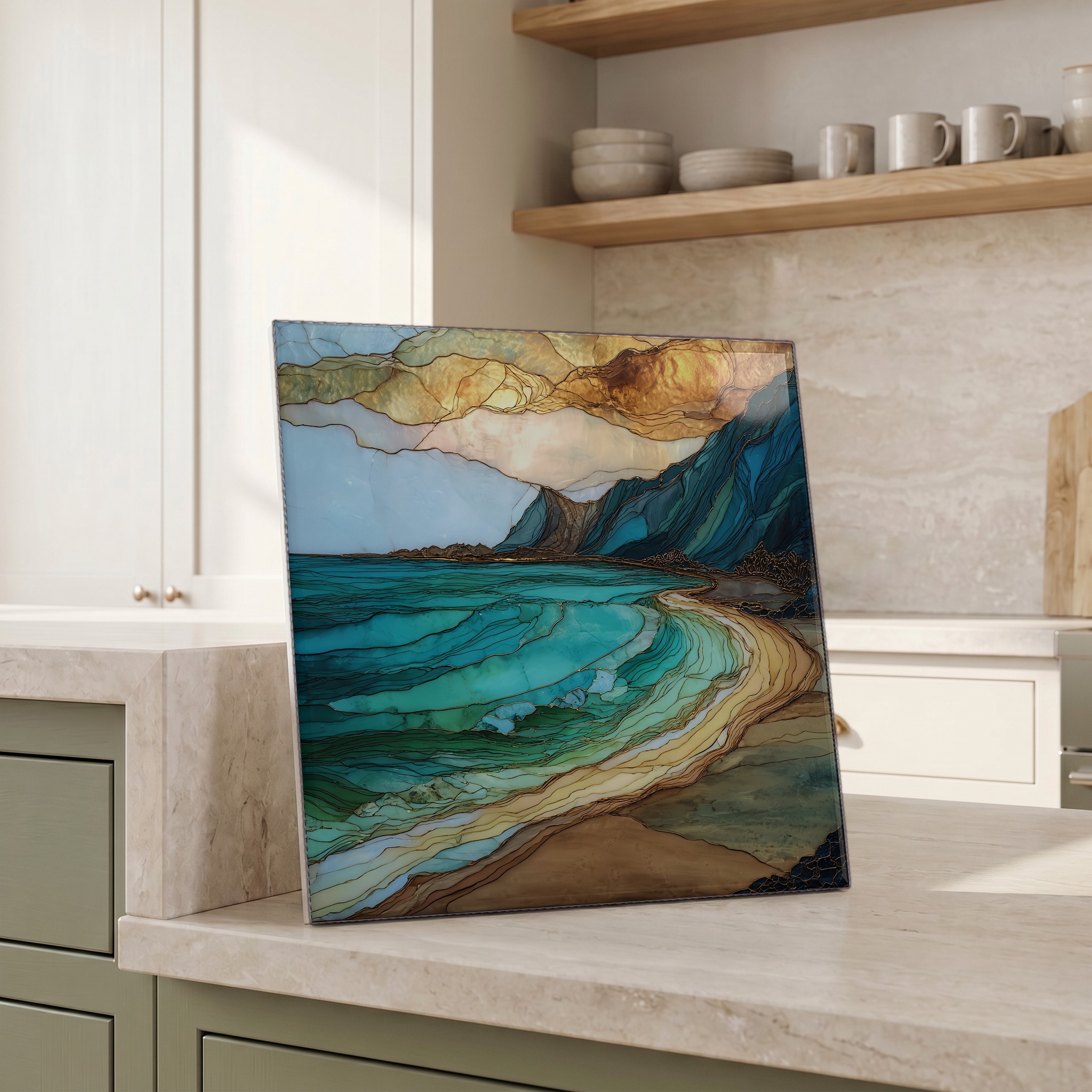
Beside the kettle, propped on the counter.
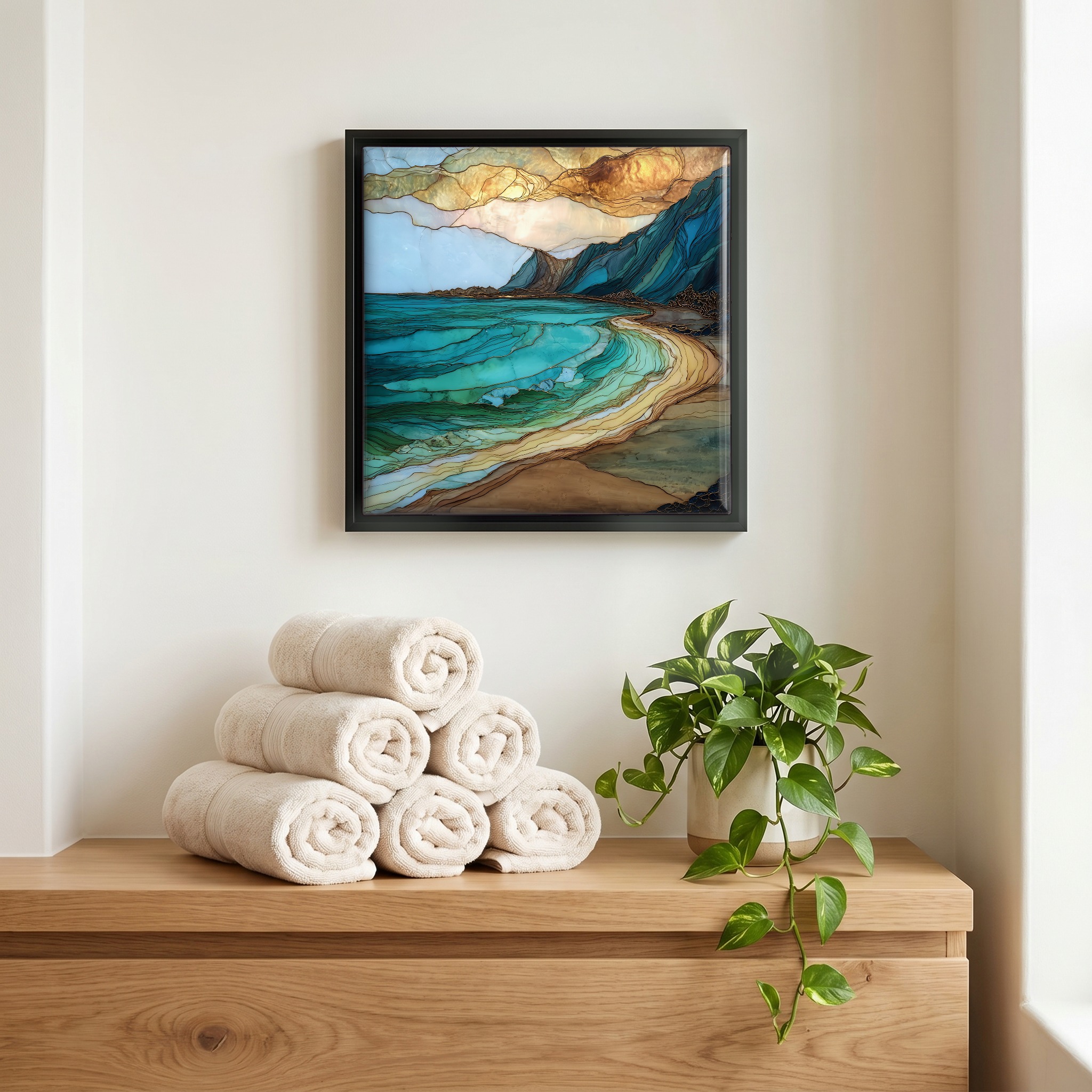
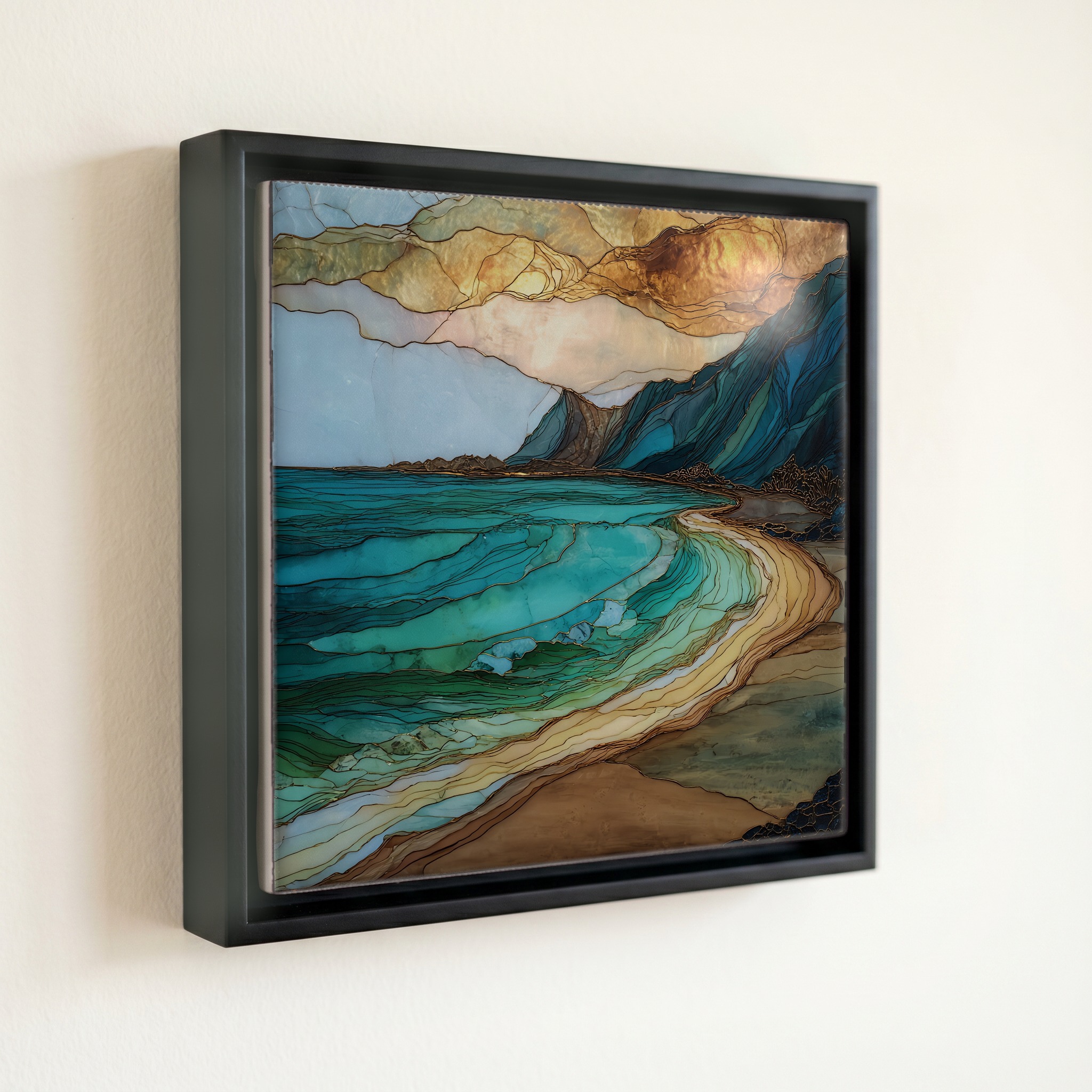
Above the linens, in a slim black surround.
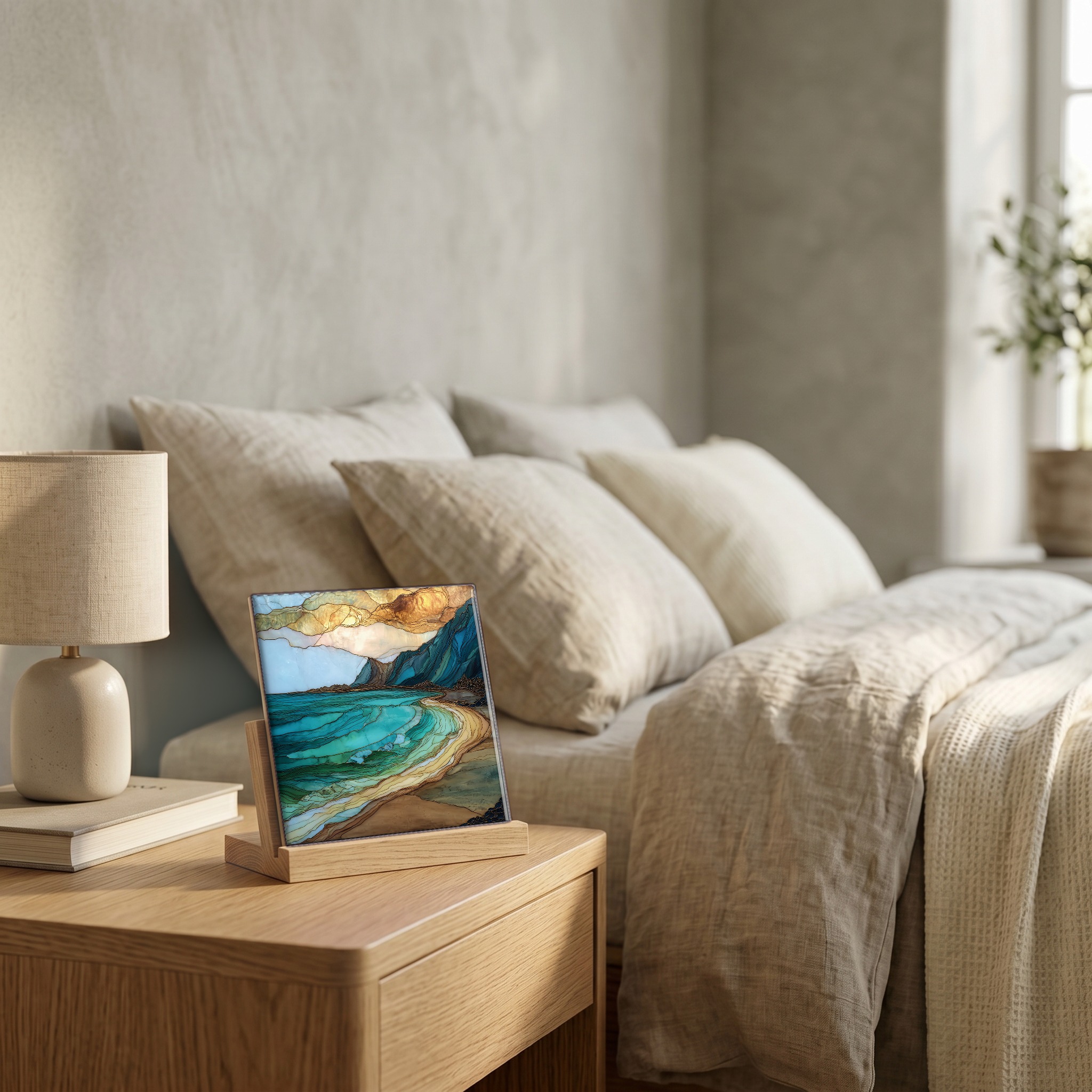
On the nightstand, on a light oak stand.
On a picture ledge, where the light comes in.
a note from the studio

The far end of the Wai'anae coast. Where Farrington Highway gives up at the foot of Ka'ena Point and the pavement turns to gravel. Locals call it Keawa'ula. The name on the maps is Yokohama, after the Japanese fishermen who worked this water a hundred years ago. Long crescent of sand, lifeguarded but mostly empty on a weekday morning. Sea turtles haul out in the afternoon shadow of the cliffs. In summer the water is calm enough to swim. In winter the shore break here will lift a person off the sand. The sun sets straight into the channel.
from the studio
shown in a slim black floating frame · 6 × 6 in
— bring it home

Yokohama Bay Oahu Ceramic Art Tile, on ceramic.

Each tile is finished by hand in our Knoxville studio. Artwork is slowly infused into the ceramic surface under high heat and pressure, and rests beneath a thin glossy finish. The colour lives in the surface, not on top of it.

What kind of piece?
One tile — square or rectangle.
How big?
the popular one — counter, shelf, nightstand
6 × 6 in · 15 cm · 1.6 lb
Surface finish
A clear glossy finish — the artwork reads as if under resin. Ideal for show-pieces and framed wall art.
How it sits
A hidden cleat — sits ¼″ proud of the wall.
$58
Hand-finished and shipped from our studio at the foot of the Smokies. On your wall in about ten days.
size
6 × 6 in
15 cm
weighs
1.6 lb
solid in the hand
surface
ceramic, hand-finished
art rests beneath a thin glossy finish
from
Knoxville, TN
our family studio, at the foot of the Smokies
— start a Coaster Set

Pick any four 4-inch tiles — National Parks you've been to, a Smokies set, the four seasons of one place. $ for a set of , cork-backed, ready to live on the table.
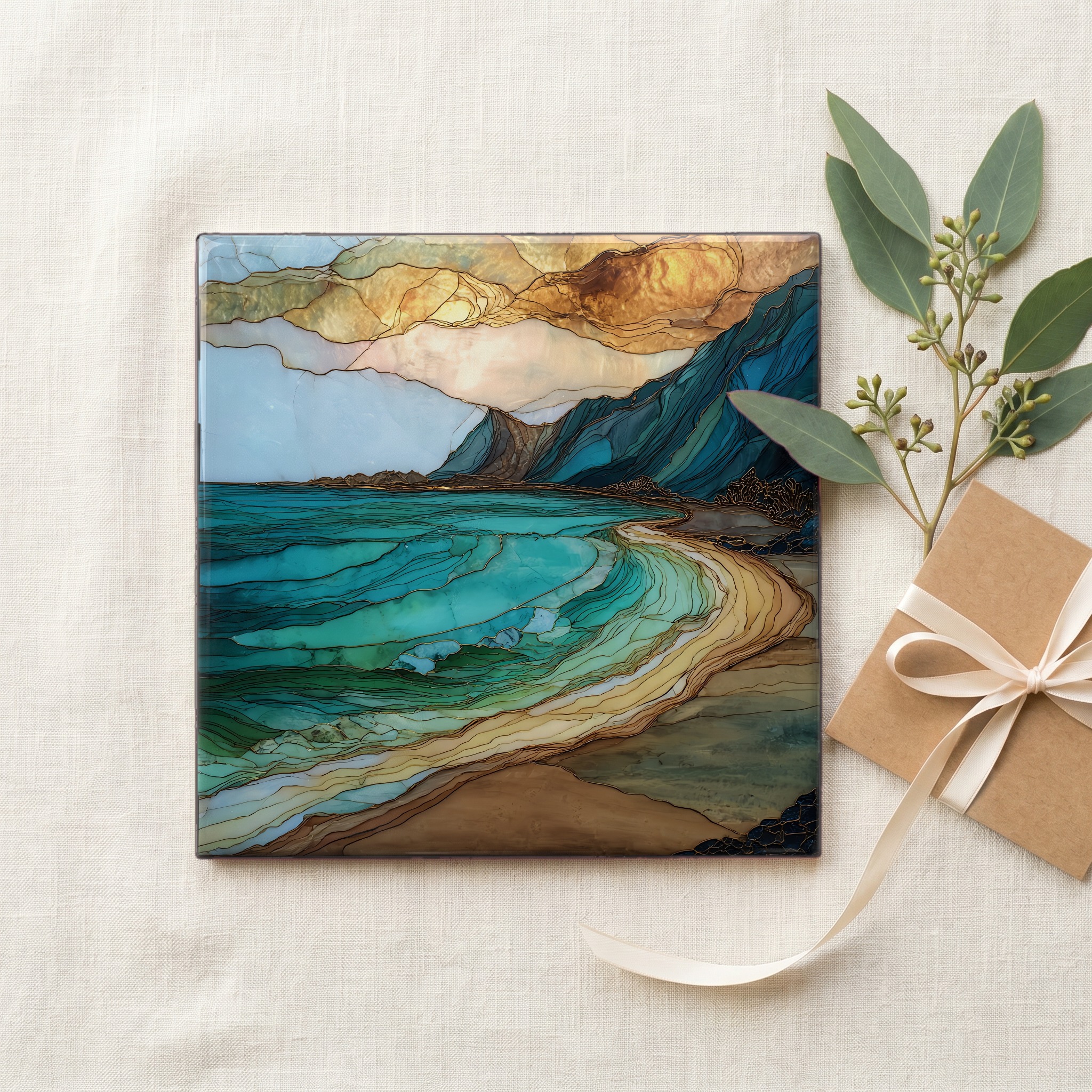
comes gift-ready
comes gift-ready

Each tile ships in a kraft box, tied with cream ribbon, with a handwritten note from the studio if you'd like to add one.
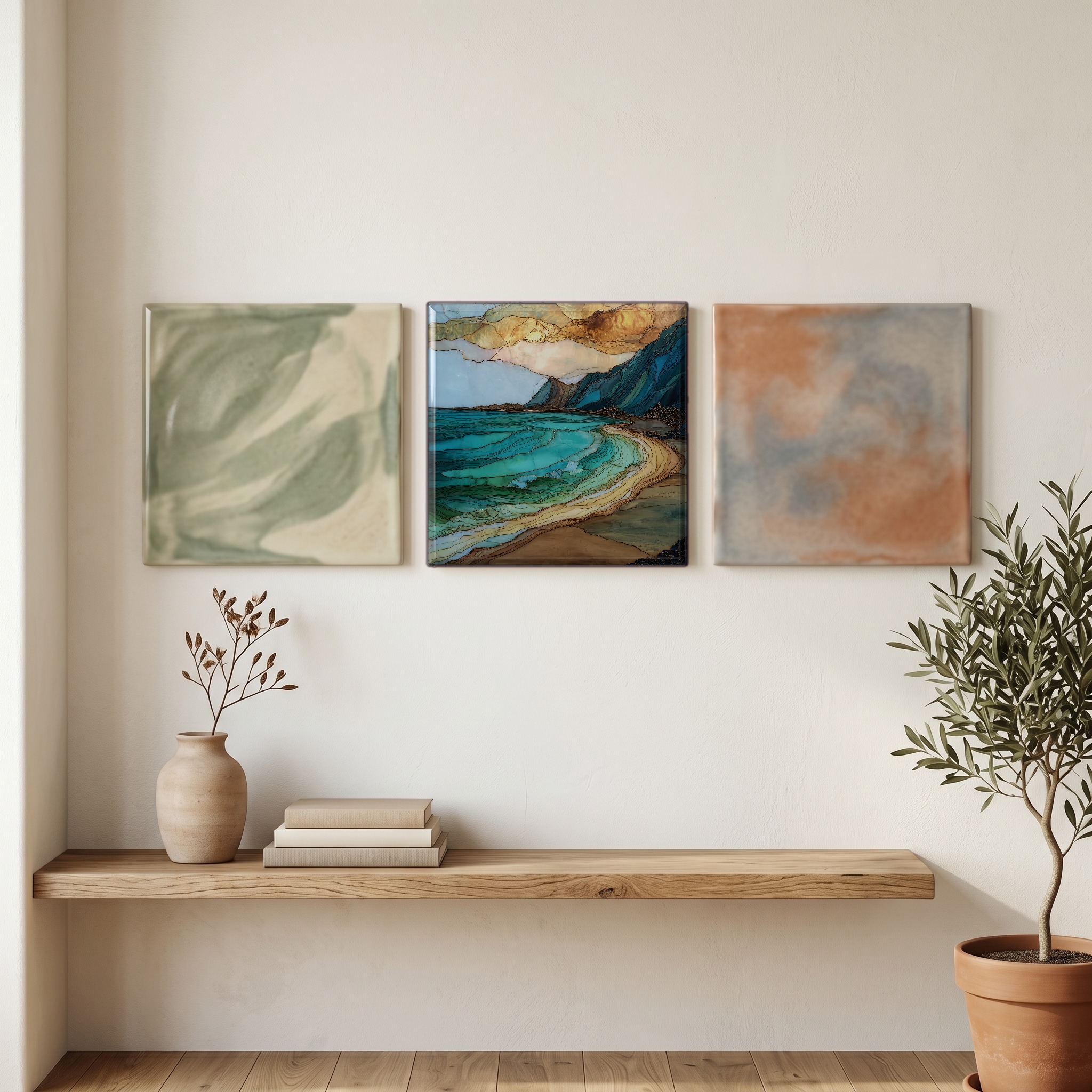
or build a grouping
or build a grouping

Three or five different vistas, hung together — a chapter of places you've been, or want to go.

about Yokohama Bay Oahu Ceramic Art Tile

The place, in three passes.

A little of what's known, in case you fall down the rabbit hole — or want to go see it yourself.
the place

Yokohama Bay sits at the western terminus of Farrington Highway on O'ahu's leeward Wai'anae coast, about 40 miles northwest of Honolulu. Its Hawaiian name is Keawa'ula Bay, meaning 'the red harbor,' after the squid that once turned the water reddish on summer nights. The common name Yokohama dates to the early 1900s, when Japanese fishermen from the O'ahu Railway & Land Company line worked the shore here. The bay marks the entrance to Ka'ena Point State Park, an 853-acre coastal reserve at the northwesternmost tip of O'ahu. Beyond the gate, the road ends and a graded path runs another 2.5 miles around the point to the natural area reserve.

the water

The bay faces due west across the Ka'ie'ie Waho Channel toward Kaua'i, 70 miles away. Conditions split sharply by season. From May through September the water is generally swimmable and the sand bottom slopes gently; in winter the same beach takes North Pacific swell head-on, with shore-break waves that have injured experienced bodyboarders. The City and County of Honolulu posts lifeguards every day at Tower 16, and signs warn of strong shore currents. Hawaiian green sea turtles (honu) commonly haul out on the south end of the beach in late afternoon. Hawaiian monk seals, of which roughly 1,600 remain, occasionally rest here and must be given a 50-foot berth under federal law.

the visit

The beach is open daily from sunrise to sunset; the gravel parking area sits at the end of state Route 93. There is no entry fee. Lifeguard Tower 16 covers the bay. Restrooms and outdoor showers are at the south end of the lot. Cell coverage is patchy past Makaha, 8 miles back down the coast, and the nearest gas and groceries are at Makaha and Wai'anae. Walk-in access to Ka'ena Point Natural Area Reserve begins at the locked gate at the north end of the beach; the round-trip hike to the point and its Laysan albatross colony is roughly 5 miles on the Mokuleia (north) side or 4.6 miles on the Yokohama side. No shade.

where
United States · O'ahu, Honolulu County, Hawaii
within
Ka'ena Point State Park
elevation
0 m · 0 ft
position
21.6500° N · 158.2400° W
the neighborhood

What's nearby.

A handful of named places within an hour's walk or short drive. Some we've already painted; some we will.
4 km NW
Ka'ena Point
cape and seabird reserve
13 km S
Makaha Beach
beach
16 km S
Wai'anae
town
12 km NE
Mokule'ia Beach
beach
18 km NE
Dillingham Airfield
airfield and glider strip
N
Yokohama Bay Oahu Ceramic Art Tile
Ka'ena Point
Makaha Beach
Wai'anae
Mokule'ia Beach
Dillingham Airfield
common questions

What people ask.

A few questions we get about Yokohama Bay Oahu Ceramic Art Tile — and about bringing the piece home.
about the place

Yokohama Bay is the westernmost beach on O'ahu's Wai'anae coast, at the end of Farrington Highway (state Route 93) about 40 miles northwest of Honolulu. Its Hawaiian name is Keawa'ula Bay. The road ends here at the entrance to Ka'ena Point State Park.

The common name dates to the early 1900s, when Japanese immigrant fishermen worked the bay using the O'ahu Railway & Land Company line that once ran out to the coast. Locals and signage today often use Keawa'ula, the original Hawaiian name meaning 'the red harbor.'

In summer, generally yes. The sand bottom slopes gently and the water is often calm. From October through April the bay takes direct North Pacific swell, and the shore break can be dangerous. Lifeguards are on duty every day at Tower 16.

No. Yokohama Bay sits within Ka'ena Point State Park and is free to visit. The gravel parking lot, restrooms, and outdoor showers are open from sunrise to sunset. The walk-in gate to Ka'ena Point Natural Area Reserve, at the north end of the beach, is also free.

Hawaiian green sea turtles (honu) commonly haul out in the afternoon. Hawaiian monk seals occasionally rest on the sand and must be given a 50-foot berth under federal law. Past the gate, Ka'ena Point hosts a protected Laysan albatross colony, active from November through July.

Walk through the locked vehicle gate at the north end of the beach. The Yokohama (south) approach is roughly 4.6 miles round-trip on a graded dirt road. The trail offers no shade. Bring water and start early; afternoon sun on the leeward coast is intense.

about the piece in your home

It's been a meaningful gift for our customers from the Wai'anae side. Yokohama is the beach locals drive to when they want the long quiet end of the island. A Small or Medium with a handwritten note from the studio carries that recognition without overstating it.

The blues and golds in the piece read well against Coastal-modern, Mid-century, and Quiet-Maximalist palettes. It also sits naturally in rooms with rattan, raw teak, or oak; the artwork's stained-glass blues hold their own against warm wood without competing.

Yes. Coastal-modern has moved away from beach-cottage pastels toward deeper jewel-tone water and warmer sand; the Yokohama Bay tile reads in that direction. The color register also fits the wider biophilic trend toward nature-grounded color over photography.

Above a standard sofa, a single Large reads at the right scale, or a four-tile Mural for more presence. Above a console table, a Medium or a three-tile horizontal strip works well. Above a bed, the nine-tile Mural is the most often chosen size.

Yes, with the Dura Satin or Matte finish. Both are scratch-resistant, hold up to humidity, and clean easily. The Glossy finish is best kept to framed wall pieces in dry rooms. All three finishes carry the same artwork; the surface choice depends on the room.

A soft microfibre cloth and water. The colour is slowly infused into the ceramic surface under high heat and pressure and sits beneath a thin protective finish, so the surface will not fade or scratch with normal cleaning. Avoid abrasive sponges and household chemicals.

Yes. Every WenderVista piece is created in-house in Knoxville, Tennessee, by Reid Wender and the studio team. We do not license stock art, and no two pieces in the WenderVista atlas share the same painting.

if this one stayed with you

A few you might also love.

Hand-picked by the eye that found Sorapis. Same air, same kind of quiet.