Wender·Vista
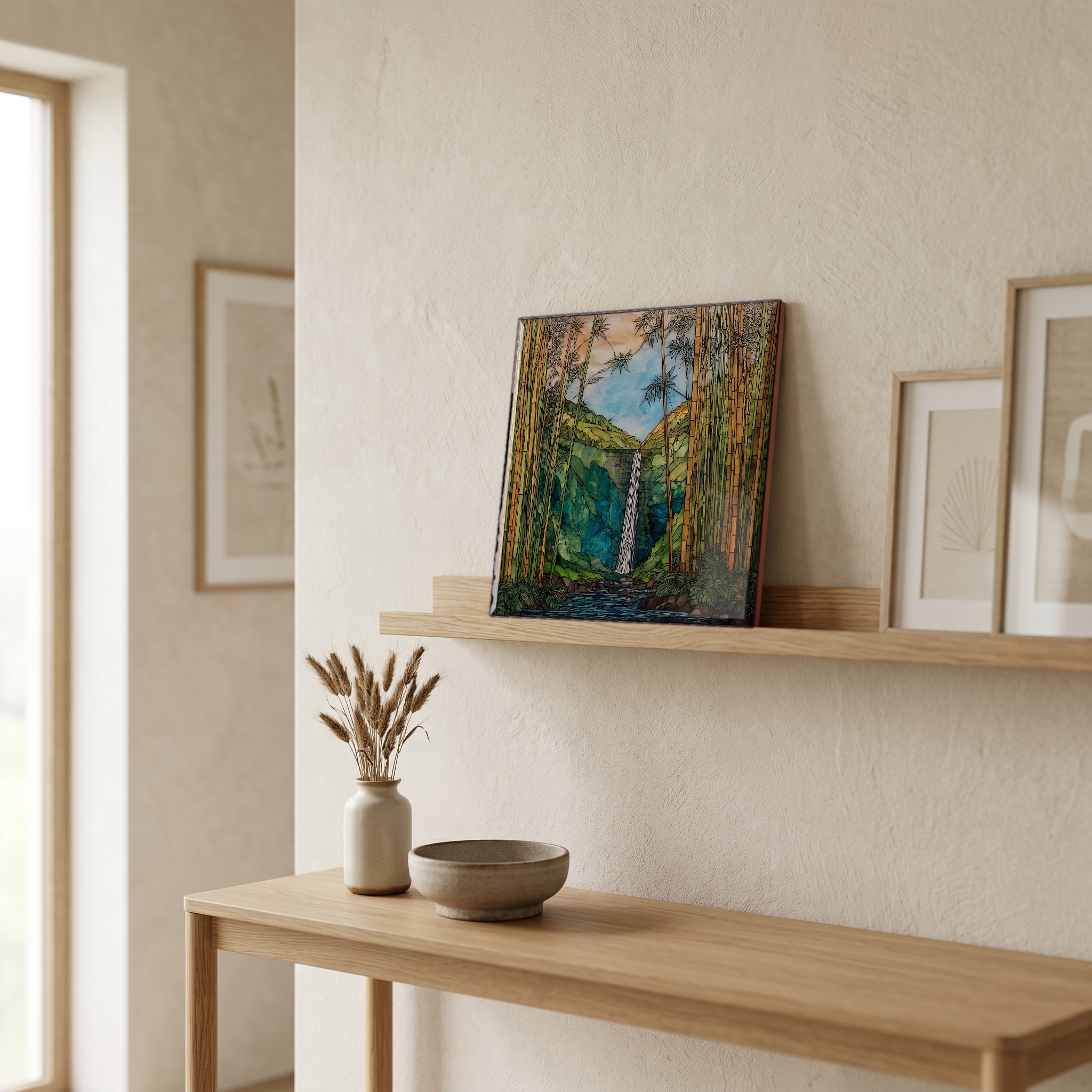
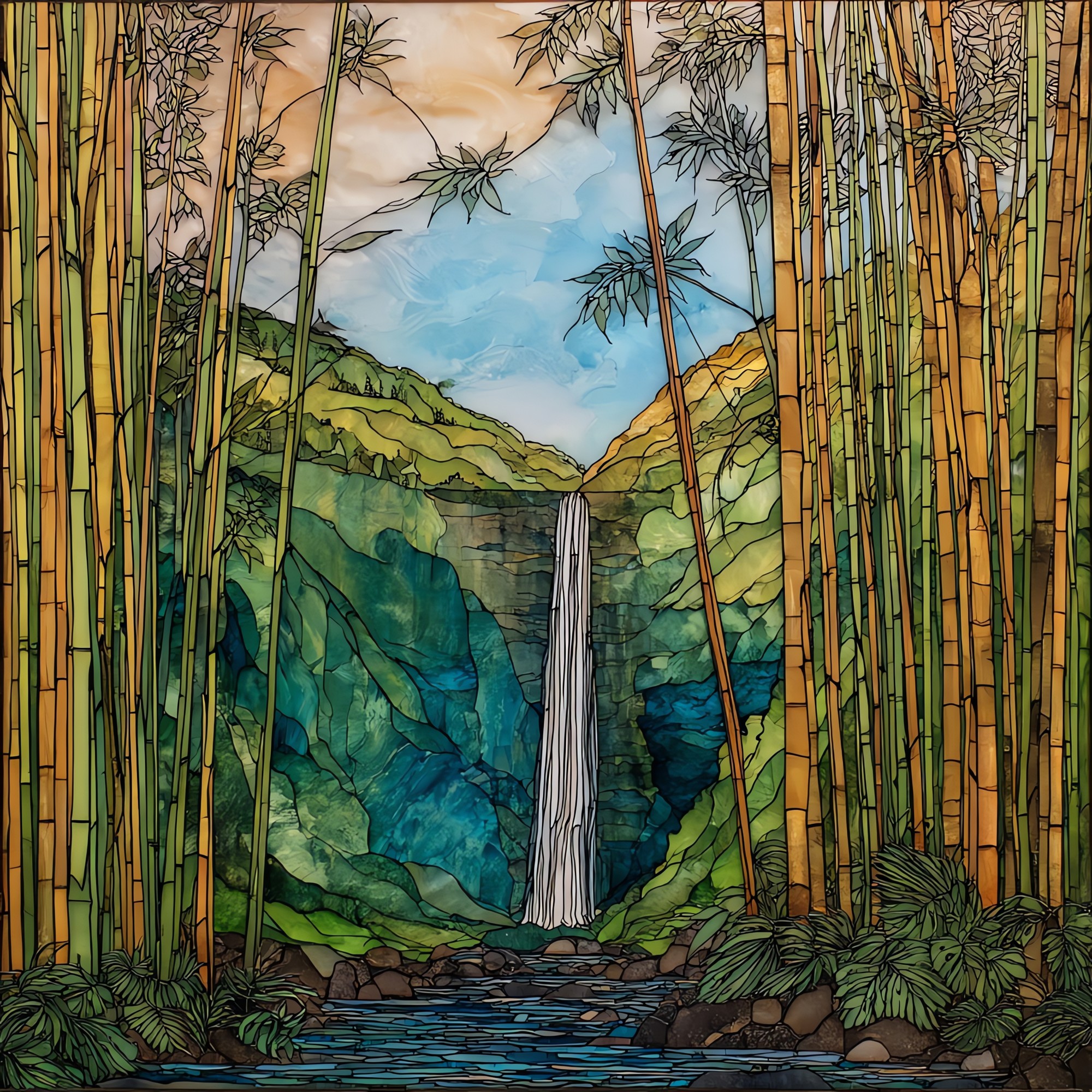
Waimoku Falls Pipiwai Maui Ceramic Art Tile
shown on ceramic, 12-inch tileHawaii · United States
at the end of the Pipiwai Trail, past Hāna on east Maui

Waimoku Falls Pipiwai Maui Ceramic Art Tile

— the cliff the bamboo opens onto.

Where it lives

Not only on a wall.

A small tile on the nightstand catching the morning. A larger one above the fire. Yours, wherever you spend the slow hours.
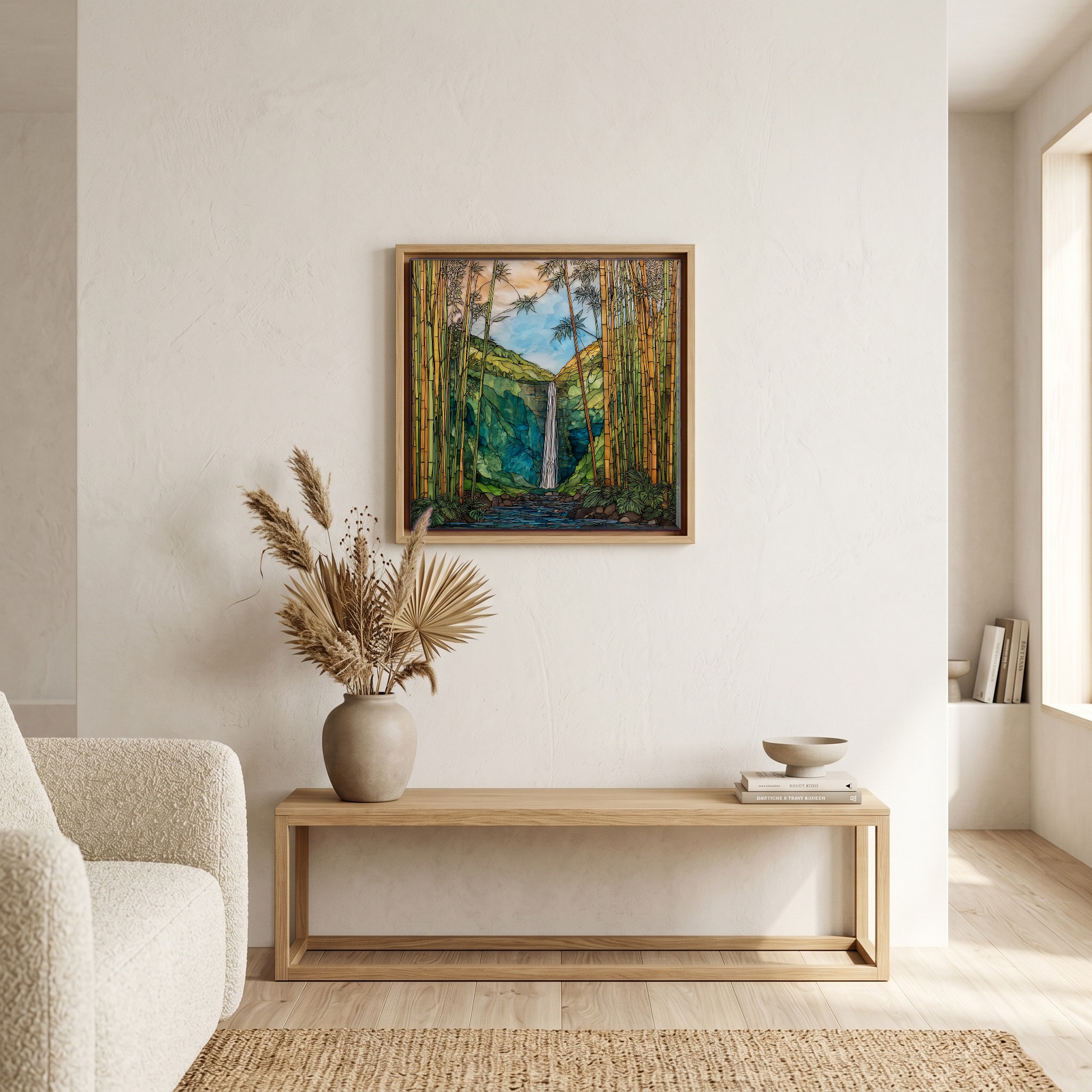
Above the bench, in a warm oak surround.
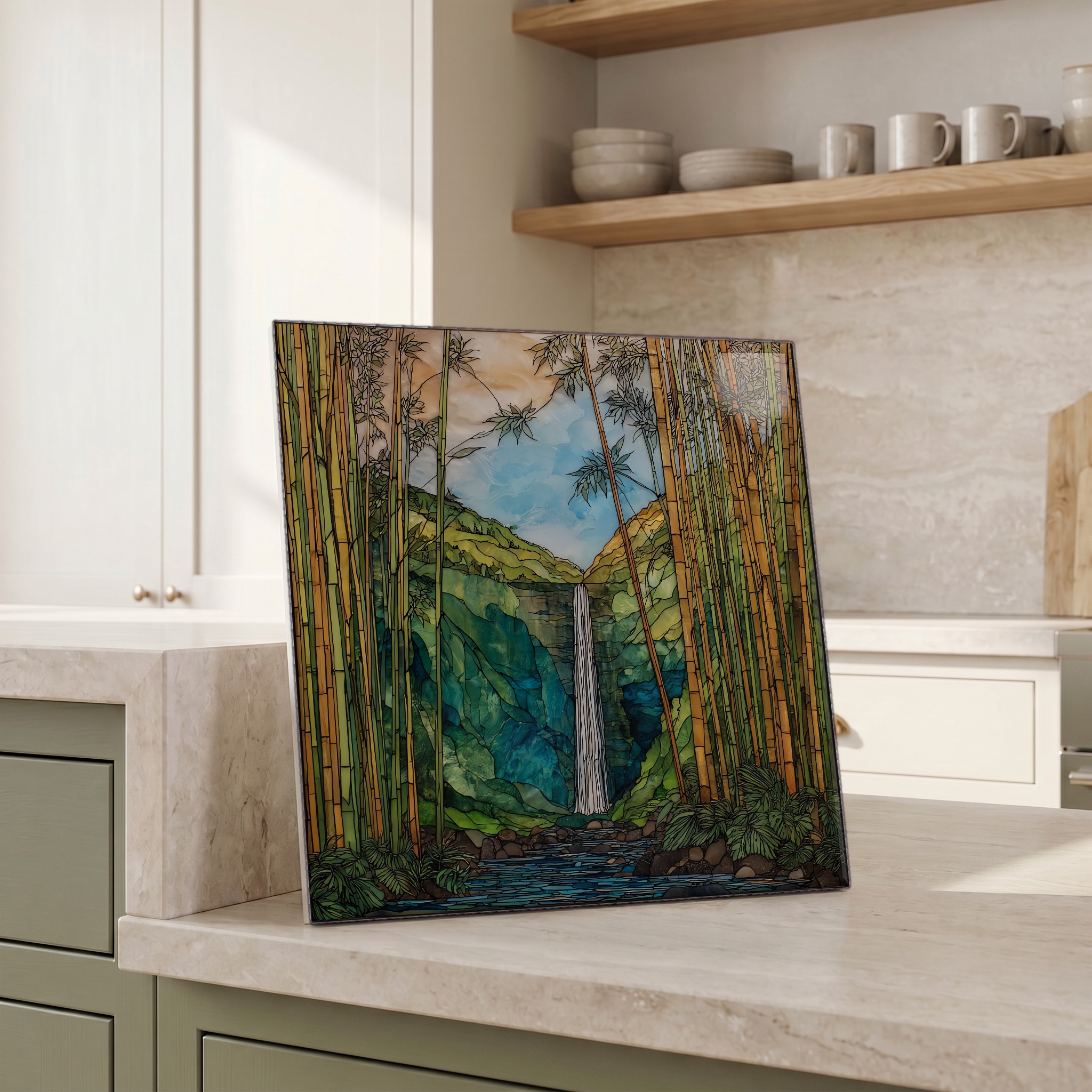
Beside the kettle, propped on the counter.
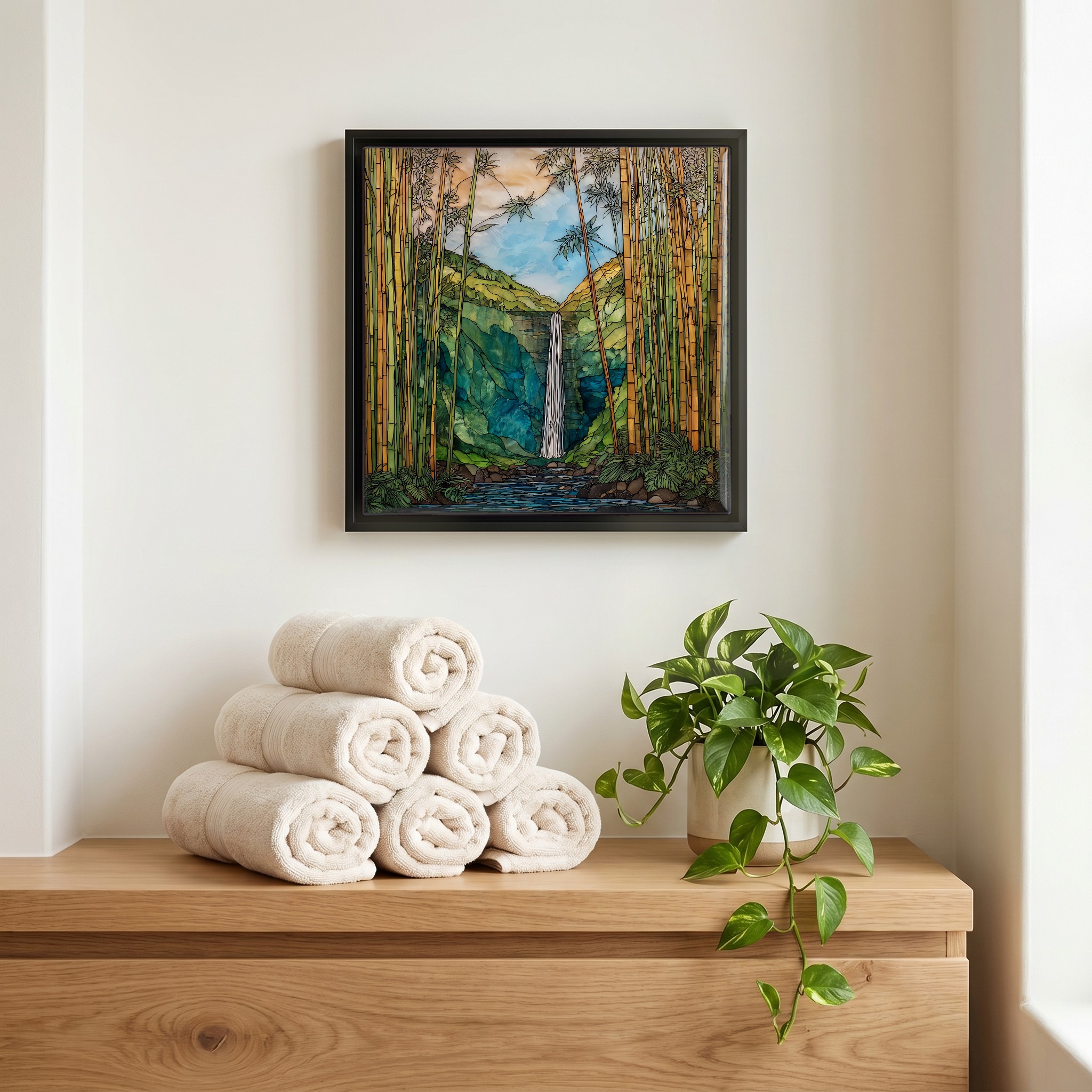
Above the linens, in a slim black surround.
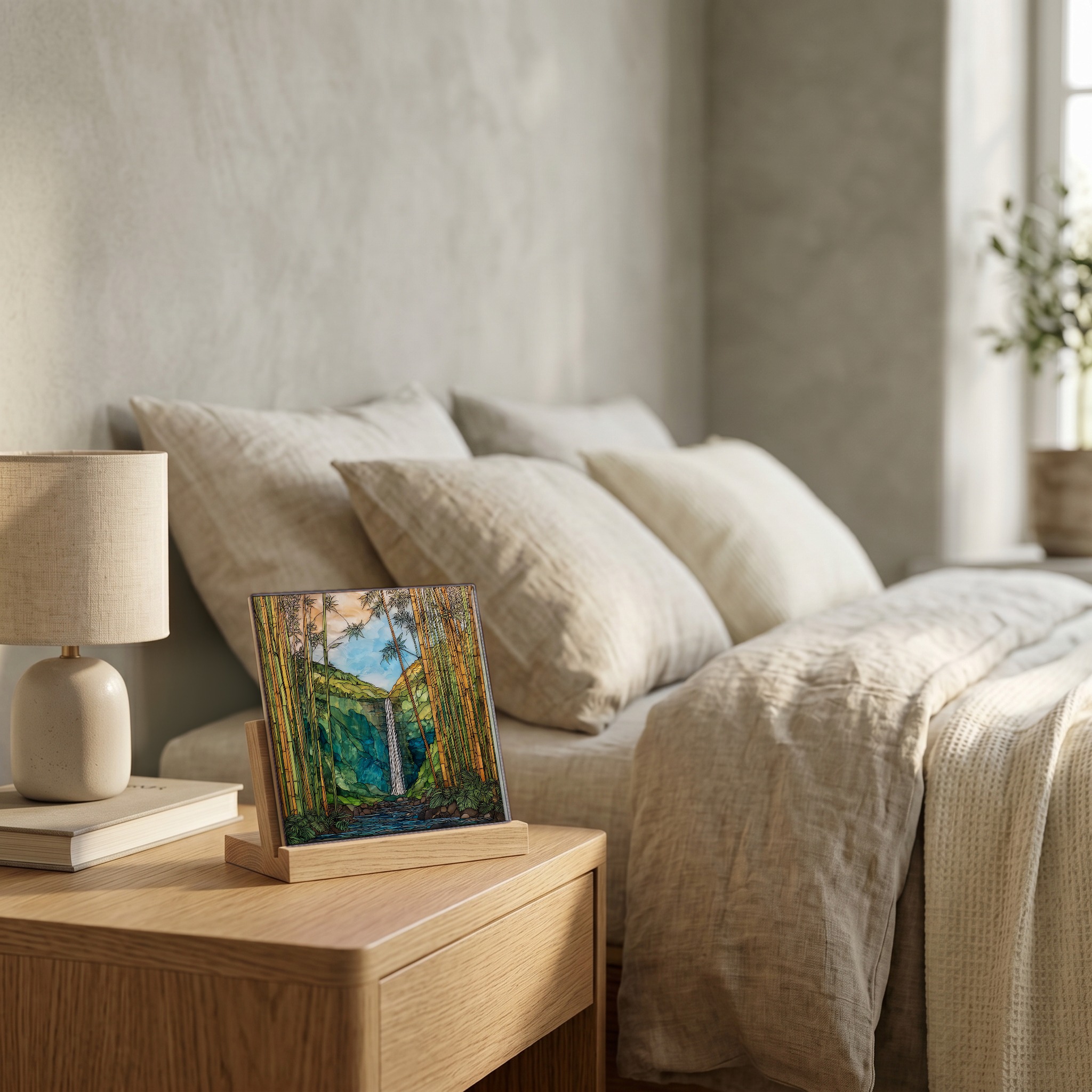
On the nightstand, on a light oak stand.
On a picture ledge, where the light comes in.
a note from the studio

A four-hundred-foot ribbon of water down a wall of dark basalt, reached by a four-mile out-and-back through the rainforest of east Maui. The walk begins at the Pools of ʻOheʻo and climbs slowly, past Makahiku Falls and a wide-spread banyan, before the path turns into a stand of bamboo. The stalks clack overhead in the trade winds. The forest holds the light. Then it opens, and the cliff is there. Waimoku, falling the whole way down.
from the studio
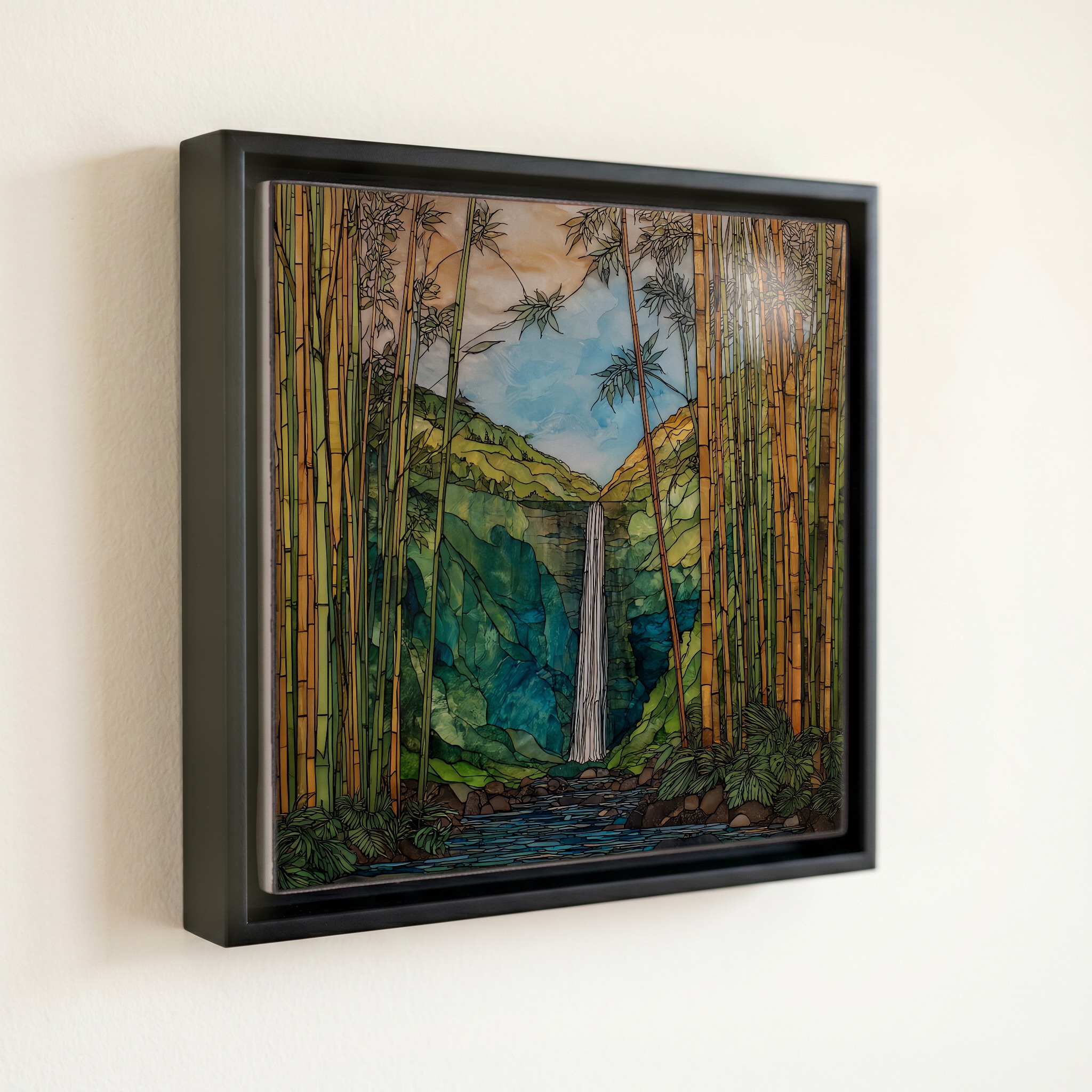
shown in a slim black floating frame · 6 × 6 in
— bring it home

Waimoku Falls Pipiwai Maui Ceramic Art Tile, on ceramic.

Each tile is finished by hand in our Knoxville studio. Artwork is slowly infused into the ceramic surface under high heat and pressure, and rests beneath a thin glossy finish. The colour lives in the surface, not on top of it.

What kind of piece?
One tile — square or rectangle.
How big?
the popular one — counter, shelf, nightstand
6 × 6 in · 15 cm · 1.6 lb
Surface finish
A clear glossy finish — the artwork reads as if under resin. Ideal for show-pieces and framed wall art.
How it sits
A hidden cleat — sits ¼″ proud of the wall.
$58
Hand-finished and shipped from our studio at the foot of the Smokies. On your wall in about ten days.
size
6 × 6 in
15 cm
weighs
1.6 lb
solid in the hand
surface
ceramic, hand-finished
art rests beneath a thin glossy finish
from
Knoxville, TN
our family studio, at the foot of the Smokies
— start a Coaster Set

Pick any four 4-inch tiles — National Parks you've been to, a Smokies set, the four seasons of one place. $ for a set of , cork-backed, ready to live on the table.
comes gift-ready
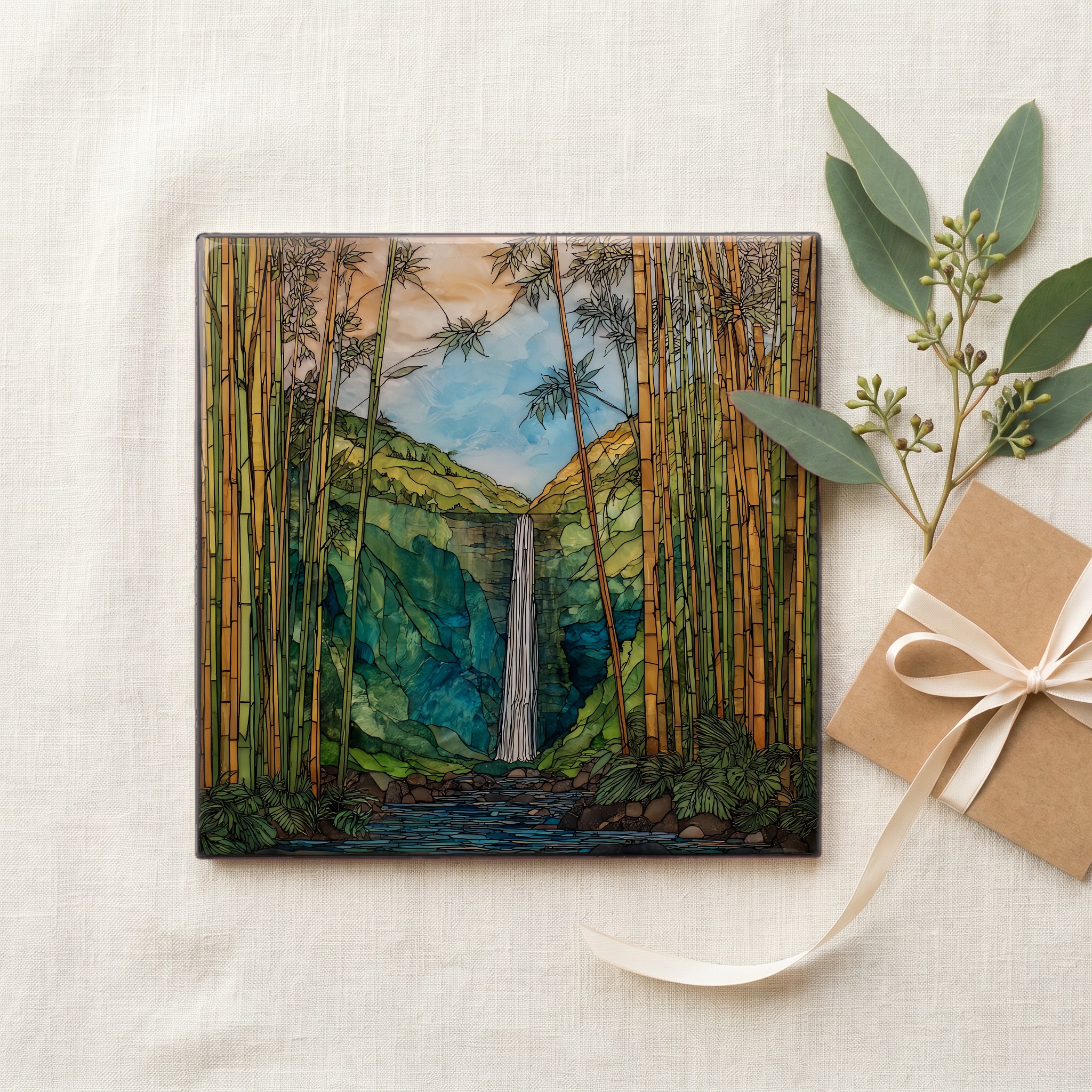
comes gift-ready

Each tile ships in a kraft box, tied with cream ribbon, with a handwritten note from the studio if you'd like to add one.
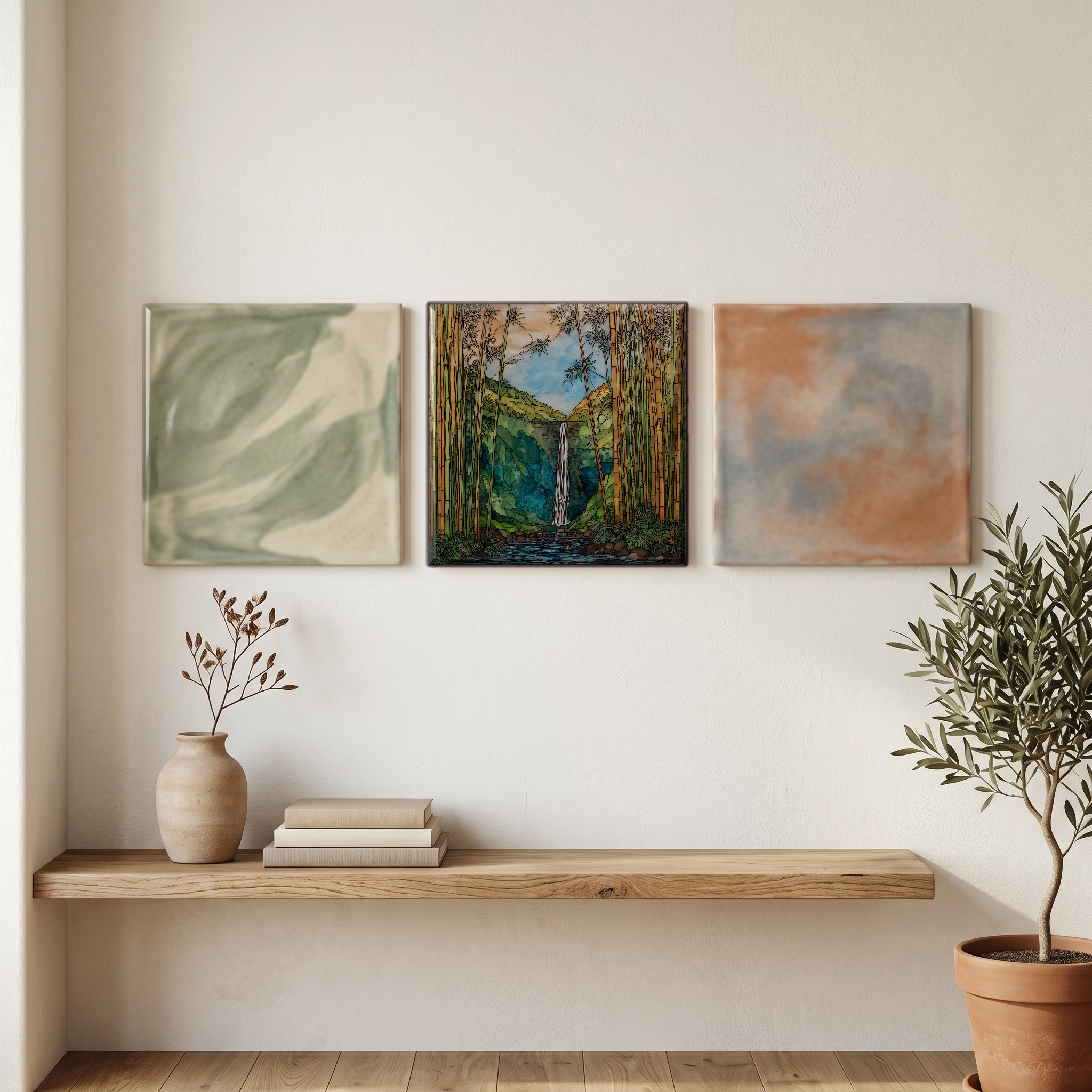
or build a grouping
or build a grouping

Three or five different vistas, hung together — a chapter of places you've been, or want to go.

about Waimoku Falls Pipiwai Maui Ceramic Art Tile

The place, in three passes.

A little of what's known, in case you fall down the rabbit hole — or want to go see it yourself.
the place

Waimoku Falls stands at the head of the Pipiwai Trail, a four-mile out-and-back in the Kīpahulu District of Haleakalā National Park, on the eastern coast of Maui. The trailhead sits at the Kīpahulu Visitor Center, near the Pools of ʻOheʻo, reached by the Hāna Highway past the village of Hāna, a slow drive of switchbacks and one-lane bridges from Kahului. The trail climbs roughly eight hundred feet through tropical rainforest, crossing the Pipiwai Stream and passing a wide banyan tree before entering the bamboo. The bamboo covers the middle third of the route; the falls themselves drop at the head of a basalt amphitheatre at trail's end.

the water

The falls drop roughly four hundred feet down a sheer face of dark basalt, the bedrock left from earlier eruptions of Haleakalā. The volume rises and falls with the rains; in heavy weather the cliff fills with secondary streams that braid the main column. The Pipiwai Stream, the same one the trail crosses on its way up, feeds the falls before continuing down to the Pools of ʻOheʻo and out into the Pacific a short distance below. The amphitheatre at the base catches the spray and sends it back as a fine mist that hangs in the canyon long after the rain has passed.

the visit

The Kīpahulu District is open daily and shares its entry pass with Haleakalā's summit district; one vehicle pass covers both for three days. The trailhead is reached by the Hāna Highway, a drive of roughly three to four hours from Kahului. Park staff recommend an early start: the bamboo forest can be dim under cloud cover, the parking lot fills by mid-day, and flash floods in the Pipiwai Stream have stranded hikers more than once. The trail is closed when stream conditions warrant. No camping is permitted at the falls themselves; the Kīpahulu Campground sits near the Pools of ʻOheʻo and operates first-come, first-served.

where
United States · Maui County, Hawaii
within
Haleakalā National Park
the neighborhood

What's nearby.

A handful of named places within an hour's walk or short drive. Some we've already painted; some we will.
3 km S
Pools of ʻOheʻo
tiered stream pools
2 km S
Makahiku Falls
200-foot waterfall
3 km S
Kīpahulu Visitor Center
park visitor center
19 km N
Hāna
east Maui village
10 km NW
Wailua Falls
roadside waterfall
N
Waimoku Falls Pipiwai Maui Ceramic Art Tile
Pools of ʻOheʻo
Makahiku Falls
Kīpahulu Visitor Center
Hāna
Wailua Falls
common questions

What people ask.

A few questions we get about Waimoku Falls Pipiwai Maui Ceramic Art Tile — and about bringing the piece home.
about the place

Waimoku Falls is in the Kīpahulu District of Haleakalā National Park, on the eastern coast of Maui. The trailhead sits near the Pools of ʻOheʻo, about twelve miles past the village of Hāna along the Hāna Highway. The falls themselves stand about two miles inland from the coast.

Waimoku Falls drops roughly four hundred feet down a wall of dark basalt at the head of the Pipiwai valley. It is one of the tallest waterfalls reachable on foot on Maui. The volume varies with rainfall; in heavy weather the cliff carries several secondary streams braided around the main column.

The Pipiwai Trail is about four miles round-trip with roughly eight hundred feet of elevation gain. The walk takes most hikers two to three hours and ends at Waimoku Falls. The first half-mile passes Makahiku Falls; the middle third runs through a dense stand of bamboo.

About a third of the way to Waimoku Falls, the trail enters a thick stand of non-native bamboo. The stalks reach forty feet and higher and clack against each other in the trade winds. The forest covers most of the middle section of the trail and is one of the best-known stretches of any hike in Hawaiʻi.

Swimming at the base is not recommended. Falling rock and debris are common at the foot of the cliff, and the National Park Service posts warning signs at the viewpoint. Wading in the Pools of ʻOheʻo, at the start of the trail, is also closed at times because of flash flood risk.

Mornings are best: the bamboo forest is brighter, the parking lot fills by mid-day, and afternoon rain is common in the Kīpahulu rainforest. The falls run in every season but flow heavier after recent rains. Trail closures happen when the Pipiwai Stream rises.

The trail is inside Haleakalā National Park, and the standard park entry pass covers access. The same pass covers the summit district at the top of the volcano for three days. America the Beautiful interagency passes are accepted at the Kīpahulu entry station.

about the piece in your home

It carries well as a keepsake for someone who has walked the four miles through the bamboo to the falls. The Pipiwai is the kind of hike that stays with people. A Small or Medium with a handwritten note from the studio sits well on a hallway shelf, and the Coaster Set lands gently on a kitchen counter.

The palette runs deep rainforest green, basalt-dark, and the cool white of the falling water. It sits well in Biophilic, Coastal-modern, and Tropical-modern interiors, and works against warm woods like teak or koa. The piece anchors a room that already has one strong natural texture in it.

Biophilic design — rooms built around plants, water, and natural texture — has been one of the strongest interior directions of the last several years and is heavily covered in shelter magazines. A Large or a four-tile Mural of Waimoku Falls reads as a piece of rainforest brought indoors and anchors a wall the way a window would.

Above a standard three-seat sofa, a single Large tile holds the wall on its own. Above a console or a narrower wall, a Medium reads cleanly. For a long entry wall or a stair landing, a four-tile Mural carries the room; the nine-tile Mural is the right scale for a double-height wall.

Yes, in the Dura Satin or Matte finish. Both are scratch-resistant and stand up to the steam and splashes of a bathroom or a kitchen splashback. The Glossy finish is meant for framed wall pieces in a dry room rather than wet installations.

A soft microfibre cloth with warm water is enough for everyday dust and fingerprints. For a kitchen or bathroom install, a mild non-abrasive cleaner is fine. Avoid bleach, ammonia, and abrasive pads, which can dull the surface finish over time.

Yes. Every WenderVista piece is made in-house by Reid Wender at the studio in Knoxville, Tennessee. We do not license or resell other artists' work, and each tile is hand-finished before it leaves us.

if this one stayed with you

A few you might also love.

Hand-picked by the eye that found Sorapis. Same air, same kind of quiet.