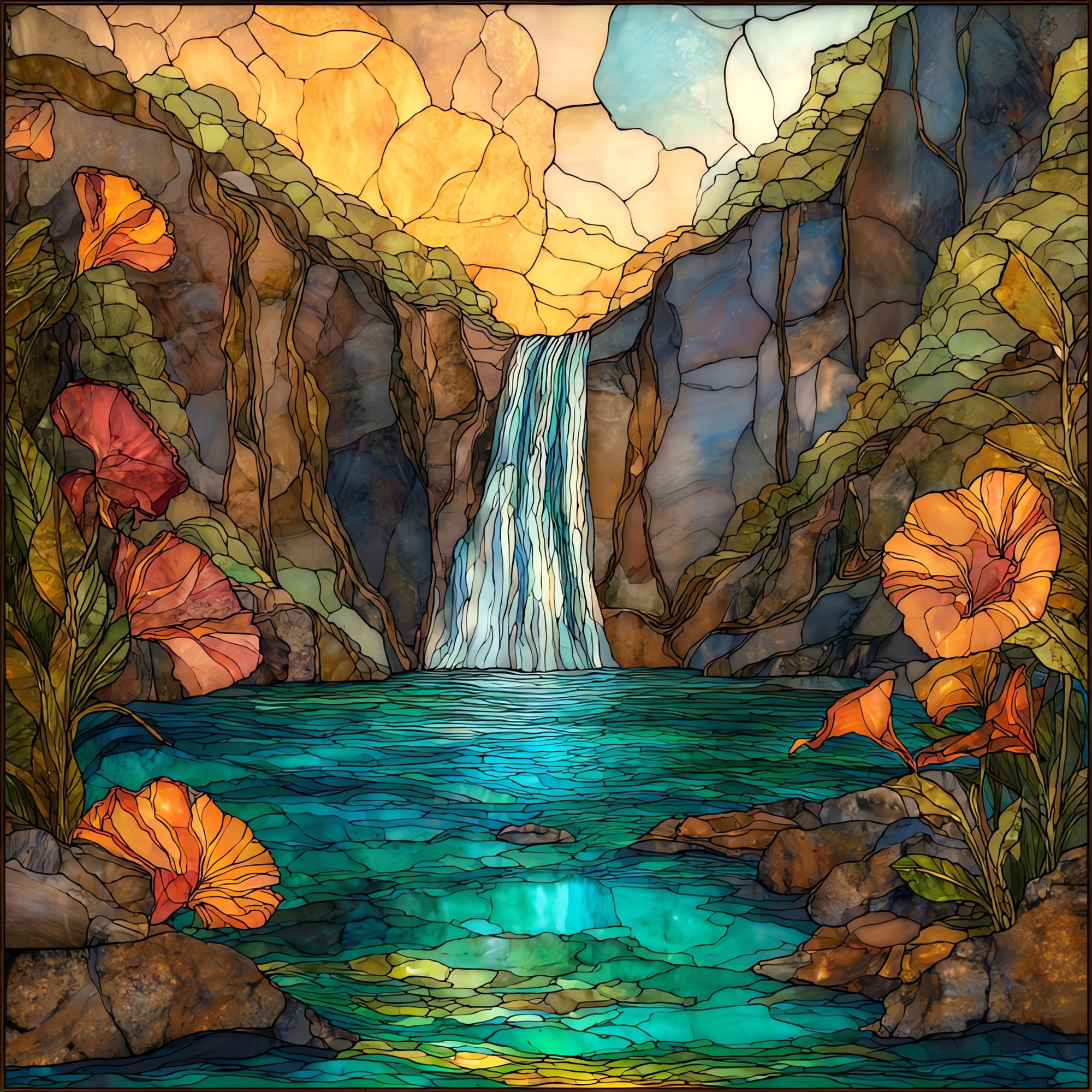
Waimea Valley Falls Oahu Ceramic Art Tile
— the green the rain keeps deepening.
Not only on a wall.
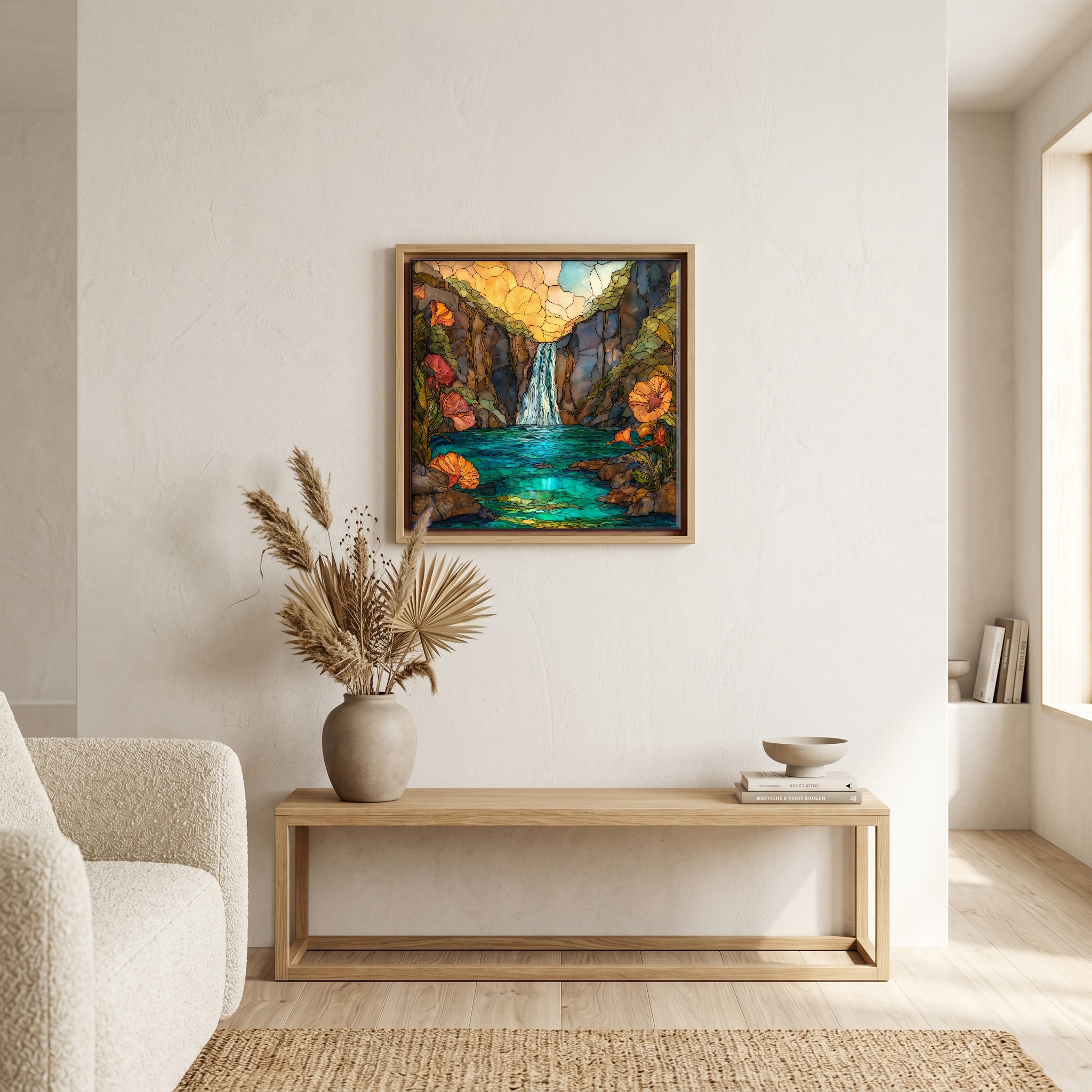
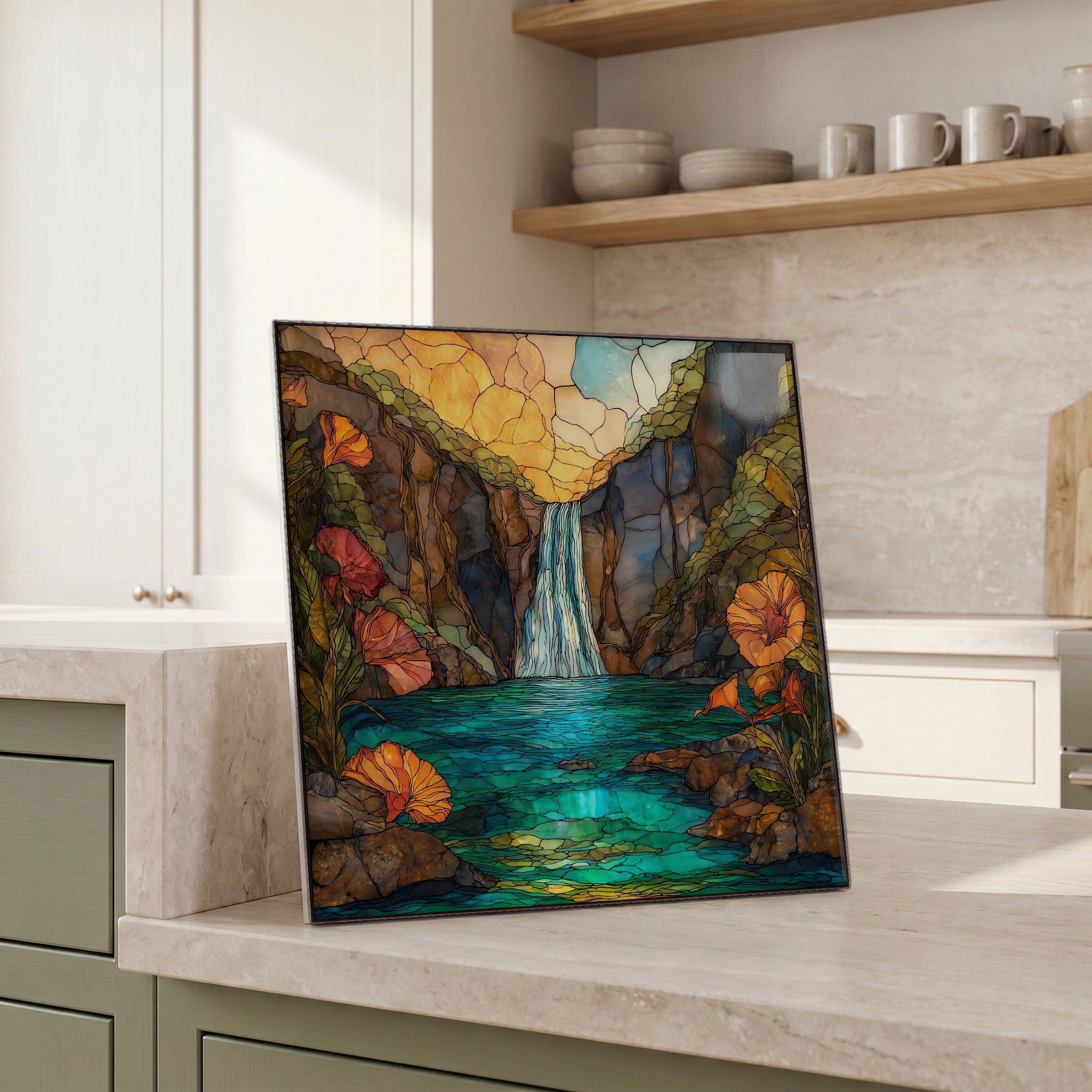
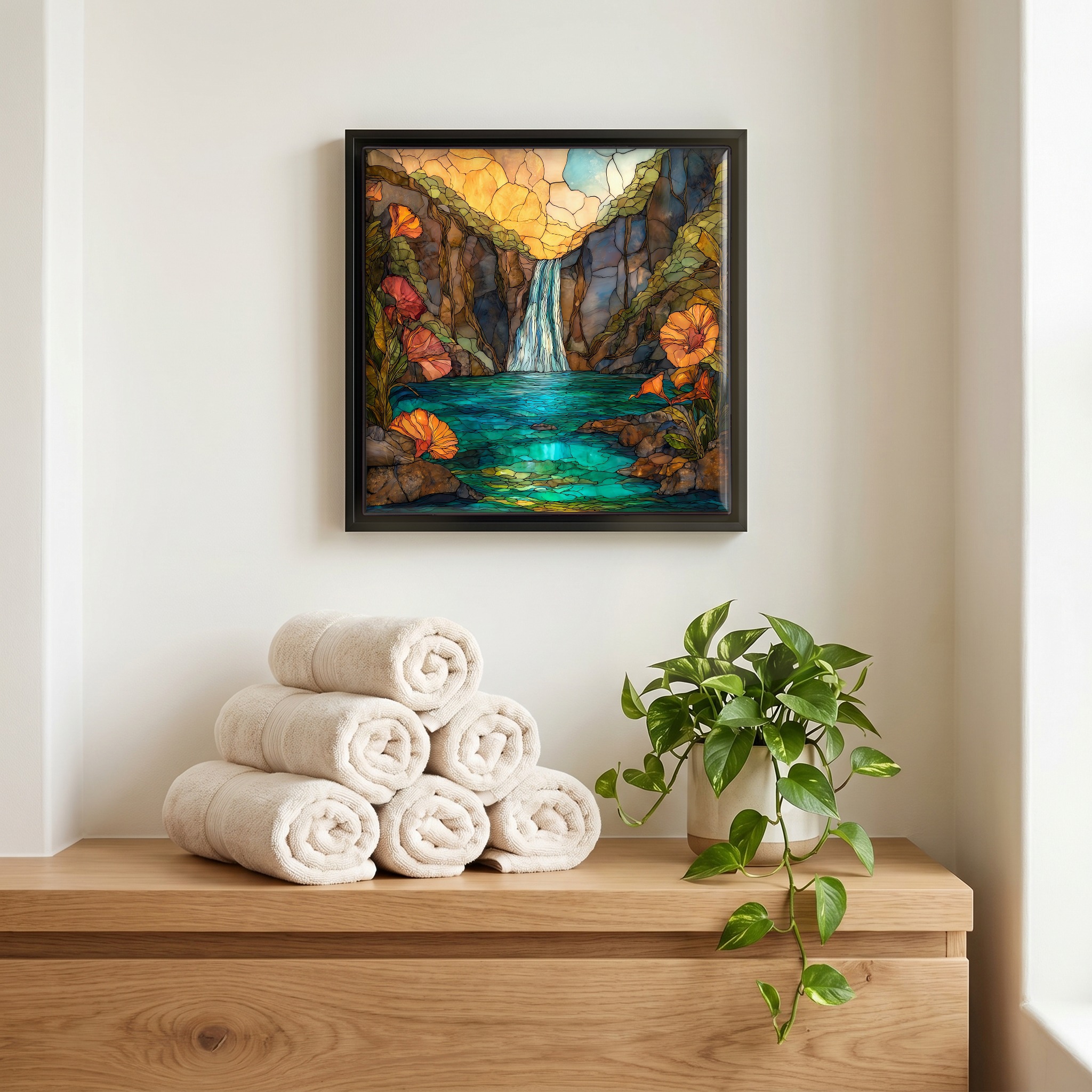
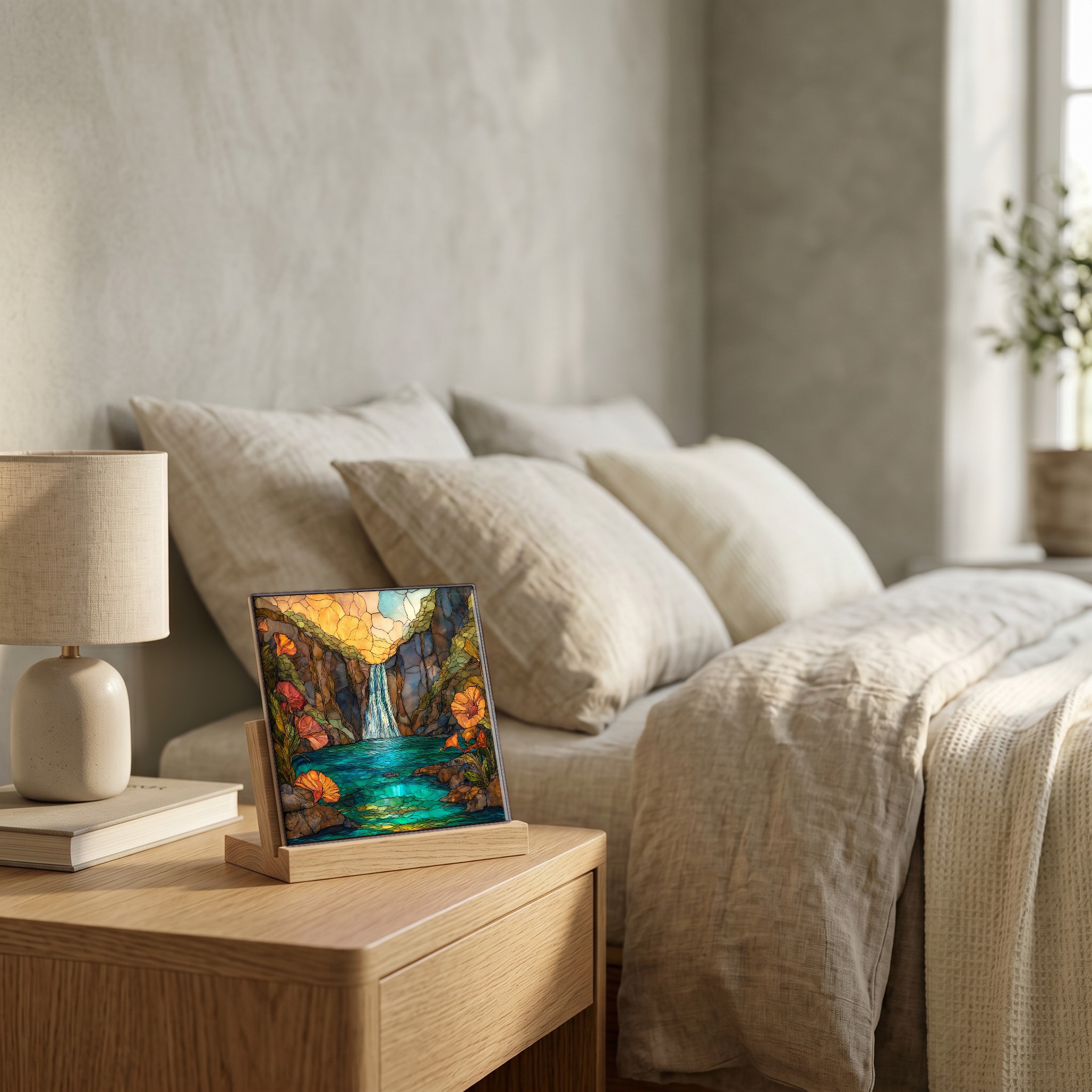
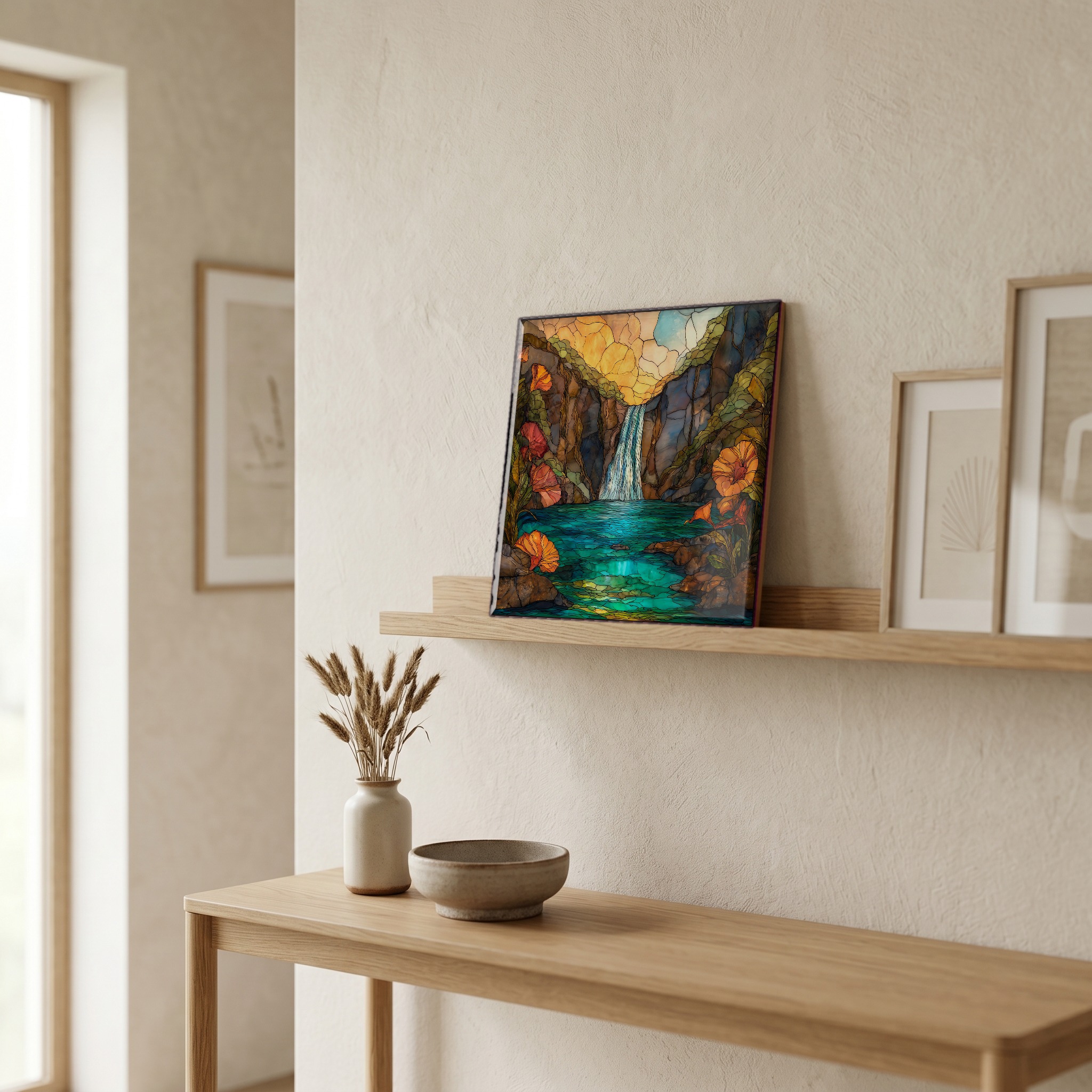
“A 45-foot fall at the head of a long green valley on O'ahu's north shore. The water arrives in a pool you can swim in if a lifeguard is on. The path in is paved, just under a mile, lined with tropical plants from across the Pacific. The valley is an ahupua'a, a traditional land division running from ridge to sea, held now by Hi'ipaka, a Hawaiian non-profit. The bay out front is the one that goes huge in January. The valley behind is quieter, slower, the kind of green that comes from rain falling every other afternoon.
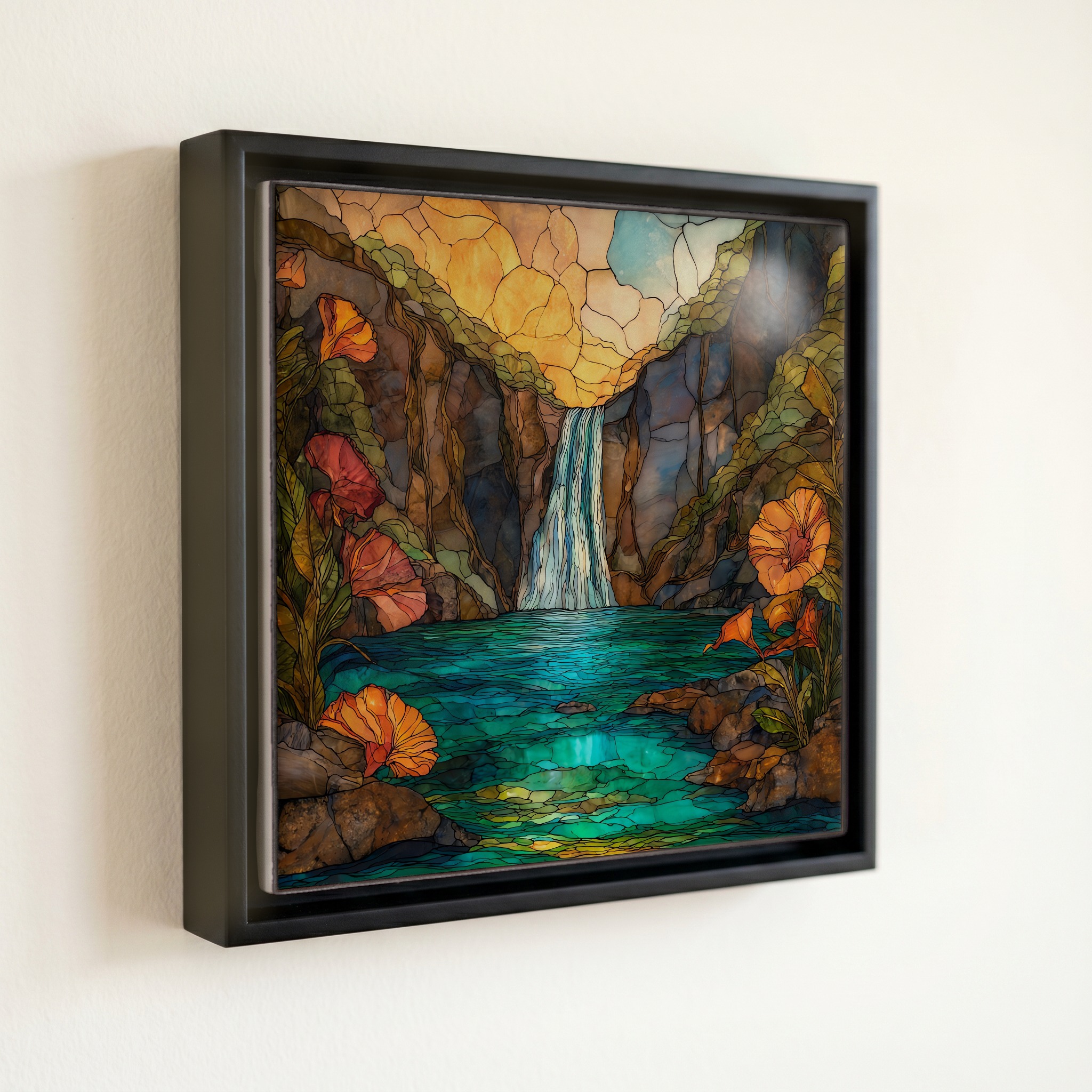
Waimea Valley Falls Oahu Ceramic Art Tile, on ceramic.
Each tile is finished by hand in our Knoxville studio. Artwork is slowly infused into the ceramic surface under high heat and pressure, and rests beneath a thin glossy finish. The colour lives in the surface, not on top of it.
Pick any four 4-inch tiles — National Parks you've been to, a Smokies set, the four seasons of one place. $ for a set of , cork-backed, ready to live on the table.
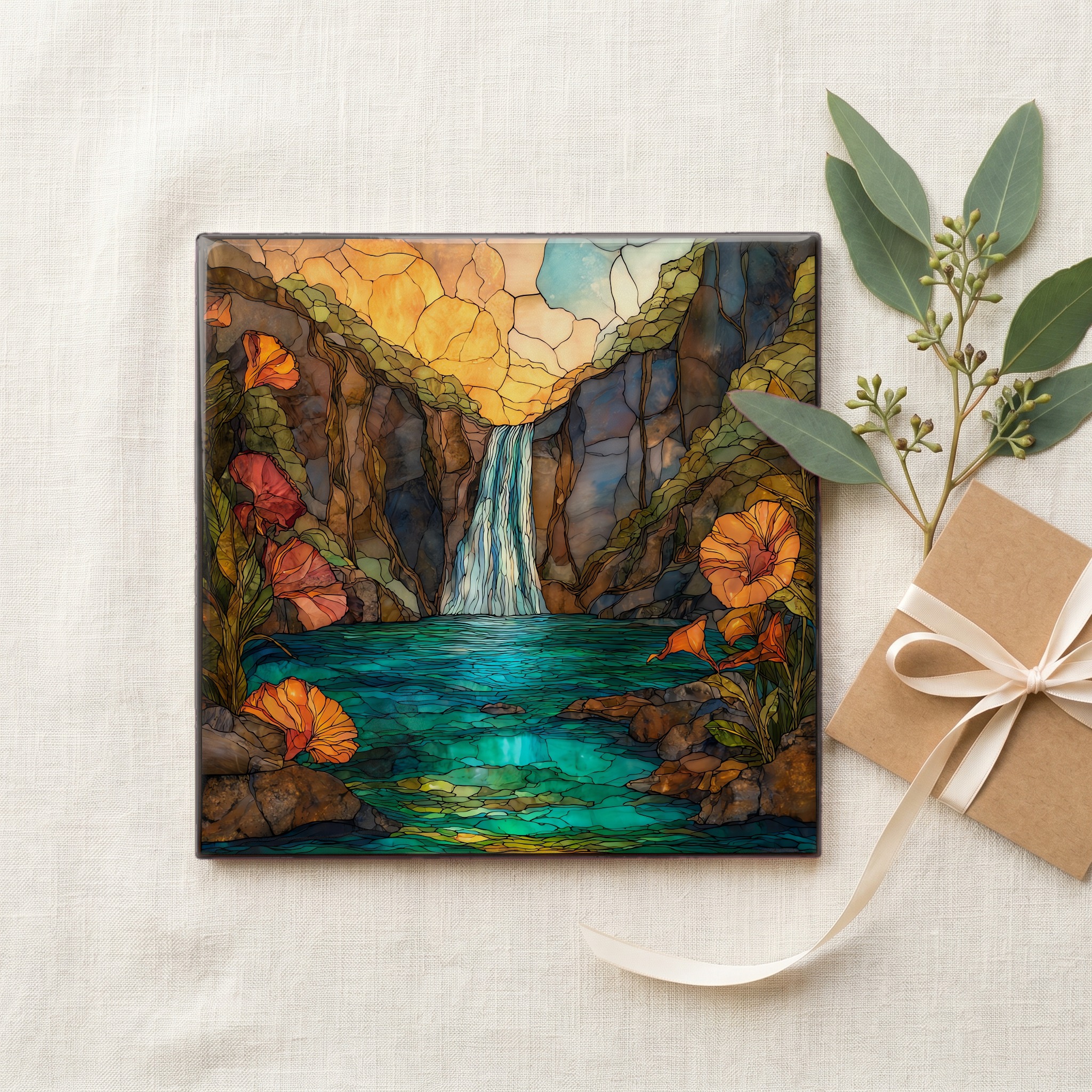
Each tile ships in a kraft box, tied with cream ribbon, with a handwritten note from the studio if you'd like to add one.
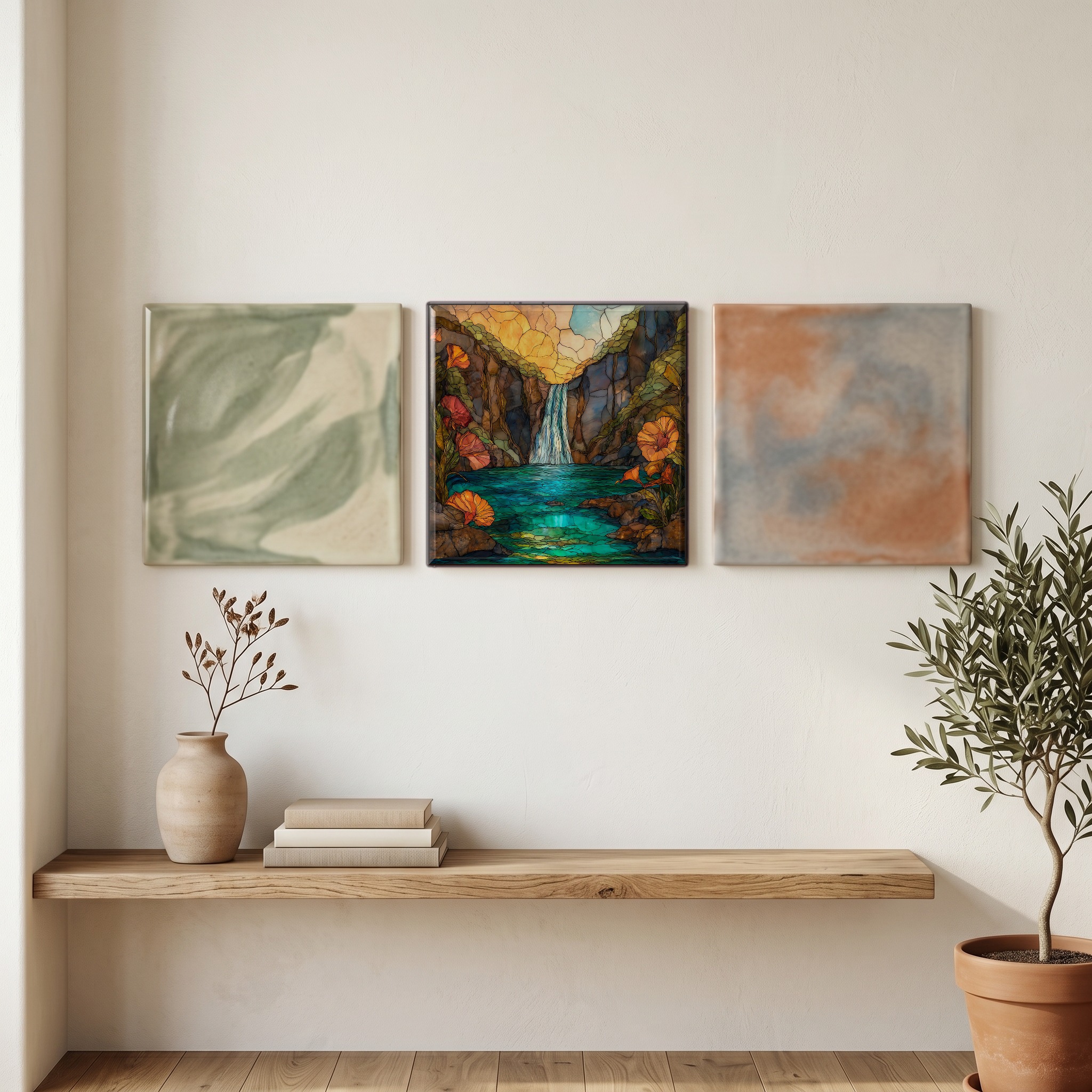
Three or five different vistas, hung together — a chapter of places you've been, or want to go.
The place, in three passes.
Waimea Valley sits behind Waimea Bay on the north shore of O'ahu, about an hour by car from Honolulu. The valley runs about 1,875 acres from the Ko'olau ridge down to the coast, an intact ahupua'a, the traditional Hawaiian land division that follows a watershed from mountain to sea. Waimea Falls itself drops about 45 feet at the head of a paved 0.75-mile path lined with native and Polynesian-introduced plants. The land is held by Hi'ipaka LLC, a non-profit subsidiary of the Office of Hawaiian Affairs, which operates the valley as a botanical and cultural site rather than as a park.
The fall runs all year because the Ko'olau range above the valley catches trade-wind moisture moving in steadily from the northeast. Rain across the upper valley feeds Kamananui Stream, which carries the water down through the valley floor and steps up after the winter storms. The pool at the base is shallow at the edges and deeper at the centre, with a sandy floor; swimming is allowed when a lifeguard is on duty, and life jackets are required. The water is fresh and cool, a little tannic from the leaves upstream, and the fall itself is a roughly 45-foot drop.
Hi'ipaka operates Waimea Valley as a paid-admission site, with a visitor centre at the entrance and an interpretive trail running about 0.75 miles to the falls. The route is paved and stroller-friendly, with rest benches and signed stops at restored heiau and cultural sites along the way. The valley is open daily except on major holidays, with the falls closing earlier than the gate to allow swimmers to walk back out. Cultural protocols posted at the entrance ask visitors to enter the valley quietly and to leave plants, stones, and offerings in place.