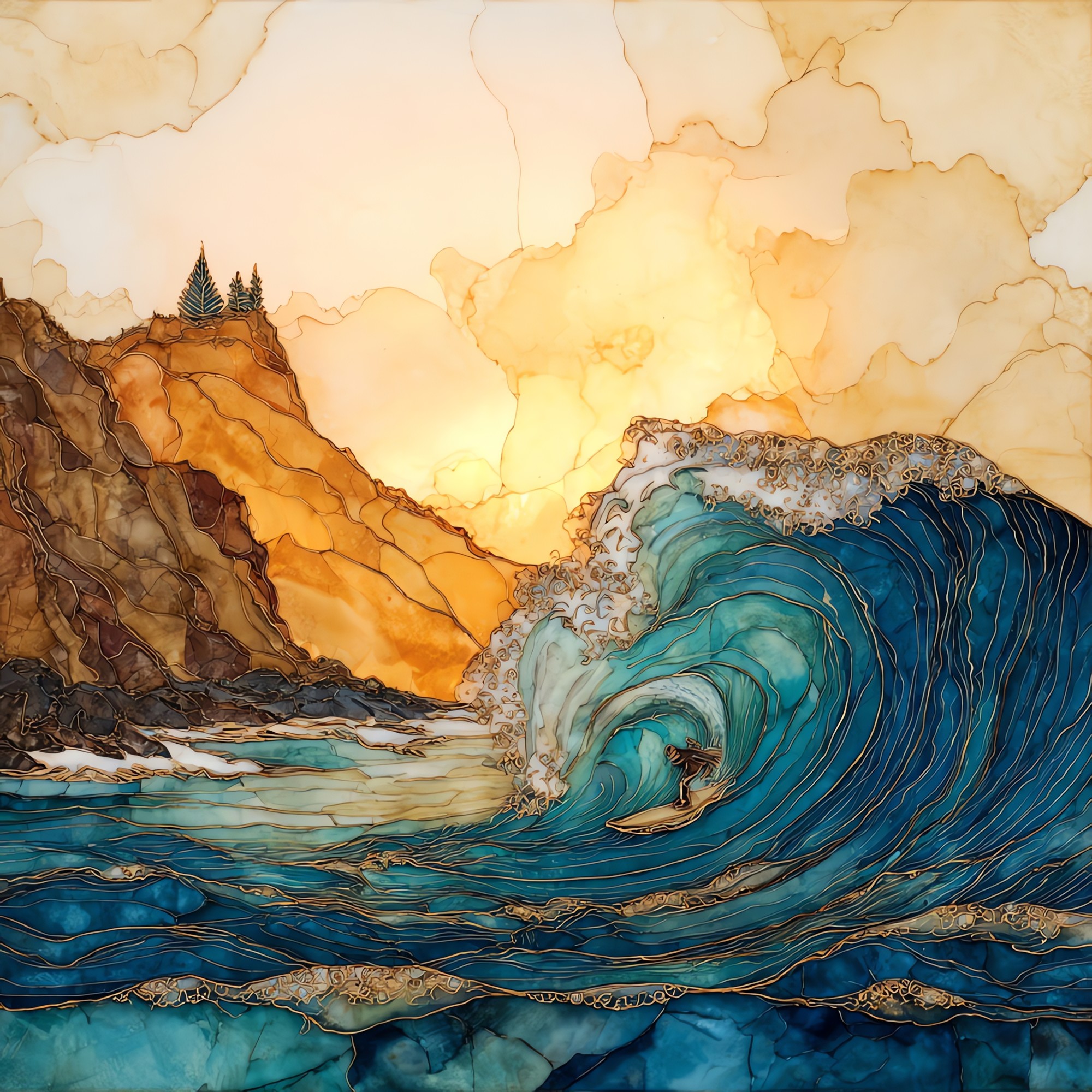
Waimea Bay Winter Oahu Ceramic Art Tile
— — the winter the ocean stands up.
Not only on a wall.
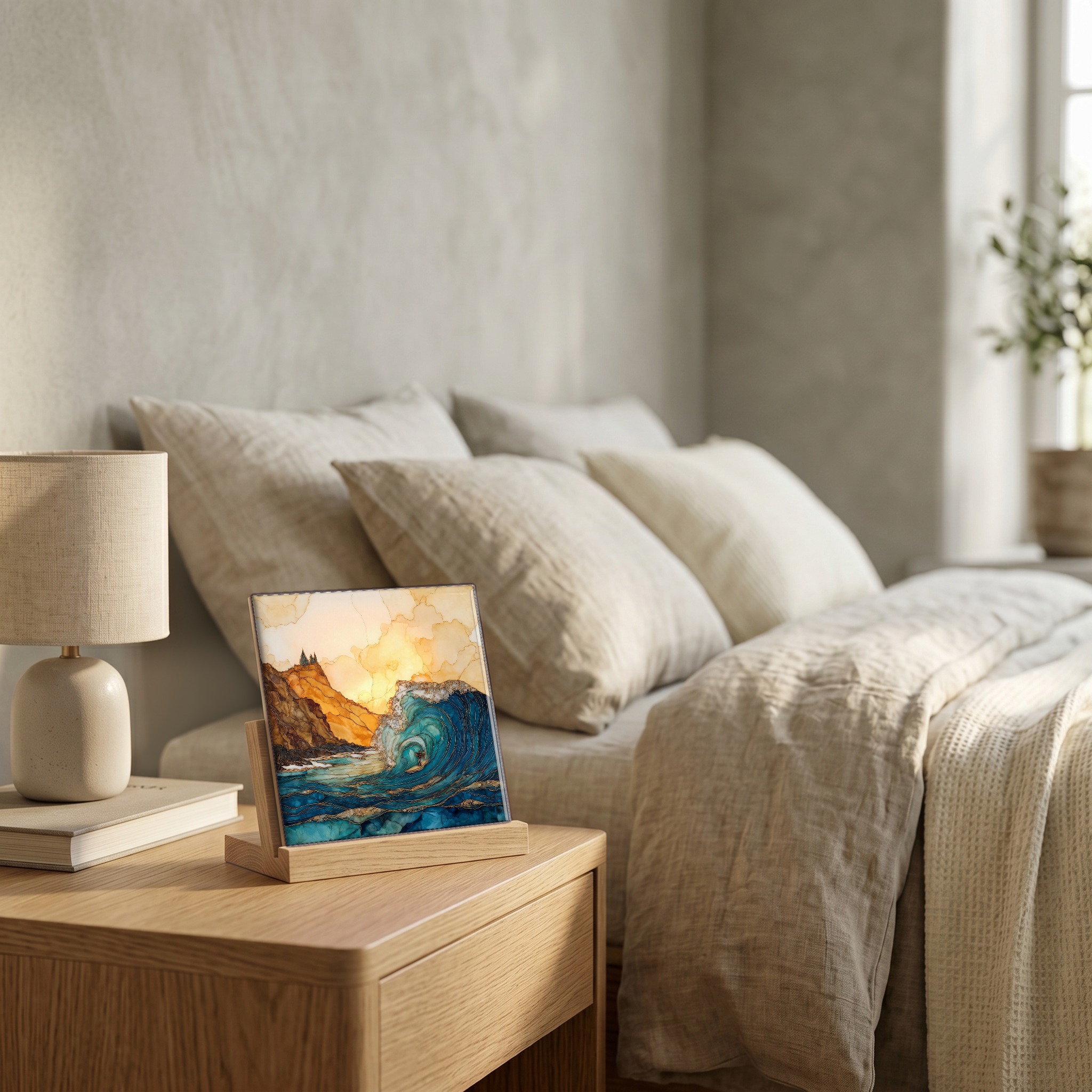
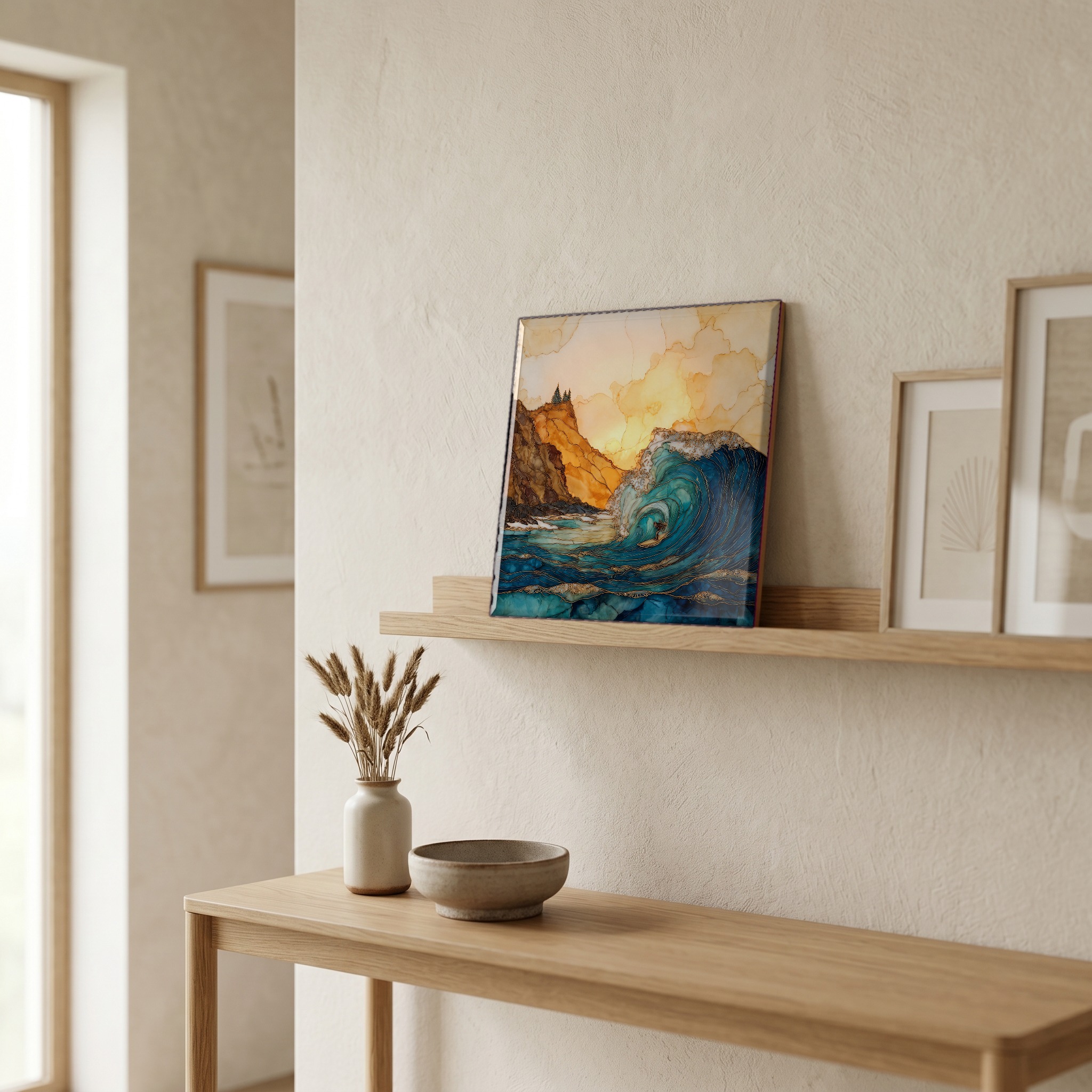
“The bay at the mouth of the Waimea River, on the North Shore of Oʻahu. In summer the water is calm enough to swim across. In winter the long-period swells out of the North Pacific arrive at twenty and thirty feet, and the Seven Mile Miracle becomes itself again. Puʻu o Mahuka Heiau watches from the ridge above. Eddie Aikau was the lifeguard here. The contest that bears his name has run only a handful of times since 1985, on the days the bay decides.
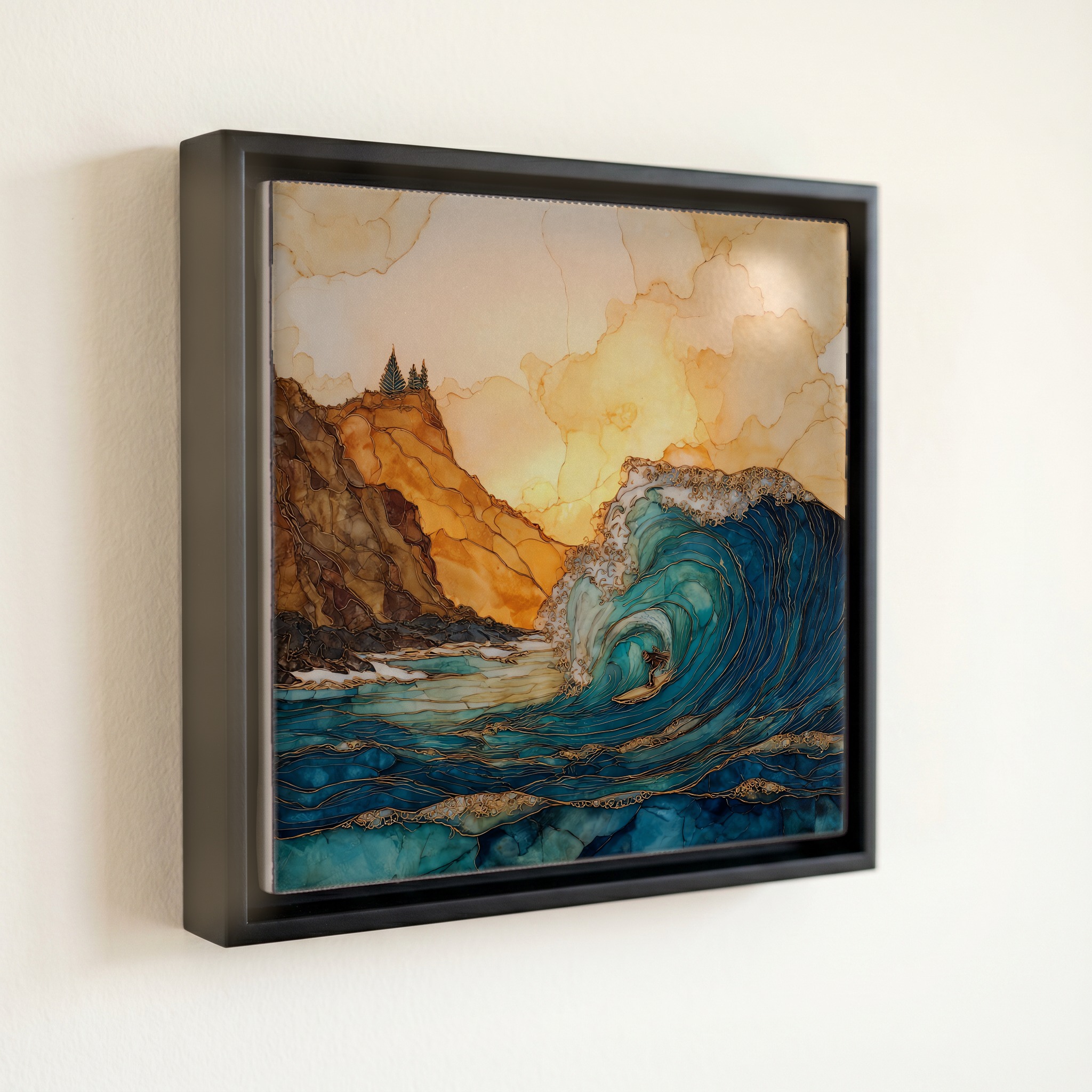
Waimea Bay Winter Oahu Ceramic Art Tile, on ceramic.
Each tile is finished by hand in our Knoxville studio. Artwork is slowly infused into the ceramic surface under high heat and pressure, and rests beneath a thin glossy finish. The colour lives in the surface, not on top of it.
Pick any four 4-inch tiles — National Parks you've been to, a Smokies set, the four seasons of one place. $ for a set of , cork-backed, ready to live on the table.
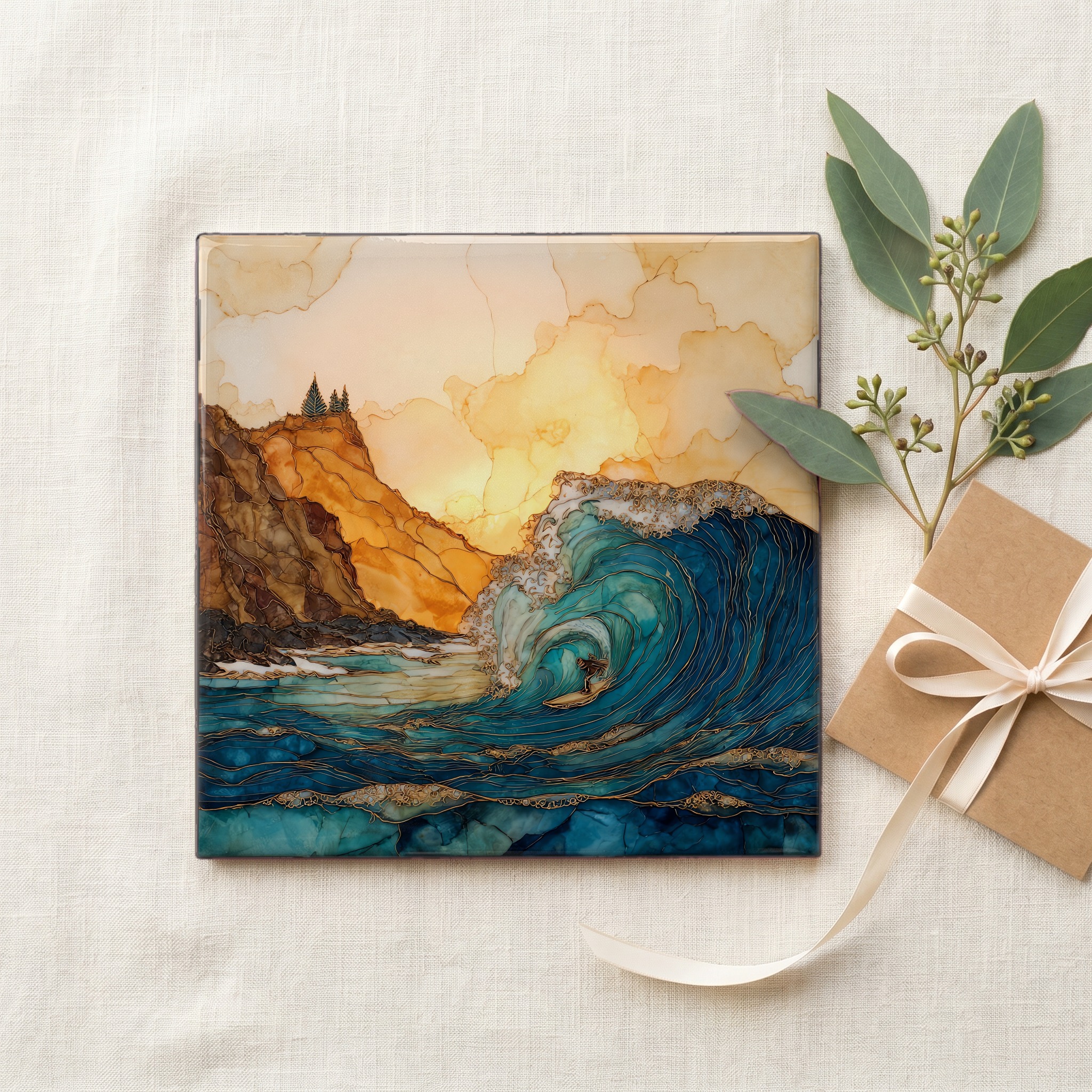
Each tile ships in a kraft box, tied with cream ribbon, with a handwritten note from the studio if you'd like to add one.
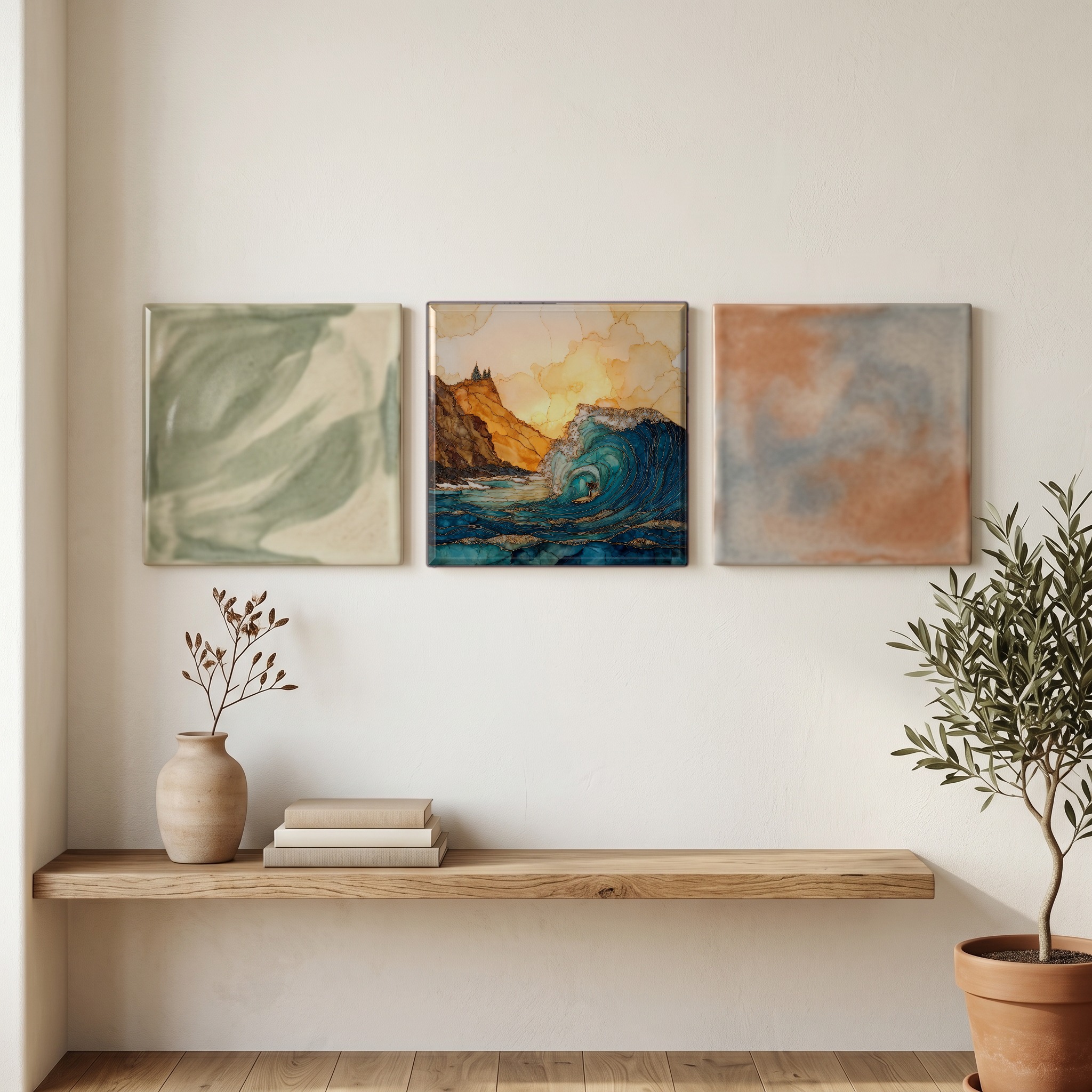
Three or five different vistas, hung together — a chapter of places you've been, or want to go.
The place, in three passes.
Waimea Bay sits on the North Shore of Oʻahu, about 35 miles north of Honolulu by way of the Kamehameha Highway. The bay opens at the mouth of the Waimea River, between Haleʻiwa town and Sunset Beach, in the long sweep of breaks surfers call the Seven Mile Miracle. Above the bay rises Puʻu o Mahuka Heiau, the largest temple site on Oʻahu, dating to the seventeenth century and now a state historic site. Adjacent Waimea Valley descends from the 45-foot Waimea Falls through restored kalo terraces to the shore. Waimea Bay Beach Park is open daily and free; parking fills early on winter swell days.
The bay's winter waves are made by storms a continent away. Low-pressure systems forming near the Aleutian Islands generate long-period swells that travel several thousand miles south across the North Pacific. They meet a deep notch with a sand bottom that rises sharply toward shore, and that geometry focuses the energy into a single peeling break that holds size when other North Shore breaks close out. Faces of thirty feet are routine in a solid swell; the biggest days bring faces over fifty. Waimea was first surfed in winter by Greg Noll and a small group in November 1957.
Winter at Waimea runs roughly from October through March, with the most consistent giant swells arriving December through February. The same bay that swimmers cross in July is, by Thanksgiving, unrecognizable. Hawaii's Big Wave Surf Advisory closes the bay to entry when the surf hits 20 feet on the Hawaiian scale, faces of about 35 to 40 feet. The Eddie Aikau Big Wave Invitational at Waimea has been held only a handful of times since its founding in 1985, opening on the rare days the swell holds at the contest threshold for eight straight daylight hours. Beach access remains open through the year; in summer the bay is calm enough for snorkeling along the rocks on the south side.