Wender·Vista
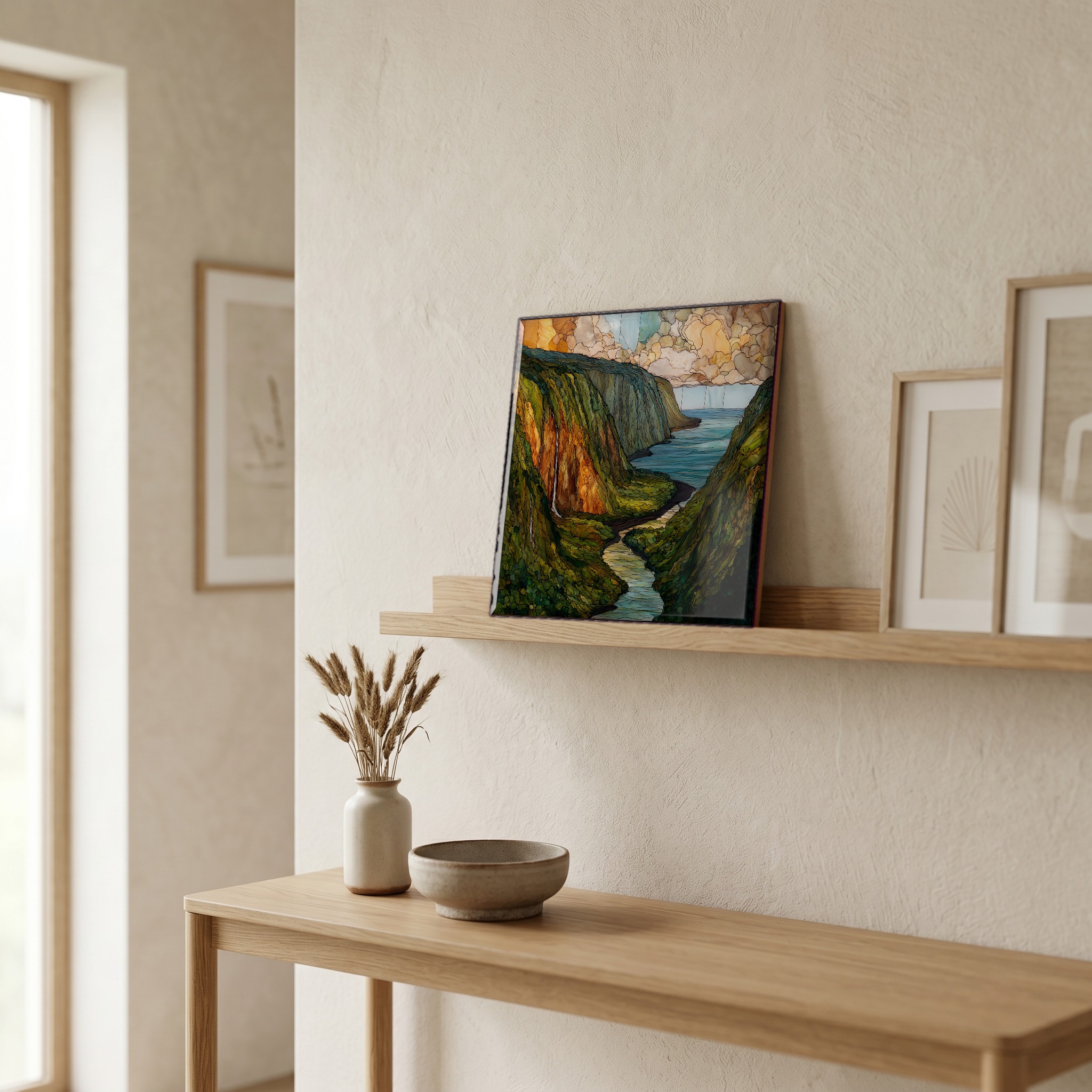
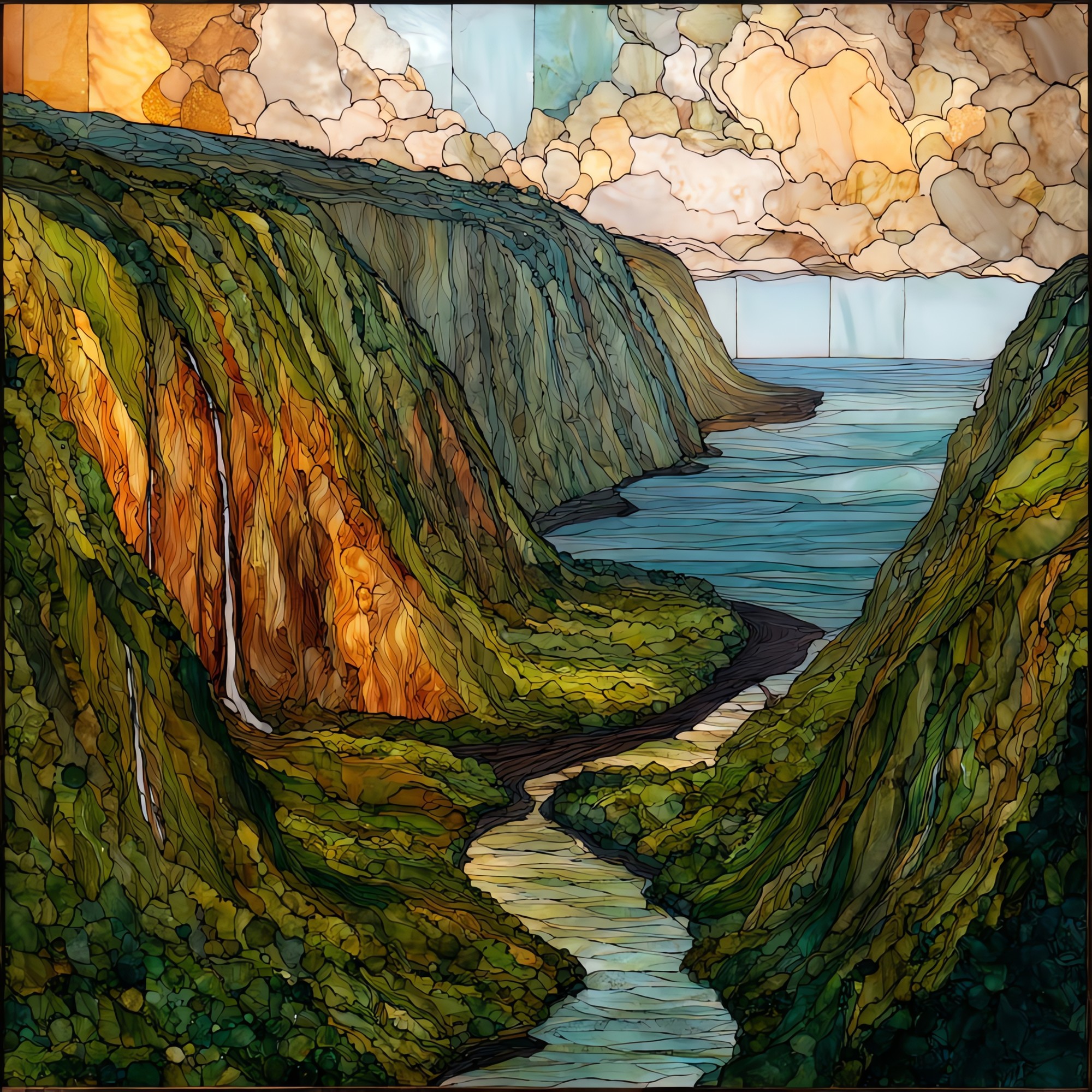
Waimanu Aerial Big Island Ceramic Art Tile
shown on ceramic, 12-inch tileHawaii · United States
on the Big Island's Hāmākua coast, north of Waipiʻo

Waimanu Aerial Big Island Ceramic Art Tile

a green amphitheater open to the sea.

Where it lives

Not only on a wall.

A small tile on the nightstand catching the morning. A larger one above the fire. Yours, wherever you spend the slow hours.
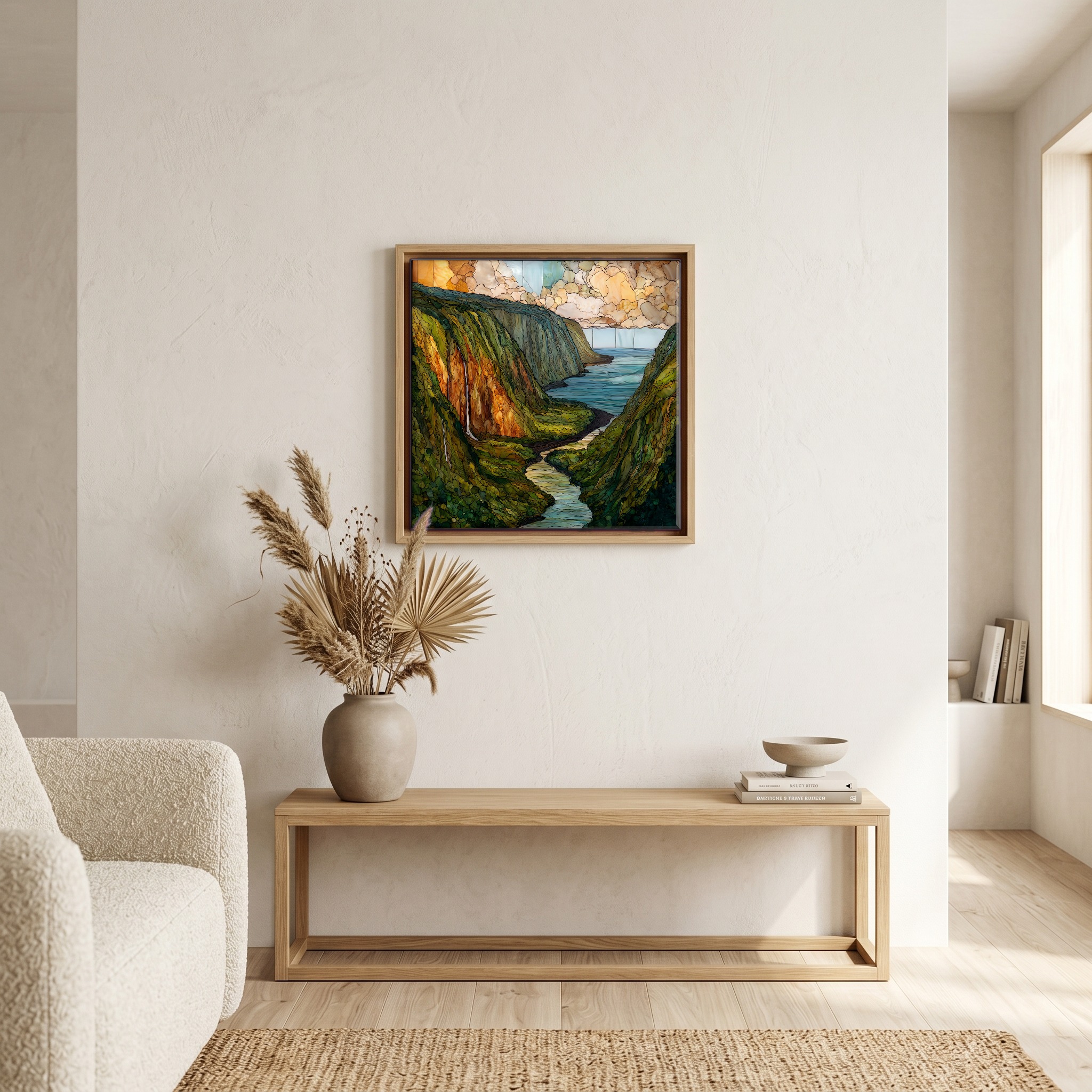
Above the bench, in a warm oak surround.
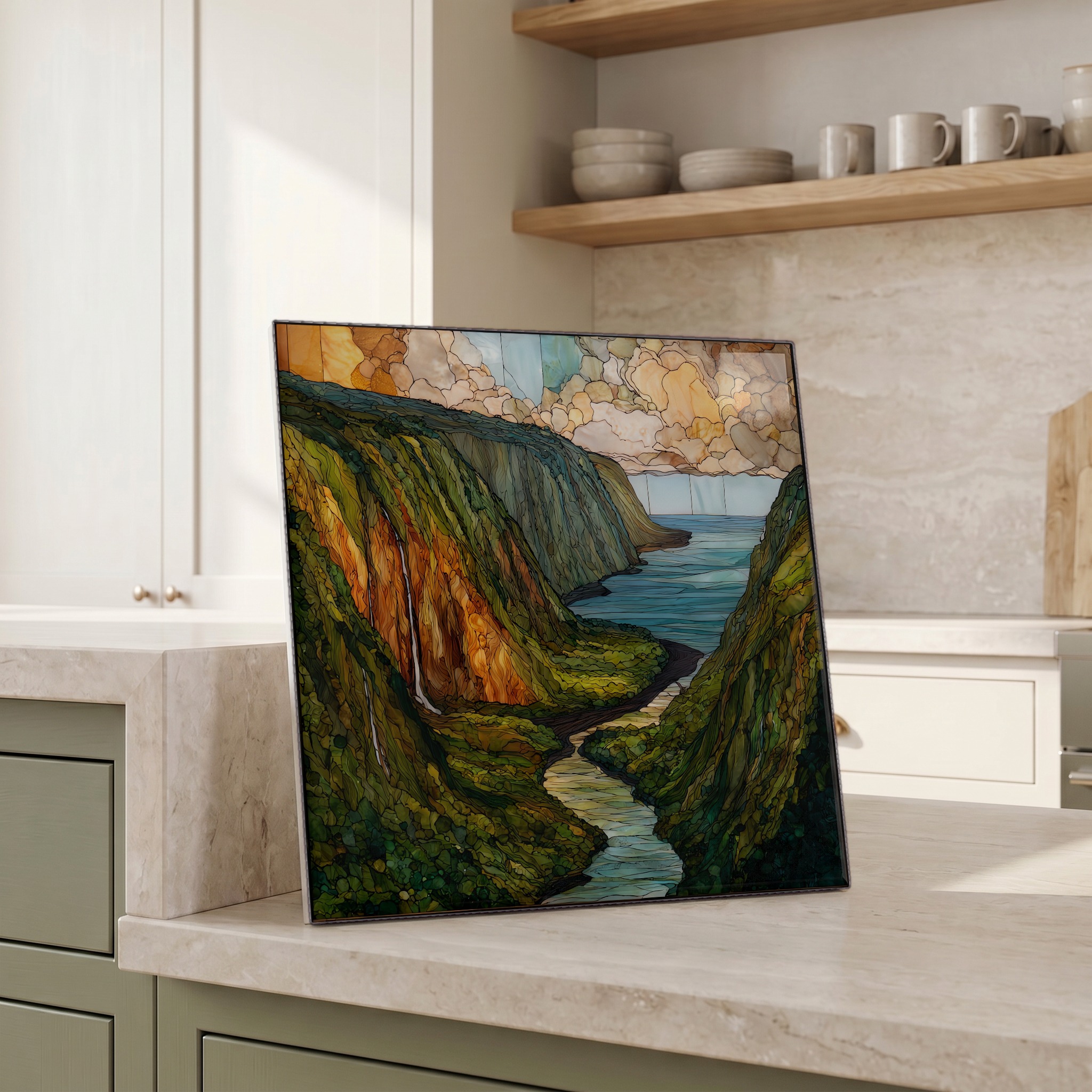
Beside the kettle, propped on the counter.
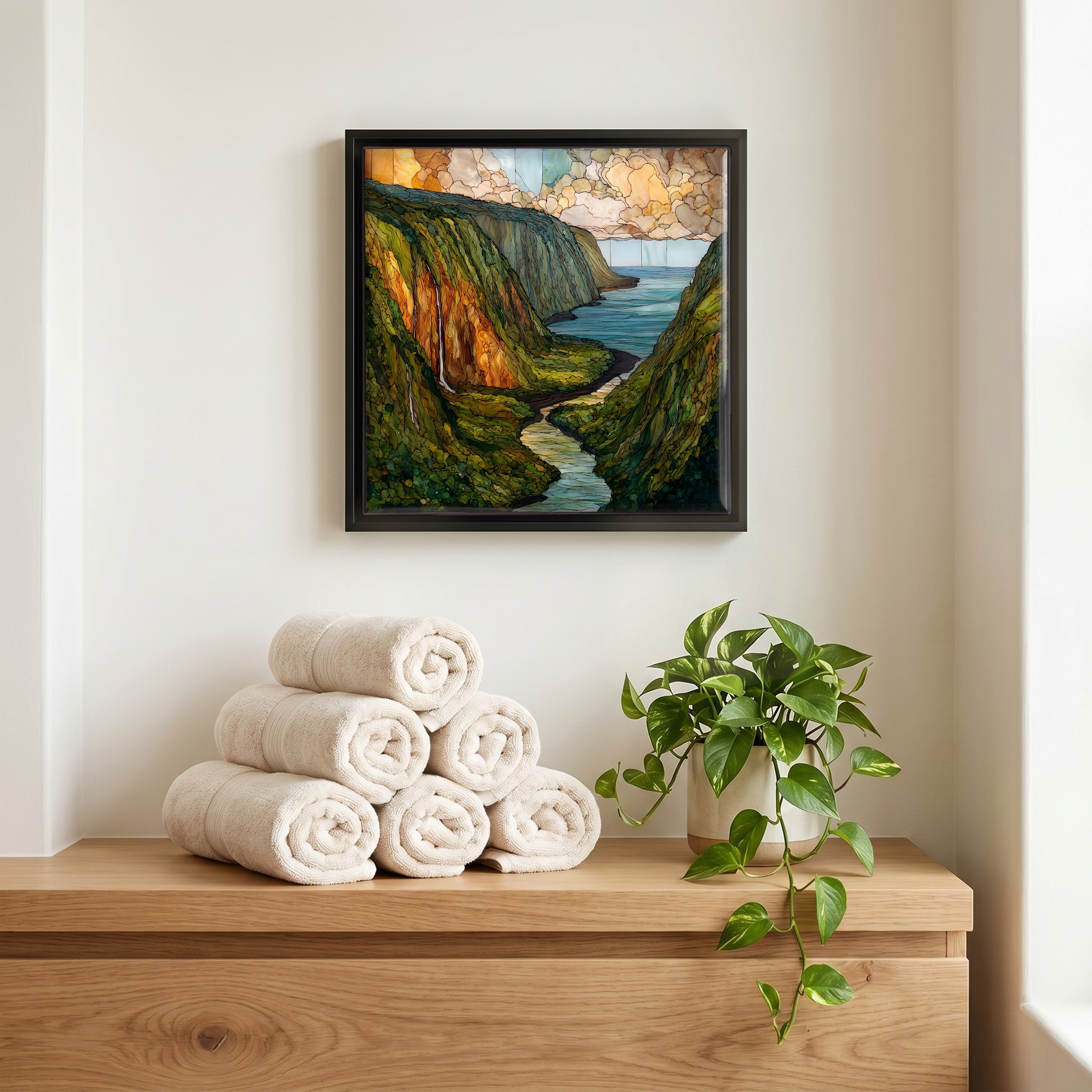
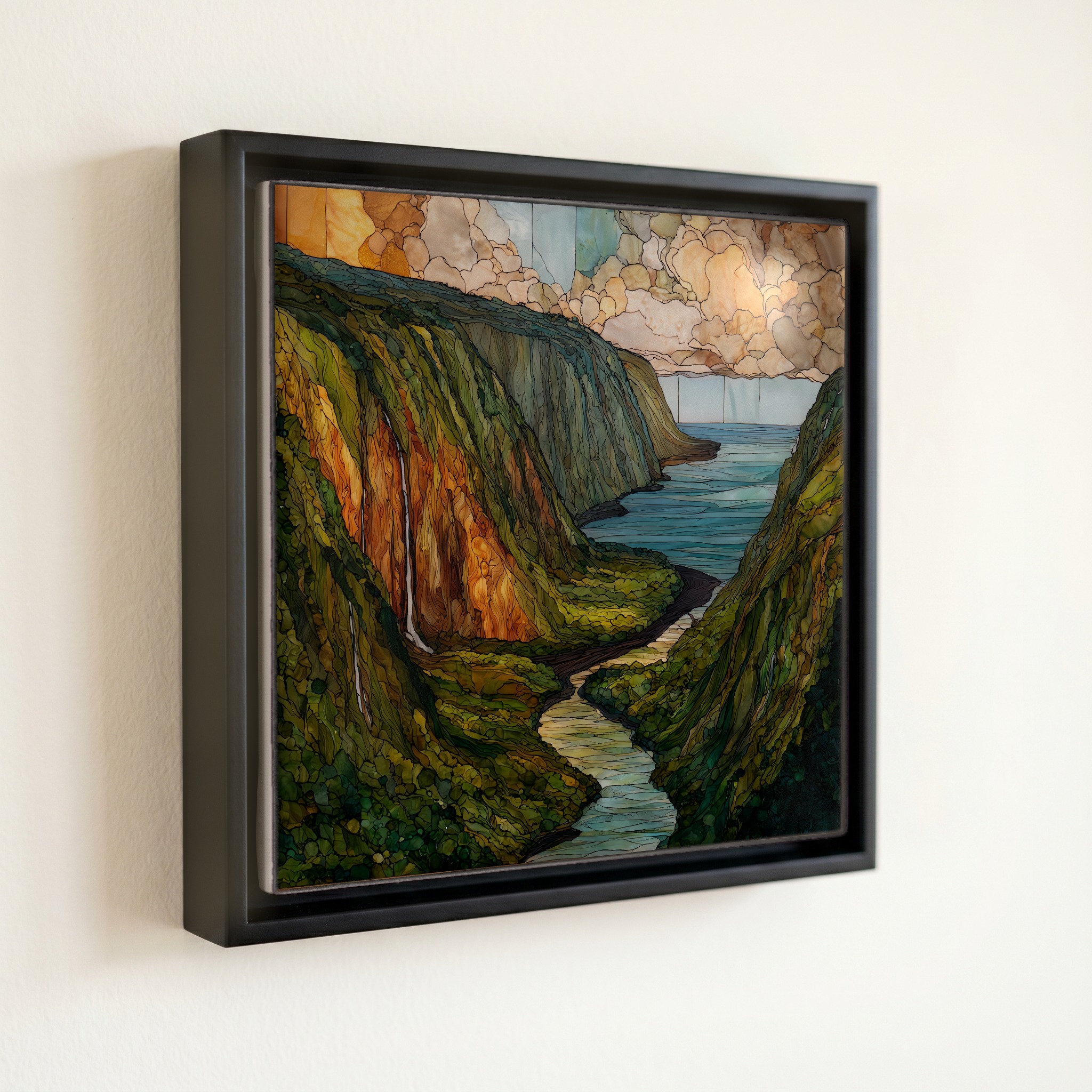
Above the linens, in a slim black surround.
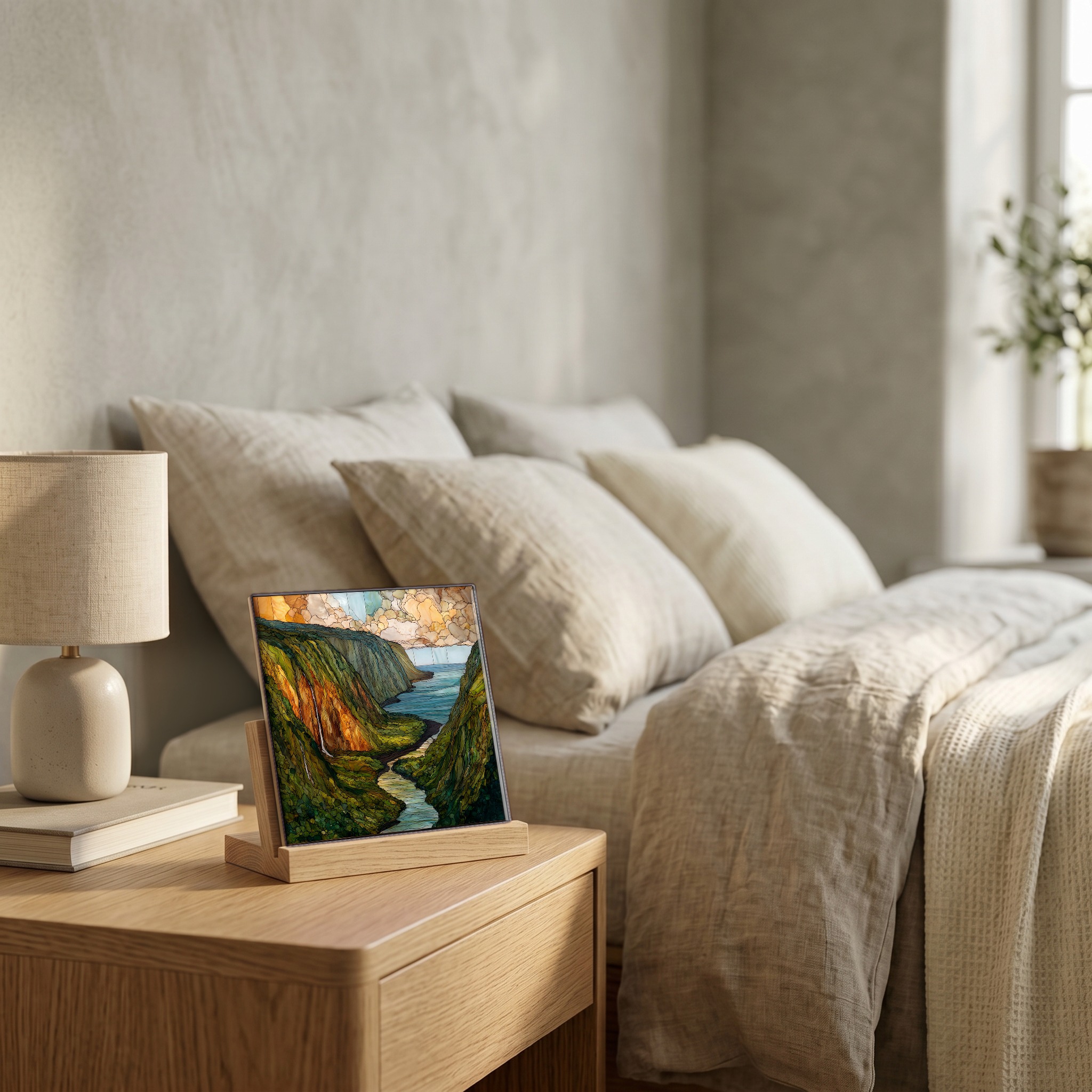
On the nightstand, on a light oak stand.
On a picture ledge, where the light comes in.
a note from the studio

A nine-mile walk in. The Muliwai Trail drops off the Waipiʻo lookout, crosses the stream, climbs the Z-switchbacks, traces the ridge across thirteen gulches, then falls back down to a black sand beach where Waimanu Stream meets the ocean. The walls rise two thousand feet on three sides. Nobody has lived here since the 1946 tsunami took the village. From above, the shape resolves into a green amphitheater closing around the quiet it kept, framed by water on the only open side.
from the studio
shown in a slim black floating frame · 6 × 6 in
— bring it home

Waimanu Aerial Big Island Ceramic Art Tile, on ceramic.

Each tile is finished by hand in our Knoxville studio. Artwork is slowly infused into the ceramic surface under high heat and pressure, and rests beneath a thin glossy finish. The colour lives in the surface, not on top of it.

What kind of piece?
One tile — square or rectangle.
How big?
the popular one — counter, shelf, nightstand
6 × 6 in · 15 cm · 1.6 lb
Surface finish
A clear glossy finish — the artwork reads as if under resin. Ideal for show-pieces and framed wall art.
How it sits
A hidden cleat — sits ¼″ proud of the wall.
$58
Hand-finished and shipped from our studio at the foot of the Smokies. On your wall in about ten days.
size
6 × 6 in
15 cm
weighs
1.6 lb
solid in the hand
surface
ceramic, hand-finished
art rests beneath a thin glossy finish
from
Knoxville, TN
our family studio, at the foot of the Smokies
— start a Coaster Set

Pick any four 4-inch tiles — National Parks you've been to, a Smokies set, the four seasons of one place. $ for a set of , cork-backed, ready to live on the table.
comes gift-ready
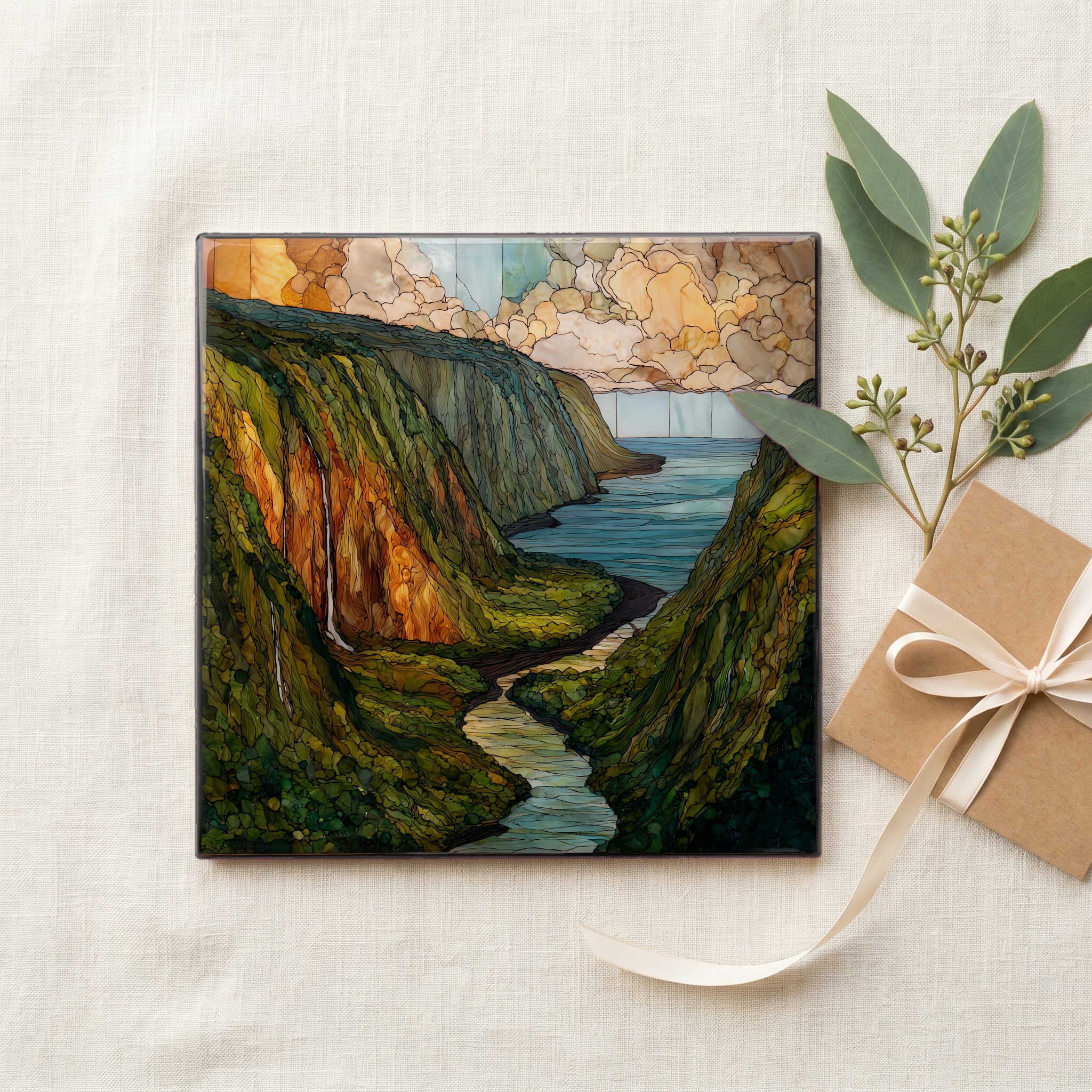
comes gift-ready

Each tile ships in a kraft box, tied with cream ribbon, with a handwritten note from the studio if you'd like to add one.
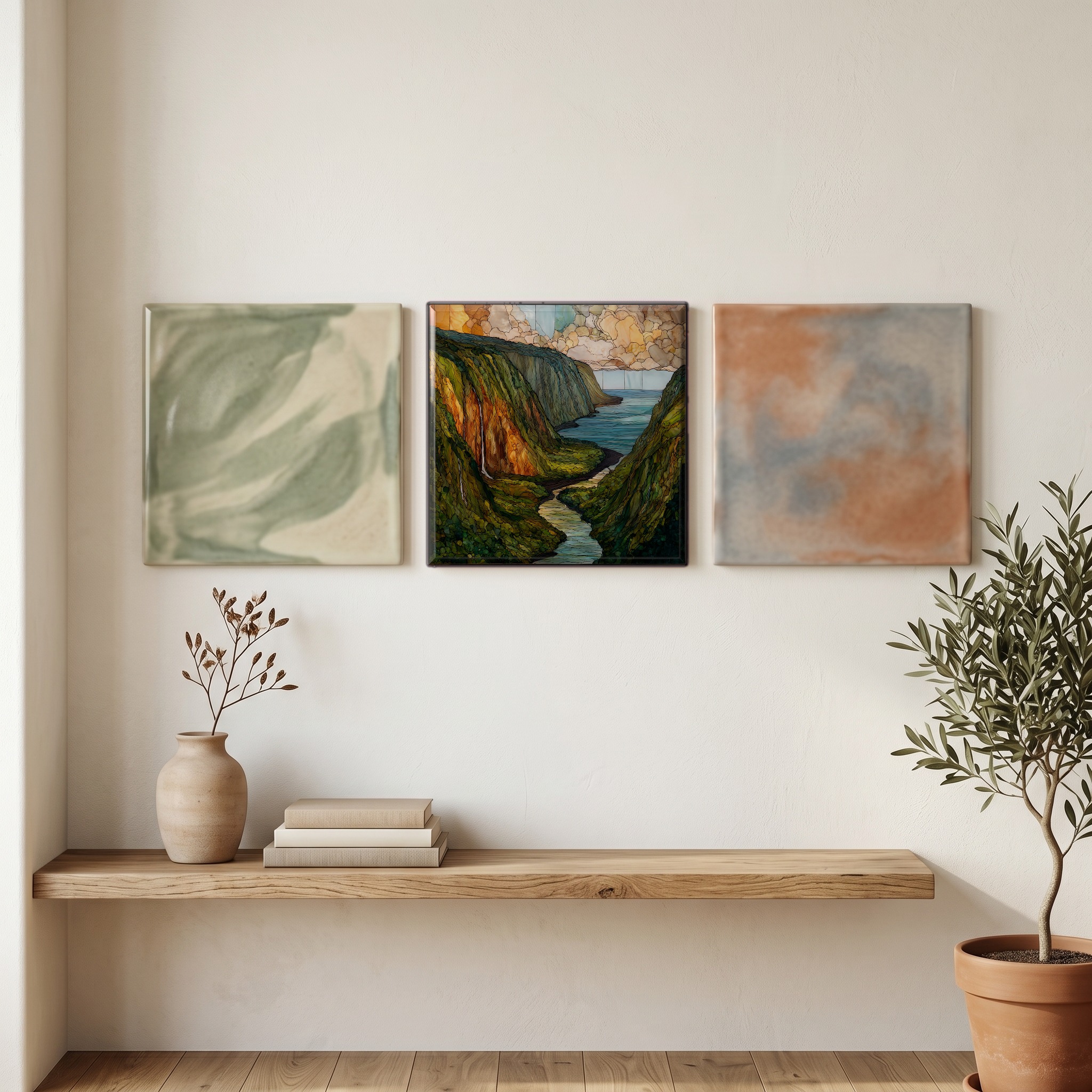
or build a grouping
or build a grouping

Three or five different vistas, hung together — a chapter of places you've been, or want to go.

about Waimanu Aerial Big Island Ceramic Art Tile

The place, in three passes.

A little of what's known, in case you fall down the rabbit hole — or want to go see it yourself.
the place

Waimanu Valley sits on the windward Hāmākua Coast of Hawaiʻi Island, in Hawaiʻi County. Cliffs of roughly 2,000 feet hem the valley on three sides; the fourth opens to the Pacific. The valley floor runs about a mile wide at the beach and reaches roughly two miles inland to Waiʻilikahi Falls, which drops some 300 feet down the back wall to a pool. Access is on foot only. The Muliwai Trail covers nine miles from the Waipiʻo Valley lookout, drops 1,200 feet to cross Waipiʻo Stream, climbs the Z-switchbacks, then traces the ridge across thirteen gulches before descending into Waimanu. The land is administered by the Hawaiʻi Division of Forestry and Wildlife.

the silence

The valley has been uninhabited since the April 1, 1946 Aleutian tsunami swept the Hāmākua coast and destroyed the small Hawaiian village on the Waimanu beach. Before that, kalo (taro) was farmed on the valley floor for generations, and loʻi terraces are still readable in the undergrowth. Today the only overnight presence is the small number of campers holding a permit from the Hawaiʻi Division of Forestry and Wildlife. There is no road into the valley, no cell signal, no resident population. By day, the sounds are the surf at the beach, the wind moving over the cliffs, and Waimanu Stream finding its way to the sea.

the visit

Camping permits for Waimanu are issued by the Hawaiʻi Division of Forestry and Wildlife and are free. Day-hiking is allowed without a permit, but the round trip from the Waipiʻo lookout is eighteen miles, with two long descents and two long climbs along the Muliwai Trail. The Waipiʻo Valley access road, which begins the route, has been closed to non-resident vehicles since February 2022; the descent now starts at the lookout above. Drinking water is filtered or treated from Waiʻilikahi Stream, and pit toilets are at the designated campsites. The drier window runs roughly June through September. The rest of the year, the gulches along the ridge run high and the trail closes without notice.

— informed by Hawaiʻi DLNR DOFAW
where
United States · Hāmākua District, Hawaiʻi County
elevation
0 m · 0 ft
position
20.1760° N · 155.6940° W
the neighborhood

What's nearby.

A handful of named places within an hour's walk or short drive. Some we've already painted; some we will.
7 km SE
Waipiʻo Valley
Hawaiian valley
10 km SE
Hiʻilawe Falls
waterfall
3 km S
Waiʻilikahi Falls
waterfall
12 km NW
Puʻu o Umi Natural Area Reserve
forest reserve
N
Waimanu Aerial Big Island Ceramic Art Tile
Waipiʻo Valley
Hiʻilawe Falls
Waiʻilikahi Falls
Puʻu o Umi Natural Area Reserve
common questions

What people ask.

A few questions we get about Waimanu Aerial Big Island Ceramic Art Tile — and about bringing the piece home.
about the place

Waimanu Valley is on the windward Hāmākua Coast of Hawaiʻi Island, about seven kilometers northwest of Waipiʻo Valley. The valley meets the Pacific at a black sand beach and is hemmed by cliffs of roughly 2,000 feet on three sides.

By foot only. The Muliwai Trail covers nine miles one way from the Waipiʻo Valley lookout, drops into Waipiʻo, crosses the stream, climbs the Z-switchbacks, then traces the ridge across thirteen gulches before descending into Waimanu. There is no road and no developed boat access.

Yes. Camping permits are free but required, issued by the Hawaiʻi Division of Forestry and Wildlife. Stays are capped at six nights with a two-night minimum. Day-hiking from the Waipiʻo lookout does not require a permit.

The April 1, 1946 Aleutian tsunami swept the Hāmākua coast and destroyed the small Hawaiian village on the Waimanu beach. The valley has not been permanently resettled. Before 1946, kalo (taro) was farmed across the valley floor for generations.

The walls rise roughly 2,000 feet on three sides of the valley. The fourth side opens to the Pacific. Waiʻilikahi Falls drops about 300 feet down the back wall to a pool on the valley floor.

About seven kilometers by air. By foot, the Muliwai Trail covers nine miles between the Waipiʻo Valley lookout and the Waimanu beach. The two valleys are separated by a high ridge cut by thirteen gulches.

June through September is the drier window. The rest of the year, the gulches along the Muliwai Trail run high after rain and the trail closes without notice. Permits are needed any season the trail is open.

about the piece in your home

It has been a meaningful gift for customers with roots on Hawaiʻi Island. Waimanu is one of the harder-earned places in the state, the kind of valley locals talk about and few have actually walked into. A Small or Medium with a handwritten note from the studio carries that recognition well.

The piece reads coastal-modern, biophilic, and tropical jewel-tone. The deep greens and blacks pair with rattan, raw teak, and warm-white walls. It also sits well in a moody-tropical interior where the cliffs and ocean carry the contrast.

Yes. Both directions are running strong in 2026. The aerial framing reads as biophilic without the usual leaf-and-fern shorthand, and the green-and-sea-glass palette sits inside the current coastal-modern range without leaning beachy or pastel.

Above a standard sofa, the Large is the single-tile choice and a four-tile Mural fills the wall properly. Above a console or entry table, the Medium reads at eye level and a stacked pair of Smalls also works. For a feature wall, consider a nine-tile Mural.

Yes, in either of the wet-area finishes. Dura Satin keeps a soft sheen and resists scratches on a backsplash or shower wall. Matte gives the same protection without sheen. Glossy is for framed wall pieces and dry rooms only.

A soft microfibre cloth and water. No abrasive sponges, no ammonia or bleach-based cleaners. The colour lives in the ceramic surface beneath a thin glossy finish, so day-to-day cleaning is the same as any sealed tile.

Yes. The Waimanu aerial is a Wender Studios original by Reid Wender, the curator. We do not license or resell artwork from other studios. Every tile in the WenderVista atlas is made in our studio in Knoxville, Tennessee.

if this one stayed with you

A few you might also love.

Hand-picked by the eye that found Sorapis. Same air, same kind of quiet.