Wender·Vista
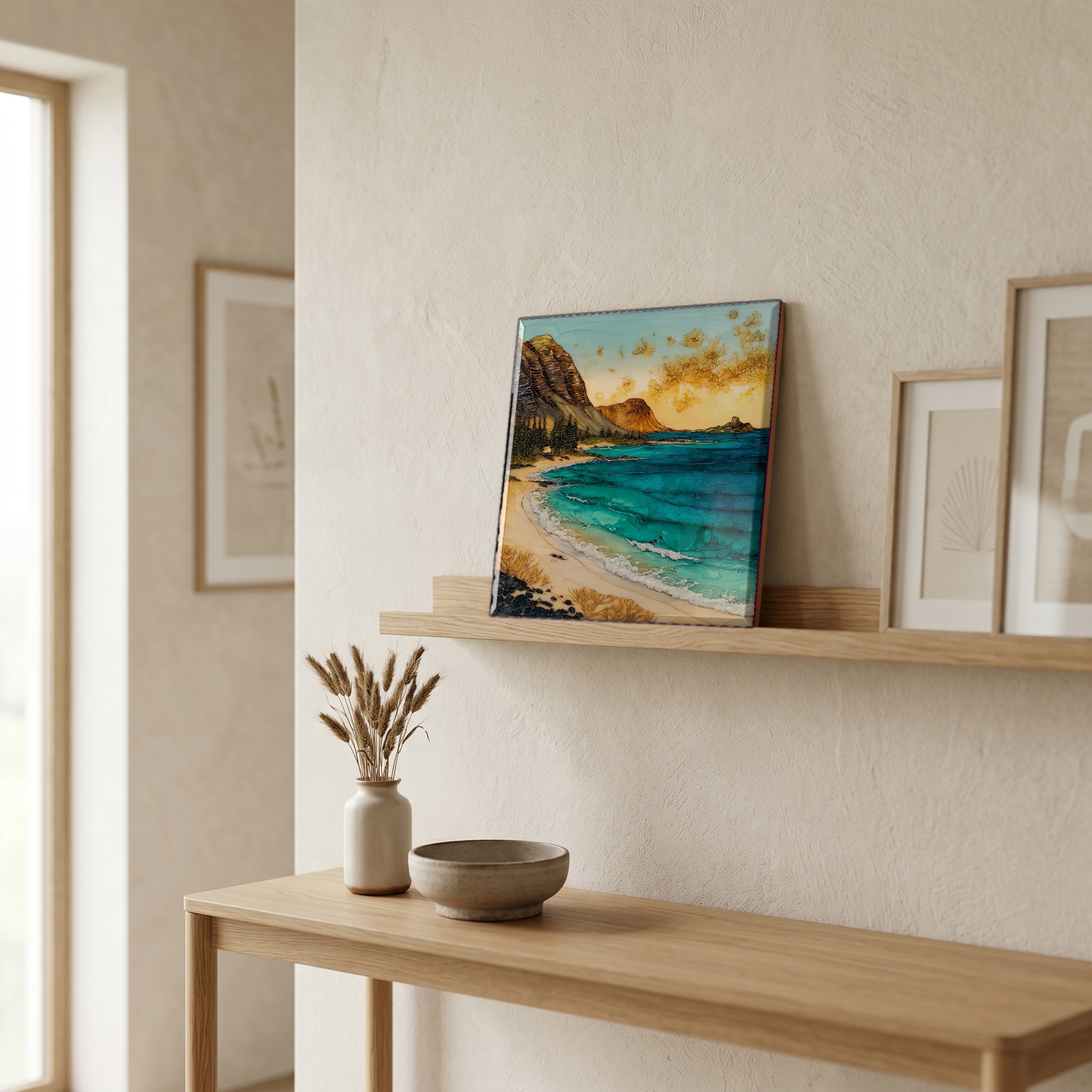
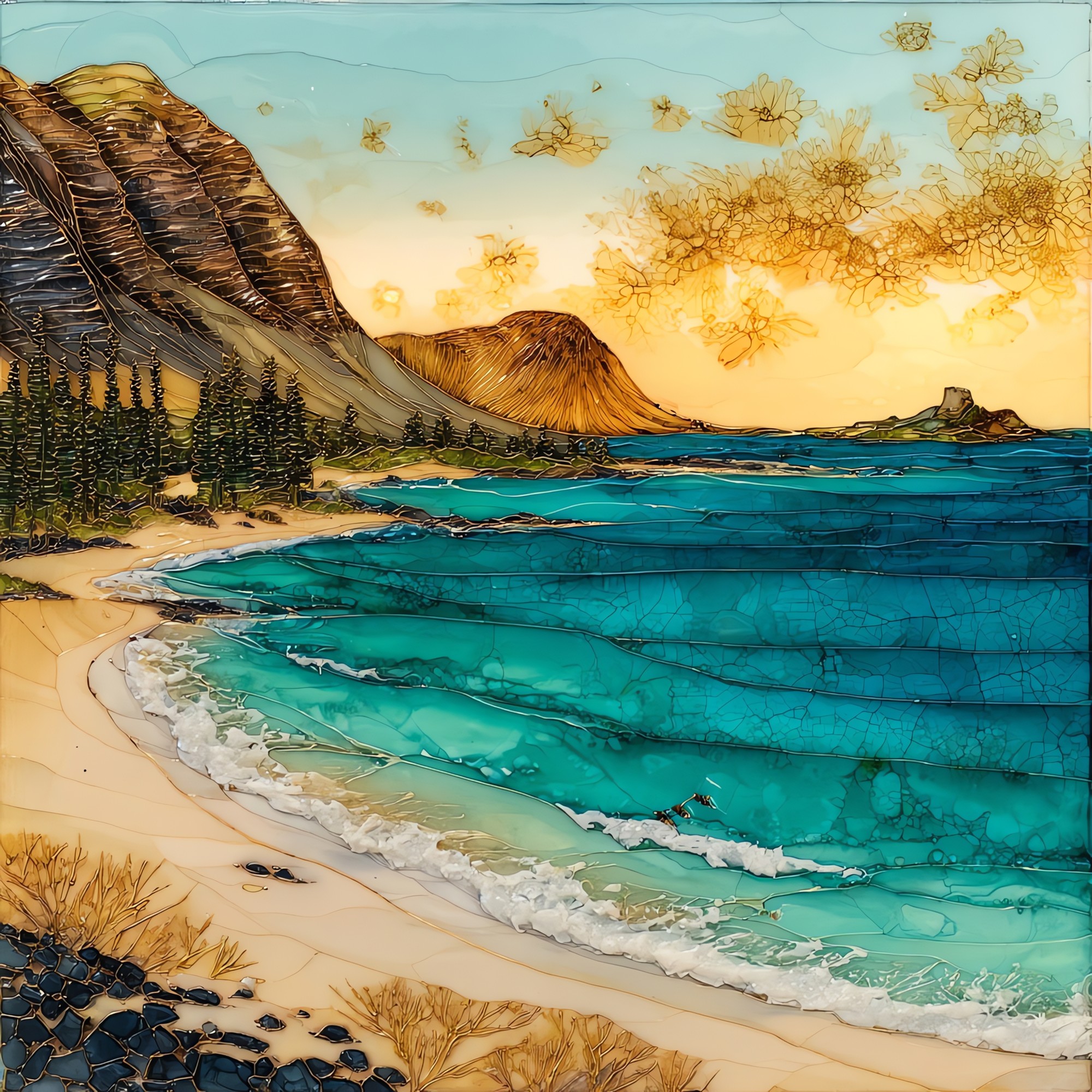
Waimanalo Makapuu Oahu Ceramic Art Tile
shown on ceramic, 12-inch tileHawaii · United States
on the windward coast of Oʻahu, southeast of Honolulu

Waimanalo Makapuu Oahu Ceramic Art Tile

the morning the sun walks straight out of the sea.

Where it lives

Not only on a wall.

A small tile on the nightstand catching the morning. A larger one above the fire. Yours, wherever you spend the slow hours.
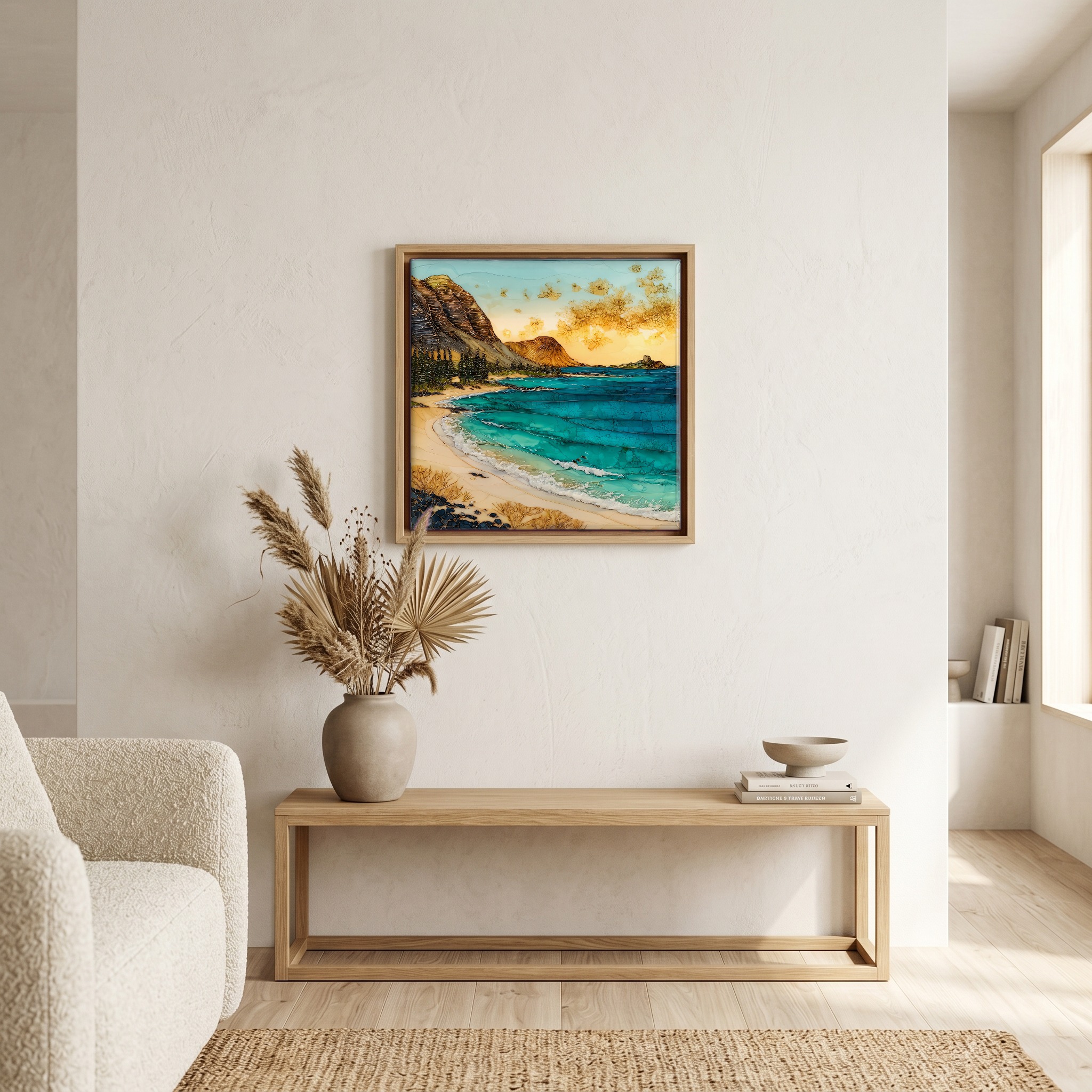
Above the bench, in a warm oak surround.
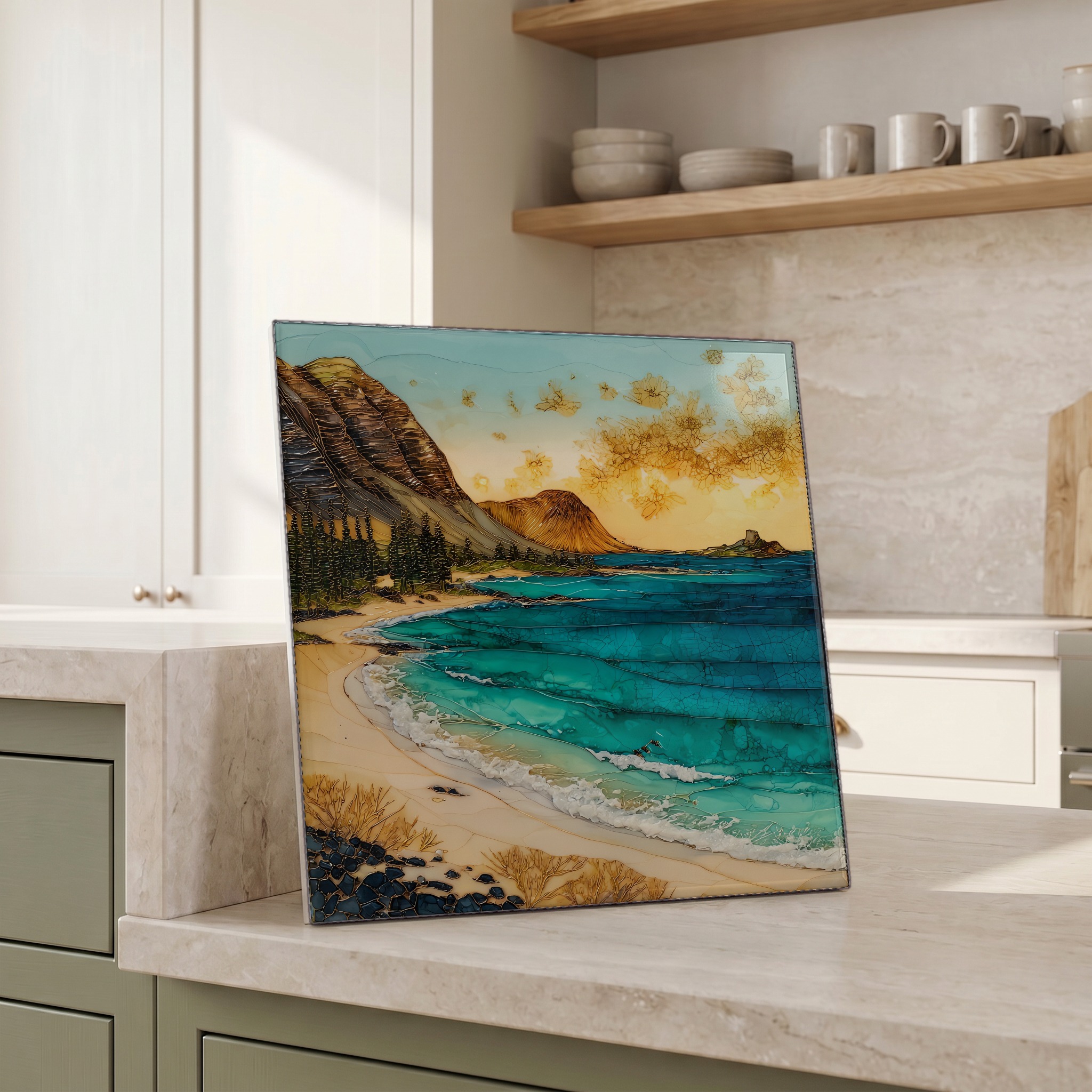
Beside the kettle, propped on the counter.
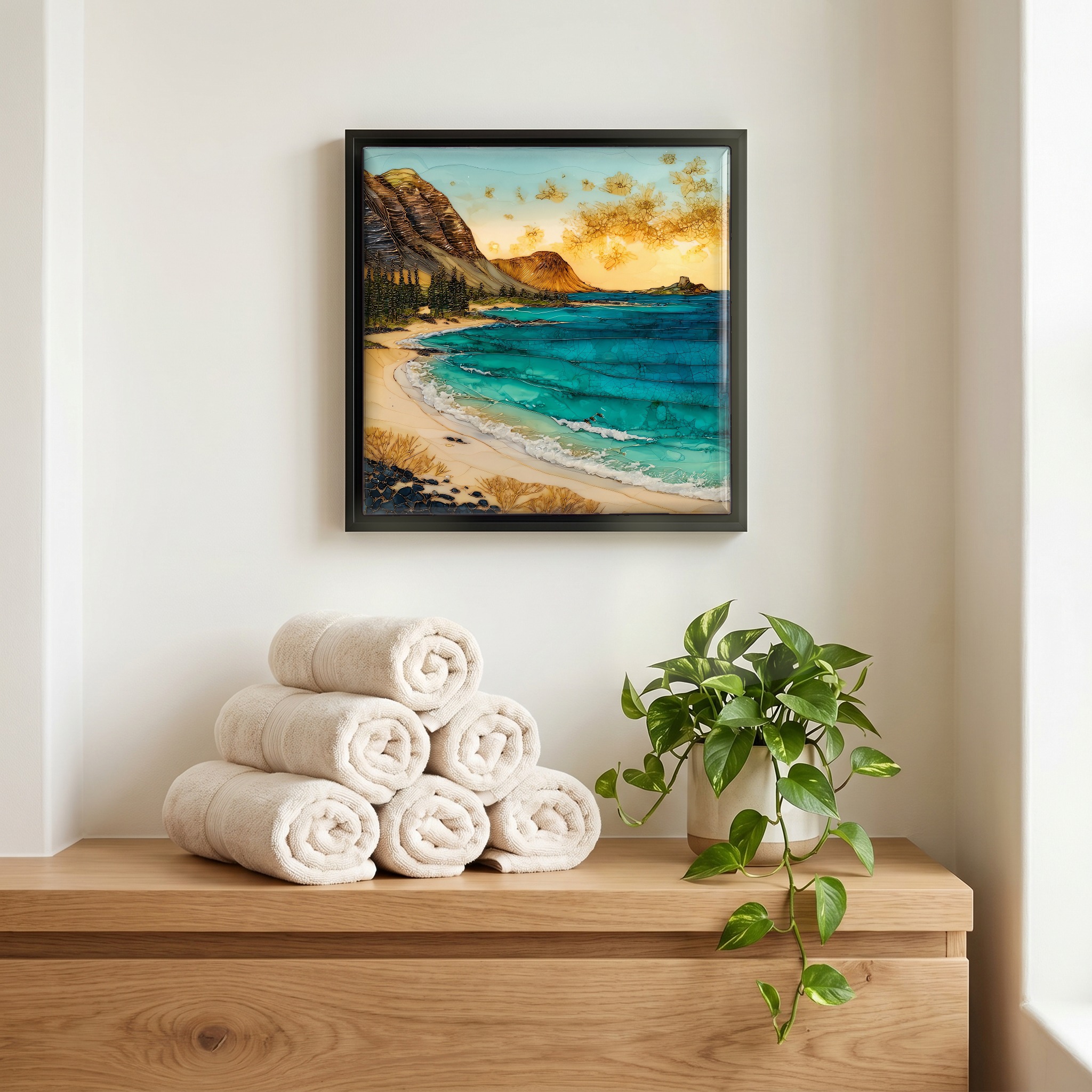
Above the linens, in a slim black surround.
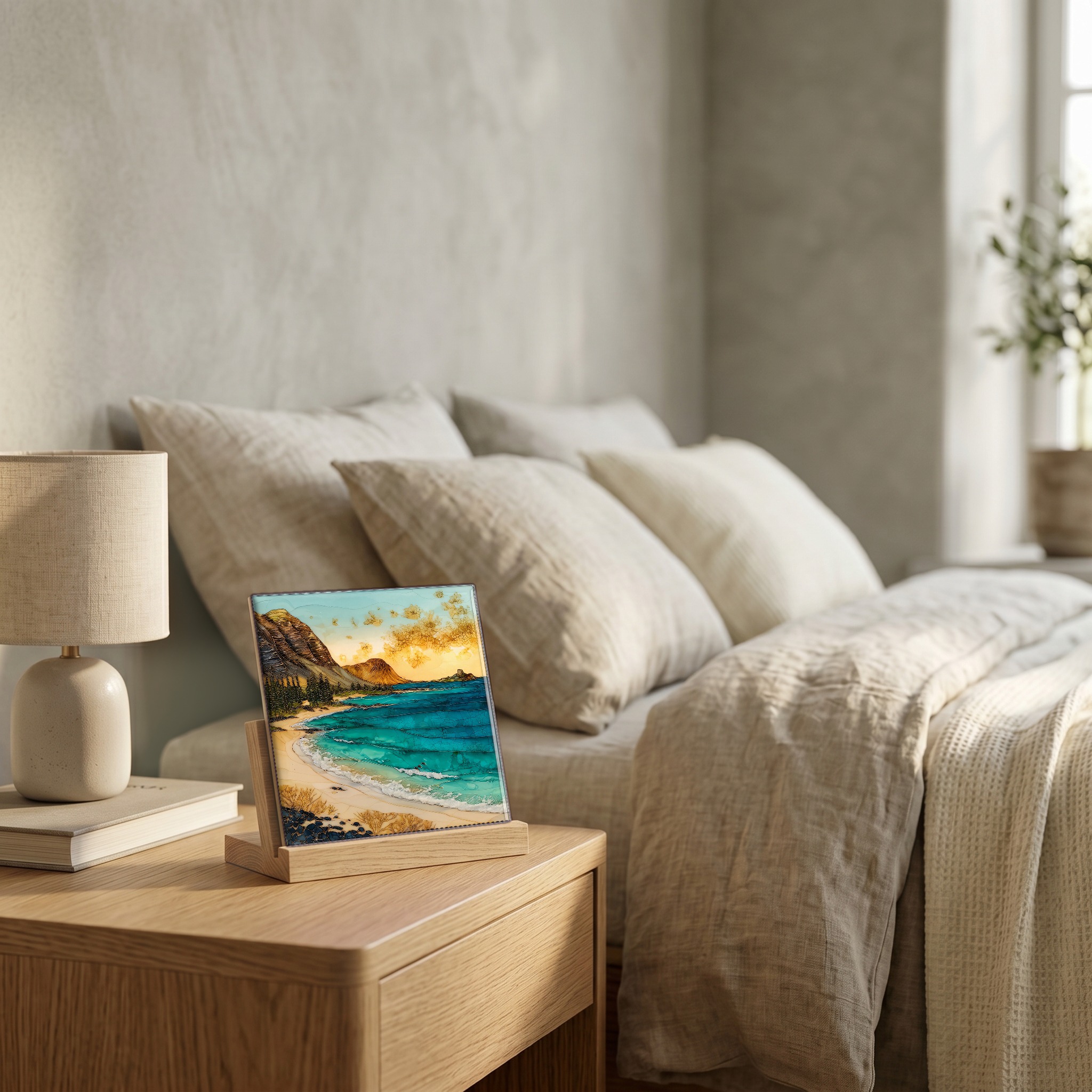
On the nightstand, on a light oak stand.
On a picture ledge, where the light comes in.
a note from the studio

The long sand on Oʻahu's windward side, the one that runs north from Makapuʻu Point. Five miles of white beach, with the Koʻolau range standing close behind it, and two small islands offshore: Mānana and Kāohikaipu. The trade winds come ashore here most days, which is why the water stays the colour it does. Up the road at the Makapuʻu lookout, December through May, people pull off to watch the humpbacks coming down from Alaska. Locals call this side of the island the country side, and most days the name fits.
from the studio
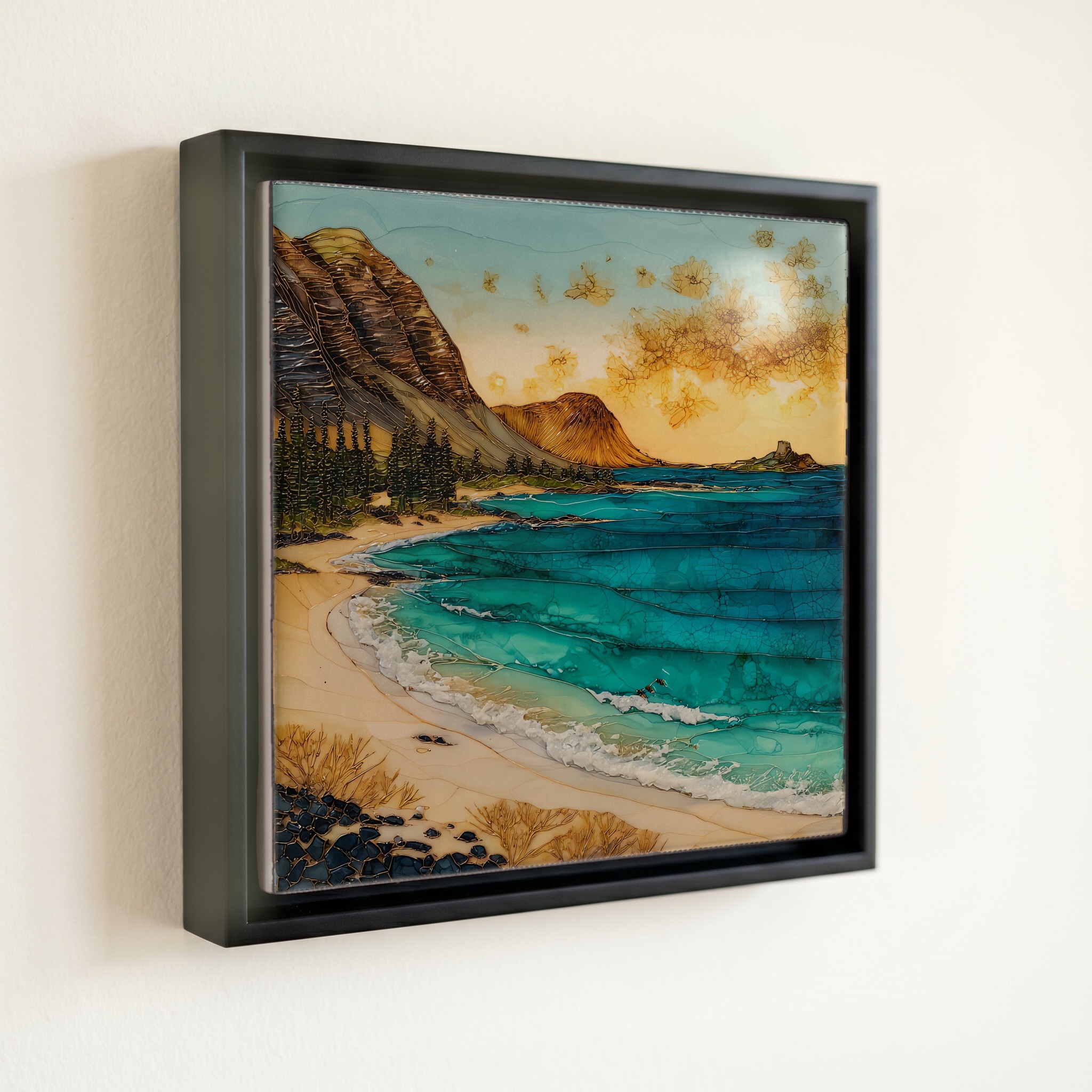
shown in a slim black floating frame · 6 × 6 in
— bring it home

Waimanalo Makapuu Oahu Ceramic Art Tile, on ceramic.

Each tile is finished by hand in our Knoxville studio. Artwork is slowly infused into the ceramic surface under high heat and pressure, and rests beneath a thin glossy finish. The colour lives in the surface, not on top of it.

What kind of piece?
One tile — square or rectangle.
How big?
the popular one — counter, shelf, nightstand
6 × 6 in · 15 cm · 1.6 lb
Surface finish
A clear glossy finish — the artwork reads as if under resin. Ideal for show-pieces and framed wall art.
How it sits
A hidden cleat — sits ¼″ proud of the wall.
$58
Hand-finished and shipped from our studio at the foot of the Smokies. On your wall in about ten days.
size
6 × 6 in
15 cm
weighs
1.6 lb
solid in the hand
surface
ceramic, hand-finished
art rests beneath a thin glossy finish
from
Knoxville, TN
our family studio, at the foot of the Smokies
— start a Coaster Set

Pick any four 4-inch tiles — National Parks you've been to, a Smokies set, the four seasons of one place. $ for a set of , cork-backed, ready to live on the table.
comes gift-ready
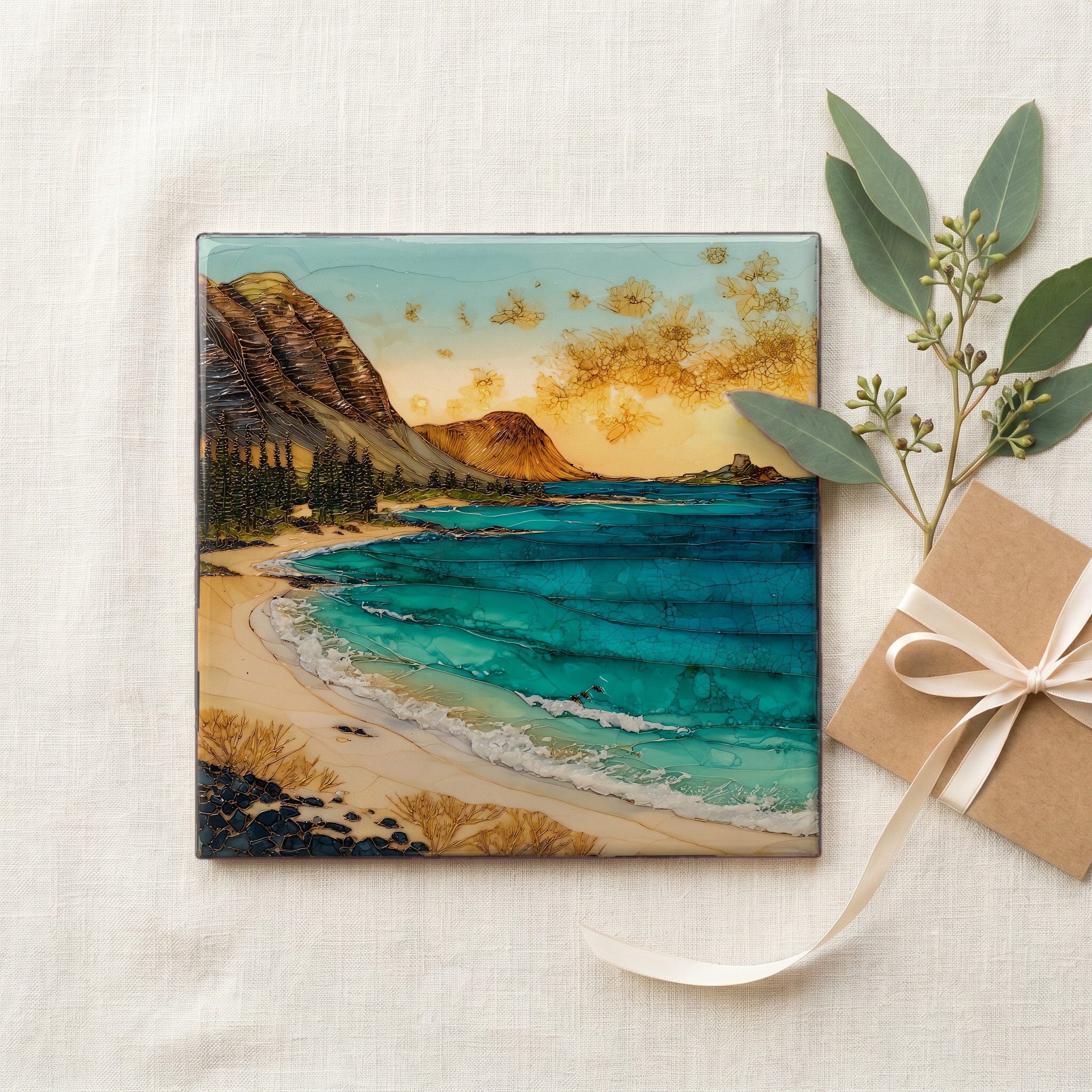
comes gift-ready

Each tile ships in a kraft box, tied with cream ribbon, with a handwritten note from the studio if you'd like to add one.
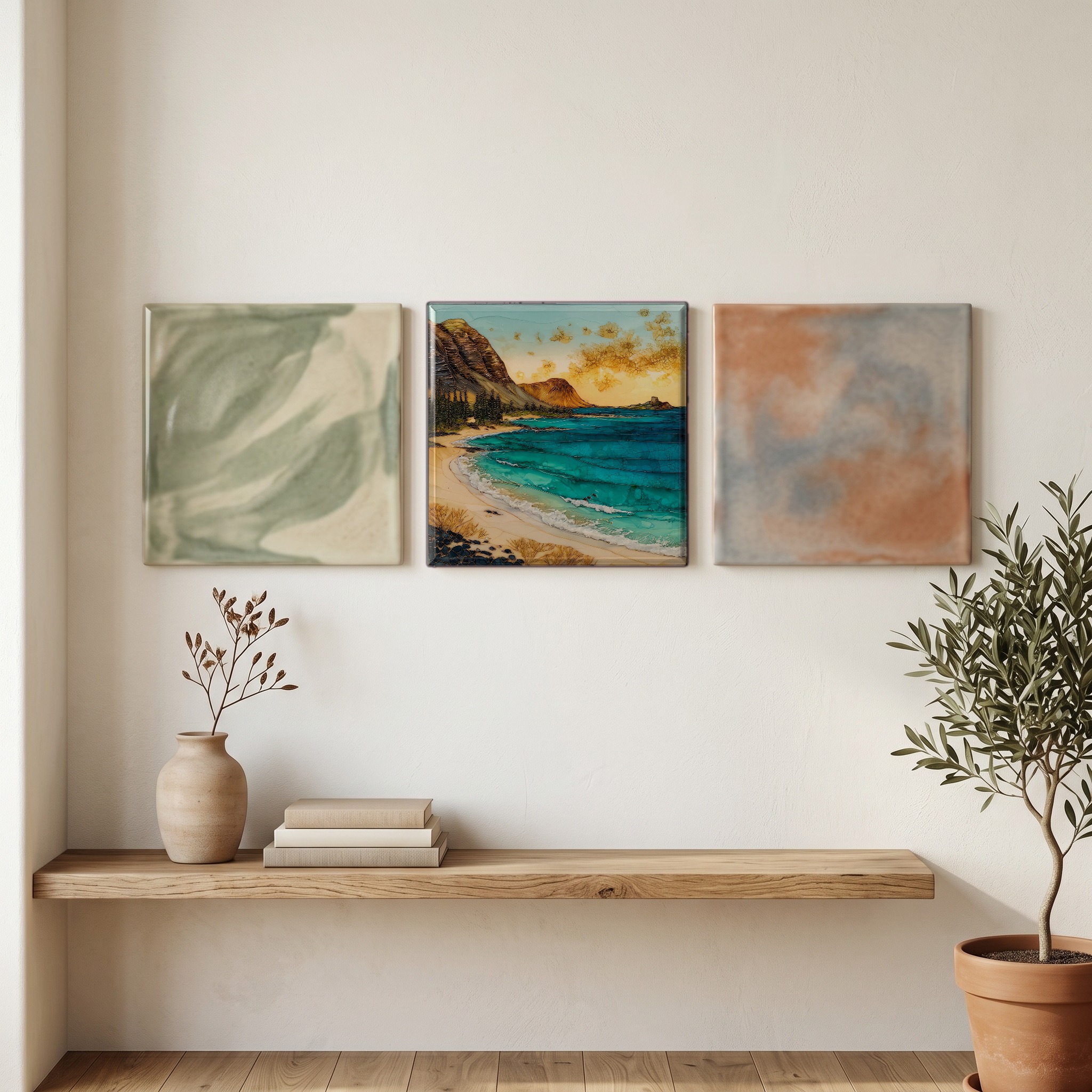
or build a grouping
or build a grouping

Three or five different vistas, hung together — a chapter of places you've been, or want to go.

about Waimanalo Makapuu Oahu Ceramic Art Tile

The place, in three passes.

A little of what's known, in case you fall down the rabbit hole — or want to go see it yourself.
the place

Waimanalo and Makapuʻu sit on the windward, southeastern corner of Oʻahu, about a thirty-minute drive east of Honolulu over the Pali. Waimanalo Bay is the longest unbroken stretch of white sand on the island, running close to five miles between the Koʻolau cliffs and the Pacific. At its southern end the land turns inland and rises to Makapuʻu Head, a 647-foot headland topped by the Makapuʻu Point Light, the first U.S. lighthouse a ship from California sees as it makes Hawaiian waters. The whole arc is bound by the Kalanianaʻole Highway and looks out at two small offshore islets, Mānana and Kāohikaipu, both designated state seabird sanctuaries.

the water

The water inside Waimanalo Bay holds the turquoise it does because the bay is shallow, the sand is unusually white, and the trade winds come ashore most afternoons and keep the surface moving. Two small islands sit a half-mile offshore. The closer one, Mānana, takes its English name, Rabbit Island, from the introduced rabbit colony that lived there into the 1990s before being removed to protect the wedge-tailed shearwaters that nest in its tuff slopes. Kāohikaipu, lower and darker, is mostly basalt. Both islets are designated state seabird sanctuaries, and green sea turtles move regularly through the reefs along this stretch of coast.

the visit

The Makapuʻu Point Lighthouse Trail is the way most visitors meet this coast. The paved access road climbs about 500 feet over a mile to a viewing platform above the light station, which the U.S. Lighthouse Service first lit in 1909 with a Fresnel hyperradiant lens, the largest of its kind in any American lighthouse. From the lookout the eye runs north along Waimanalo Bay and out to the two seabird islands. Between December and May, North Pacific humpback whales calve in the warm channel below, and the lookout is one of the most reliable shore-based whale-watching spots on the island. The trail is open daily; parking off the Kalanianaʻole Highway fills early on clear weekends.

where
United States · Oʻahu, Honolulu County, Hawaii
within
Kaiwi State Scenic Shoreline
position
21.3100° N · 157.6490° W
the neighborhood

What's nearby.

A handful of named places within an hour's walk or short drive. Some we've already painted; some we will.
6 km N
Lanikai Beach
white-sand beach
8 km N
Kailua Beach
white-sand beach
3 km N
Bellows Beach
white-sand beach
3 km SW
Sandy Beach
bodyboarding beach
6 km SW
Hanauma Bay
marine reserve
5 km SW
Koko Crater
tuff cone
N
Waimanalo Makapuu Oahu Ceramic Art Tile
Lanikai Beach
Kailua Beach
Bellows Beach
Sandy Beach
Hanauma Bay
Koko Crater
common questions

What people ask.

A few questions we get about Waimanalo Makapuu Oahu Ceramic Art Tile — and about bringing the piece home.
about the place

Waimanalo Beach runs along the windward, southeastern coast of Oʻahu, roughly twenty miles east of downtown Honolulu by way of the Kalanianaʻole Highway. The bay stretches close to five miles between Bellows Field in the north and Makapuʻu Head in the south, the longest unbroken white-sand beach on the island.

The bay is shallow, sandy, and bright. Sunlight reflects off the unusually white coral sand on the seafloor and back up through clear water, which reads as pale turquoise to the eye. The trade winds that come ashore here most afternoons keep the surface moving and the colour shifting.

Mānana and Kāohikaipu. Mānana, sometimes called Rabbit Island in English, is a volcanic tuff cone about a half-mile from shore. Kāohikaipu sits just south of it, lower and darker. Both are designated Hawaiʻi state seabird sanctuaries, with nesting wedge-tailed shearwaters and brown noddies.

North Pacific humpback whales arrive in Hawaiian waters around November and stay through May to calve and nurse before returning to Alaskan feeding grounds. The Makapuʻu Point Lighthouse Trail, with its high paved lookout above the Kaiwi Channel, is one of the most reliable shore-based whale-watching spots on Oʻahu.

The Makapuʻu Point Lighthouse Trail is a paved access road that climbs about 500 feet over one mile, two miles round trip from the parking area off the Kalanianaʻole Highway. It is open to walkers and strollers daily and ends at a viewing platform above the 1909 light station, which is not open to the public.

Waimanalo Beach is generally one of the calmer swimming beaches on Oʻahu, with a long shallow sandy bottom and a weaker shorebreak than the south or north shore. Conditions can change with trade-wind swell and winter storms, and lifeguards are on duty at Waimanalo Bay Beach Park and Sherwood Forest.

Waimanalo means "potable water" in Hawaiian, from wai (water) and manalo (sweet or potable). The name points to the fresh spring water that historically rose along this stretch of windward coast and made the area liveable long before the modern town and military installations took shape.

about the piece in your home

It works well as that kind of gift. The windward coast holds a strong place attachment for anyone who grew up there, and the piece keeps the bay, the Koʻolau line, and the two islands in one frame. A Small or Medium with a handwritten note from the studio is the size most often asked for.

The piece sits naturally in coastal-modern, biophilic, and Pacific-Island interiors. The aqua and white sand register reads alongside rattan, oak, linen, and washed-blue palettes. It also holds its own in a more saturated room, against jewel-toned navy or terracotta walls, because the artwork carries its own pigment density rather than borrowing the wall's.

Yes. Coastal-modern and Hawaiian-modern interiors have moved away from generic beach-house pastels toward place-specific imagery: a named bay, a named lighthouse, a real horizon. The Waimanalo and Makapuʻu pairing reads as both regionally specific and visually quiet enough to live with daily.

Above a standard sofa, a single Large or a 4-tile Mural reads at the right scale. Above a console table or a long entry runner, a 9-tile Mural is the format most often asked for, since the long horizontal arc of Waimanalo Bay sits well across a wide composition. A Medium works above a smaller console or stair landing.

Yes, with the Dura Satin or Matte finish. The colour is slowly infused into the ceramic surface under high heat and pressure, beneath a thin protective layer, so the piece holds up to humidity, splash, and routine cleaning. The standard Glossy finish is for framed wall art, not for splash zones.

A soft microfibre cloth and clean water. The ceramic surface is non-porous, so dust wipes off and fingerprints lift with a damp cloth. Skip ammonia, alcohol-based cleaners, and abrasive pads; they are not needed and over time will dull the surface finish.

Yes. Every WenderVista piece is a Wender Studios original, painted in our distinctive stained-glass and alcohol-ink visual language and slowly infused into the ceramic surface in-house. We do not license artwork to or from other studios, and the same eye sits behind every place in the WenderVista atlas.

if this one stayed with you

A few you might also love.

Hand-picked by the eye that found Sorapis. Same air, same kind of quiet.