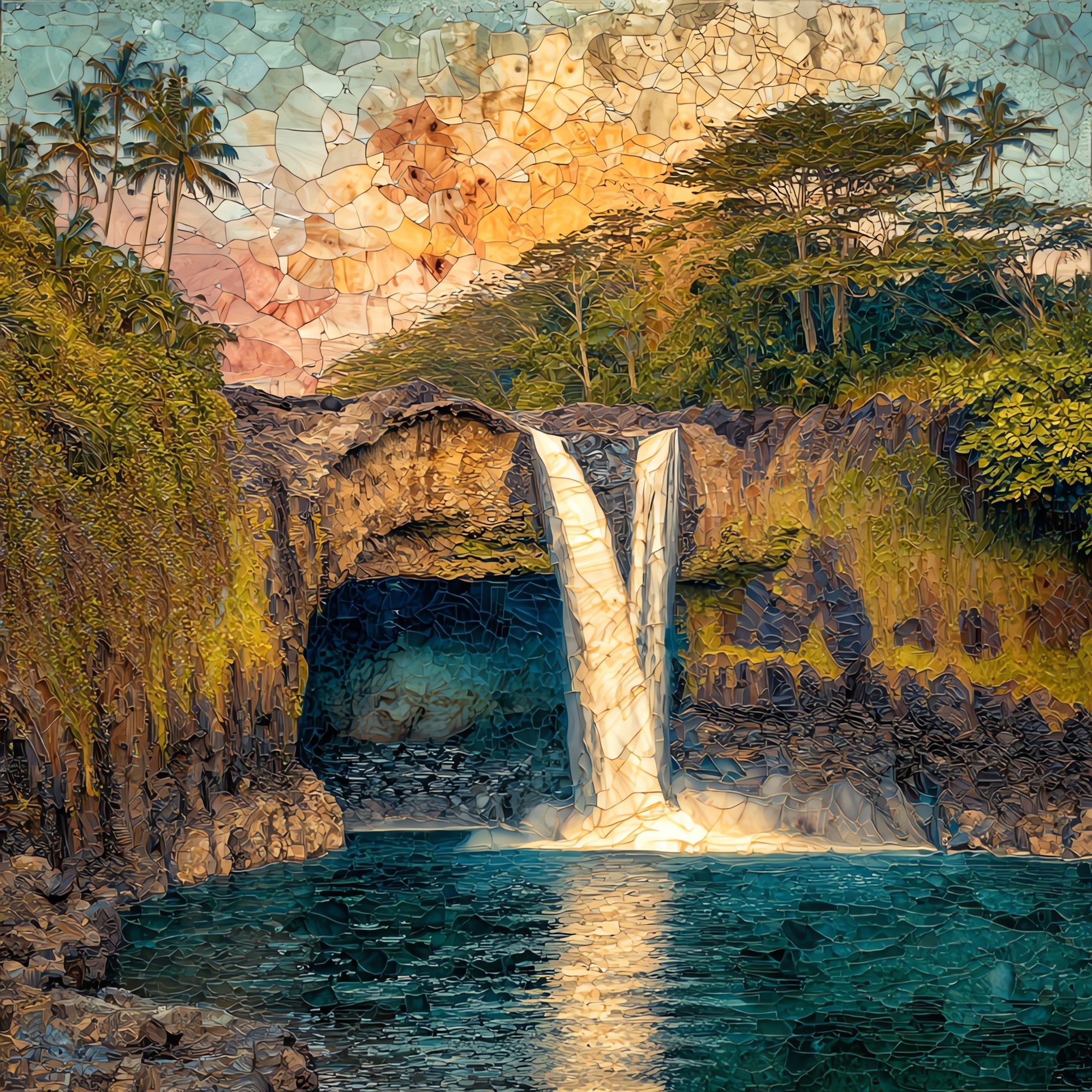
Wailua Falls Hana Maui Ceramic Art Tile
— — the curtain at mile forty-five.
Not only on a wall.


“Eighty feet of water at the side of the Hāna Highway, about six miles past Hāna town on the way to Kīpahulu. The road bends and the curtain is just there. No hike, no trailhead, nothing to find. The pool below catches the light most strongly at midday, when the canopy isn't shading it. Most rental cars stop. Most drivers don't get out long. The locals know to come back after a rain.
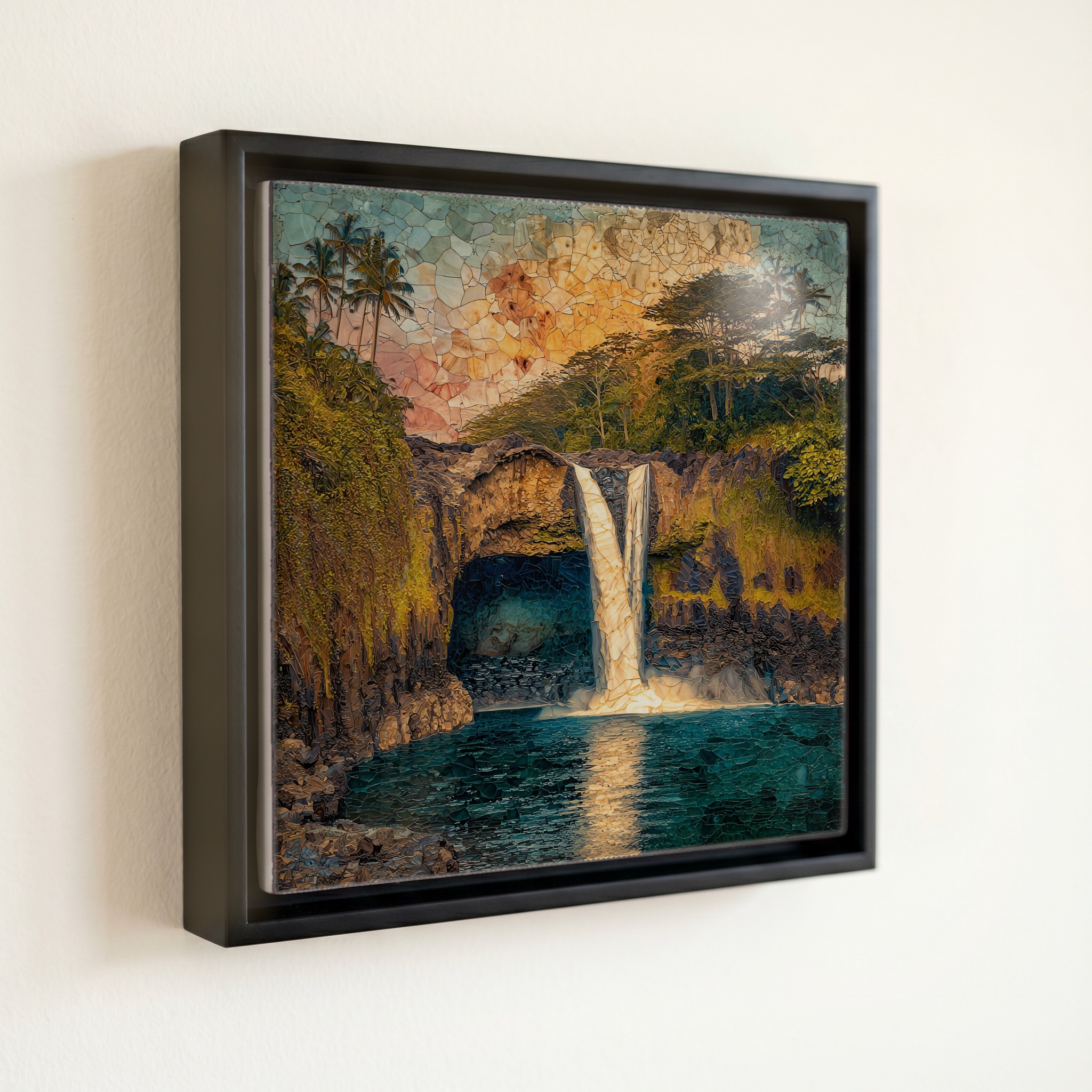
Wailua Falls Hana Maui Ceramic Art Tile, on ceramic.
Each tile is finished by hand in our Knoxville studio. Artwork is slowly infused into the ceramic surface under high heat and pressure, and rests beneath a thin glossy finish. The colour lives in the surface, not on top of it.
Pick any four 4-inch tiles — National Parks you've been to, a Smokies set, the four seasons of one place. $ for a set of , cork-backed, ready to live on the table.

Each tile ships in a kraft box, tied with cream ribbon, with a handwritten note from the studio if you'd like to add one.

Three or five different vistas, hung together — a chapter of places you've been, or want to go.
The place, in three passes.
Wailua Falls is on the eastern flank of Maui, in the rural Hāna district of Maui County, Hawaii. The water drops roughly 80 feet along the south coast of East Maui, off Hawaii Route 31 between the town of Hāna and the Kīpahulu District of Haleakalā National Park. Hāna town, population around 1,200, is the largest settlement on this coast and the conventional turnaround point for the day-trip drive from Kahului, roughly 52 miles to the northwest by the original 1926 Hāna Highway alignment. Wailua Falls is one of the last named falls before the road narrows further toward Kīpahulu and the ʻOheʻo Gulch pools, sometimes called the Seven Sacred Pools.
East Maui sits in the path of the northeast trade winds, which lift moist Pacific air against the windward slopes of Haleakalā, the 10,023-foot shield volcano that makes up most of the island. The orographic rainfall this produces ranks among the heaviest on Earth: parts of the windward slope receive over 300 inches a year. Dozens of short, steep watercourses drain that rainfall back down to the ocean across just a few miles of basalt cliff. Wailua Falls is among the most easily seen of them, plunging directly to a small basalt pool just beyond the road shoulder. Its volume rises and falls on whatever rain came through the week before, which is why it can look so different between mornings.
The Hāna Highway runs roughly 52 miles from Kahului to Hāna town along the windward coast of Maui, with more than 600 curves and 59 one-lane bridges; most of those bridges date to the original 1926 alignment. Wailua Falls sits about six miles past the Hāna town turnoff at approximately mile marker 45 on the Route 31 continuation toward Kīpahulu. There is no trail. The view is from the shoulder, looking straight at the 80-foot drop into a basalt-lined pool. Swimming is sometimes possible at low water but is not advised after rain; flash floods on East Maui watercourses arrive without warning and have killed visitors at nearby pools. Most drivers continue another five miles to the Kīpahulu District of Haleakalā National Park, where ʻOheʻo Gulch and the Pipiwai Trail begin.