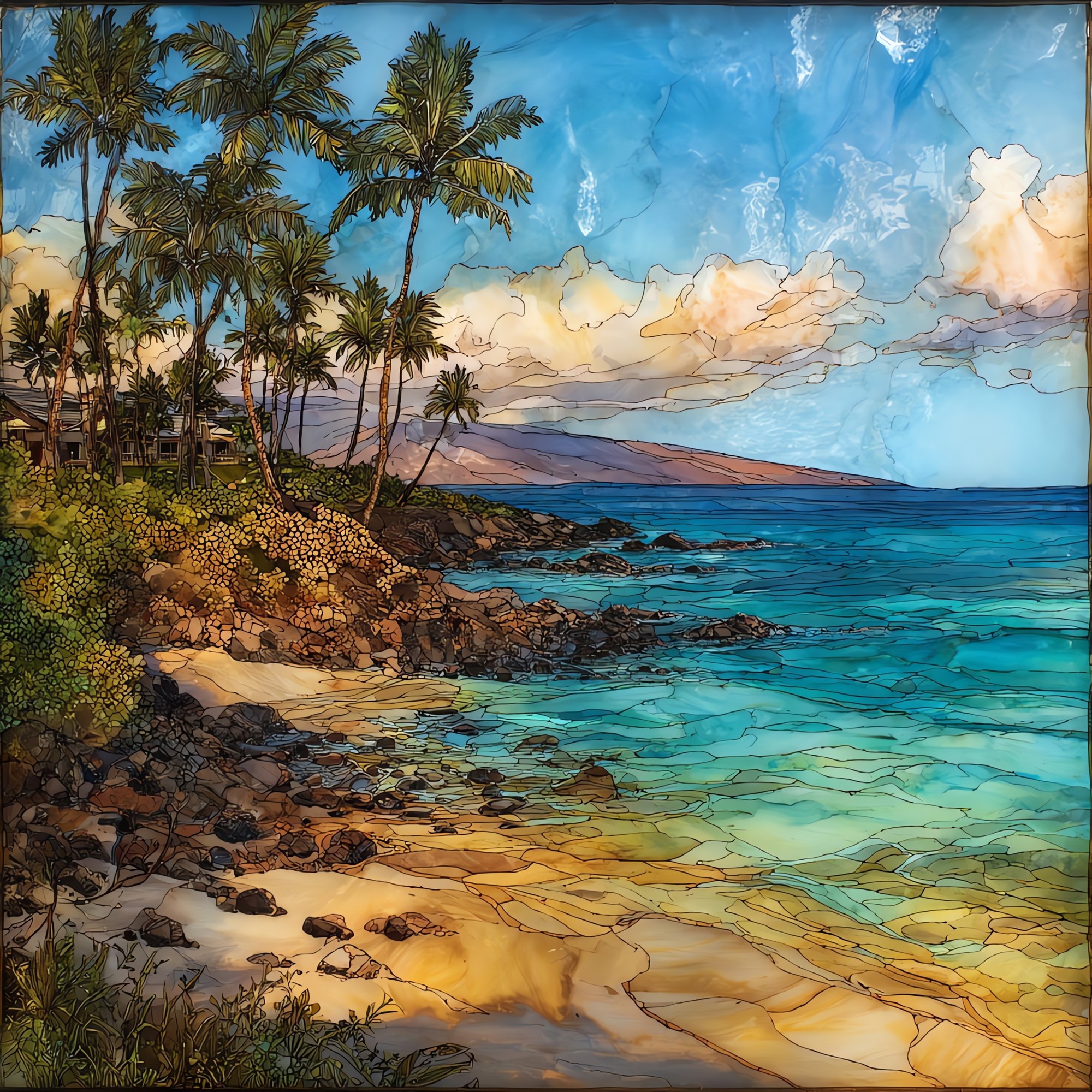
Wailea Coast Morning Maui Ceramic Art Tile
— the hour before the trades come up.
Not only on a wall.
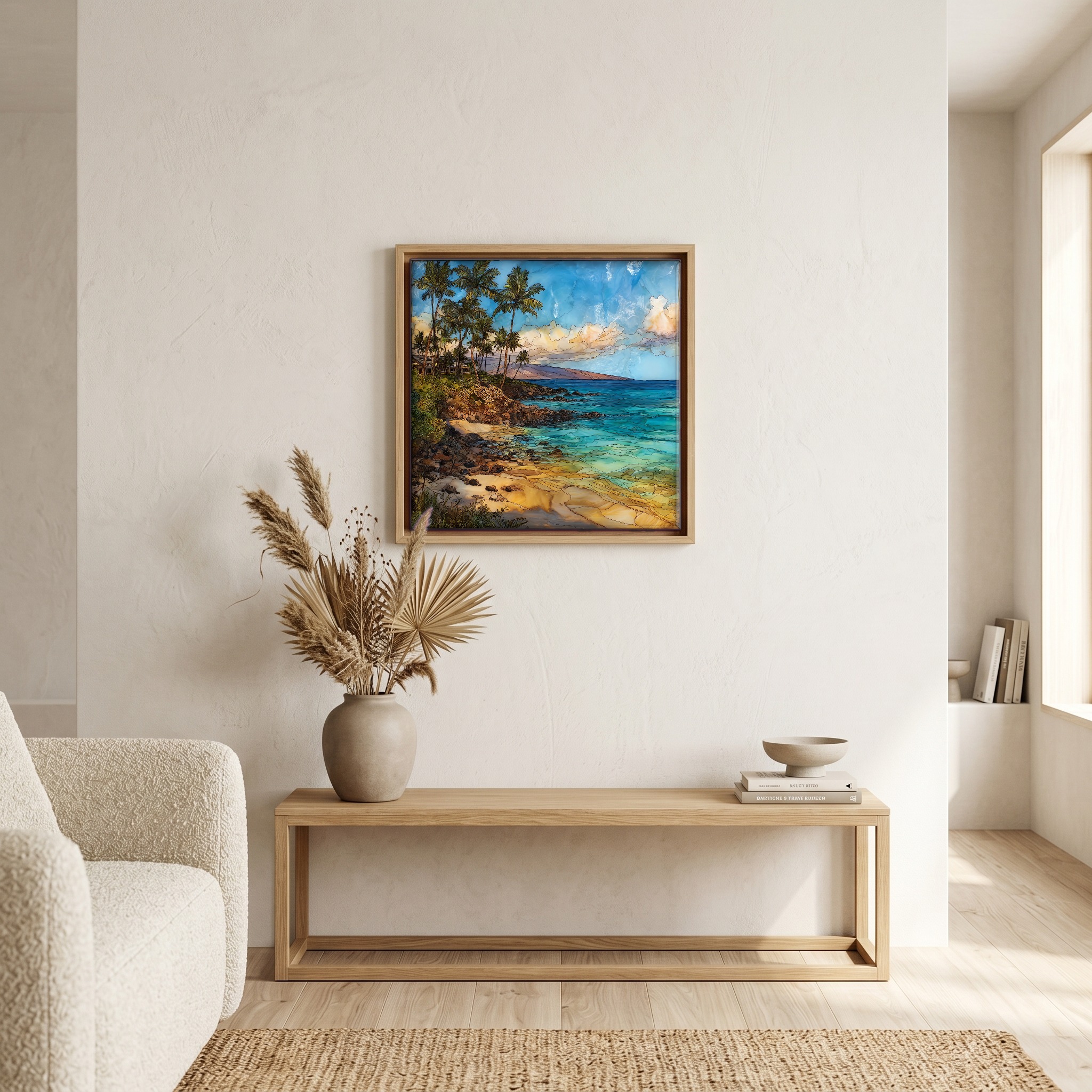
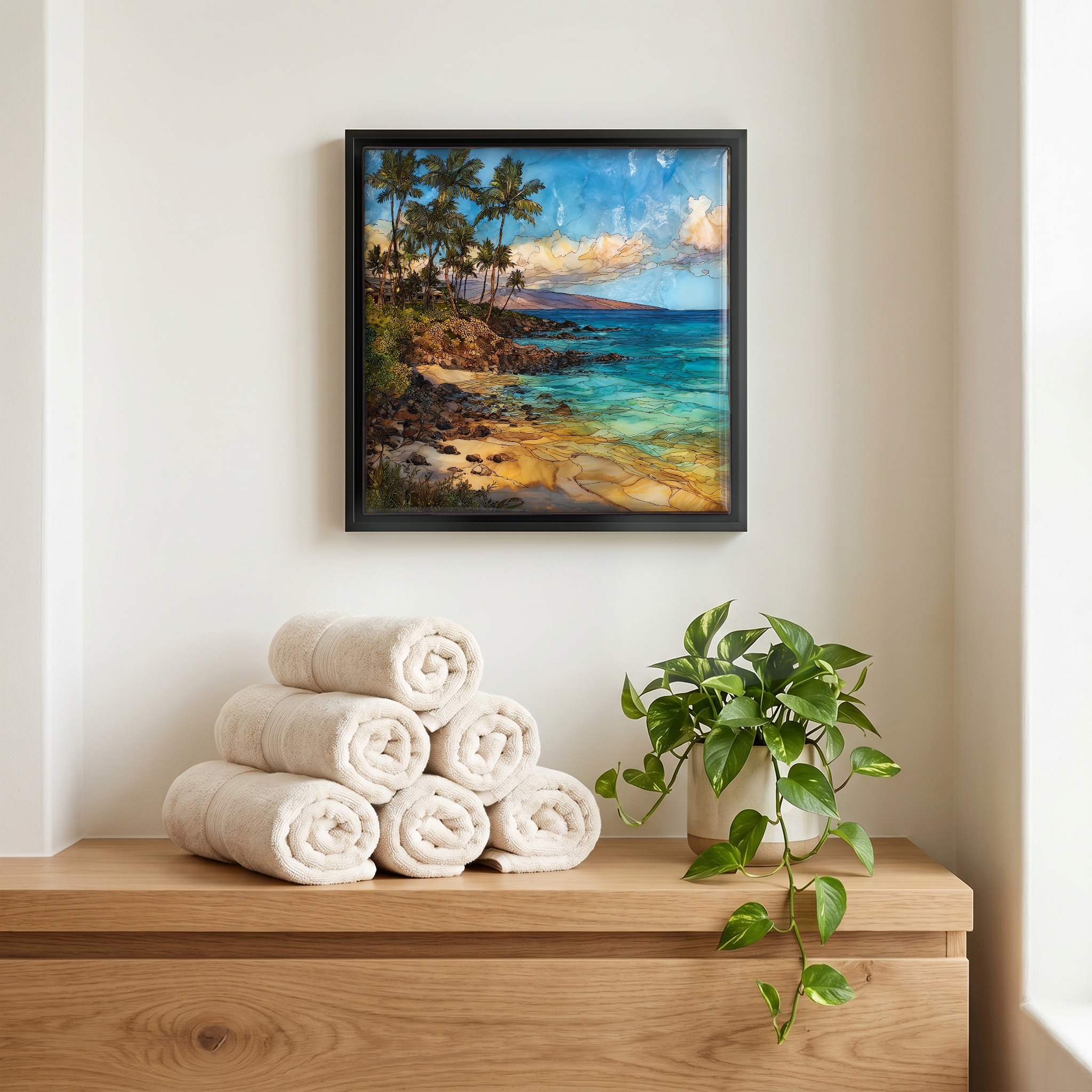
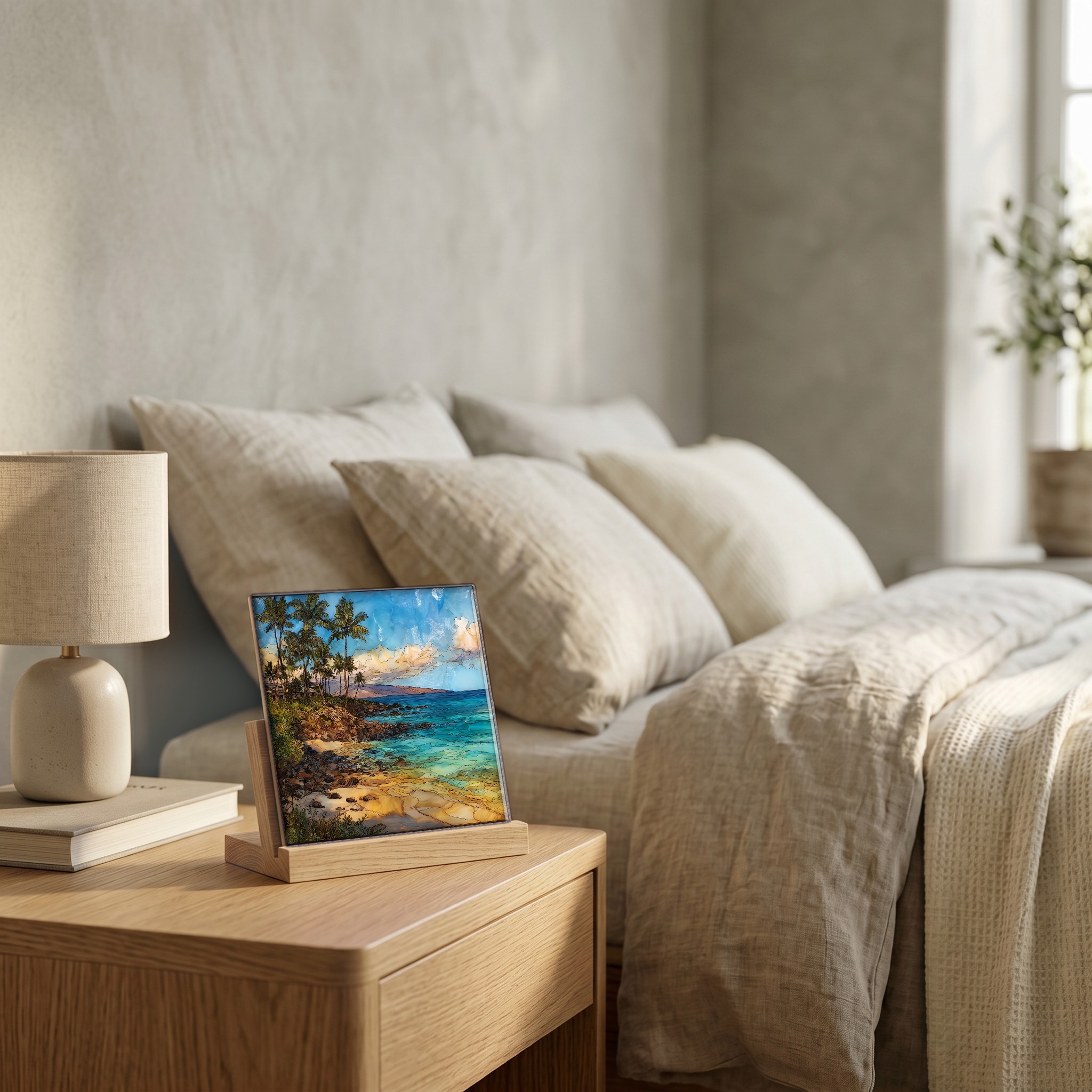
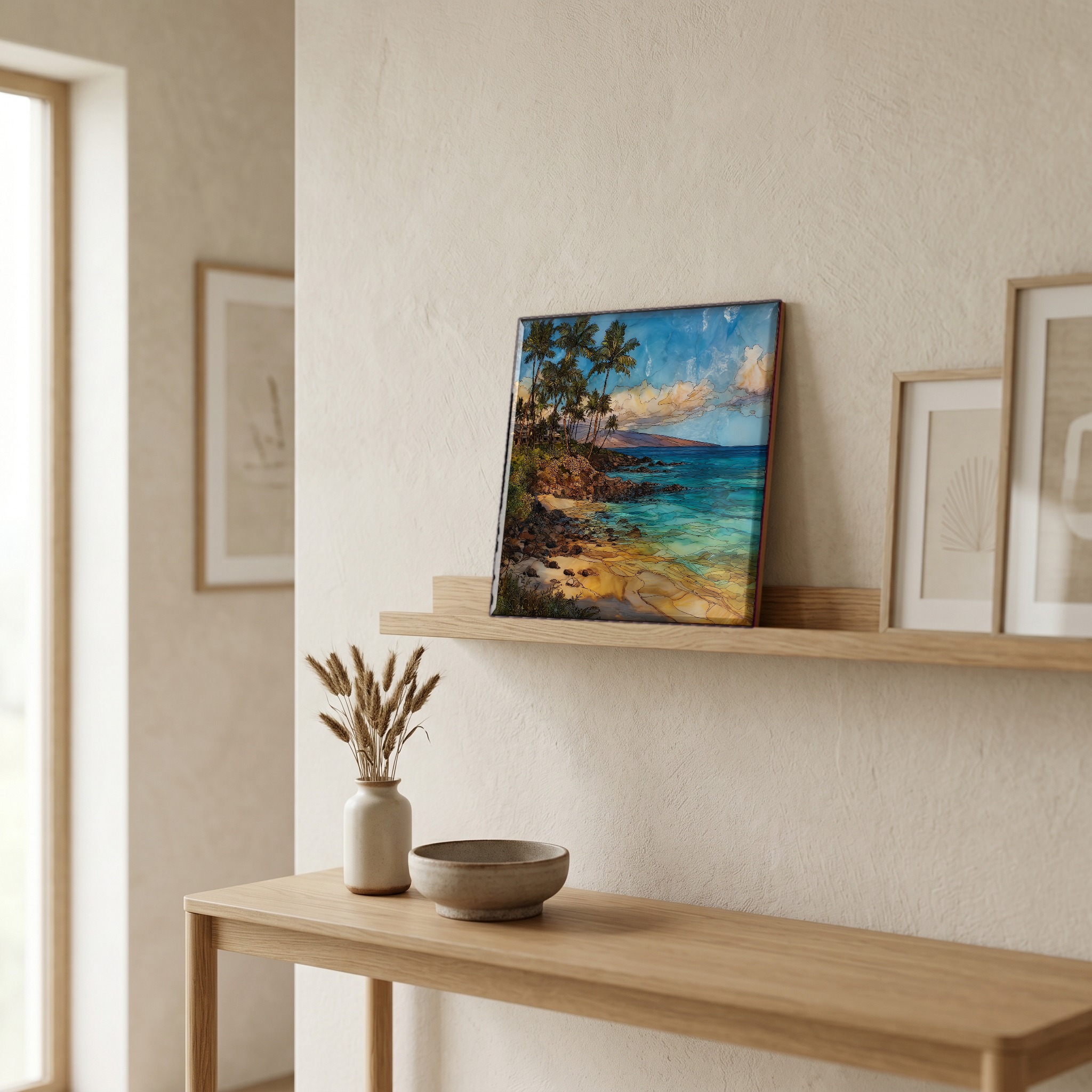
“On the south-west shore of Maui, where the slopes of Haleakalā throw a long dry shadow over the coast. The trade winds usually pick up by mid-morning. Until they do, the water has a window of a couple of hours after first light when it sits flat and reads almost mineral, the translucent blue people remember and try to describe later. The Wailea Beach Path threads five small bays between black lava points. Molokini sits two and a half miles offshore, low on the water. The light moves quickly here.
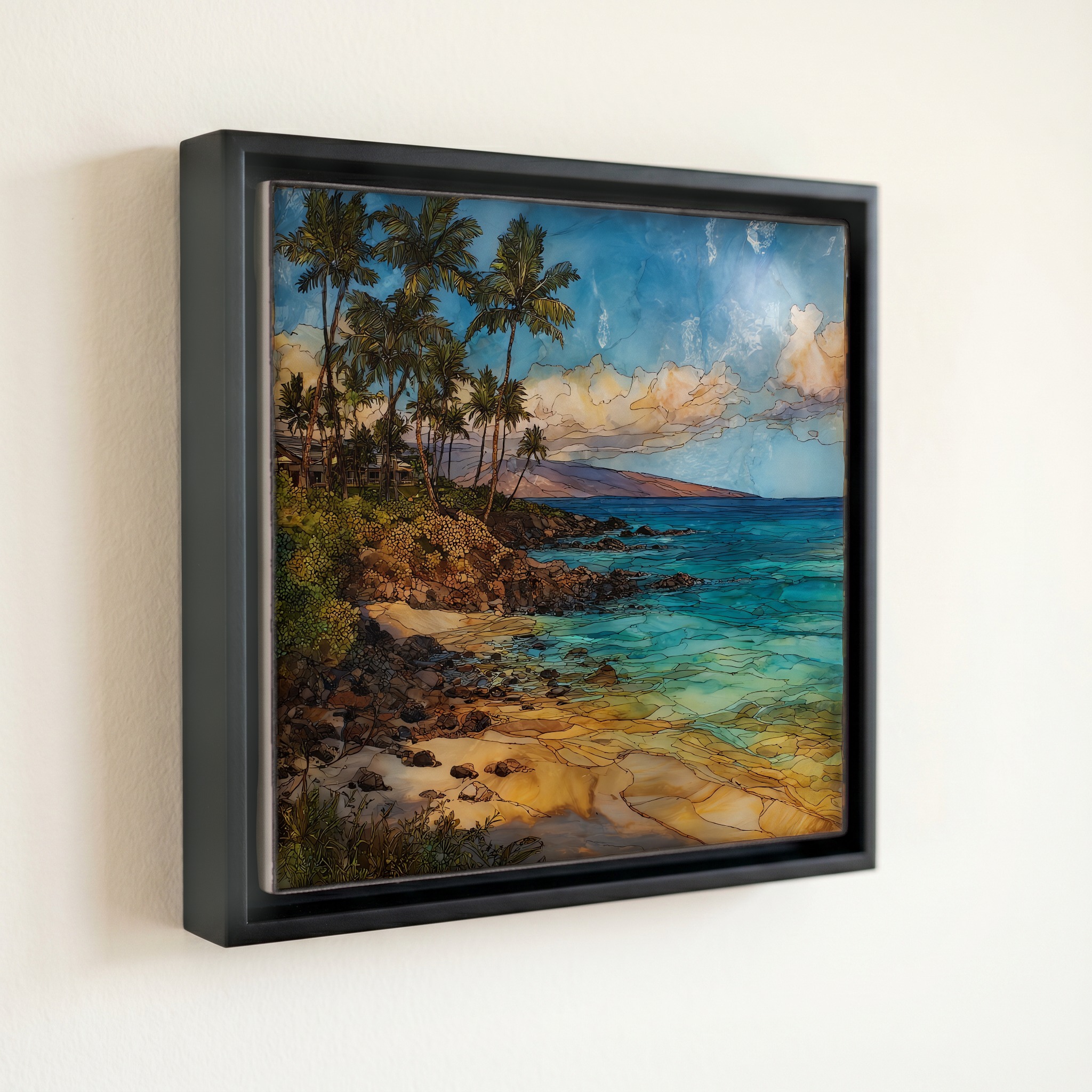
Wailea Coast Morning Maui Ceramic Art Tile, on ceramic.
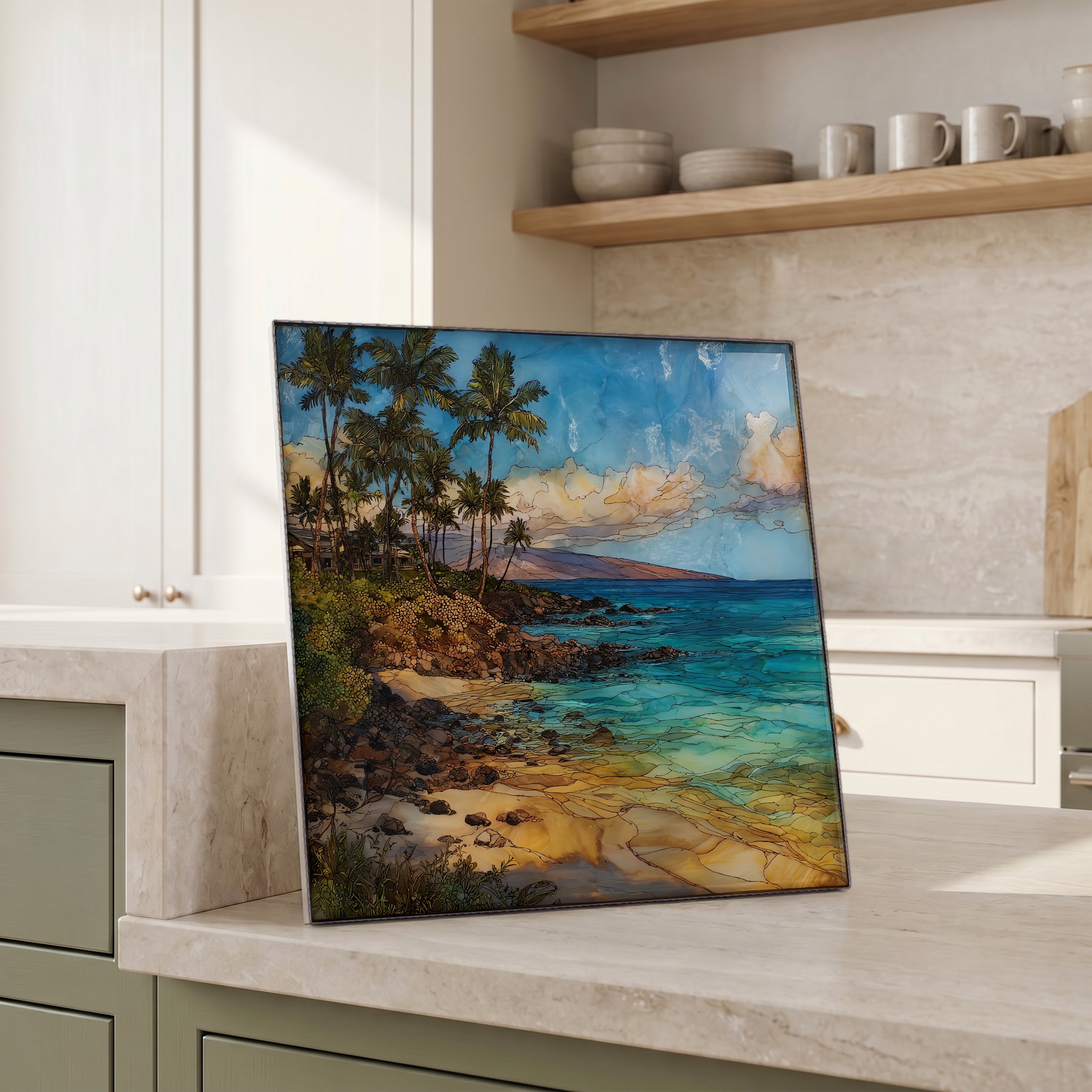
Each tile is finished by hand in our Knoxville studio. Artwork is slowly infused into the ceramic surface under high heat and pressure, and rests beneath a thin glossy finish. The colour lives in the surface, not on top of it.
Pick any four 4-inch tiles — National Parks you've been to, a Smokies set, the four seasons of one place. $ for a set of , cork-backed, ready to live on the table.
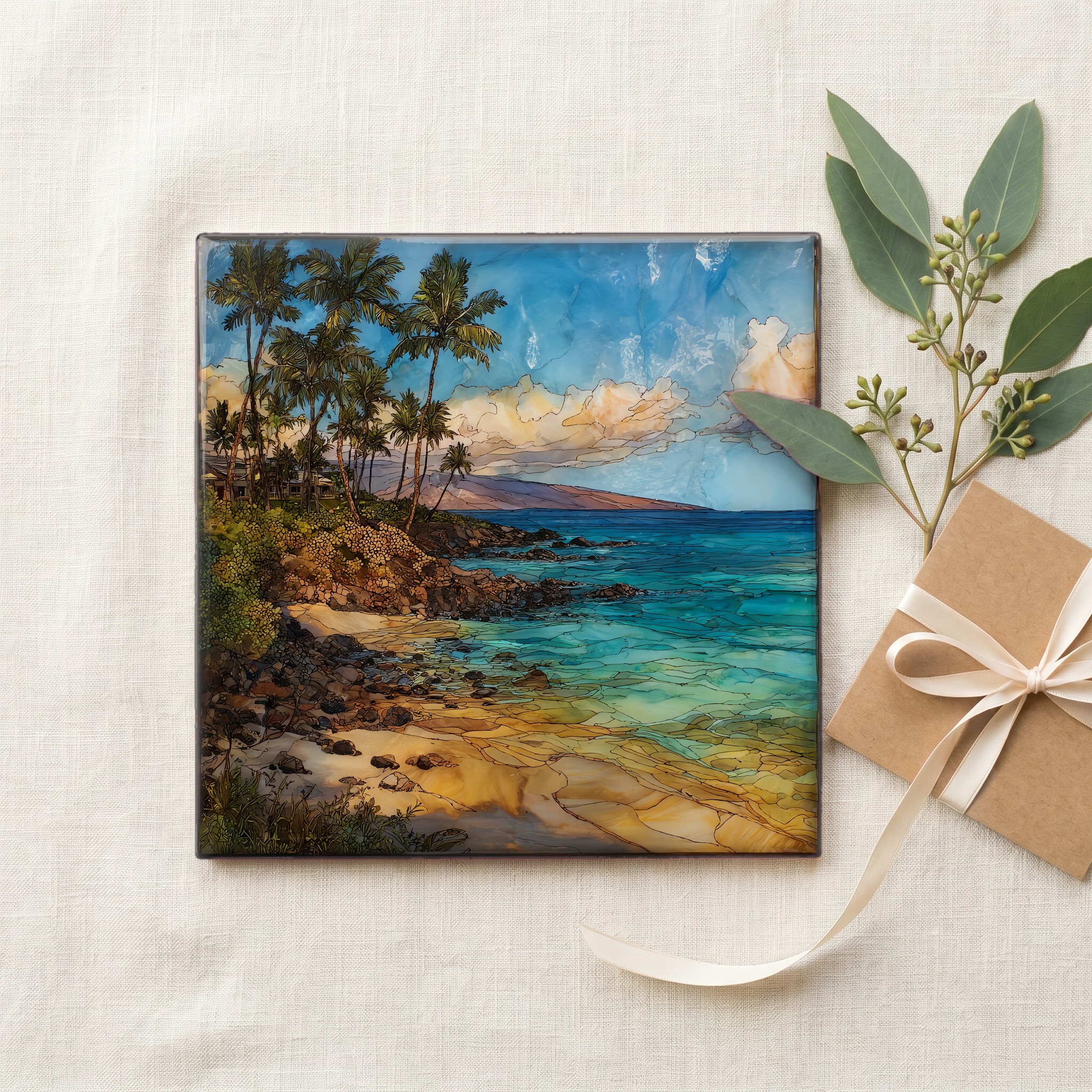
Each tile ships in a kraft box, tied with cream ribbon, with a handwritten note from the studio if you'd like to add one.
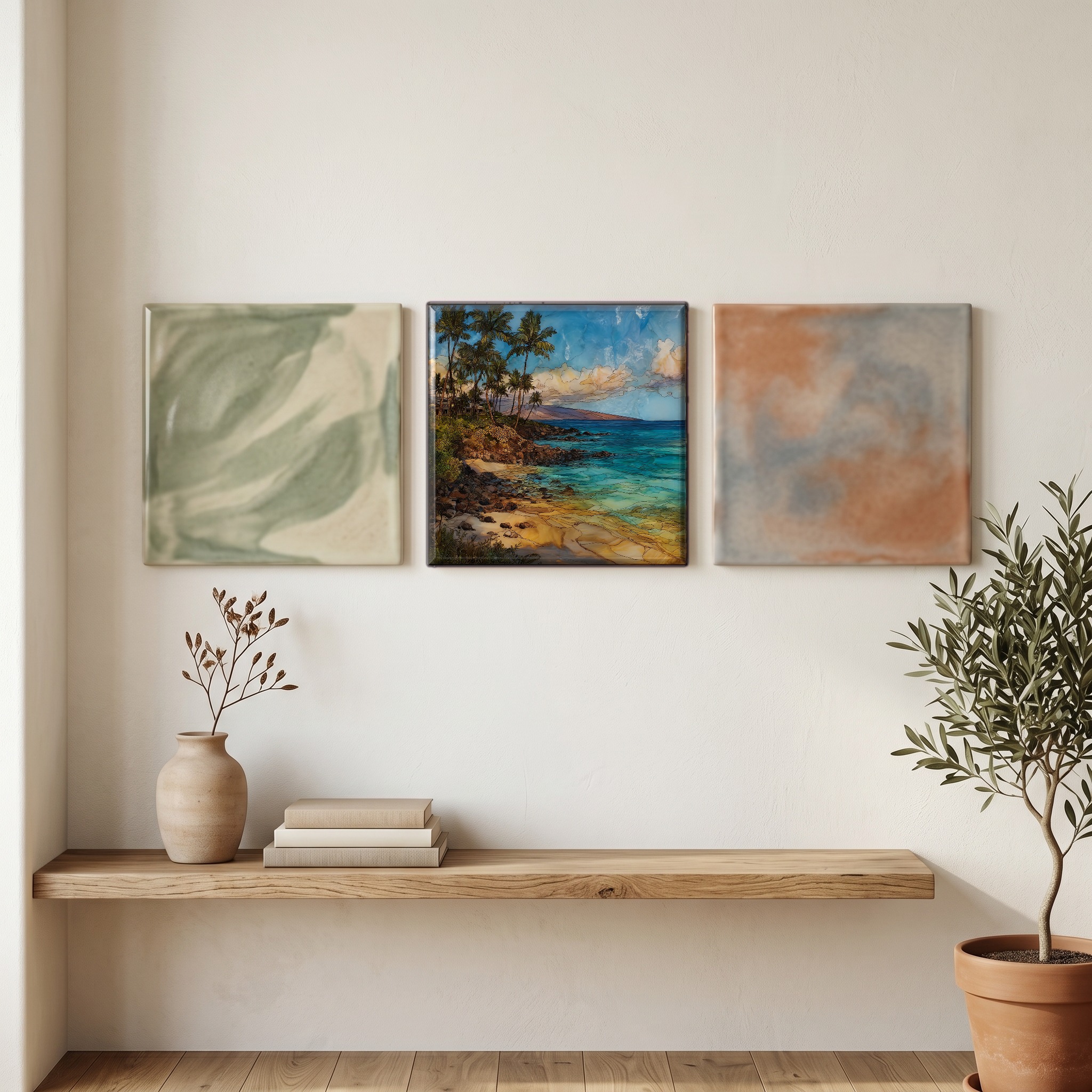
Three or five different vistas, hung together — a chapter of places you've been, or want to go.
The place, in three passes.
Wailea sits on the south-west shore of Maui, in the Wailea-Mākena census-designated place in Maui County, Hawaii. The coast lies in the rain shadow of Haleakalā, the dormant shield volcano that rises to 10,023 feet roughly 25 miles to the north-east. The area was developed as a resort community by Alexander & Baldwin beginning in 1971 and now holds about 6,000 residents alongside five oceanfront resorts. A 1.5-mile paved walkway called the Wailea Beach Path connects the five small bays of Mokapu, Ulua, Wailea, Polo, and Poʻolenalena, stitching the coastline together between low black lava points.
At Wailea the morning has a definite shape, set by Haleakalā to the north-east. The dormant volcano stands 10,023 feet above sea level, and its bulk shadows the coast through first light; direct sun reaches the beaches well after the official sunrise time. The northeast trade winds that dominate the Hawaiian climate push around the island on either side of Haleakalā, leaving the south-west coast in a wind shadow until mid-morning. The water reads a different blue in this window than it does after the wind arrives. By 11 a.m. the lee has broken down and the surface lifts into the usual Pacific chop.
The water along this stretch of Maui is consistently clear because of the geology: the south-west coast sits in the rain shadow of Haleakalā and receives only about 12 inches of rainfall per year, so very little freshwater runoff carries sediment into the bays. Ulua Beach in particular has a fringing reef where visibility regularly reaches 40 to 60 feet, and the water temperature holds between 75 and 80 degrees Fahrenheit through the year. Molokini Crater, the half-submerged volcanic caldera 2.5 miles offshore from neighbouring Mākena, sits in the same protected lee and serves as a Marine Life Conservation District.