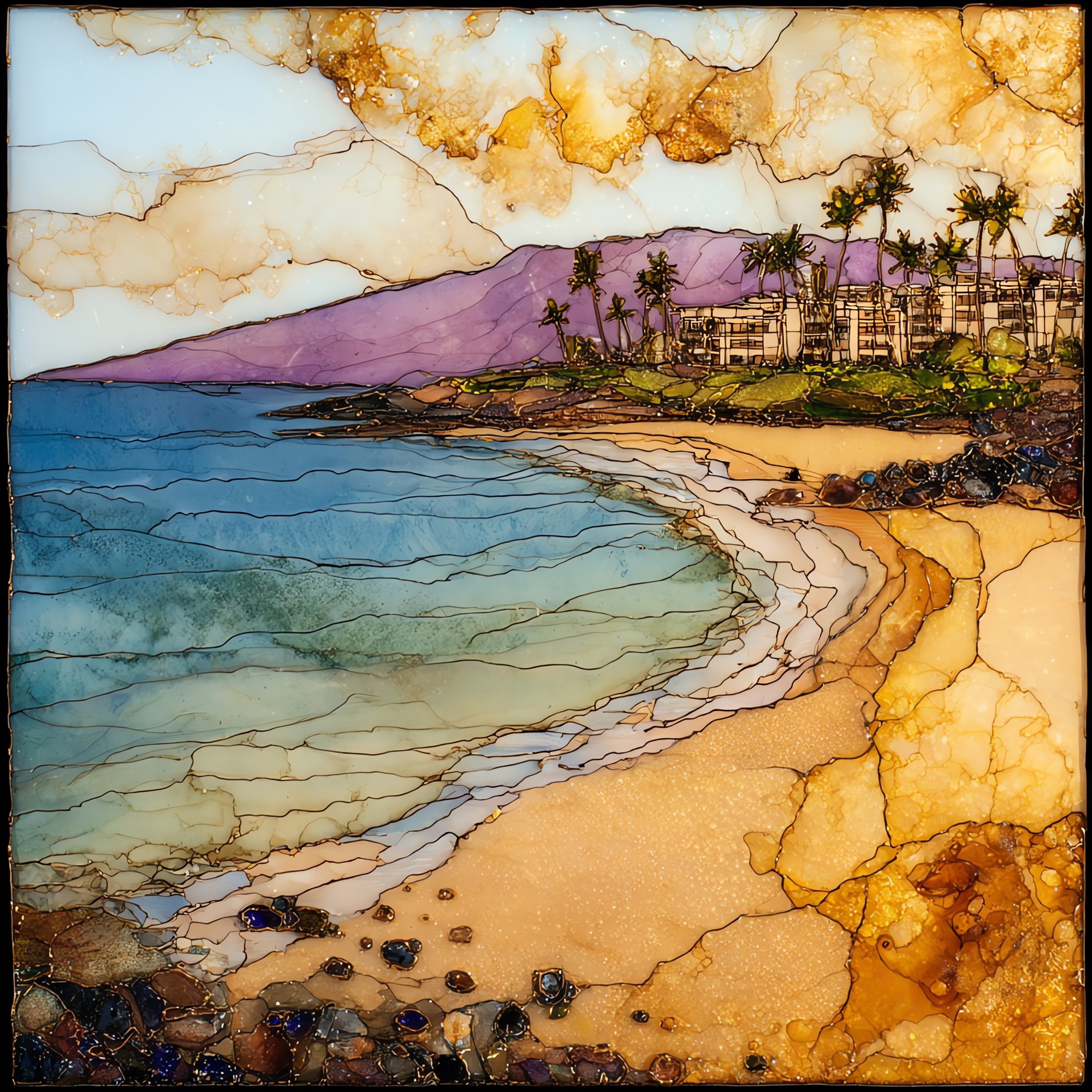
Wailea Beach Maui Ceramic Art Tile
— — the crescent the trades don't reach.
Not only on a wall.
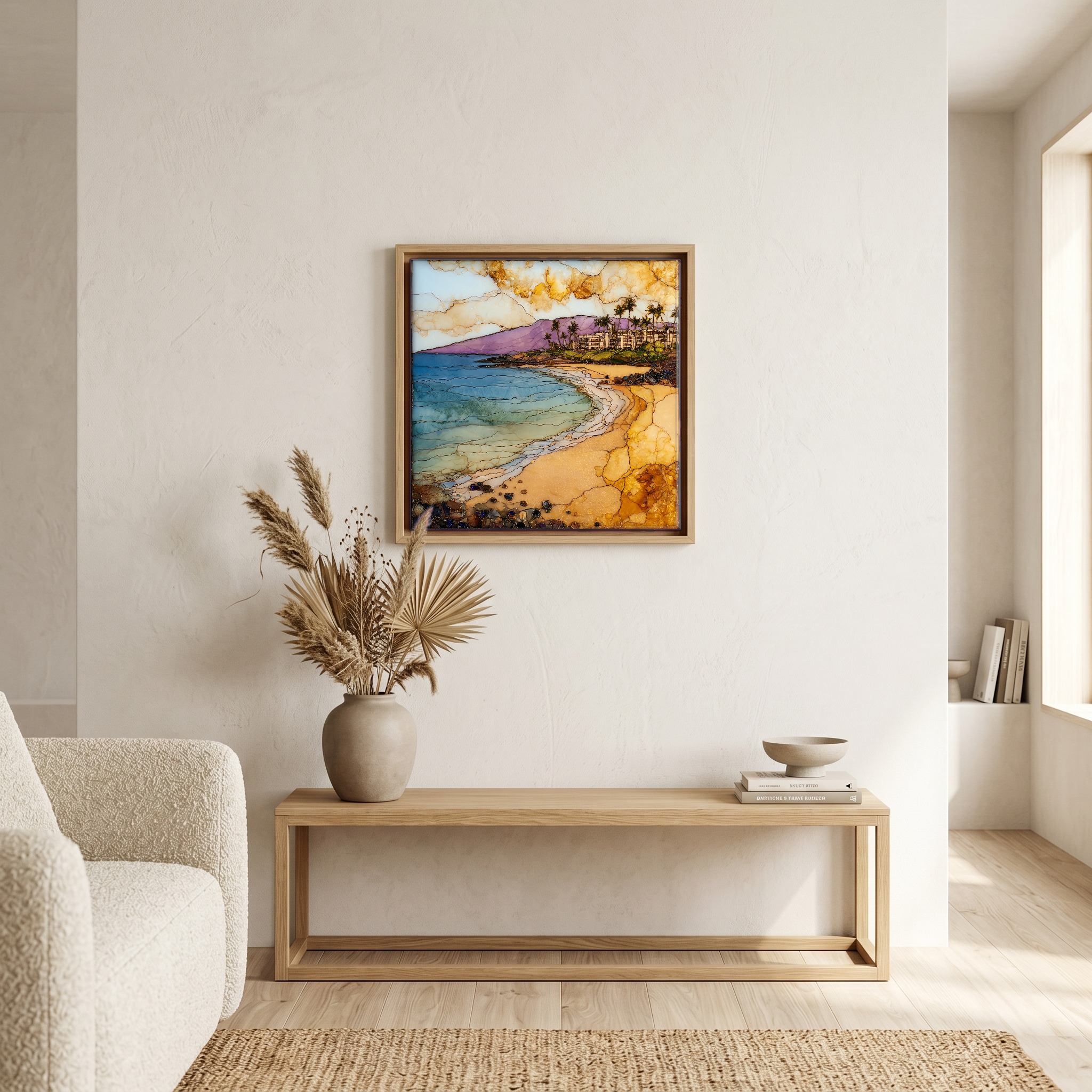
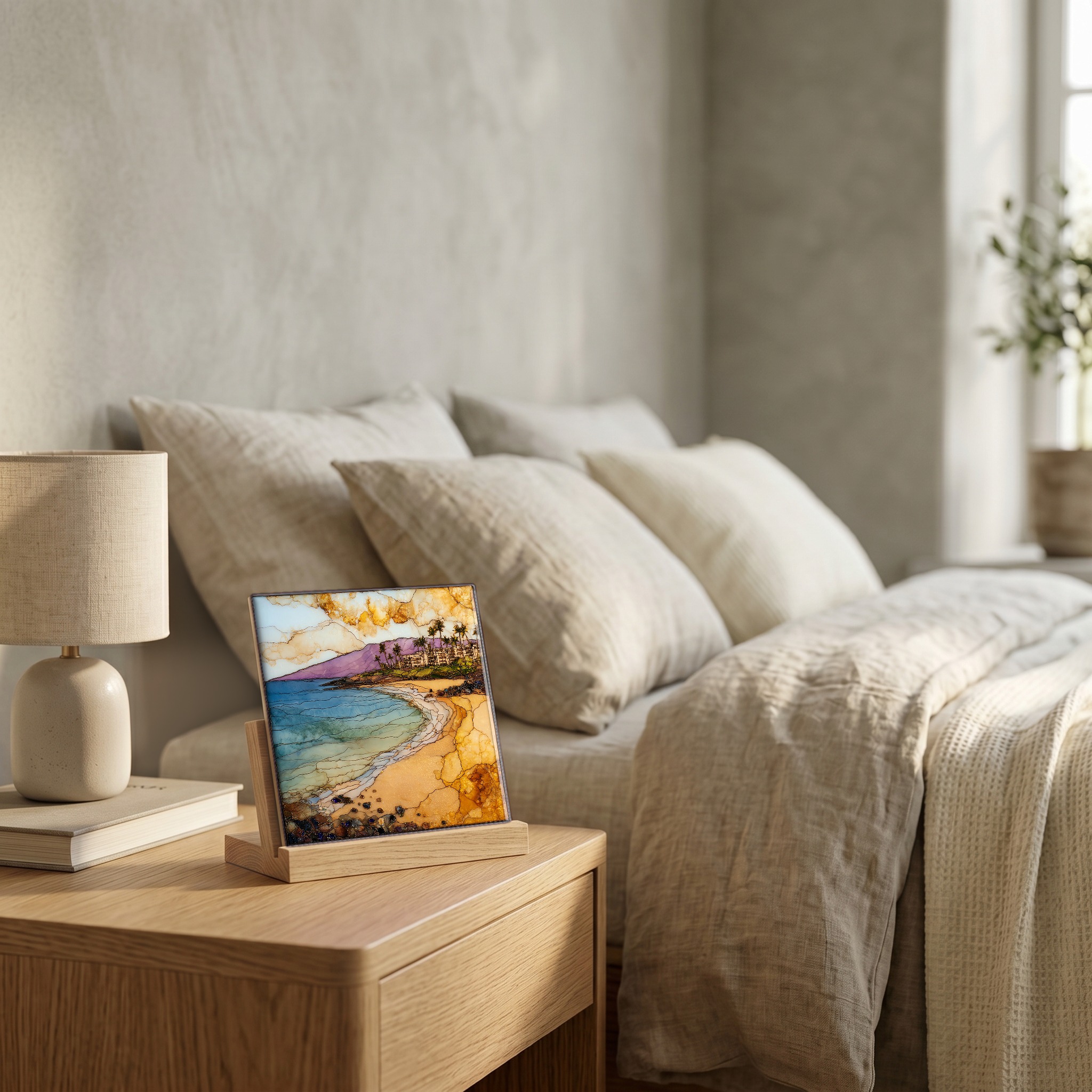
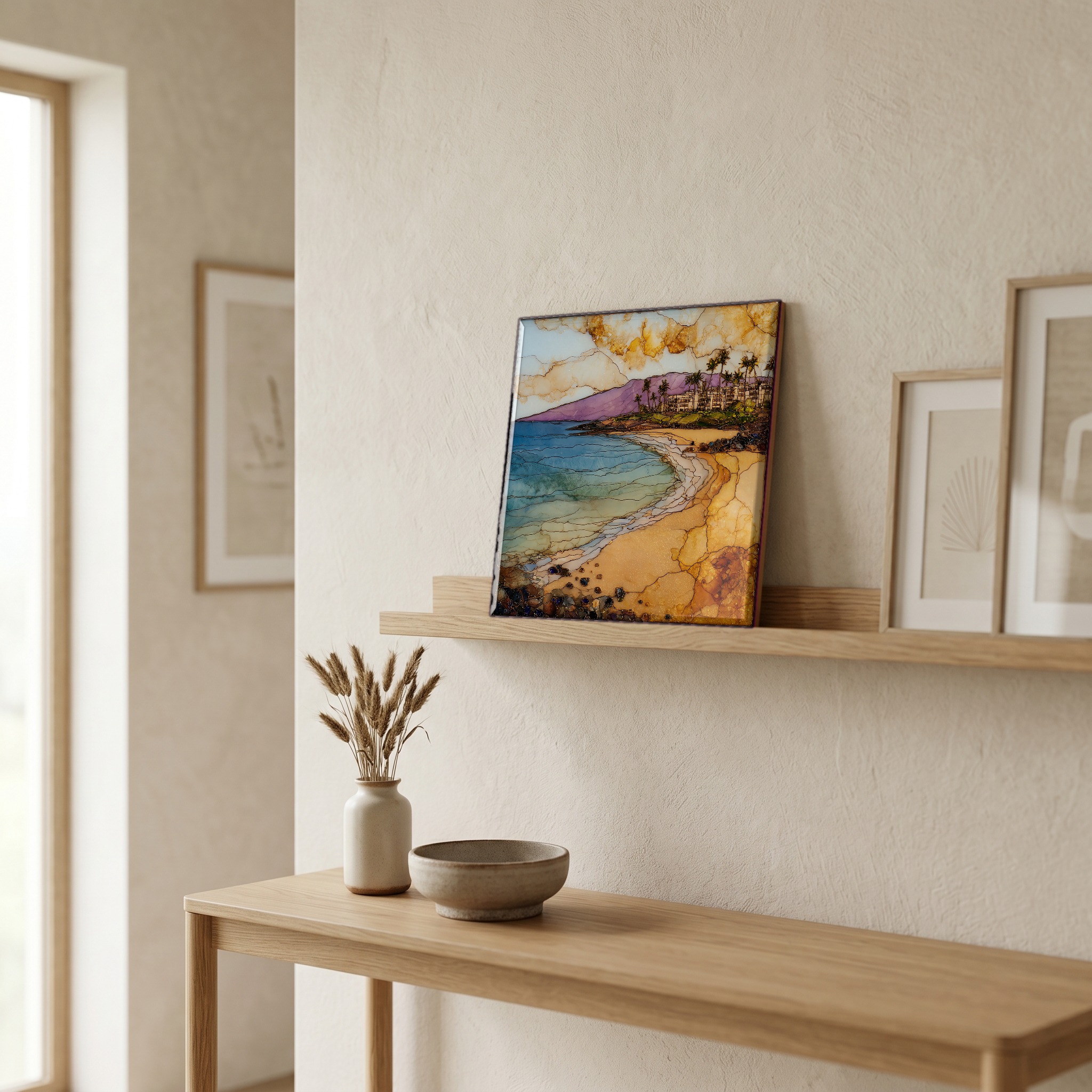
“A white-sand crescent on the leeward coast of Maui, in the long line of beaches that run from Polo to Keawakapu. The trade winds come down off Haleakalā and lose their force on this side of the island, so the water sits quietly most afternoons. Sea turtles surface off the lava rocks at either end. In winter humpback whales (koholā) pass through the channel toward Lanai, their spouts sometimes visible from the sand. The light goes late here. The walk between the resorts is paved and quiet.
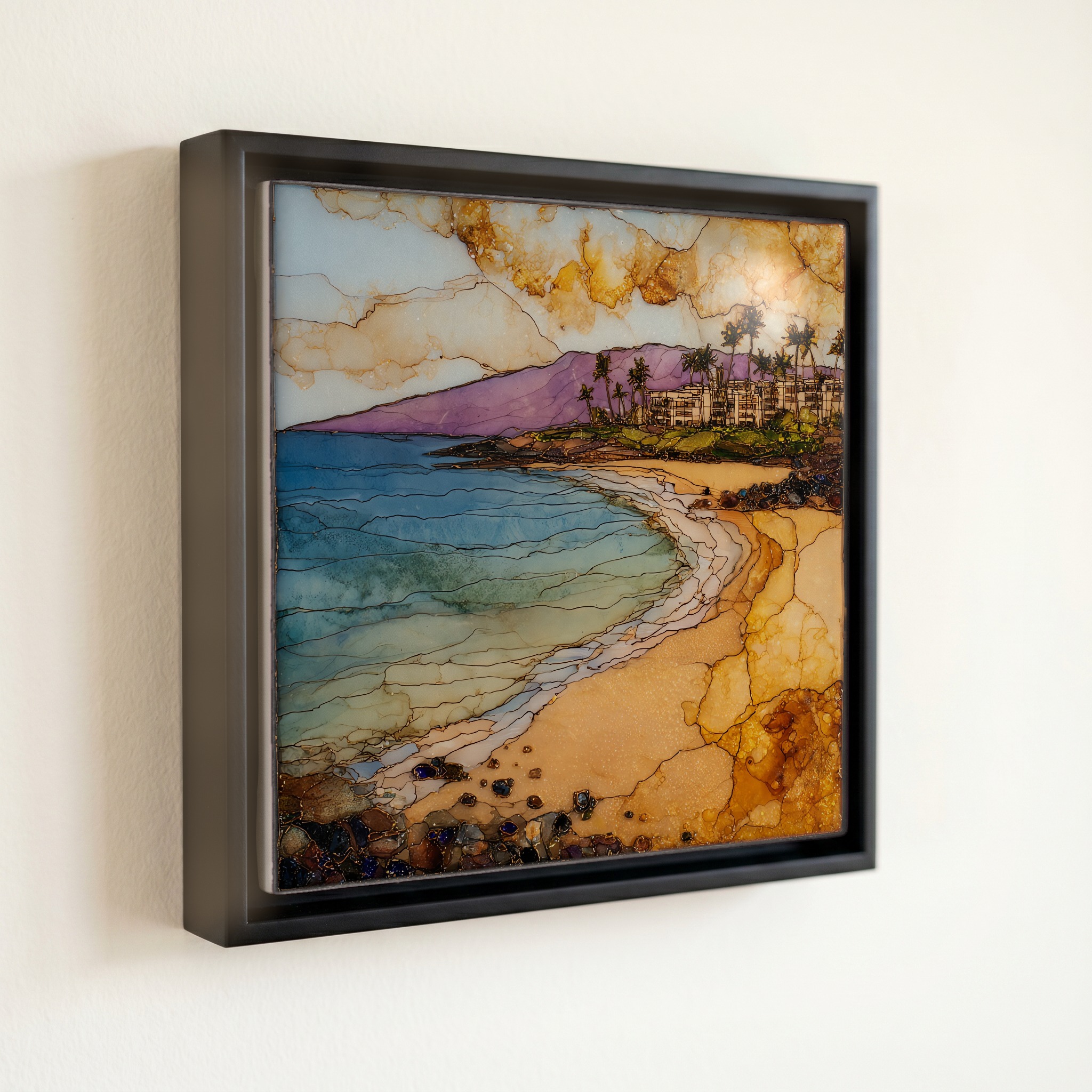
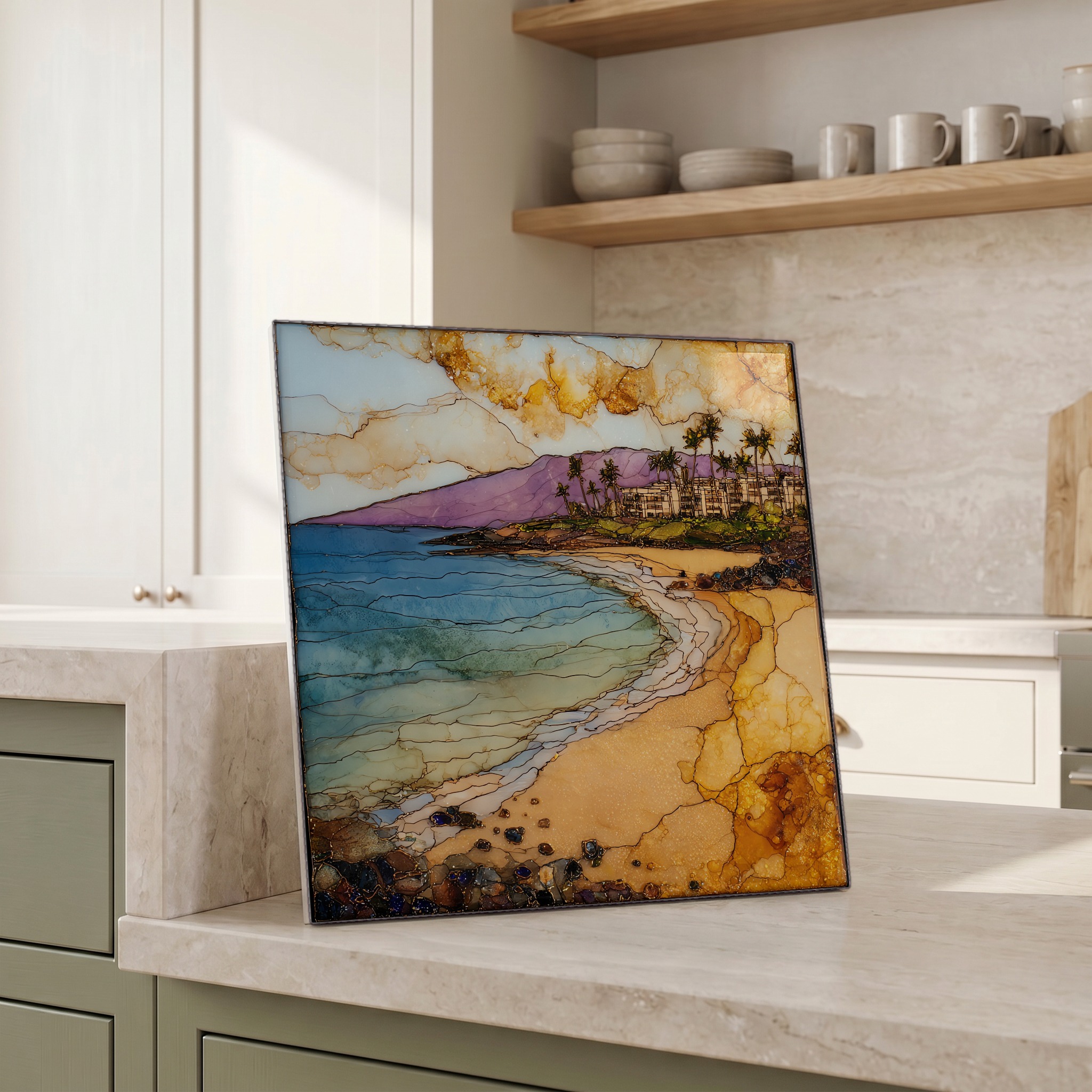
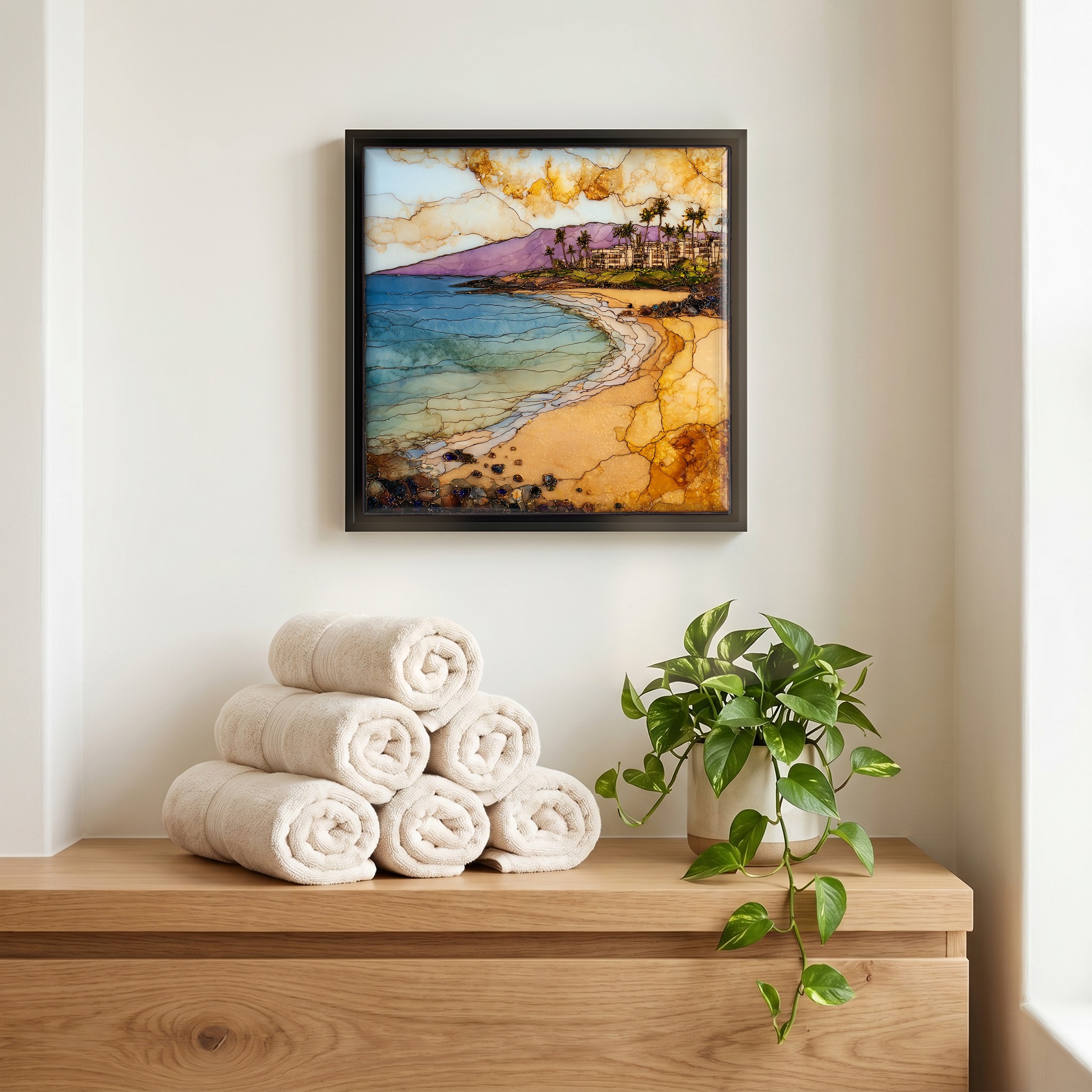
Wailea Beach Maui Ceramic Art Tile, on ceramic.
Each tile is finished by hand in our Knoxville studio. Artwork is slowly infused into the ceramic surface under high heat and pressure, and rests beneath a thin glossy finish. The colour lives in the surface, not on top of it.
Pick any four 4-inch tiles — National Parks you've been to, a Smokies set, the four seasons of one place. $ for a set of , cork-backed, ready to live on the table.
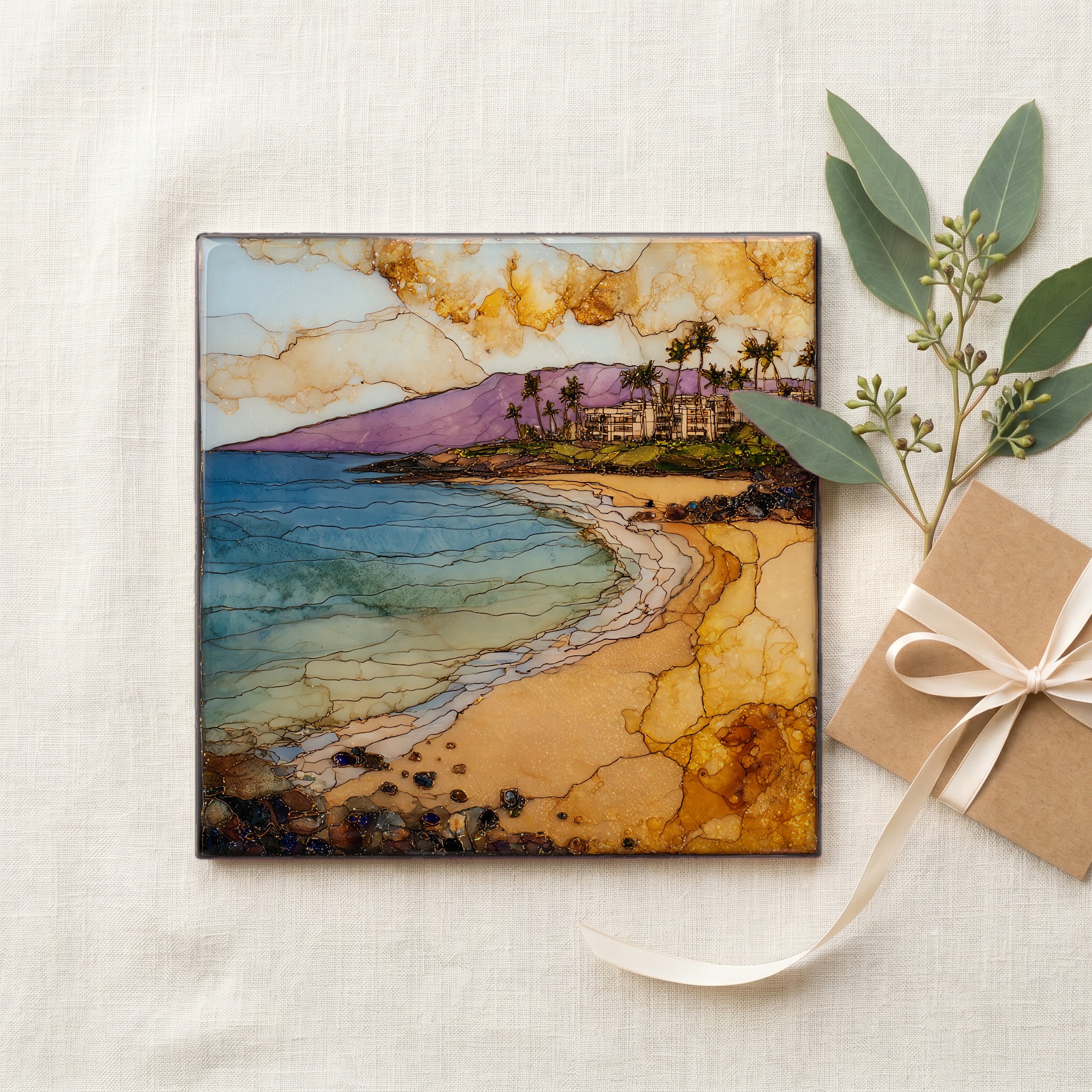
Each tile ships in a kraft box, tied with cream ribbon, with a handwritten note from the studio if you'd like to add one.
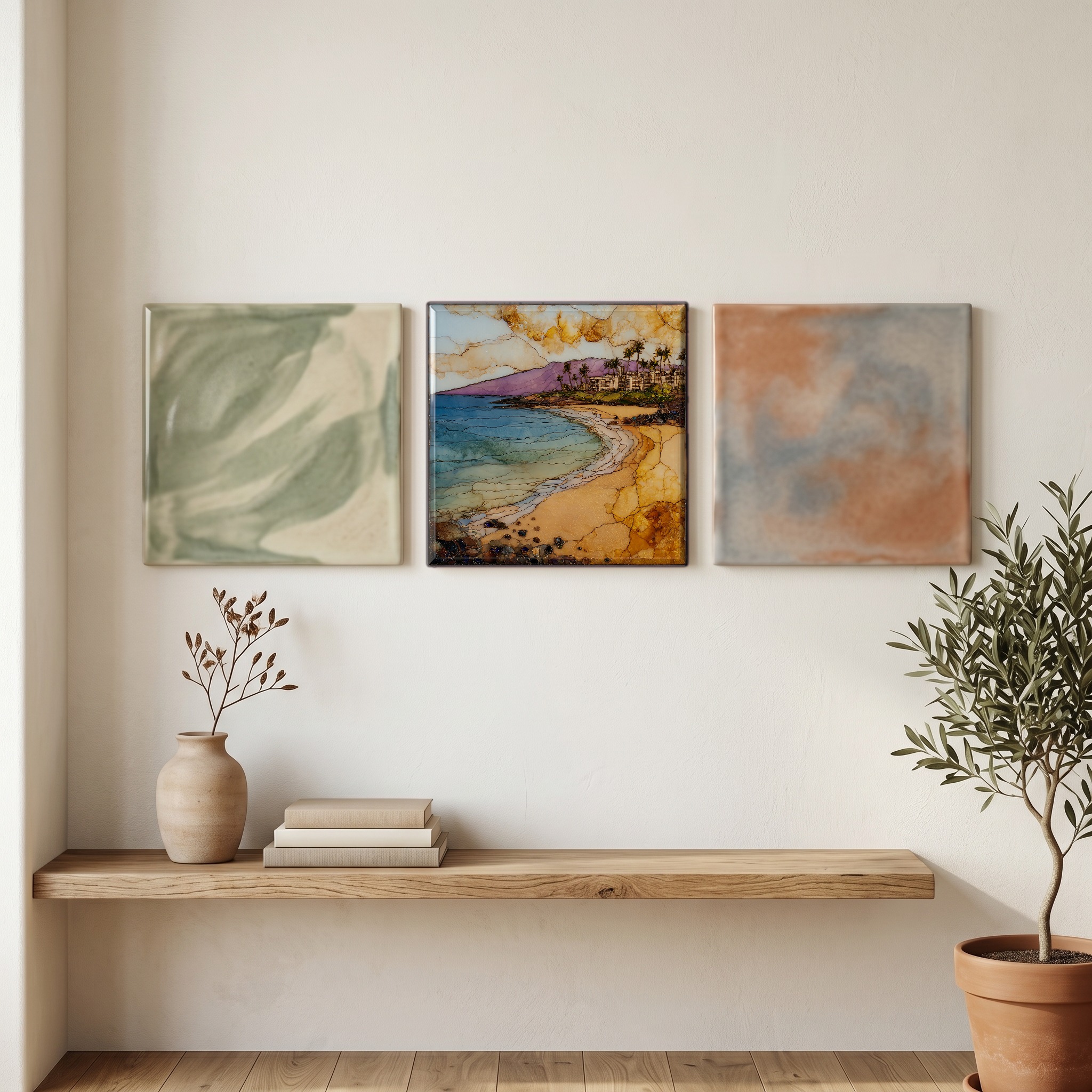
Three or five different vistas, hung together — a chapter of places you've been, or want to go.
The place, in three passes.
Wailea Beach is a crescent of white sand on the leeward south coast of Maui, in Maui County, Hawaii. It runs roughly a quarter mile between two black lava-rock outcrops that close off the open ocean and shelter the swimming water. The beach sits in the middle of a string of five resort beaches running from Polo to Keawakapu, connected by the paved Wailea Coastal Walk of about 1.5 miles. Two resorts back the sand directly: the Grand Wailea and the Four Seasons Resort Maui at Wailea. The leeward side of the island sees less rainfall and surf than the windward east, where the trade winds first meet the volcano of Haleakalā.
The water at Wailea is calm by Hawaiian standards. The trade winds, which blow steadily from the northeast across most of the year, lose their force as they cross the 10,023-foot volcano of Haleakalā, so the south-facing leeward coast where Wailea sits is sheltered from the chop that defines the windward beaches. Hawaiian green sea turtles, the honu, feed on the rocks at either end of the beach and surface a short distance offshore. Snorkelers head to the lava points; the sand-bottomed middle is where families swim. Offshore, the partly submerged volcanic crater of Molokini, a few miles to the southwest, is one of the most visited snorkel sites in the islands.
From roughly December through April, humpback whales (koholā) return to the warm waters between Maui, Lanai, Molokai, and Kahoolawe to breed and calve. The channel directly west of Wailea is part of the Hawaiian Islands Humpback Whale National Marine Sanctuary, established by Congress in 1992 and visited by an estimated ten thousand whales each season. Spouts, breaches, and pectoral slaps can be seen from the sand on still mornings. The same months bring the south-coast swell into a long lull while north-shore surf builds, so the leeward beaches are at their calmest. The trades return in May, and the water clarity rises with them.