Wender·Vista
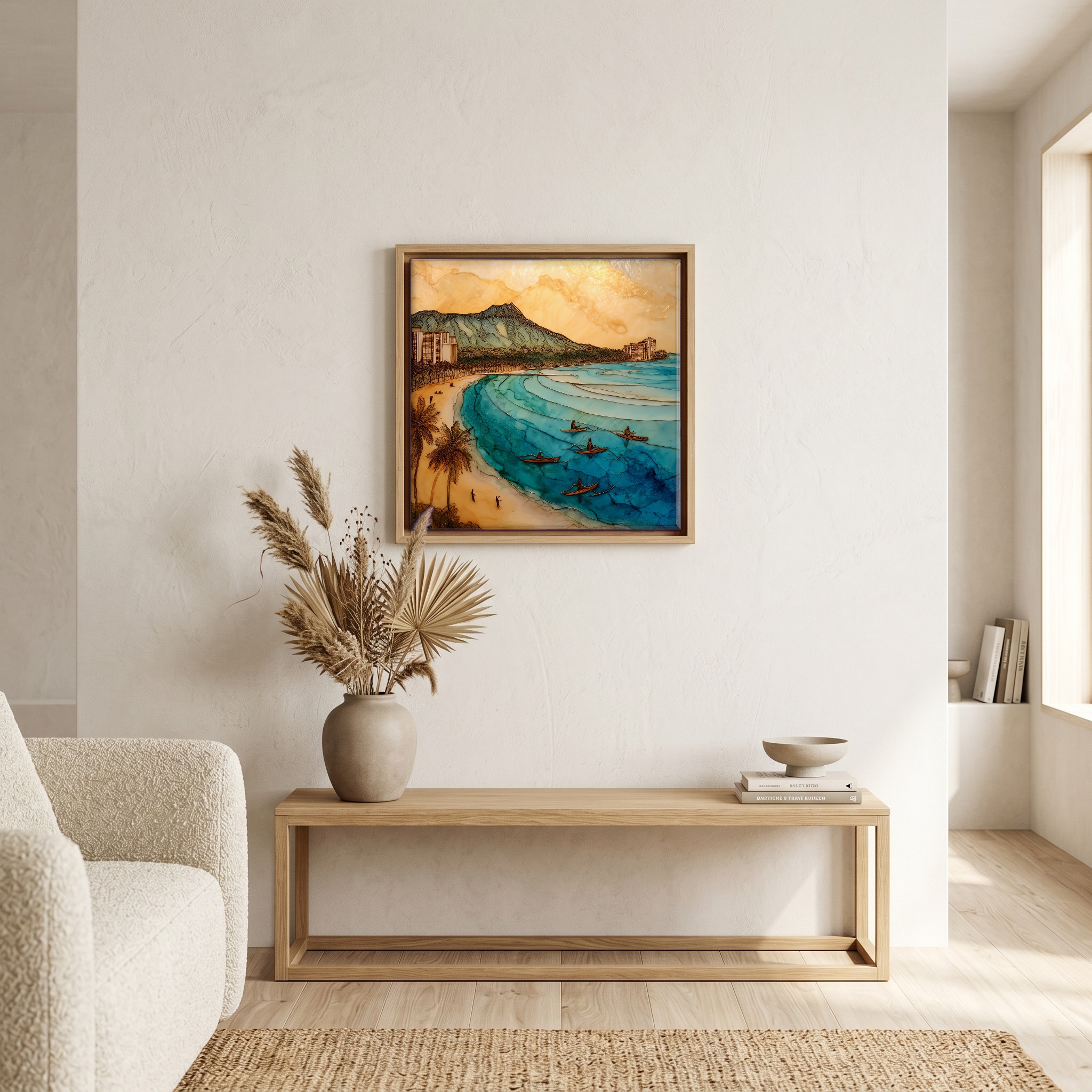
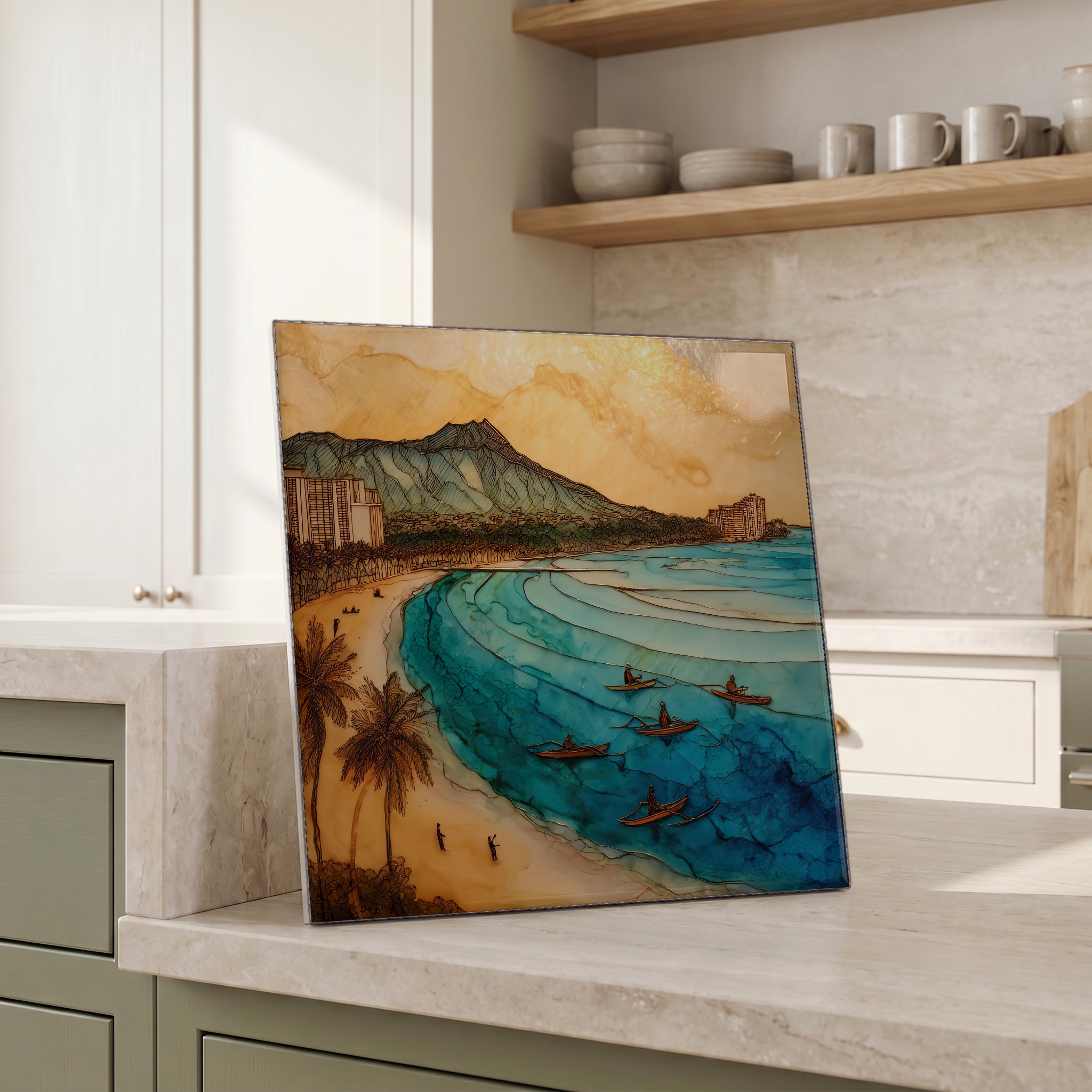
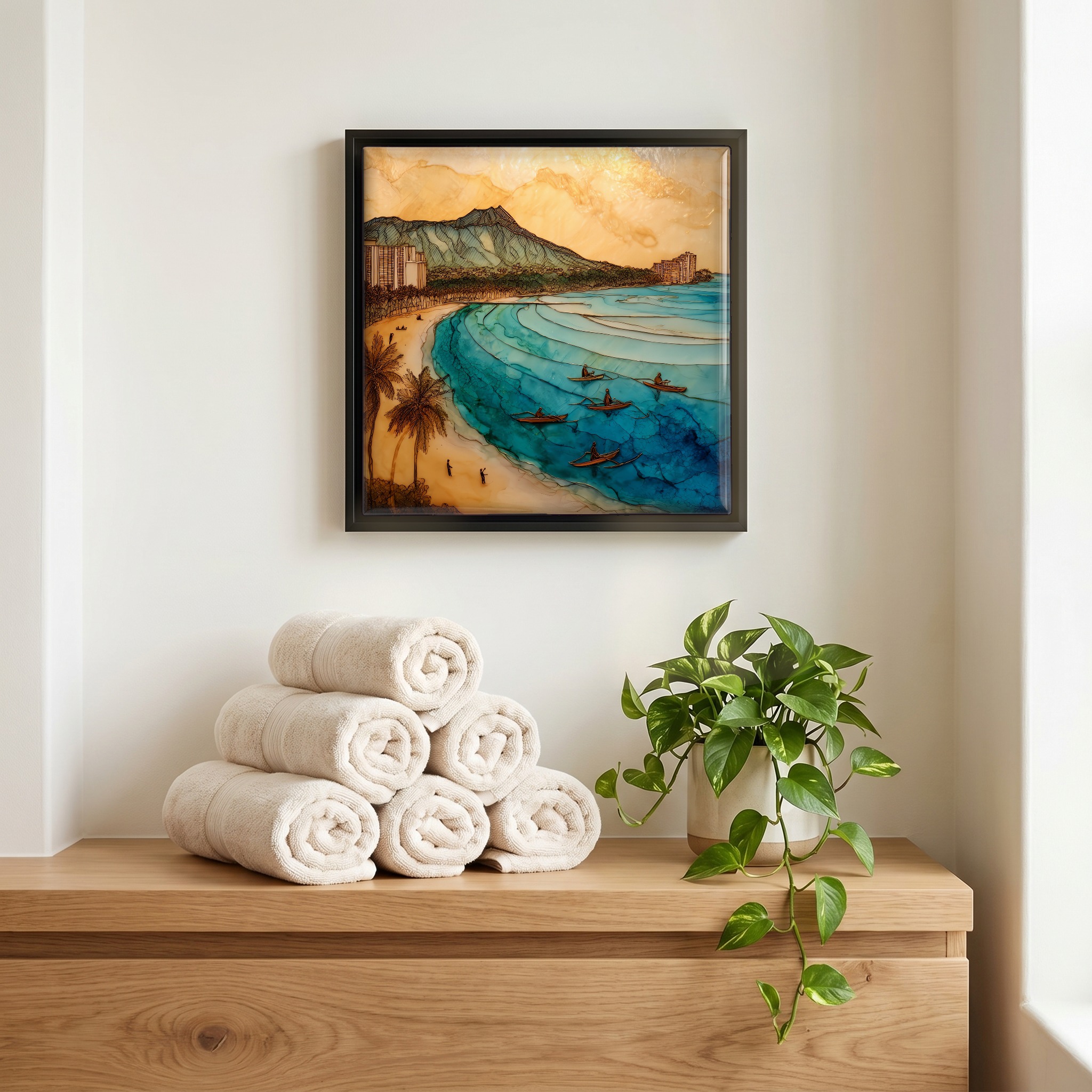
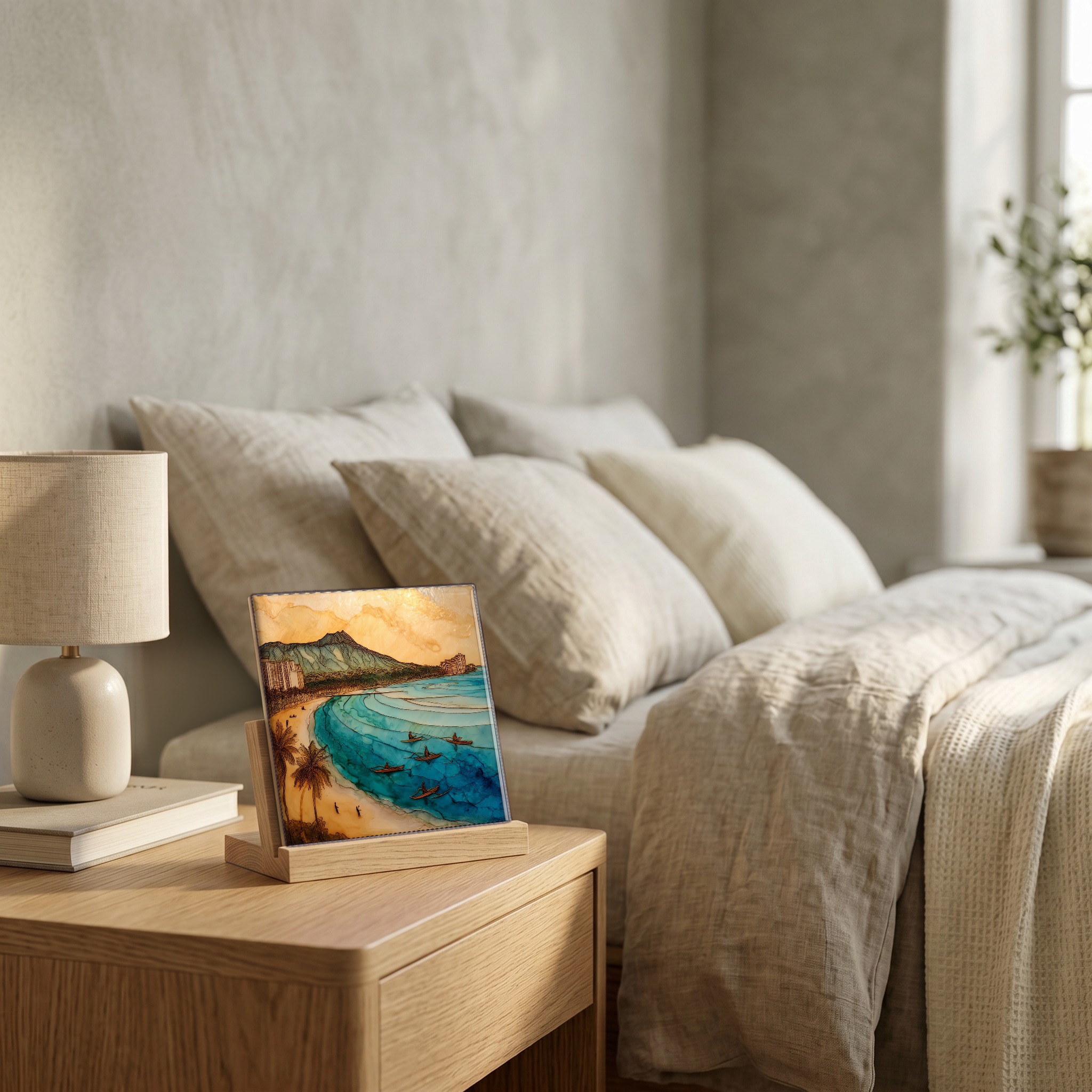
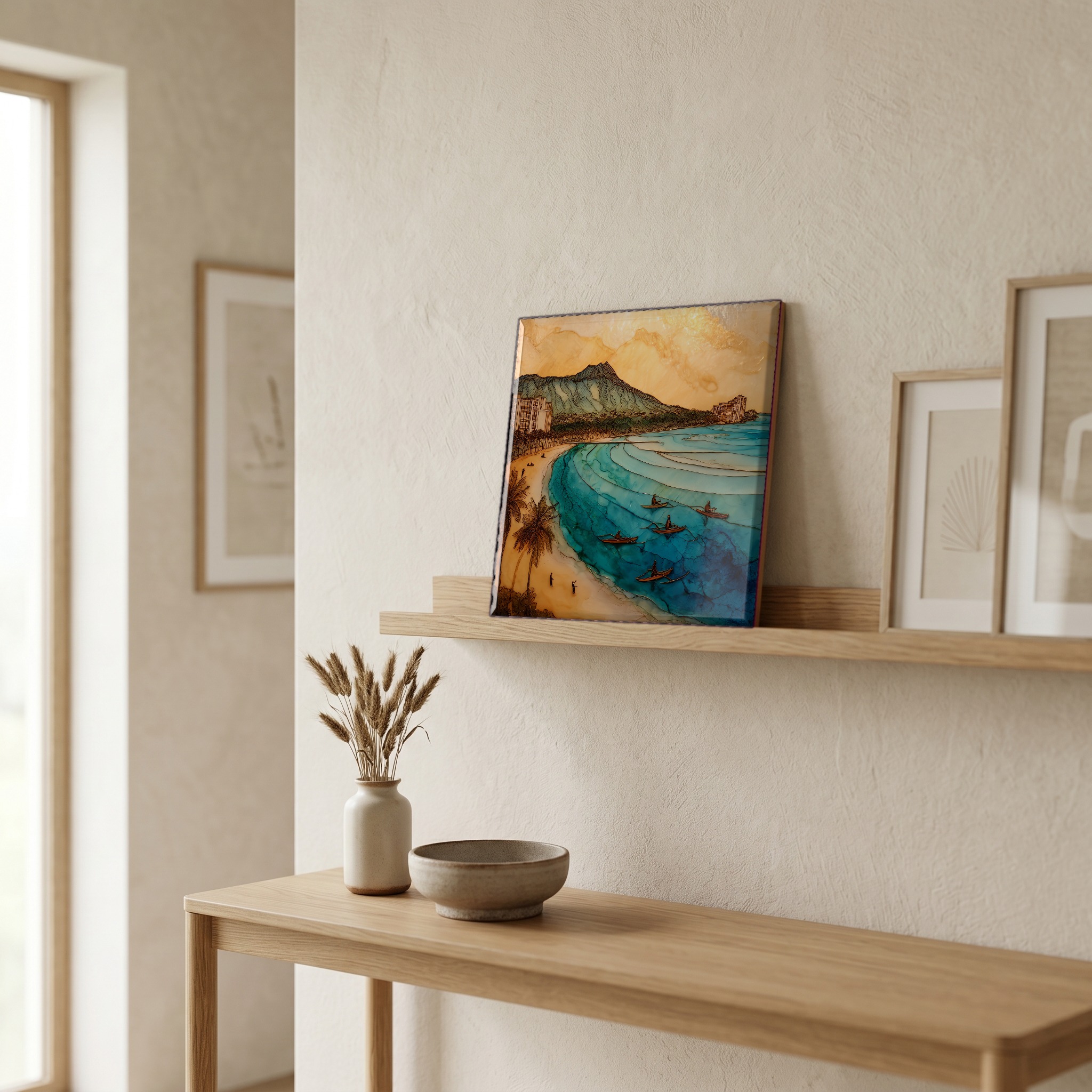
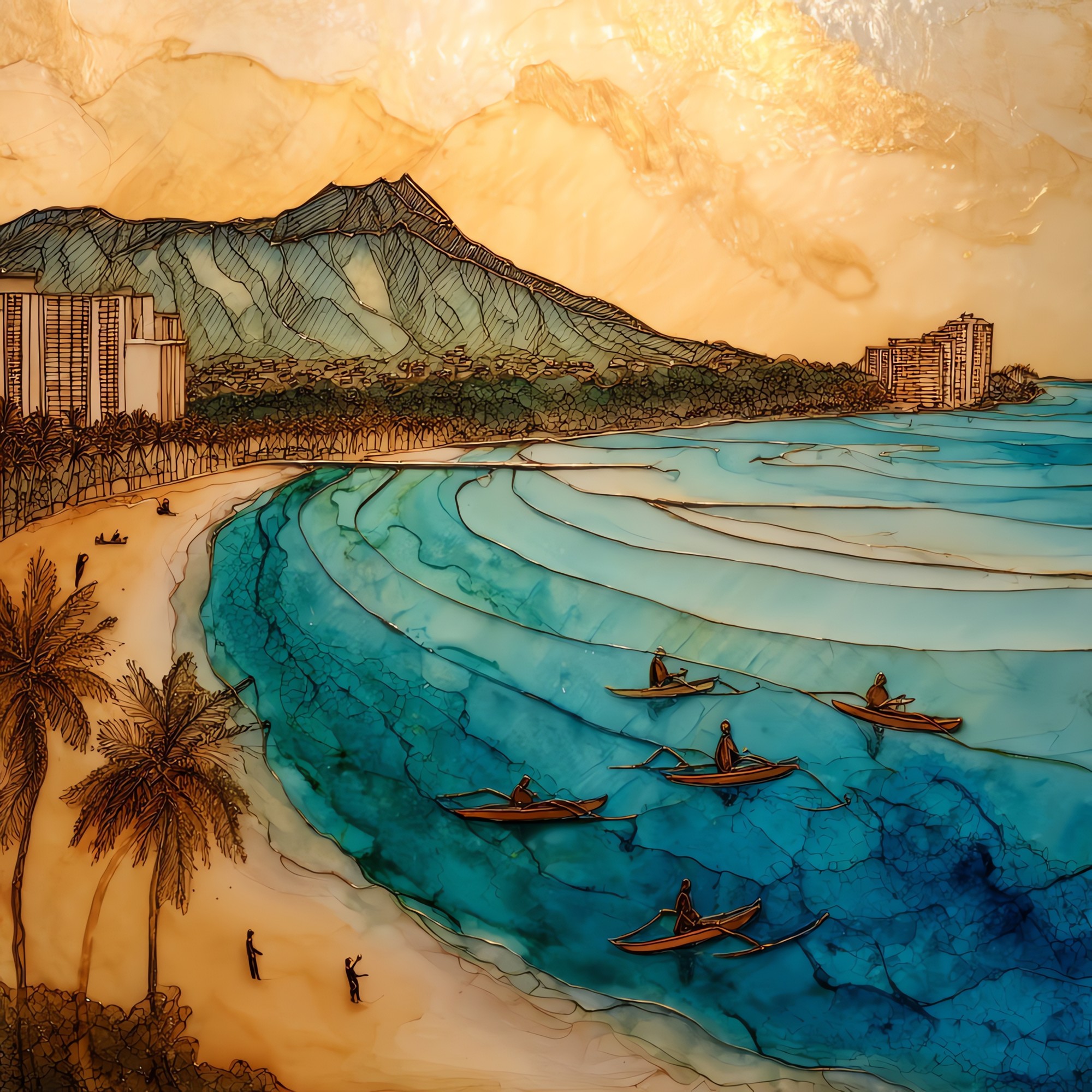
Waikiki Diamond Head Oahu Ceramic Art Tile
shown on ceramic, 12-inch tileHawaii · United States
at the east end of Waikiki Beach, on Oʻahu's south shore

Waikiki Diamond Head Oahu Ceramic Art Tile

— the green crater above the long beach.

Where it lives

Not only on a wall.

A small tile on the nightstand catching the morning. A larger one above the fire. Yours, wherever you spend the slow hours.
Above the bench, in a warm oak surround.
Beside the kettle, propped on the counter.
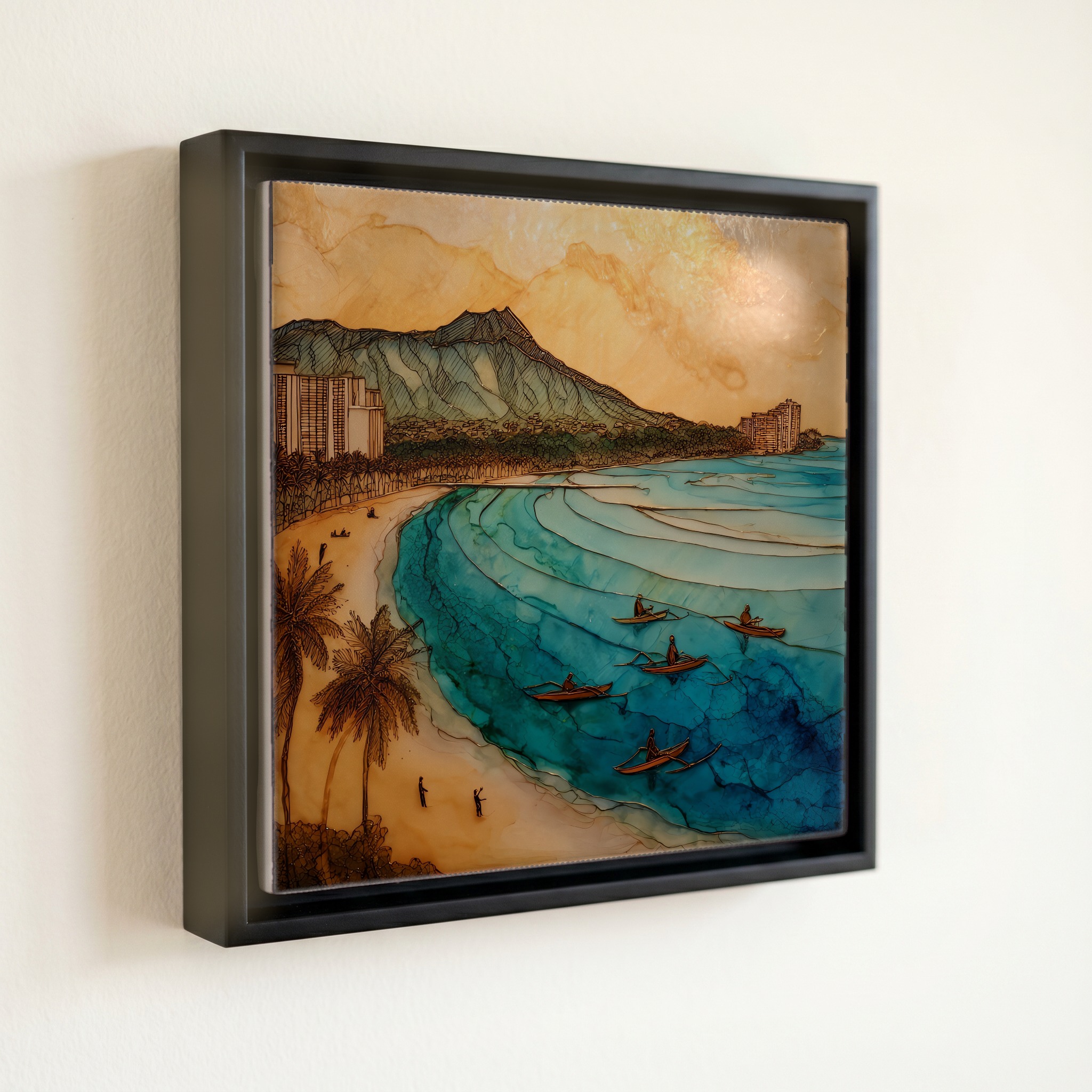
Above the linens, in a slim black surround.
On the nightstand, on a light oak stand.
On a picture ledge, where the light comes in.
a note from the studio

Diamond Head closes Waikiki the way a paperweight closes a stack of letters. A green-shouldered tuff cone, three hundred thousand years old, holding the line where the city ends and the open Pacific begins. From the beach the crater reads as one shape, a single curve against the trade-wind sky. From inside, the path turns to switchbacks, an old wartime tunnel, a bunker at the summit. Sunrise hits it first, before anything else on Oʻahu's south shore. The locals call it Lēʻahi: the brow.
from the studio
shown in a slim black floating frame · 6 × 6 in
— bring it home

Waikiki Diamond Head Oahu Ceramic Art Tile, on ceramic.

Each tile is finished by hand in our Knoxville studio. Artwork is slowly infused into the ceramic surface under high heat and pressure, and rests beneath a thin glossy finish. The colour lives in the surface, not on top of it.

What kind of piece?
One tile — square or rectangle.
How big?
the popular one — counter, shelf, nightstand
6 × 6 in · 15 cm · 1.6 lb
Surface finish
A clear glossy finish — the artwork reads as if under resin. Ideal for show-pieces and framed wall art.
How it sits
A hidden cleat — sits ¼″ proud of the wall.
$58
Hand-finished and shipped from our studio at the foot of the Smokies. On your wall in about ten days.
size
6 × 6 in
15 cm
weighs
1.6 lb
solid in the hand
surface
ceramic, hand-finished
art rests beneath a thin glossy finish
from
Knoxville, TN
our family studio, at the foot of the Smokies
— start a Coaster Set

Pick any four 4-inch tiles — National Parks you've been to, a Smokies set, the four seasons of one place. $ for a set of , cork-backed, ready to live on the table.
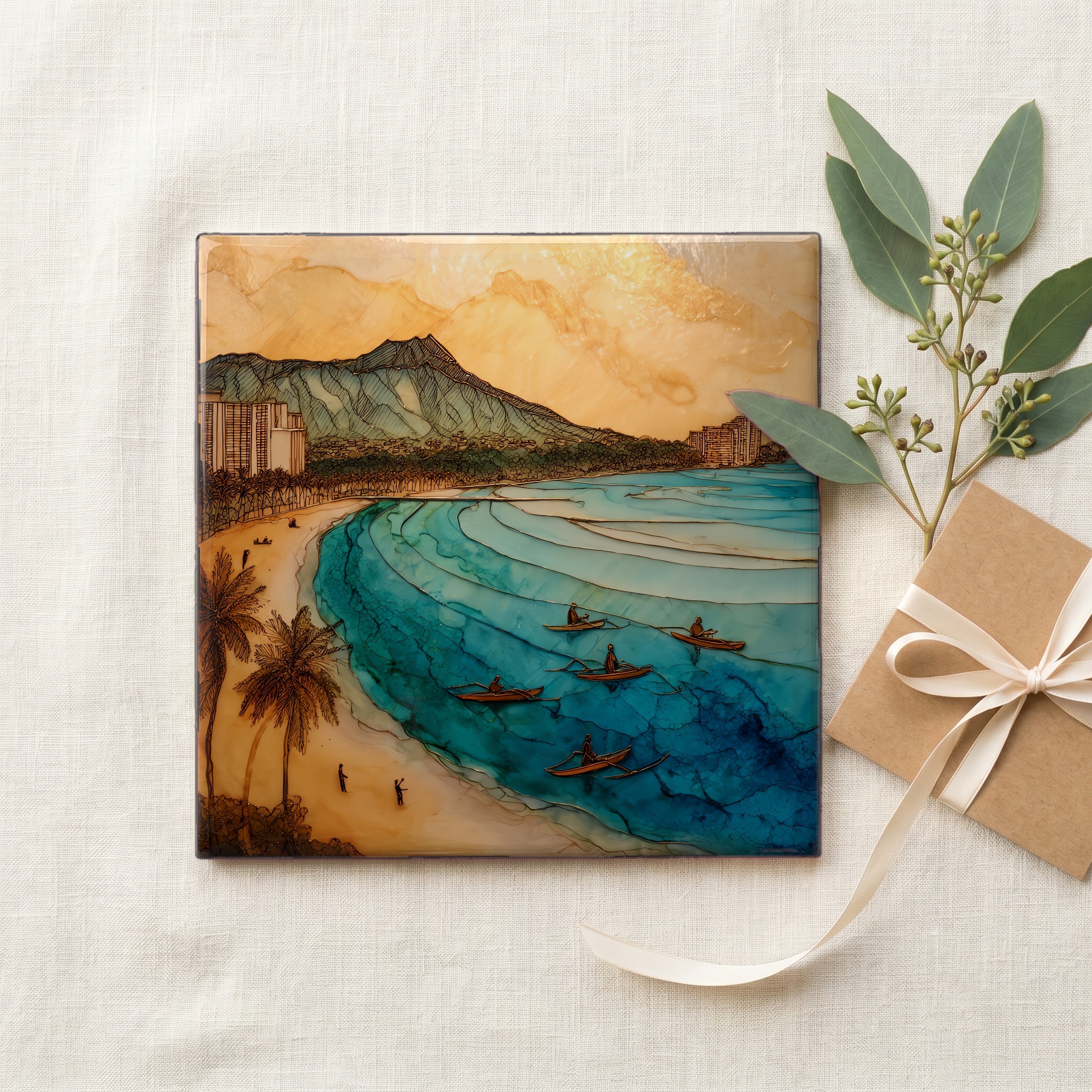
comes gift-ready
comes gift-ready

Each tile ships in a kraft box, tied with cream ribbon, with a handwritten note from the studio if you'd like to add one.
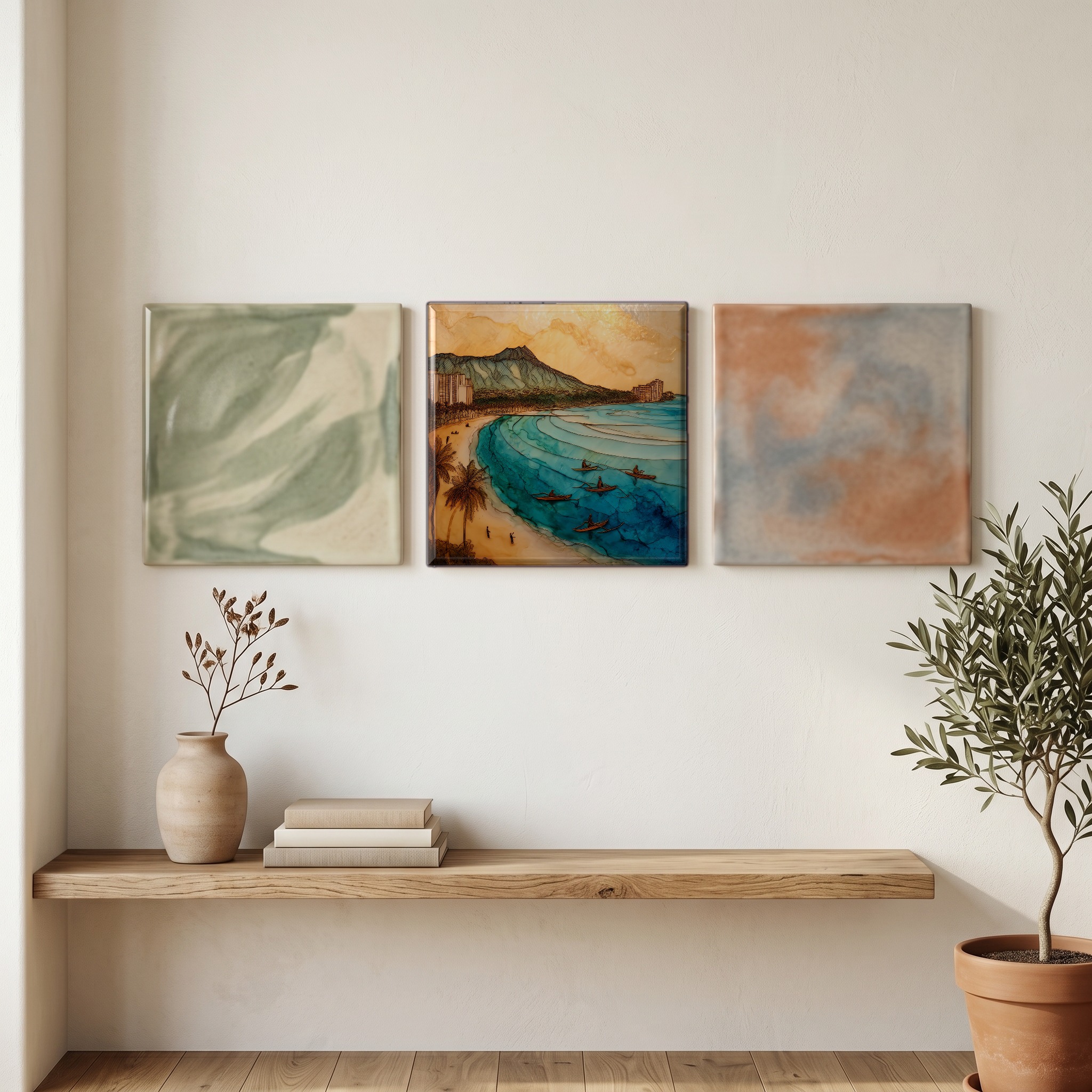
or build a grouping
or build a grouping

Three or five different vistas, hung together — a chapter of places you've been, or want to go.

about Waikiki Diamond Head Oahu Ceramic Art Tile

The place, in three passes.

A little of what's known, in case you fall down the rabbit hole — or want to go see it yourself.
the place

Diamond Head, known in Hawaiian as Lēʻahi, sits at the southeast corner of Oʻahu, the eastern bookend of Waikiki and Honolulu's most recognized landmark. The crater is a tuff cone roughly 300,000 years old, formed in a single explosive eruption when rising magma met seawater along the south coast. Its rim reaches 762 feet (232 metres) above sea level; the crater floor is wide enough to hold a football stadium with room to spare. The summit is reached by a 0.8-mile trail that climbs 560 feet through switchbacks, a 225-step staircase, and two military tunnels left from the early-twentieth-century Fort Ruger garrison.

— informed by Wikipedia, Hawaii State Parks
the stone

The Hawaiian name Lēʻahi describes the ridgeline's profile: lae for brow or promontory and ʻahi for yellowfin tuna. The English name comes from British sailors in the early nineteenth century who mistook calcite crystals embedded in the dark tuff for diamonds. Tuff itself is volcanic ash, fused in place; the cone was built in a few hours of phreatomagmatic eruption when seawater flashed against rising basalt. The crater interior, once an artillery emplacement under Fort Ruger, was returned by the U.S. military to the State of Hawaiʻi in 1976 and remains a State Monument under the Department of Land and Natural Resources.

— informed by Wikipedia
the visit

Diamond Head State Monument is open 6 a.m. to 4 p.m. daily, with the gates closing at 6 p.m. Out-of-state visitors must reserve a timed entry online before arriving; a $5 entry fee per person and $10 vehicle fee apply, while Hawaiʻi residents enter free with proof of residency. The hike runs 0.8 miles one way and gains 560 feet, with several flights of stairs and a low-ceilinged tunnel near the top. Most walkers finish in 1.5 to 2 hours round trip. The summit is the old Fire Control Station, built in 1910, with bunker windows that frame the long arc of Waikiki Beach below.

— informed by Hawaii State Parks
where
United States · Honolulu, Oʻahu, Hawaii
within
Diamond Head State Monument
elevation
232 m · 762 ft
position
21.2620° N · 157.8056° W
the neighborhood

What's nearby.

A handful of named places within an hour's walk or short drive. Some we've already painted; some we will.
2 km W
Waikiki Beach
beach
1 km W
Kapiʻolani Park
urban park
7 km E
Hanauma Bay
snorkel cove
8 km E
Koko Head
tuff cone
8 km W
ʻIolani Palace
royal residence
N
Waikiki Diamond Head Oahu Ceramic Art Tile
Waikiki Beach
Kapiʻolani Park
Hanauma Bay
Koko Head
ʻIolani Palace
common questions

What people ask.

A few questions we get about Waikiki Diamond Head Oahu Ceramic Art Tile — and about bringing the piece home.
about the place

Diamond Head sits at the southeast tip of Honolulu on the island of Oʻahu, marking the eastern end of Waikiki Beach. The state monument is about 2 miles from the heart of Waikiki and 5 miles from Honolulu's downtown.

British sailors in the early 1800s spotted calcite crystals glinting in the tuff and mistook them for diamonds. The original Hawaiian name is Lēʻahi: lae for brow or promontory and ʻahi for yellowfin tuna, describing the ridgeline's profile.

The cone formed about 300,000 years ago in a single phreatomagmatic eruption, when rising magma flashed seawater into steam. It belongs to the Honolulu Volcanic Series, a young phase of activity layered on the much older Koʻolau shield volcano.

The rim reaches 762 feet (232 metres) at the summit. The hike from the crater floor gains about 560 feet over 0.8 miles one way, with a 225-step concrete staircase and two military tunnels near the top.

Out-of-state visitors must book a timed entry through the Hawaii State Parks reservation system before arriving. Hawaii residents enter free with state ID. The monument is open 6 a.m. to 4 p.m., with gates closing at 6 p.m.

The summit holds the Fire Control Station Diamond Head, built in 1910 as part of the coastal artillery defenses of Fort Ruger. Bunker observation slits frame the view west across Waikiki to the Waiʻanae Range and east toward Koko Head.

about the piece in your home

Yes. Diamond Head and the long stretch of Waikiki are what most people picture when they think of Oʻahu. A Small or Medium in the Glossy finish carries the memory cleanly. A Coaster Set works for someone who hosted you and would rather use the piece than hang it.

The deep teals, surf-greens, and warm beach tones read well in Coastal-modern, mid-century Hawaiian, and Jewel-tone Maximalist rooms. The stained-glass treatment also holds up against darker walls in navy or forest, where most coastal art looks washed out.

Coastal-modern moved away from washed-out blue and beige around 2024 toward deeper, more saturated palettes anchored to a specific shoreline. A Diamond Head tile fits that shift: the colour is rooted in a real place rather than a generic surf scene.

A single Large reads from across a room above a console up to about 6 feet wide. Above a standard sofa, a 4-tile Mural carries the proportion better. Above a wide sectional, a 9-tile Mural gives the crater the scale it has in life.

Yes. Order it in the Dura Satin or Matte finish for bathrooms, showers, and kitchen backsplashes. Both are scratch-resistant and shed moisture cleanly. Reserve the Glossy finish for framed wall pieces in living spaces.

Microfibre cloth and water for daily care. For kitchen splatter on a Dura Satin or Matte tile, a drop of mild dish soap works. The colour is slowly infused into the ceramic surface beneath a thin protective finish, so no special sealant or polish is needed.

Yes. Reid Wender is the curator and eye behind every WenderVista piece. The studio does not license artwork or resell stock images: every tile in the atlas is original to Wender Studios, hand-finished in Knoxville, Tennessee.

if this one stayed with you

A few you might also love.

Hand-picked by the eye that found Sorapis. Same air, same kind of quiet.