Wender·Vista
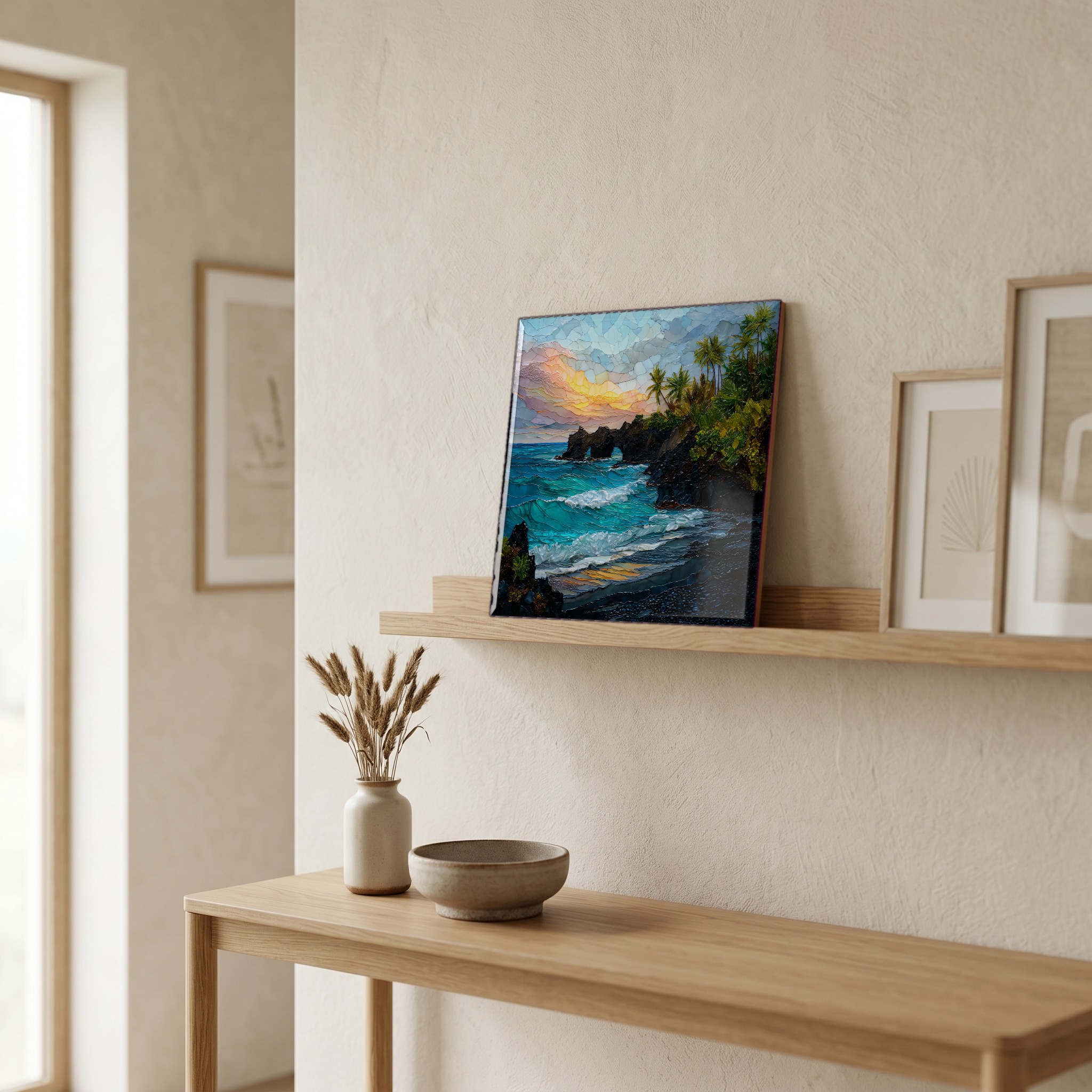
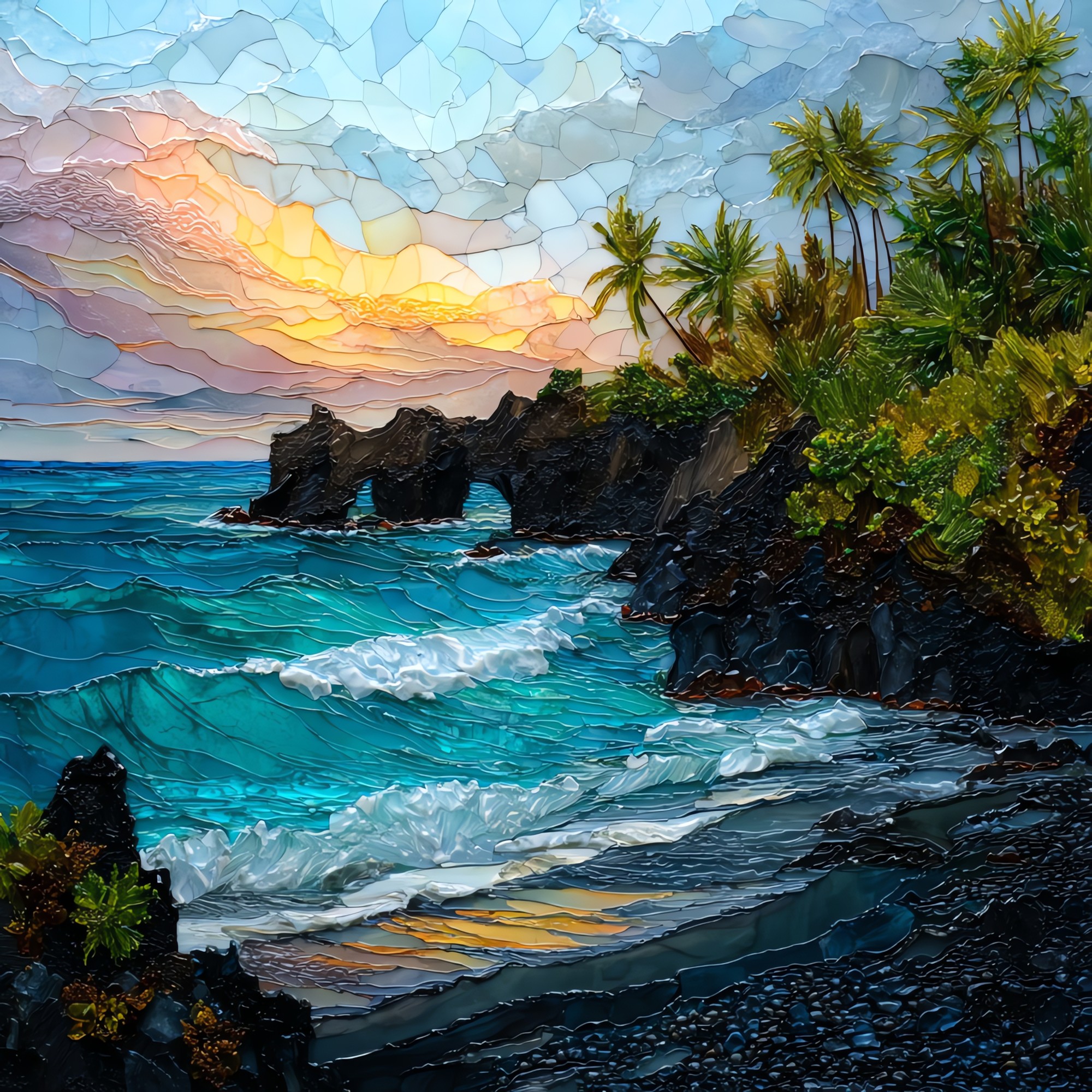
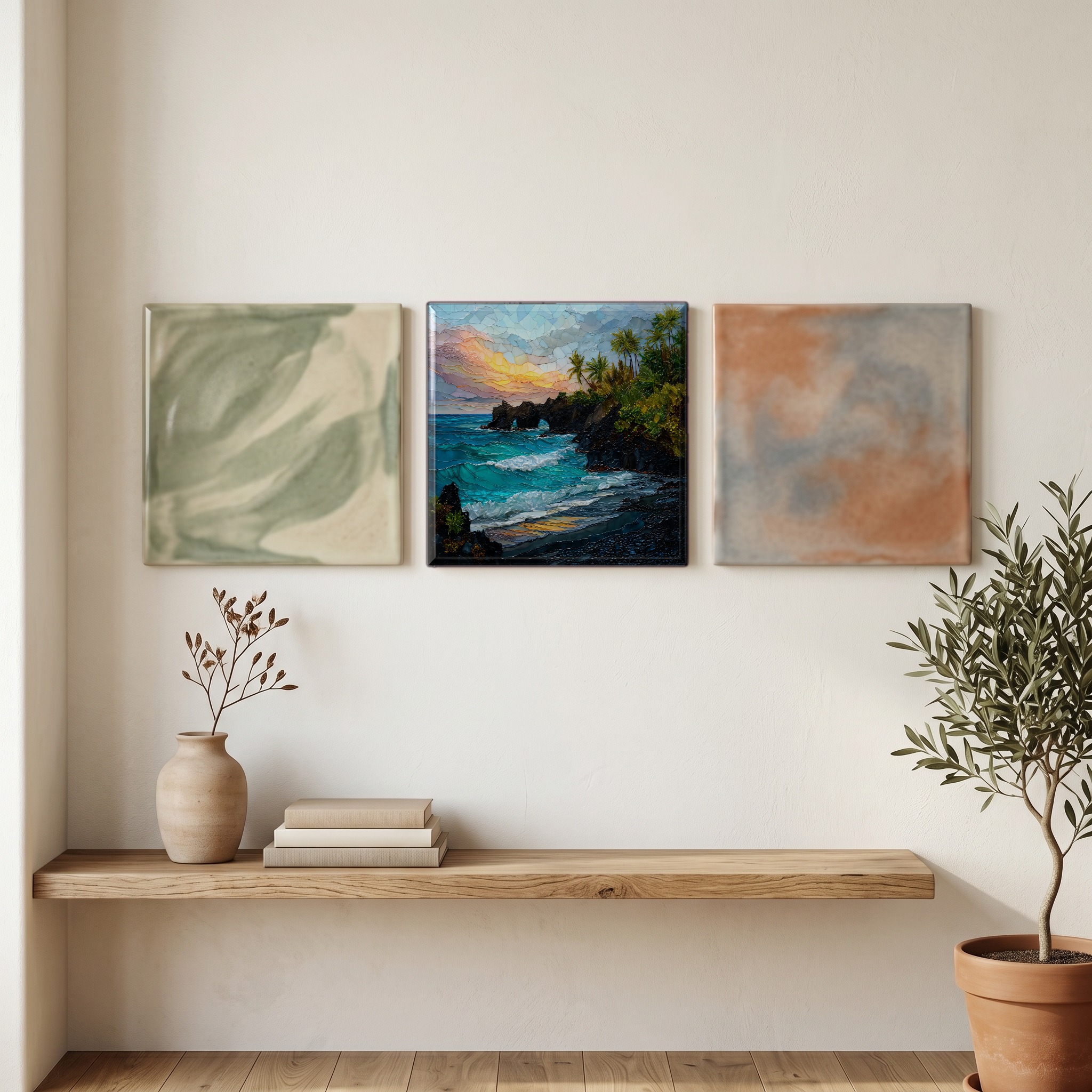
Waianapanapa Black Sand Maui Ceramic Art Tile
shown on ceramic, 12-inch tileHawaii · United States
on Maui's east coast, near Hāna

Waianapanapa Black Sand Maui Ceramic Art Tile

the colour the lava left behind.

Where it lives

Not only on a wall.

A small tile on the nightstand catching the morning. A larger one above the fire. Yours, wherever you spend the slow hours.
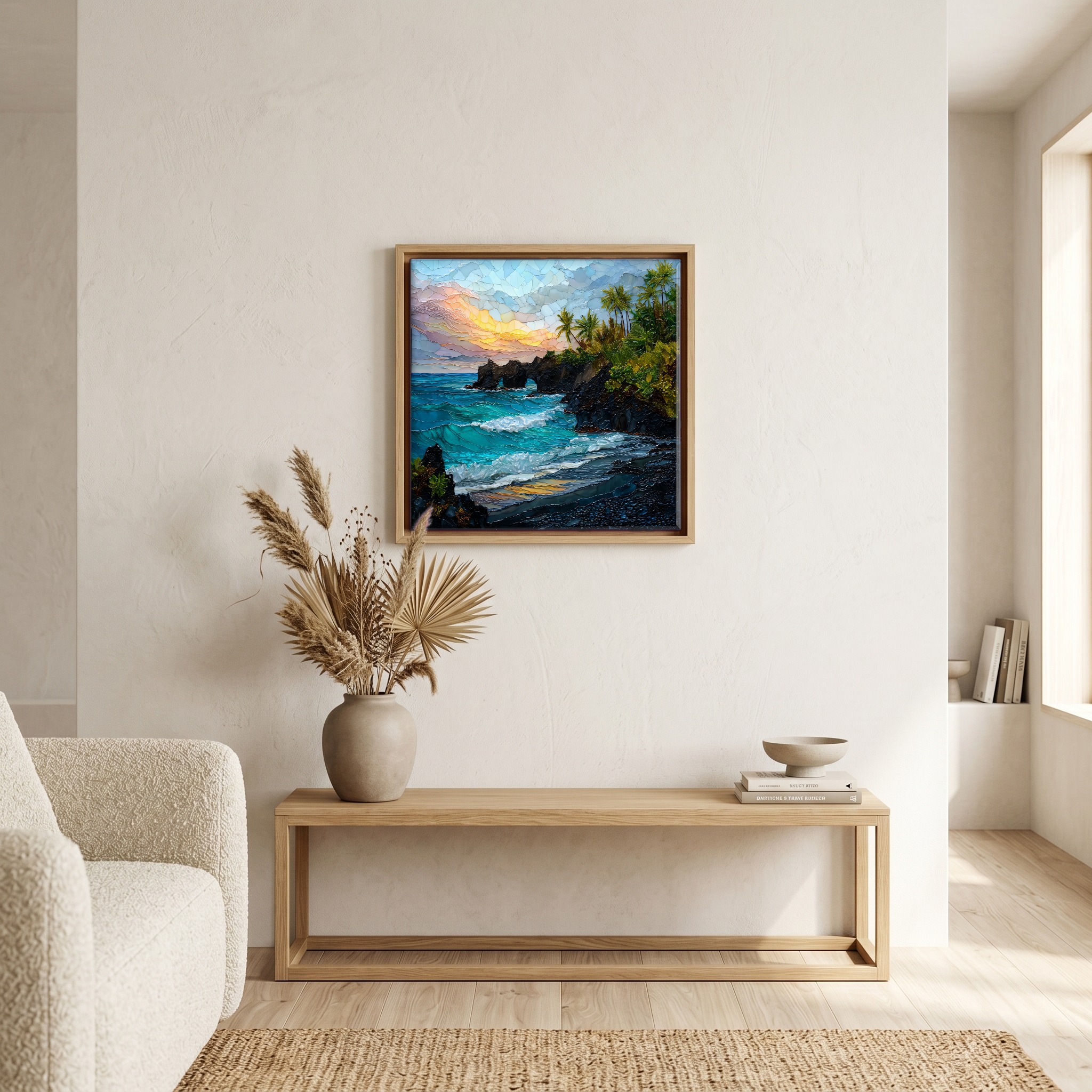
Above the bench, in a warm oak surround.
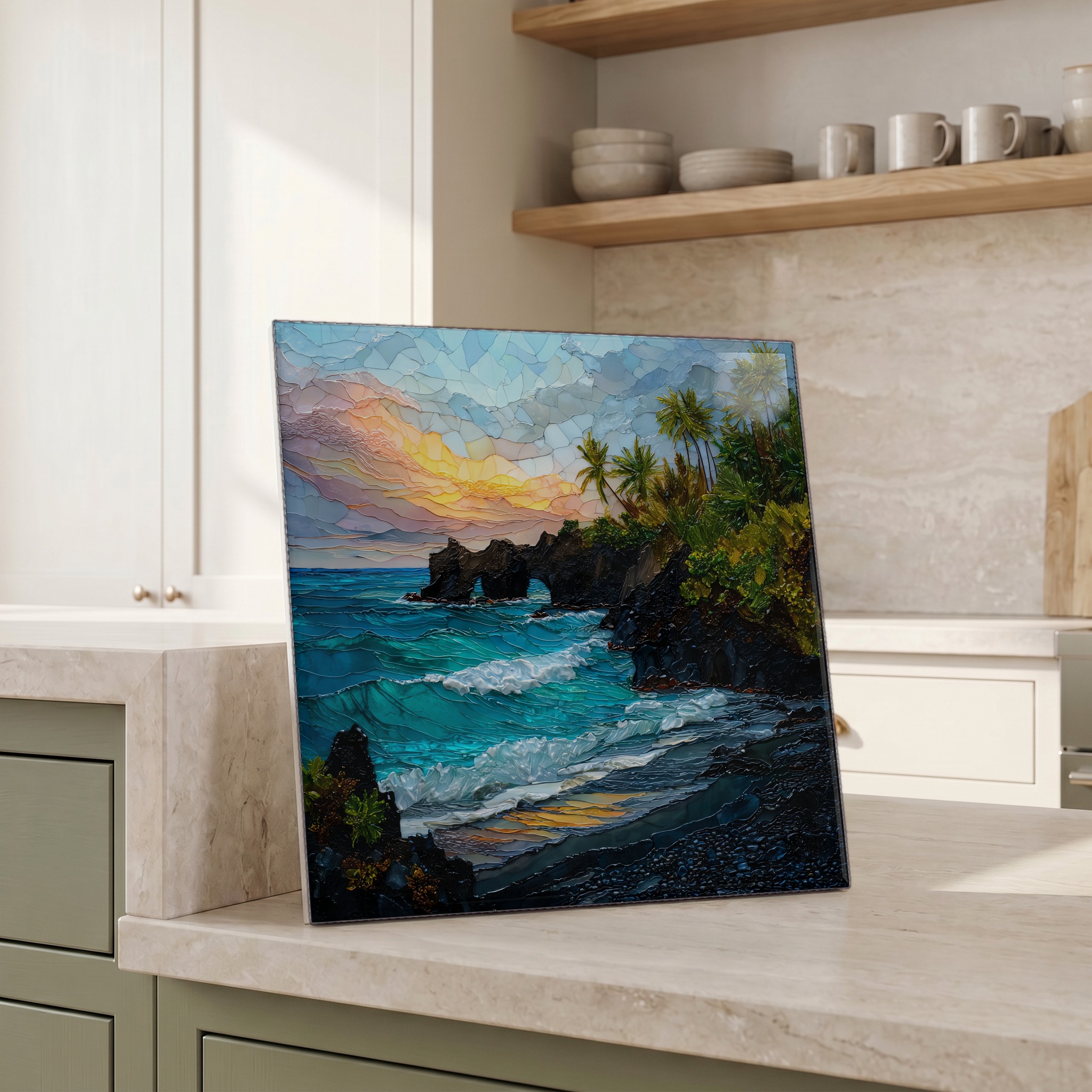
Beside the kettle, propped on the counter.
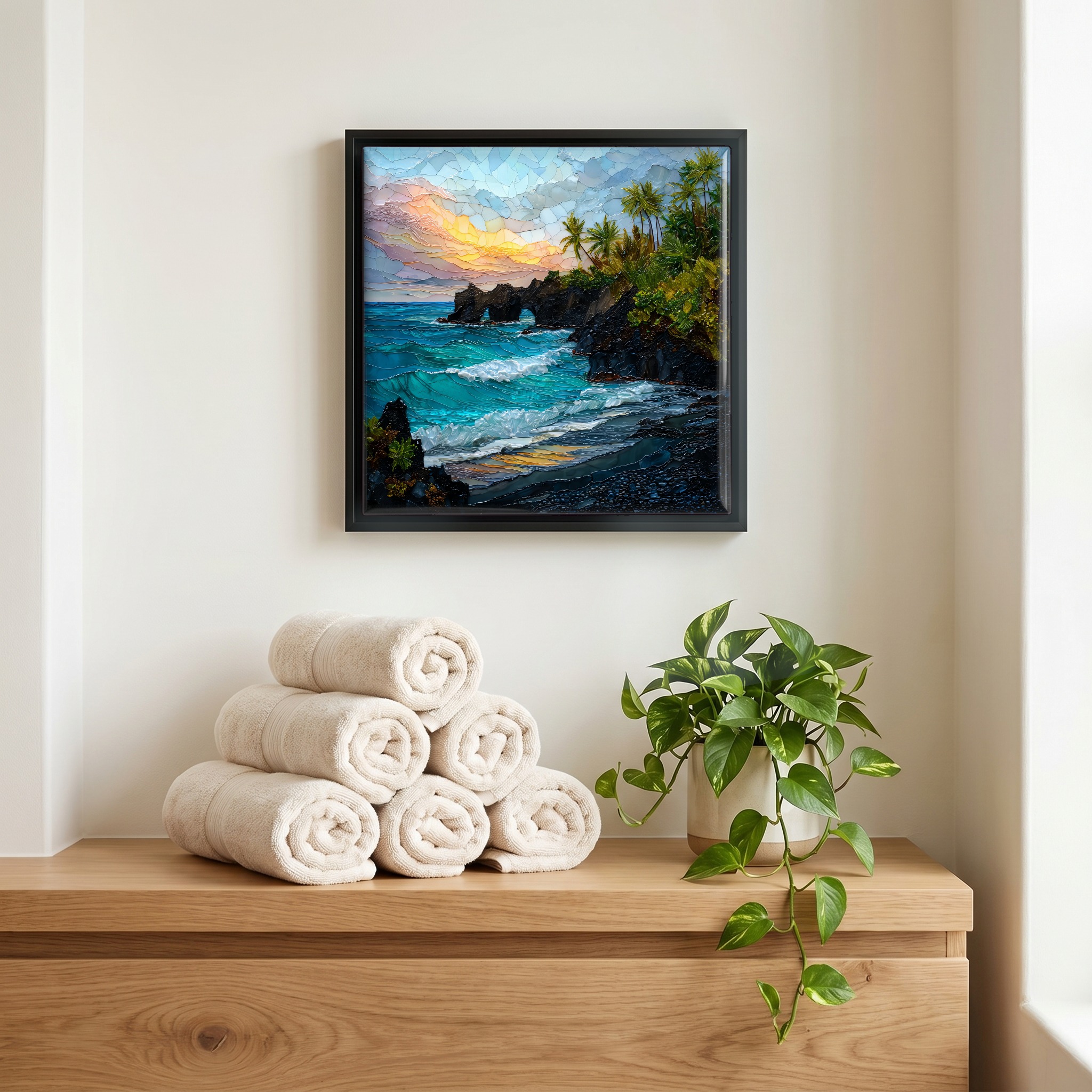
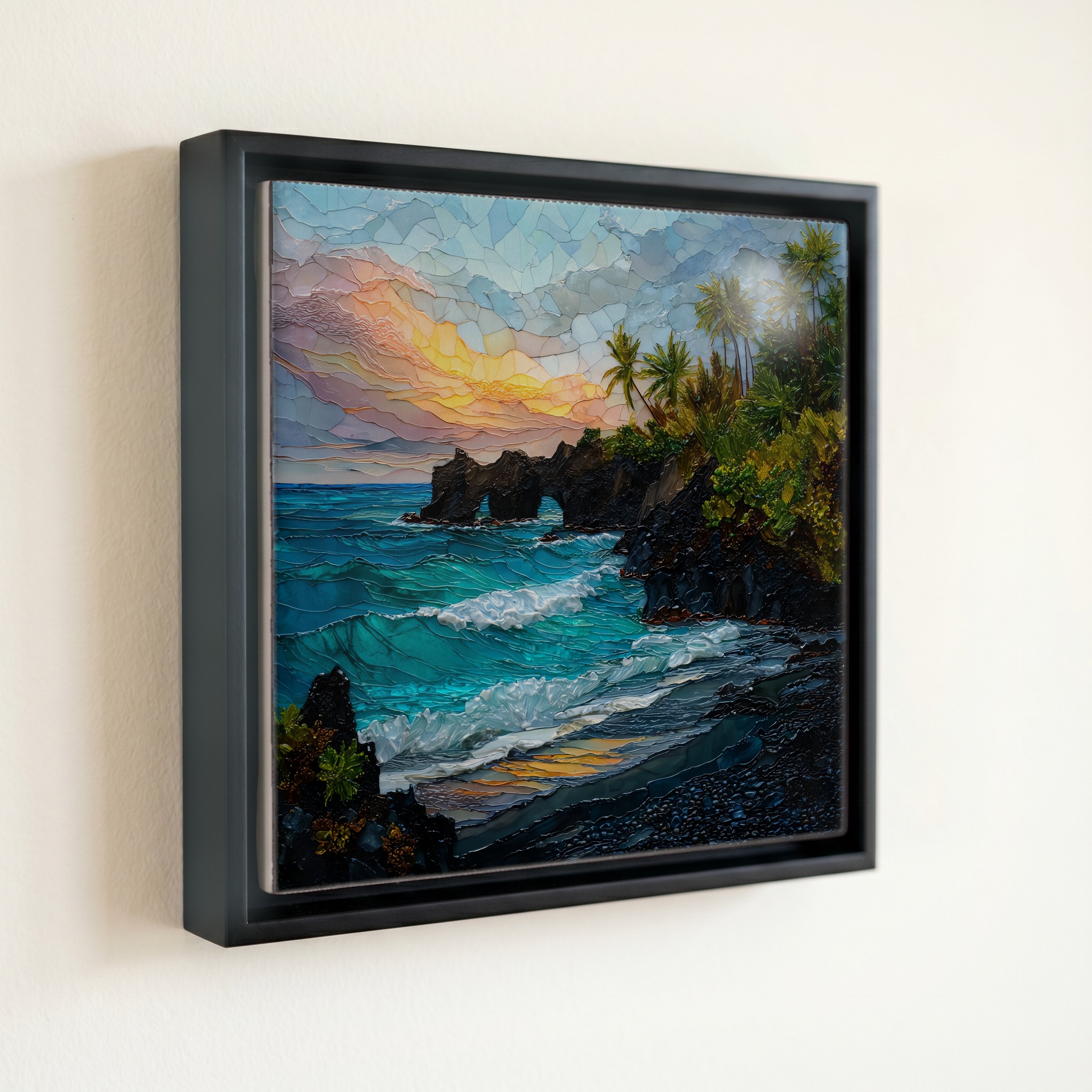
Above the linens, in a slim black surround.
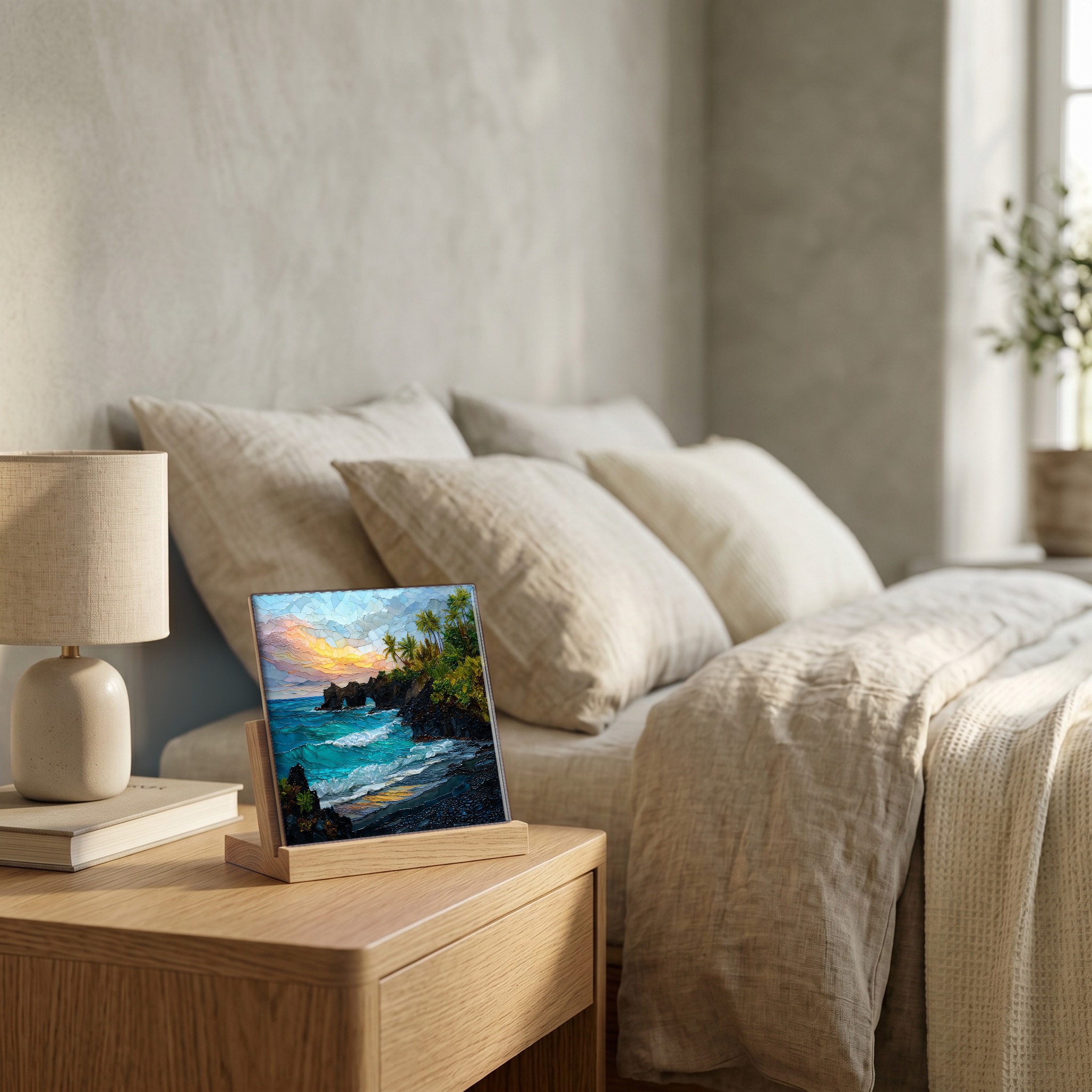
On the nightstand, on a light oak stand.
On a picture ledge, where the light comes in.
a note from the studio

Mile marker 32 on the Hāna Highway, on the windward coast of Maui. The sand here is basalt, volcanic rock the Pacific has been grinding down for centuries. The Hawaiian name means glistening water, a reference to the freshwater caves at the head of the beach where Princess Popoalaea is said to have hidden from her husband. Hala trees lean toward the surf. The state park requires a reservation now, since 2021, and most days the shore is quieter for it.
from the studio
shown in a slim black floating frame · 6 × 6 in
— bring it home

Waianapanapa Black Sand Maui Ceramic Art Tile, on ceramic.

Each tile is finished by hand in our Knoxville studio. Artwork is slowly infused into the ceramic surface under high heat and pressure, and rests beneath a thin glossy finish. The colour lives in the surface, not on top of it.

What kind of piece?
One tile — square or rectangle.
How big?
the popular one — counter, shelf, nightstand
6 × 6 in · 15 cm · 1.6 lb
Surface finish
A clear glossy finish — the artwork reads as if under resin. Ideal for show-pieces and framed wall art.
How it sits
A hidden cleat — sits ¼″ proud of the wall.
$58
Hand-finished and shipped from our studio at the foot of the Smokies. On your wall in about ten days.
size
6 × 6 in
15 cm
weighs
1.6 lb
solid in the hand
surface
ceramic, hand-finished
art rests beneath a thin glossy finish
from
Knoxville, TN
our family studio, at the foot of the Smokies
— start a Coaster Set

Pick any four 4-inch tiles — National Parks you've been to, a Smokies set, the four seasons of one place. $ for a set of , cork-backed, ready to live on the table.
comes gift-ready
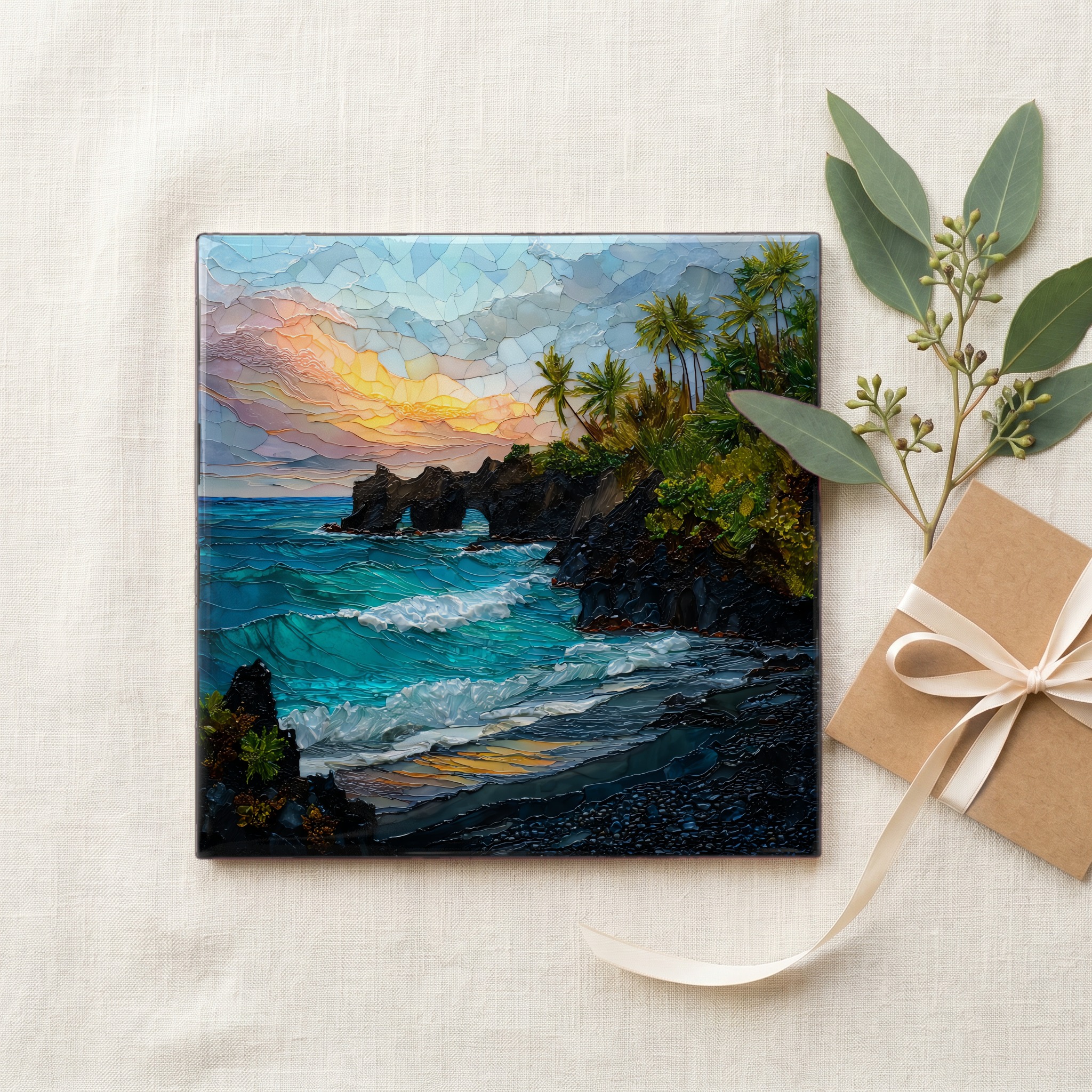
comes gift-ready

Each tile ships in a kraft box, tied with cream ribbon, with a handwritten note from the studio if you'd like to add one.
or build a grouping
or build a grouping

Three or five different vistas, hung together — a chapter of places you've been, or want to go.

about Waianapanapa Black Sand Maui Ceramic Art Tile

The place, in three passes.

A little of what's known, in case you fall down the rabbit hole — or want to go see it yourself.
the place

Waiʻānapanapa State Park sits on the windward coast of Maui, along the Hāna Highway at mile marker 32, just before the town of Hāna. The 122-acre park preserves a stretch of low basalt sea cliff, freshwater caves, and Pāʻiloa Beach, the small black-sand pocket at its centre [1]. The land remains culturally significant to Native Hawaiians. Within the park boundaries are the remains of ʻOhala Heiau, an ancient temple platform, and a section of the Kīpapa o Kihapiʻilani Trail, the coastal stone path attributed to the 16th-century Maui chief Kihapiʻilani [2]. The state park is administered by the Hawaiʻi Division of State Parks under the Department of Land and Natural Resources.

the stone

The sand of Pāʻiloa Beach is basalt, volcanic rock broken down by wave action rather than the long mineral weathering that produces the tan and white sands of older shores. Maui's eastern coast was built by the shield volcanism of Haleakalā, whose last eruption is now dated by the U.S. Geological Survey to between 1480 and 1600 [1]. As lava cliffs meet the Pacific, the sea grinds basalt into pebbles, then into the coarse black grains underfoot, and the fragments retain the colour of the parent rock. Across the Hawaiian Islands, only a handful of beaches sit at the right combination of recent lava flow and ocean exposure for this to occur. Punaluʻu on Hawaiʻi Island is the other most-photographed example [2]. The grains are heavier than quartz sand and warm quickly in the sun.

the water

The park takes its name from the freshwater caves at the head of Pāʻiloa Beach. Waiʻānapanapa translates loosely as 'glistening water,' a reference to the pools at the back of two lava-tube caves that catch and throw light through narrow openings overhead [1]. On certain nights the water takes on a red cast. Hawaiian oral tradition attributes the colour to Princess Popoalaea, said to have hidden in the caves from her cruel husband Chief Kaʻakea and to have been found and killed there [2]. The natural explanation is the seasonal hatch of ʻōpaeʻula, the small red endemic shrimp that live in anchialine pools across the Hawaiian Islands [1]. Visitors are asked not to enter the caves out of respect; the pools remain culturally significant to Native Hawaiians.

where
United States · Hāna, Maui County, Hawaii
within
Waiʻānapanapa State Park
elevation
0 m · 0 ft
position
20.7867° N · 156.0019° W
the neighborhood

What's nearby.

A handful of named places within an hour's walk or short drive. Some we've already painted; some we will.
5 km SE
Hāna
town
6 km SE
Hāna Bay
harbor
9 km S
Hāmoa Beach
beach
16 km S
Wailua Falls
waterfall
19 km S
Pools of ʻOheʻo
stream pools
N
Waianapanapa Black Sand Maui Ceramic Art Tile
Hāna
Hāna Bay
Hāmoa Beach
Wailua Falls
Pools of ʻOheʻo
common questions

What people ask.

A few questions we get about Waianapanapa Black Sand Maui Ceramic Art Tile — and about bringing the piece home.
about the place

The park is on Maui's windward east coast, along the Hāna Highway at mile marker 32, just before the town of Hāna. It covers 122 acres of basalt cliffs, freshwater caves, and a small black-sand beach called Pāʻiloa.

The sand is basalt — the same volcanic rock that built the island. As the surf grinds the lava cliffs of Maui's east shore, the rock breaks down into coarse black grains. The fragments retain the colour of the parent stone, which was extruded from Haleakalā volcano.

In Hawaiian it translates loosely as 'glistening water,' a reference to the freshwater caves at the head of the beach. Hawaiian tradition tells of Princess Popoalaea, who hid in the caves from her husband; the water there occasionally runs red, an effect also produced by hatches of small endemic ʻōpaeʻula shrimp.

Out-of-state visitors must reserve entry online in advance through the Hawaiʻi State Parks reservation system. The policy was introduced in 2021 to ease congestion. Hawaiʻi residents enter free with valid ID. Reservations are released thirty days ahead and the midday slots sell out fastest.

About two and a half hours each way along the Hāna Highway, which crosses fifty-nine one-lane bridges and several hundred curves. Most visitors plan the route as a full-day outing, and many stay the night in Hāna or in the park's camping cabins to avoid driving the road back after dark.

The shore break at Pāʻiloa Beach is short, rocky, and often heavy, and the cove pulls a strong current. The state park advises against swimming except in calm conditions. The freshwater caves are not open to swimming; the pools carry cultural significance and visitors are asked to view them from the path.

Beyond the black-sand beach, the 122-acre park holds the freshwater caves, ʻOhala Heiau (an ancient temple platform), a sea arch, several blowholes, hala-tree groves along the cliffs, and a section of the Kīpapa o Kihapiʻilani Trail — the coastal stone path attributed to the 16th-century Maui chief Kihapiʻilani.

about the piece in your home

The tile carries well as a gift for someone connected to Maui or to the Hāna coast specifically. Waiʻānapanapa is a place locals return to. A Small or Medium with a handwritten note from the studio is the most common gifting size; a Keepsake works for a desk or a nightstand.

The deep black sand, the dark basalt cliffs, and the green of the hala trees suit Coastal-modern interiors, Tropical-modern rooms with dark woods, and Jewel-tone Maximalist walls where a rich palette is welcome. It also reads well against weathered wood, white plaster, and rattan.

The image fits both. Biophilic design favours scenes of real, specific landscapes rather than generic prints, and Waiʻānapanapa is a strong example. Tropical-modern rooms tend to balance dark woods with deep greens and ocean tones; the tile gives them a focal point that is not a stock palm-tree print.

A single Large reads well above a console table or a small loveseat. Above a standard sofa, a 4-tile Mural is the proportioned choice. For a long sectional or a generous gallery wall, a 9-tile Mural carries the full sweep of the beach, the sea arch, and the cliff line.

Yes. For a bathroom, kitchen backsplash, or any wet or vertical installation, choose the Dura Satin or Matte finish. Both are scratch-resistant and rated for those rooms. The Glossy finish is reserved for framed wall pieces and dry display surfaces.

A soft microfibre cloth with water is enough for routine dust. For a deeper clean, use a small amount of mild dish soap on the cloth, then dry with a second microfibre. Skip abrasive sponges and ammonia-based cleaners; the colour lives in the surface and a gentle hand is all it needs.

Yes. Every WenderVista piece is created in one studio by Reid Wender, with no external licensing. The Waiʻānapanapa piece was made specifically for this place and does not appear in any other catalogue.

if this one stayed with you

A few you might also love.

Hand-picked by the eye that found Sorapis. Same air, same kind of quiet.