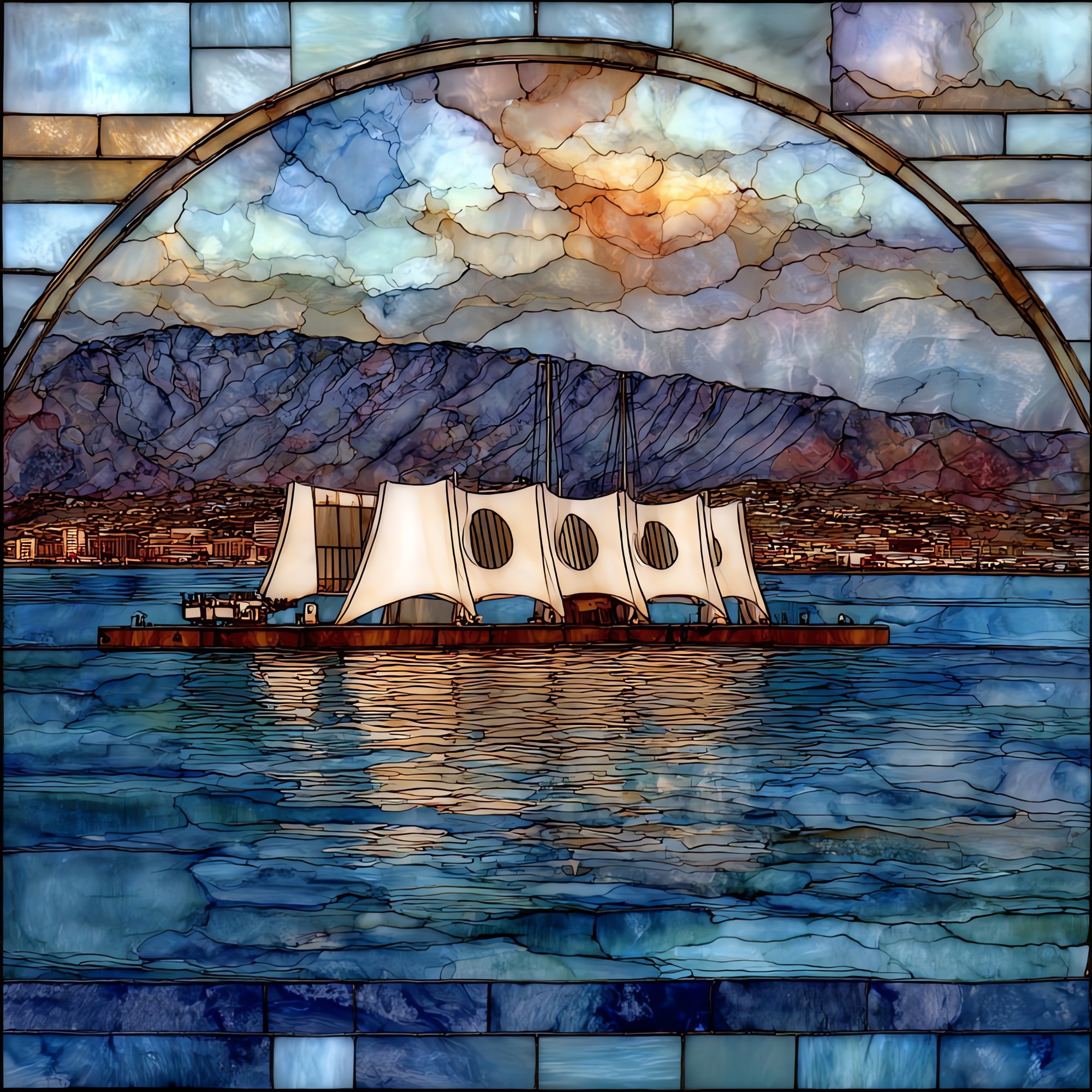
USS Arizona Memorial Oahu Ceramic Art Tile
— — the white above the sunken ship.
Not only on a wall.
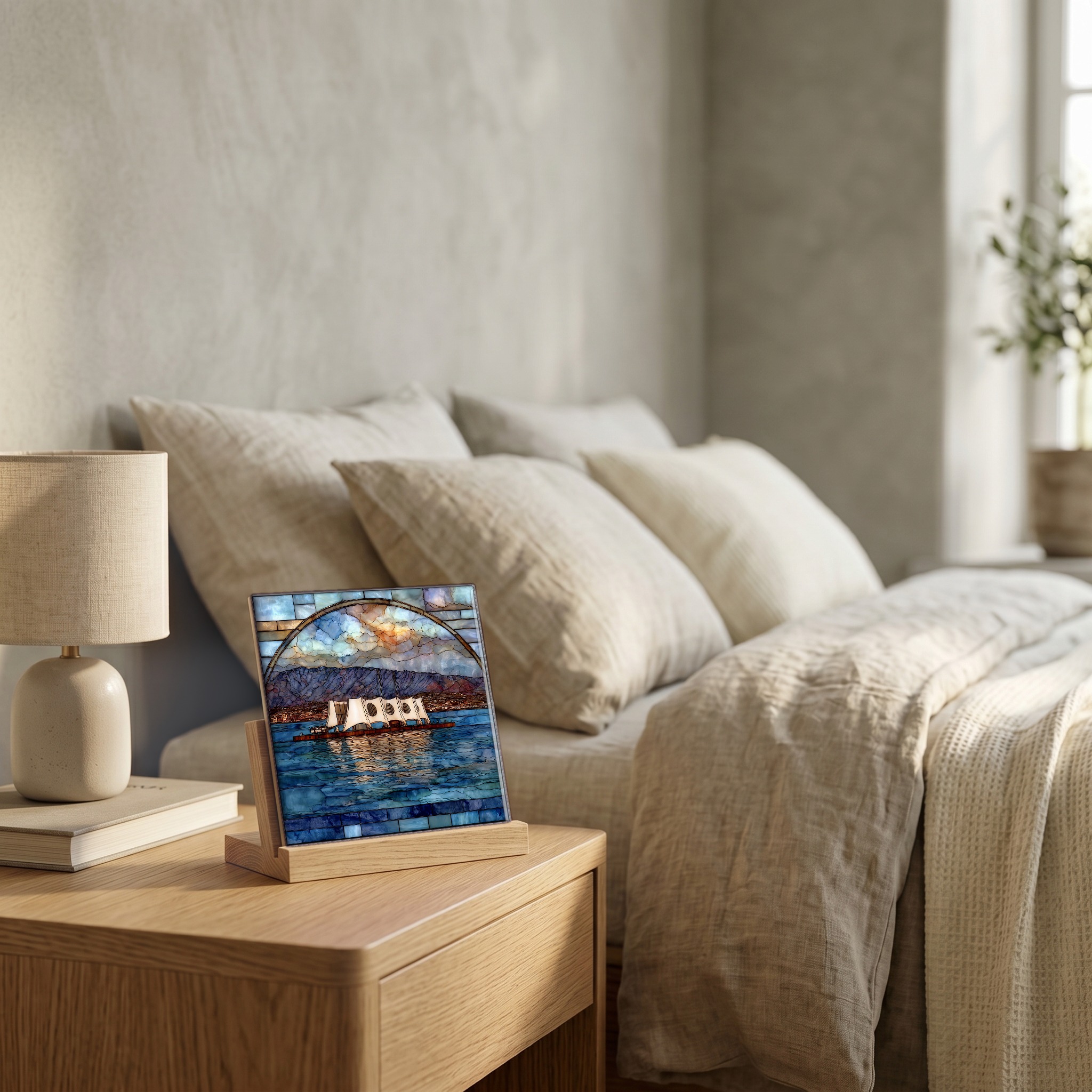
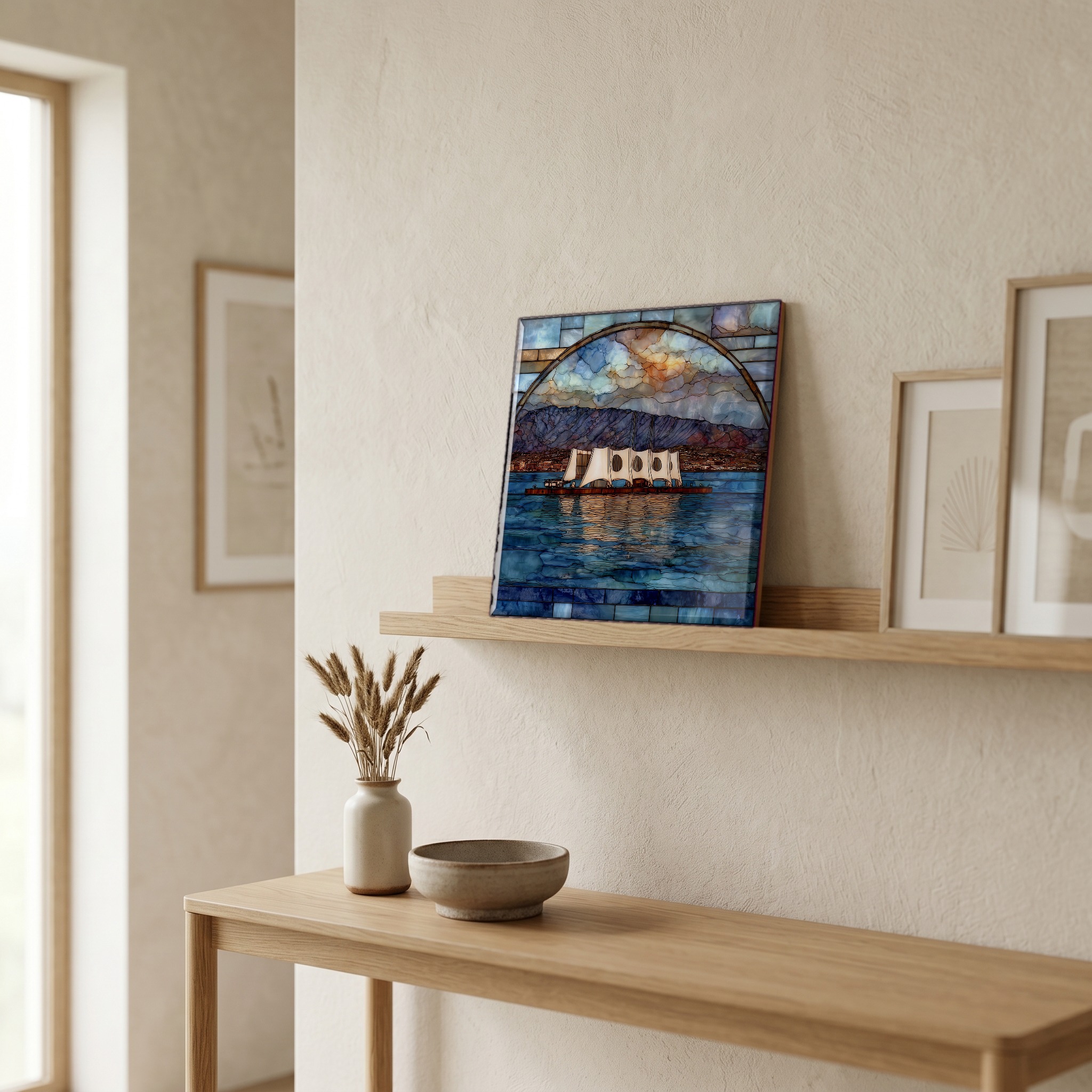
“A white structure that bridges, without touching, the sunken hull of a battleship. Designed by Alfred Preis in 1962, it dips in the middle and rises at the ends, suggesting the line of American sentiment before, during, and after the morning of December 7, 1941. Inside the shrine room, 1,177 names are carved into the marble wall. The ship below still gives up about nine quarts of oil a day, slow black drops that rise to the surface. Visitors come on a free Navy shuttle from the visitor center. Most do not say much when they arrive.
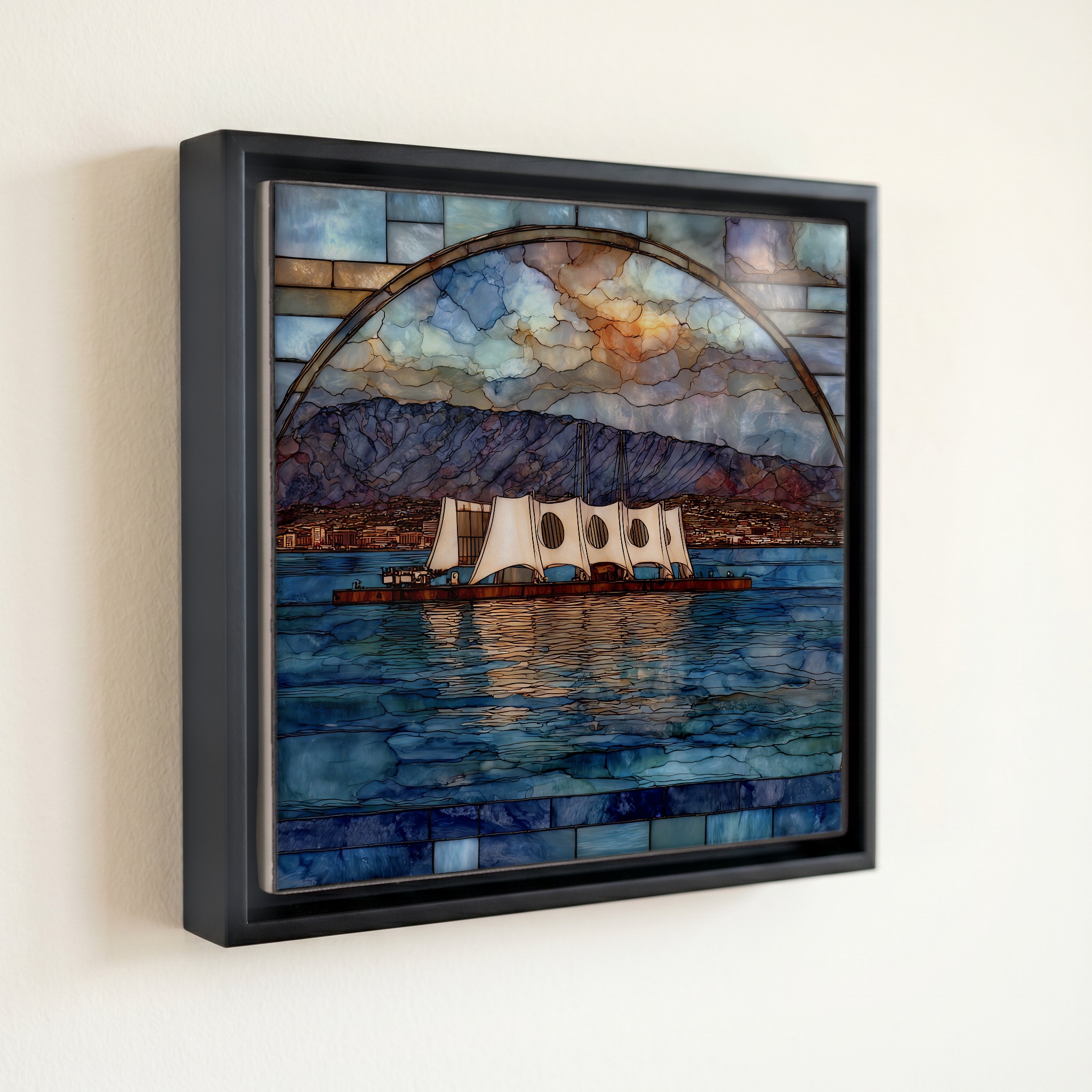
USS Arizona Memorial Oahu Ceramic Art Tile, on ceramic.
Each tile is finished by hand in our Knoxville studio. Artwork is slowly infused into the ceramic surface under high heat and pressure, and rests beneath a thin glossy finish. The colour lives in the surface, not on top of it.
Pick any four 4-inch tiles — National Parks you've been to, a Smokies set, the four seasons of one place. $ for a set of , cork-backed, ready to live on the table.
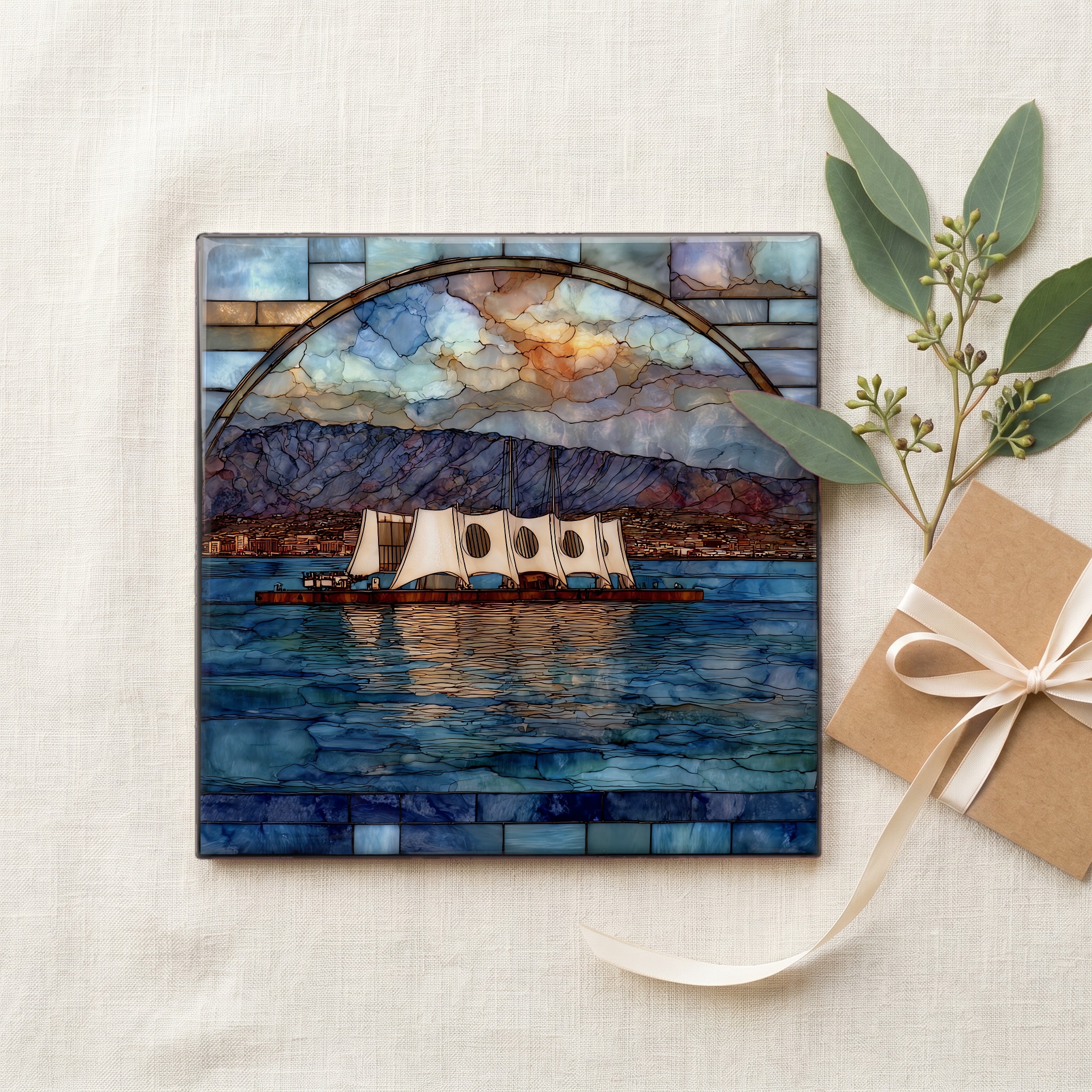
Each tile ships in a kraft box, tied with cream ribbon, with a handwritten note from the studio if you'd like to add one.
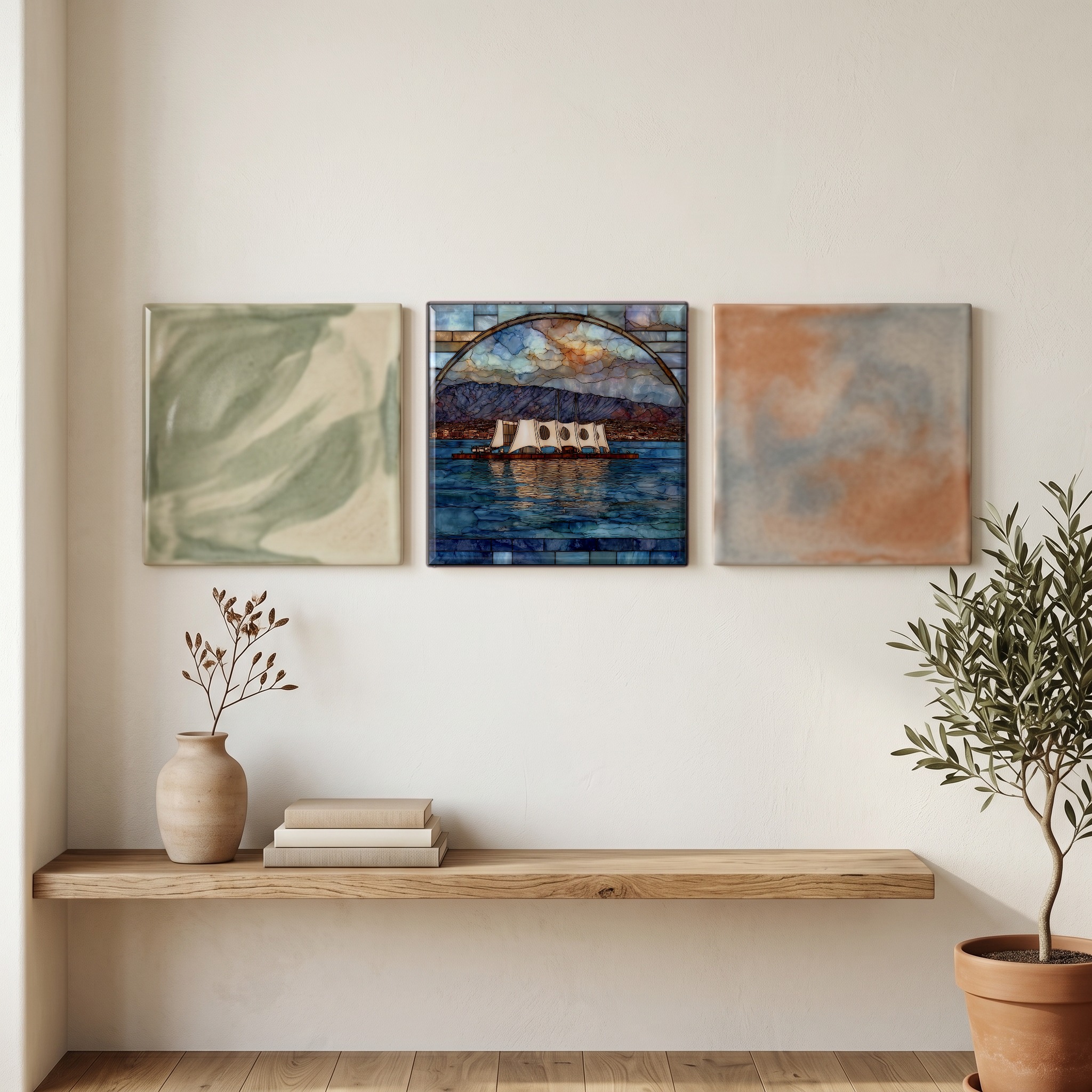
Three or five different vistas, hung together — a chapter of places you've been, or want to go.
The place, in three passes.
The USS Arizona Memorial sits in Pearl Harbor on the south coast of Oahu, just off the eastern shore of Ford Island. It marks the wreck of the battleship USS Arizona, sunk by Japanese aircraft on the morning of December 7, 1941. The 184-foot white concrete structure straddles the hull without touching it, oriented perpendicular to the ship's long axis. The memorial was dedicated on Memorial Day 1962 and is now part of the Pearl Harbor National Memorial, administered jointly by the National Park Service and the U.S. Navy. Access is from a visitor center on the Honolulu shore; the memorial itself sits about a mile offshore, reachable only by a free Navy shuttle boat.
The most distinctive feature at the surface is the oil that still rises from the wreck, in small rainbow-edged droplets the National Park Service calls the tears of the Arizona. The ship was carrying more than a million gallons of fuel oil on the morning of the attack; most burned that day, but the bunkers were never fully drained and continue to release roughly two to nine quarts of oil a day. The drops surface against the harbor water below the memorial floor, where visitors look down from the open well in the assembly room. The Navy monitors the seep; the wreck itself is the grave of 1,102 sailors and marines, and is not disturbed.
Entry to the memorial is free, but visitors must reserve timed tickets in advance through Recreation.gov; same-day standby tickets are limited and often gone by mid-morning. The full experience takes about 75 minutes, beginning at the visitor center on the Honolulu shore with a short documentary film, then a Navy shuttle boat ride of about 10 minutes to the memorial itself. Bags larger than a small purse are not allowed and must be stored at the off-site Aloha Stadium baggage check. The memorial is open daily except Thanksgiving, Christmas, and New Year's Day; the closure for structural repairs in 2018 and 2019 has since been resolved. Each December 7, a commemoration ceremony marks the anniversary of the attack.