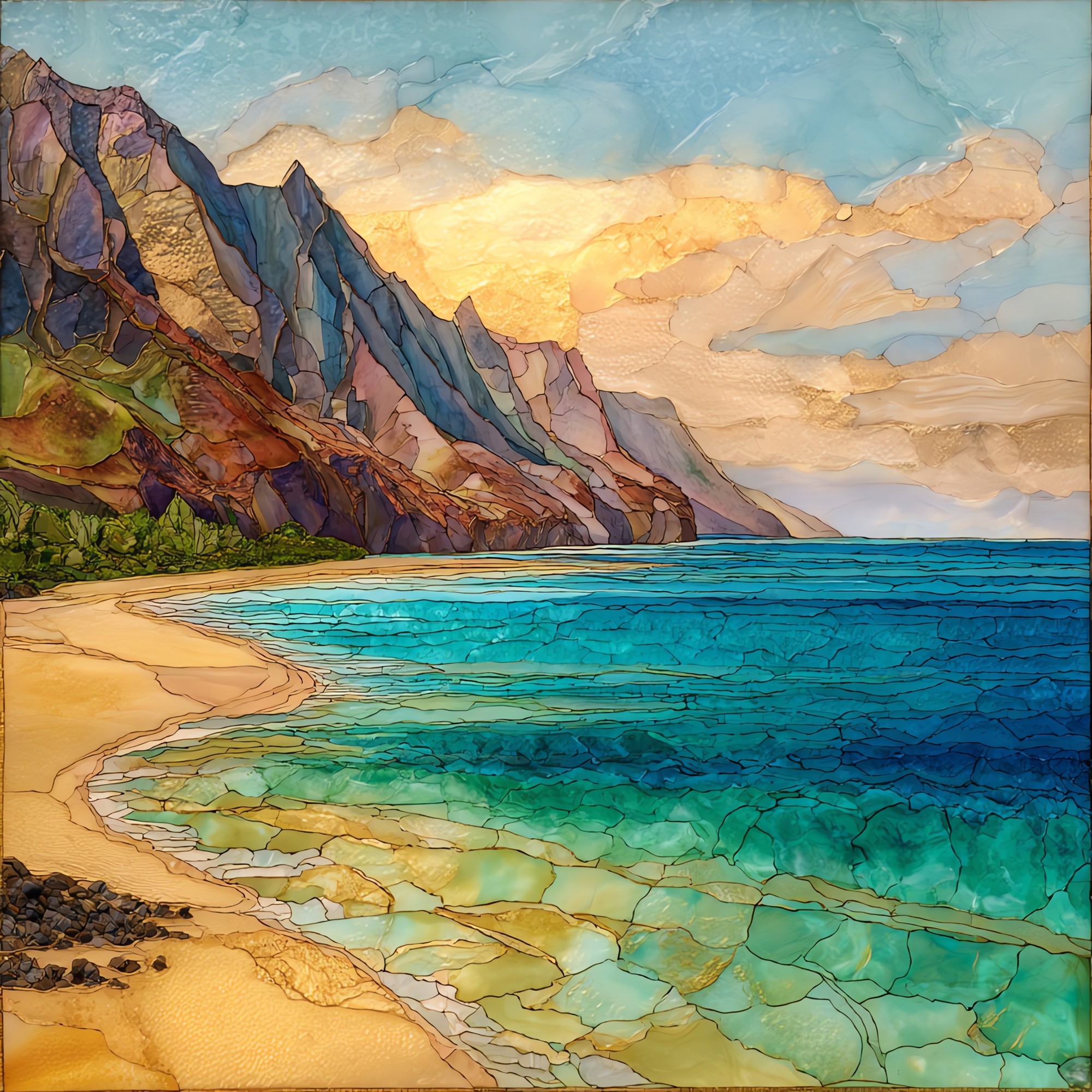
Tunnels Beach Kauai Ceramic Art Tile
— — the summer the reef opens.
Not only on a wall.
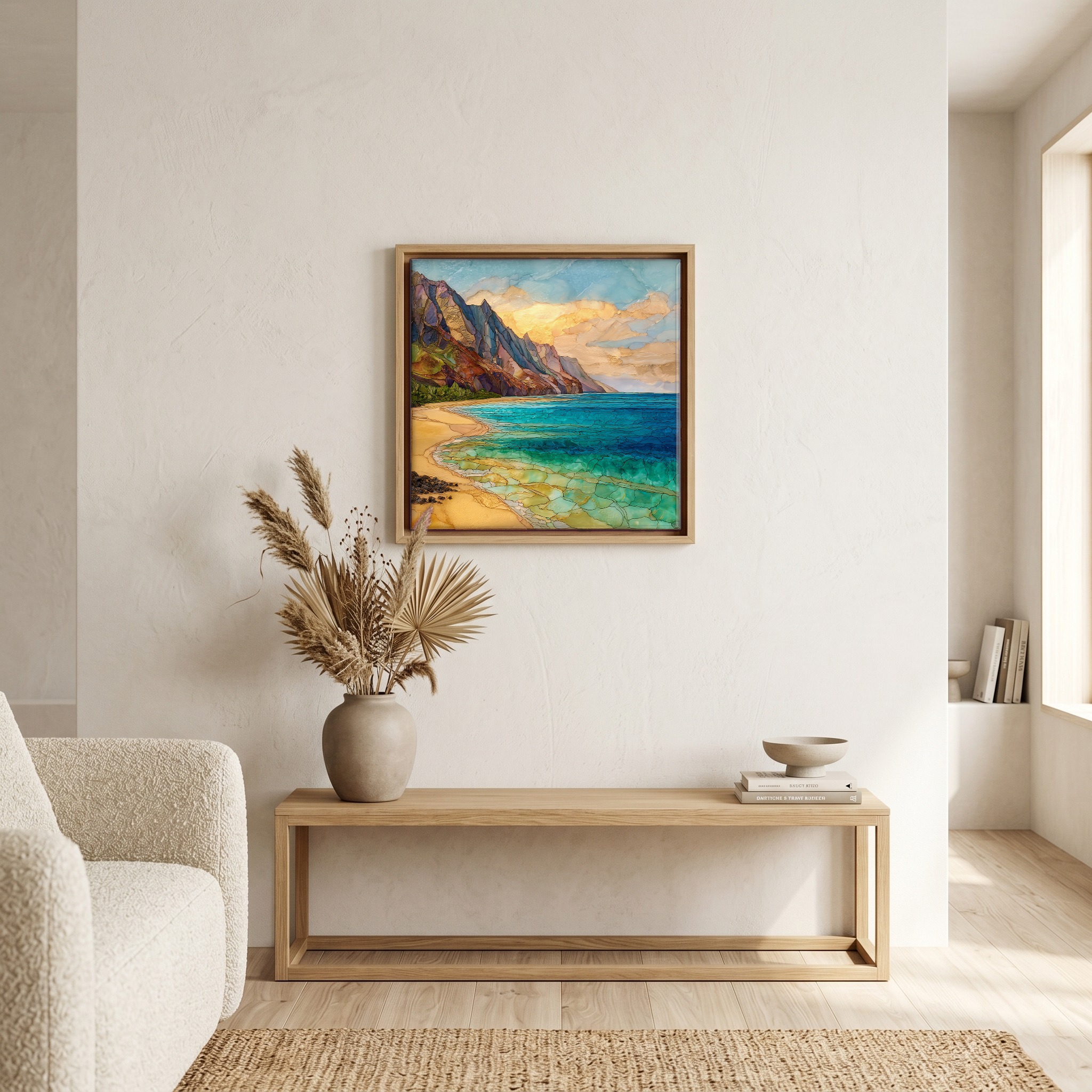

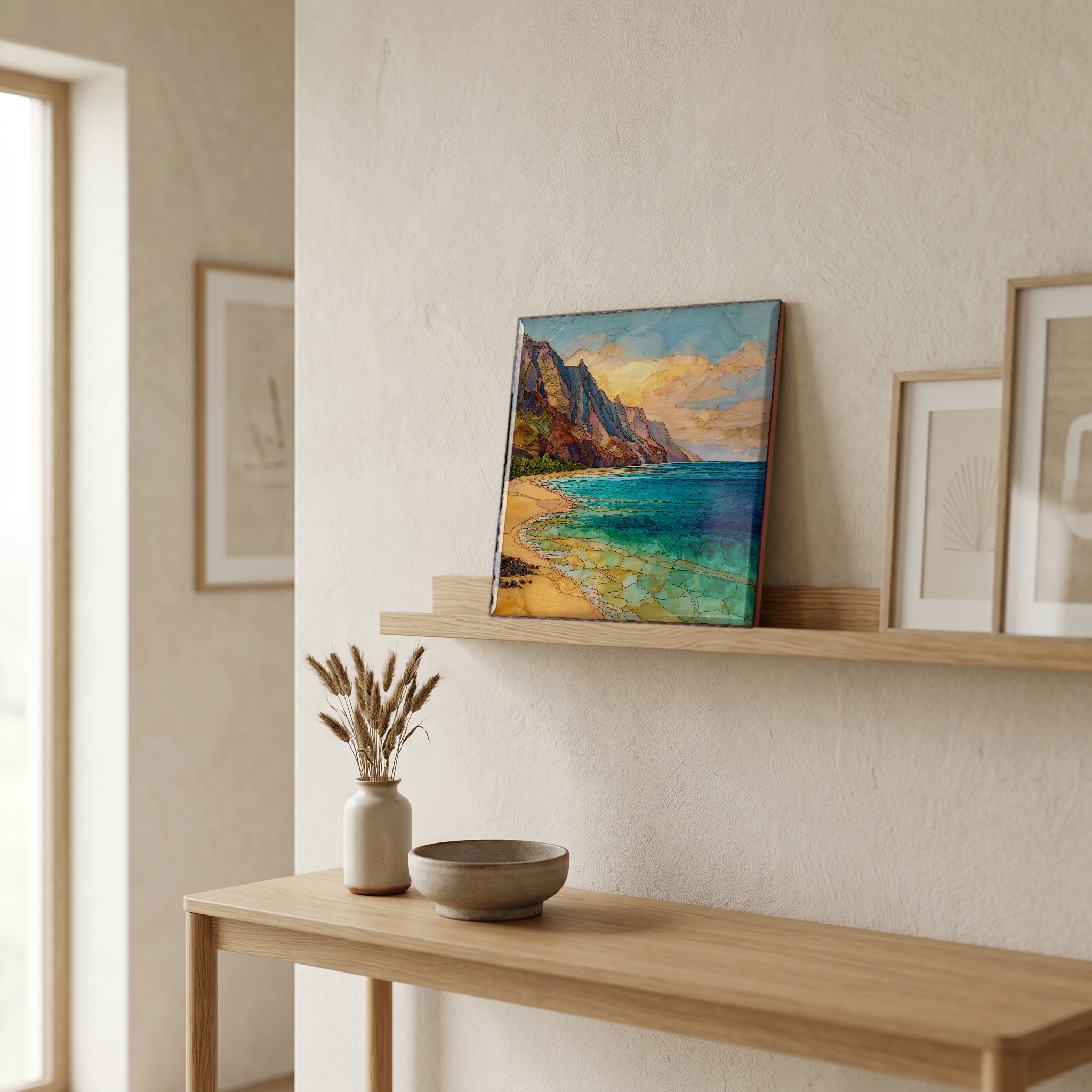
“The end of the road on Kauai's north shore, where Kuhio Highway runs out near Hāʻena and the reef starts about a hundred yards offshore. The water reads a particular turquoise, shallow over the coral, deeper where the reef breaks open into the lava tubes the place is named for. From May through September the surface stays glass and the snorkelers come. The rest of the year the north swell takes over and the beach is for walking. Mt. Makana rises behind it, the spire from the old South Pacific film. Most days nobody on the sand says much.
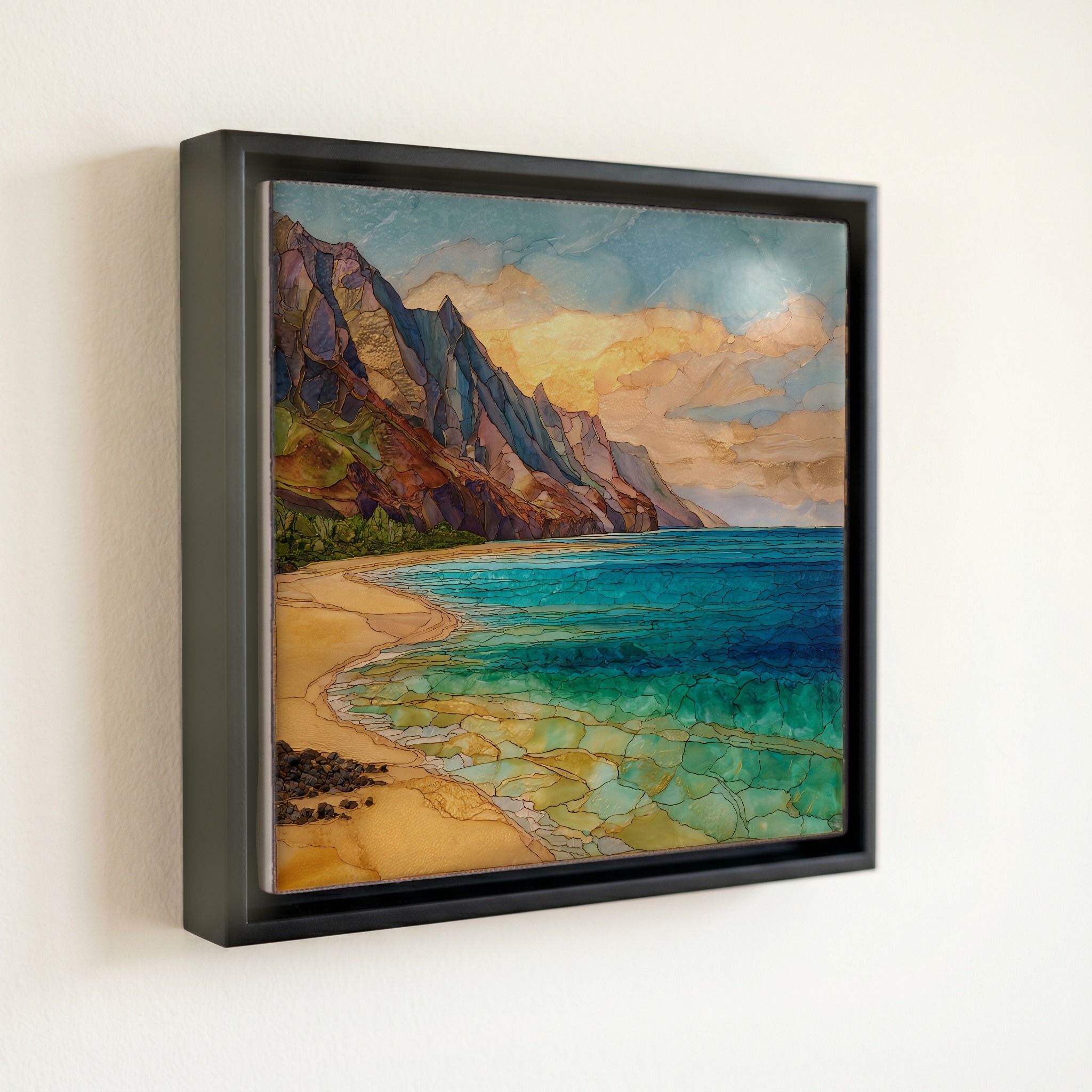
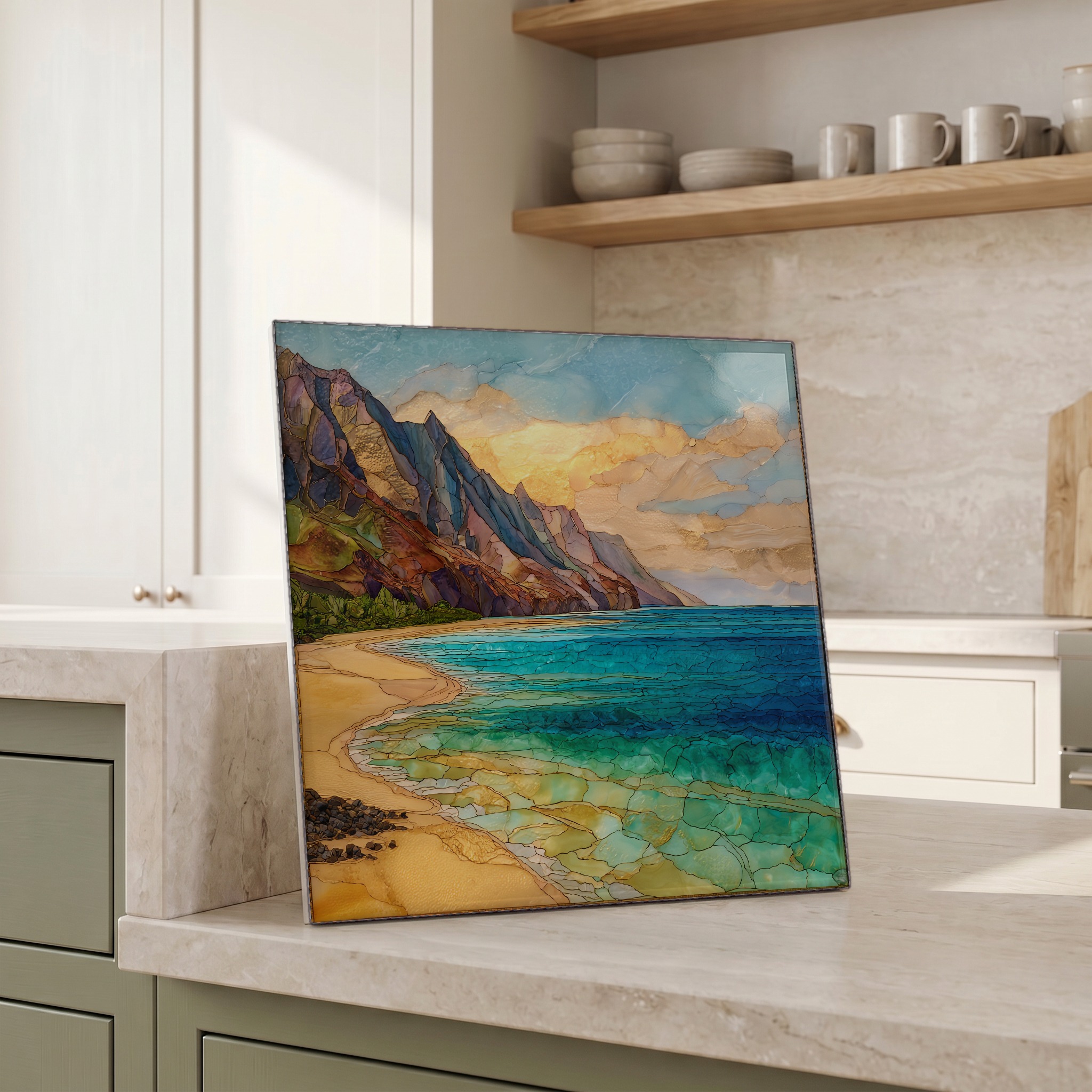
Tunnels Beach Kauai Ceramic Art Tile, on ceramic.
Each tile is finished by hand in our Knoxville studio. Artwork is slowly infused into the ceramic surface under high heat and pressure, and rests beneath a thin glossy finish. The colour lives in the surface, not on top of it.
Pick any four 4-inch tiles — National Parks you've been to, a Smokies set, the four seasons of one place. $ for a set of , cork-backed, ready to live on the table.
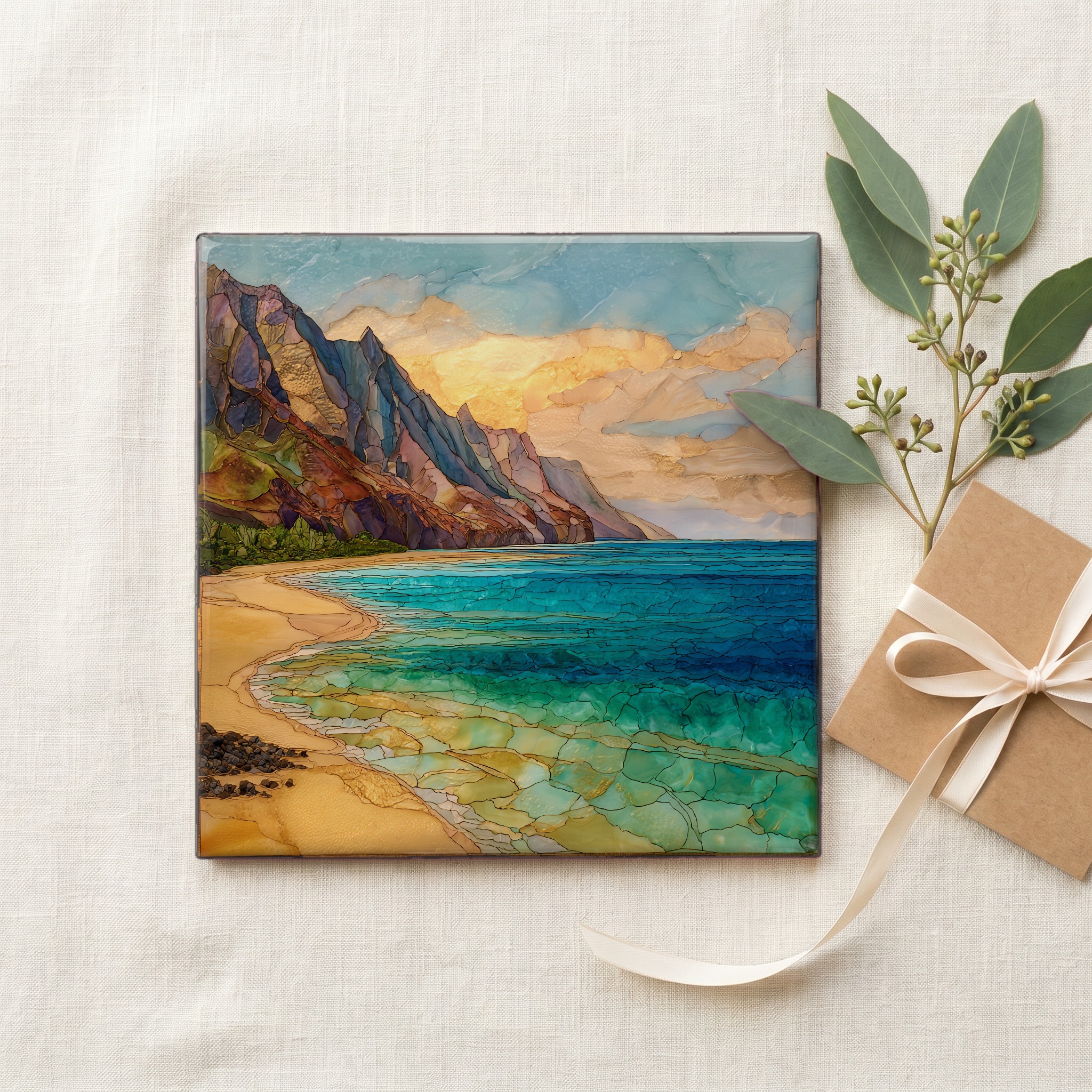
Each tile ships in a kraft box, tied with cream ribbon, with a handwritten note from the studio if you'd like to add one.
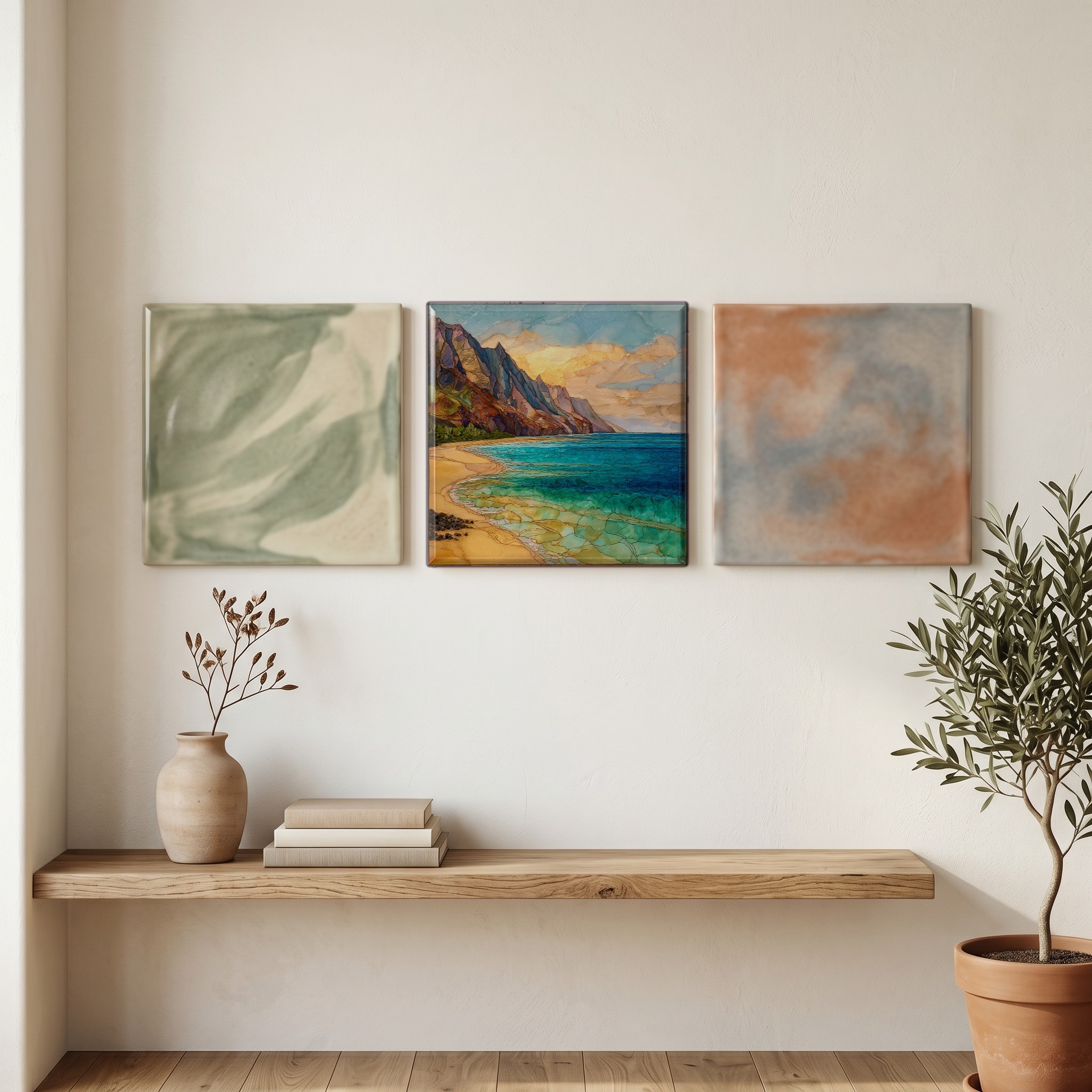
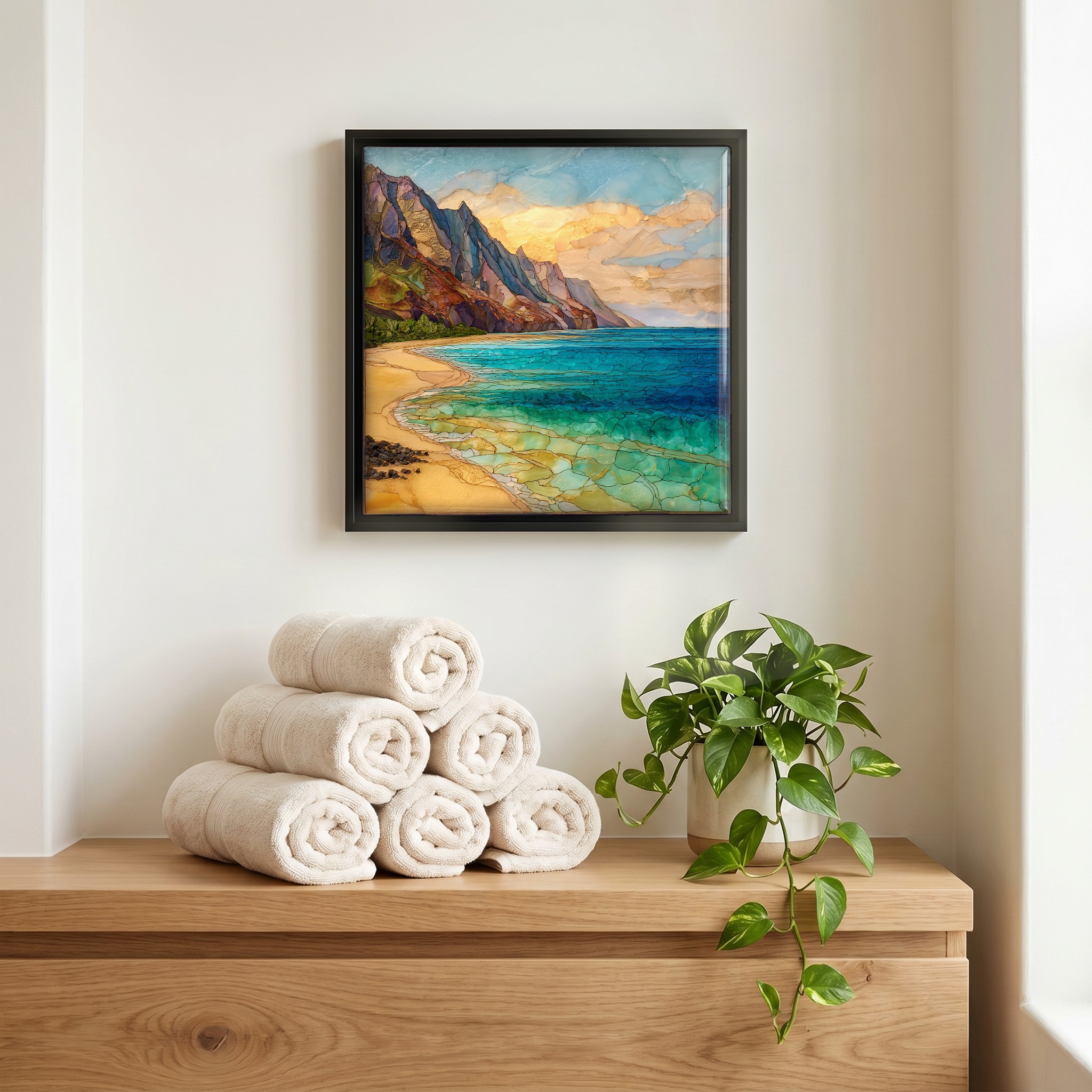
Three or five different vistas, hung together — a chapter of places you've been, or want to go.
The place, in three passes.
Tunnels Beach sits on the north shore of Kauai, about eight miles west of Hanalei and just east of the Hāʻena State Park boundary where Kuhio Highway ends. The Hawaiian name is Mākua. Behind the crescent of sand, Mt. Makana rises about 1,540 feet, the peak that doubled for Bali Hai in the 1958 film of Rodgers and Hammerstein's South Pacific. The beach takes its English name from the underwater lava tubes and arches in the fringing reef, which extends well offshore. Access runs through Hāʻena State Park, which has required advance entry and parking reservations since reopening after the 2018 north shore floods.
The reef at Tunnels is one of the largest fringing reef systems on Kauai, with an outer wall that breaks the north swell and an inner shelf where the water shallows over coral. The lava tubes that give the beach its English name form arches and caves at the reef's outer edge, drawing snorkelers and shallow-divers when conditions are calm. Visibility commonly runs 30 to 50 feet in summer. Green sea turtles (honu) feed on the algae that grows across the reef shelf. The same reef that protects the beach in summer becomes a closeout in winter, when waves break heavily over the outer wall.
The north shore beaches of Kauai operate on two calendars. From roughly May through September, the trade winds ease and north Pacific swell drops; Tunnels reads glass, and the snorkelers come early. From October through April, north Pacific swells arrive in series and the same reef that protects the beach in summer becomes a closeout. Lifeguards at Hāʻena post warnings, and the National Weather Service office in Honolulu issues high-surf advisories that often last for days. Locals call it the off-season. The ocean calls it everything else.