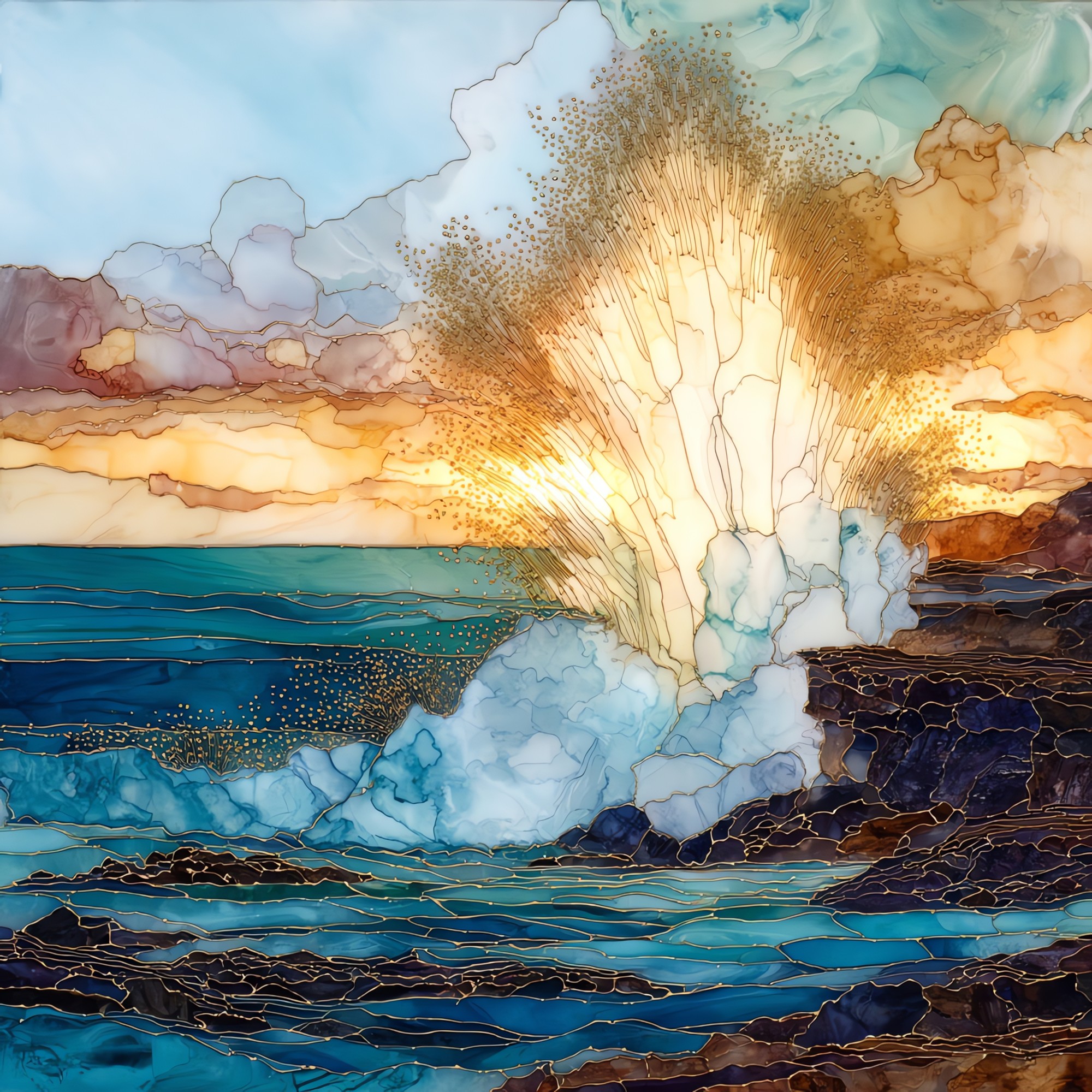
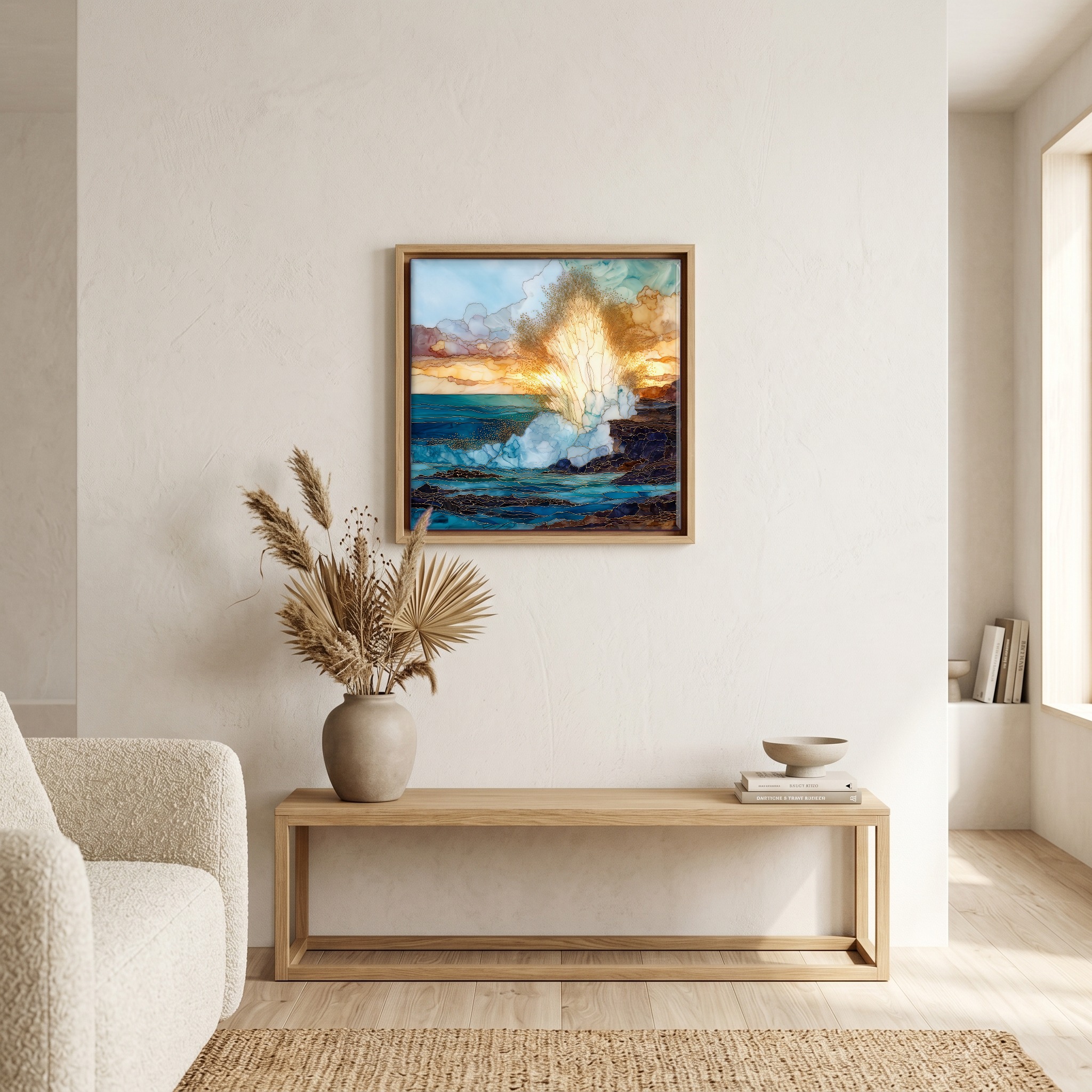
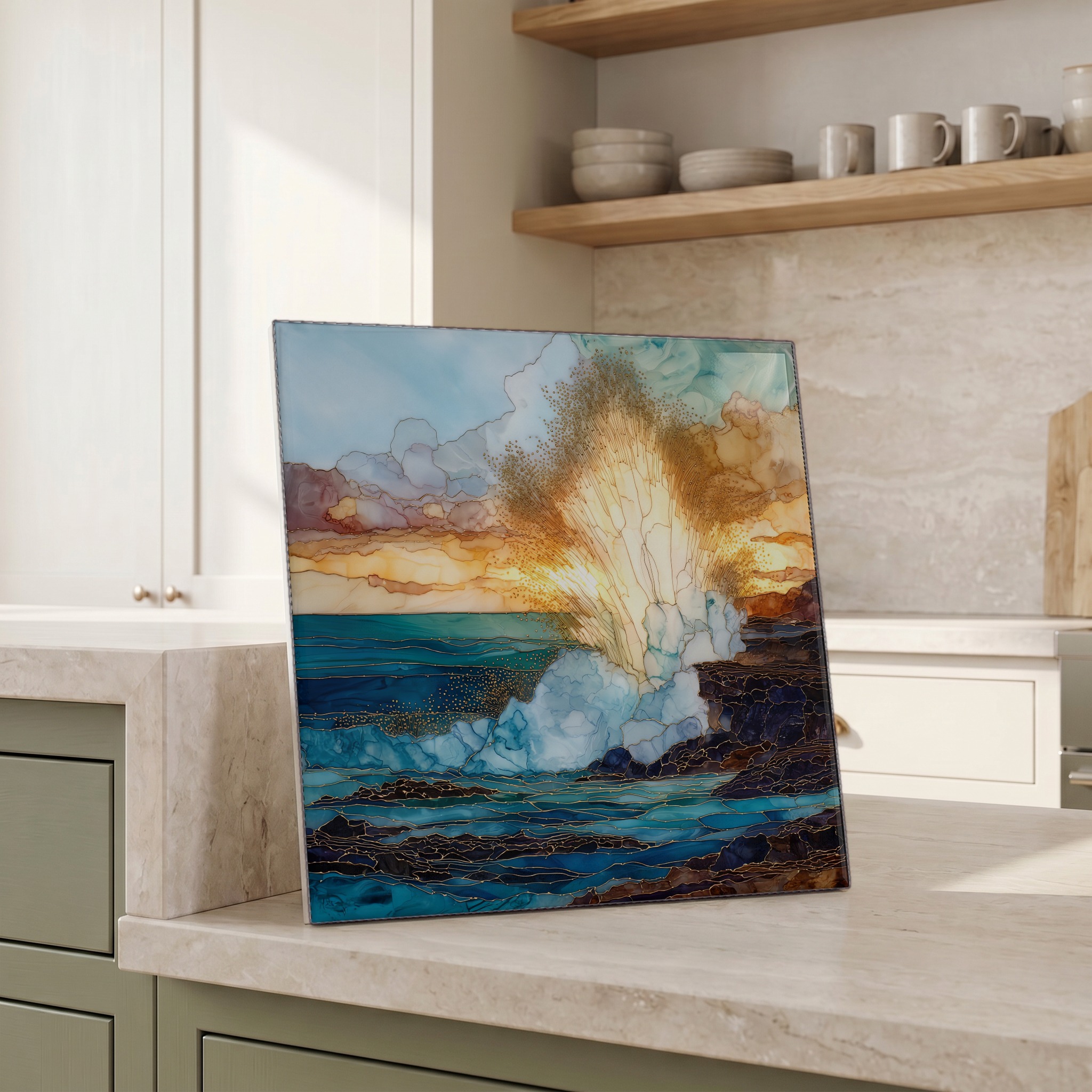
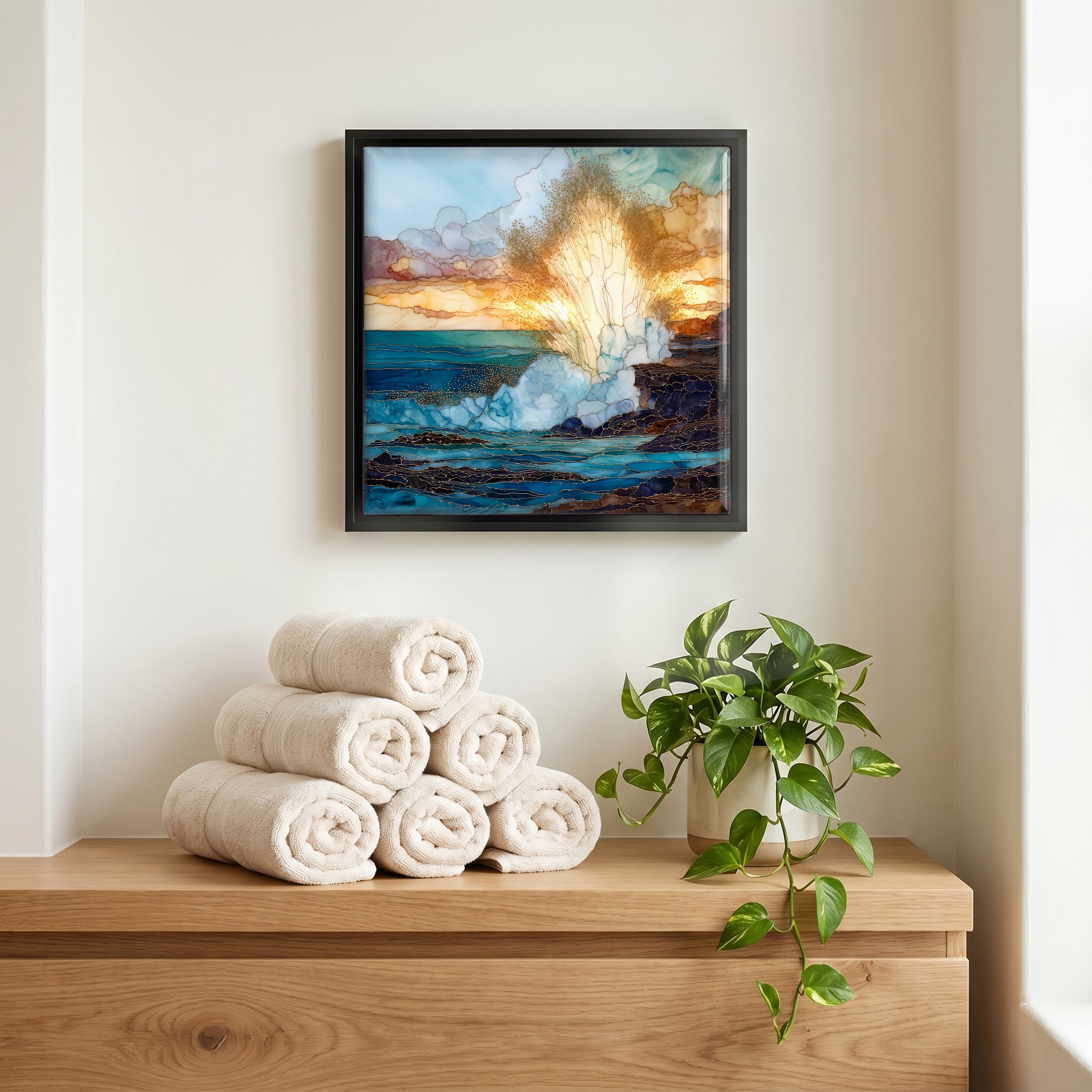
Spouting Horn Poipu Kauai Ceramic Art Tile
— a moan, then a column of sea.
Not only on a wall.
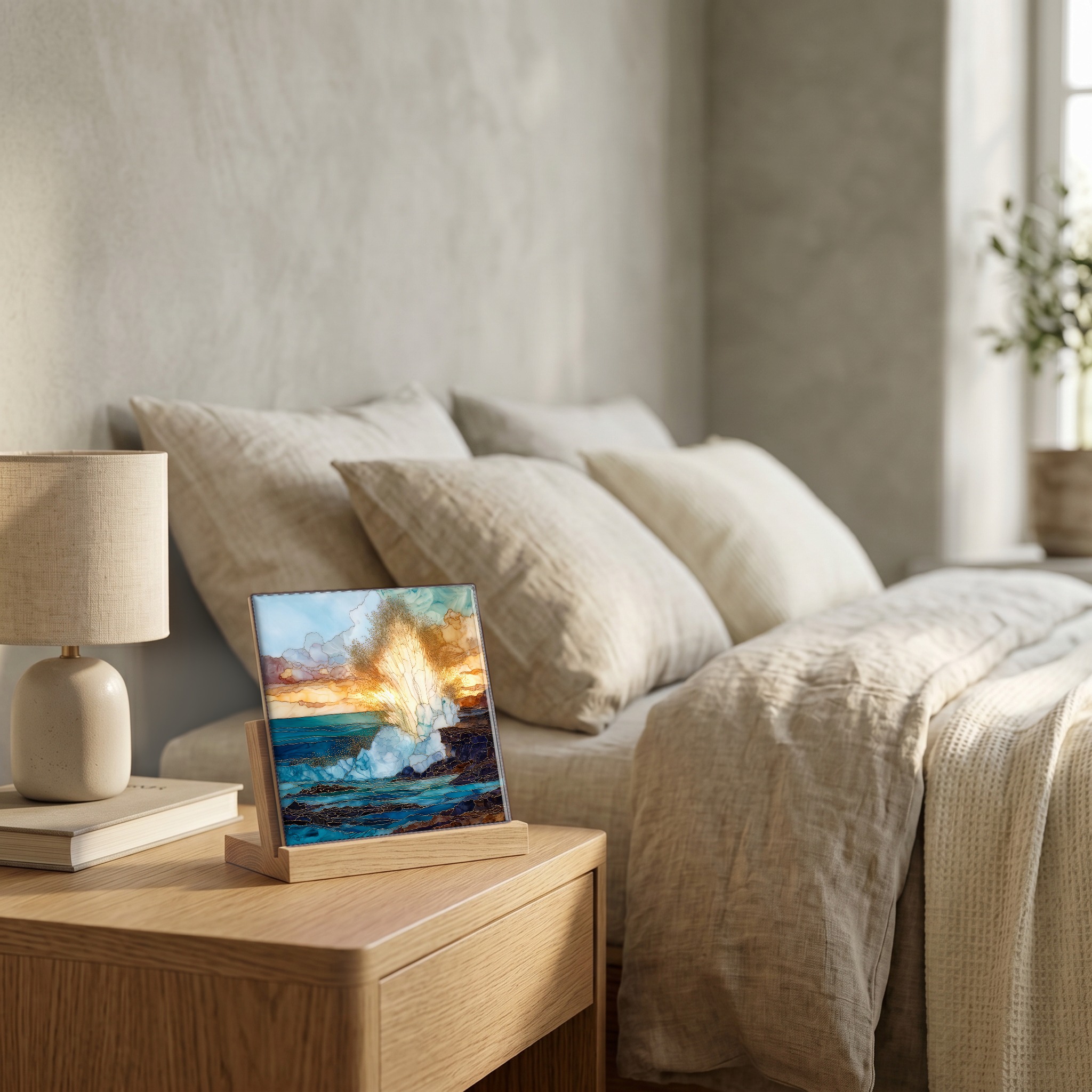
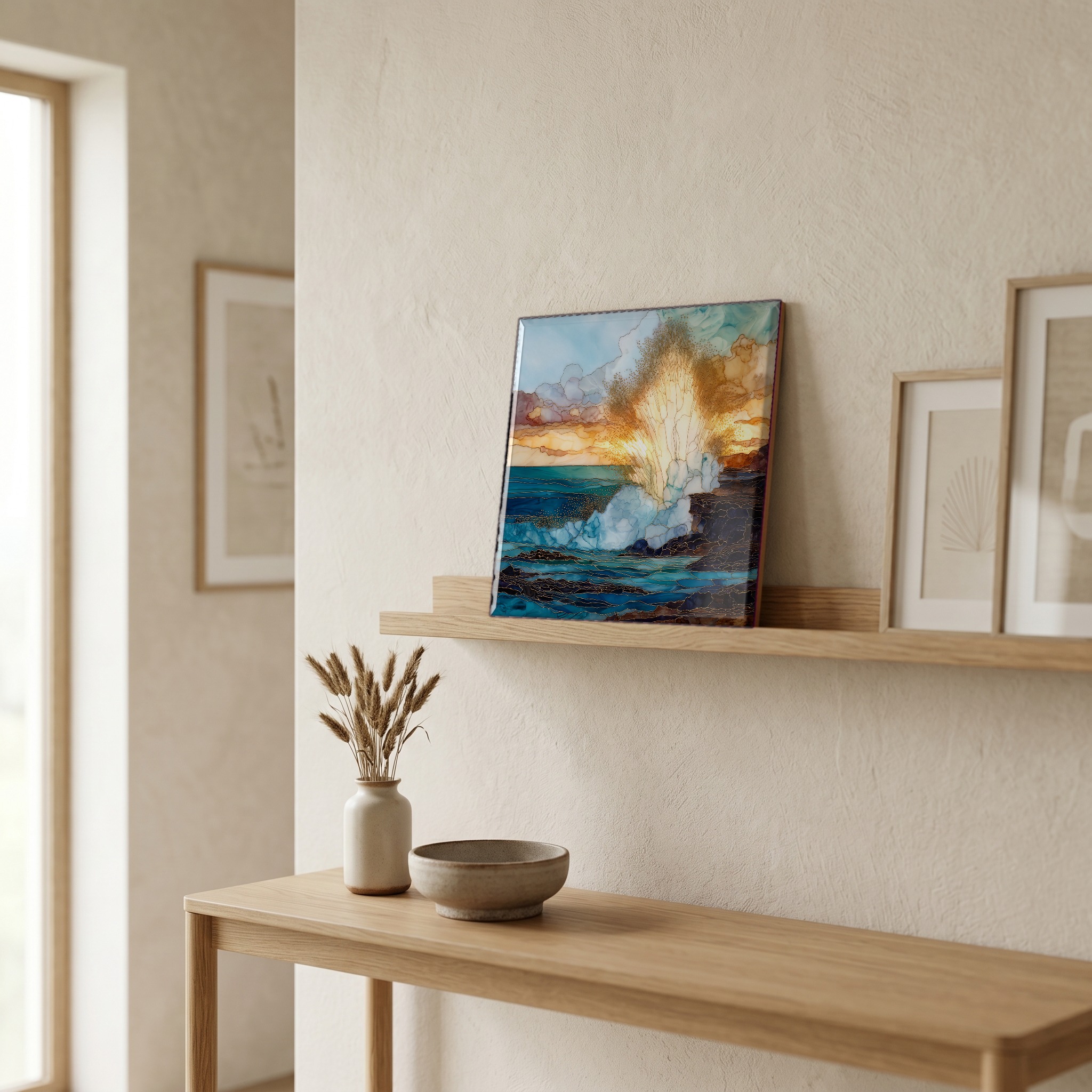
“The lava bench along Lāwaʻi Road, where an old tube turns the surf into a column of seawater. It rises about fifty feet on a strong south swell. The sound comes a beat before the water — a low moan that locals tell as Kaikapu, the moʻo who once swallowed swimmers in the channel, caught in the rock by a young man named Liko. The lookout is free, an easy drive from Poipu. Best on a rising tide. People stop talking when the next set rolls in.
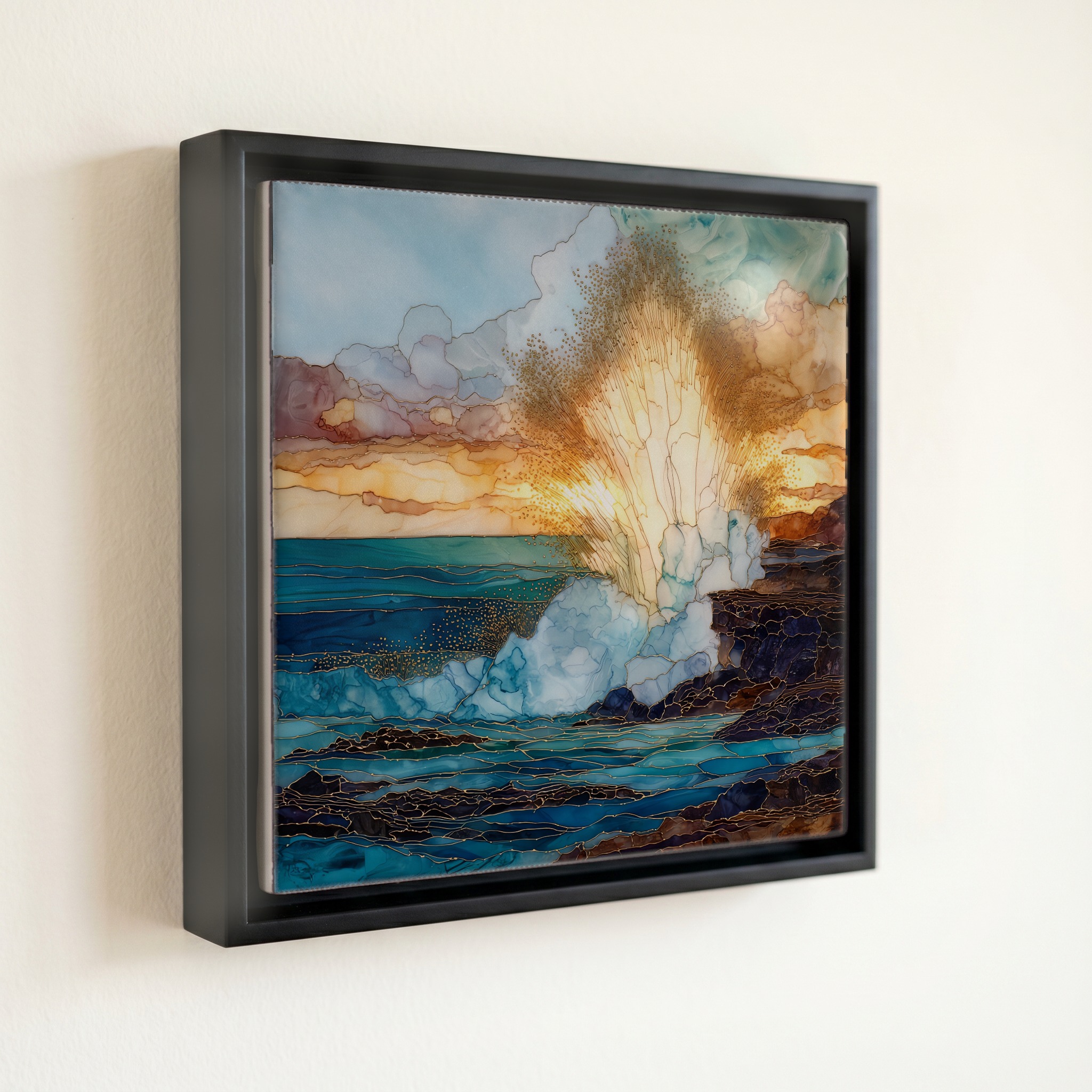
Spouting Horn Poipu Kauai Ceramic Art Tile, on ceramic.
Each tile is finished by hand in our Knoxville studio. Artwork is slowly infused into the ceramic surface under high heat and pressure, and rests beneath a thin glossy finish. The colour lives in the surface, not on top of it.
Pick any four 4-inch tiles — National Parks you've been to, a Smokies set, the four seasons of one place. $ for a set of , cork-backed, ready to live on the table.
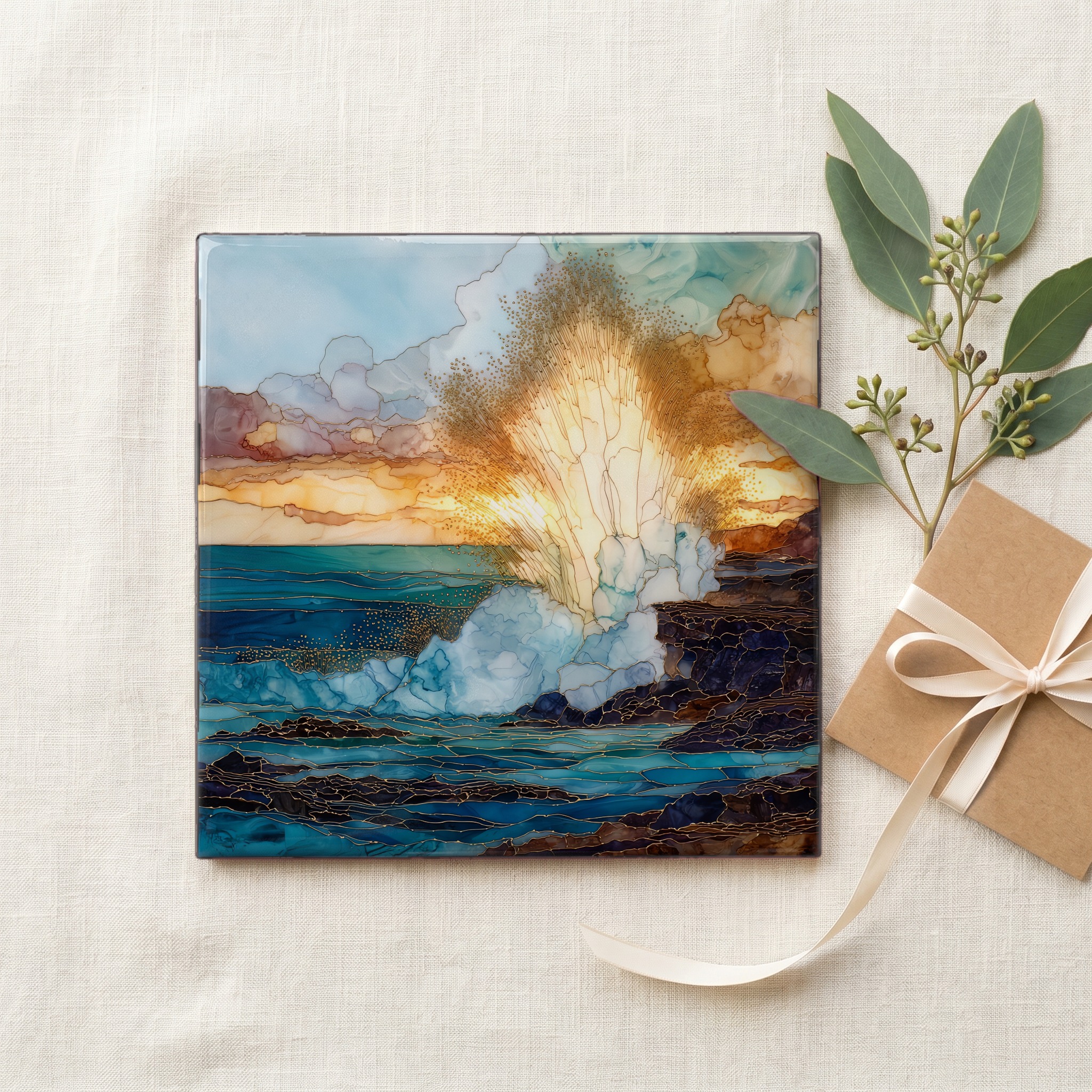
Each tile ships in a kraft box, tied with cream ribbon, with a handwritten note from the studio if you'd like to add one.
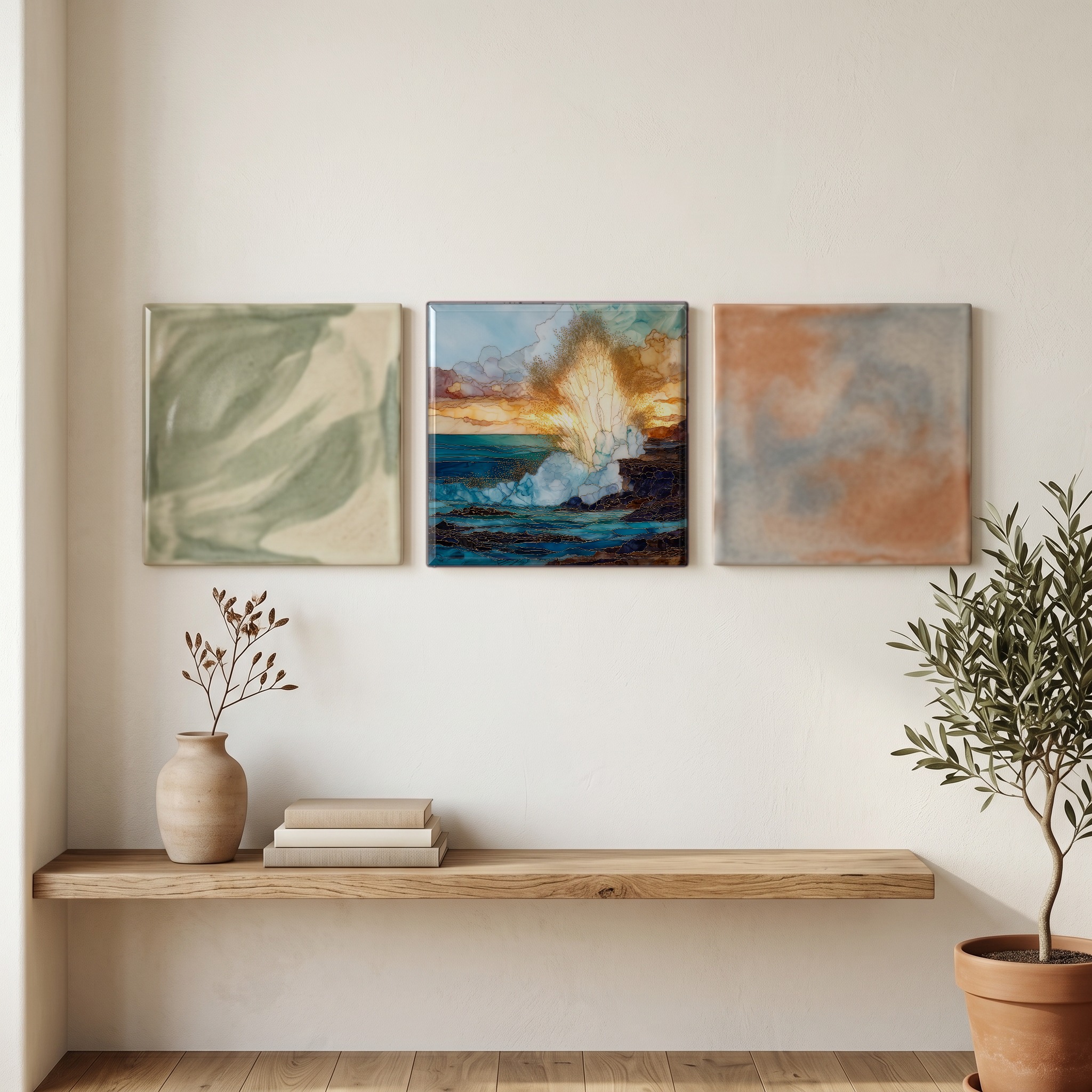
Three or five different vistas, hung together — a chapter of places you've been, or want to go.
The place, in three passes.
Spouting Horn sits on the lava bench at the end of Lāwaʻi Road in Kōloa, on Kauai's south shore. The lookout overlooks a coastal terrace formed from Kōloa Volcanic Series basalt, where the Pacific has carved tubes through the rock. The site is part of Spouting Horn Beach Park, managed by Kauai County, with parking, a vendor market, and a railed overlook above the bench. Poipu Beach lies about two miles east; the National Tropical Botanical Garden's Allerton and McBryde Gardens are next door at Lāwaʻi Bay. The town of Kōloa, the site of the first commercial sugar plantation in the Hawaiian Islands (established 1835), is three miles north.
The spout works by mechanical compression. Incoming swell enters a lava tube under the bench and rises through a vertical vent that narrows as it climbs. On a south or southwest swell the column reaches around fifty feet; on a calm day it barely clears the rim. A second, smaller hole vents air a heartbeat before the seawater; that is the moan visitors hear. Hawaiian tradition tells the sound as Kaikapu, a moʻo (giant lizard) who guarded the channel and swallowed swimmers, caught in the rock by a young man named Liko. An older, larger blowhole nearby was reportedly dynamited in the 1920s to protect a sugar plantation's irrigation flume.
The lookout is free, open from dawn to dusk, and reached by Lāwaʻi Road from the Kōloa roundabout. A vendor market at the lot sells Niʻihau shell jewellery, kukui nut leis, and shave ice; the lot fills by mid-morning on calm-weather days. The spout is strongest on an incoming high tide with a south or southwest swell, typically October through April. Climbing down to the lava bench is prohibited and dangerous; rogue waves and the column itself have caused injuries. The Kōloa Heritage Trail marker for the legend of Kaikapu stands at the overlook.