Wender·Vista
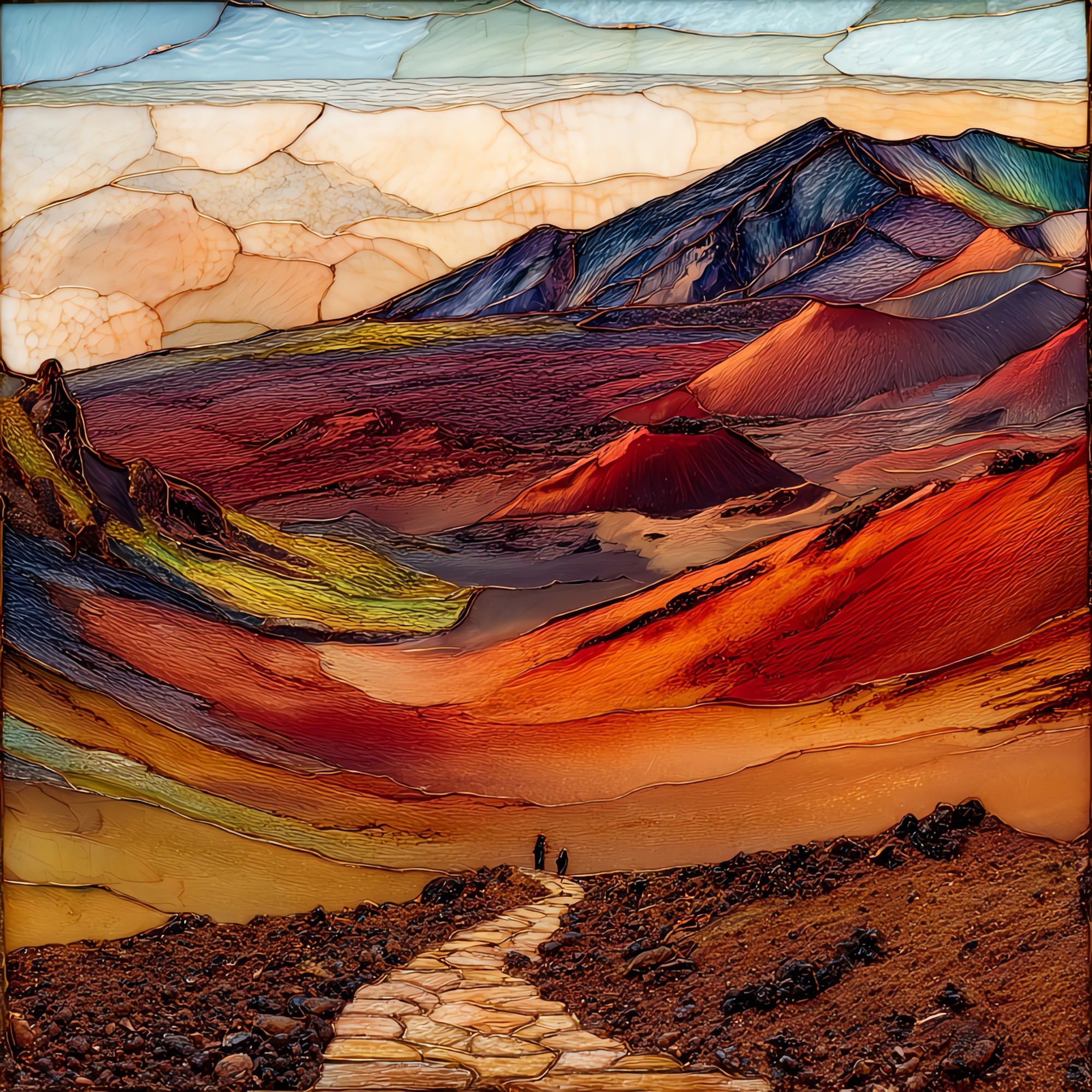
Sliding Sands Trail Maui Ceramic Art Tile
shown on ceramic, 12-inch tileHawaii · United States
on the rim of Haleakalā, the volcano that makes most of Maui

Sliding Sands Trail Maui Ceramic Art Tile

— a long red walk down into the quiet.

Where it lives

Not only on a wall.

A small tile on the nightstand catching the morning. A larger one above the fire. Yours, wherever you spend the slow hours.
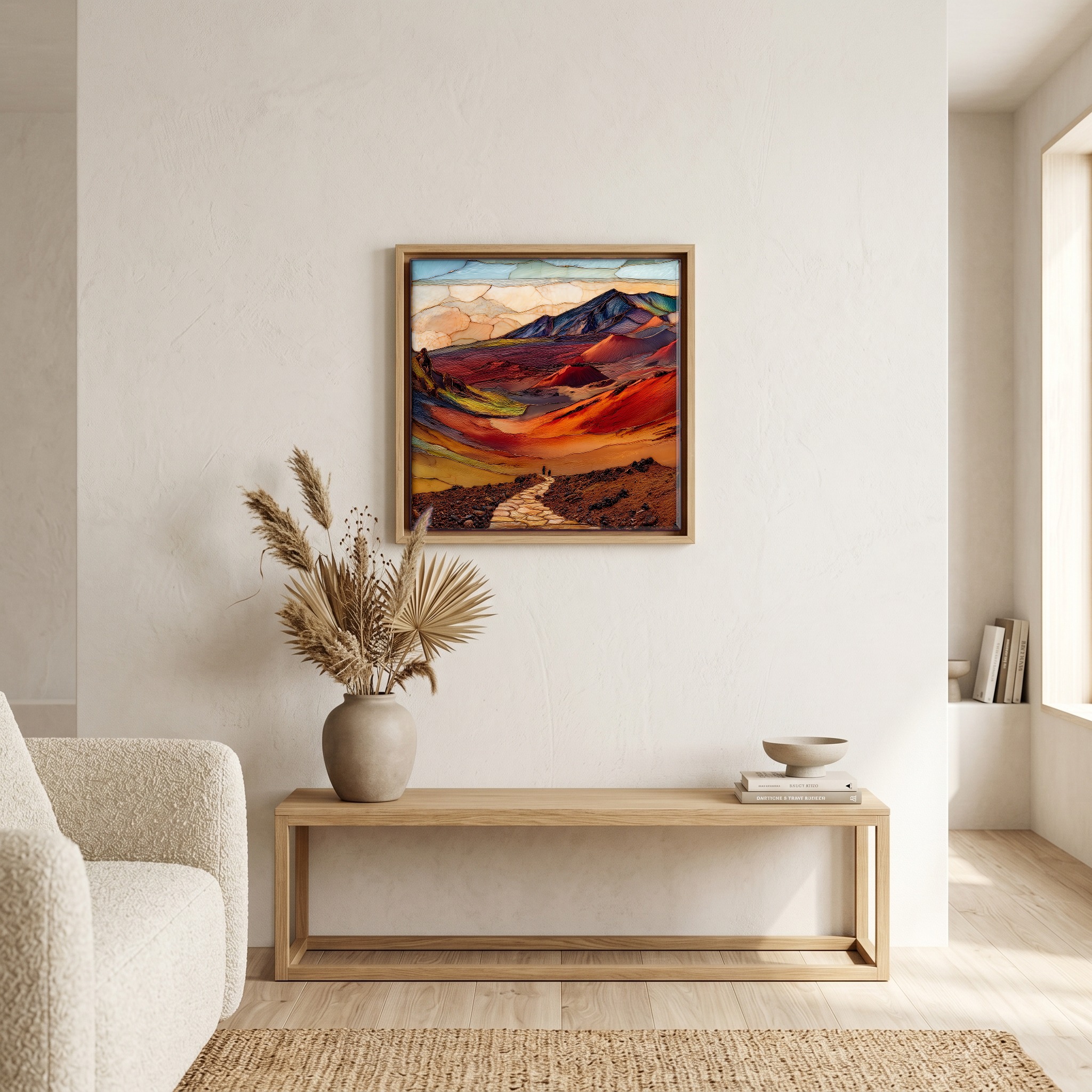
Above the bench, in a warm oak surround.
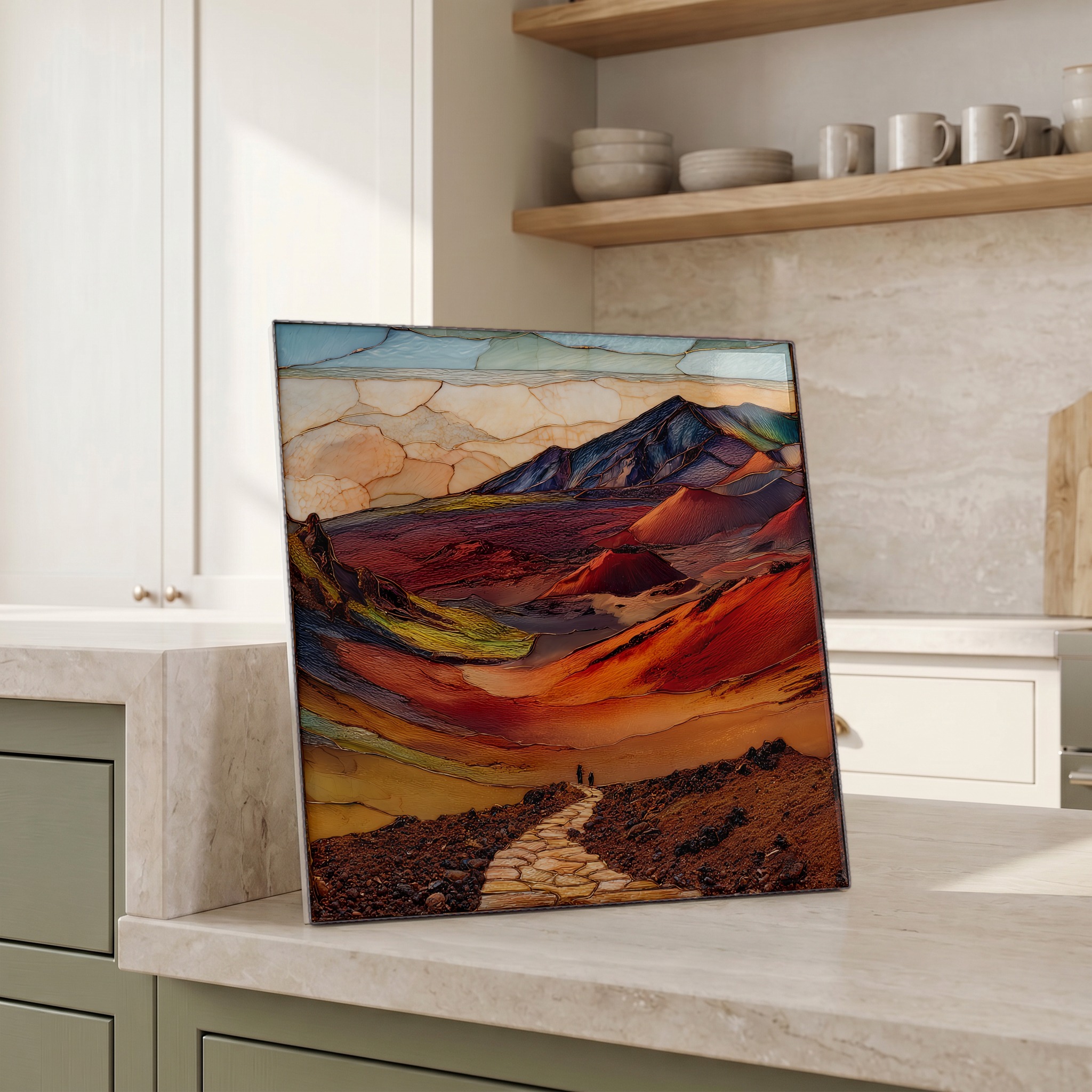
Beside the kettle, propped on the counter.
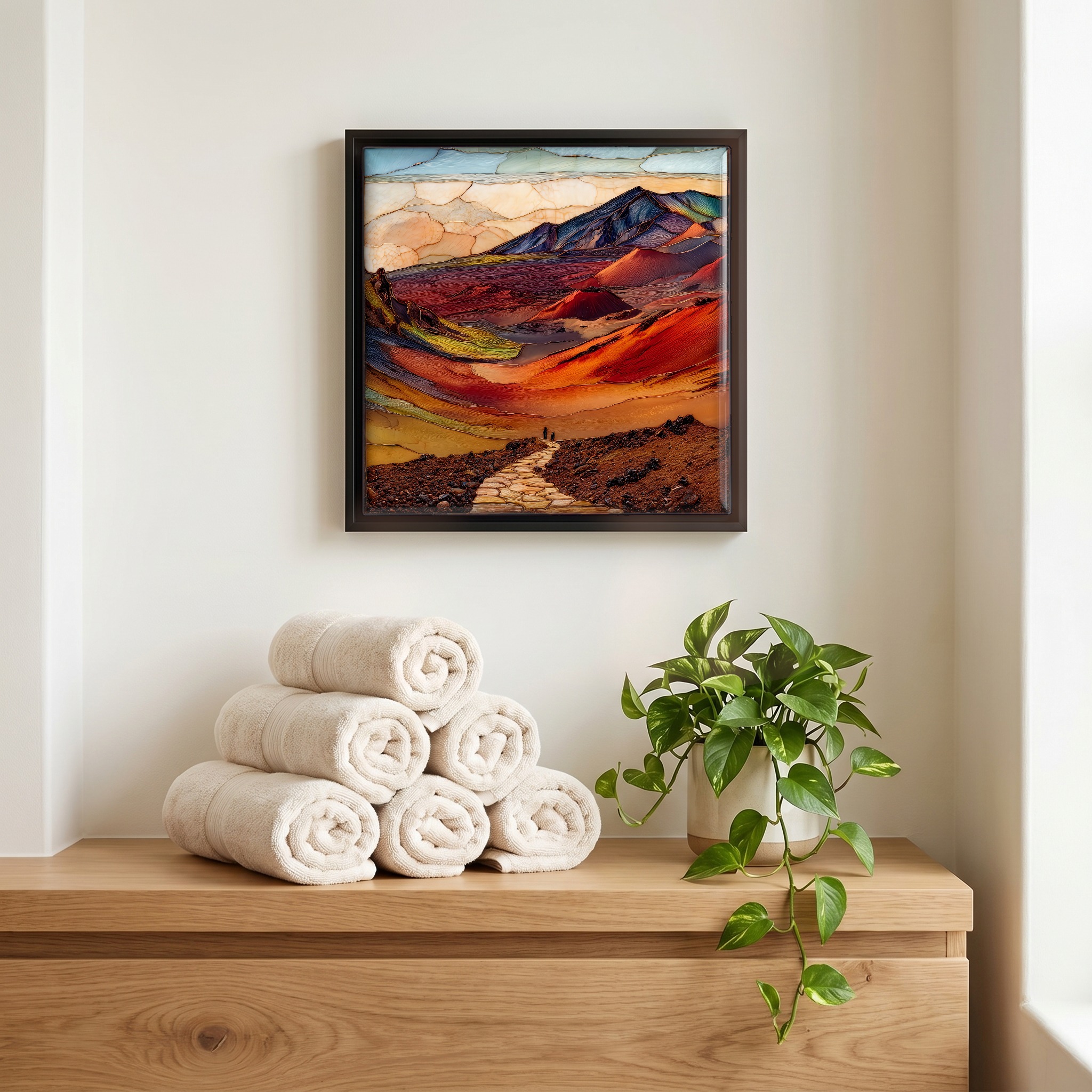
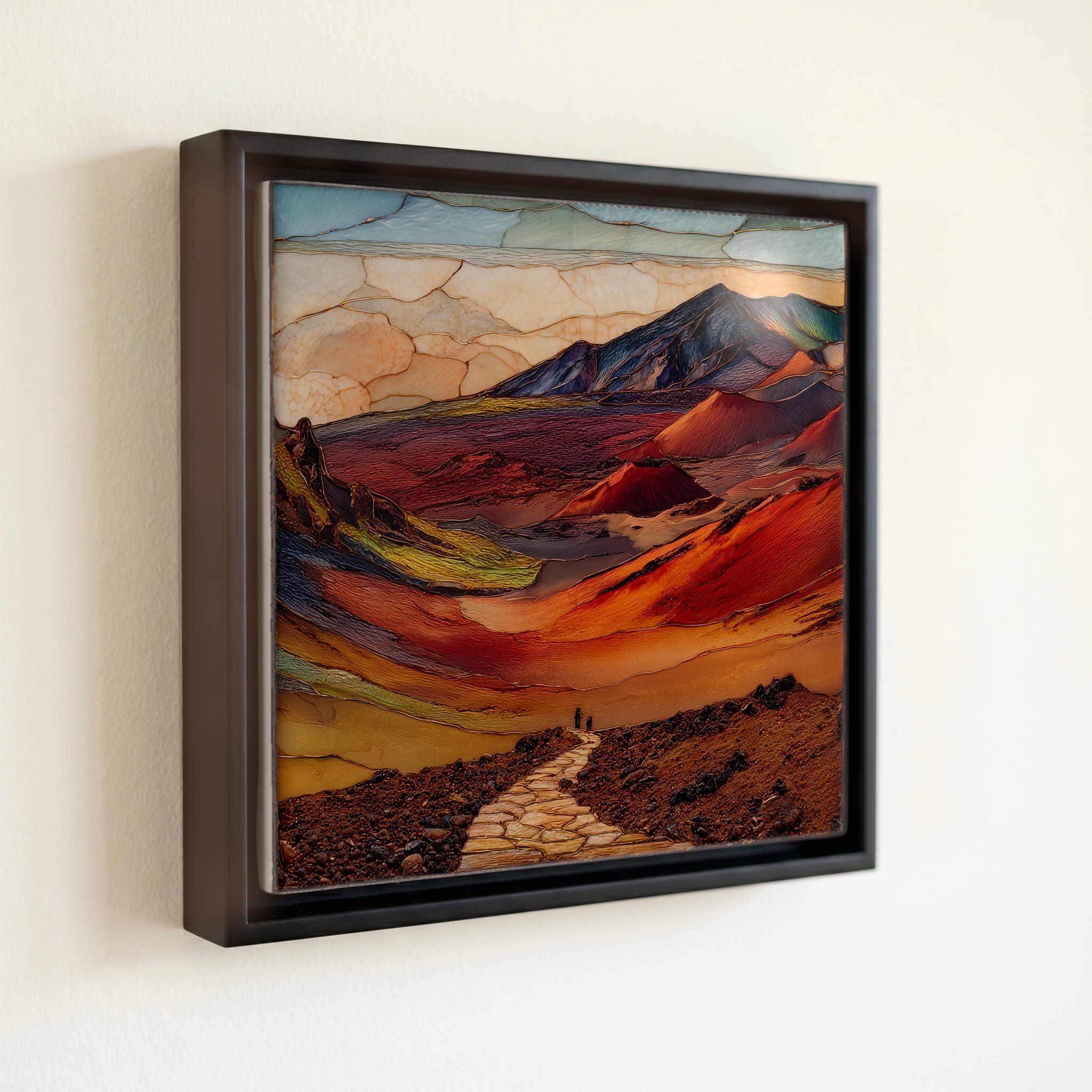
Above the linens, in a slim black surround.
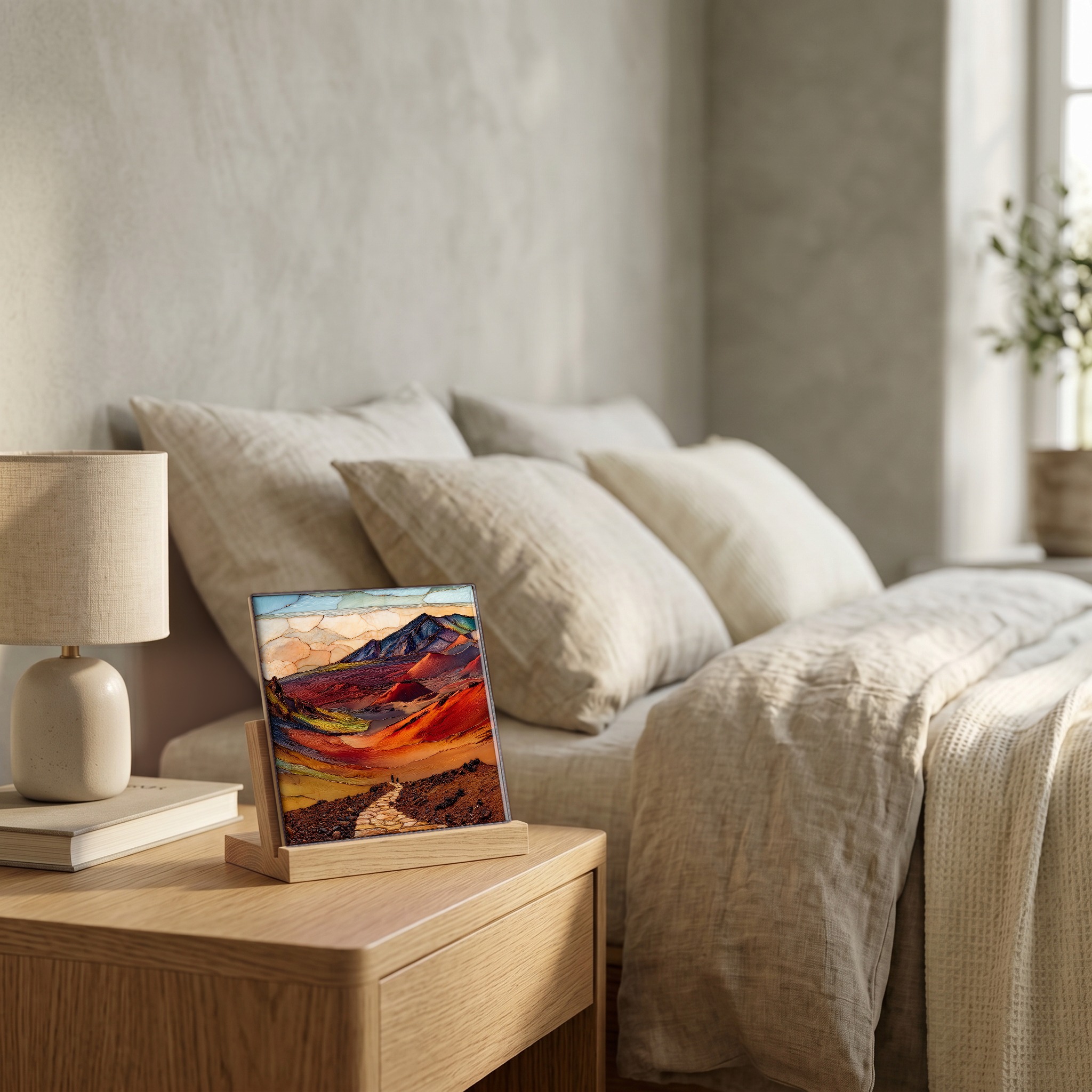
On the nightstand, on a light oak stand.
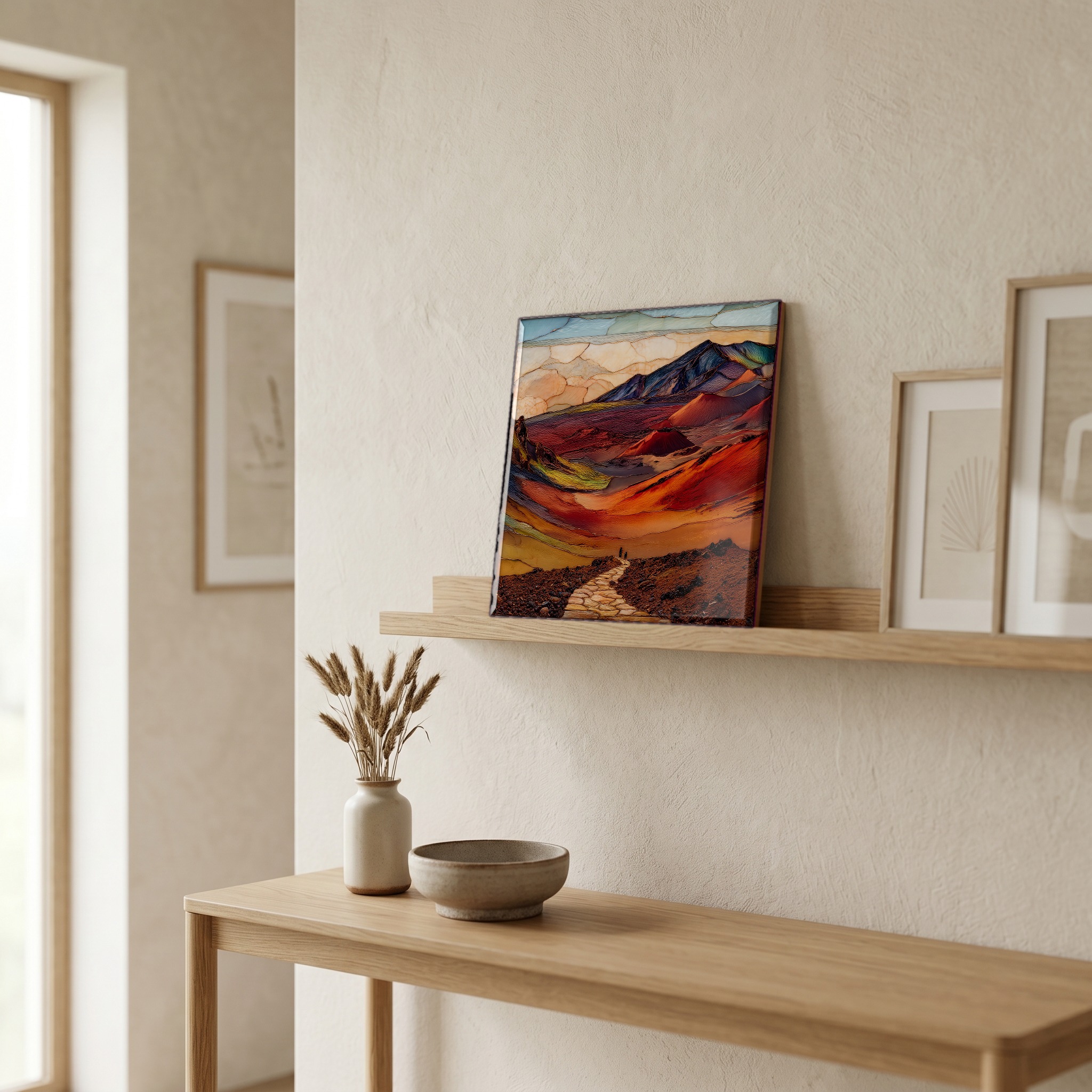
On a picture ledge, where the light comes in.
a note from the studio

The trail leaves the rim near the Haleakalā Visitor Center at about 9,700 feet and drops down onto the floor of the crater. A wide, quiet, almost lunar place where the Haleakalā silversword grows and grows nowhere else. The surface is loose red and ochre cinder; boots sink a little. Most hikers who go down turn around well before noon, before the cloud layer climbs up the western slope and pours back over the rim. The walk down is easy. The walk back is the part you remember.
from the studio
shown in a slim black floating frame · 6 × 6 in
— bring it home

Sliding Sands Trail Maui Ceramic Art Tile, on ceramic.

Each tile is finished by hand in our Knoxville studio. Artwork is slowly infused into the ceramic surface under high heat and pressure, and rests beneath a thin glossy finish. The colour lives in the surface, not on top of it.

What kind of piece?
One tile — square or rectangle.
How big?
the popular one — counter, shelf, nightstand
6 × 6 in · 15 cm · 1.6 lb
Surface finish
A clear glossy finish — the artwork reads as if under resin. Ideal for show-pieces and framed wall art.
How it sits
A hidden cleat — sits ¼″ proud of the wall.
$58
Hand-finished and shipped from our studio at the foot of the Smokies. On your wall in about ten days.
size
6 × 6 in
15 cm
weighs
1.6 lb
solid in the hand
surface
ceramic, hand-finished
art rests beneath a thin glossy finish
from
Knoxville, TN
our family studio, at the foot of the Smokies
— start a Coaster Set

Pick any four 4-inch tiles — National Parks you've been to, a Smokies set, the four seasons of one place. $ for a set of , cork-backed, ready to live on the table.
comes gift-ready
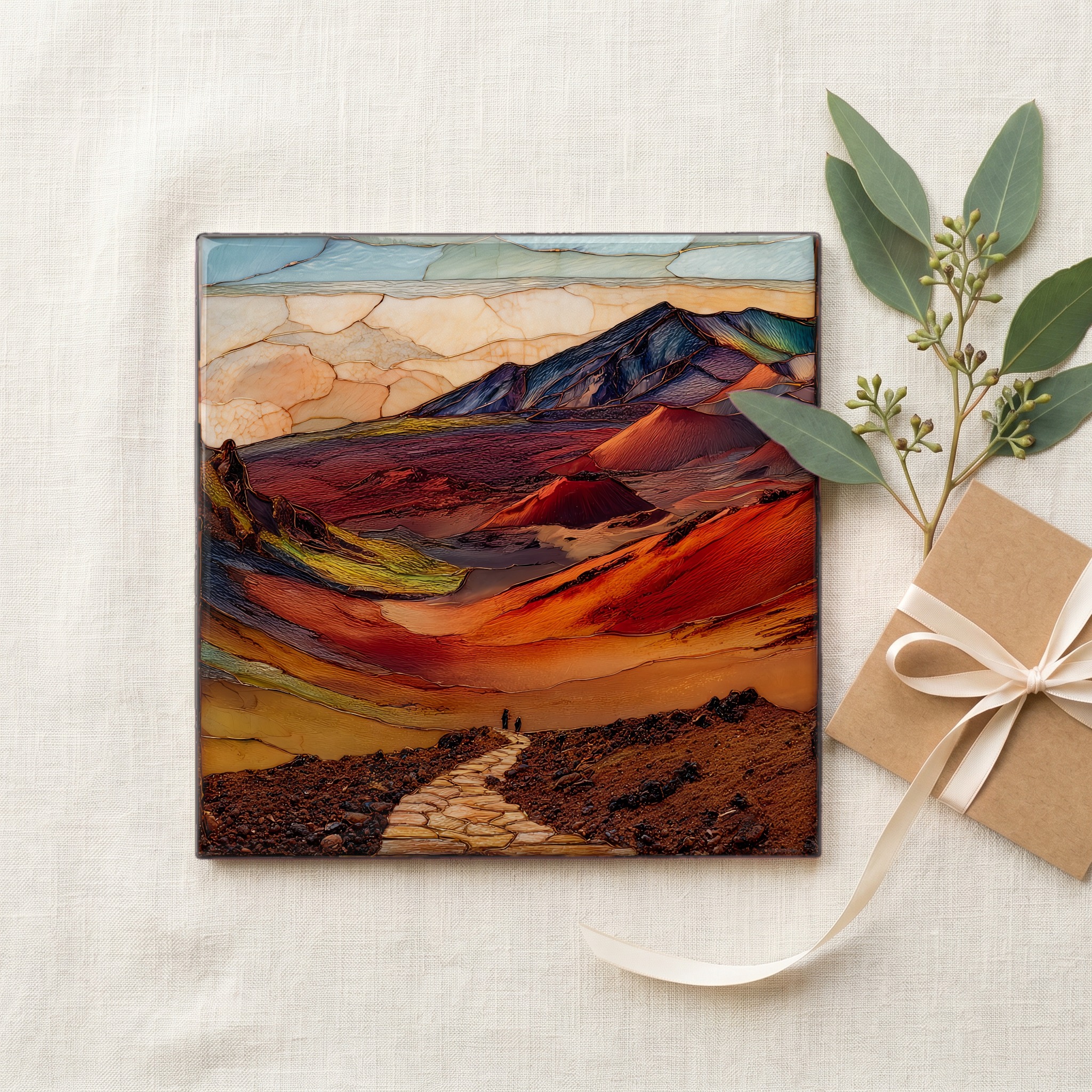
comes gift-ready

Each tile ships in a kraft box, tied with cream ribbon, with a handwritten note from the studio if you'd like to add one.
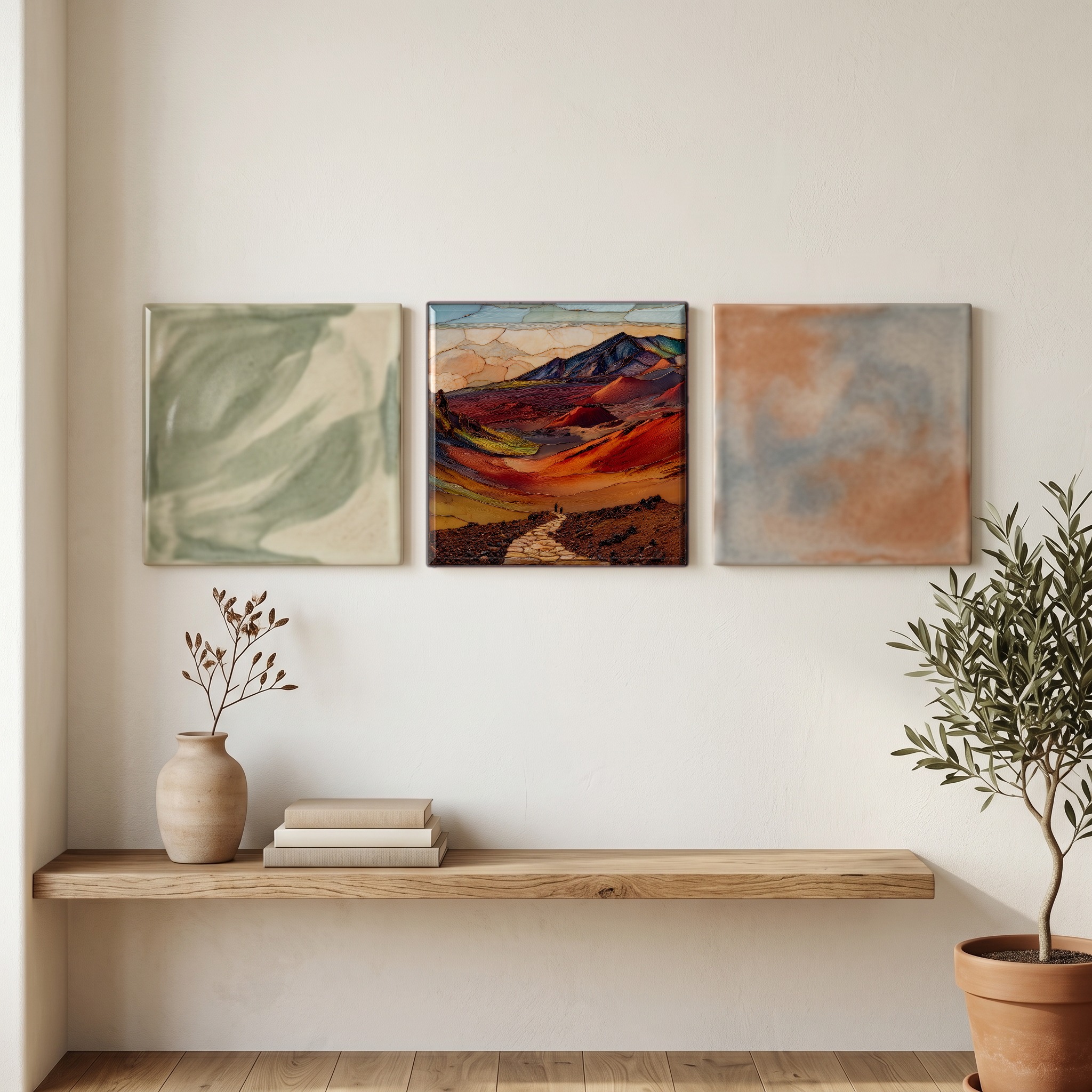
or build a grouping
or build a grouping

Three or five different vistas, hung together — a chapter of places you've been, or want to go.

about Sliding Sands Trail Maui Ceramic Art Tile

The place, in three passes.

A little of what's known, in case you fall down the rabbit hole — or want to go see it yourself.
the place

Keonehe'ehe'e, known to most visitors as Sliding Sands Trail, descends from a trailhead near the Haleakalā Visitor Center at 9,740 feet (2,969 m), inside Haleakalā National Park on the island of Maui. The trail drops about 2,500 feet over its first four miles, walking down a slope of loose volcanic cinder onto the floor of Haleakalā's vast erosional depression. The full length runs roughly eleven miles east to Palikū Cabin near the park's eastern boundary. The summit of Haleakalā itself, at Pu'u 'Ula'ula or Red Hill, reaches 10,023 feet (3,055 m), placing the rim among the highest points in the Pacific.

the air

At the trailhead the air is roughly two-thirds as dense as at sea level, and the rim sits above most of the trade-wind cloud layer that builds over Maui through the day. Mornings are clear and cold, often near freezing in winter; by early afternoon clouds typically climb the western slope and pour over the rim. The U.S. Geological Survey classifies Haleakalā as an active volcano, with its most recent eruption between roughly 1480 and 1600 on the southwest rift zone. The Haleakalā silversword (ʻāhinahina), endemic to this volcano, lives about fifty years, flowers once, and dies.

the visit

The trail is open to day hikers all year and no permit is required, though Haleakalā National Park charges a vehicle entrance fee at the station below the summit road. The descent is easy; the return climb gains 2,500 feet in thin air with no shade and no reliable water, and the National Park Service recommends turning back well before noon to leave a margin for the cloud ceiling and the climb out. Overnight stays at the three backcountry cabins (Hōlua, Kapalaoa, Palikū) and the two wilderness campgrounds require advance reservation through recreation.gov.

— informed by National Park Service
where
United States · Maui County, Hawaii
within
Haleakalā National Park
elevation
2,969 m · 9,740 ft
position
20.7160° N · 156.2533° W
the neighborhood

What's nearby.

A handful of named places within an hour's walk or short drive. Some we've already painted; some we will.
1 km W
Pu'u 'Ula'ula Summit
summit
3 km W
Kalahaku Overlook
overlook
4 km NW
Halemau'u Trail
trail
5 km NW
Hosmer Grove
forest grove
6 km E
Hōlua Cabin
wilderness cabin
N
Sliding Sands Trail Maui Ceramic Art Tile
Pu'u 'Ula'ula Summit
Kalahaku Overlook
Halemau'u Trail
Hosmer Grove
Hōlua Cabin
common questions

What people ask.

A few questions we get about Sliding Sands Trail Maui Ceramic Art Tile — and about bringing the piece home.
about the place

The trail is in Haleakalā National Park on the island of Maui, Hawaii. The trailhead sits on the rim of Haleakalā at about 9,740 feet (2,969 m), near the Haleakalā Visitor Center on the summit road.

The full length is about 11 miles (17.7 km) one-way to Palikū Cabin near the park's eastern boundary. Most day hikers go a shorter distance, often turning back at the first cinder cone field three to four miles in.

The trail descends across loose volcanic cinder from Haleakalā's most recent eruptive phases. The reddish-tan colour comes from iron in the basaltic scoria oxidising on exposure to air. The same iron oxidation colours the soils of Mars and the Painted Desert in Arizona.

Yes. The U.S. Geological Survey classifies Haleakalā as active. Its most recent eruption occurred between roughly 1480 and 1600 on the southwest rift zone near La Pérouse Bay. The volcano forms about three-quarters of the island of Maui.

Early morning. The trail is open all year; the rim is often clear at sunrise and clouds typically climb the western slope by early afternoon. Most hikers start at first light and aim to be back on the rim before noon.

No permit is required for day hiking. Haleakalā National Park charges a vehicle entrance fee. Overnight stays at the three backcountry cabins (Hōlua, Kapalaoa, Palikū) and the two wilderness campgrounds require an advance reservation through recreation.gov.

The Haleakalā silversword (ʻāhinahina in Hawaiian) is a globe of silver-leaved succulent rosettes that grows only on this volcano. A single plant lives roughly fifty years, then sends up a tall flowering stalk, sets seed, and dies. The species is federally protected.

about the piece in your home

It's been a meaningful gift for many of our customers with ties to the park. The red cinder floor and the rim above it are unmistakable to anyone who has stood on either edge of the crater. A Medium with a handwritten note from the studio carries well.

The warm reds, ochres, and deep volcanic browns of this tile read well with desert-modern, mountain-modern, and southwestern-warm interiors. The high-altitude blue along the upper edge keeps it from feeling heavy in lighter rooms.

Yes. Earth-tone palettes anchored in clay, rust, and ochre have been a steady through-line in biophilic design for several years. A piece grounded in a real volcanic landscape gives the palette a specific reference point rather than a generic warm neutral.

A single Large reads at the right scale above most consoles. Above a standard three-seat sofa, a four-tile Mural holds the wall without crowding it. For a longer wall, a nine-tile Mural carries the eye across the room.

Yes. For bathrooms, showers, and backsplashes, choose the Dura Satin or Matte finish. Both are scratch-resistant and built for vertical wet installation. The Glossy finish is for framed wall art and dry display pieces.

A soft microfibre cloth and warm water handle everyday cleaning. The colour lives in the ceramic surface and will not lift, scratch, or fade under normal household use. Avoid abrasive scrubbers and bleach-based cleaners on the Glossy finish.

Yes. Every WenderVista tile is painted in our distinctive stained-glass and alcohol-ink visual language and hand-finished in our Knoxville studio. No image is licensed from a third party. Reid Wender, the studio's curator, chooses what enters the atlas.

if this one stayed with you

A few you might also love.

Hand-picked by the eye that found Sorapis. Same air, same kind of quiet.