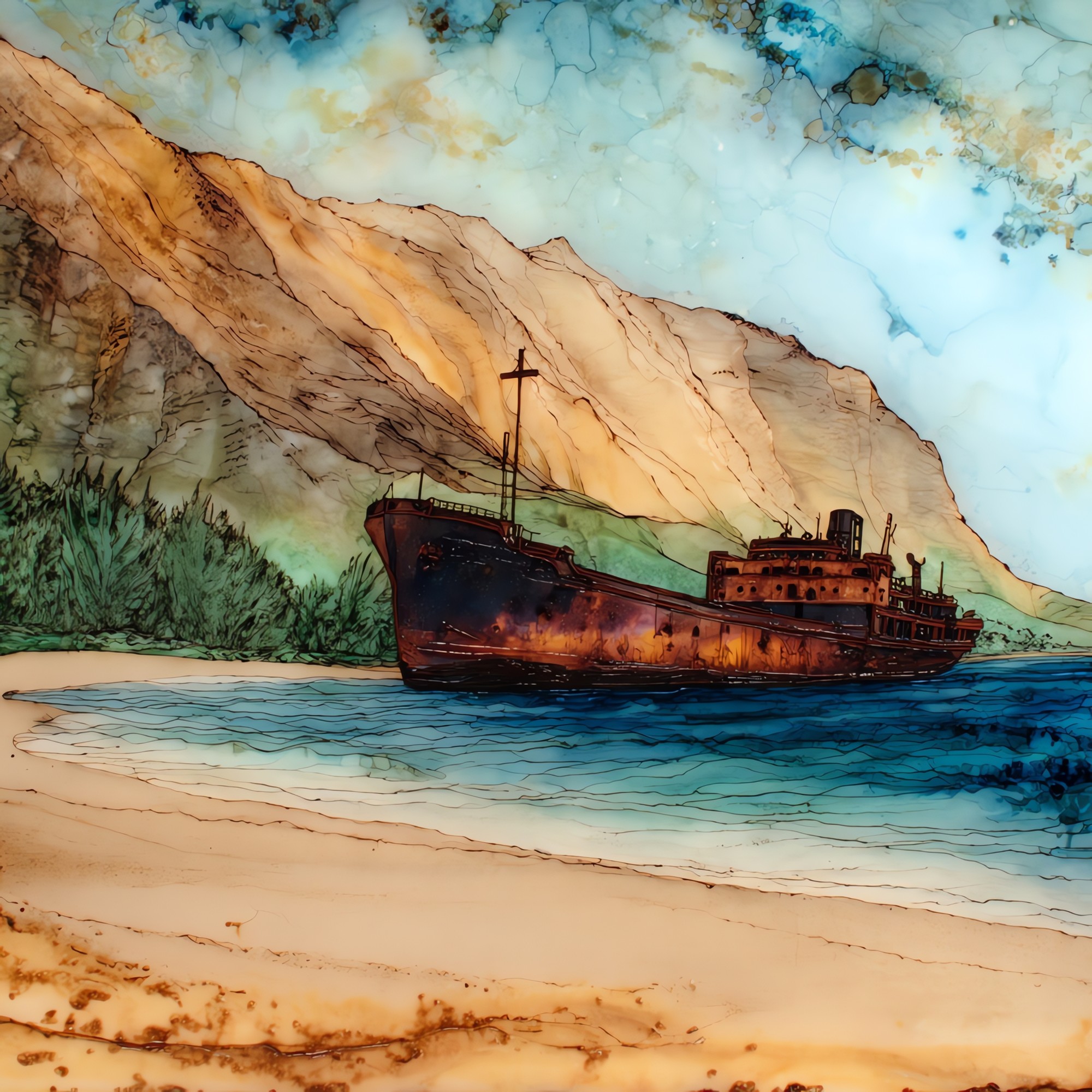
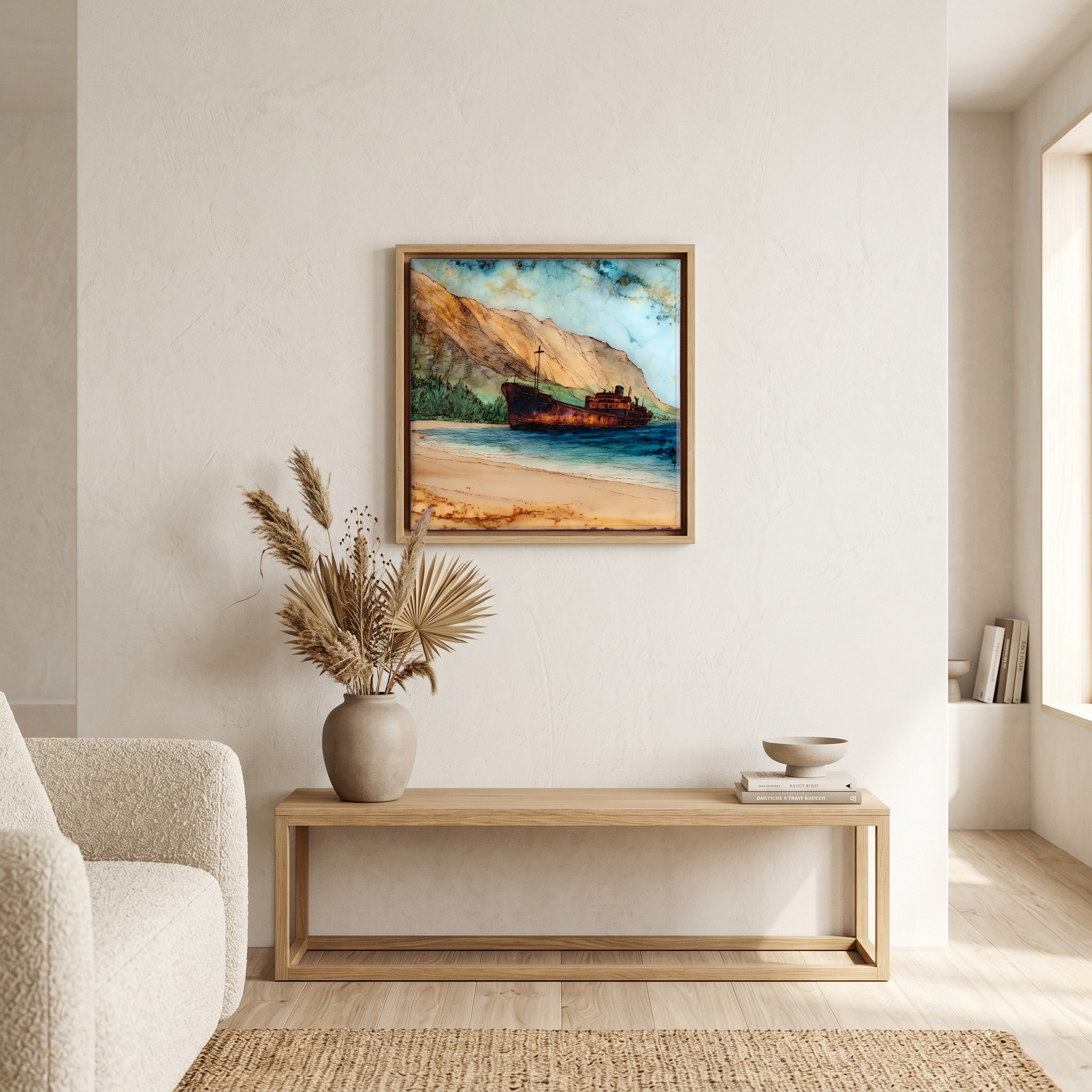
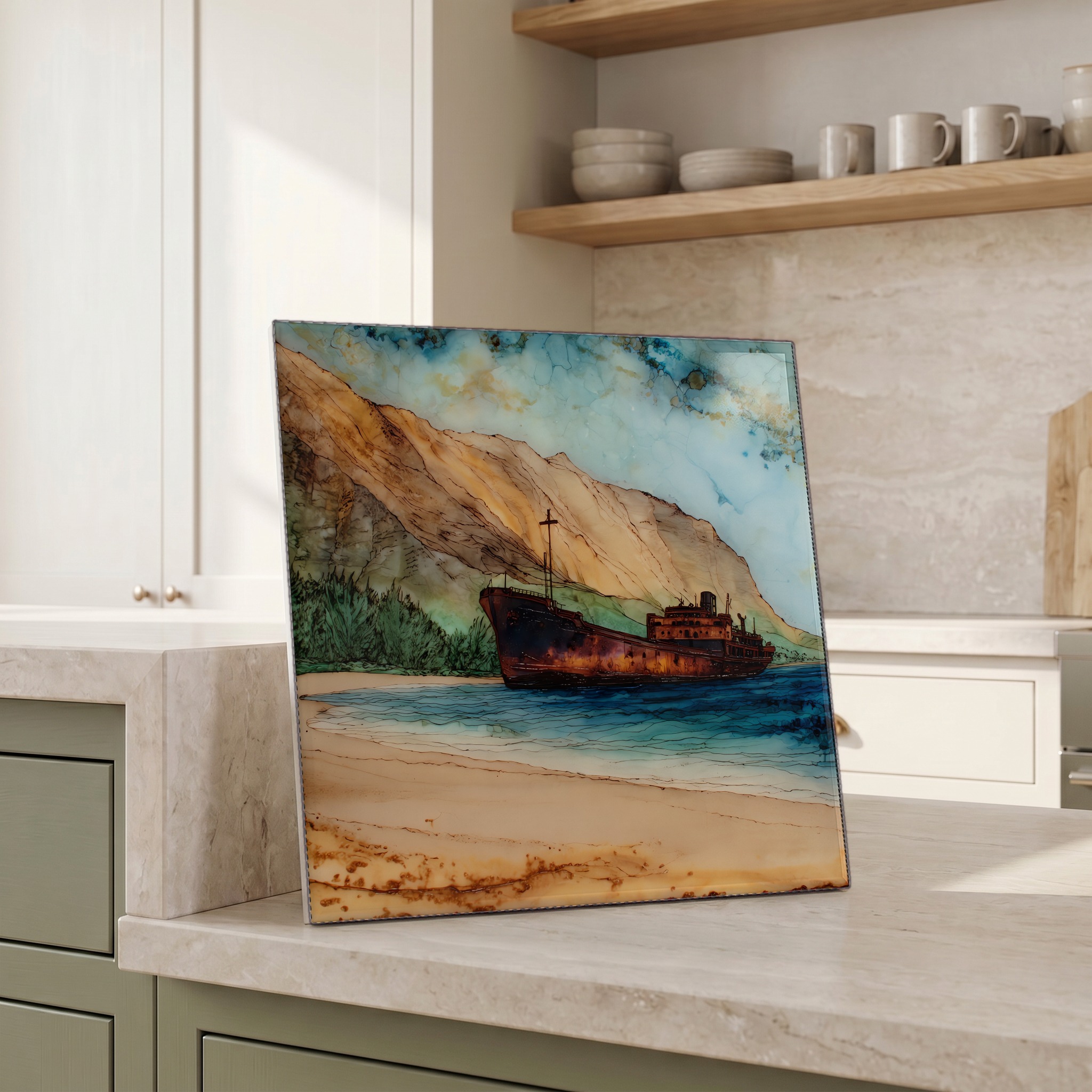
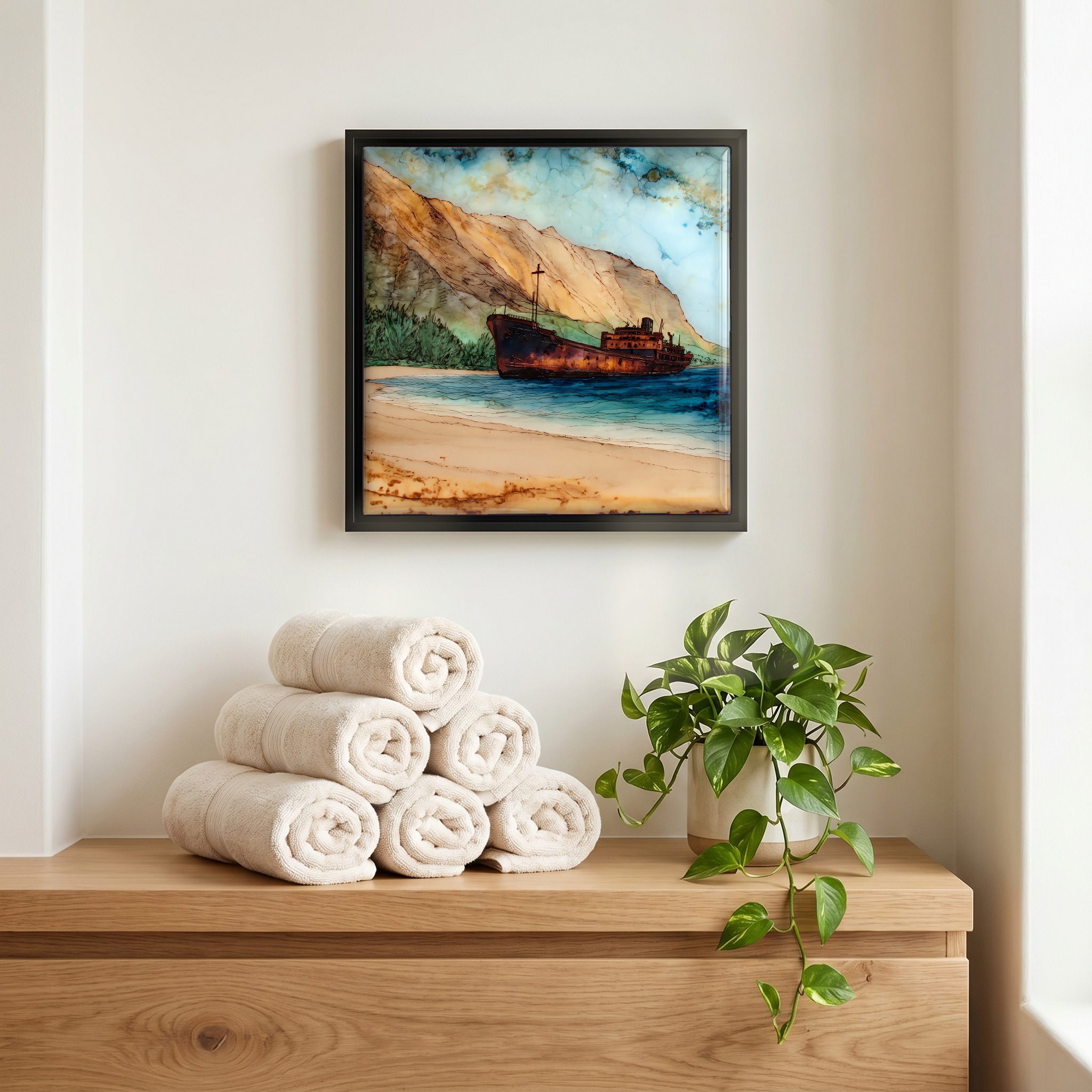
Shipwreck Beach Lanai Ceramic Art Tile
— a coast that keeps what the channel hands ashore.
Not only on a wall.
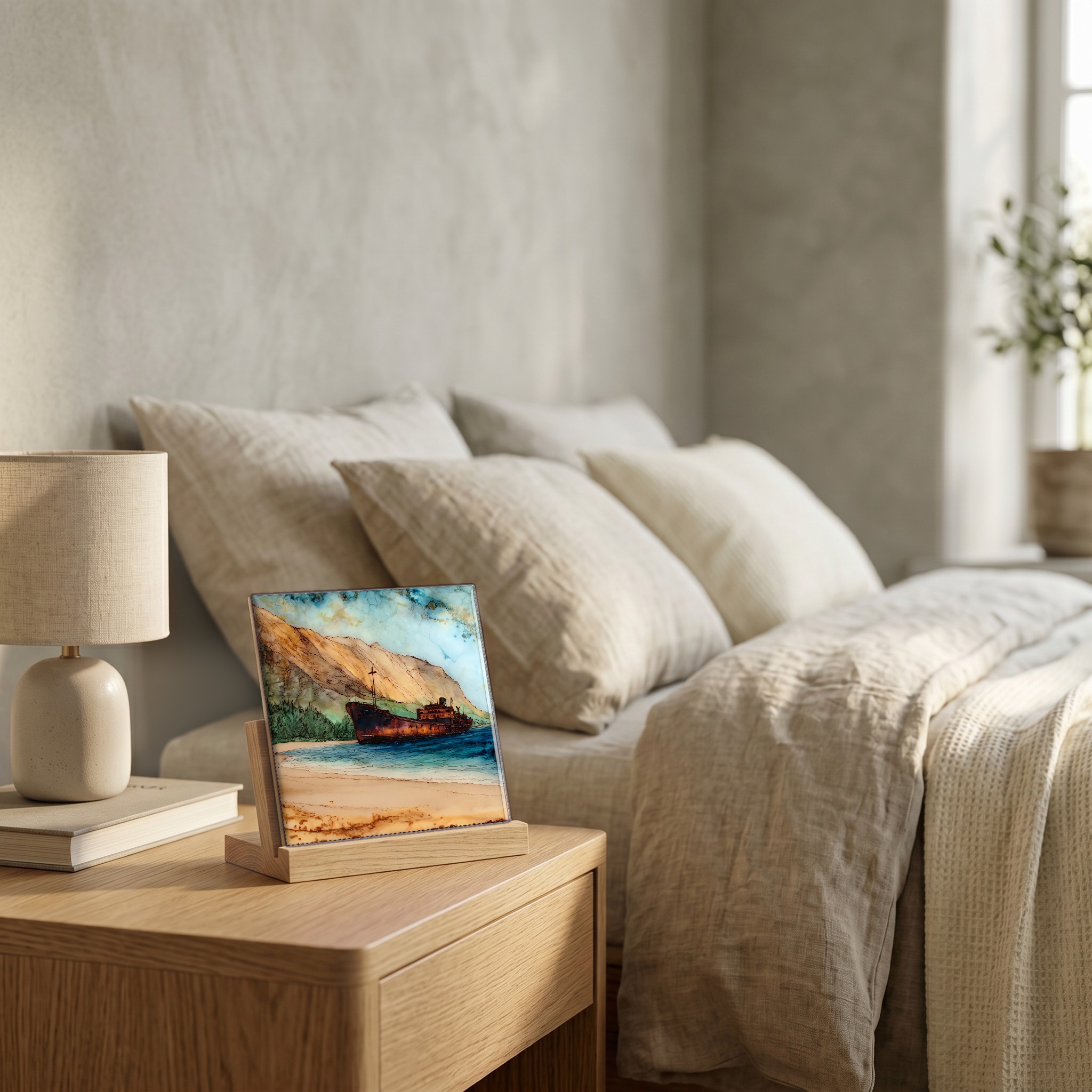
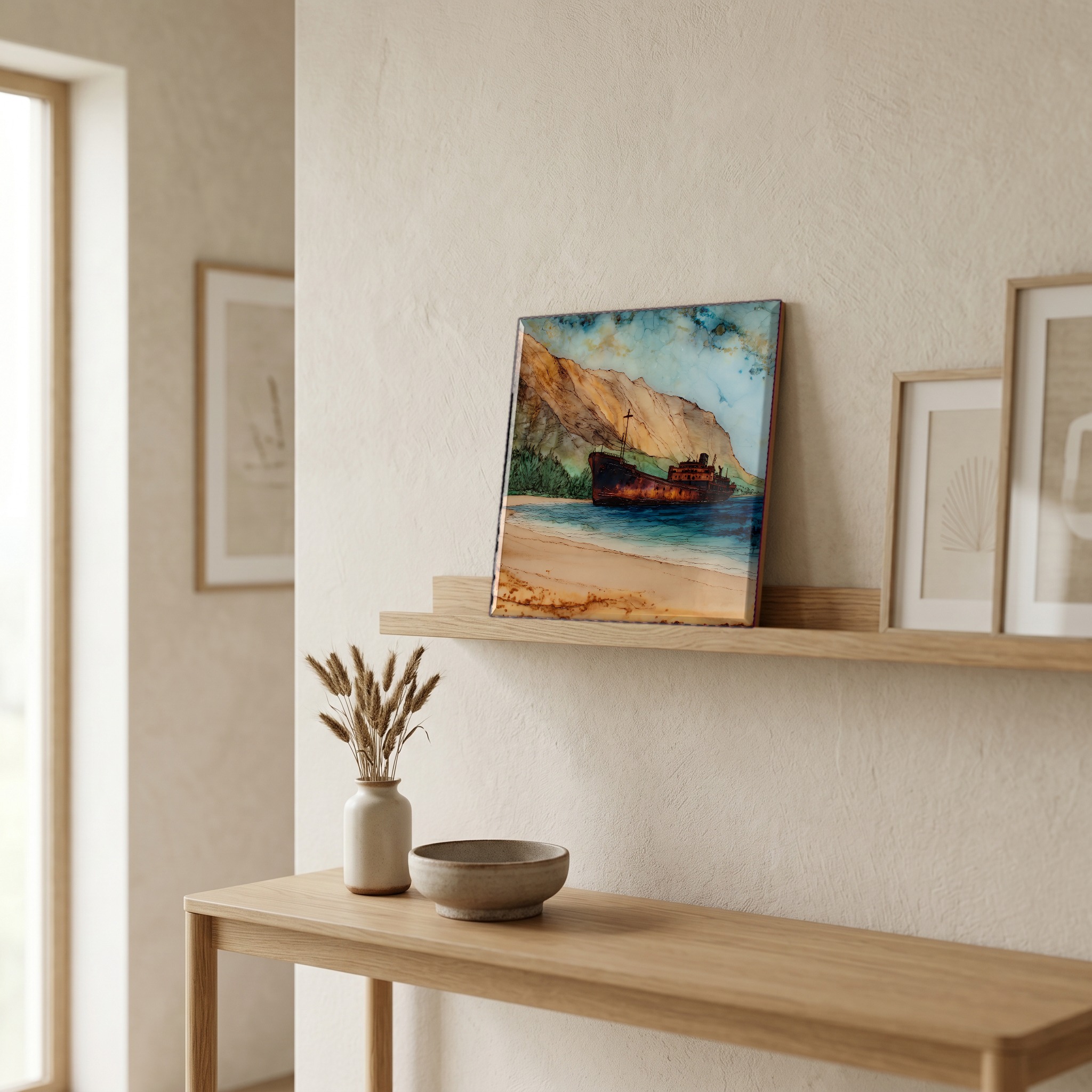
“The name is older than the wreck people drive out to see. The Alderman Wood, a British ship, foundered on this coast in 1824; the American London followed two years later. By the time the Navy beached the YOGN-42 here in the late 1940s, the count was already a dozen. The trade comes hard out of the northeast, drives swell into a shallow basalt reef, and pins whatever it catches. The road in from Lanai City is dirt past the pavement's end and asks for four-wheel-drive. The wreck is offshore. The walking is long and quiet. — from the studio
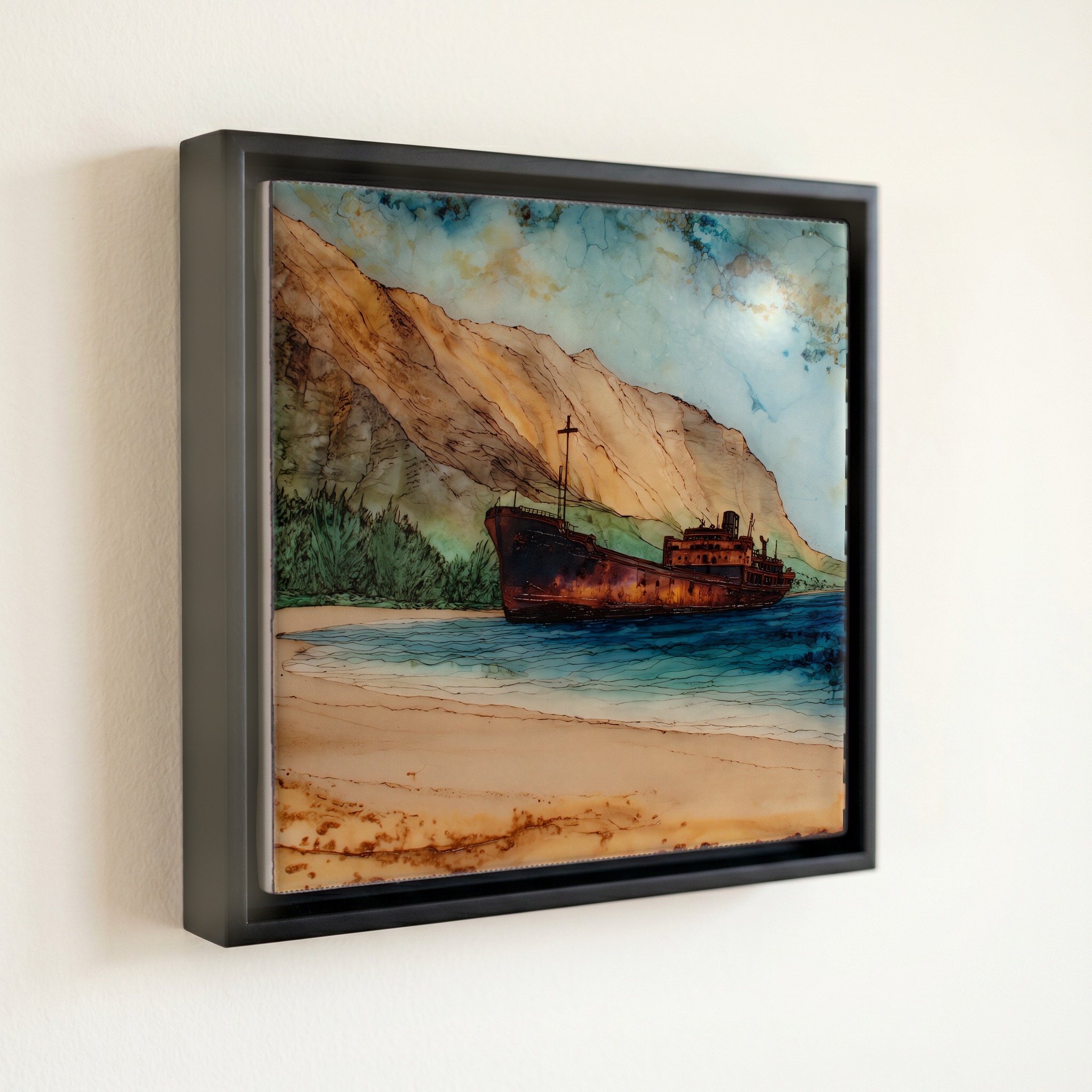
Shipwreck Beach Lanai Ceramic Art Tile, on ceramic.
Each tile is finished by hand in our Knoxville studio. Artwork is slowly infused into the ceramic surface under high heat and pressure, and rests beneath a thin glossy finish. The colour lives in the surface, not on top of it.
Pick any four 4-inch tiles — National Parks you've been to, a Smokies set, the four seasons of one place. $ for a set of , cork-backed, ready to live on the table.
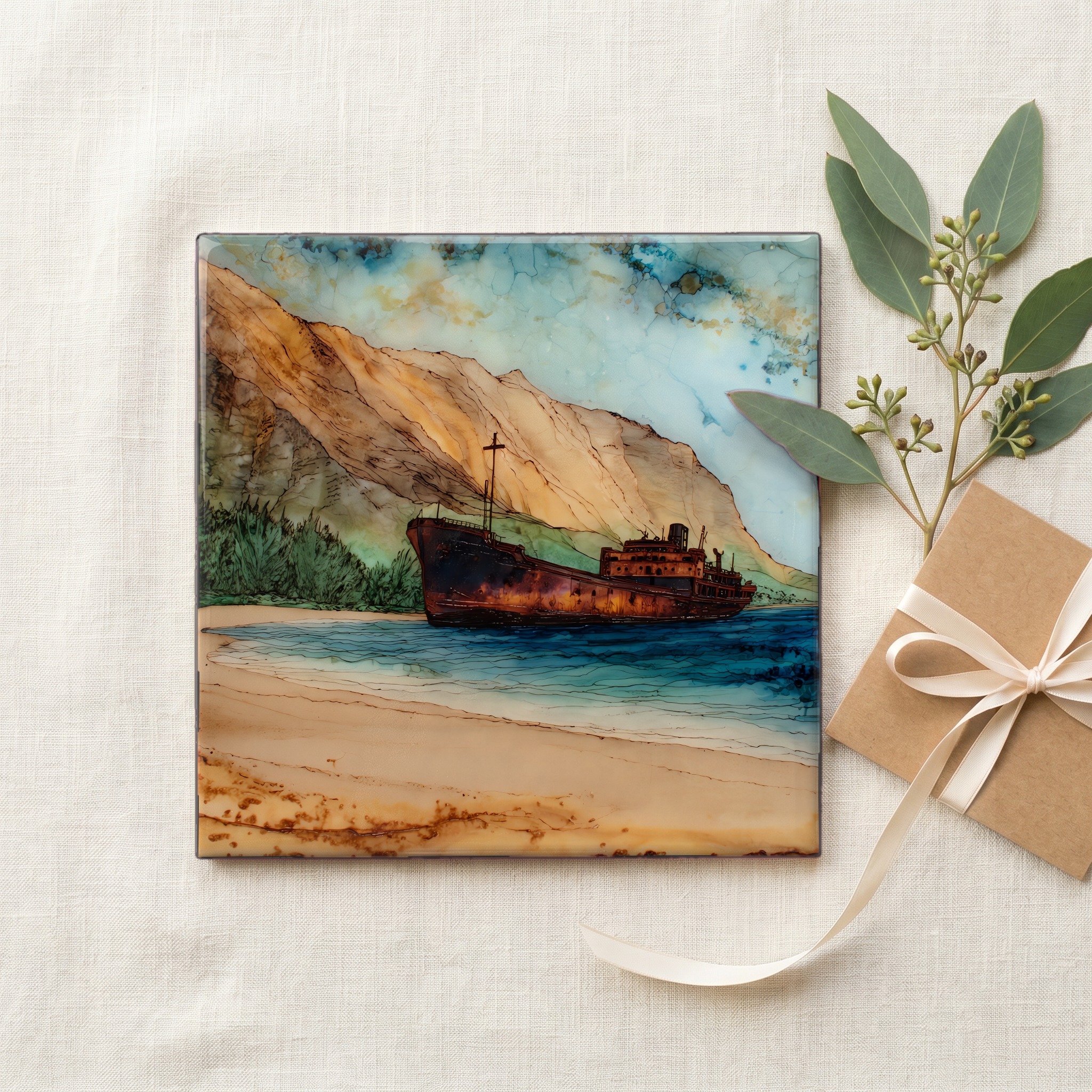
Each tile ships in a kraft box, tied with cream ribbon, with a handwritten note from the studio if you'd like to add one.
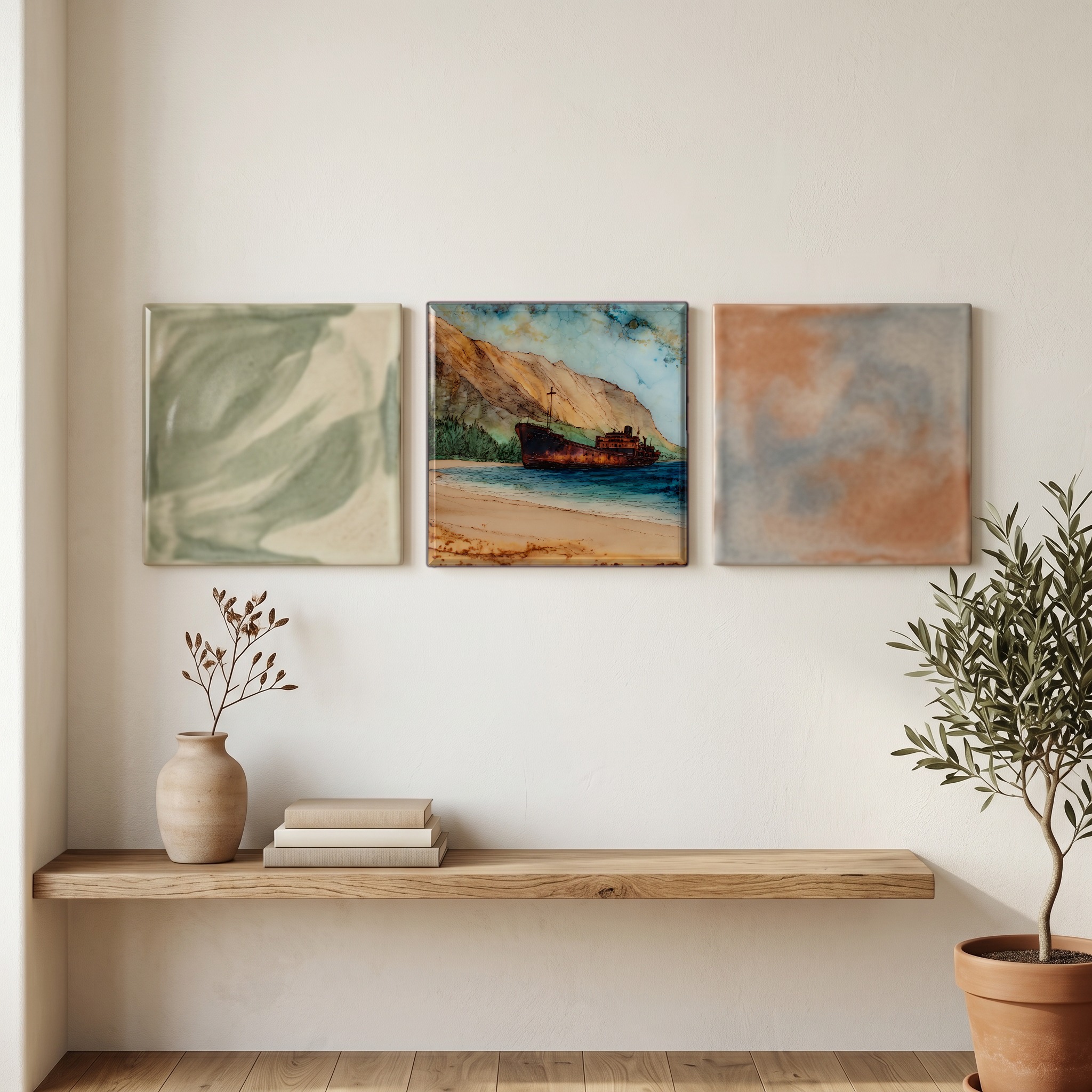
Three or five different vistas, hung together — a chapter of places you've been, or want to go.
The place, in three passes.
Shipwreck Beach is the English name for Kaiolohia, the stretch of windward coast that runs north of Kahokunui on the island of Lanai. The island sits in the middle of the Hawaiian chain, fourteen miles across the Auau Channel from west Maui, and measures roughly 140 square miles. Lanai City, population around 3,000, lies on the plateau above; from there, the route to the beach is north on Keomoku Highway until the pavement ends, then onto an unpaved track. The entire shore faces the Kalohi Channel, which separates Lanai from Molokai eight miles to the north.
There is almost no one here. Lanai has roughly 3,000 residents, all concentrated in Lanai City on the plateau above; the windward coast is empty for most of its length. There are no facilities at the beach, no shade, no lifeguard, no concessions, no sign at the turnoff that points anywhere. The Kalohi Channel and the offshore reef rule out anything built along this coast; the swell that grounded the ships still runs. A short trail inland from the parking pull-off leads about two hundred yards to the Poaiwa petroglyphs, a cluster of more than twenty figures carved into basalt boulders, marked by a single cultural-site sign. The wind does most of the talking.
A four-wheel-drive vehicle is required; the unpaved last stretch from the end of Keomoku Highway has soft sand and rutted clay that rental sedans cannot cross. The drive from Lanai City takes about forty-five minutes, depending on conditions. Most visitors park at the road's end and walk down the beach toward the wreck, roughly a mile from the pull-off. Beachcombing turns up sea glass, fishing-line floats, and the occasional Japanese glass ball that has crossed the Pacific. Polihua Beach, a mile and a half of white sand and a green-sea-turtle nesting ground, lies further west along the same shore.