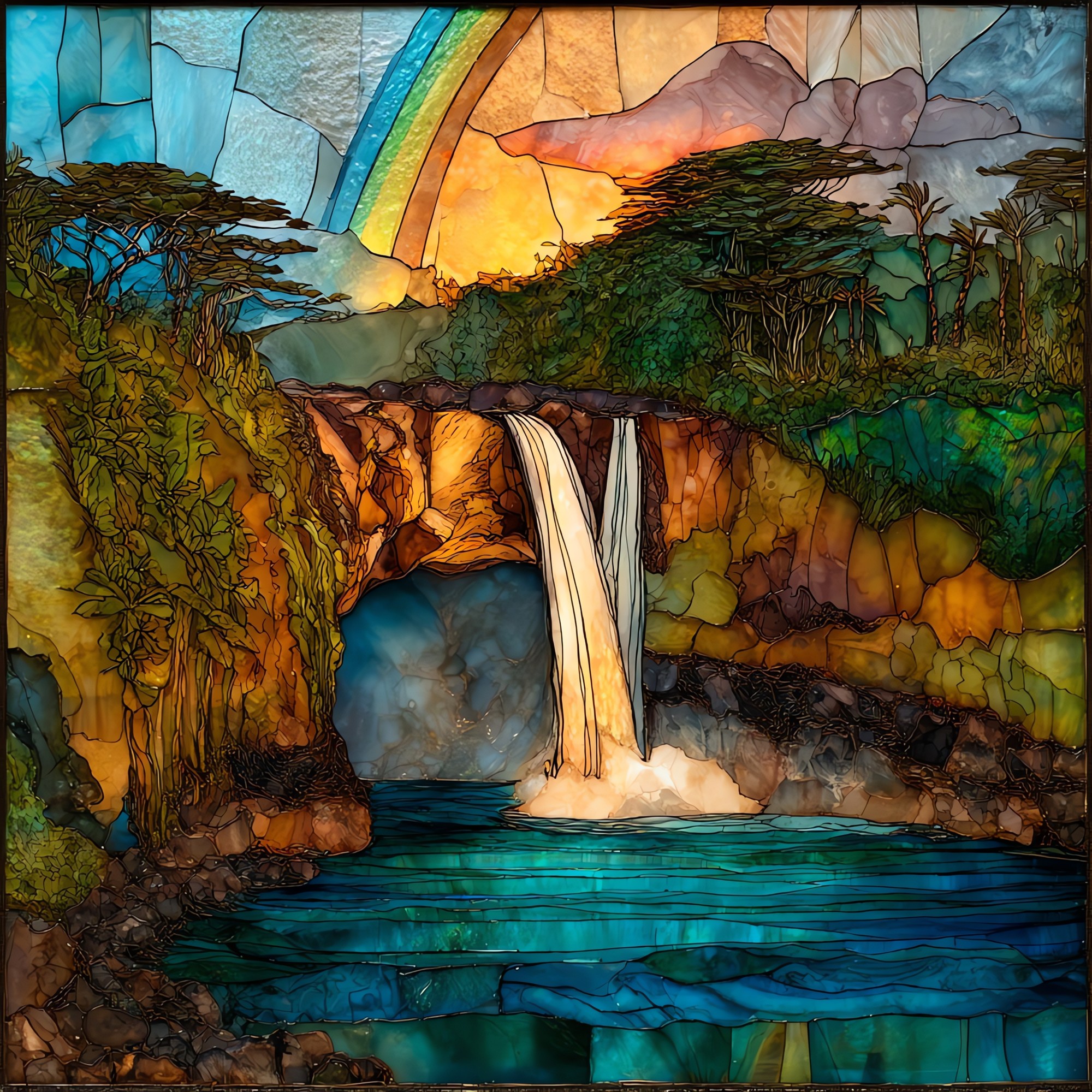
Rainbow Falls Big Island Ceramic Art Tile
— the rainbow the morning leaves in the mist.
Not only on a wall.
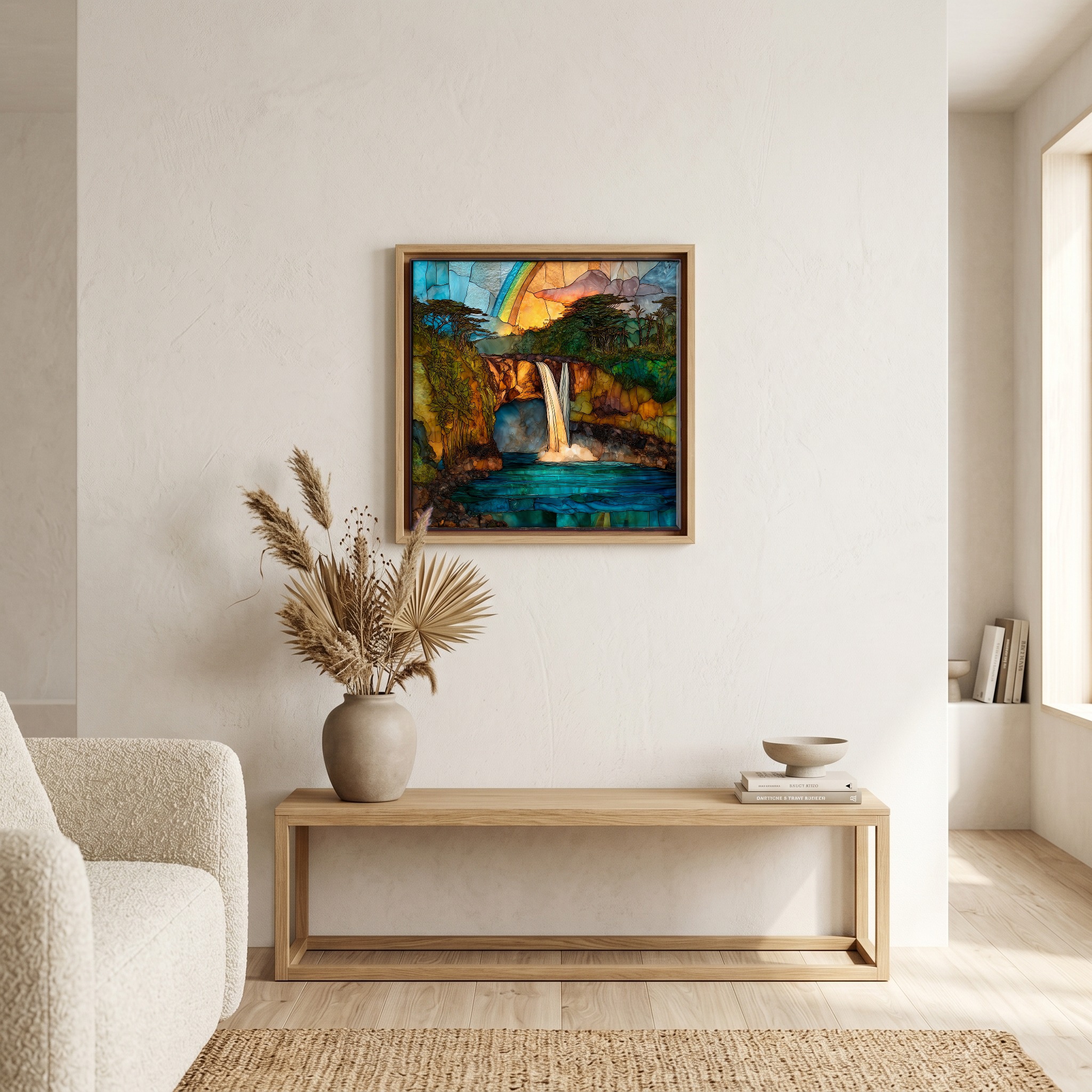
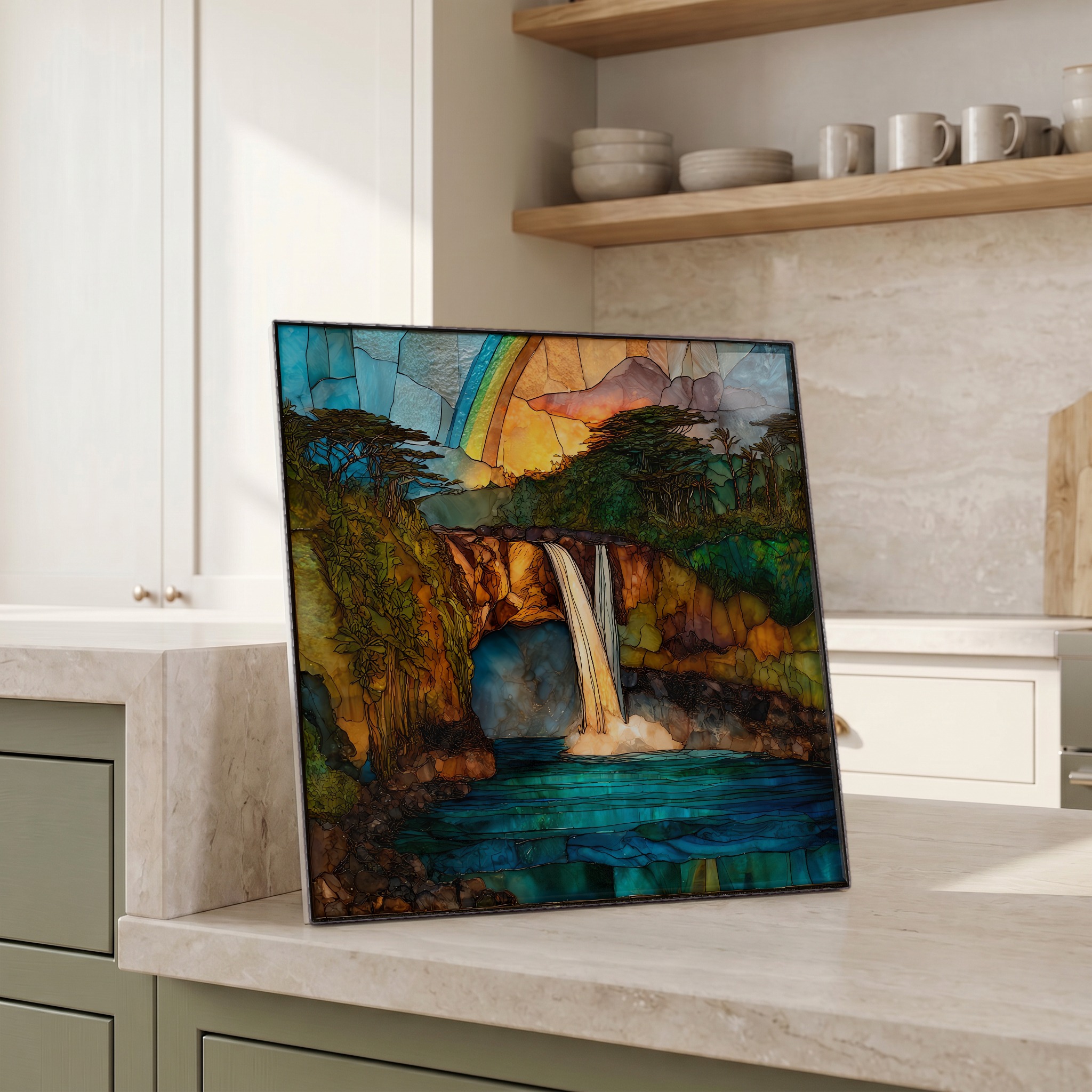
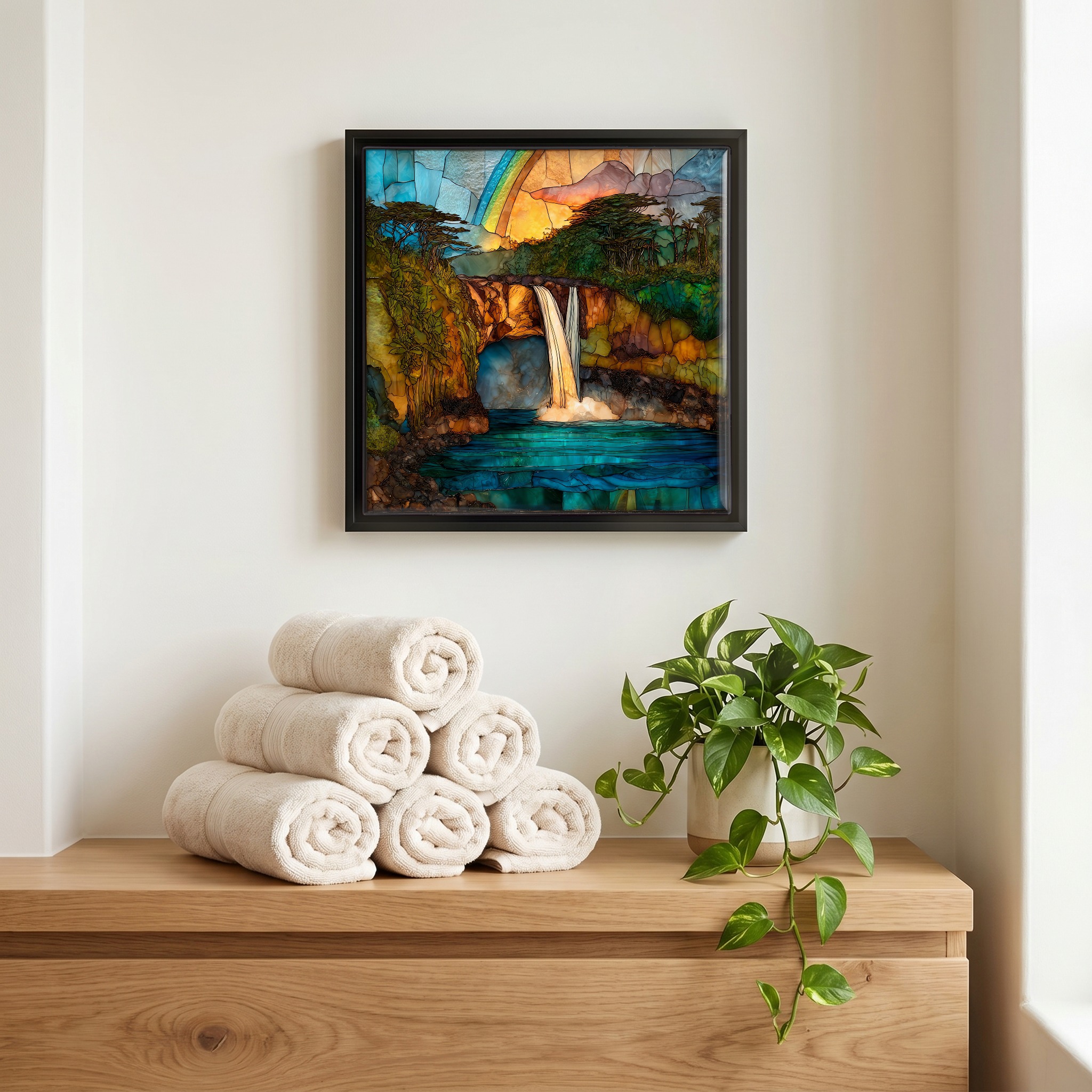
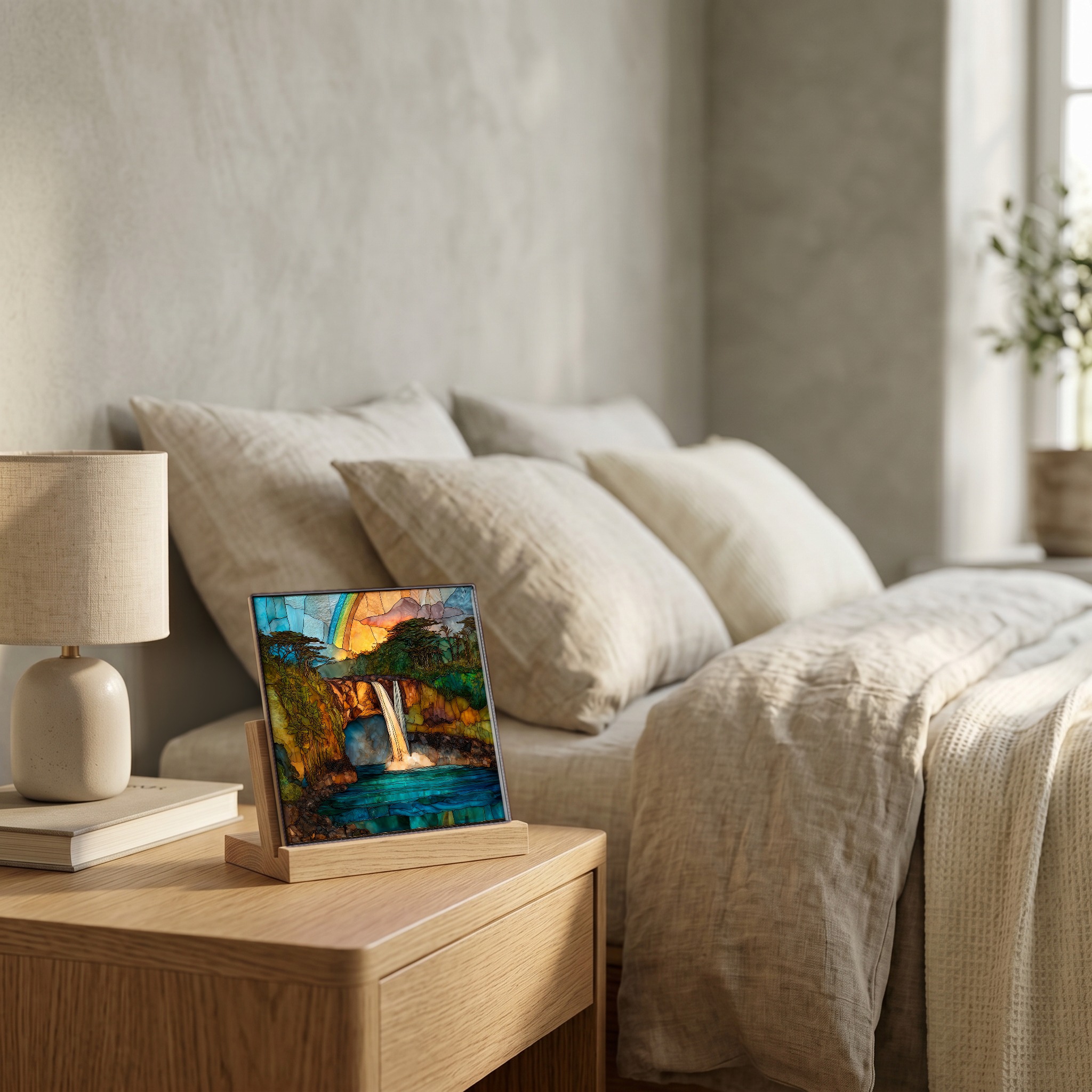
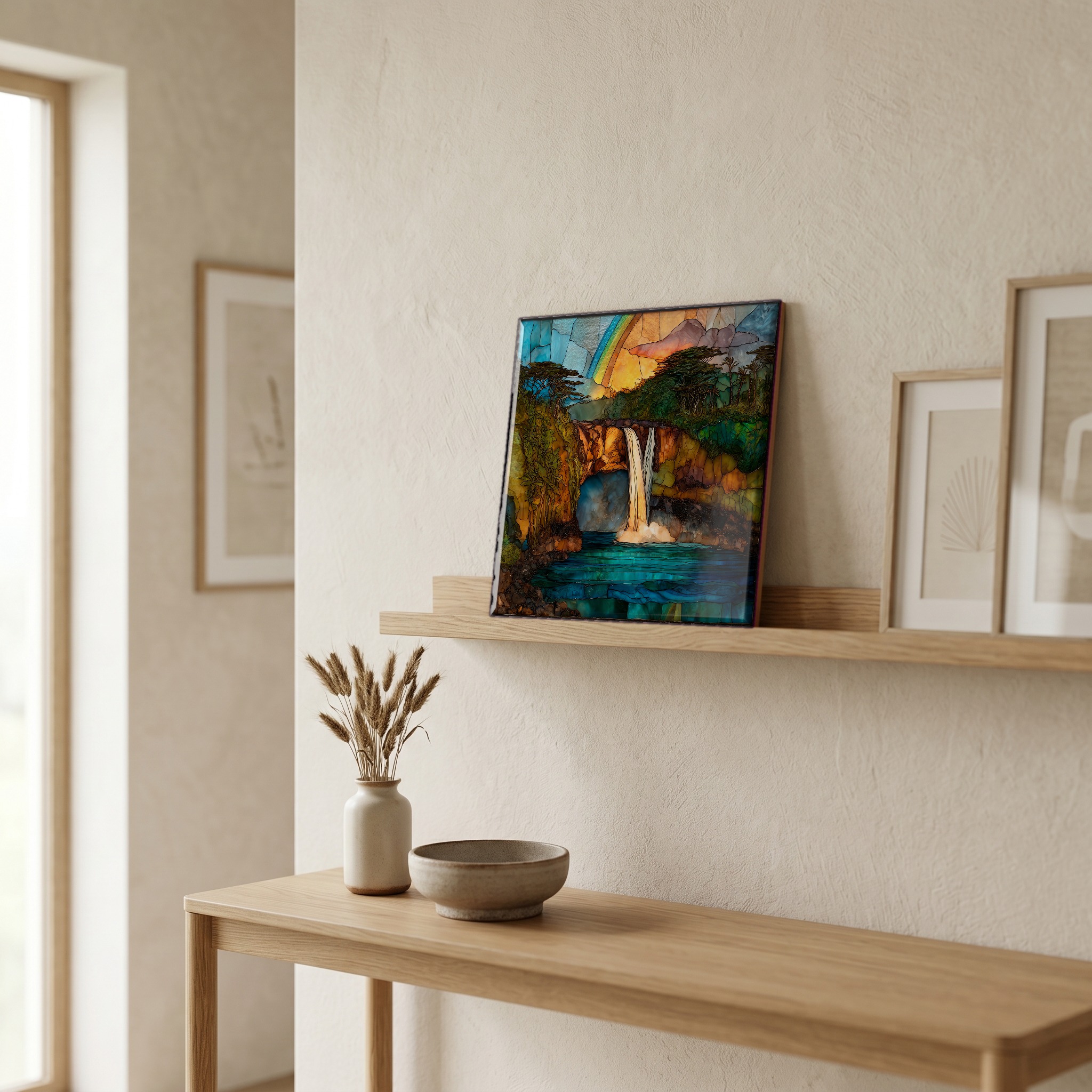
“The falls sit at the edge of Hilo, where the Wailuku River drops eighty feet over a lava cave and throws spray into the trees. The Hawaiian name is Waiānuenue, rainbow seen in water, and the rainbow is the point: it appears most mornings around ten, when the sun crosses the gorge and lights the mist. The cave behind the falls is, in the old stories, the home of Hina, mother of Māui. The lookout is steps from the parking lot. By afternoon the rainbow is gone.
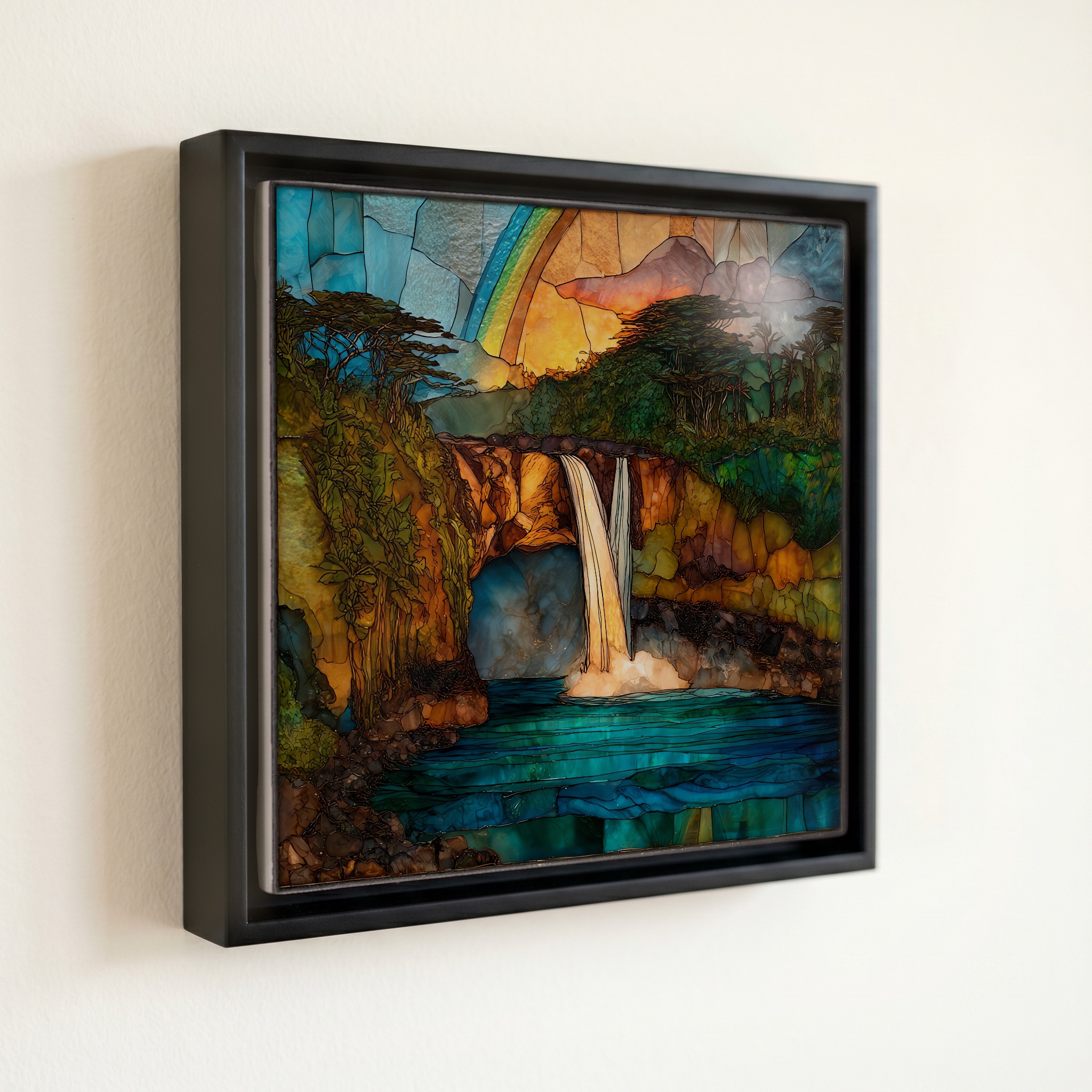
Rainbow Falls Big Island Ceramic Art Tile, on ceramic.
Each tile is finished by hand in our Knoxville studio. Artwork is slowly infused into the ceramic surface under high heat and pressure, and rests beneath a thin glossy finish. The colour lives in the surface, not on top of it.
Pick any four 4-inch tiles — National Parks you've been to, a Smokies set, the four seasons of one place. $ for a set of , cork-backed, ready to live on the table.
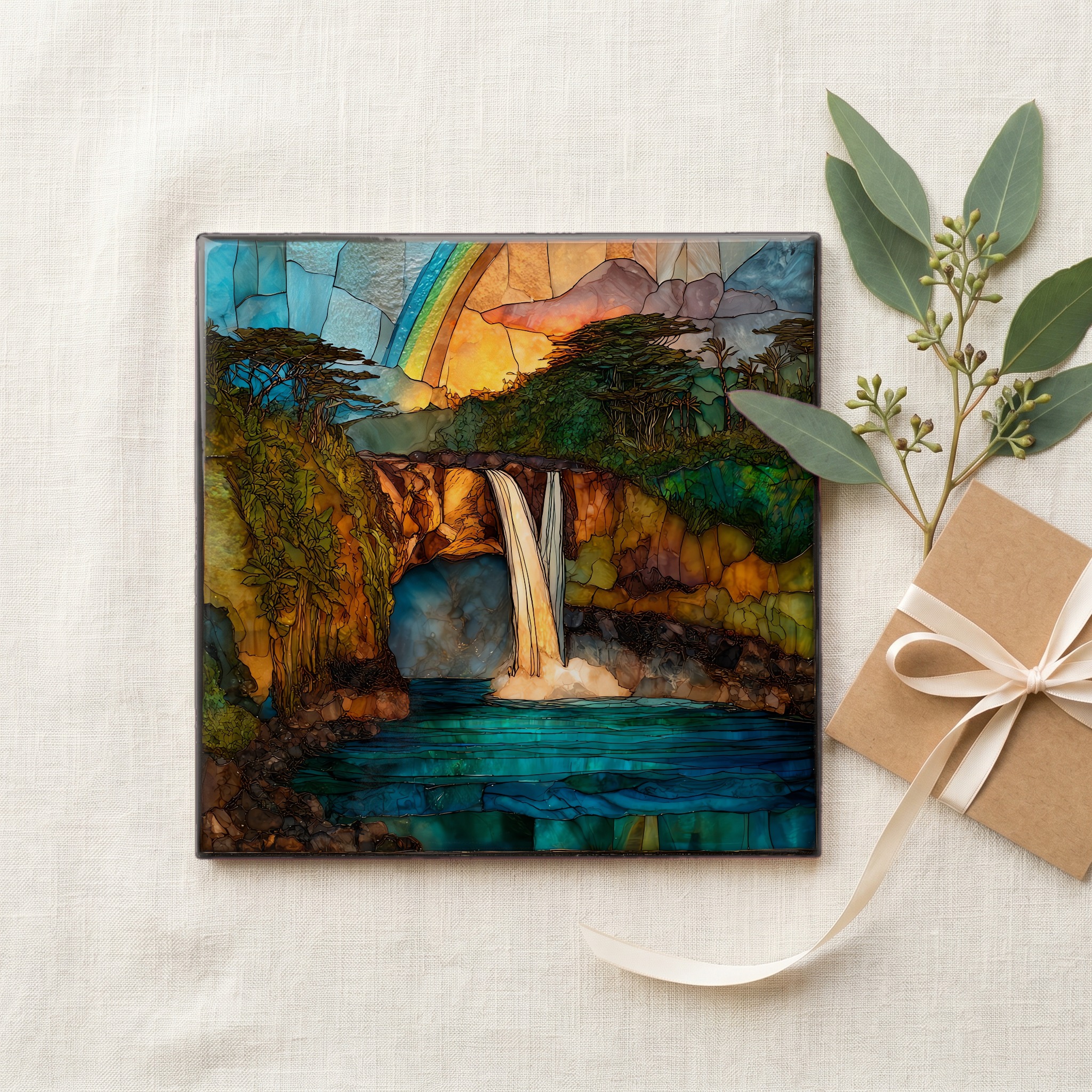
Each tile ships in a kraft box, tied with cream ribbon, with a handwritten note from the studio if you'd like to add one.
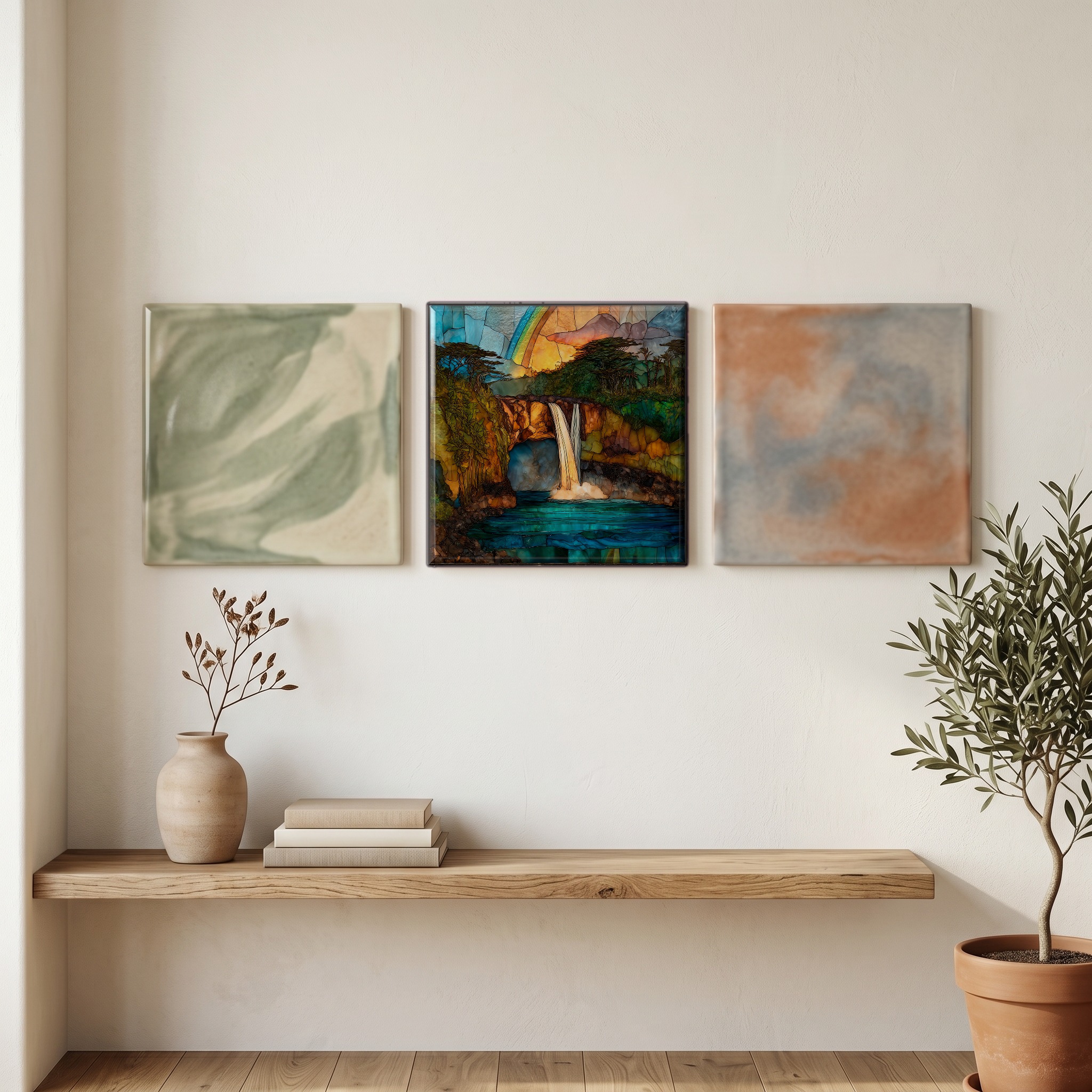
Three or five different vistas, hung together — a chapter of places you've been, or want to go.
The place, in three passes.
Rainbow Falls is the lower waterfall on the Wailuku River, the longest river in the State of Hawaiʻi, on the windward side of Hawaiʻi Island. The drop is eighty feet (24 m), over a basalt lip that was once the roof of a lava cave on the river's outflow toward Hilo Bay. The viewpoint and parking lot sit within Wailuku River State Park, two miles inland from downtown Hilo on Waianuenue Avenue. Admission is free; the walk from the car to the upper lookout is paved and short. Pe'epe'e Falls and the Boiling Pots, a chain of plunge pools further upstream, are part of the same park unit.
The Wailuku River drains the eastern slope of Mauna Kea, carrying runoff from one of the wettest places in the United States. Hilo averages around 126 inches of rain a year, and that volume meets a basalt rim at the lower falls. The plunge is roughly eighty feet into a circular pool, and the spray hangs in the gorge long enough to refract sunlight into a rainbow most mornings between nine and eleven. The Hawaiian name Waiānuenue, rainbow seen in water, names the phenomenon, not the falls themselves. After heavy rain the river runs brown with sediment and the rainbow sharpens; in drought the flow thins to a curtain.
Wailuku River State Park is open daily from 7 a.m. to sunset, and admission is free. The main lookout sits at the parking lot and is paved and step-free, so the falls are visible without a hike. The rainbow forms most reliably between nine and eleven in the morning, when sunlight clears the eastern rim of the gorge and lights the mist. A short paved path climbs through a grove of banyans to an upper viewpoint over the lip of the falls. Swimming is prohibited at both Rainbow Falls and the Boiling Pots upstream; the currents and undertows are dangerous and have been fatal.