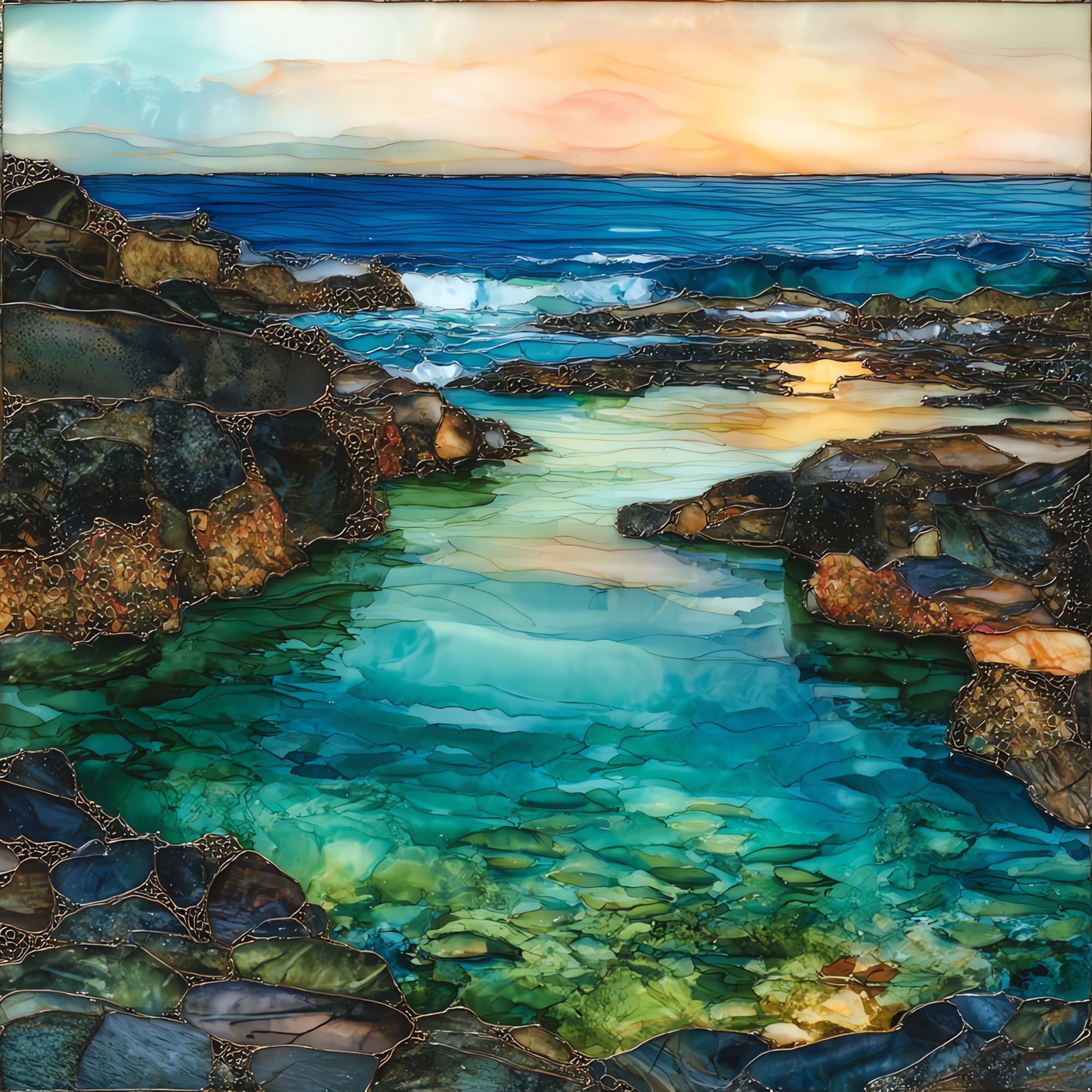
Pupukea Tidepools Oahu Ceramic Art Tile
— the still water the lava leaves at low tide.
Not only on a wall.
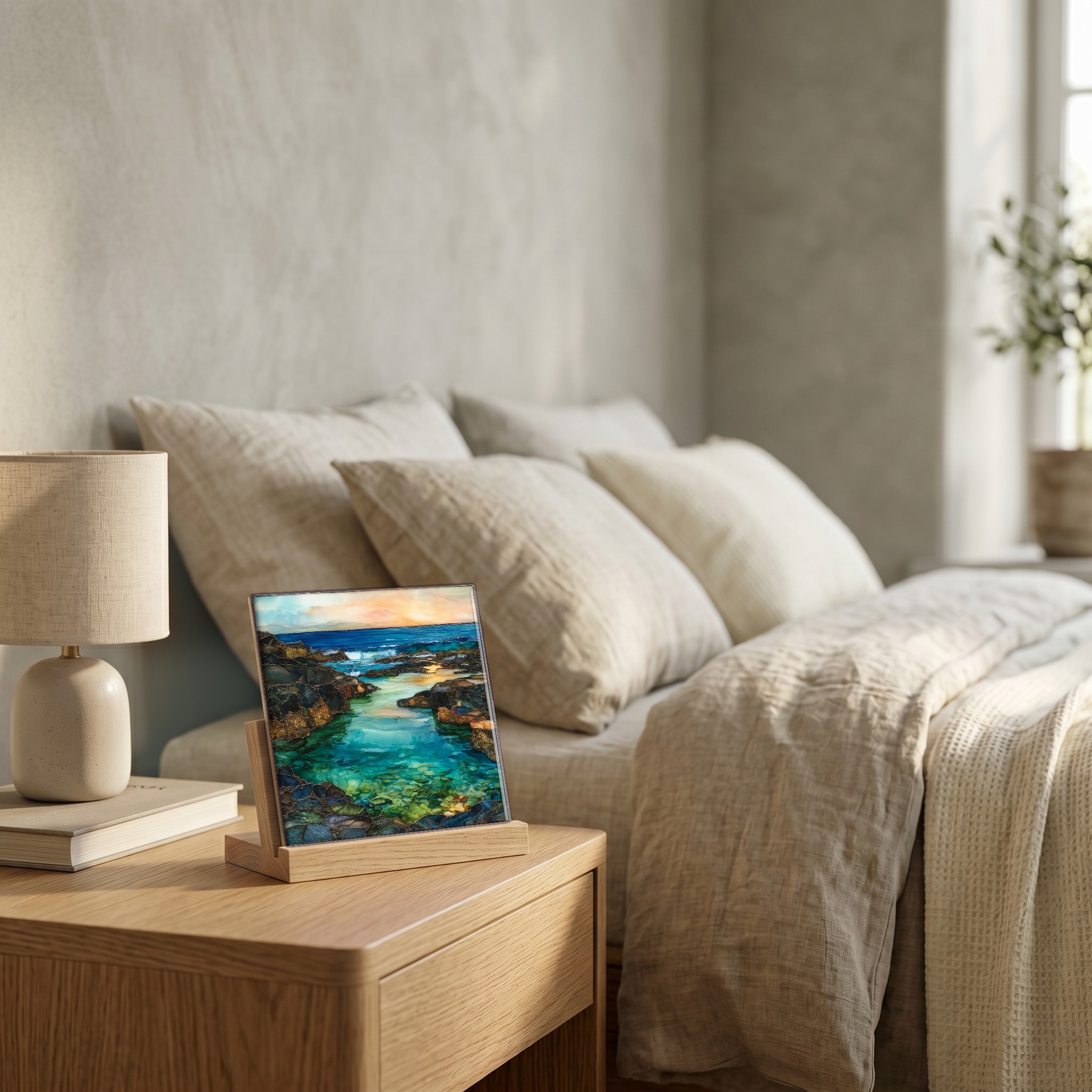
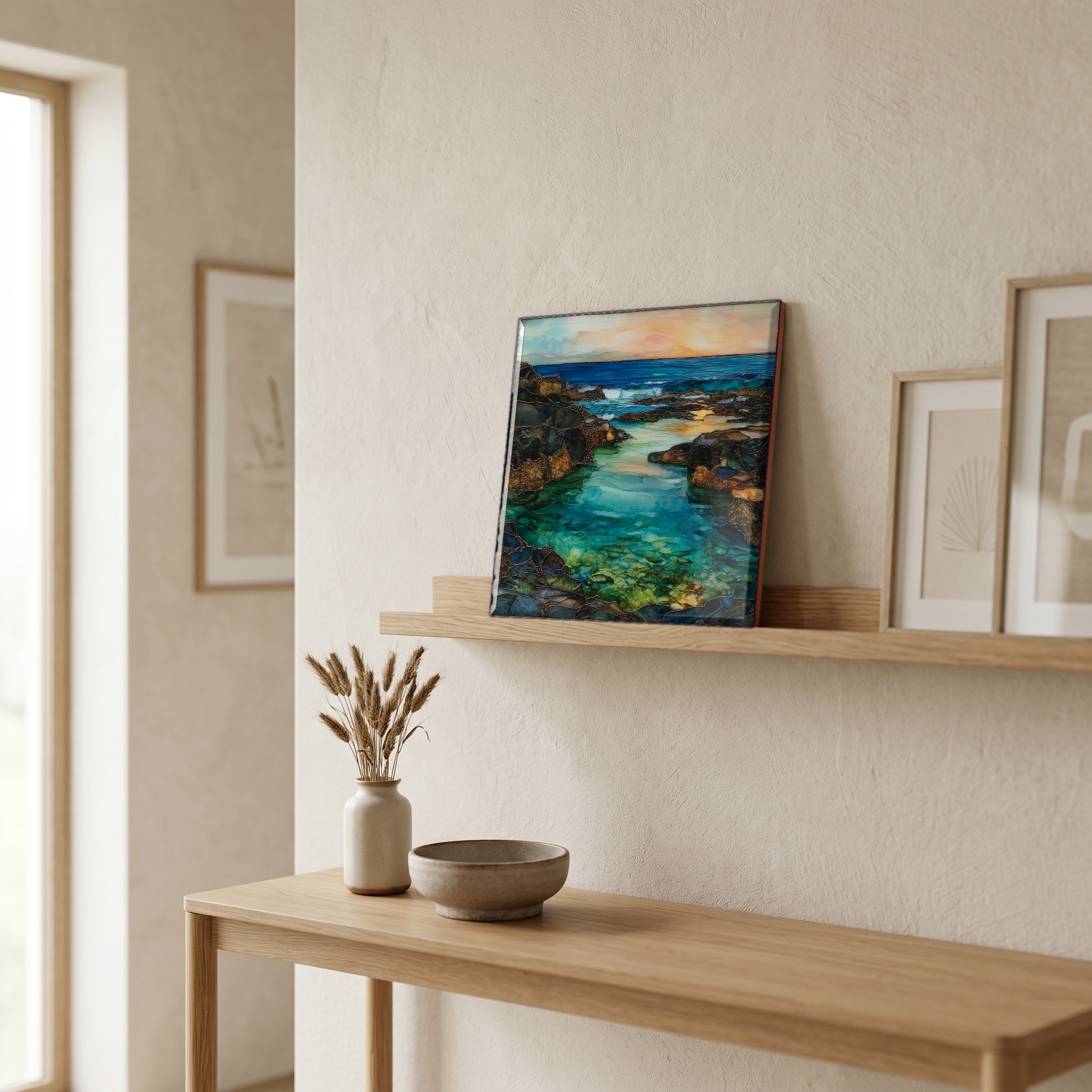
“The tide goes out from a basalt shelf on the North Shore of Oahu, and what's left is a hundred small bowls of ocean. Sea urchins, wrasse, the occasional green turtle people pretend they didn't see. In summer the water sits glass-still. By November the same coast becomes some of the most dangerous water in Hawaii. The surf comes back in thirty-foot sets and the bowls disappear. The signs change. The lifeguards change. The road still runs past Three Tables and Sharks Cove, and the small ocean waits for May.
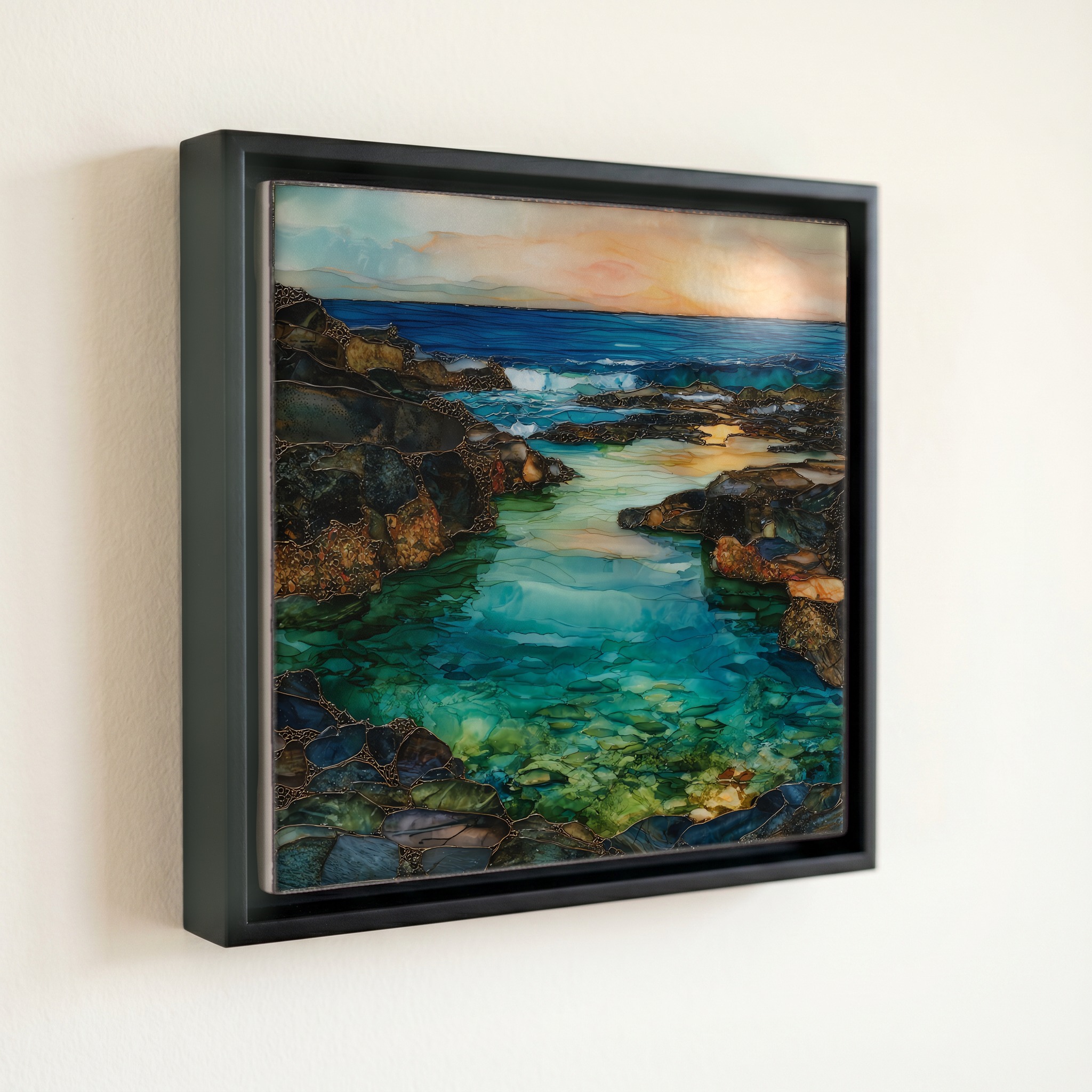
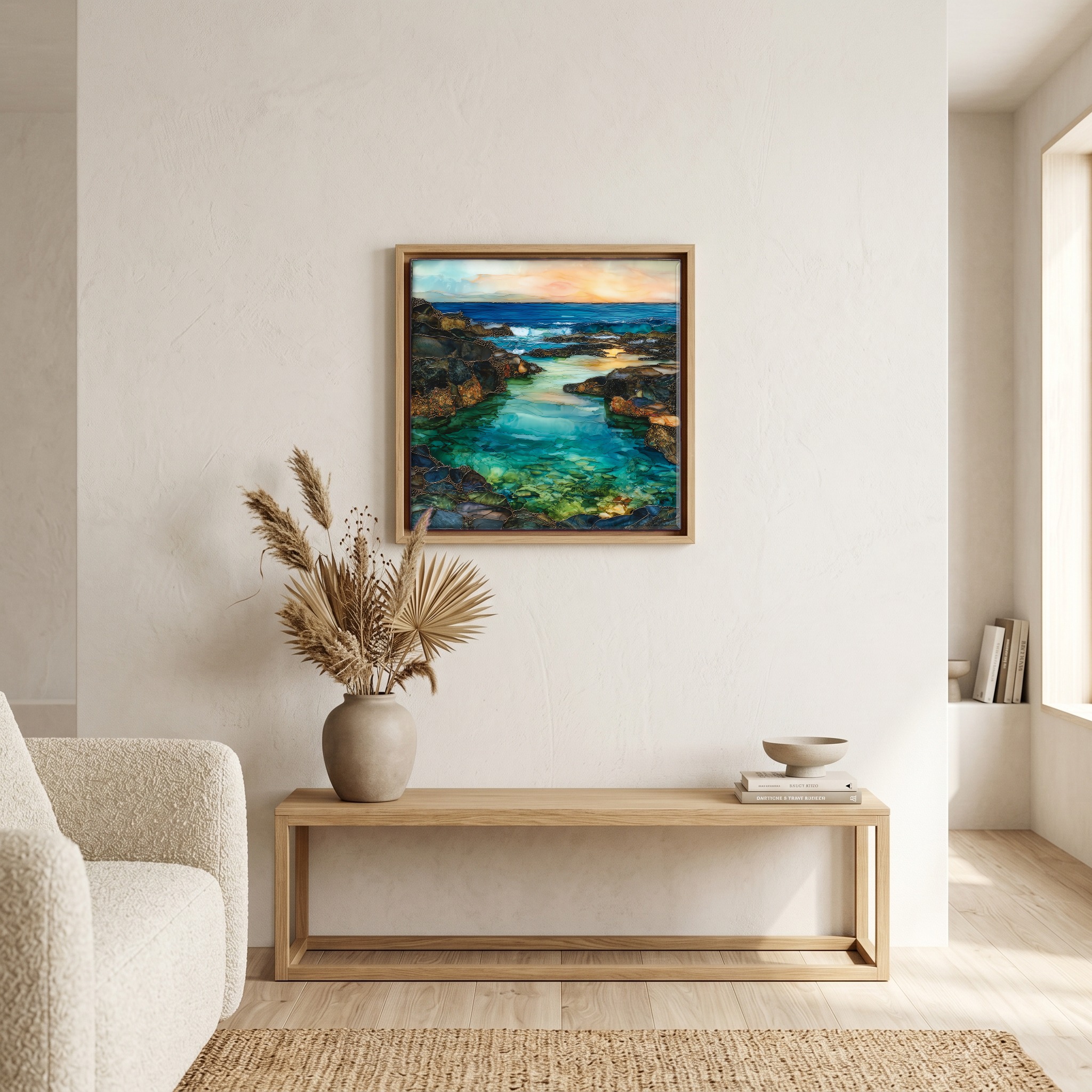
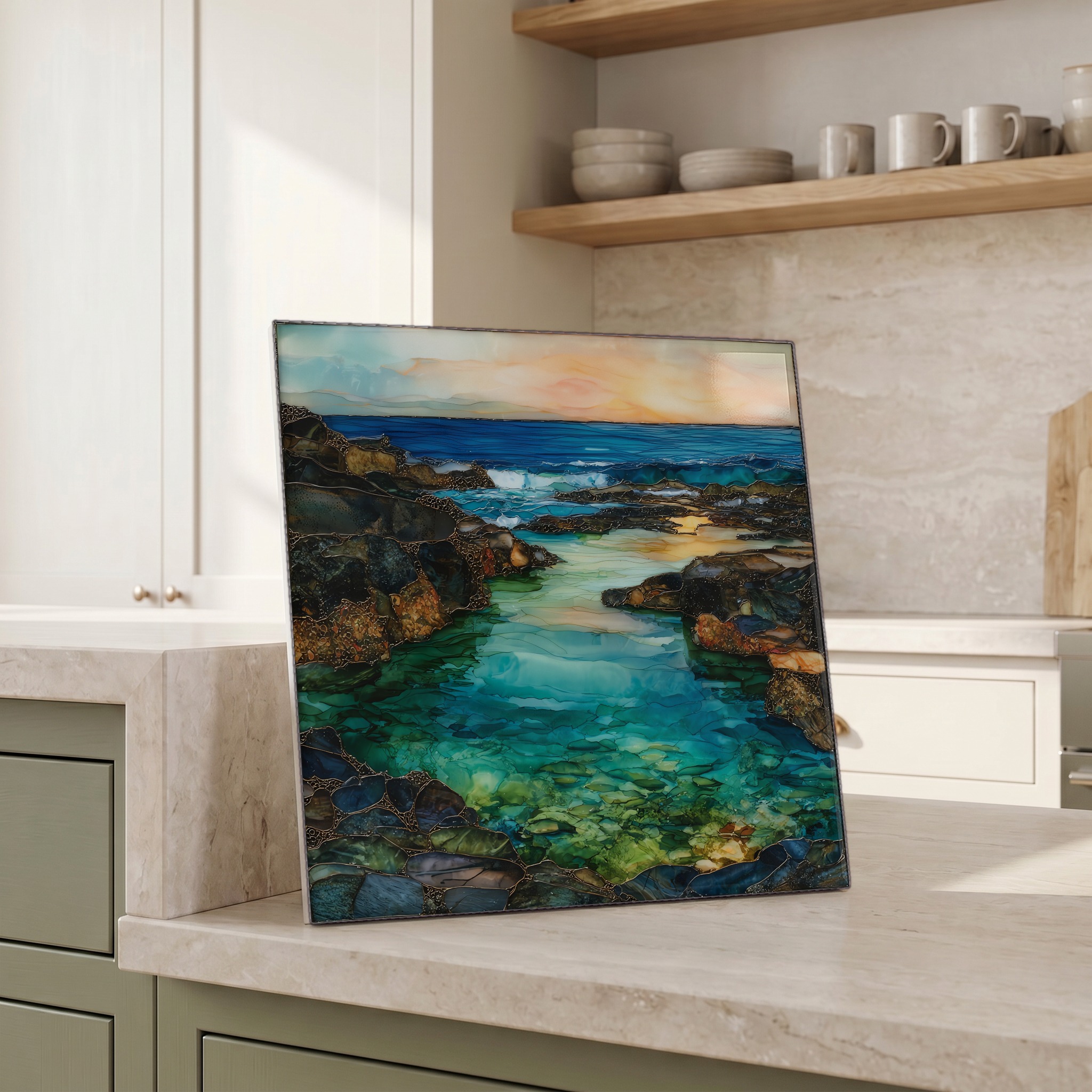
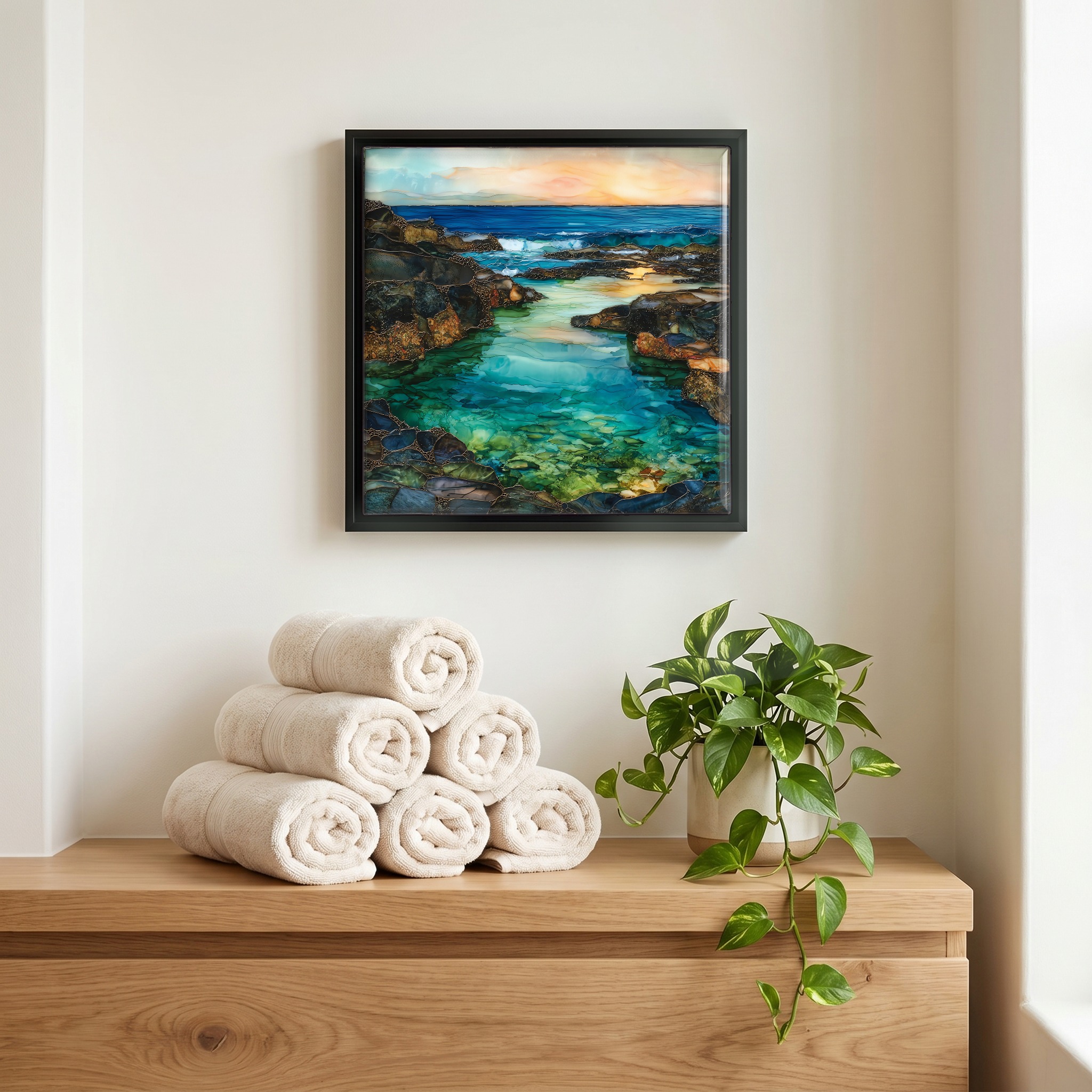
Pupukea Tidepools Oahu Ceramic Art Tile, on ceramic.
Each tile is finished by hand in our Knoxville studio. Artwork is slowly infused into the ceramic surface under high heat and pressure, and rests beneath a thin glossy finish. The colour lives in the surface, not on top of it.
Pick any four 4-inch tiles — National Parks you've been to, a Smokies set, the four seasons of one place. $ for a set of , cork-backed, ready to live on the table.
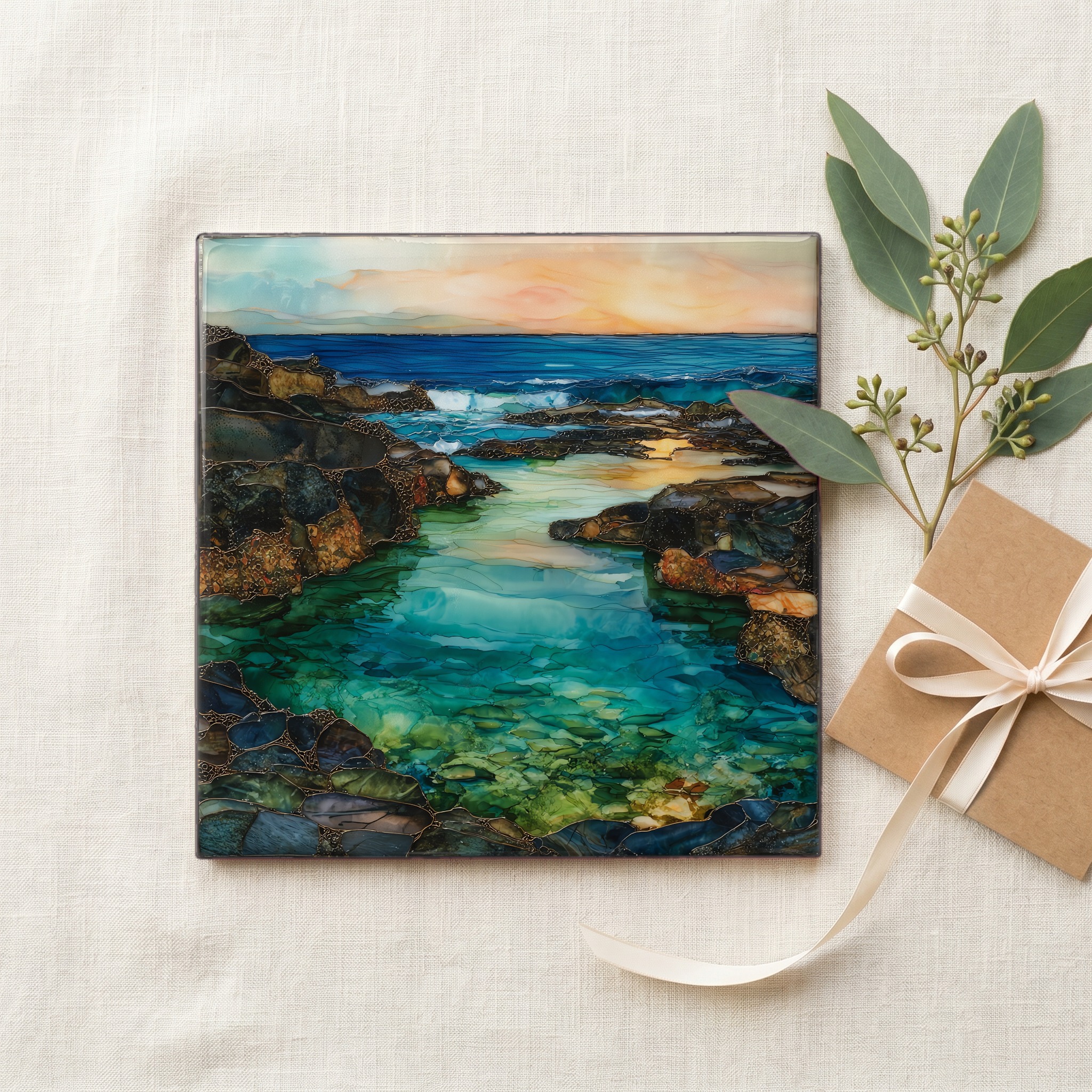
Each tile ships in a kraft box, tied with cream ribbon, with a handwritten note from the studio if you'd like to add one.
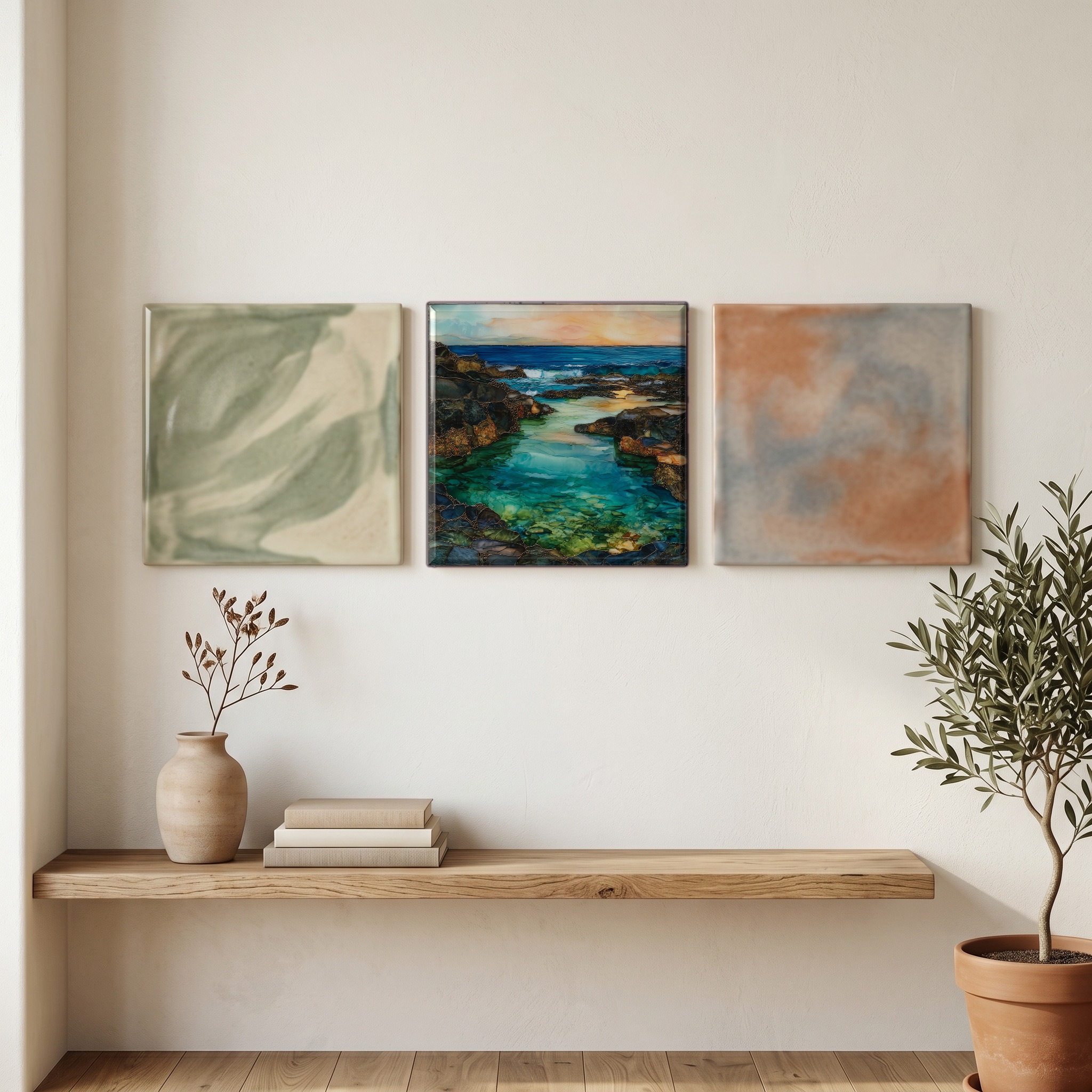
Three or five different vistas, hung together — a chapter of places you've been, or want to go.
The place, in three passes.
Pupukea sits on the windward bend of Oahu's North Shore, on the seven-mile stretch of coast between Haleiwa and Sunset Beach. The tidepools form along a low basalt shelf below Pupukea Beach Park, on the seaward side of Kamehameha Highway. The shelf, together with Sharks Cove and Three Tables, lies within the Pūpūkea Marine Life Conservation District — about 100 acres of nearshore reef established by the State of Hawaiʻi in 1983. The Hawaiian name Pūpūkea translates roughly as 'white shell.' The closest town is Haleiwa, about seven miles south on Route 83. Honolulu is an hour by car when traffic is light, longer when it isn't.
The tidepools form where the lava shelf drops just below the line of the highest tide, and the reef beyond breaks the swell before it reaches the rocks. Twice a day the shallow ocean drains out of the bowls and what stays is a roll-call of the inner reef: yellow tang, manini, brittle stars, hermit crabs, the occasional juvenile green sea turtle (honu) resting in a back pool. Because the area sits inside a Marine Life Conservation District, fishing and the taking of any sea life are prohibited; the rule has held since 1983 and the fish here behave like fish who have never been hunted. Visibility on a calm summer morning can exceed sixty feet.
Summer is the season — May through September. From late October through April, the North Shore receives the swell that made the Banzai Pipeline and Waimea Bay famous, with sets routinely reaching twenty to thirty feet and occasionally larger. During those months the tidepools are submerged under heavy whitewater and the area is closed to entry by lifeguards and posted signs. In summer the same water flattens to almost lake-stillness. Low tide is the working hour: tide-table consultation is essential, and reef-walking sandals with grip are the minimum kit for crossing the basalt. The Honolulu Ocean Safety lifeguard tower at Pupukea Beach Park is the place to check conditions before going down.