Wender·Vista
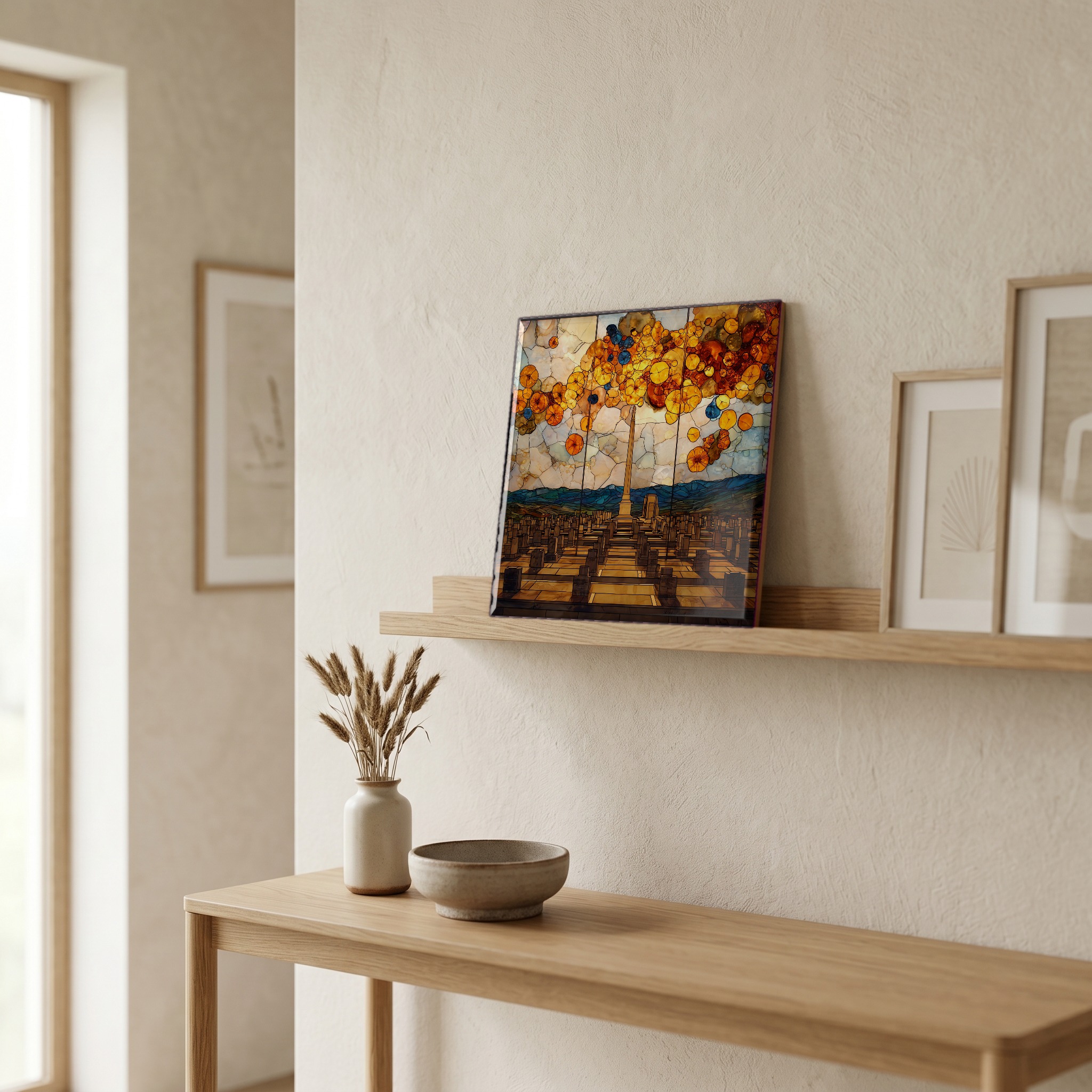
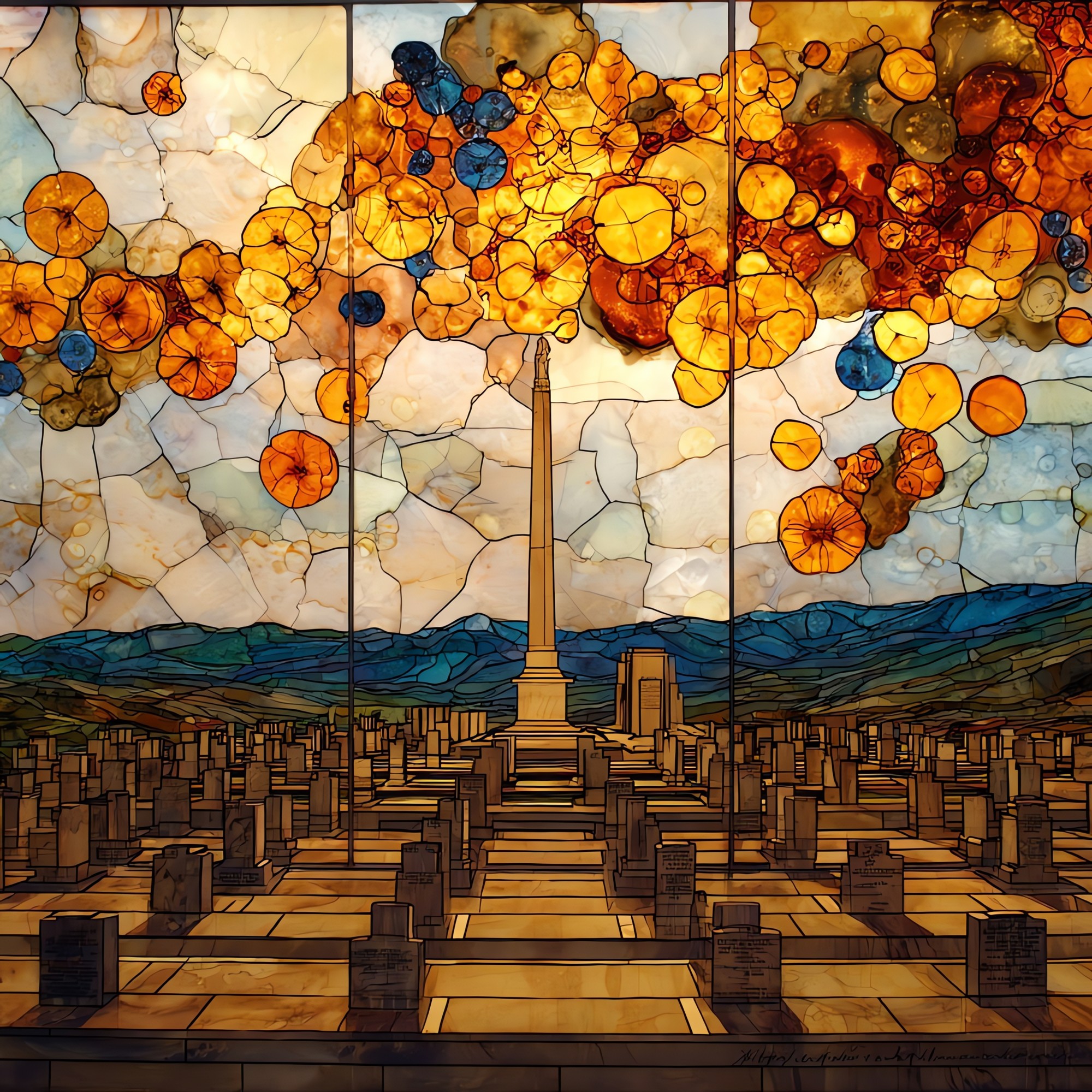
Punchbowl Cemetery Oahu Ceramic Art Tile
shown on ceramic, 12-inch tileHawaii · United States
above Honolulu, in an old crater

Punchbowl Cemetery Oahu Ceramic Art Tile

the city's noise stops at the rim.

Where it lives

Not only on a wall.

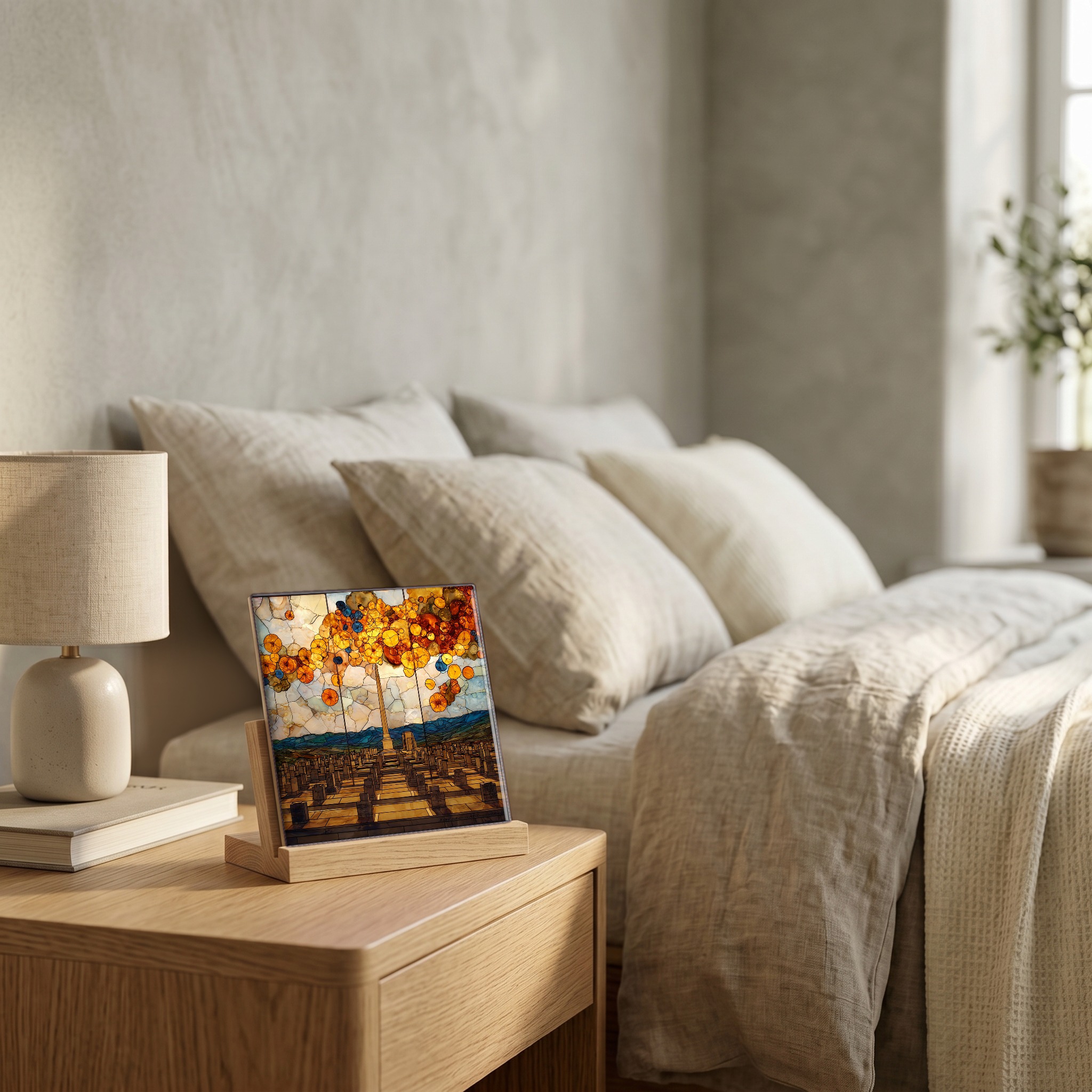
A small tile on the nightstand catching the morning. A larger one above the fire. Yours, wherever you spend the slow hours.
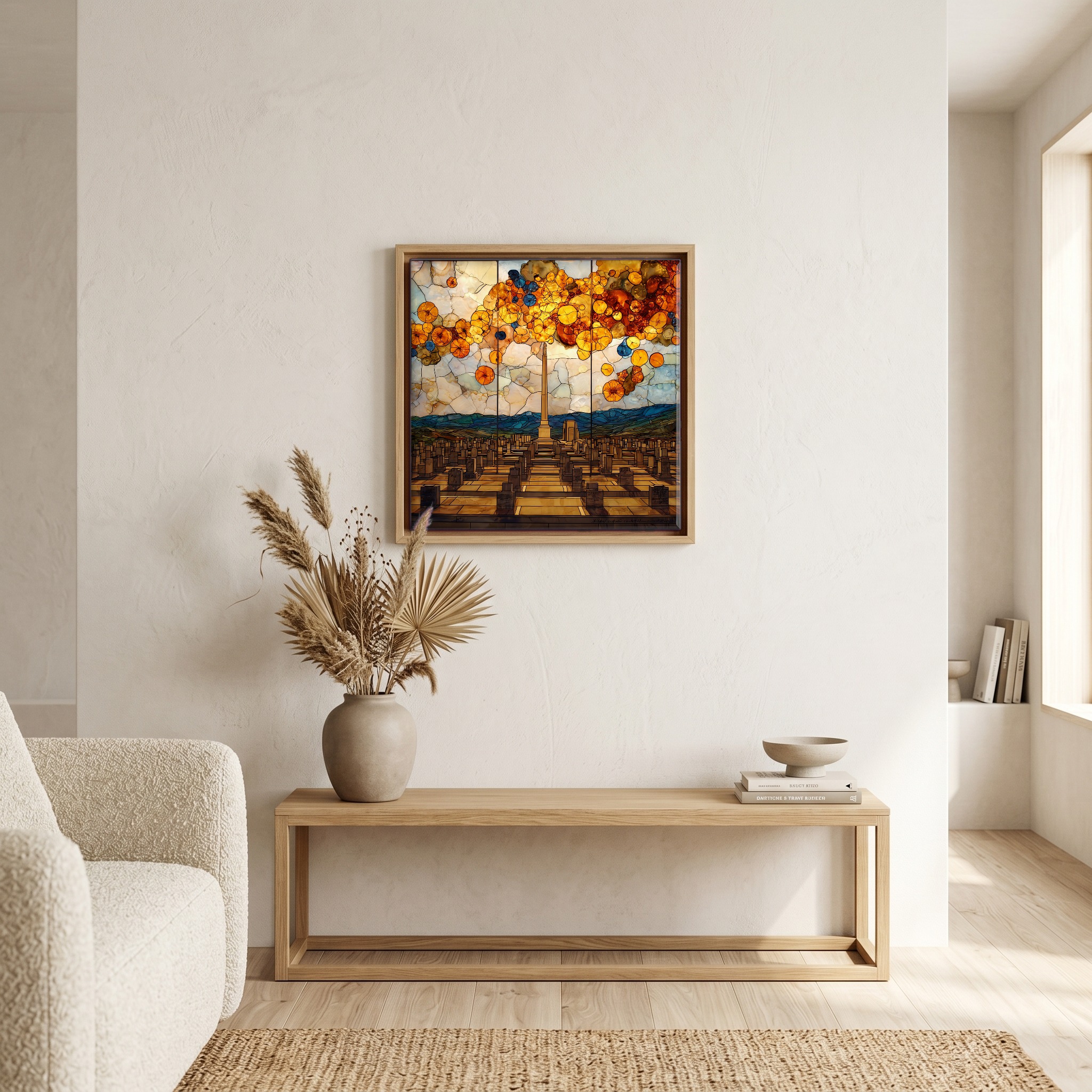
Above the bench, in a warm oak surround.
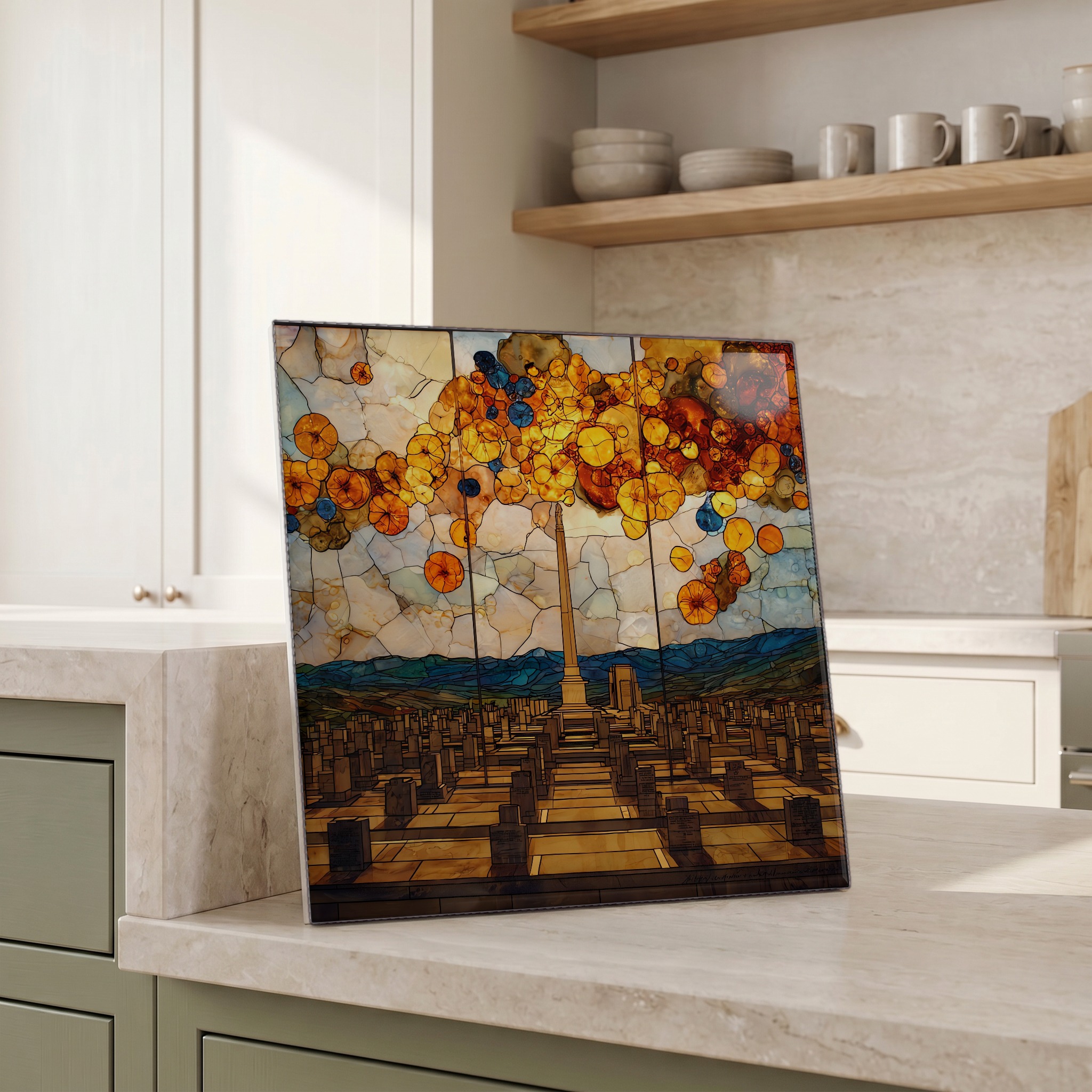
Beside the kettle, propped on the counter.
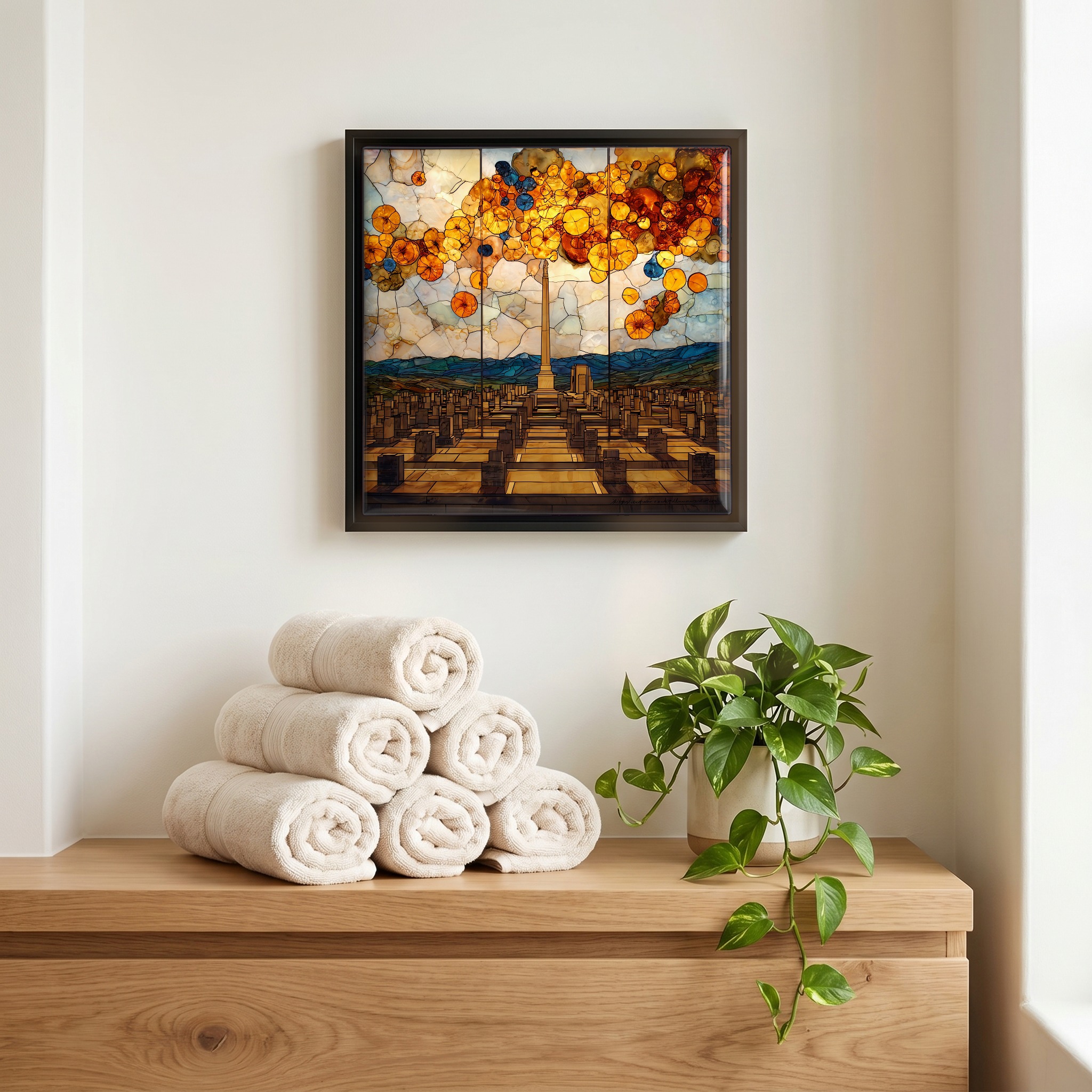
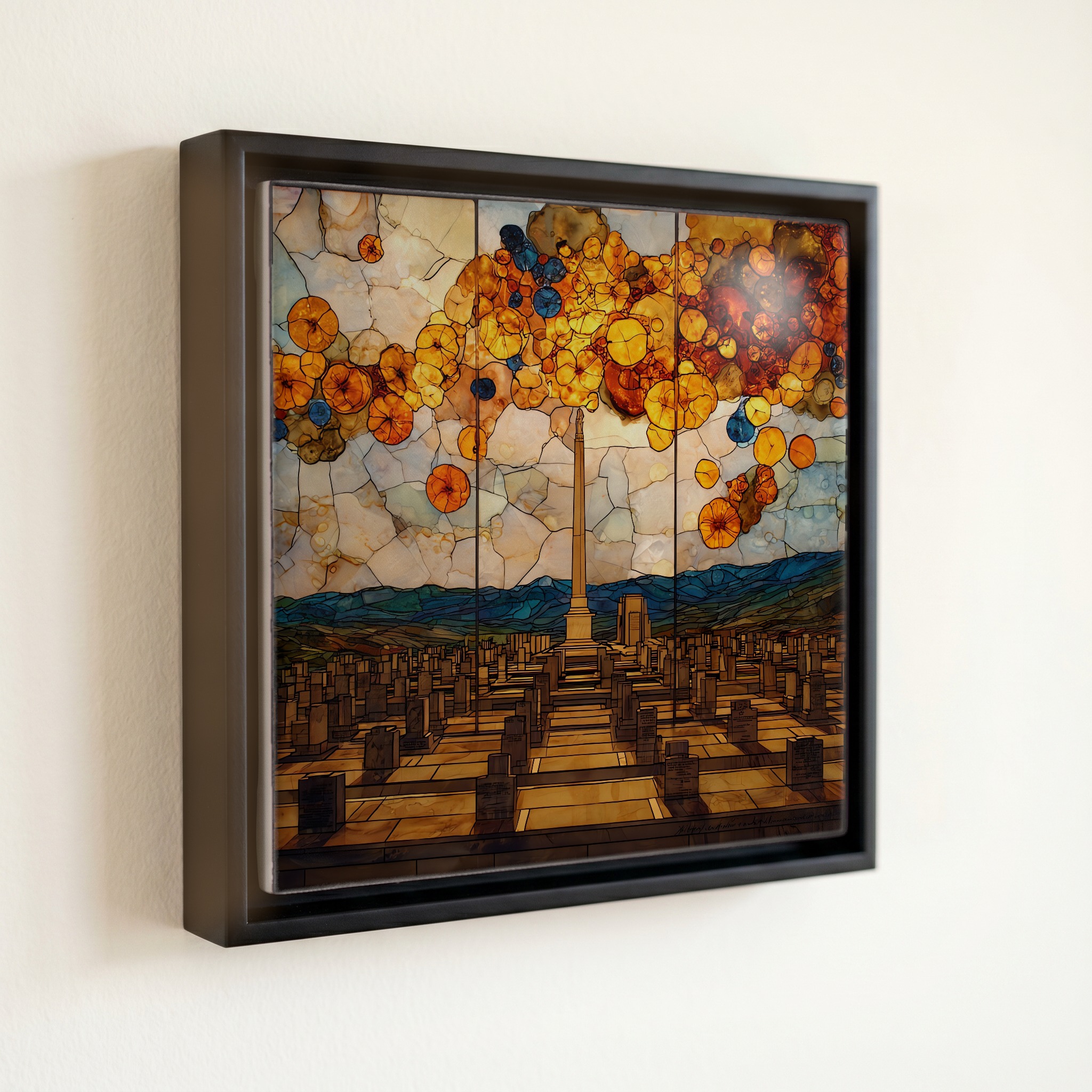
Above the linens, in a slim black surround.
On the nightstand, on a light oak stand.
On a picture ledge, where the light comes in.
a note from the studio

The volcanic crater the Hawaiians called Puowaina, the Hill of Sacrifice, held above Honolulu like a bowl. Inside, more than fifty thousand white markers set flush with the grass, in long quiet rows. The memorial at the head of the crater names twenty-eight thousand more, missing from the Pacific and Korea and Vietnam. Ernie Pyle is buried here. So is Ellison Onizuka. The lookout at the rim shows Diamond Head and the Pacific in one wide breath. The wind comes in from the harbor. Nobody talks much.
from the studio
shown in a slim black floating frame · 6 × 6 in
— bring it home

Punchbowl Cemetery Oahu Ceramic Art Tile, on ceramic.

Each tile is finished by hand in our Knoxville studio. Artwork is slowly infused into the ceramic surface under high heat and pressure, and rests beneath a thin glossy finish. The colour lives in the surface, not on top of it.

What kind of piece?
One tile — square or rectangle.
How big?
the popular one — counter, shelf, nightstand
6 × 6 in · 15 cm · 1.6 lb
Surface finish
A clear glossy finish — the artwork reads as if under resin. Ideal for show-pieces and framed wall art.
How it sits
A hidden cleat — sits ¼″ proud of the wall.
$58
Hand-finished and shipped from our studio at the foot of the Smokies. On your wall in about ten days.
size
6 × 6 in
15 cm
weighs
1.6 lb
solid in the hand
surface
ceramic, hand-finished
art rests beneath a thin glossy finish
from
Knoxville, TN
our family studio, at the foot of the Smokies
— start a Coaster Set

Pick any four 4-inch tiles — National Parks you've been to, a Smokies set, the four seasons of one place. $ for a set of , cork-backed, ready to live on the table.
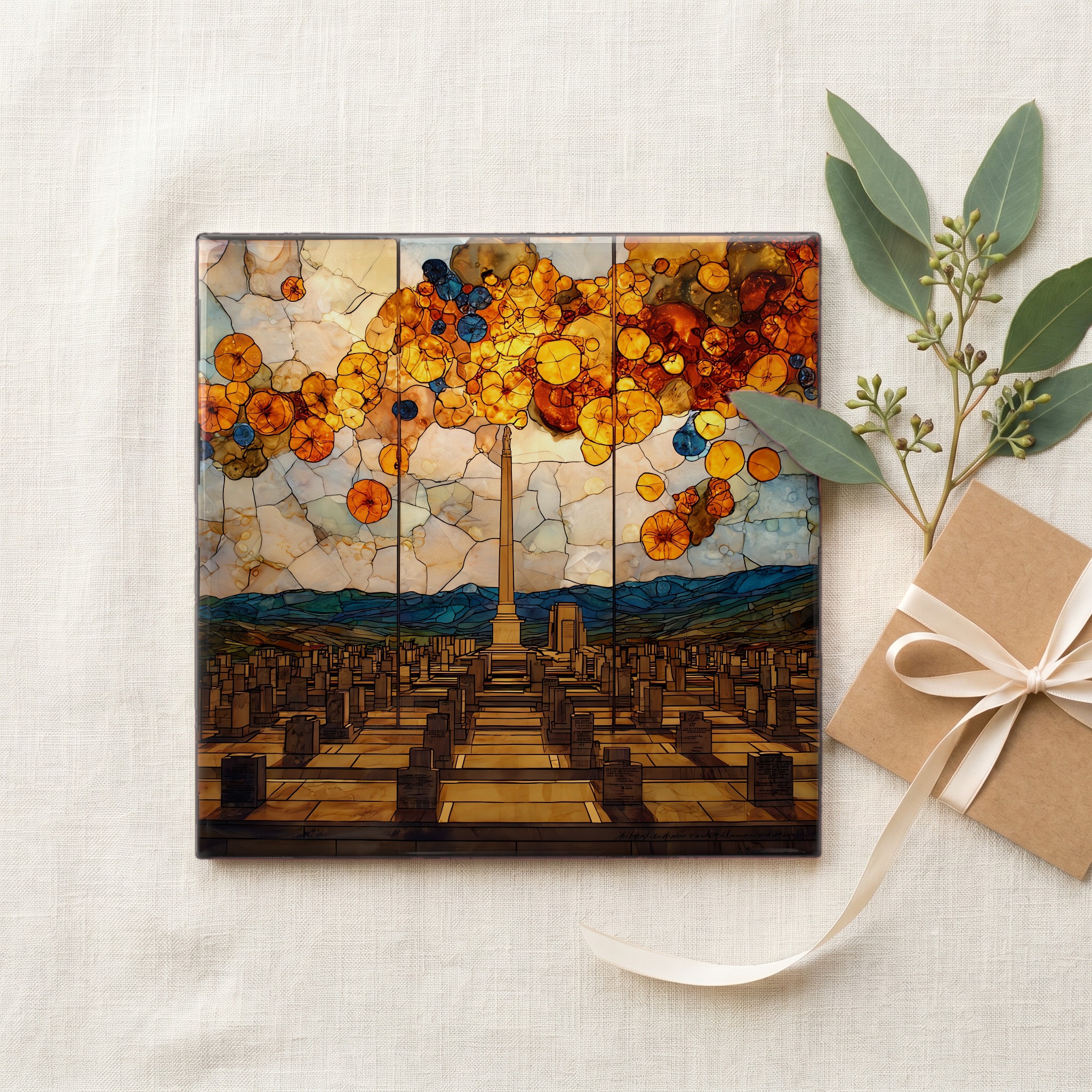
comes gift-ready
comes gift-ready

Each tile ships in a kraft box, tied with cream ribbon, with a handwritten note from the studio if you'd like to add one.
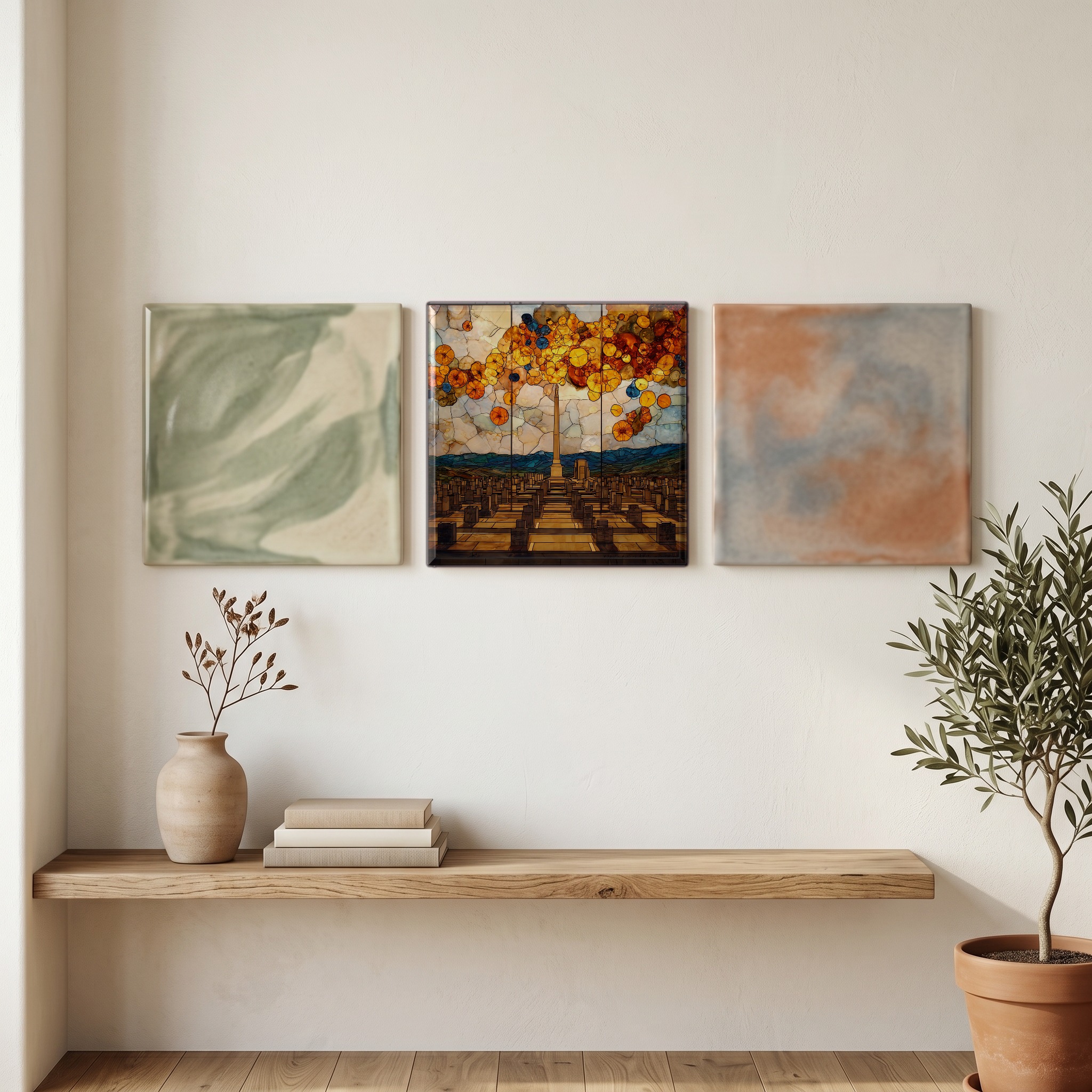
or build a grouping
or build a grouping

Three or five different vistas, hung together — a chapter of places you've been, or want to go.

about Punchbowl Cemetery Oahu Ceramic Art Tile

The place, in three passes.

A little of what's known, in case you fall down the rabbit hole — or want to go see it yourself.
the place

The National Memorial Cemetery of the Pacific occupies the floor of the Puowaina Crater, an extinct tuff cone above downtown Honolulu on the island of Oahu. The crater formed in a volcanic eruption an estimated 75,000 to 100,000 years ago, and its rim rises about 500 feet above the city. Native Hawaiians called the place Puowaina, the Hill of Sacrifice. The cemetery covers 116 acres and was dedicated on September 2, 1949, four years after the Japanese surrender on the deck of the USS Missouri in nearby Pearl Harbor. The entrance is at 2177 Puowaina Drive, a winding climb up from the Punchbowl neighborhood. Admission is free.

the silence

Inside the crater walls, the rhythm of Honolulu drops out. Coaches and traffic thin at the gates and the wind comes off the harbor through the western opening. More than fifty thousand veterans of the Pacific, Korean, and Vietnam wars rest here under markers set flat to the grass, a quiet uniformity that keeps the field unbroken from any one angle. Among them are war correspondent Ernie Pyle, killed by machine-gun fire on Ie Shima in April 1945, and astronaut Ellison Onizuka, who was lost in the Space Shuttle Challenger explosion in January 1986. Visitors keep their voices down without being asked.

the visit

The cemetery is open to the public daily, with gate hours that shift by season: typically 8:00 to 5:30 from October through February and 8:00 to 6:30 the rest of the year. There is no admission fee. The Memorial Walk leads up from the burial field to the Honolulu Memorial at the head of the crater, where the Courts of the Missing carry the names of more than 28,000 service members missing from the wars in the Pacific, Korea, and Vietnam. A short trail continues to the rim lookout, which gives the city's clearest view of Diamond Head and the harbor. Visitors are asked to behave as in any active cemetery: no picnicking, no jogging, no pets.

where
United States · Honolulu, Hawaii
position
21.3115° N · 157.8458° W
the neighborhood

What's nearby.

A handful of named places within an hour's walk or short drive. Some we've already painted; some we will.
6 km SE
Diamond Head
volcanic crater
12 km W
Pearl Harbor
naval memorial
2 km S
Iolani Palace
royal palace
5 km SE
Waikiki Beach
beach
8 km NE
Nuuanu Pali Lookout
scenic overlook
N
Punchbowl Cemetery Oahu Ceramic Art Tile
Diamond Head
Pearl Harbor
Iolani Palace
Waikiki Beach
Nuuanu Pali Lookout
common questions

What people ask.

A few questions we get about Punchbowl Cemetery Oahu Ceramic Art Tile — and about bringing the piece home.
about the place

The National Memorial Cemetery of the Pacific sits inside the Punchbowl Crater (Puowaina) on the island of Oahu, just above downtown Honolulu, Hawaii. The entrance is at 2177 Puowaina Drive. Admission is free.

Puowaina is an extinct volcanic tuff cone that formed roughly 75,000 to 100,000 years ago. Native Hawaiians called it the Hill of Sacrifice and used it for ceremonial offerings. The crater rim rises about 500 feet above the city of Honolulu.

More than fifty thousand veterans of the Pacific, Korean, and Vietnam wars are buried at the National Memorial Cemetery of the Pacific. The Honolulu Memorial above the burial field carries the names of more than 28,000 additional service members missing from those wars.

Ernie Pyle, the WWII war correspondent killed on Ie Shima in April 1945, is buried here. So is Ellison Onizuka, the Hawaiian-born astronaut lost in the 1986 Challenger explosion. Senator and Medal of Honor recipient Daniel Inouye is also interred at Punchbowl.

The cemetery was dedicated on September 2, 1949, the fourth anniversary of the Japanese surrender ending World War II. It was authorized by Congress in 1948 and is administered today by the U.S. Department of Veterans Affairs.

Morning hours are quietest. The cemetery is open daily, with gate hours that vary by season: roughly 8:00 to 5:30 in winter and 8:00 to 6:30 in summer. Memorial Day services and the Easter Sunrise service draw the largest crowds.

Puowaina translates from Hawaiian as Hill of Sacrifice. Before the crater became a cemetery, Native Hawaiians used the site for ceremonial offerings, including the bodies of those who violated kapu, the sacred law. The name predates the cemetery by centuries.

about the piece in your home

Many of our customers have given this tile to veterans, Gold Star families, and Hawaii-stationed service members. Punchbowl is one of the most quietly held places in the Pacific. A Small or Medium with a handwritten note from the studio carries well as a remembrance piece.

The piece pairs with Coastal-modern, traditional Americana, and Pacific-Asian palettes. The greens and whites of the burial field sit easily against warm woods and natural fabrics. The deeper crater shadows give it weight in rooms with darker accent walls.

Yes. Memorial and place-of-meaning art is a steady, slow-growing category, distinct from the fast turnover of decorative prints. The piece reads as a remembrance object more than a wall decoration, which suits entries, studies, and quiet corners.

Above a standard sofa, the Large reads well centered on the wall. For a longer room or a console with two pendants flanking it, a four-tile Mural carries the proportions. For a focal wall, a nine-tile Mural extends the panoramic view of the crater.

Yes. For a damp room or a backsplash, order the tile in Dura Satin or Matte rather than Glossy. The color is slowly infused into the ceramic surface under high heat and pressure, so it does not fade with steam or splash.

A soft microfibre cloth and clean water. The thin glossy or satin finish is non-porous, so dust and fingerprints lift easily. Avoid abrasive sponges and harsh cleansers, which can dull the surface over time.

Yes. Every WenderVista piece is made in-house at the Wender Studios family workshop in Knoxville, Tennessee. There is no licensing and no third-party art catalog. The Punchbowl Cemetery tile is part of the studio's Hawaii collection.

if this one stayed with you

A few you might also love.

Hand-picked by the eye that found Sorapis. Same air, same kind of quiet.