Wender·Vista
Punaluu Black Sand Big Island Ceramic Art Tile
shown on ceramic, 12-inch tileHawaii · United States
on the Kaʻū coast of the Big Island

Punaluu Black Sand Big Island Ceramic Art Tile

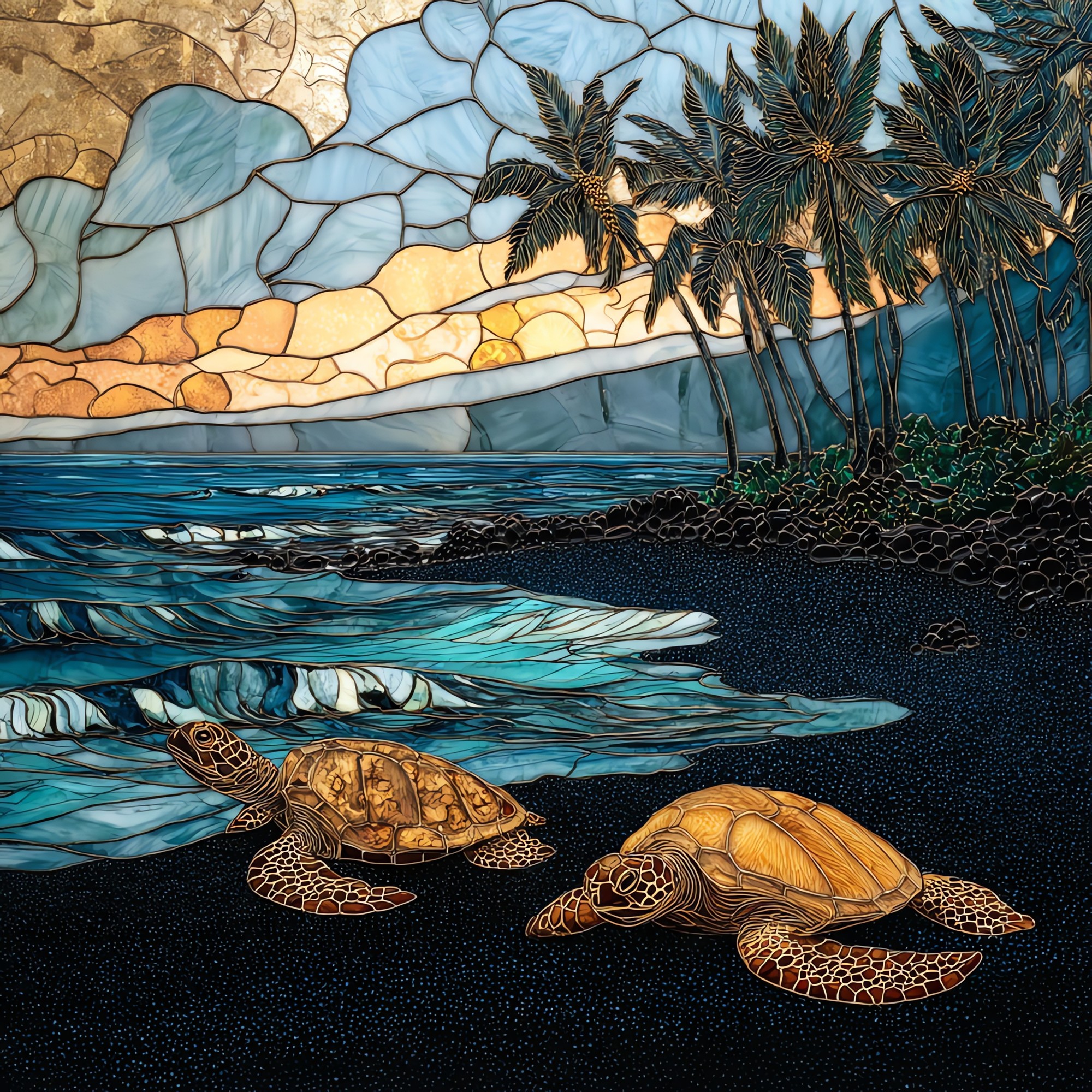
— black sand, and the turtles come ashore to warm.

Where it lives

Not only on a wall.

A small tile on the nightstand catching the morning. A larger one above the fire. Yours, wherever you spend the slow hours.
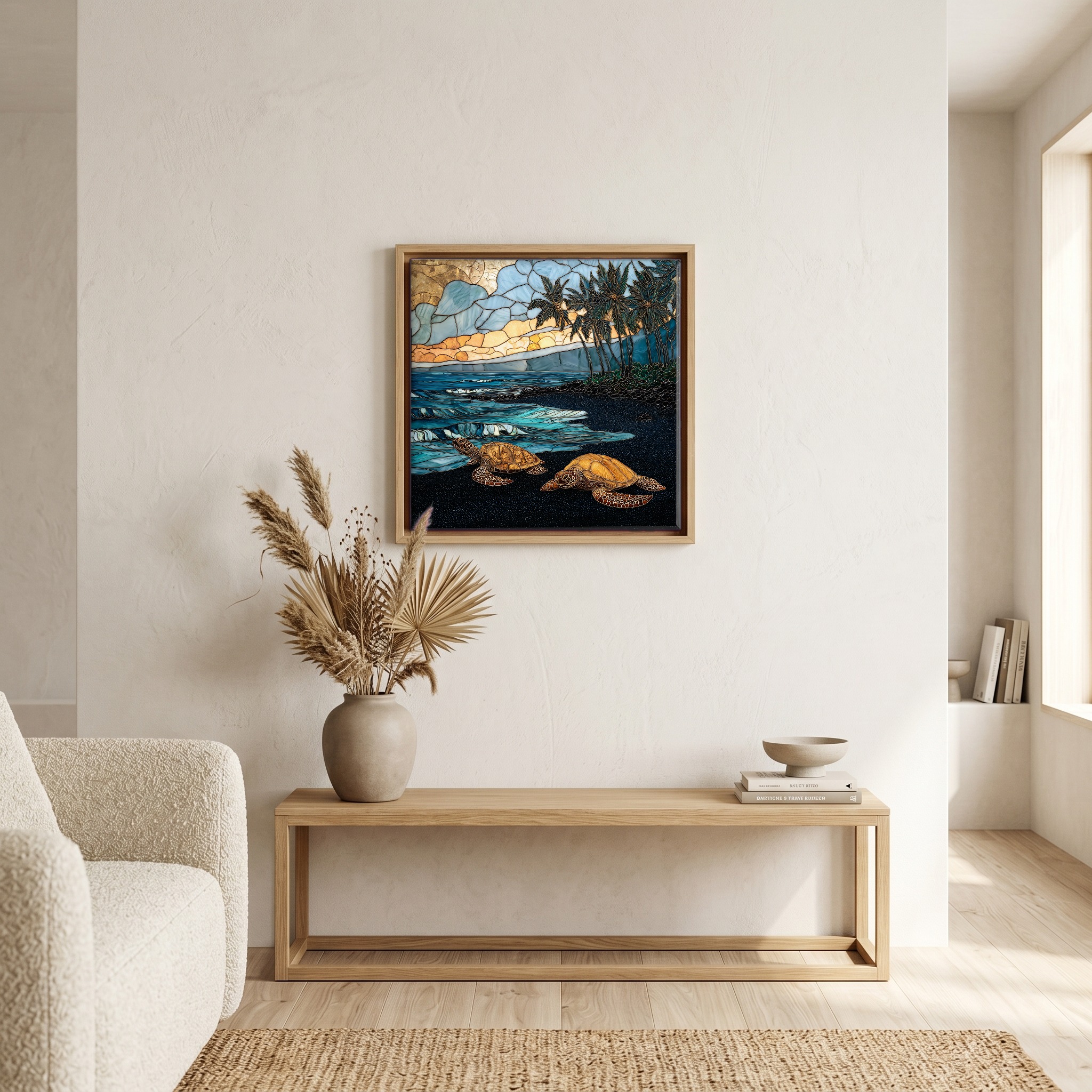
Above the bench, in a warm oak surround.
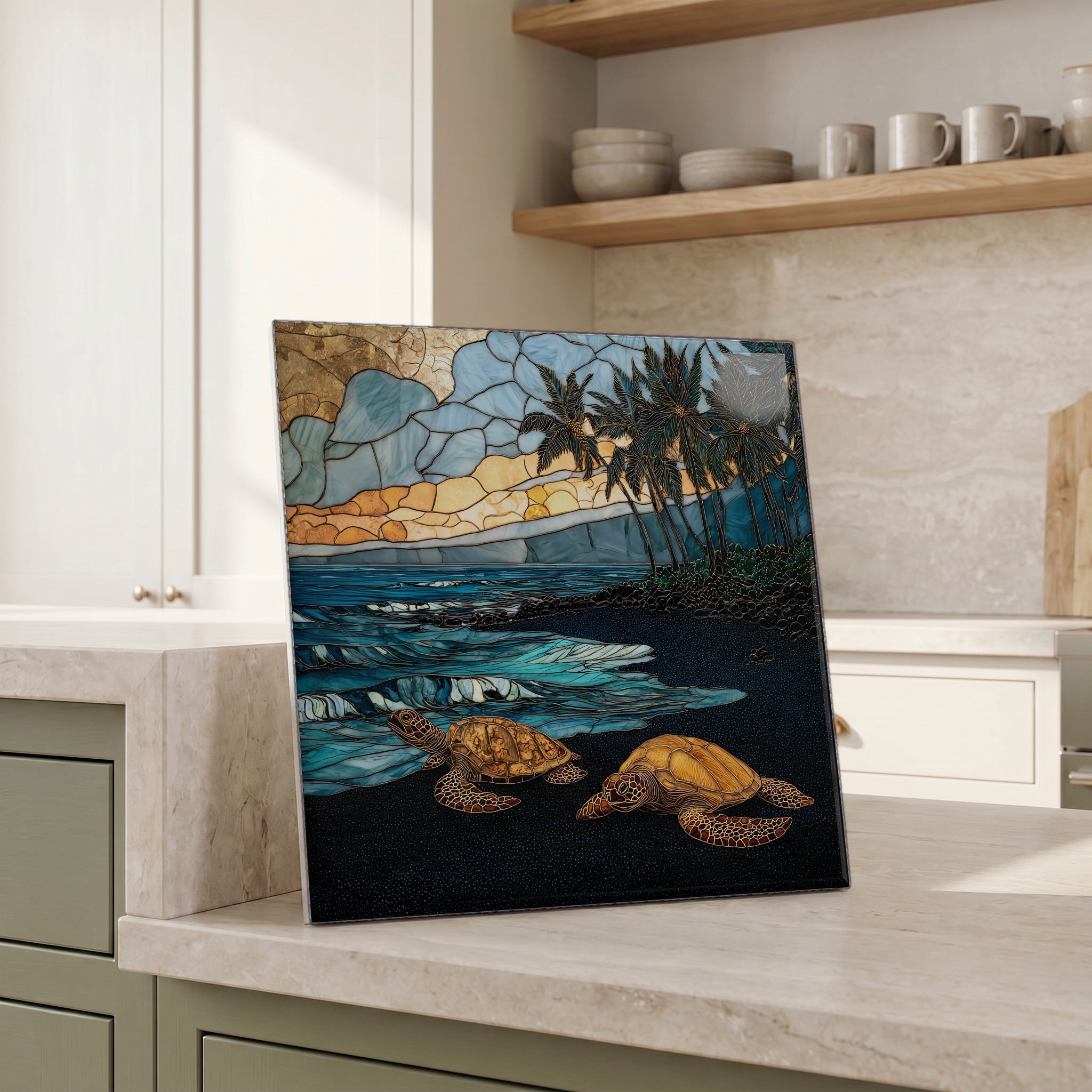
Beside the kettle, propped on the counter.
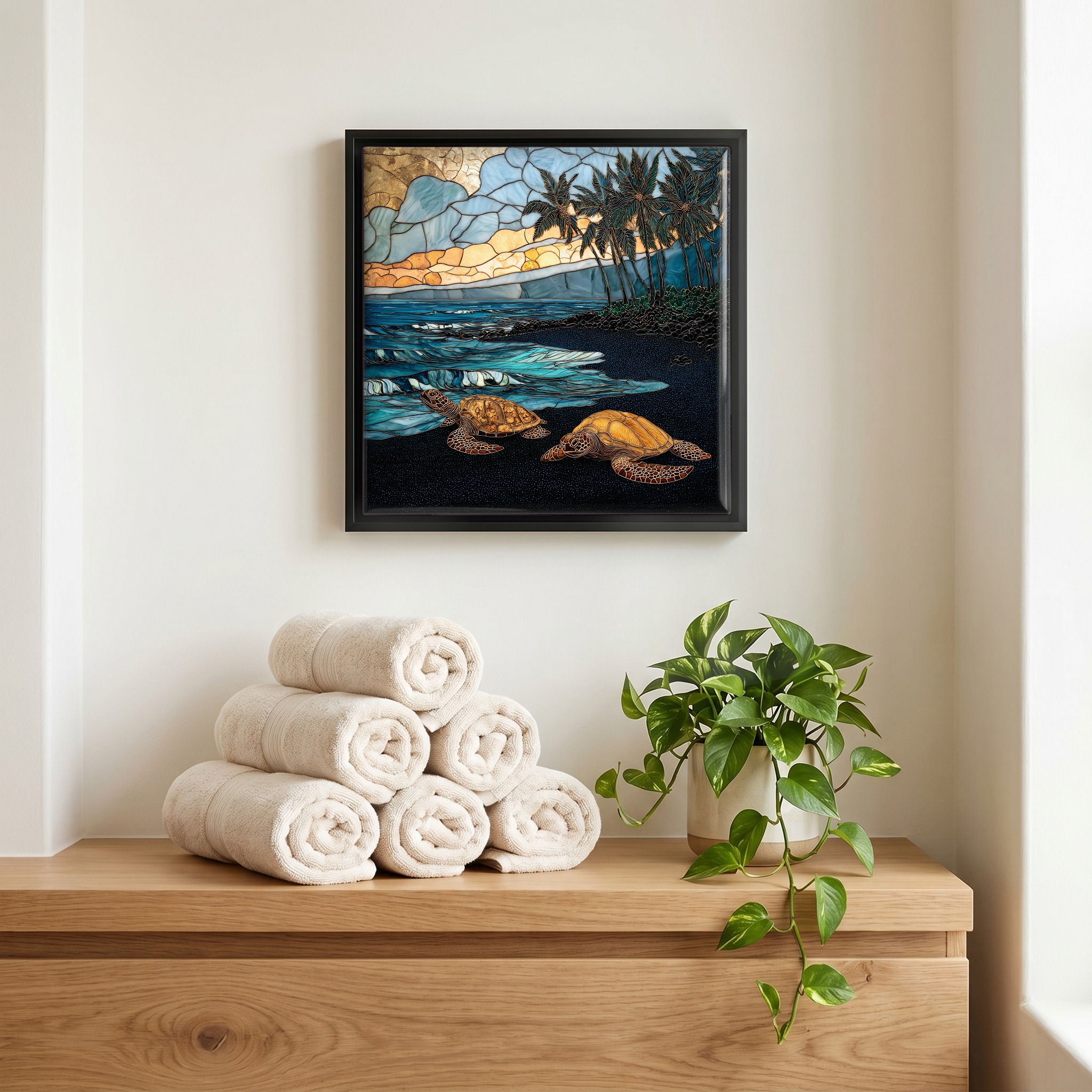
Above the linens, in a slim black surround.
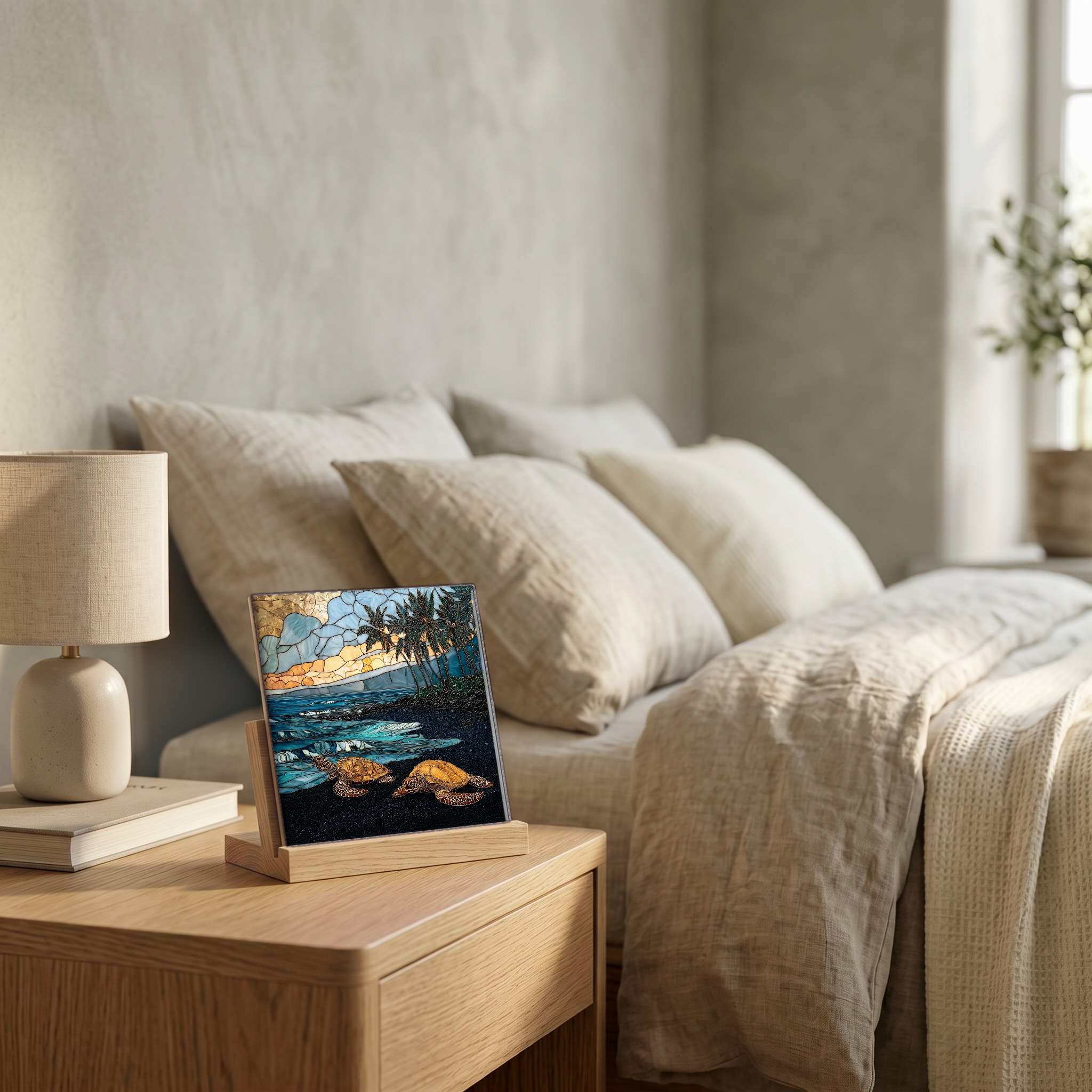
On the nightstand, on a light oak stand.
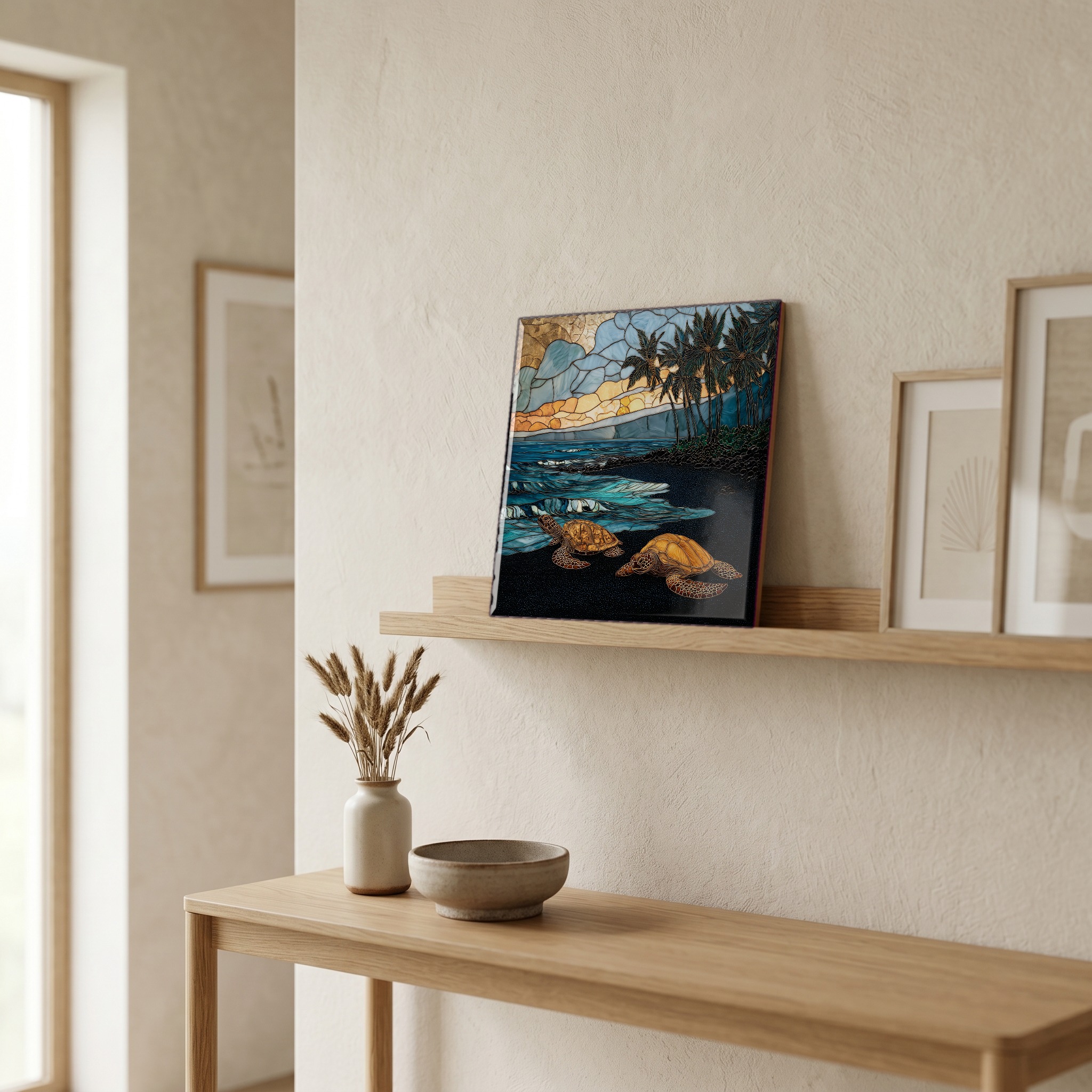
On a picture ledge, where the light comes in.
a note from the studio

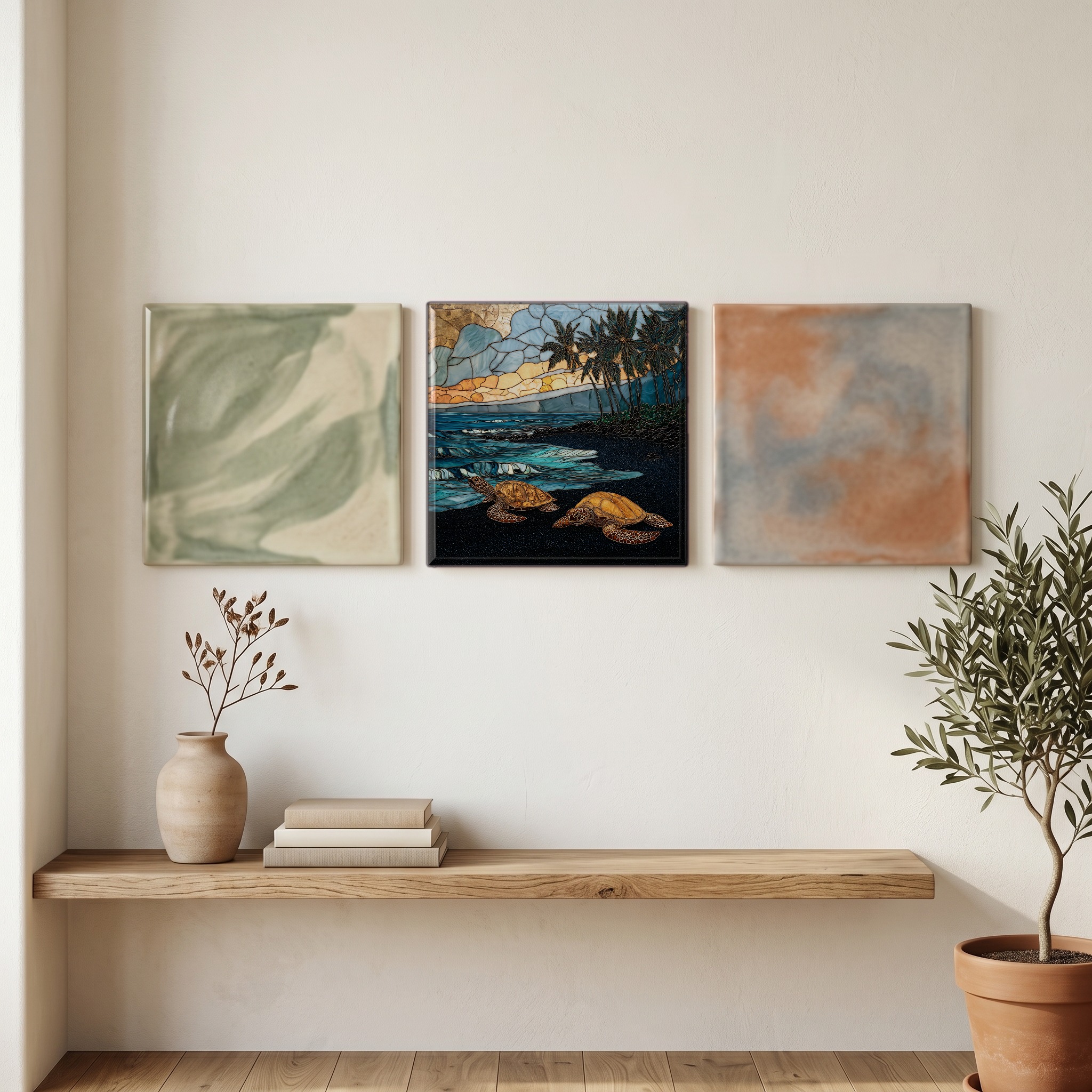
A small crescent of jet-black sand on the south coast of the Big Island, between Pāhala and Naʻalehu. The sand is basalt, lava that ran into the ocean and shattered into grains when it hit cold water. Coconut palms lean over the bay. Hawaiian green sea turtles, the honu, come ashore to bask on the warm dark sand most afternoons. The water runs cold near the shore where freshwater springs slip in from the slopes above. The name is the old Hawaiian word for the springs, and for diving to gather them.
from the studio
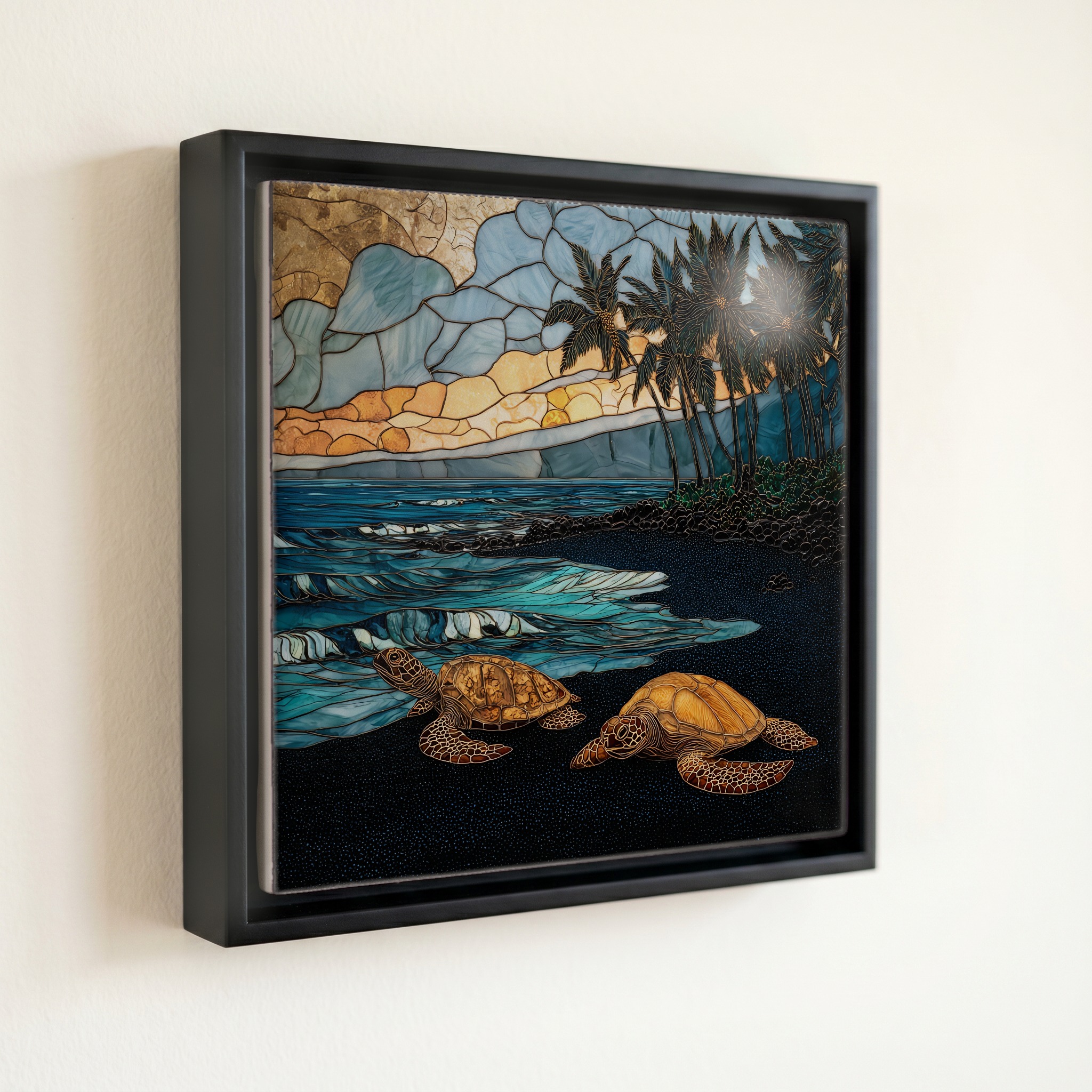
shown in a slim black floating frame · 6 × 6 in
— bring it home

Punaluu Black Sand Big Island Ceramic Art Tile, on ceramic.

Each tile is finished by hand in our Knoxville studio. Artwork is slowly infused into the ceramic surface under high heat and pressure, and rests beneath a thin glossy finish. The colour lives in the surface, not on top of it.

What kind of piece?
One tile — square or rectangle.
How big?
the popular one — counter, shelf, nightstand
6 × 6 in · 15 cm · 1.6 lb
Surface finish
A clear glossy finish — the artwork reads as if under resin. Ideal for show-pieces and framed wall art.
How it sits
A hidden cleat — sits ¼″ proud of the wall.
$58
Hand-finished and shipped from our studio at the foot of the Smokies. On your wall in about ten days.
size
6 × 6 in
15 cm
weighs
1.6 lb
solid in the hand
surface
ceramic, hand-finished
art rests beneath a thin glossy finish
from
Knoxville, TN
our family studio, at the foot of the Smokies
— start a Coaster Set

Pick any four 4-inch tiles — National Parks you've been to, a Smokies set, the four seasons of one place. $ for a set of , cork-backed, ready to live on the table.
comes gift-ready
comes gift-ready

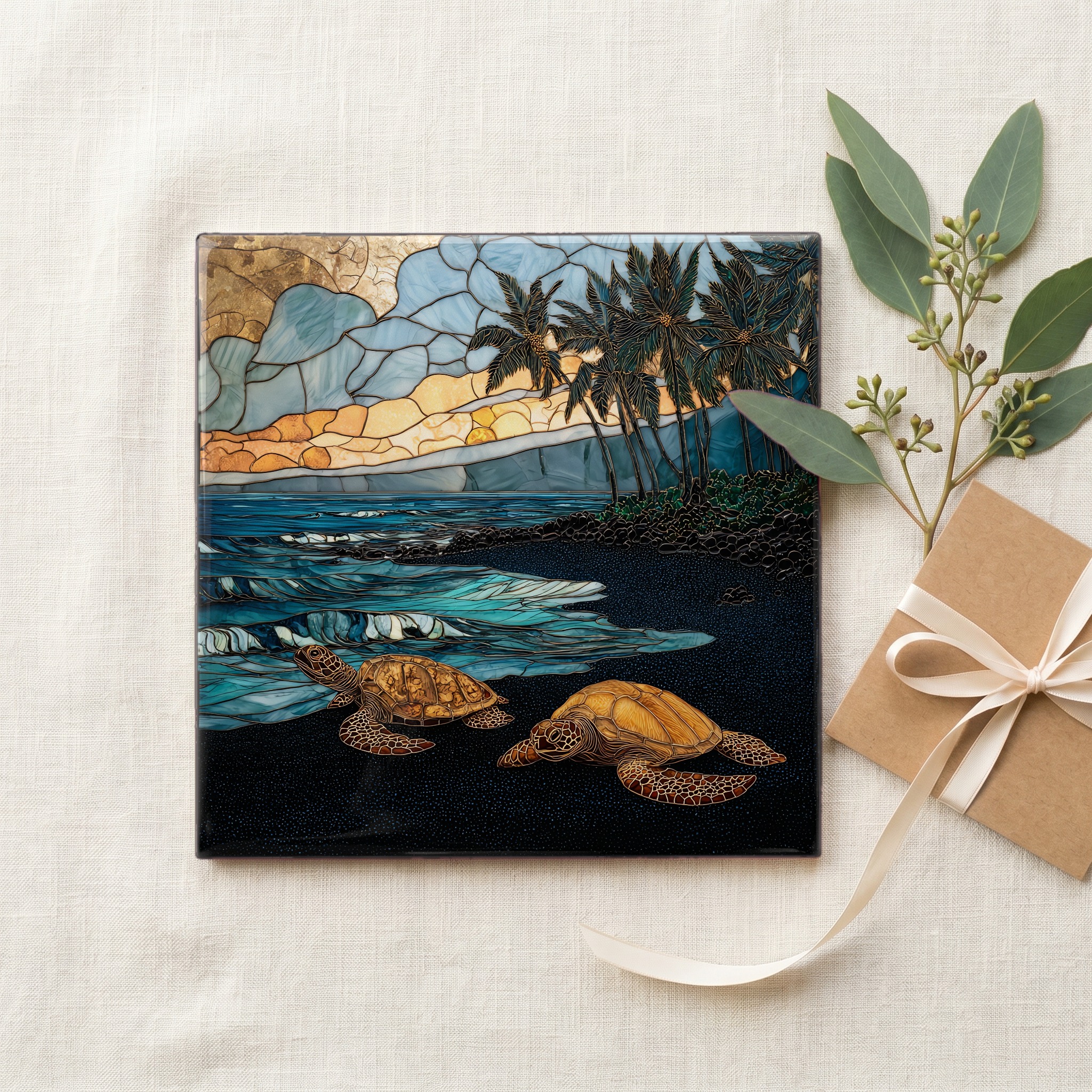
Each tile ships in a kraft box, tied with cream ribbon, with a handwritten note from the studio if you'd like to add one.
or build a grouping
or build a grouping

Three or five different vistas, hung together — a chapter of places you've been, or want to go.

about Punaluu Black Sand Big Island Ceramic Art Tile

The place, in three passes.

A little of what's known, in case you fall down the rabbit hole — or want to go see it yourself.
the place

Punaluʻu Beach Park sits on the southeast coast of Hawaiʻi Island, in the Kaʻū District, roughly halfway between Pāhala and Naʻalehu along Hawaiʻi Belt Road (Route 11). The crescent of jet-black sand is about 300 metres long and edged by a stand of coconut palms; behind it lies a brackish pond fed by underground springs. The beach is part of a Hawaiʻi County park with restrooms and pavilions, and entry is free. The Hawaiʻi Volcanoes National Park visitor centre is about a 45-minute drive northeast. Kīlauea, the source of much of the basalt that became this sand, is the closest active volcano.

the stone

The sand is basalt, the iron- and magnesium-rich rock that surf and stream slowly work into grains the colour of charcoal. It came from the shield volcanoes that built Hawaiʻi Island; the Kaʻū coast lies below Kīlauea and Mauna Loa, the two volcanoes still active today. Unlike the steaming beaches that briefly appear when fresh lava enters the sea, Punaluʻu is a slow erosion beach, fed by the breakdown of basalt cliffs and offshore deposits. The supply is finite. Hawaiʻi state law makes it a violation to remove sand from any island beach, and there is an older Hawaiian conviction, still widely held, that the sand carries bad luck home with the visitor.

the visit

Punaluʻu Beach Park is open daily, free to enter, and is one of the most visited spots in the Kaʻū District. The honu, Hawaiian green sea turtles, are protected under federal and state law: stay at least three metres back, do not touch, do not feed. The hawksbill sea turtle, honuʻea, also nests here in summer and is listed as endangered. Swimming is hazardous: the water is cold near shore from freshwater springs, currents are strong, and the bottom drops off quickly. Most visitors come for the sand, the turtles, and the picnic pavilions. Light is softest at sunrise and in the late afternoon.

where
United States · Kaʻū District, Hawaiʻi County, Hawaiʻi
within
Punaluʻu Beach Park
elevation
0 m · 0 ft
position
19.1356° N · 155.5061° W
the neighborhood

What's nearby.

A handful of named places within an hour's walk or short drive. Some we've already painted; some we will.
6 km SW
Honuʻapo Bay
bay
9 km N
Pāhala
town
10 km SW
Naʻalehu
town
45 km NE
Hawaiʻi Volcanoes National Park
national park
N
Punaluu Black Sand Big Island Ceramic Art Tile
Honuʻapo Bay
Pāhala
Naʻalehu
Hawaiʻi Volcanoes National Park
common questions

What people ask.

A few questions we get about Punaluu Black Sand Big Island Ceramic Art Tile — and about bringing the piece home.
about the place

The sand is basalt, volcanic rock from lava flows that originated at Kīlauea and Mauna Loa. As basalt cliffs and offshore deposits erode, they leave behind coarse black grains. Unlike beaches formed during active eruptions, Punaluʻu's sand supply is finite and not being replenished.

Punaluʻu Beach Park sits on the southeast coast of Hawaiʻi Island, in the Kaʻū District, along Hawaiʻi Belt Road between Pāhala and Naʻalehu. The drive is about an hour south of Hilo and 45 minutes from Hawaiʻi Volcanoes National Park.

Yes. Hawaiian green sea turtles, called honu, often haul out to bask on the warm sand most afternoons. Hawksbill sea turtles, called honuʻea, also nest here in summer. Both species are protected; stay at least three metres back and do not touch them.

Swimming is not recommended. Cold freshwater springs flow into the bay from the slopes above, currents are strong, and the bottom drops off quickly. Most visitors come for the sand, the turtles, and the picnic pavilions rather than to swim.

Punaluʻu is Hawaiian for spring dived for, referring to underground freshwater springs that flow into the bay. Hawaiians once dove with sealed gourds to collect fresh water from the springs beneath the salty surface, and the name has held since.

No. Hawaiʻi state law prohibits removing sand, rocks, or coral from the island's beaches. There is also a long-standing local belief that taking the sand carries bad luck home with the visitor. Leave the beach as you found it.

Early morning and late afternoon are the most rewarding times, both for soft light and for the chance to see honu on the warm sand. The park is open every day. The Kaʻū coast generally sees less rainfall than the windward Hilo side.

about the piece in your home

It has been a meaningful gift for many of our customers with roots on Hawaiʻi Island. Punaluʻu is one of the most recognised places on the Kaʻū coast, and the dark sand is unmistakable. A Small or Medium with a handwritten note from the studio travels well.

The deep blacks, turquoise water tones, and warm sand register read well in Coastal-modern, Tropical-modern, and Jewel-tone Maximalist rooms. The piece also holds as the anchor on a darker accent wall in charcoal, ink, or aged copper.

Yes. The black-sand-against-turquoise palette has become a signature of contemporary Hawaiian and biophilic design: natural materials, a dark grounded base, ocean colour above. The Medium and Large work especially well above teak or rattan furniture.

For a sofa, a single Large or a four-tile Mural reads well from across a room. Above a console, a Medium centred at eye level carries the wall. For a feature wall in a primary room, the nine-tile Mural fills the space.

Yes. For a bathroom, kitchen, or steamy area, choose the Dura Satin or Matte finish; both are scratch-resistant and handle humidity without issue. Glossy is for dry walls and framed pieces. The colour lives in the surface and will not lift over time.

A soft microfibre cloth with warm water is enough for almost any mark. For stubborn smudges, a drop of mild dish soap in warm water works. Avoid abrasive sponges and bleach-based cleaners, which can dull the protective finish over time.

Yes. Every WenderVista piece is curated and hand-finished by Reid Wender at Wender Studios in Knoxville, Tennessee. The Punaluʻu work is part of our Hawaiʻi atlas and is not licensed from any third party.

if this one stayed with you

A few you might also love.

Hand-picked by the eye that found Sorapis. Same air, same kind of quiet.