Wender·Vista
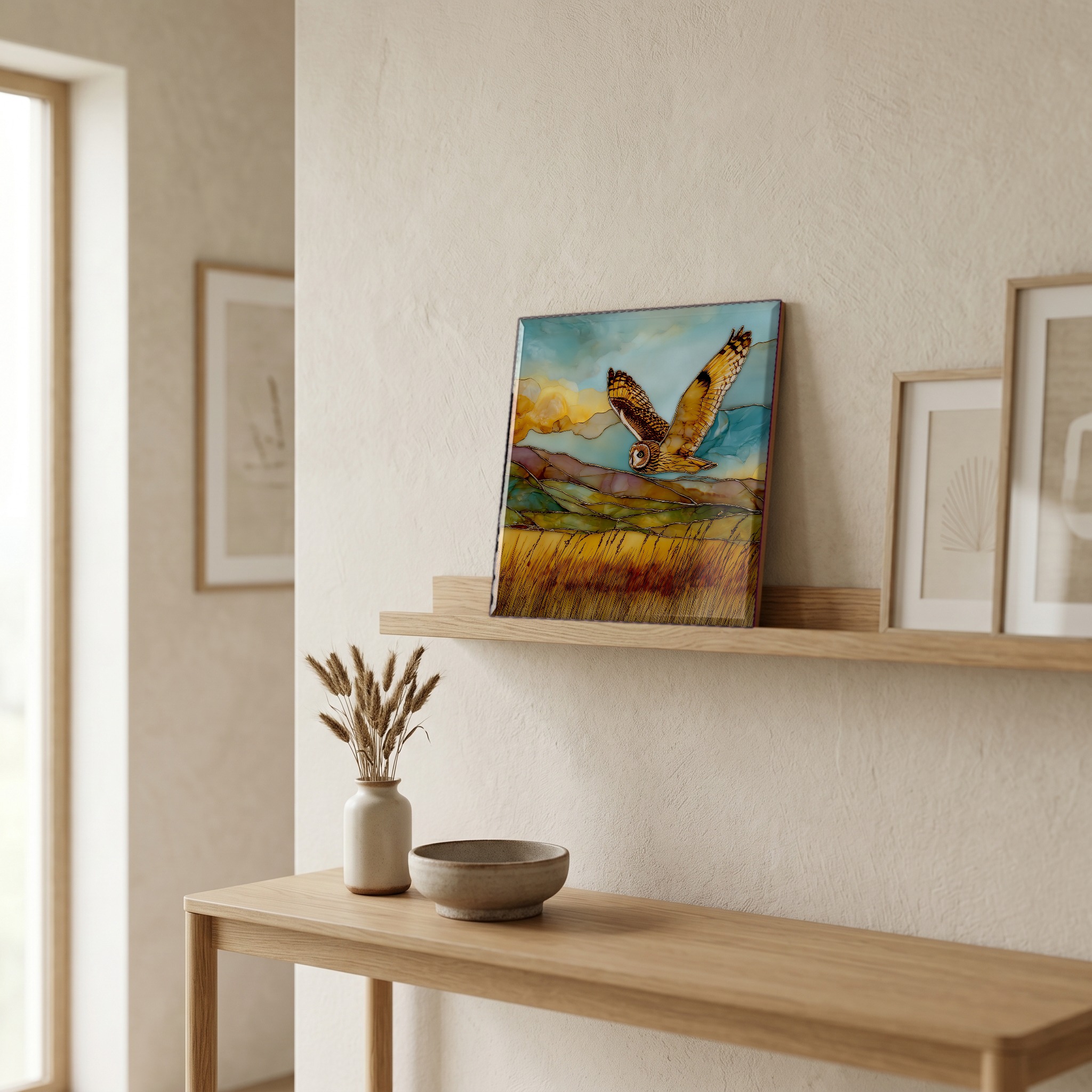
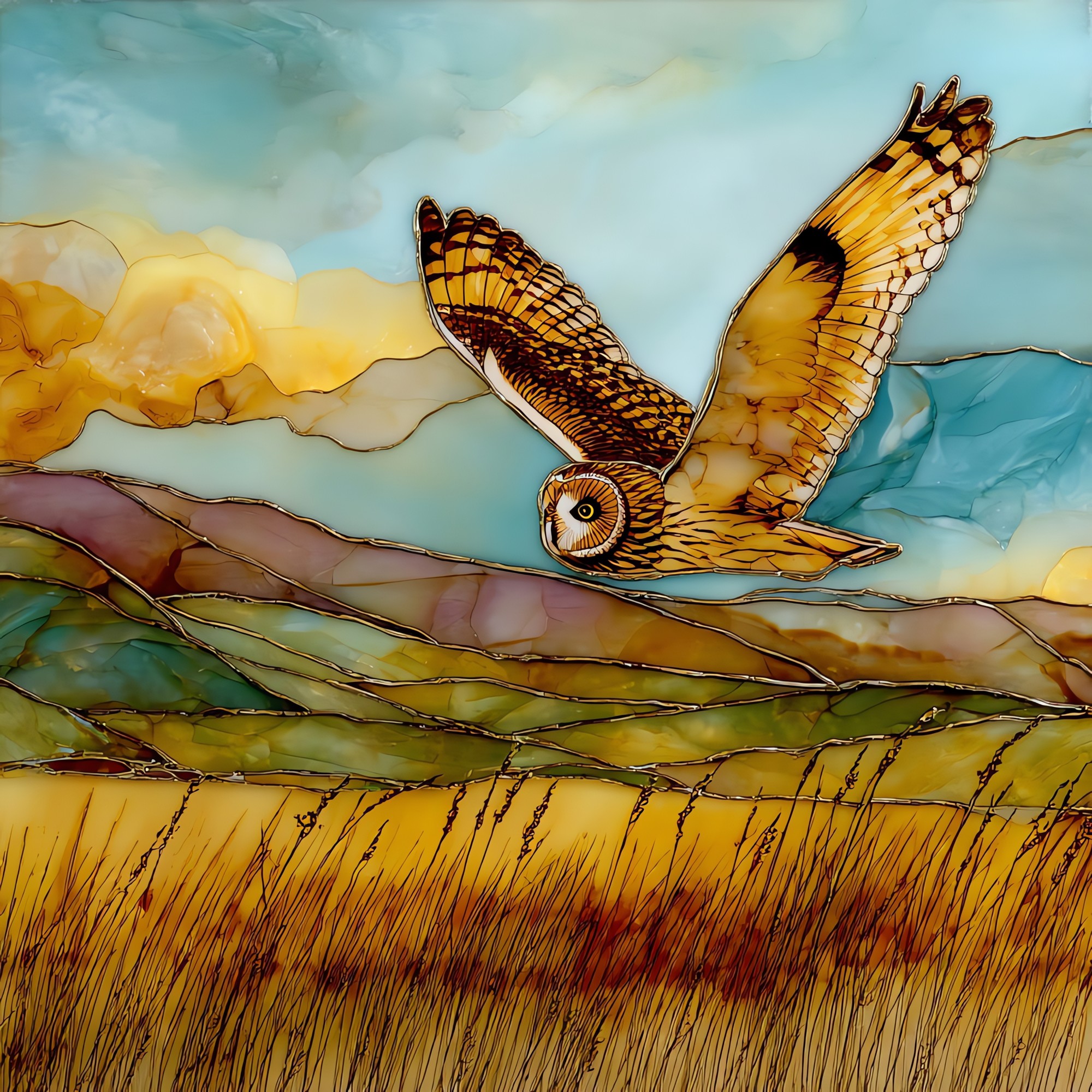
Pueo Owl Maui Ceramic Art Tile
shown on ceramic, 12-inch tileHawaii · United States
in the upcountry pastures of Maui

Pueo Owl Maui Ceramic Art Tile

the day owl that watches back.

Where it lives

Not only on a wall.

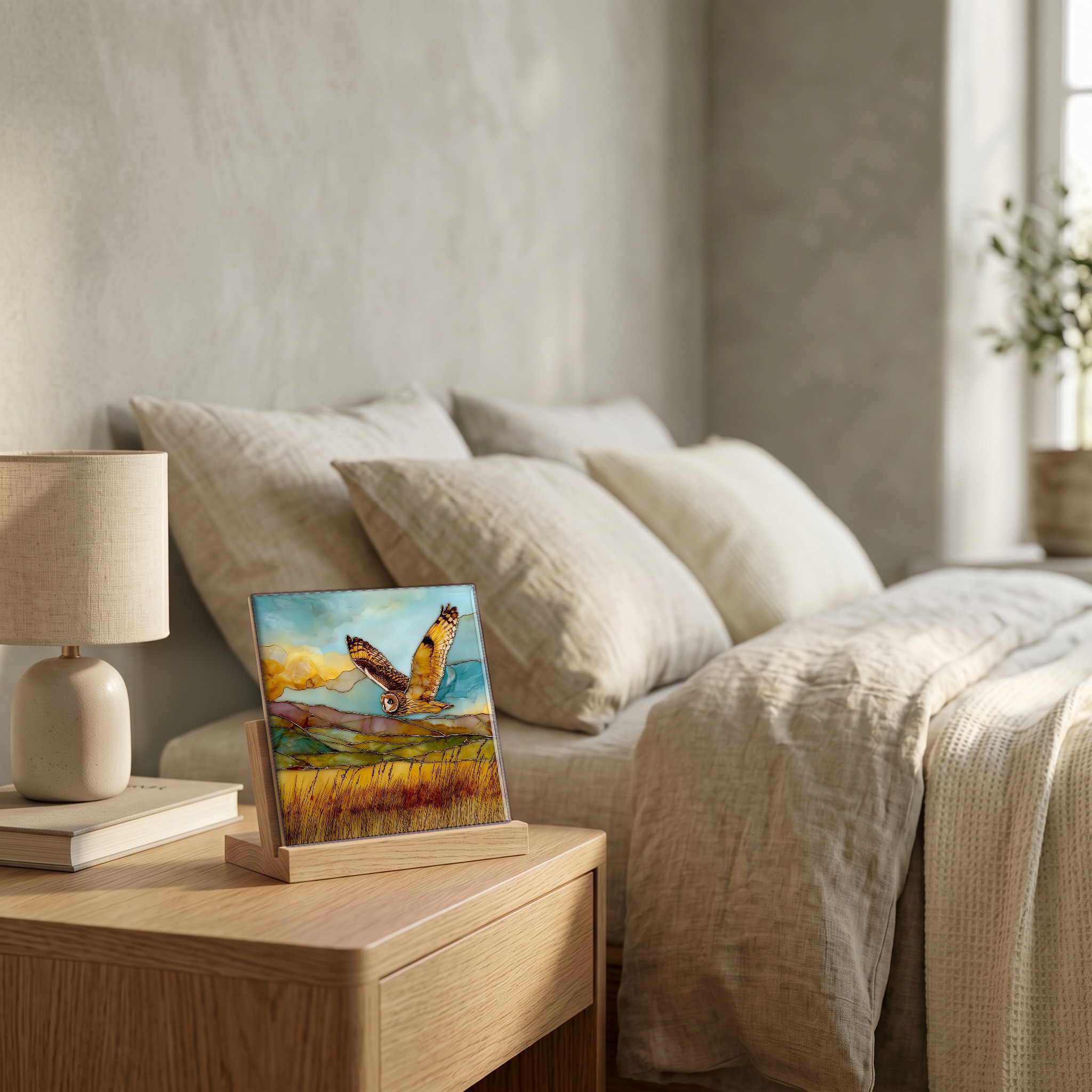
A small tile on the nightstand catching the morning. A larger one above the fire. Yours, wherever you spend the slow hours.
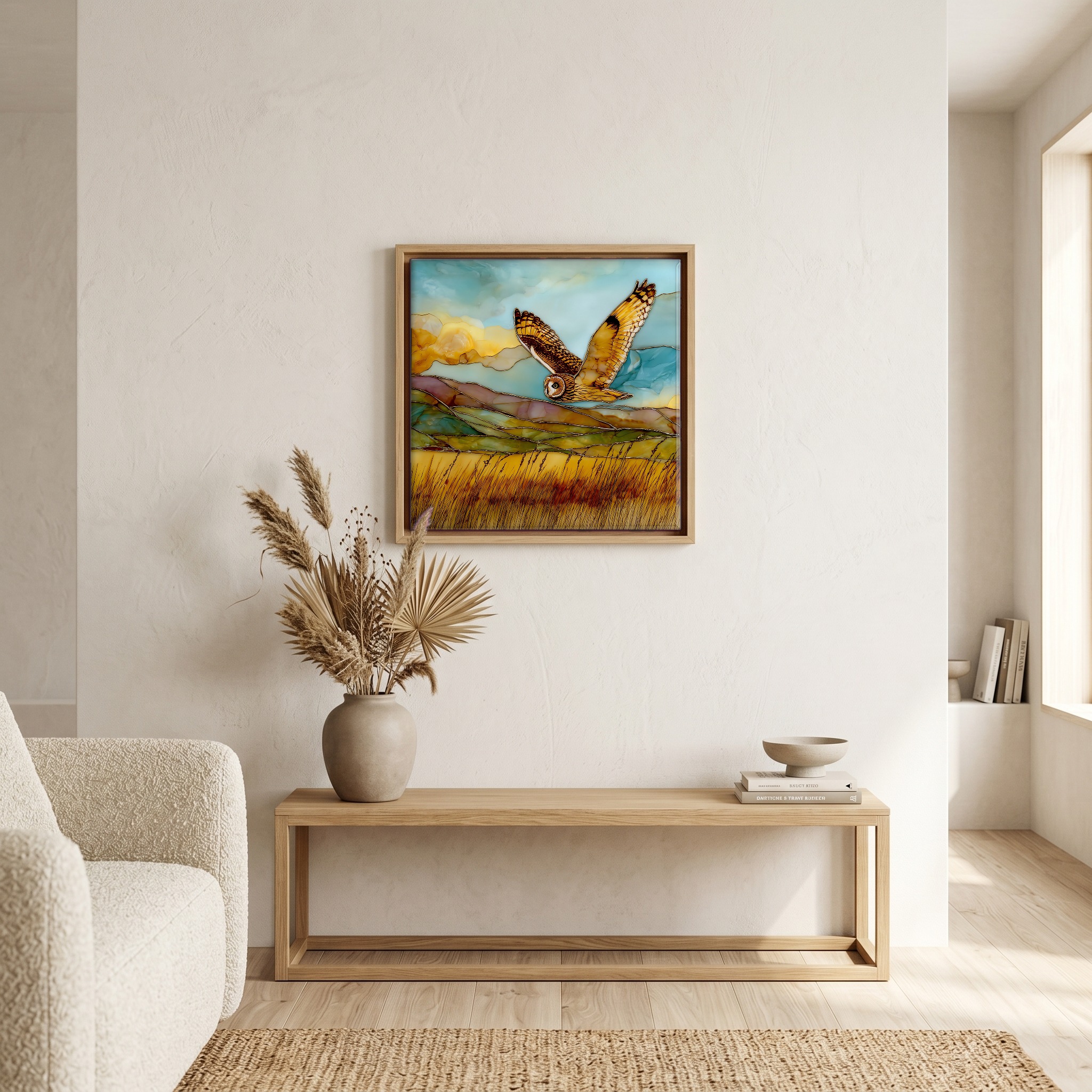
Above the bench, in a warm oak surround.
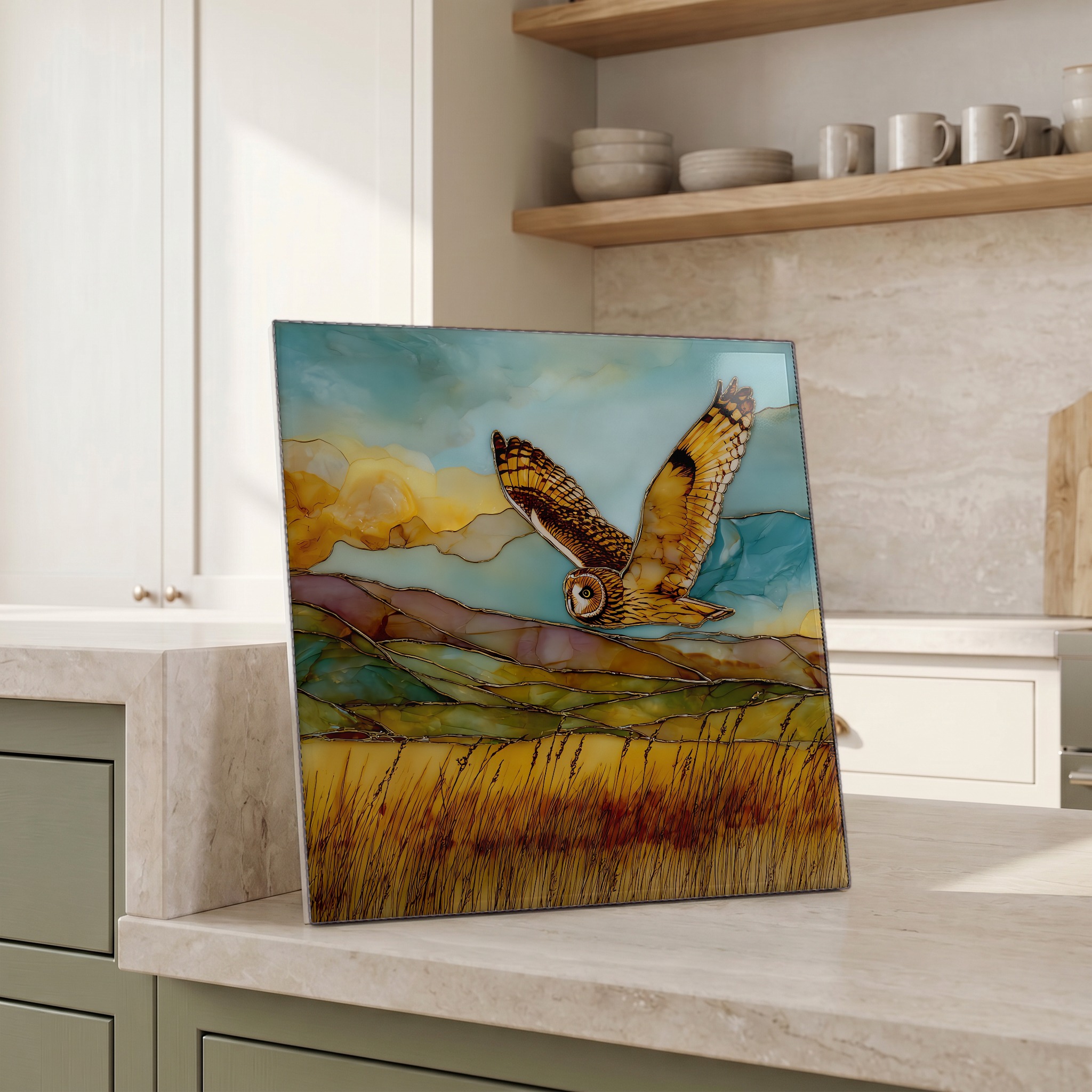
Beside the kettle, propped on the counter.
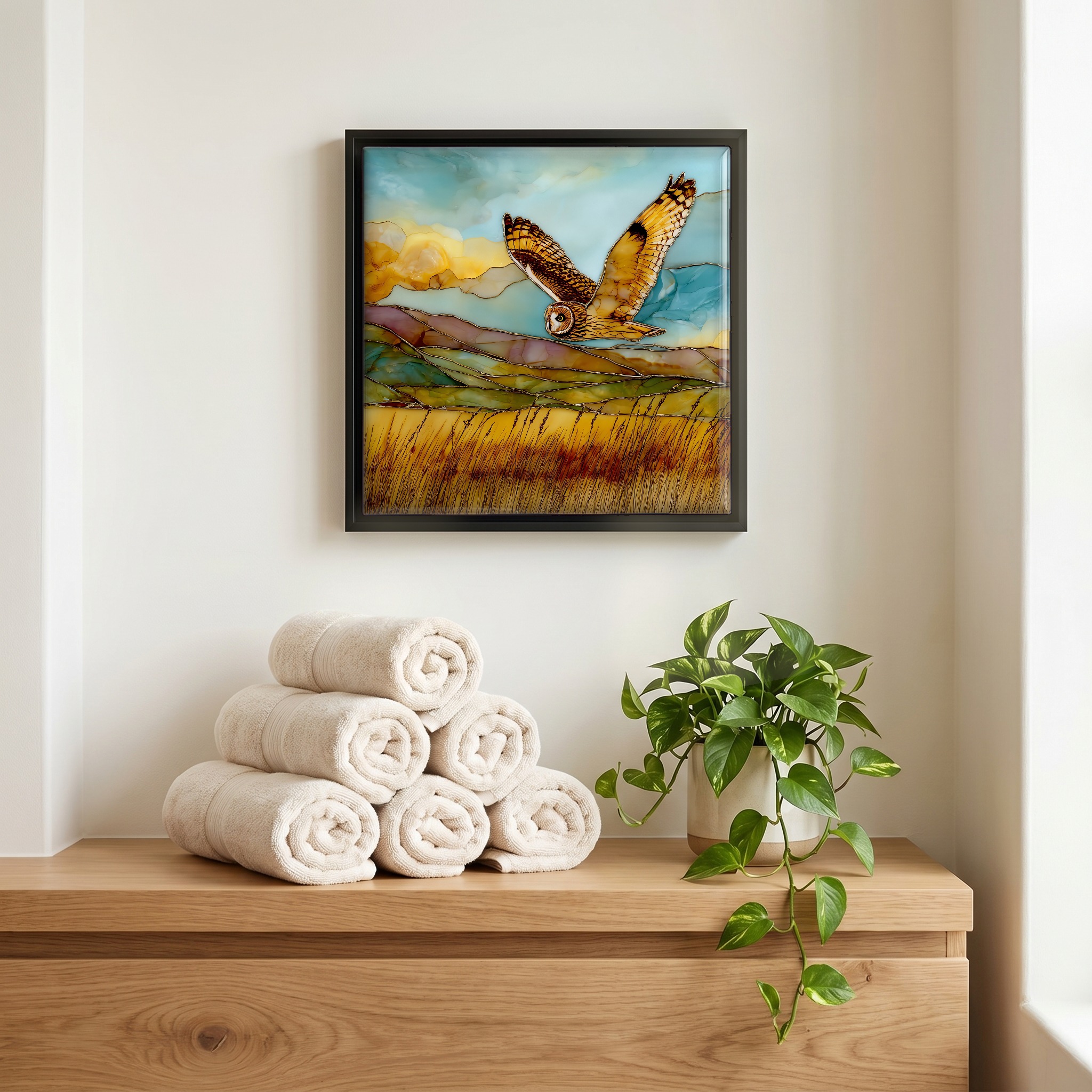
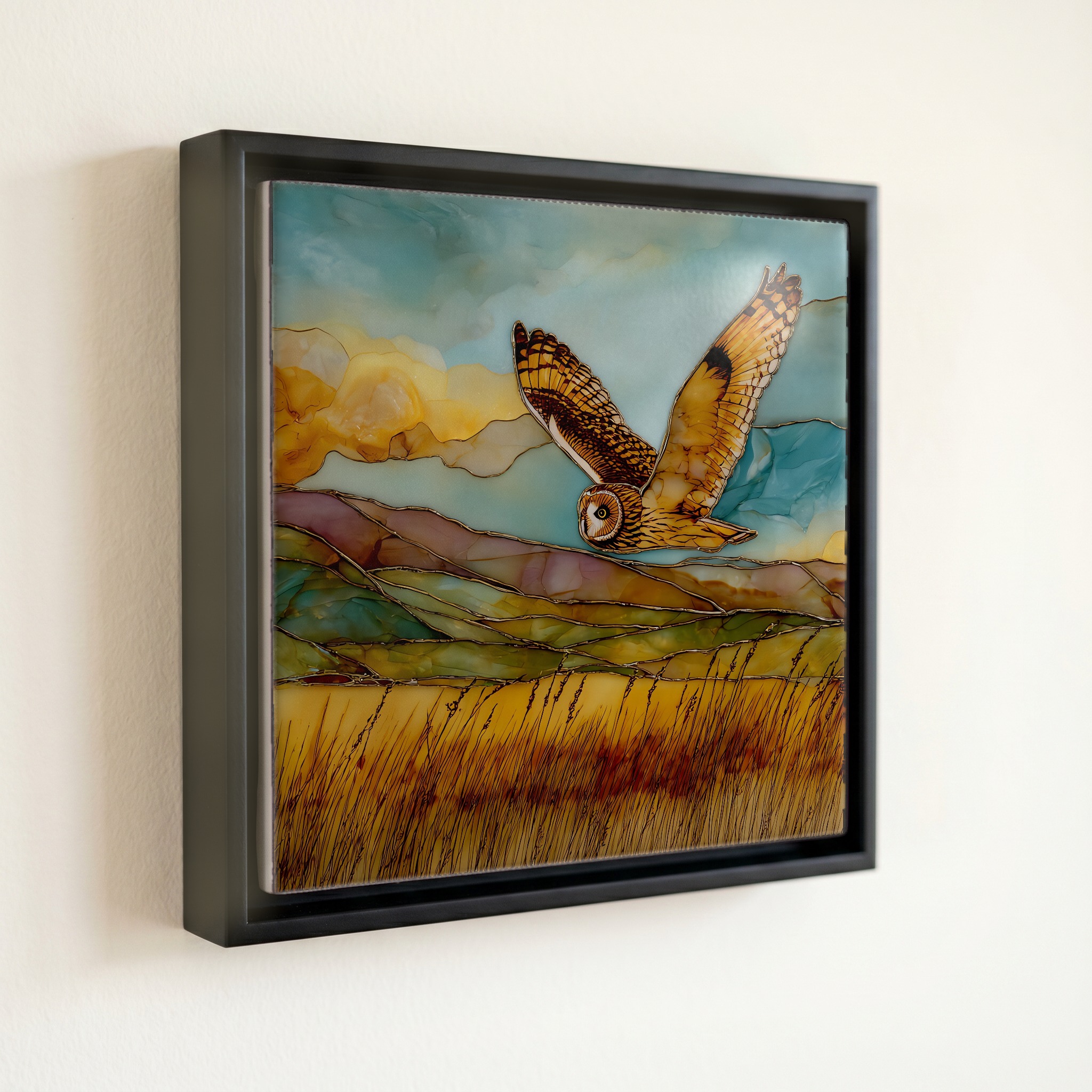
Above the linens, in a slim black surround.
On the nightstand, on a light oak stand.
On a picture ledge, where the light comes in.
a note from the studio

The Hawaiian short-eared owl, found only here. Pueo flies by day across the upcountry pastures of Maui, low and slow above the grass, then lifts again. In Hawaiian families pueo is an aumakua, an ancestral guardian, and stories of a pueo appearing at the right moment are still told around kitchen tables. The bird and the meaning travel together. On the slopes above Kula at the long edge of afternoon, it can be only a brown shape on a fencepost. Or yellow eyes, returned.
from the studio
shown in a slim black floating frame · 6 × 6 in
— bring it home

Pueo Owl Maui Ceramic Art Tile, on ceramic.

Each tile is finished by hand in our Knoxville studio. Artwork is slowly infused into the ceramic surface under high heat and pressure, and rests beneath a thin glossy finish. The colour lives in the surface, not on top of it.

What kind of piece?
One tile — square or rectangle.
How big?
the popular one — counter, shelf, nightstand
6 × 6 in · 15 cm · 1.6 lb
Surface finish
A clear glossy finish — the artwork reads as if under resin. Ideal for show-pieces and framed wall art.
How it sits
A hidden cleat — sits ¼″ proud of the wall.
$58
Hand-finished and shipped from our studio at the foot of the Smokies. On your wall in about ten days.
size
6 × 6 in
15 cm
weighs
1.6 lb
solid in the hand
surface
ceramic, hand-finished
art rests beneath a thin glossy finish
from
Knoxville, TN
our family studio, at the foot of the Smokies
— start a Coaster Set

Pick any four 4-inch tiles — National Parks you've been to, a Smokies set, the four seasons of one place. $ for a set of , cork-backed, ready to live on the table.
comes gift-ready
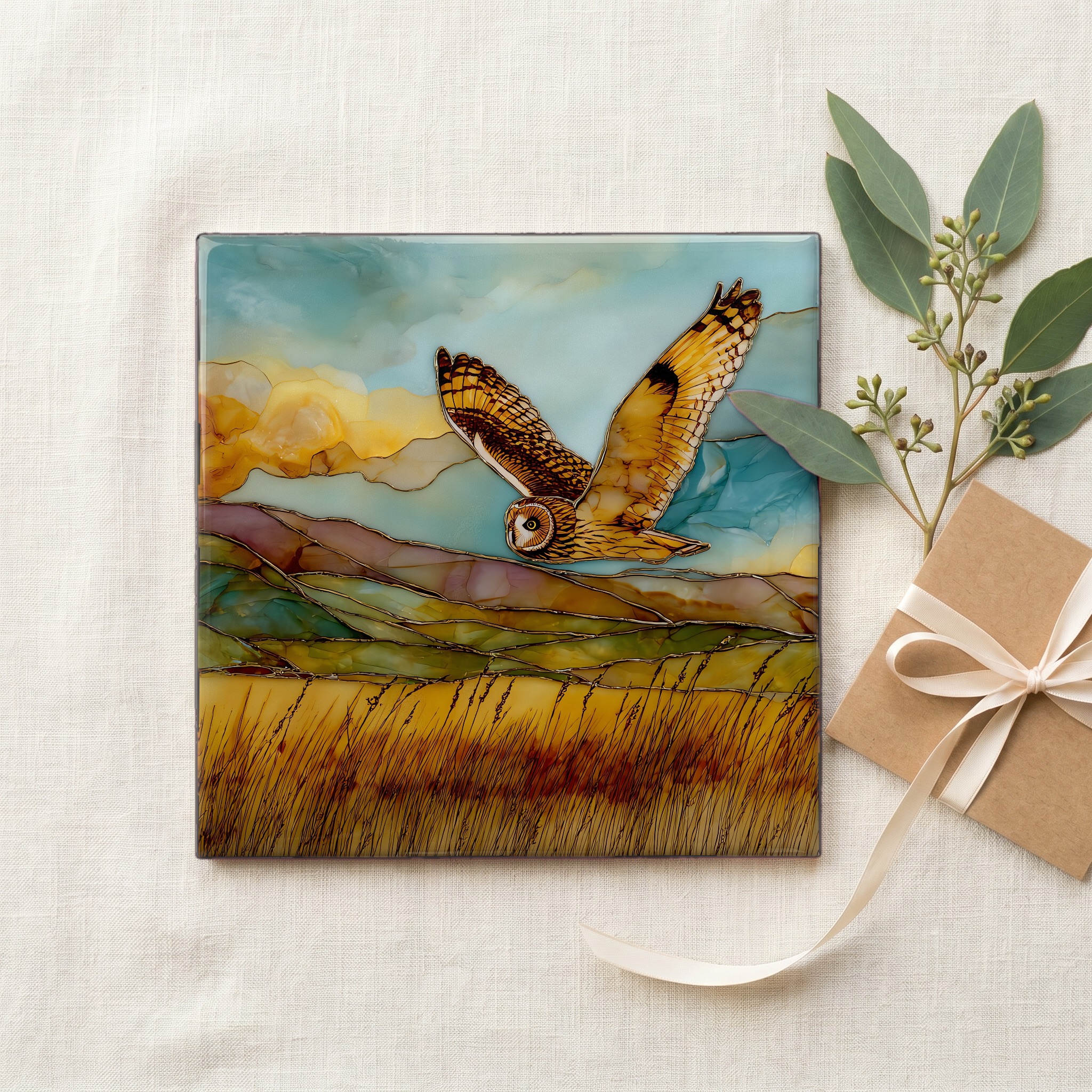
comes gift-ready

Each tile ships in a kraft box, tied with cream ribbon, with a handwritten note from the studio if you'd like to add one.
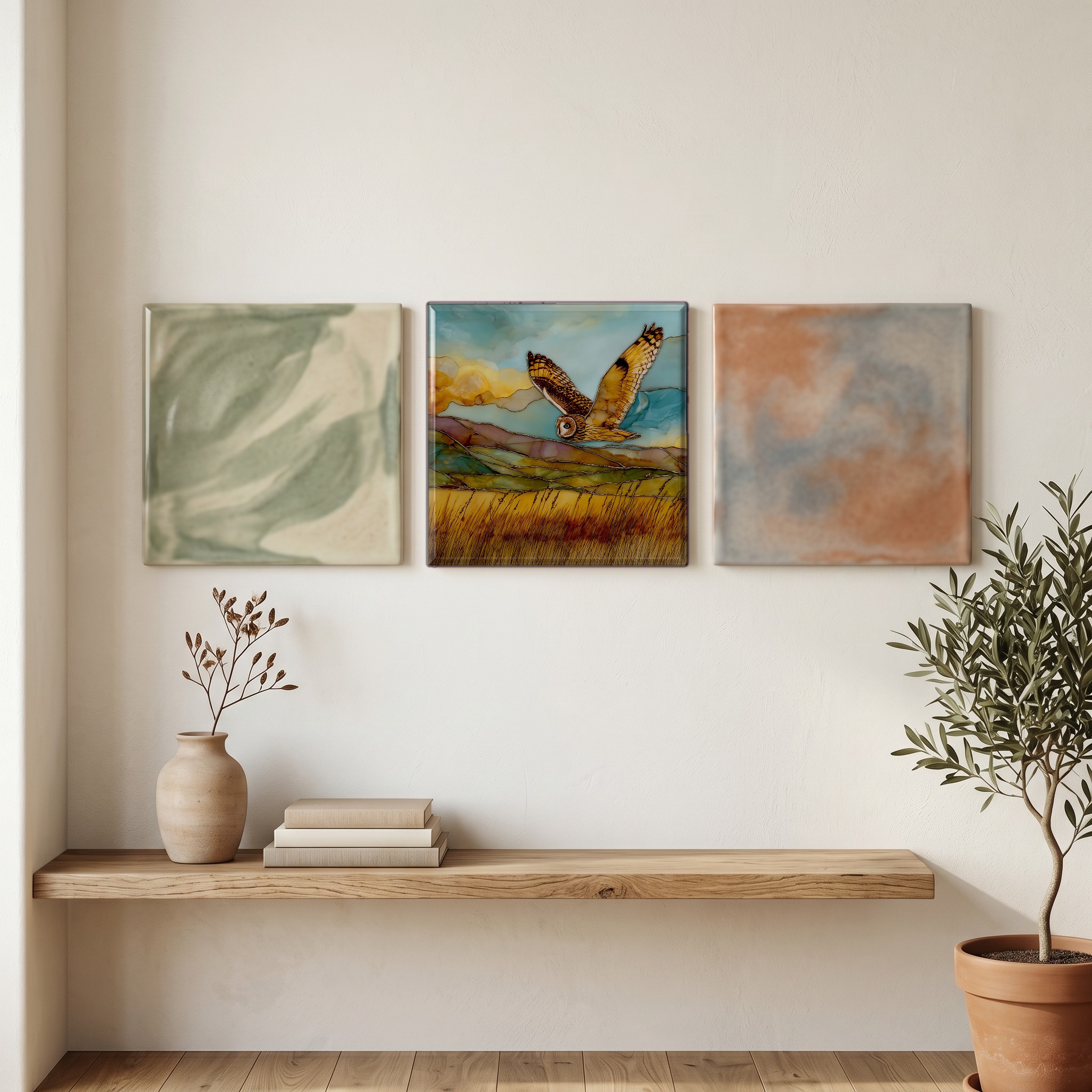
or build a grouping
or build a grouping

Three or five different vistas, hung together — a chapter of places you've been, or want to go.

about Pueo Owl Maui Ceramic Art Tile

The place, in three passes.

A little of what's known, in case you fall down the rabbit hole — or want to go see it yourself.
the place

Pueo (Asio flammeus sandwichensis) is the Hawaiian short-eared owl, an endemic subspecies and the only owl native to Hawaiʻi. On Maui the bird ranges from sea level to the high alpine of Haleakalā, but is most reliably seen across the upcountry pastures and grasslands of Kula, the slopes of Haleakalā National Park, and the open country around Polipoli, places where the grass is low enough to hunt over. Pueo is distinct from the common barn owl, Tyto alba, a later introduced species; the two are sometimes confused at distance, but the barn owl flies at night and pueo flies by day. State population estimates run into the low thousands, with the Oʻahu population listed as endangered under Hawaiʻi state law.

the air

Pueo is unusual among owls in being active by day. The bird quarters open ground at low altitude, twenty or thirty feet above the grass, with slow wingbeats and long glides, dropping suddenly on its target. The diet is mostly small mammals such as rats and mice, with birds and insects taken on the wing. Pueo nests on the ground in tall grass, which is why the open upcountry of Maui suits the species and why field fires and feral cats are among the threats tracked by the Hawaiʻi Division of Forestry and Wildlife. The bird is largely silent outside breeding. The shift toward daytime activity is thought to follow the historical absence of native mammalian predators on the islands; before contact, the Hawaiian hoary bat was the only native land mammal in Hawaiʻi.

the visit

To see a pueo on Maui, drive the upcountry roads of Kula or the lower switchbacks of Crater Road into Haleakalā National Park between mid-morning and late afternoon. Pull over where the pasture is open and the fenceline is long. Look first along fenceposts and on the ground; the bird's mottled brown plumage matches dry grass, and a perched pueo can sit unmoved while a car passes. In flight the silhouette is broad and round-winged, the underside pale, the wingbeats slow. Sightings are not guaranteed; many longtime upcountry residents speak of only a handful of clear meetings in a lifetime. Pueo is also a recognised aumakua in Hawaiian families, and many of those who see one consider the meeting carefully rather than count it as luck.

where
United States · Maui County, Hawaii
within
Haleakalā National Park
the neighborhood

What's nearby.

A handful of named places within an hour's walk or short drive. Some we've already painted; some we will.
15 km E
Haleakalā Summit
volcano summit
7 km S
Polipoli Spring State Recreation Area
state park
25 km W
ʻĪao Valley
valley
60 km E
Hāna
town
18 km SW
Wailea
coastal town
N
Pueo Owl Maui Ceramic Art Tile
Haleakalā Summit
Polipoli Spring State Recreation Area
ʻĪao Valley
Hāna
Wailea
common questions

What people ask.

A few questions we get about Pueo Owl Maui Ceramic Art Tile — and about bringing the piece home.
about the place

Pueo (Asio flammeus sandwichensis) is the Hawaiian short-eared owl, an endemic subspecies and the only owl native to Hawaiʻi. It flies by day across open country, nests on the ground, and is found on all the main Hawaiian Islands.

Pueo are most reliably seen in upcountry Maui: the open pastures of Kula, the slopes of Haleakalā National Park, and the grasslands around Polipoli. They hunt at low altitude over open ground, and sightings tend to peak in mid-morning and late afternoon.

Pueo is one of only a few owls worldwide that hunt mainly in daylight. Researchers attribute the shift to Hawaiʻi's historical lack of native mammalian predators; with no daytime threats on the ground, the bird could hunt safely outside the typical owl window.

Pueo is a long-recognised aumakua, an ancestral guardian spirit, in many Hawaiian families. Encounters with pueo are read as messages from the family's ʻaumākua and treated with care. The bird's cultural standing pre-dates contact and is still actively held today.

The Oʻahu population of pueo is listed as endangered under Hawaiʻi state law. Populations on Maui, Hawaiʻi Island, Kauaʻi and Molokaʻi are not formally listed but are tracked by the Hawaiʻi Division of Forestry and Wildlife and are believed to be declining.

The barn owl in Hawaiʻi (Tyto alba) is introduced and nocturnal, with a white heart-shaped face and pale underside. Pueo is native, day-flying, mottled brown, with yellow eyes and a round face. The two are sometimes confused at distance but rarely up close.

Pueo's diet is mainly small mammals such as rats and mice, with smaller birds and insects taken occasionally. The bird hunts low over open grass, dropping silently onto prey. Ground-nesting puts pueo eggs and chicks at risk from rats and feral cats.

about the piece in your home

It is a piece people from the islands recognise. Pueo is held by many Hawaiian families as an aumakua, and a tile of the bird carries cultural weight beyond a tropical scene. A Keepsake or Small with a handwritten note from the studio is a measured way to give it.

The plumage and pasture palette sits comfortably in coastal-modern, organic-modern or biophilic interiors. The piece also works as a single grounding tile in a Japandi-leaning room. It is not a tropical-print piece; it carries quieter than a hibiscus print and reads as fine art.

Yes. Organic-modern leans on muted natural palettes (clay, wheat, brown, dusk yellow) and on real species rather than generic motifs. A pueo tile fits that direction; it is a specific bird, painted carefully, in a colourway that sits with raw oak and undyed linen.

A single Large reads well above a console; above a full sofa, a 4-tile Mural or a 9-tile Mural lands the scale. As general hanging guidance, set the centre of the piece around 57 to 60 inches from the floor, slightly higher for taller ceilings.

Yes, with the right finish. Choose Dura Satin for kitchens, showers and bathroom walls; it has a soft sheen and is scratch-resistant. Matte gives the same durability with no sheen. The Glossy finish is best kept to framed wall art and dry rooms.

A soft microfibre cloth and water. The colour lives inside the ceramic surface beneath a thin glossy finish, so the surface itself is what you wipe. Skip abrasive pads and strong solvents; they are not needed and not good for the finish.

Yes. WenderVista is a single studio in Knoxville, Tennessee. The pueo piece is one of our originals; the visual is not licensed from anywhere, and the tile is hand-finished in-house.

if this one stayed with you

A few you might also love.

Hand-picked by the eye that found Sorapis. Same air, same kind of quiet.