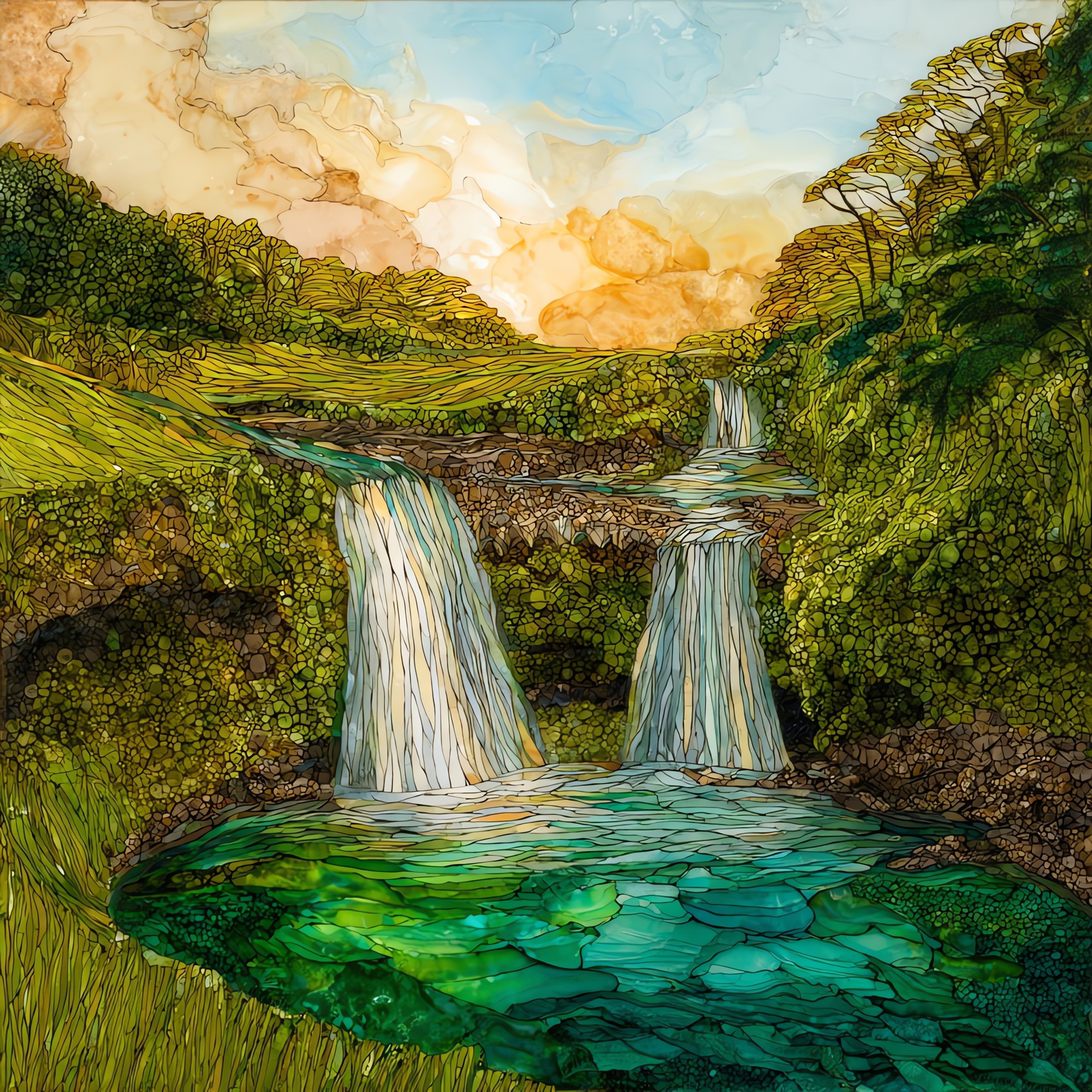
Puaa Kaa Falls Maui Ceramic Art Tile
— — water older than the road that found it.
Not only on a wall.
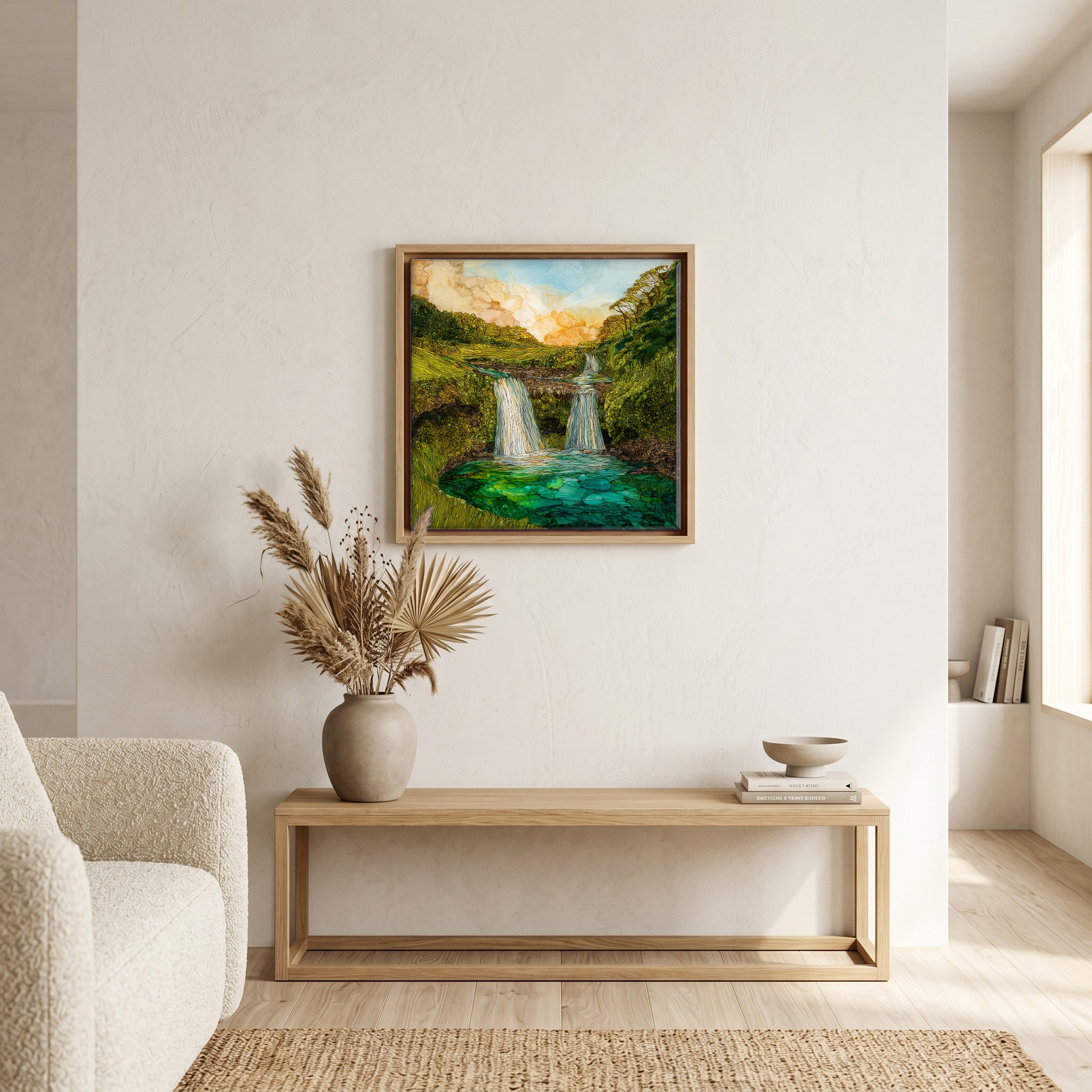

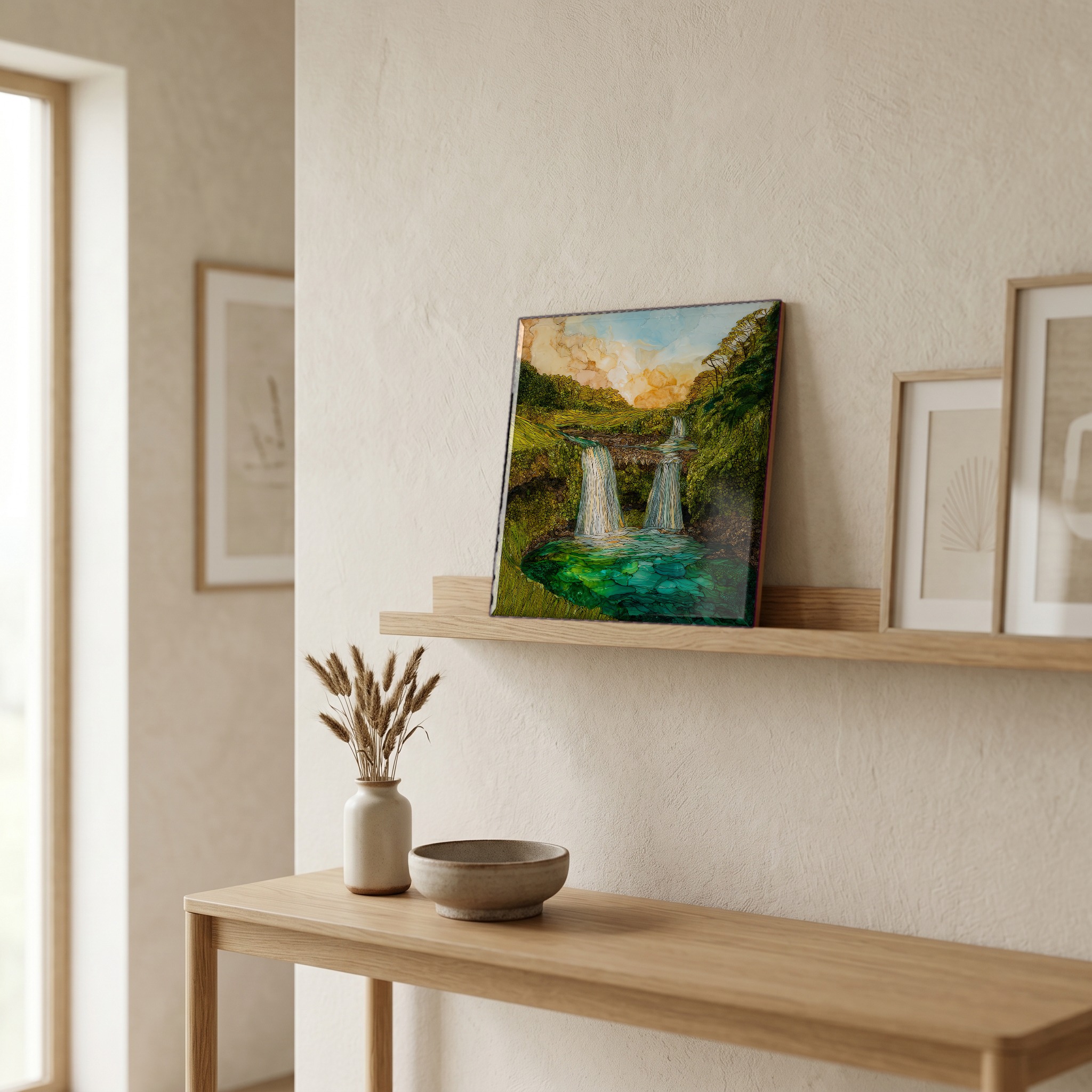
“A short walk from the road, and the engine sound is gone. Two small waterfalls into pools clear enough to wade in. The Hawaiian name means rolling pig, and the water has the same patient roll to it. Most of the tour vans stop here for fifteen minutes. The park has restrooms, which on the road to Hāna is its own kind of landmark. The people who arrive before nine in the morning have the moss-and-water sound to themselves. The water has been at this longer than the road has.
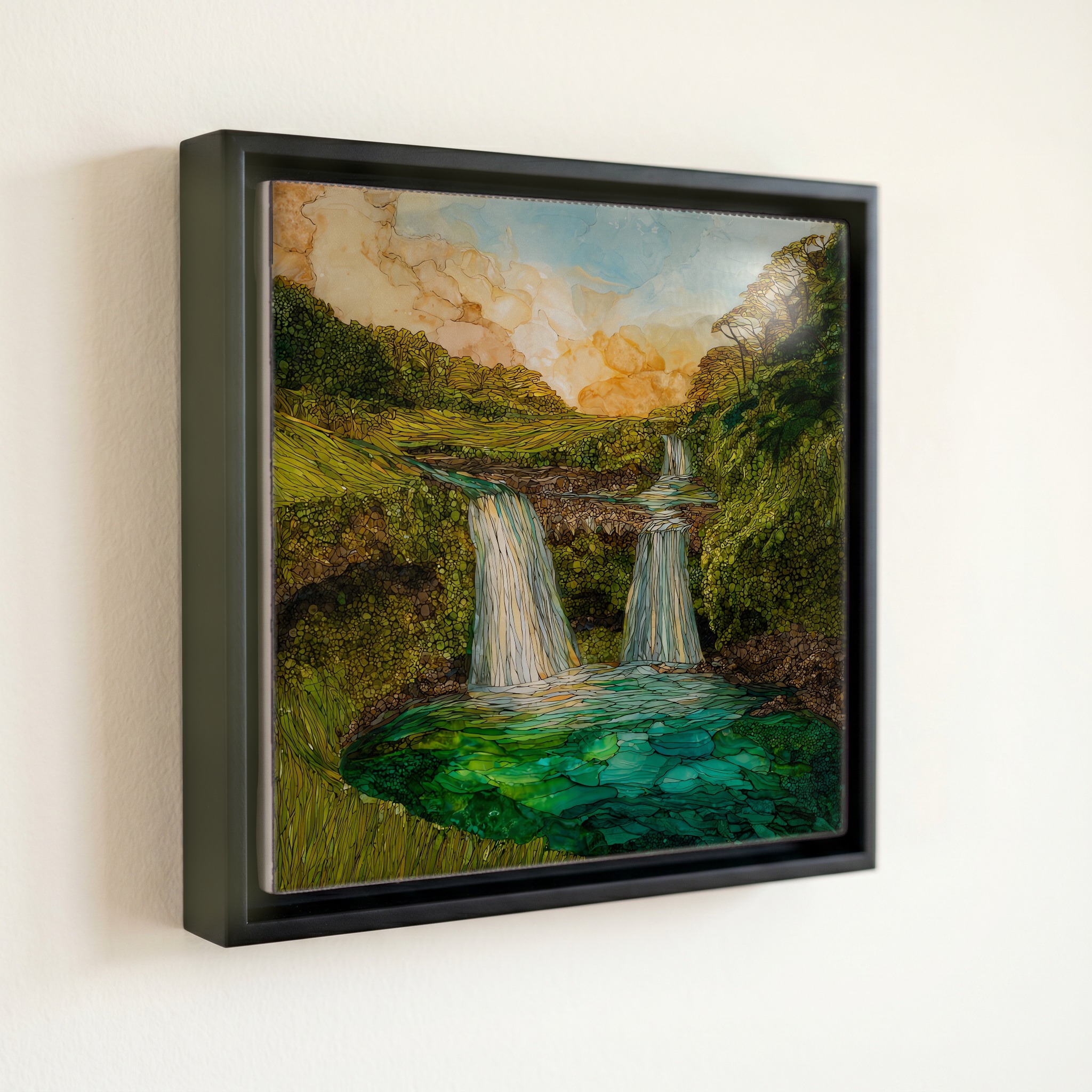
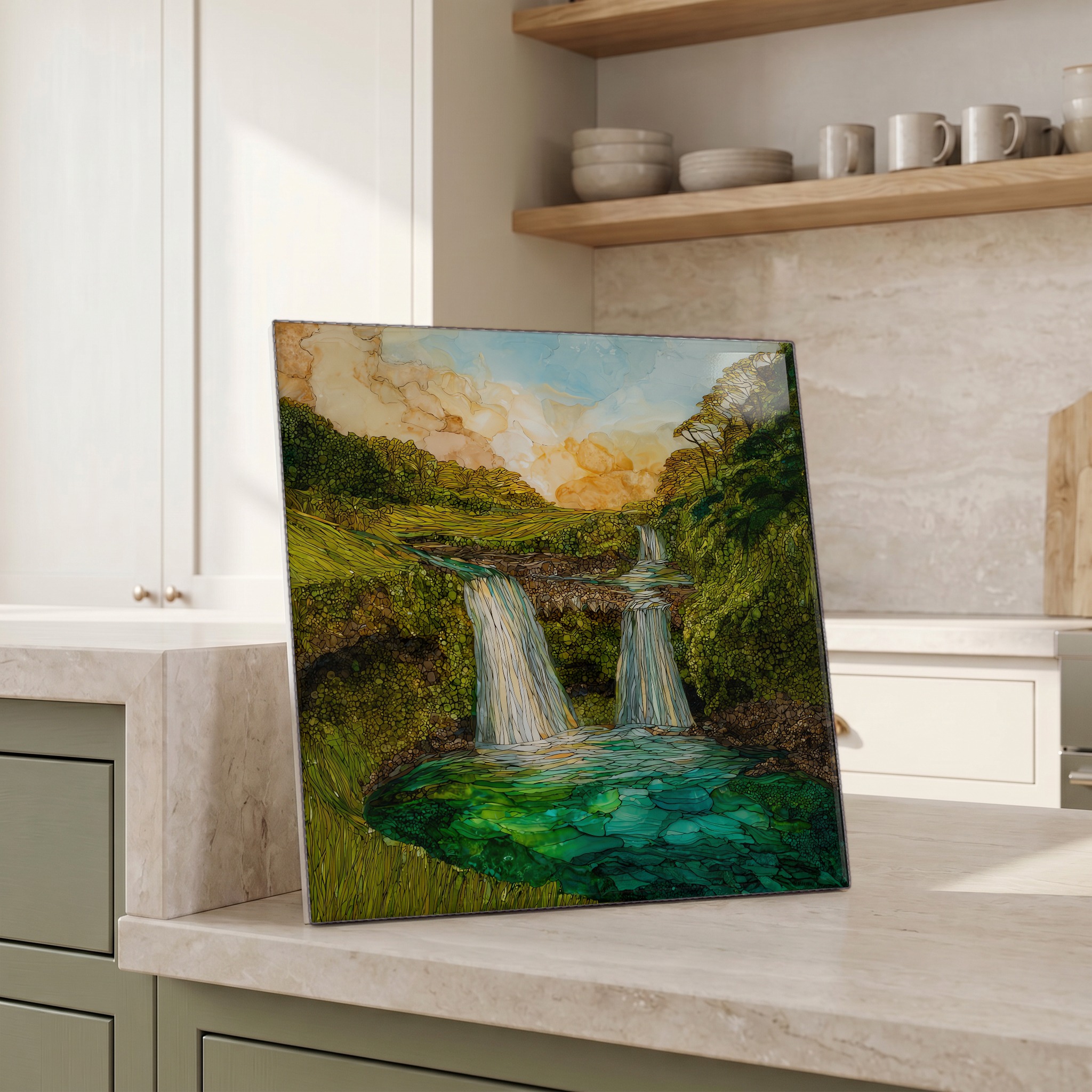
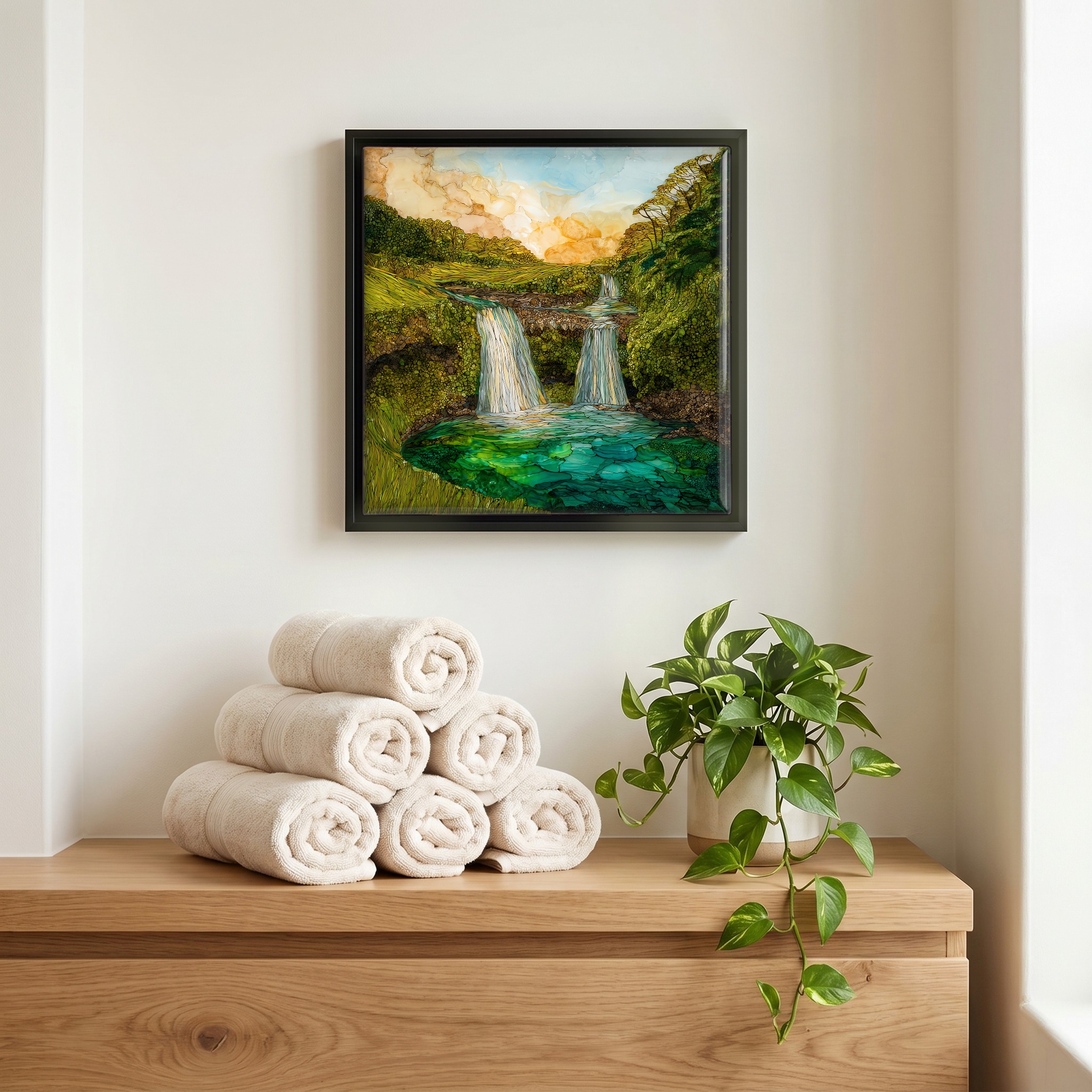
Puaa Kaa Falls Maui Ceramic Art Tile, on ceramic.
Each tile is finished by hand in our Knoxville studio. Artwork is slowly infused into the ceramic surface under high heat and pressure, and rests beneath a thin glossy finish. The colour lives in the surface, not on top of it.
Pick any four 4-inch tiles — National Parks you've been to, a Smokies set, the four seasons of one place. $ for a set of , cork-backed, ready to live on the table.

Each tile ships in a kraft box, tied with cream ribbon, with a handwritten note from the studio if you'd like to add one.
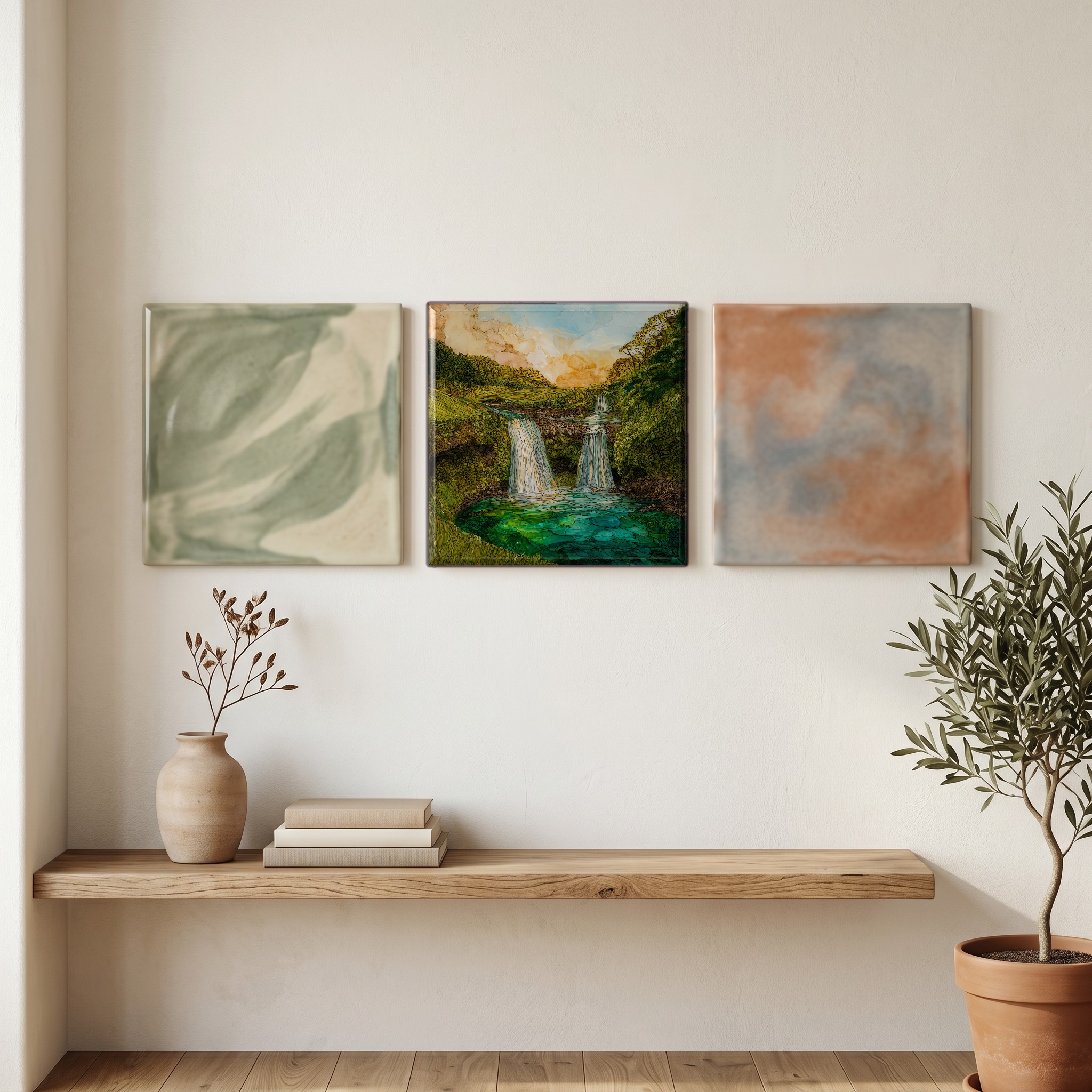
Three or five different vistas, hung together — a chapter of places you've been, or want to go.
The place, in three passes.
Puaʻa Kaʻa State Wayside is a 5-acre rainforest park on the windward side of Maui, about 39 miles east of Kahului along the Hāna Highway near mile marker 22.5. The wayside sits at roughly 1,200 feet of elevation, where the road climbs through a continuous tropical rainforest fed by trade-wind rain off the slopes of Haleakalā. The park protects two stacked waterfalls and a series of clear basalt-rimmed pools on a small stream that drains toward Waiohue Bay, about half a mile downstream. A paved short path from the parking area reaches the lower fall; the upper fall is across the stream on a narrower, often slick trail. The Hawaiian name Puaʻa Kaʻa translates as rolling pig.
Trade winds push moist Pacific air onto the windward slope of Haleakalā, the 10,023-foot shield volcano that makes up most of Maui. The orographic lift produces some of the heaviest rainfall in the United States; Big Bog, about fifteen miles upslope at 5,400 feet, averages over 400 inches of rain a year. The wayside itself sits lower, in continuous lowland rainforest. The stream that crosses the park is small and steady rather than dramatic; the two falls are short, stepped, and feed pools deep enough to wade. The pools clear quickly after rain because the basin above is forested and the bedrock is dense basalt. The colour reads green more than blue. That green is reflected canopy on still water, not the water itself.
The wayside is open daily during daylight hours with no entrance fee, and it sits near mile marker 22.5 on the Hāna Highway, about ninety minutes east of Kahului when the road is clear. A short paved path from the parking area reaches the lower fall and its swim pool; the upper fall is across the stream on a narrower, often slick trail that the Division of State Parks does not advise after rain. The lot fills between roughly 10 a.m. and 2 p.m. as Hāna-bound tour vans cycle through; arriving before nine or after three is usually quiet. The park has restrooms, picnic tables, and shade; restrooms in particular are rare on this stretch of road, which is why the place stays on every guidebook's list.