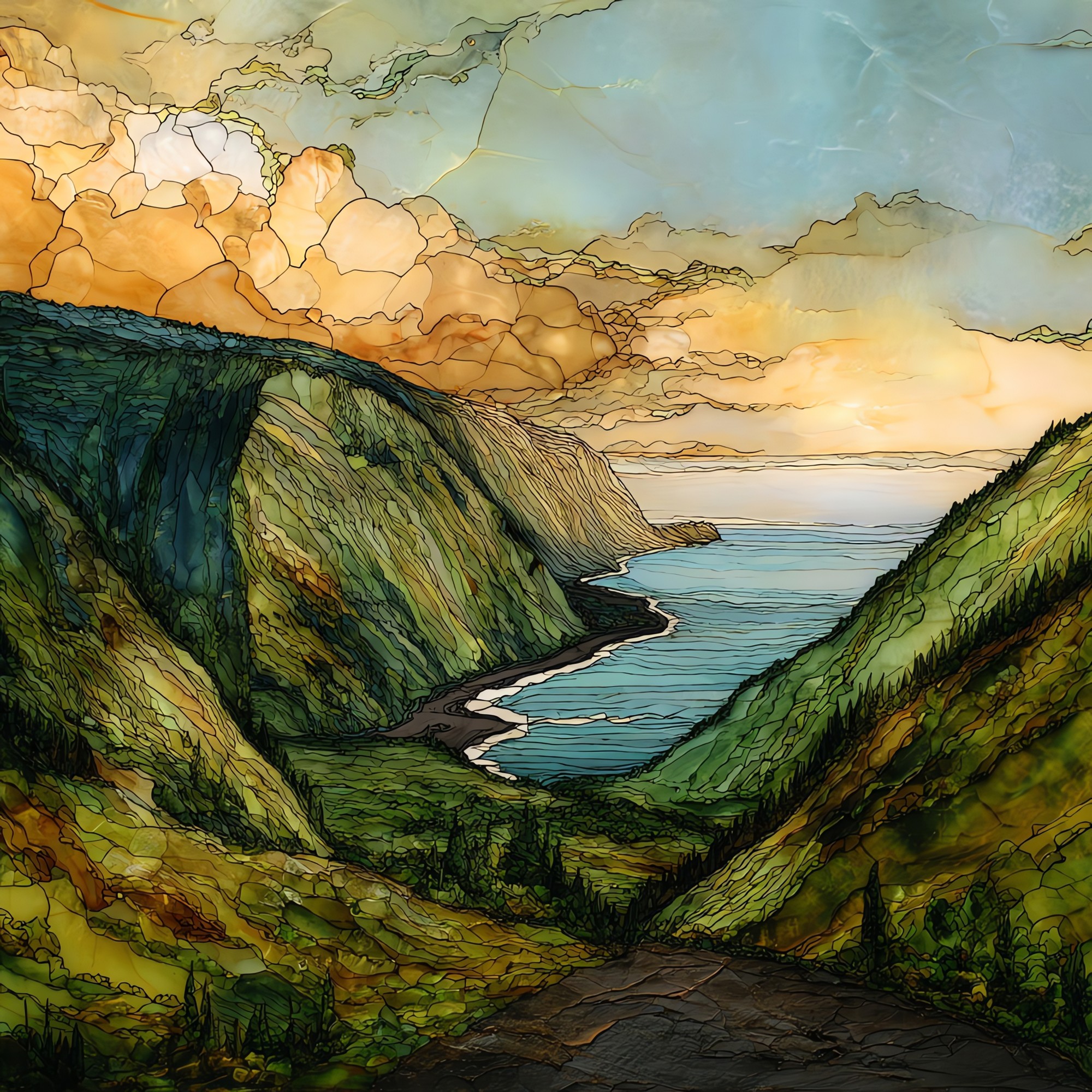
Pololu Overlook Big Island Ceramic Art Tile
— fold after fold of cliff, all the way to Waipiʻo.
Not only on a wall.
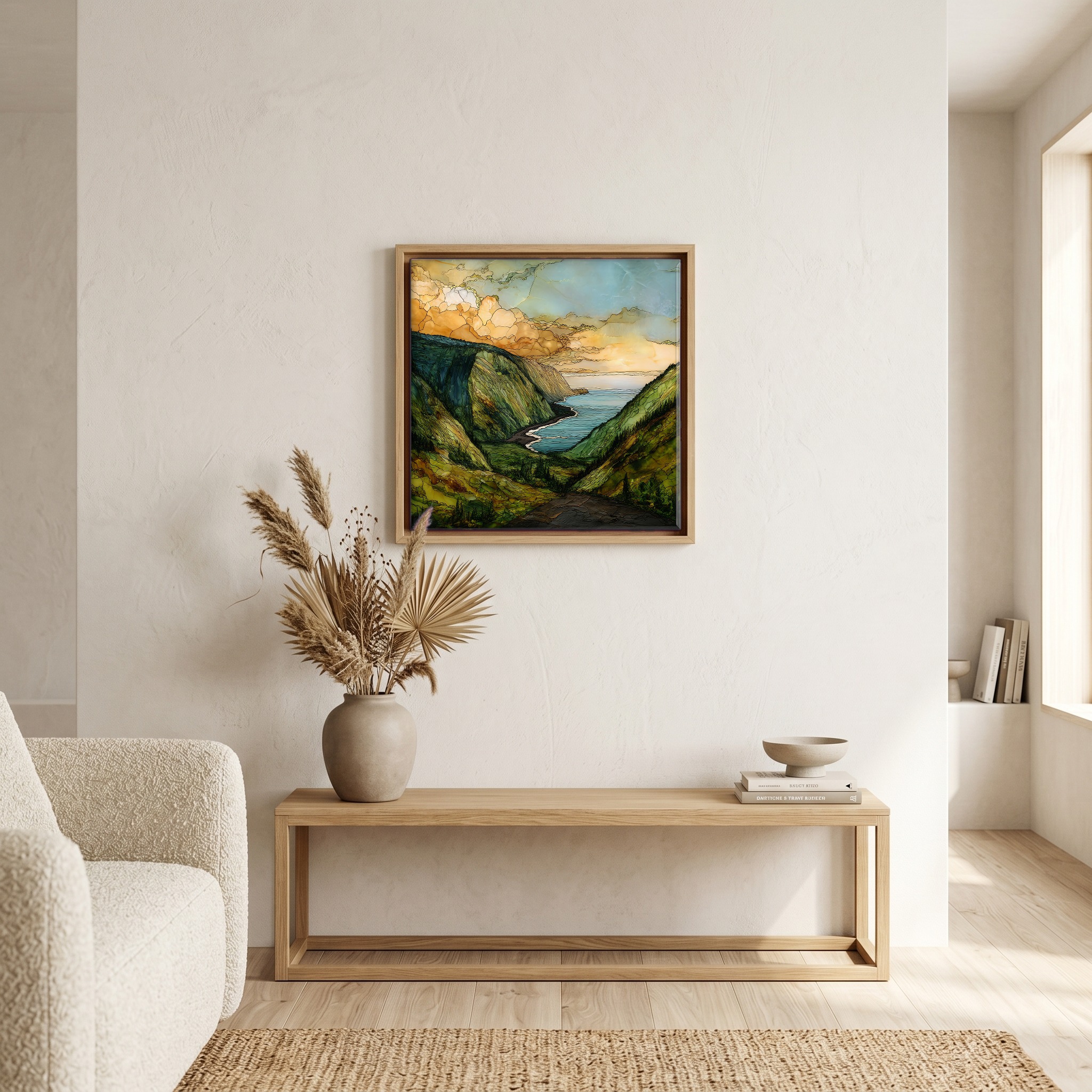

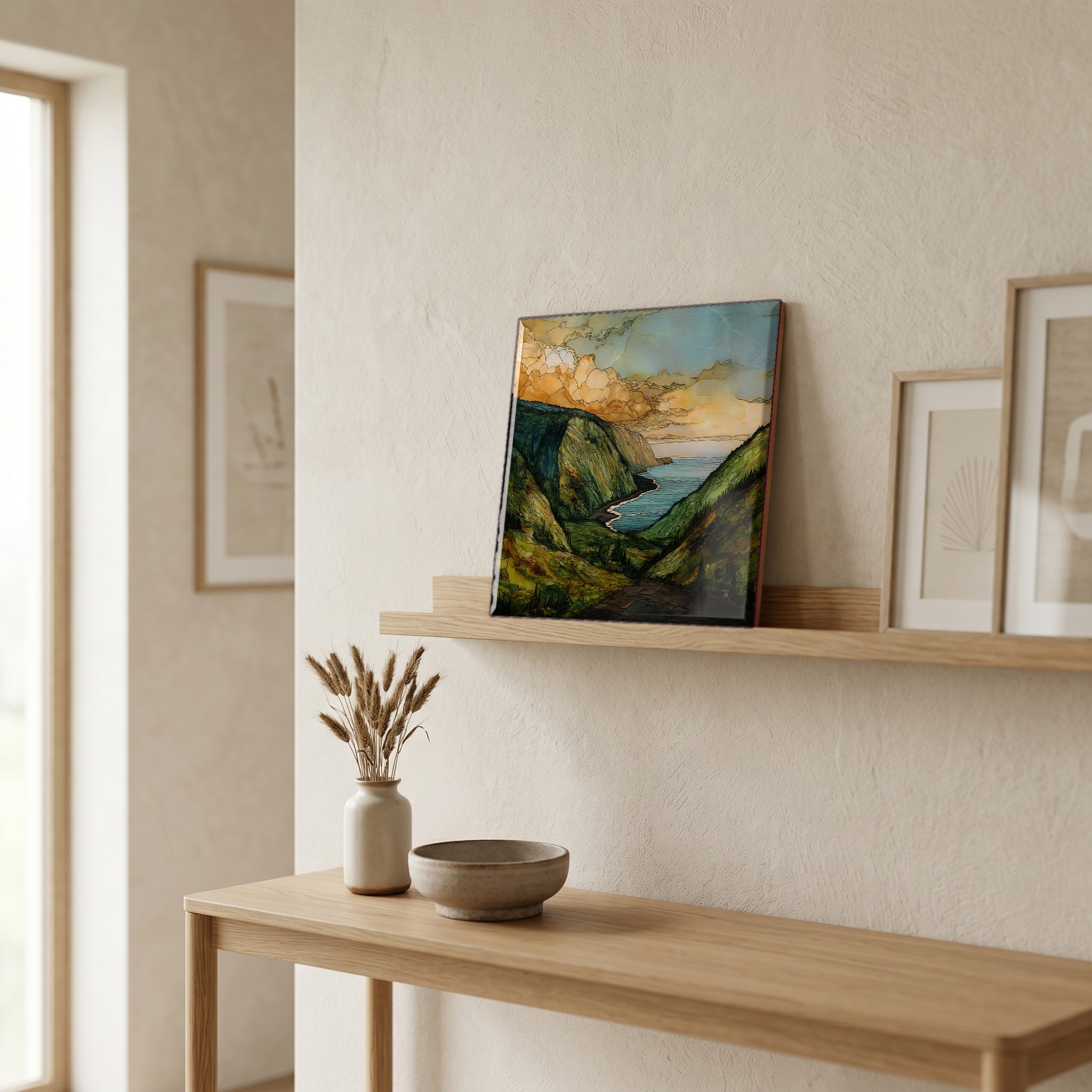
“The road north out of Kapaʻau just stops here. Last parking lot, last guardrail, and then the cliffs of the windward Kohala coast peel away to the south, fold after fold, all the way to Waipiʻo. Below the overlook, a black-sand beach the colour of wet ink. The wind never quite settles. Hikers pick their way down the Awini switchbacks to the beach; most people stay up top, holding a coffee, looking south for a long time before getting back in the car.
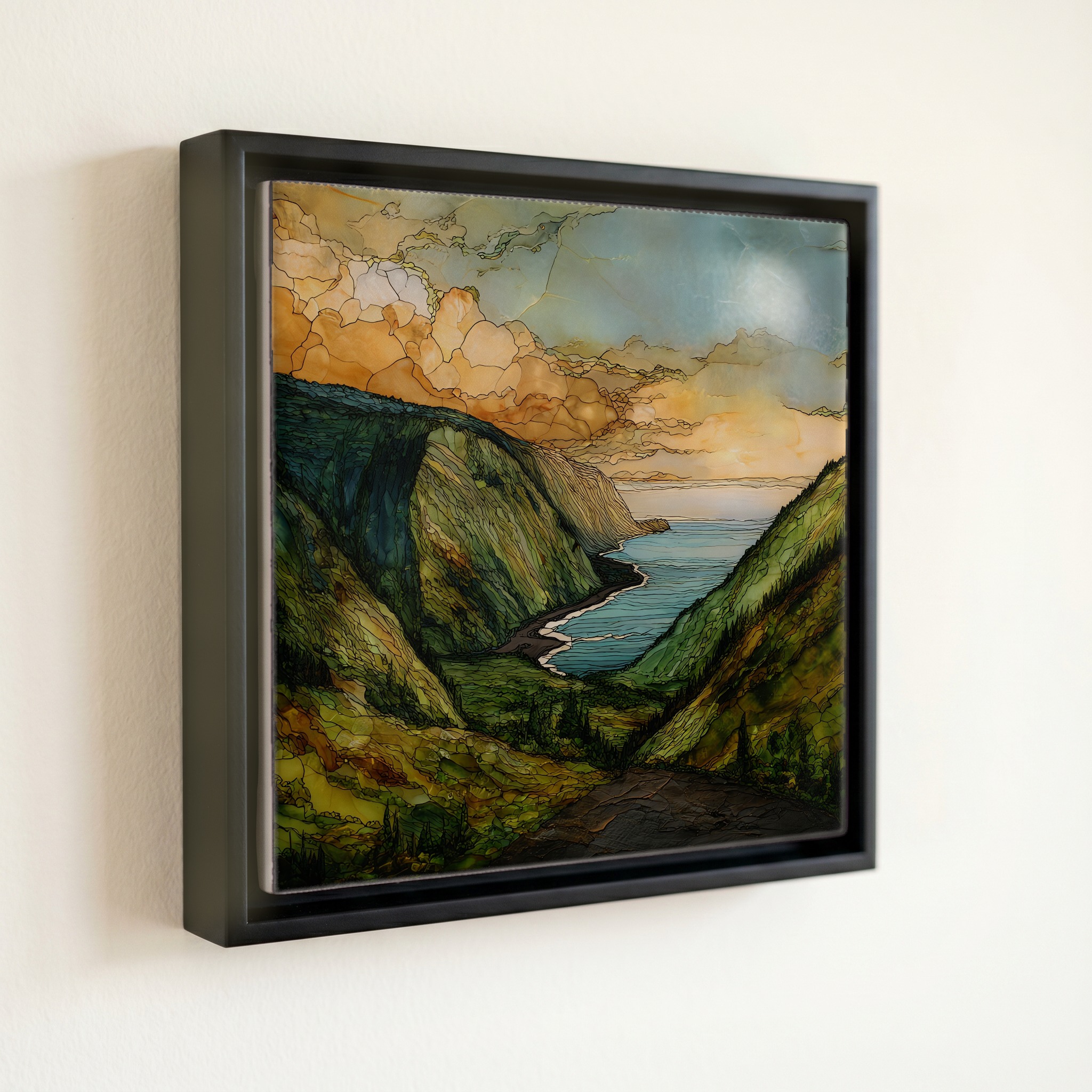
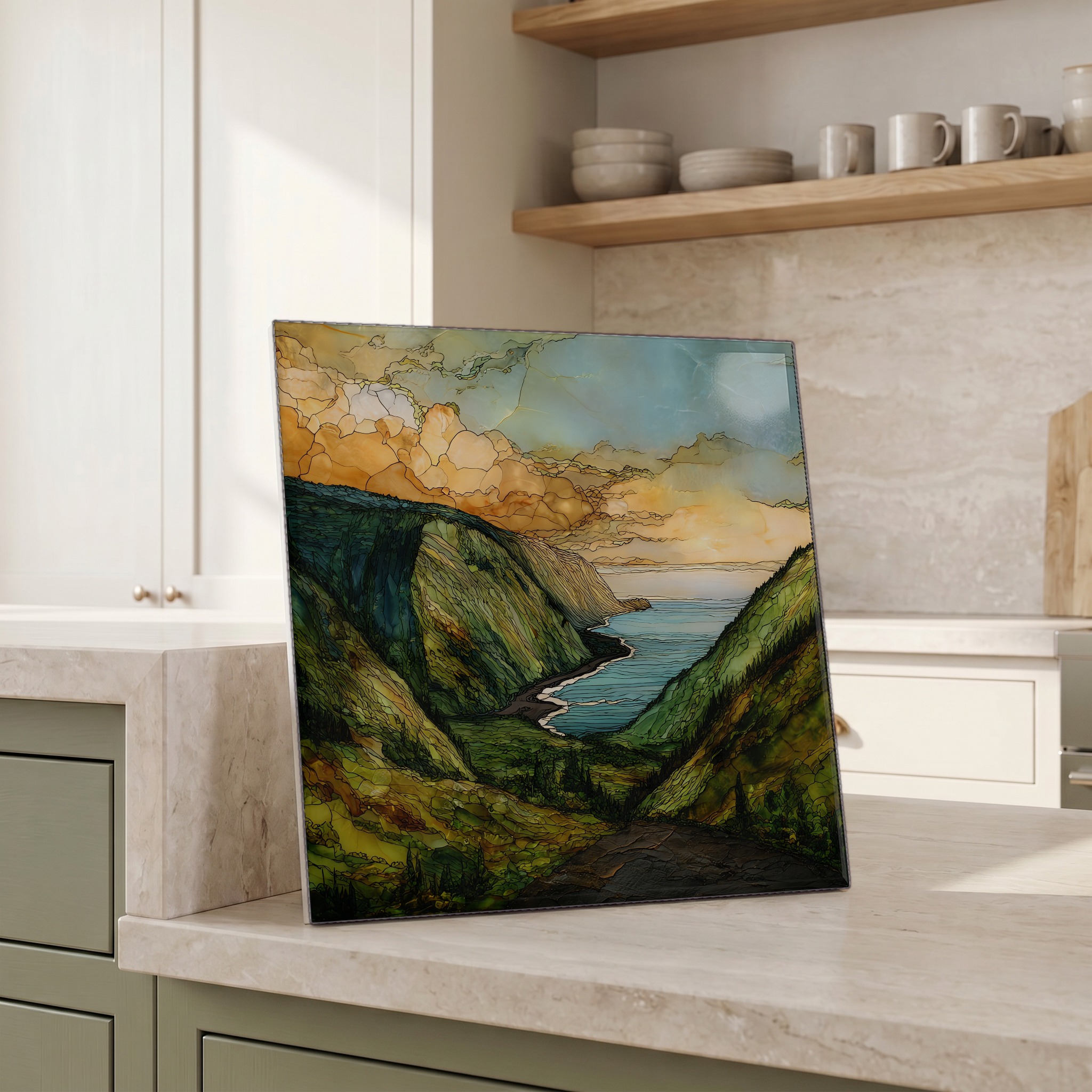
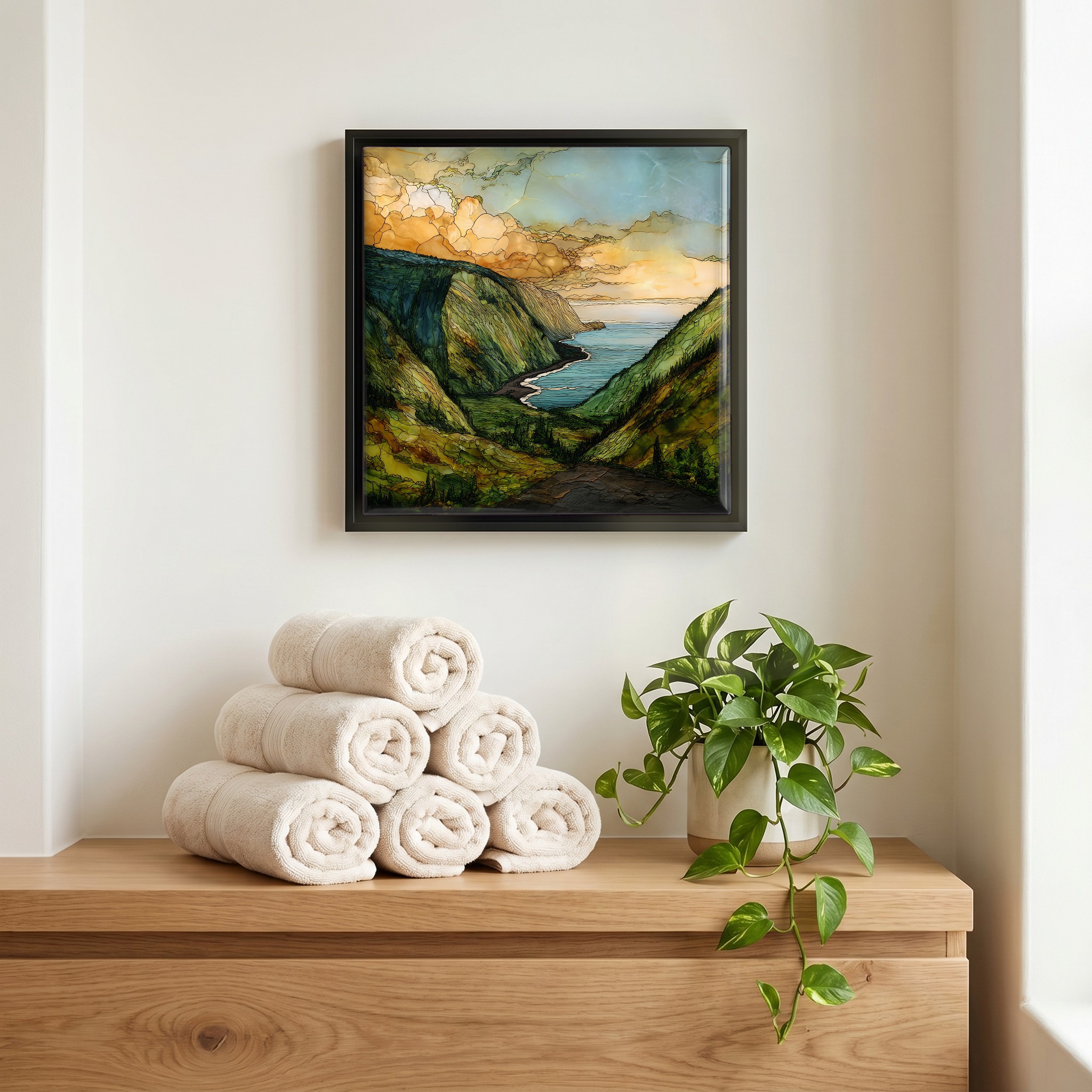
Pololu Overlook Big Island Ceramic Art Tile, on ceramic.
Each tile is finished by hand in our Knoxville studio. Artwork is slowly infused into the ceramic surface under high heat and pressure, and rests beneath a thin glossy finish. The colour lives in the surface, not on top of it.
Pick any four 4-inch tiles — National Parks you've been to, a Smokies set, the four seasons of one place. $ for a set of , cork-backed, ready to live on the table.
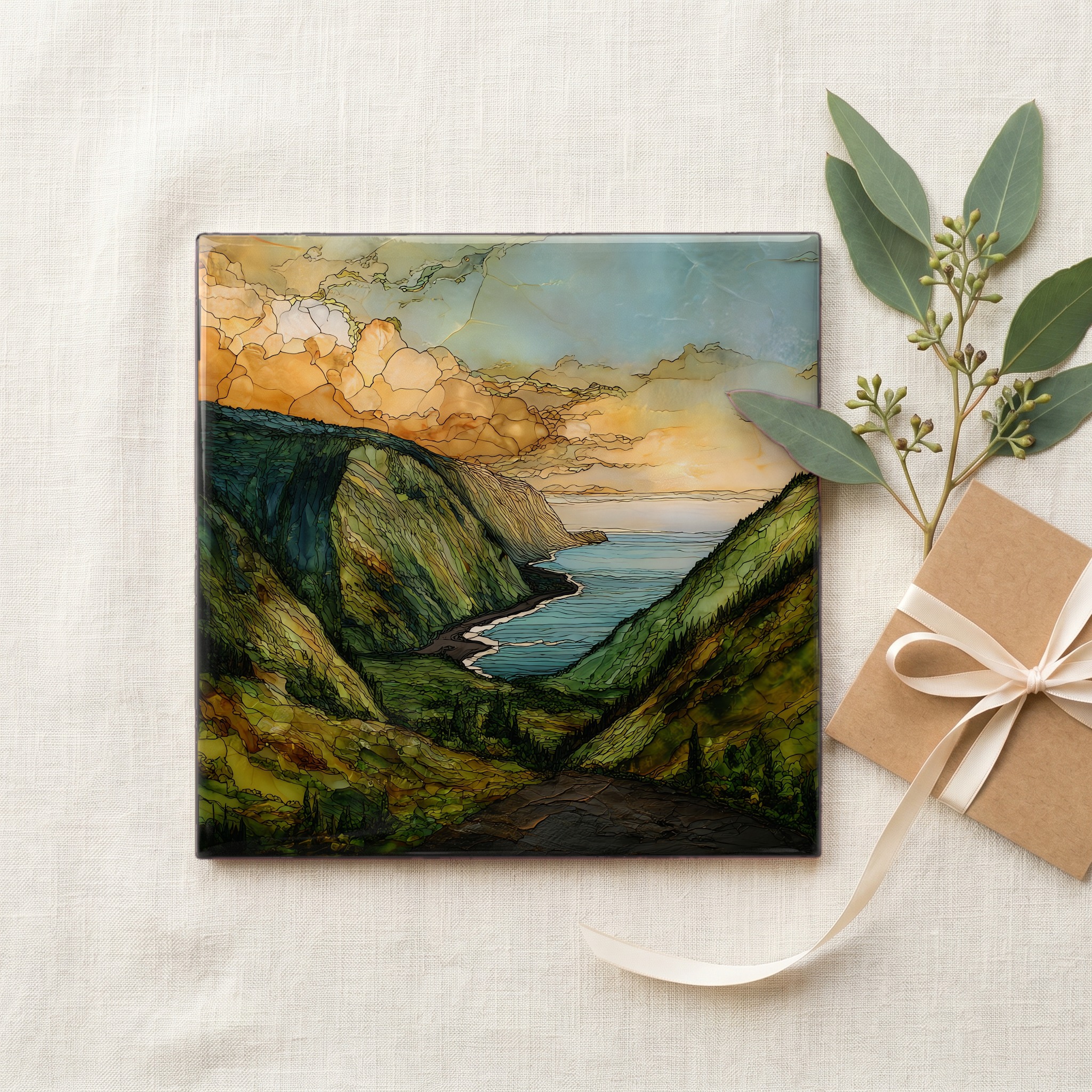
Each tile ships in a kraft box, tied with cream ribbon, with a handwritten note from the studio if you'd like to add one.

Three or five different vistas, hung together — a chapter of places you've been, or want to go.
The place, in three passes.
The northernmost of the seven deep-cut valleys on the windward face of the Kohala Mountains, on the Big Island of Hawaiʻi. The lookout sits at the end of Akoni Pule Highway (Hawaii Route 270), about six miles past the town of Kapaʻau and roughly 50 miles north of Hilo. Kohala is the oldest of the five shield volcanoes that built the island, with its eruptive lifespan ending about a million years ago; the windward face has been carved into amphitheatre valleys by erosion and a series of massive prehistoric landslides. Pololū, Hawaiian for 'long spear,' opens onto a black-sand beach at the foot of cliffs roughly 400 feet tall.
Pololū sits on the windward face of Kohala, where the northeast trade winds bank against the mountain's eastern slope and drop most of their moisture on the way up. The windward side of Kohala receives more than 100 inches of rain a year in places; the leeward Kona side gets less than 20. That rainfall, working over more than a hundred thousand years, is what carved the seven amphitheatre valleys (Pololū at the north end, Waipiʻo at the south) into the otherwise gentle dome of the volcano. The wind that meets you at the overlook is the same wind that wrote the coastline.
Access is free, with a small unpaved lot at the end of Hawaii Route 270; arrive before mid-morning on weekends because parking fills. The Awini Trail descends roughly 420 feet to the valley floor in about half a mile of switchbacks. It is steep, often muddy after rain, and best in sturdy shoes. The beach is striking but not swimmable: strong shore breaks and rip currents have caused fatalities, and there are no lifeguards. Visitors typically walk the black sand to the ironwood grove behind the beach and back, then climb out. Allow ninety minutes round-trip from the overlook if you descend.