Wender·Vista
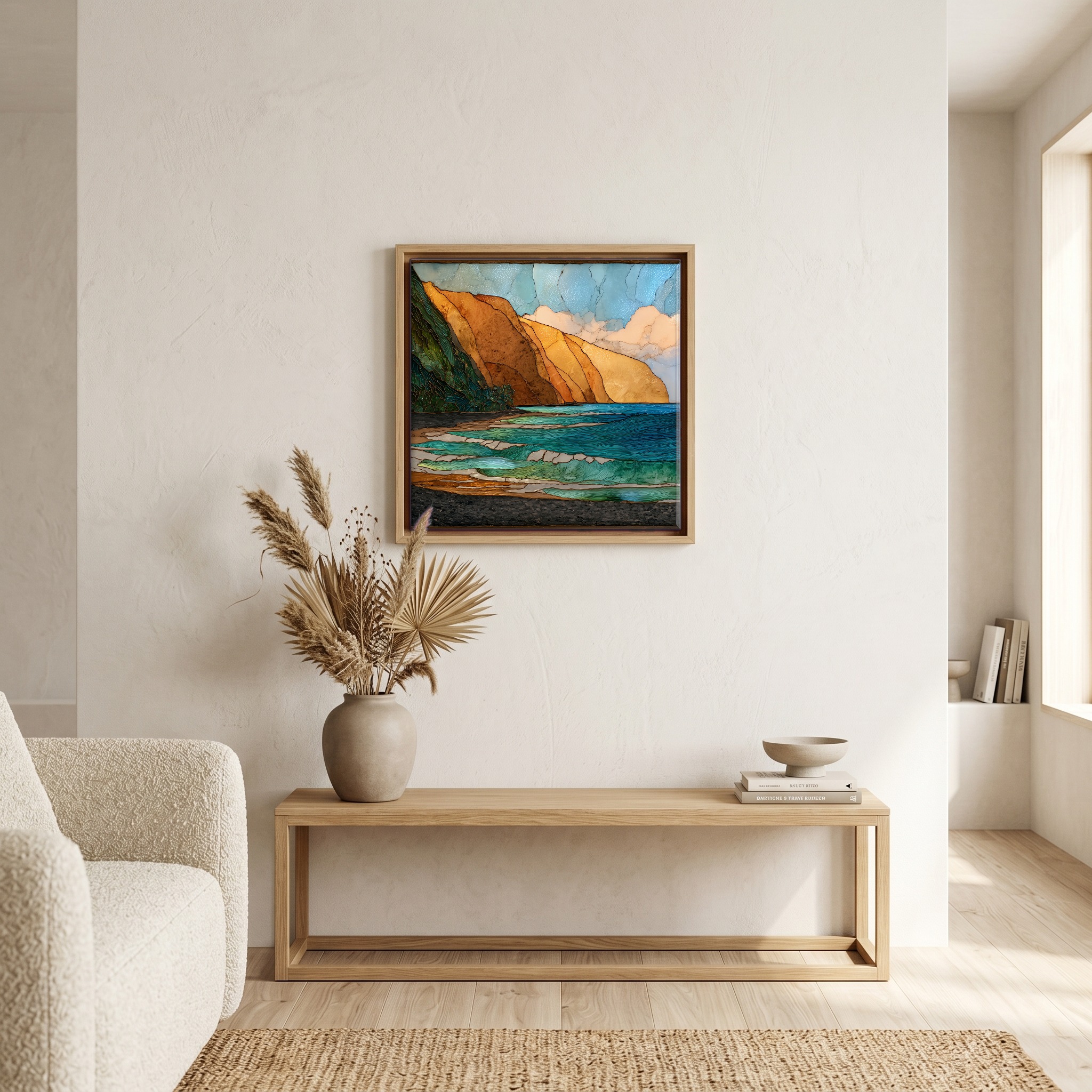
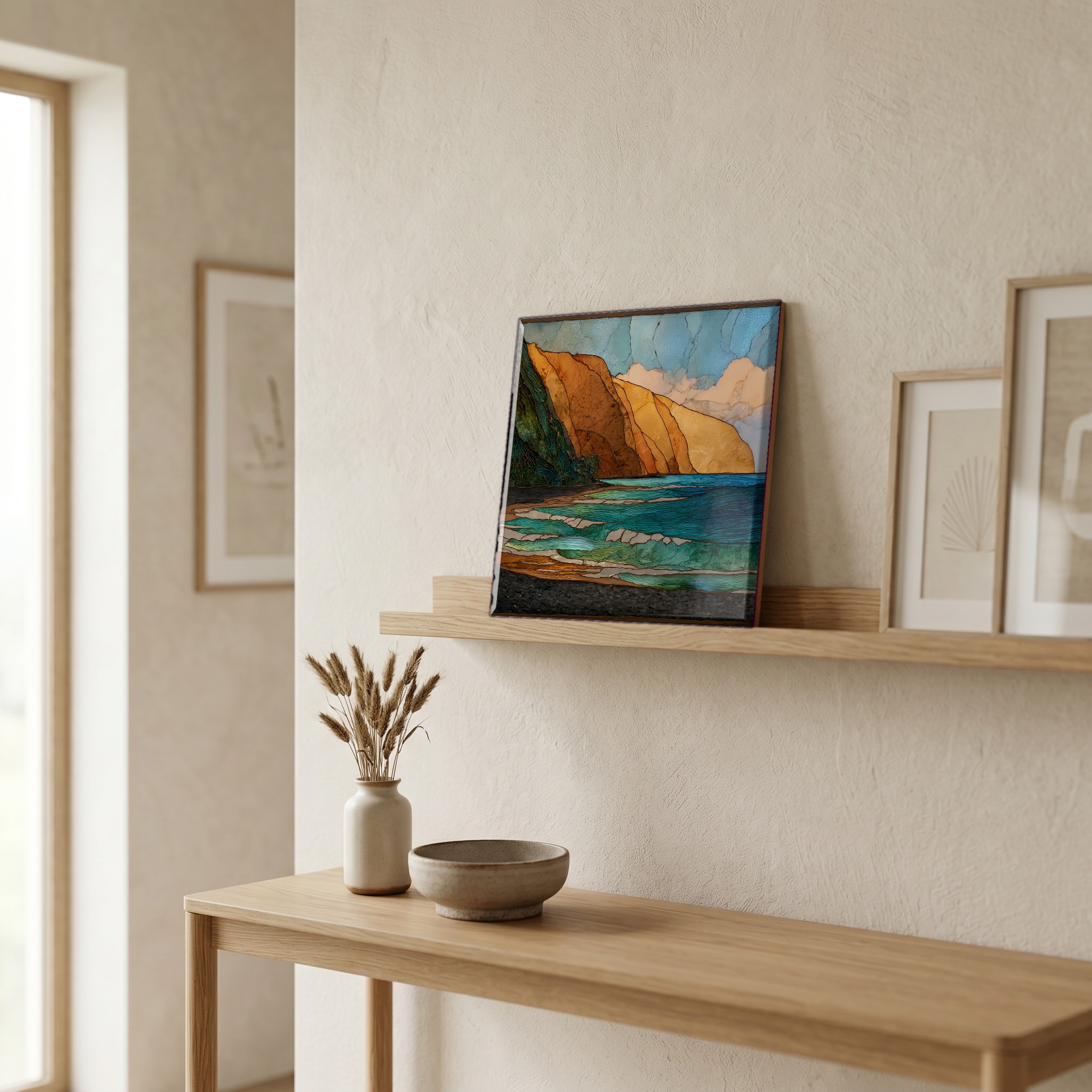
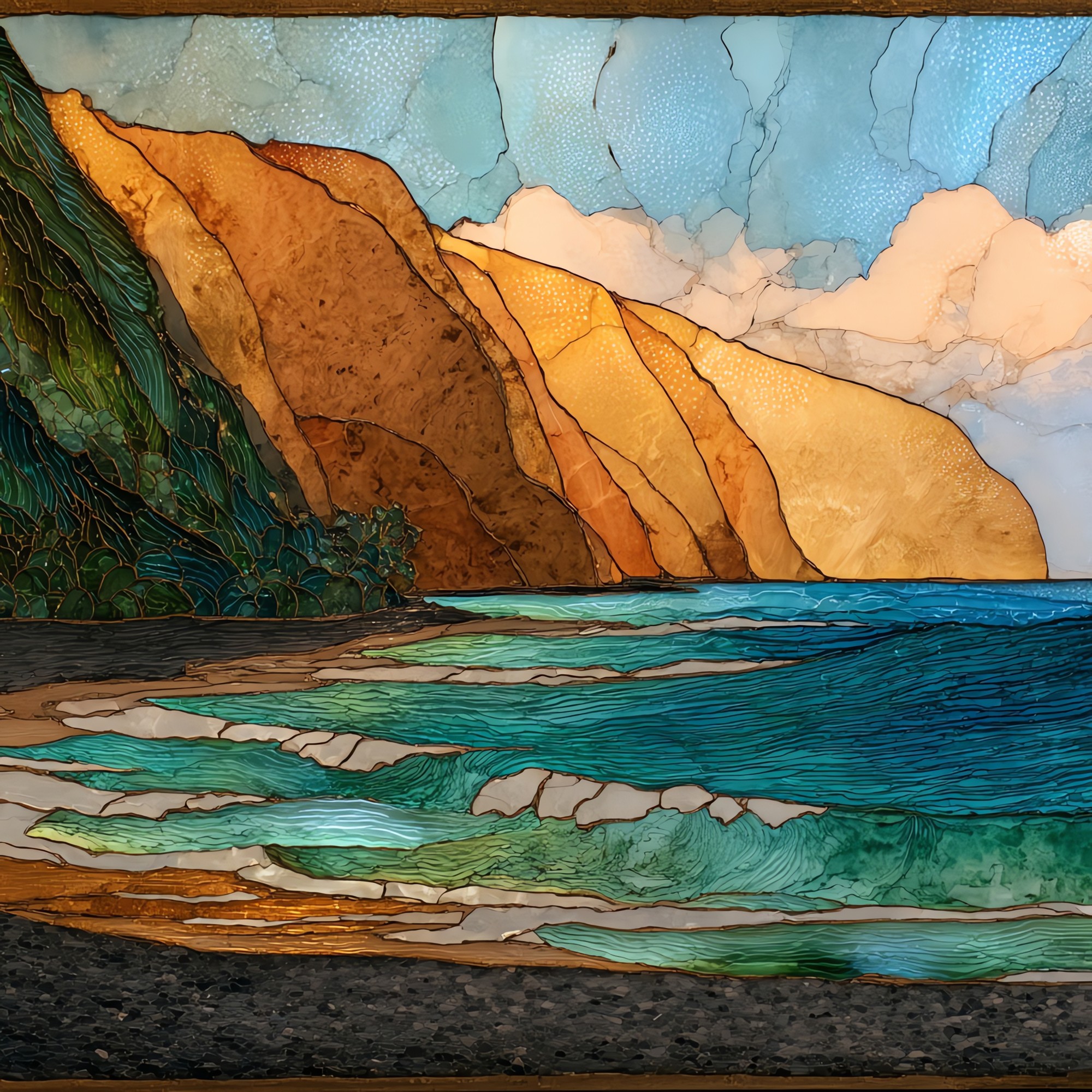
Pololu Black Sand Big Island Ceramic Art Tile
shown on ceramic, 12-inch tileHawaii · United States
at the north end of the Big Island's Kohala coast

Pololu Black Sand Big Island Ceramic Art Tile

— the black crescent where the road runs out.

Where it lives

Not only on a wall.

A small tile on the nightstand catching the morning. A larger one above the fire. Yours, wherever you spend the slow hours.
Above the bench, in a warm oak surround.
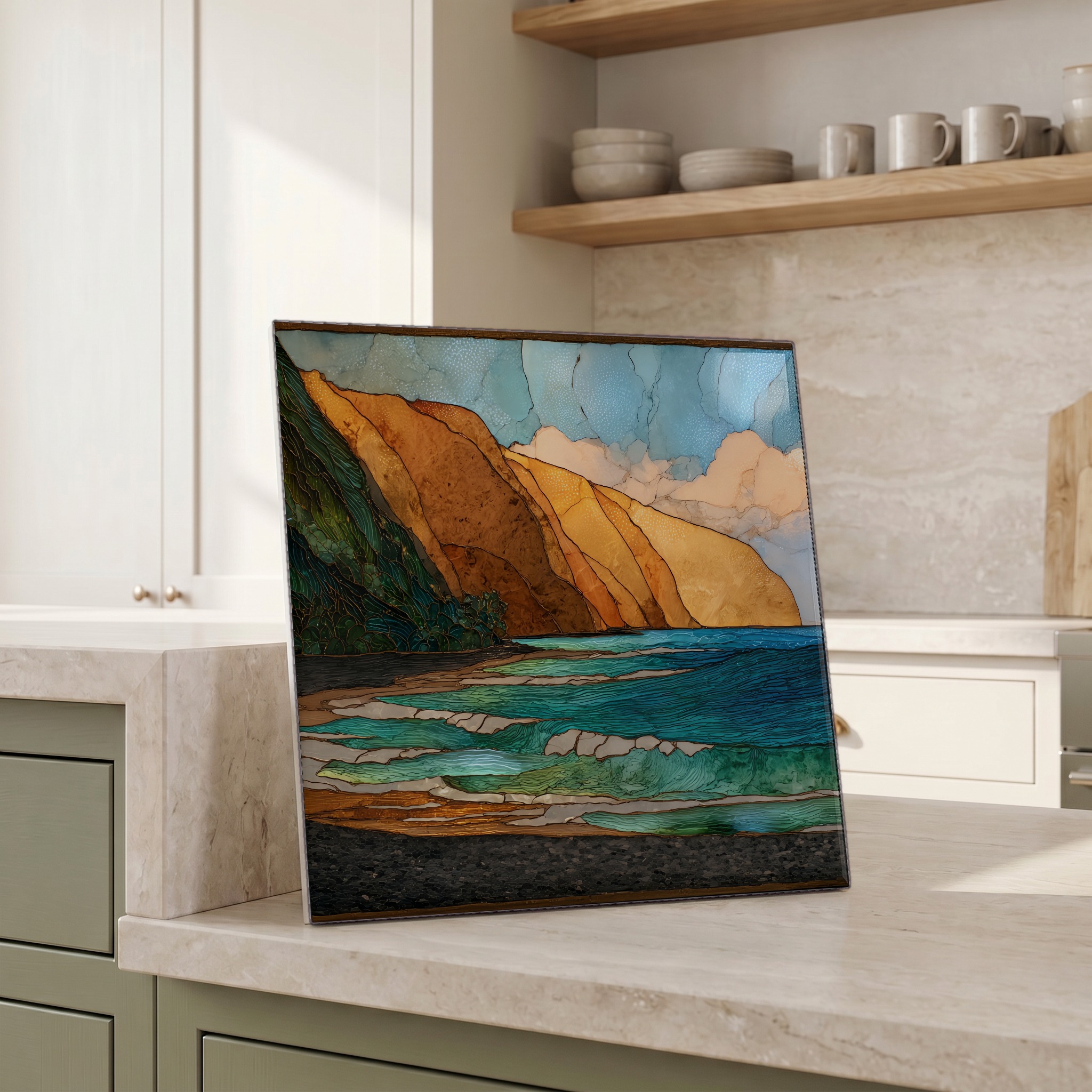
Beside the kettle, propped on the counter.
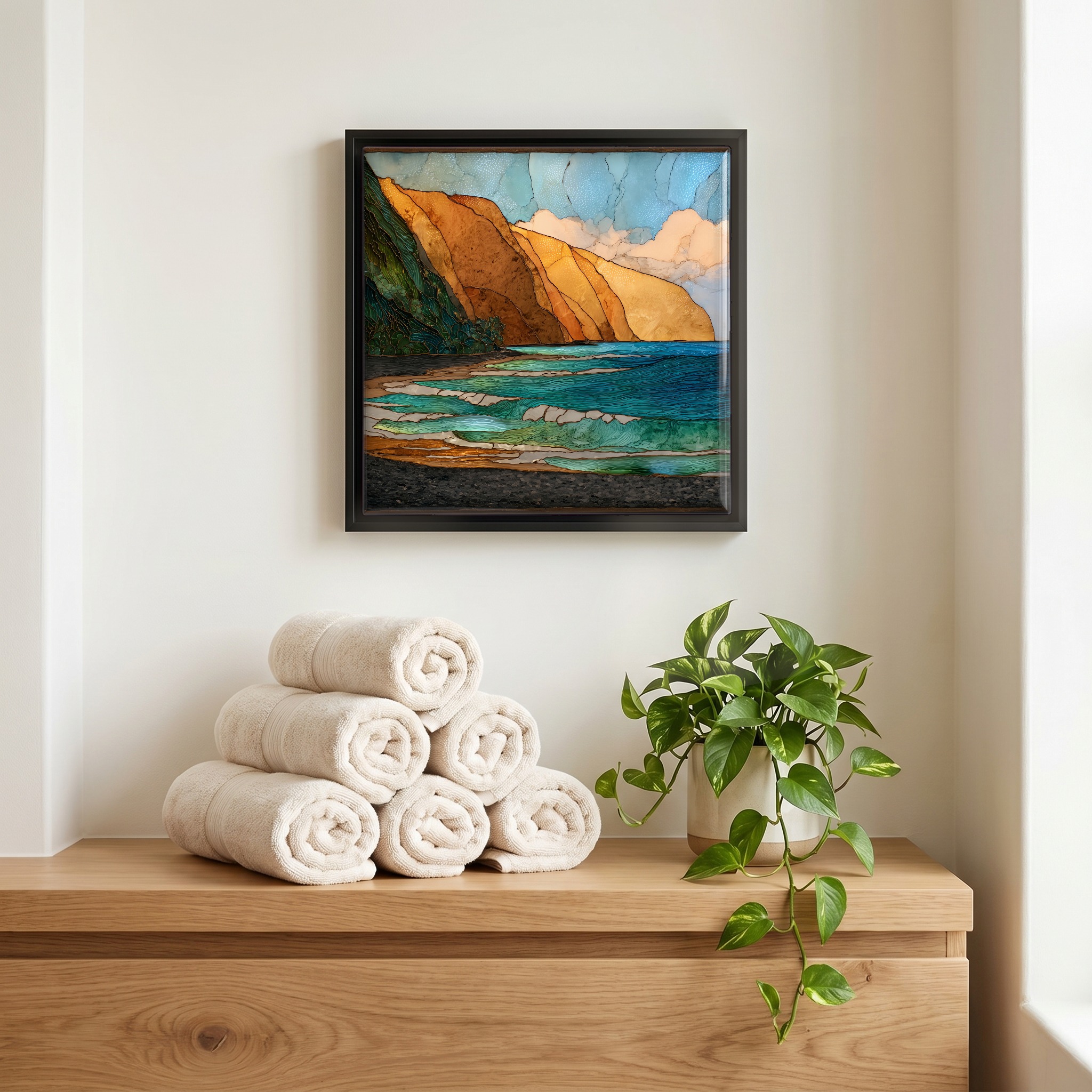
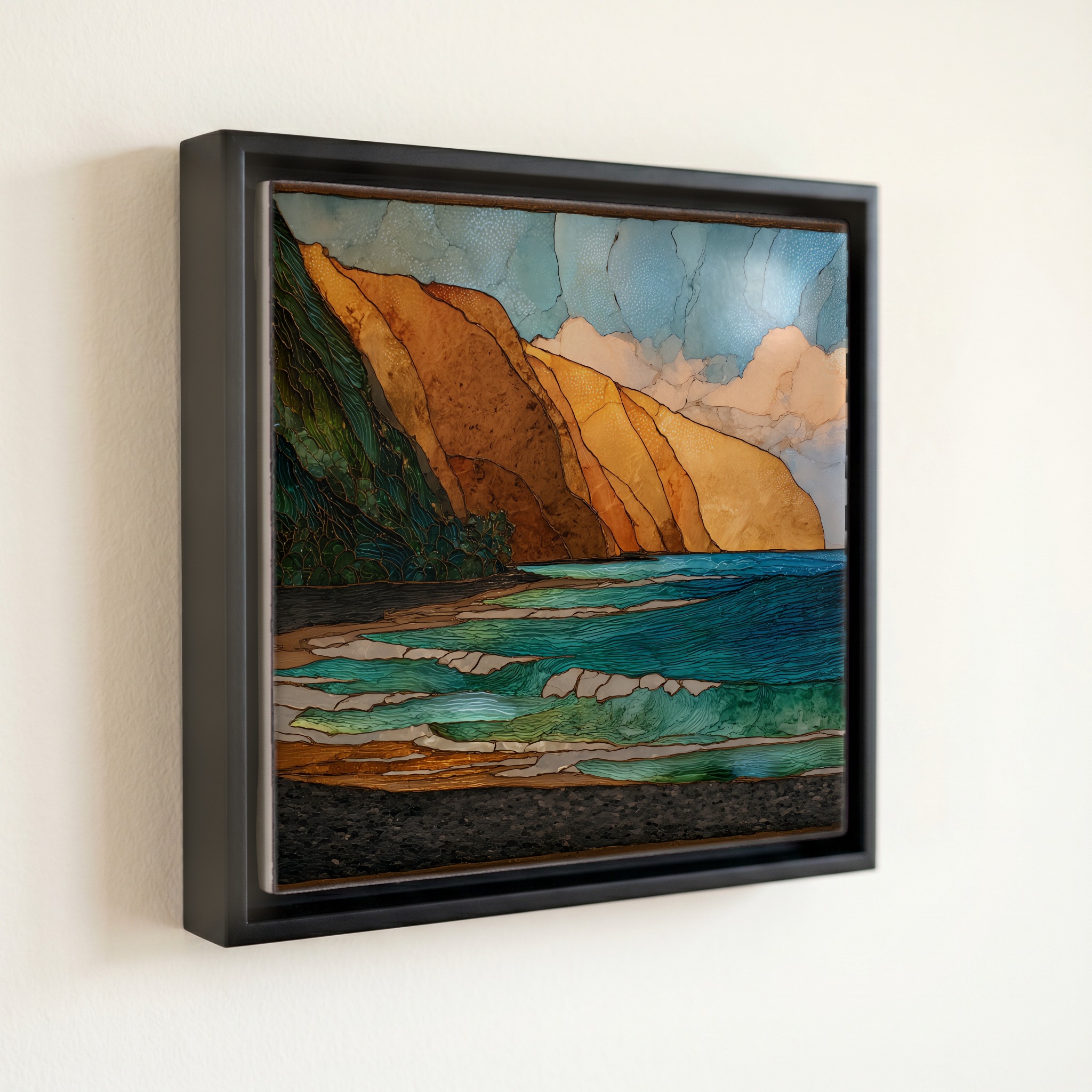
Above the linens, in a slim black surround.
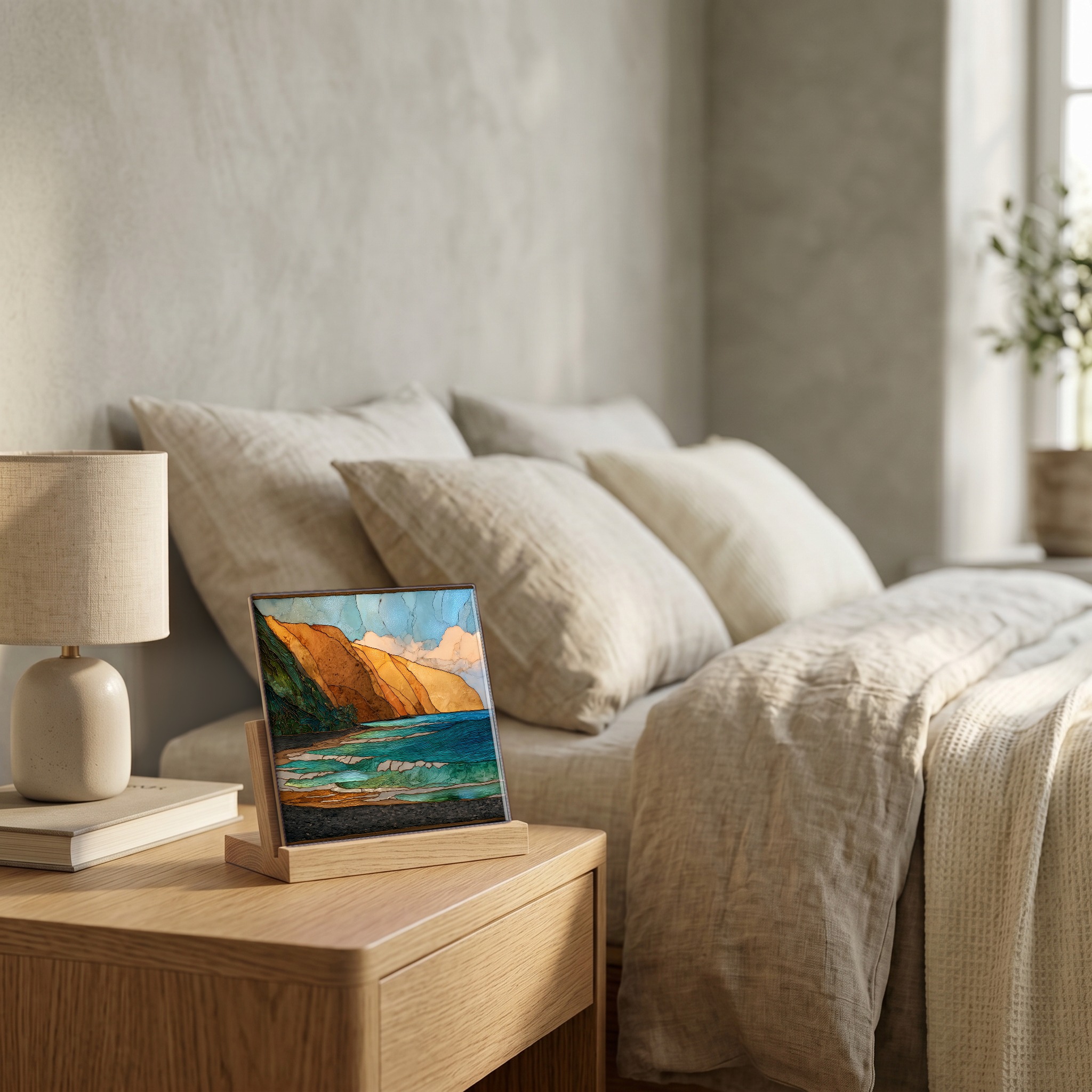
On the nightstand, on a light oak stand.
On a picture ledge, where the light comes in.
a note from the studio

The valley at the north end of the Kohala coast, where Highway 270 stops and the road ends. From the lookout the black-sand beach sits below, a long dark crescent at the foot of the cliffs. The sand is basalt the old Kohala volcano gave up over a long time. The trail down is short and steep; the surf is rough enough that swimming is not the point. Ironwood throws shade at the rim. Hawaiians farmed taro on the valley floor for centuries, until the last families moved out in the mid-1900s. The next valleys down the coast, Honokāne Nui and Honokāne Iki, are reachable on foot by people who know the way.
from the studio
shown in a slim black floating frame · 6 × 6 in
— bring it home

Pololu Black Sand Big Island Ceramic Art Tile, on ceramic.

Each tile is finished by hand in our Knoxville studio. Artwork is slowly infused into the ceramic surface under high heat and pressure, and rests beneath a thin glossy finish. The colour lives in the surface, not on top of it.

What kind of piece?
One tile — square or rectangle.
How big?
the popular one — counter, shelf, nightstand
6 × 6 in · 15 cm · 1.6 lb
Surface finish
A clear glossy finish — the artwork reads as if under resin. Ideal for show-pieces and framed wall art.
How it sits
A hidden cleat — sits ¼″ proud of the wall.
$58
Hand-finished and shipped from our studio at the foot of the Smokies. On your wall in about ten days.
size
6 × 6 in
15 cm
weighs
1.6 lb
solid in the hand
surface
ceramic, hand-finished
art rests beneath a thin glossy finish
from
Knoxville, TN
our family studio, at the foot of the Smokies
— start a Coaster Set

Pick any four 4-inch tiles — National Parks you've been to, a Smokies set, the four seasons of one place. $ for a set of , cork-backed, ready to live on the table.
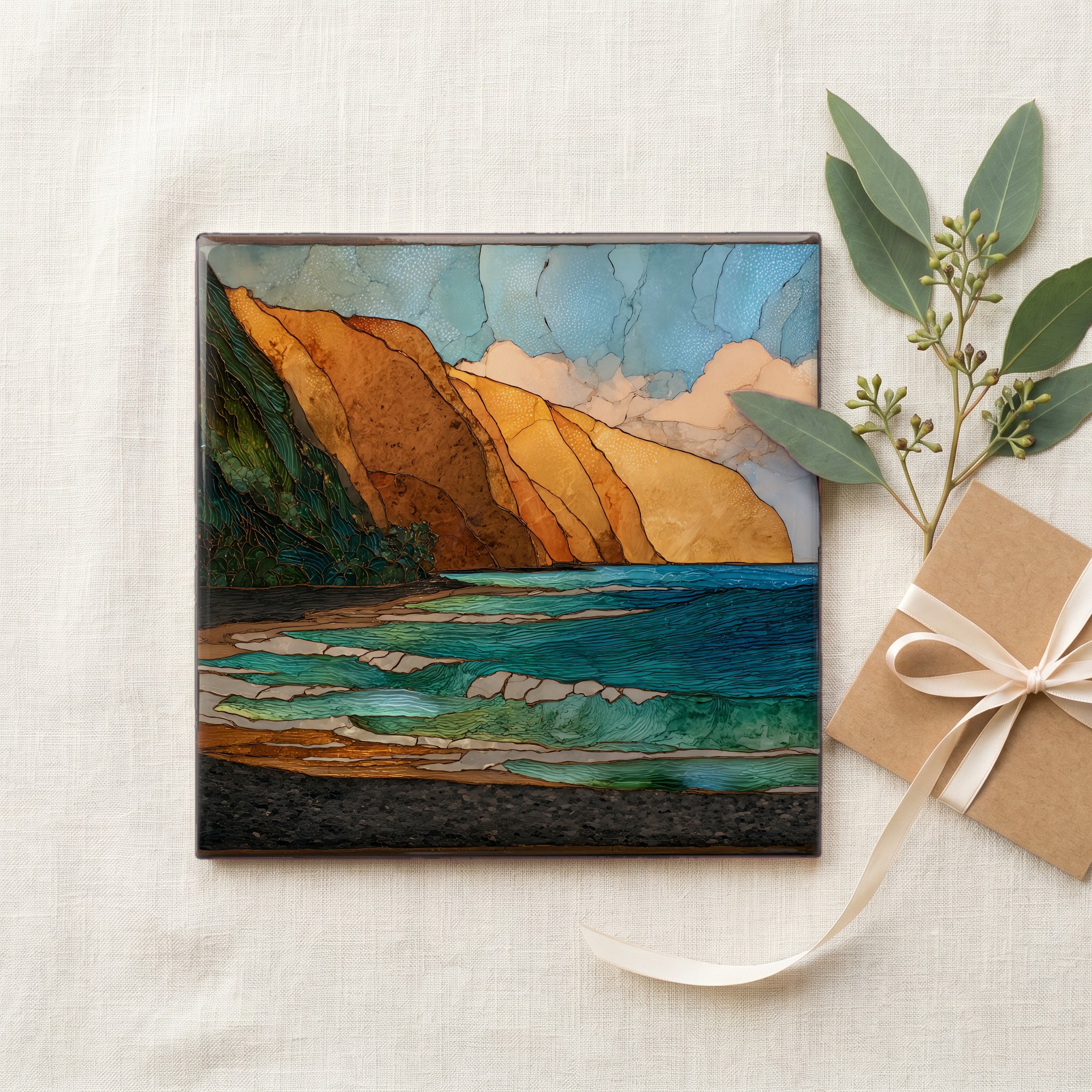
comes gift-ready
comes gift-ready

Each tile ships in a kraft box, tied with cream ribbon, with a handwritten note from the studio if you'd like to add one.
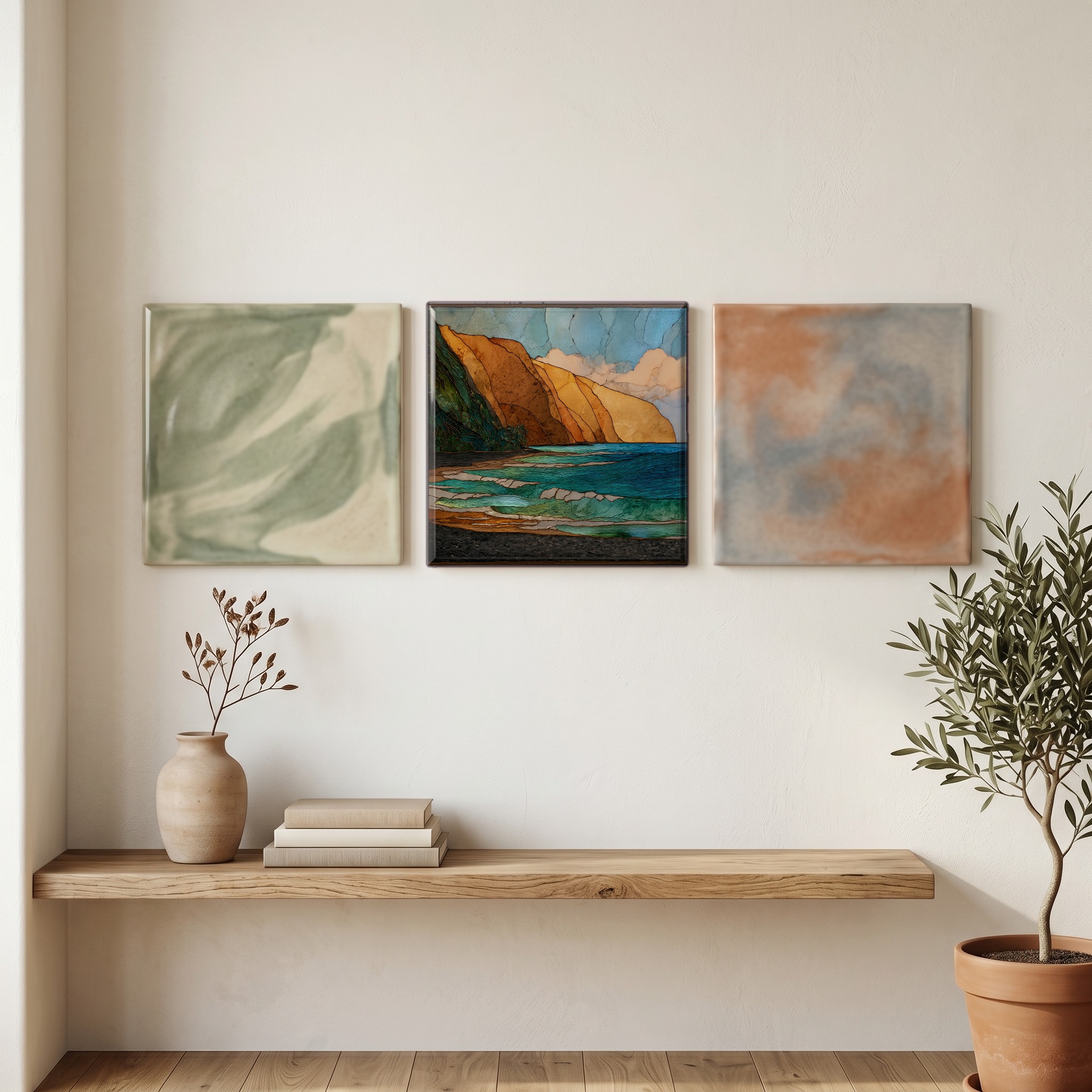
or build a grouping
or build a grouping

Three or five different vistas, hung together — a chapter of places you've been, or want to go.

about Pololu Black Sand Big Island Ceramic Art Tile

The place, in three passes.

A little of what's known, in case you fall down the rabbit hole — or want to go see it yourself.
the place

Pololū Valley sits at the northern tip of the Kohala coast on Hawaiʻi Island, the northernmost of a series of deep amphitheater-headed valleys carved into the windward side of the Kohala Volcano. Akoni Pule Highway (Hawaiʻi Route 270) ends at the Pololū Lookout above the valley, about an hour's drive north of Waimea and roughly nine miles past the small town of Kapaʻau. The Kohala Volcano is the oldest of the five volcanoes that built the Big Island, last erupting about 120,000 years ago. The trail from the lookout to the valley floor descends roughly 400 feet over a little more than half a mile of switchbacks, ending at a black-sand beach backed by ironwood trees.

the stone

The sand at Pololū is black because the Kohala coast is built almost entirely from basalt. Lava flows from the Kohala Volcano produced dense iron- and magnesium-rich rock that, when broken down by surf and stream over many thousands of years, weathers to a deep charcoal grain instead of the pale quartz sand of continental beaches. The sea cliffs above the valley reach roughly 400 feet and continue as a sheer pali along the windward coast toward Waipiʻo Valley, the largest of the Kohala valleys to the south. Massive prehistoric landslides off the Kohala flank, recorded in seafloor surveys by the U.S. Geological Survey, scalloped the windward valleys into their amphitheater shape.

the visit

The hike from the Pololū Lookout to the beach is short and steep: roughly six-tenths of a mile each way with about 400 feet of descent over loose volcanic dirt and switchbacks. The State of Hawaiʻi has limited parking at the lookout and asks visitors to coordinate access through a community stewardship program that took effect in 2022, after years of erosion damage from heavy foot traffic. The surf is strong and the rip currents serious; swimming is not advised and lifeguards are not present. Onward routes into Honokāne Nui and the older Awini Trail cross private and conservation land and are not always open. The lookout itself is open to the public without a fee.

where
United States · Hawaiʻi County, Hawaiʻi
elevation
122 m · 400 ft
position
20.2076° N · 155.7332° W
the neighborhood

What's nearby.

A handful of named places within an hour's walk or short drive. Some we've already painted; some we will.
2 km S
Honokāne Nui Valley
valley
3 km S
Honokāne Iki Valley
valley
14 km W
Kapaʻau
town
19 km W
Hāwī
town
27 km W
Moʻokini Heiau
Hawaiian temple
28 km S
Waipiʻo Valley
valley
N
Pololu Black Sand Big Island Ceramic Art Tile
Honokāne Nui Valley
Honokāne Iki Valley
Kapaʻau
Hāwī
Moʻokini Heiau
Waipiʻo Valley
common questions

What people ask.

A few questions we get about Pololu Black Sand Big Island Ceramic Art Tile — and about bringing the piece home.
about the place

Pololū Valley is on the northern tip of the Kohala coast of Hawaiʻi Island, the Big Island. The Pololū Lookout sits at the end of Akoni Pule Highway (Hawaiʻi Route 270), about an hour's drive north of Waimea and roughly nine miles past Kapaʻau.

The sand is black because the Kohala coast is built from basalt, the iron-rich volcanic rock left by lava flows from the Kohala Volcano. Surf and stream erosion grind the basalt into a charcoal-coloured grain instead of the pale quartz sand found on continental beaches.

The trail descends about six-tenths of a mile each way, dropping roughly 400 feet on switchbacks. It is short but steep and often muddy. Most hikers take 20 to 30 minutes down to the beach and longer coming back up.

Swimming is not advised. The surf is large and consistent and the rip currents are strong, with no lifeguards on duty. Visitors usually walk the sand, sit under the ironwood trees, and watch the waves rather than enter the water.

There is no fee to visit the lookout or hike down to the beach. Parking is limited and the state asks visitors to coordinate access through a community stewardship program that took effect in 2022 to protect the trail from erosion damage.

Pololū is the northernmost of a series of amphitheater-headed valleys on the windward Kohala coast. The next valleys down the coast are Honokāne Nui and Honokāne Iki, followed by a string of smaller ones leading toward Waipiʻo Valley, the largest and most famous of the group.

The Kohala Volcano is the oldest of the five volcanoes that built Hawaiʻi Island, at roughly one million years. It last erupted about 120,000 years ago and is considered extinct. The valleys were carved by erosion and prehistoric landslides off its windward flank.

about the piece in your home

It has been a meaningful gift for many of our customers with roots on Hawaiʻi Island. Pololū is one of the places North Kohala residents take visiting family. A Small or Medium with a handwritten note from the studio sits well on a desk or a hallway shelf.

The dark basalt palette and green-gold valley read well against Coastal-modern, Mountain-modern, and Pacific-island minimalist rooms. The piece also holds against deep navy or unpolished plaster walls without competing with them. The work is grounded rather than bright.

For a sofa, a single Large or a four-tile Mural reads well from across a room. For a console or a low credenza, a Medium or a four-tile Mural carries the view without crowding the surface. A nine-tile Mural suits a tall stairwell wall.

Yes. For bathrooms, kitchens, and any wet or steamy room, choose the Dura Satin or Matte finish. The colour is slowly infused into the ceramic surface under high heat and pressure and lives beneath a thin protective layer, so steam and splash do not affect it.

A soft microfibre cloth with plain water is enough for almost any mark. For stubborn smudges, a drop of mild dish soap in warm water works. Avoid abrasive sponges and bleach-based cleaners, which can dull the protective finish over time.

Yes. Every WenderVista piece is curated and finished by Reid Wender at Wender Studios in Knoxville, Tennessee. The Pololū Valley work is part of our Hawaiʻi atlas and is not licensed from any third party.

The dark-sand and deep-green palette fits the current coastal-modern direction, away from beige-and-driftwood neutrals toward grounded, place-specific volcanic and Pacific tones. It carries well with linen, oiled wood, and matte black hardware, all of which read in 2025-2026 coastal interiors.

if this one stayed with you

A few you might also love.

Hand-picked by the eye that found Sorapis. Same air, same kind of quiet.