Wender·Vista
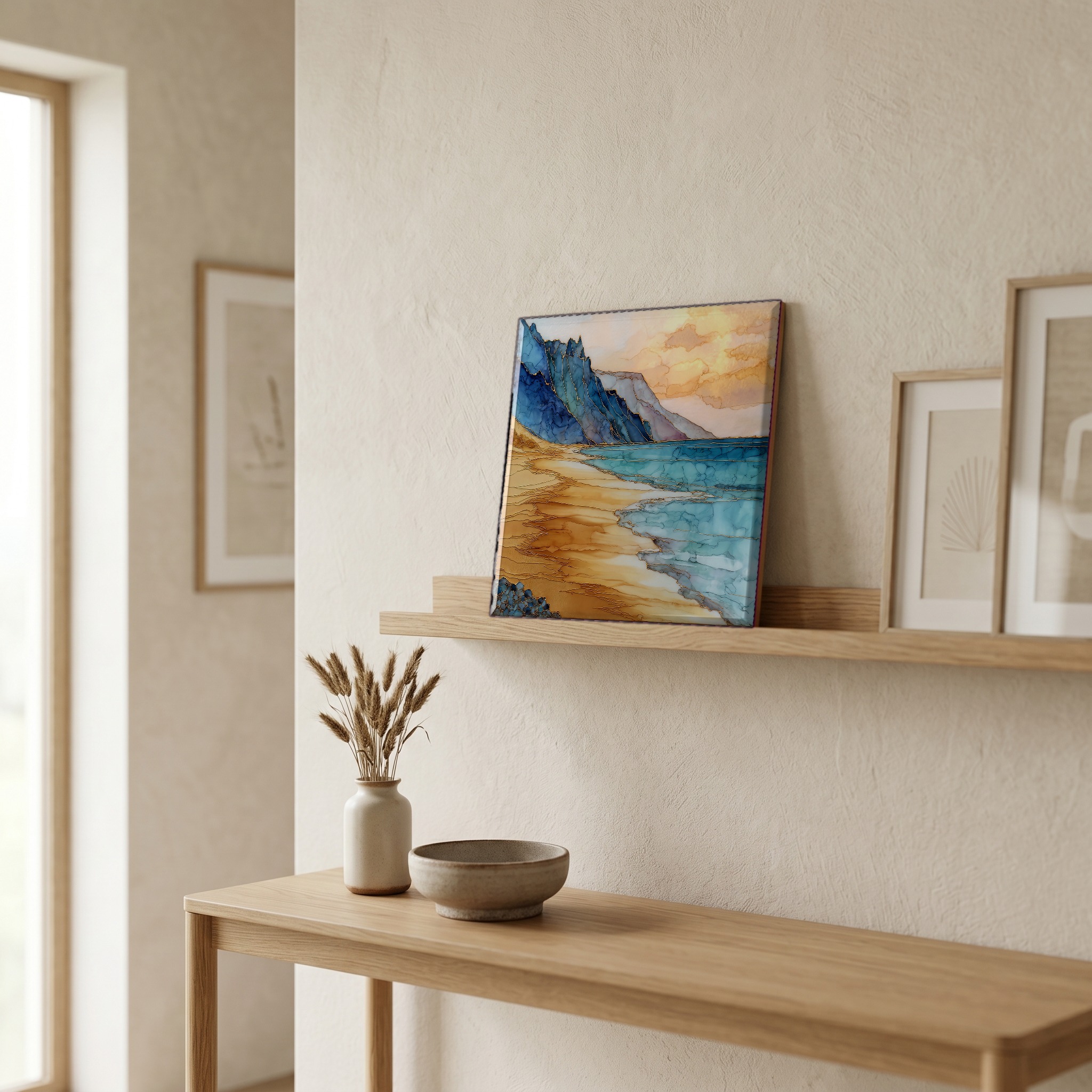
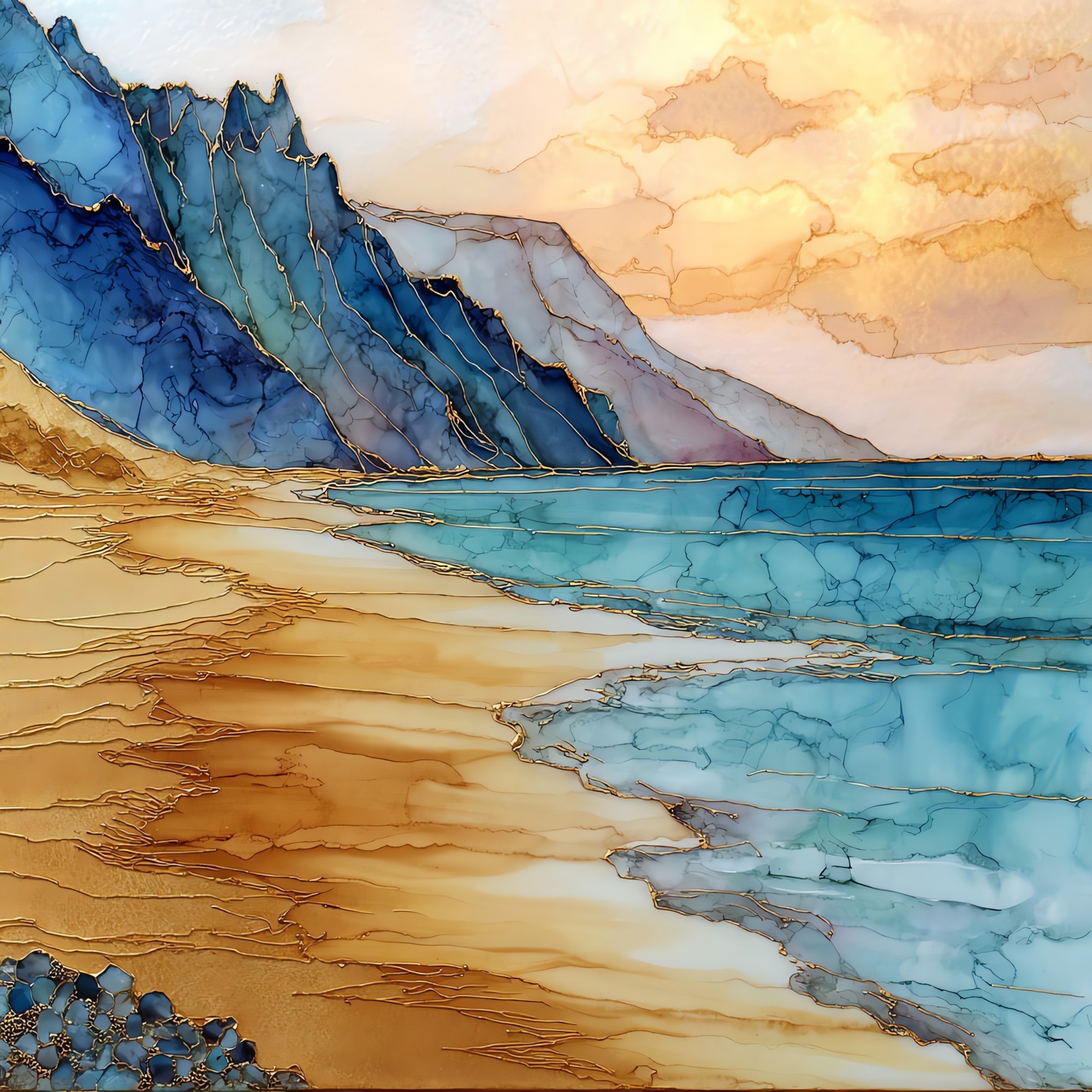
Polihale Beach Kauai Ceramic Art Tile
shown on ceramic, 12-inch tileHawaii · United States
at the end of the road on Kauaʻi's west shore

Polihale Beach Kauai Ceramic Art Tile

— where the road ends and the cliffs begin.

Where it lives

Not only on a wall.

A small tile on the nightstand catching the morning. A larger one above the fire. Yours, wherever you spend the slow hours.
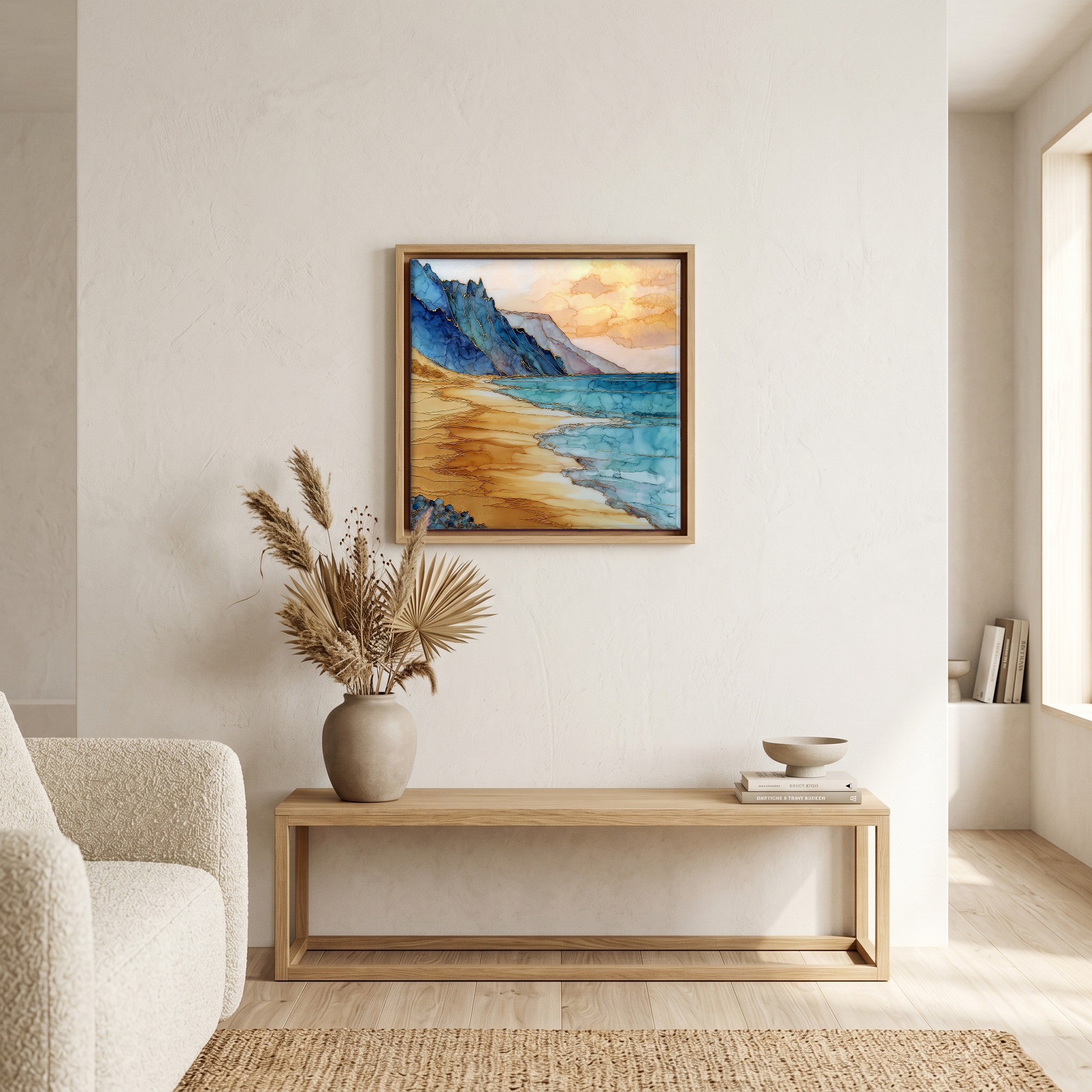
Above the bench, in a warm oak surround.
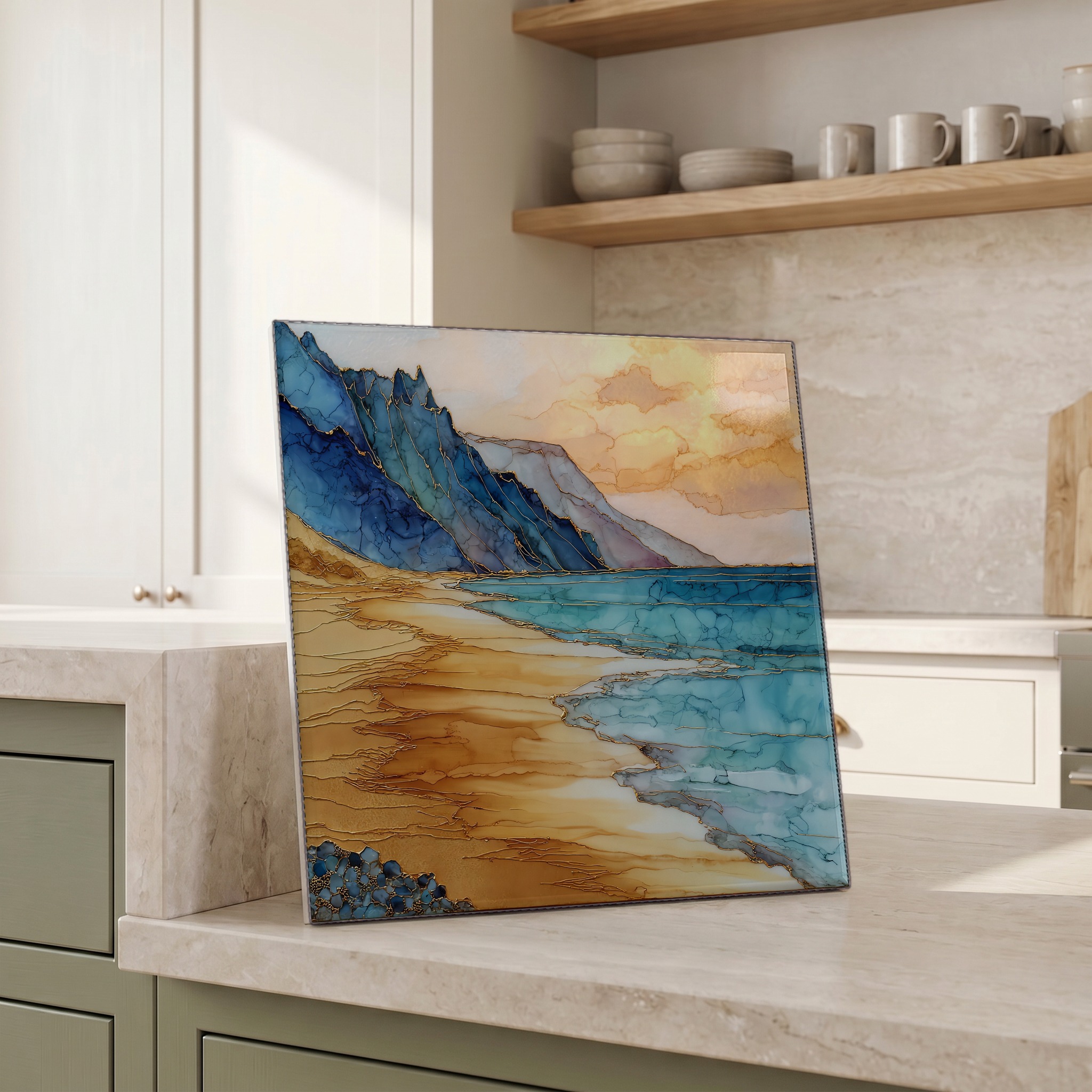
Beside the kettle, propped on the counter.
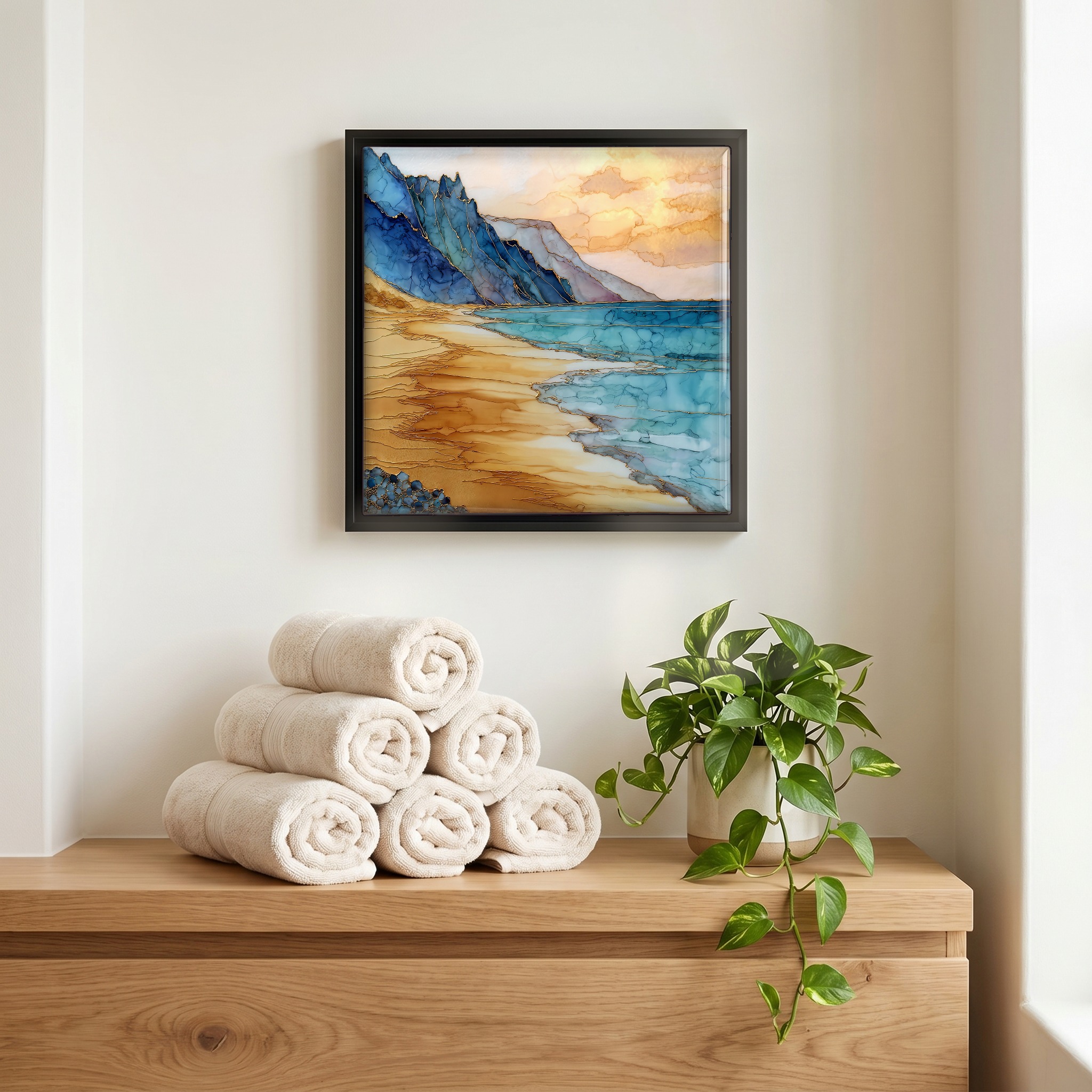
Above the linens, in a slim black surround.
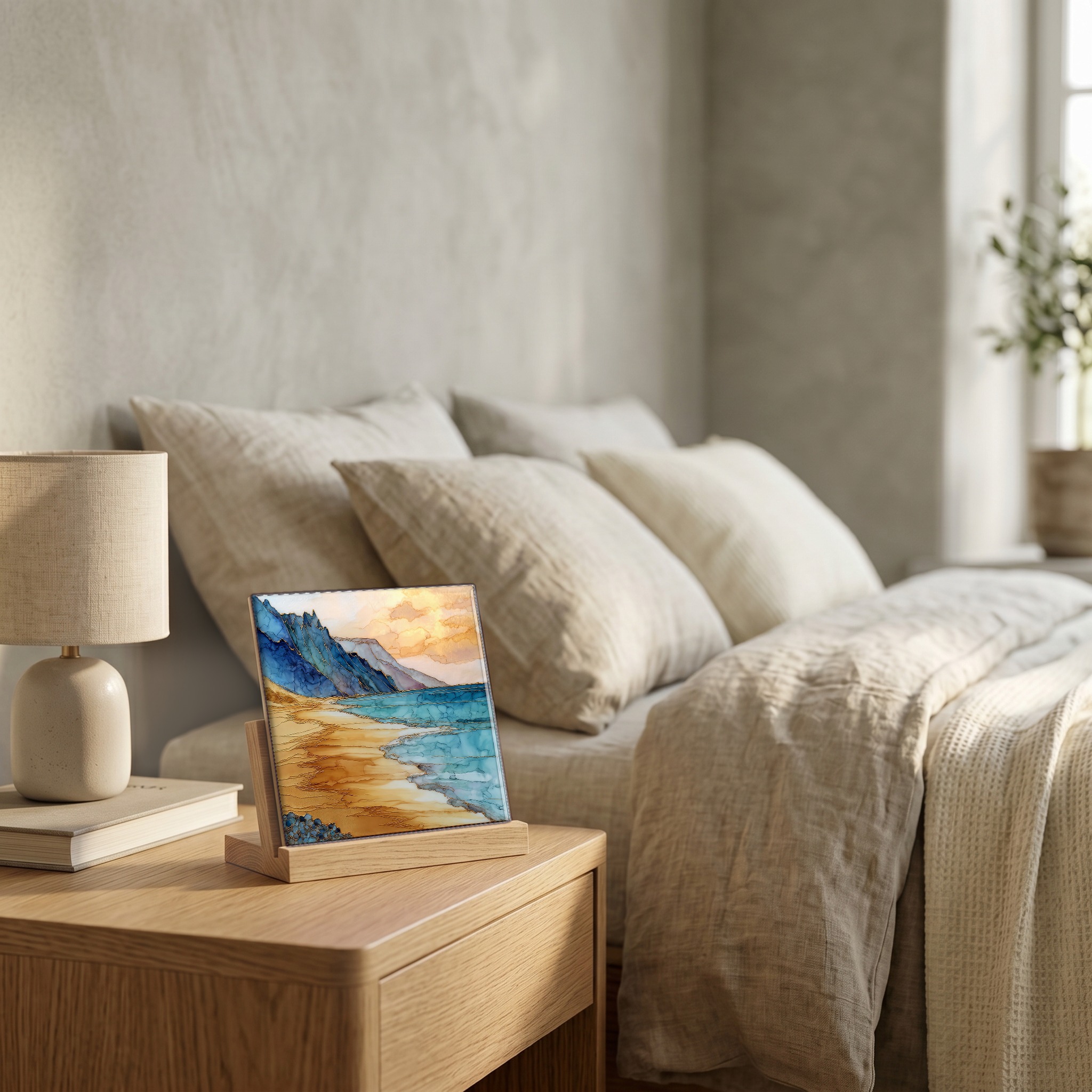
On the nightstand, on a light oak stand.
On a picture ledge, where the light comes in.
a note from the studio

The last beach on the road, before the Nā Pali cliffs take over the coast. Seventeen miles of sand running south to the Mana Plain, four thousand feet of cliff rising at the north end. Niʻihau sits offshore in the haze. The dunes are tall here, some over a hundred feet, and the rough access road thins out the crowds. The sunsets do their work alone. The name belongs to a heiau at the north end of the beach, one of the leina where souls were said to leap from the island into the next world.
from the studio
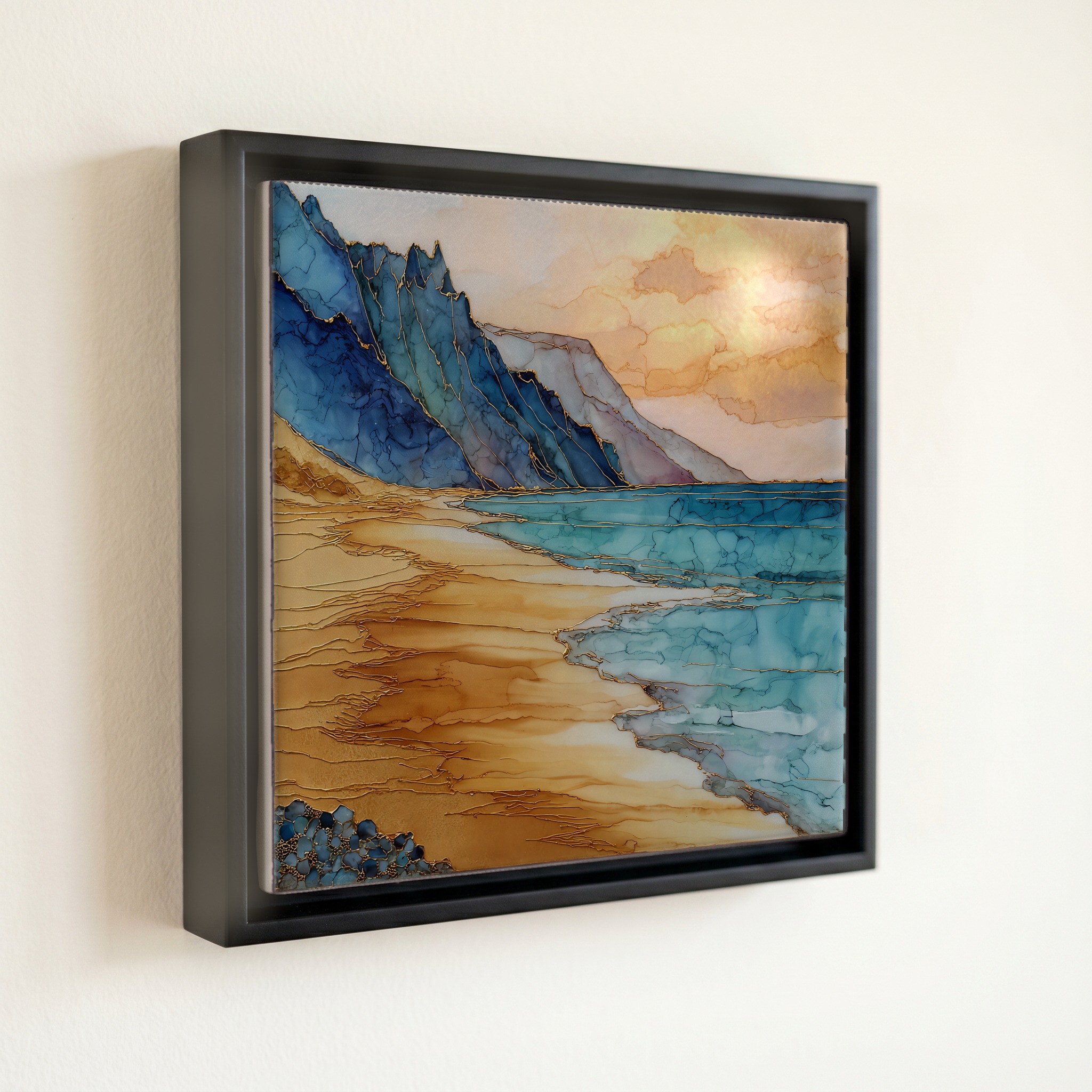
shown in a slim black floating frame · 6 × 6 in
— bring it home

Polihale Beach Kauai Ceramic Art Tile, on ceramic.

Each tile is finished by hand in our Knoxville studio. Artwork is slowly infused into the ceramic surface under high heat and pressure, and rests beneath a thin glossy finish. The colour lives in the surface, not on top of it.

What kind of piece?
One tile — square or rectangle.
How big?
the popular one — counter, shelf, nightstand
6 × 6 in · 15 cm · 1.6 lb
Surface finish
A clear glossy finish — the artwork reads as if under resin. Ideal for show-pieces and framed wall art.
How it sits
A hidden cleat — sits ¼″ proud of the wall.
$58
Hand-finished and shipped from our studio at the foot of the Smokies. On your wall in about ten days.
size
6 × 6 in
15 cm
weighs
1.6 lb
solid in the hand
surface
ceramic, hand-finished
art rests beneath a thin glossy finish
from
Knoxville, TN
our family studio, at the foot of the Smokies
— start a Coaster Set

Pick any four 4-inch tiles — National Parks you've been to, a Smokies set, the four seasons of one place. $ for a set of , cork-backed, ready to live on the table.
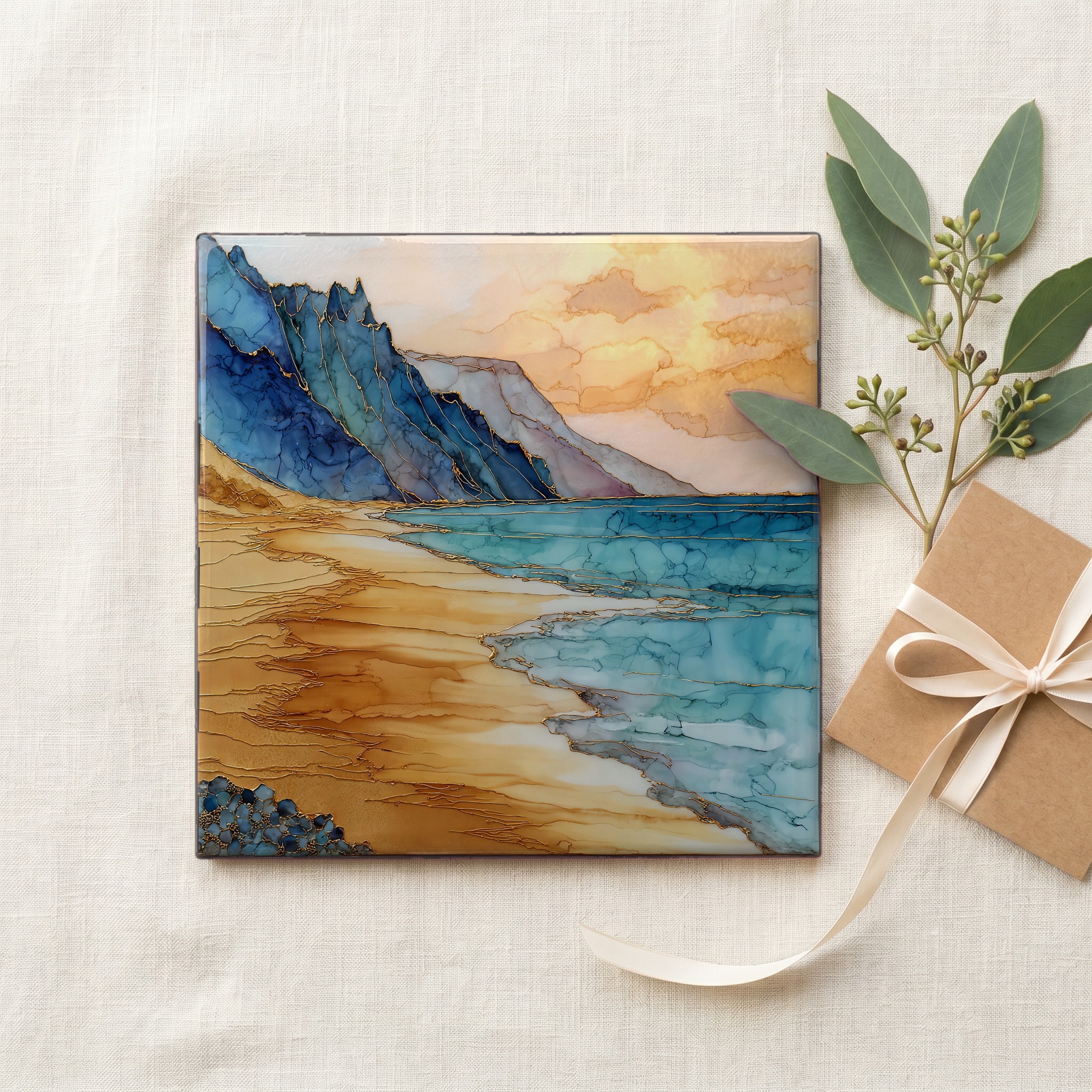
comes gift-ready
comes gift-ready

Each tile ships in a kraft box, tied with cream ribbon, with a handwritten note from the studio if you'd like to add one.
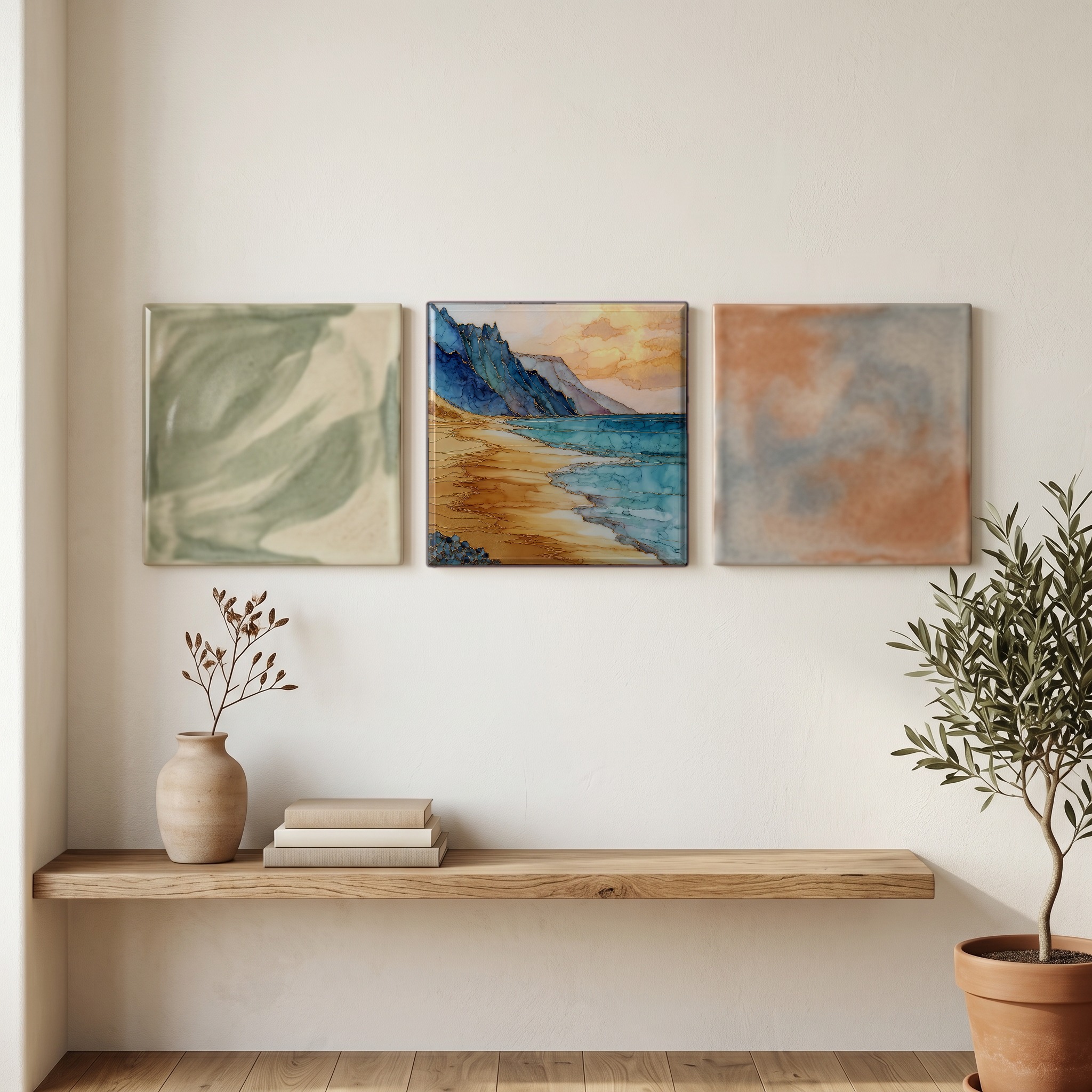
or build a grouping
or build a grouping

Three or five different vistas, hung together — a chapter of places you've been, or want to go.

about Polihale Beach Kauai Ceramic Art Tile

The place, in three passes.

A little of what's known, in case you fall down the rabbit hole — or want to go see it yourself.
the place

Polihale State Park sits at the western terminus of Hawaiʻi Highway 50 on the island of Kauaʻi, the oldest of the main Hawaiian Islands. The beach runs roughly seventeen miles south through the Mana Plain toward Kekaha, forming one of the longest continuous stretches of sand in Hawaiʻi. At its northern end, the cliffs of the Nā Pali Coast rise as much as four thousand feet from sea level, beginning a roadless wilderness that extends north to Kēʻē Beach. The park itself covers roughly 138 acres of dunes and shoreline, and the closest land offshore is Niʻihau, about seventeen miles to the west across the Kaulakahi Channel.

the visit

Reaching the park means leaving the paved highway past Kekaha and following an unsealed cane-haul road for roughly five miles. The road is rutted and often soft, and rental-car contracts on Kauaʻi typically prohibit it, so most visitors arrive in four-wheel-drive vehicles. The Hawaiʻi Department of Land and Natural Resources operates the campground, which requires a permit obtained in advance. There are no lifeguards on the beach. The surf builds quickly in winter and rip currents can be strong even on calmer days, so swimming is generally limited to the gentlest summer afternoons. A small day-use area sits near the north end below the heiau.

the light

The beach faces due west, which makes it one of the few places on Kauaʻi to watch the sun set directly over open water. In the last hour before sundown the long Nā Pali wall to the north turns the colour of warm copper, the deep red-gold of late island light. Niʻihau, the privately held island roughly seventeen miles offshore, becomes a black silhouette against the lit sea. After the sun is gone the dunes hold the warmth for a few more minutes while the sky goes through its long blue close. There is no light pollution to compete with the Milky Way once the dark settles in.

where
United States · Kauaʻi County, Hawaiʻi
within
Polihale State Park
elevation
0 m · 0 ft
position
22.0797° N · 159.7614° W
the neighborhood

What's nearby.

A handful of named places within an hour's walk or short drive. Some we've already painted; some we will.
at the lake
Nā Pali Coast
sea cliffs
5 km S
Barking Sands
beach
13 km S
Kekaha
town
20 km E
Waimea Canyon
canyon
27 km W
Niʻihau
island
N
Polihale Beach Kauai Ceramic Art Tile
Nā Pali Coast
Barking Sands
Kekaha
Waimea Canyon
Niʻihau
common questions

What people ask.

A few questions we get about Polihale Beach Kauai Ceramic Art Tile — and about bringing the piece home.
about the place

Polihale Beach sits at the western end of Kauaʻi, at the terminus of Hawaiʻi Highway 50 past the town of Kekaha. The beach faces due west across the Kaulakahi Channel toward Niʻihau, and its northern end marks the start of the Nā Pali Coast cliffs.

Polihale combines the Hawaiian words poli (bosom) and hale (house). The name belongs to a heiau, or sacred temple site, near the northern cliffs, which Hawaiian tradition identifies as one of the leina-a-ka-uhane, the leaping places where the souls of the dead departed for the next world.

The access road leaves the paved Highway 50 past Kekaha and runs roughly five miles over rutted, often soft sand and dirt. Four-wheel drive is generally advised, and rental-car agreements on Kauaʻi typically forbid taking standard vehicles down the road.

There are no lifeguards at Polihale State Park, and the surf can be powerful, especially from October through April. Rip currents are present even when the surface looks calm. Most visitors who swim do so on the gentlest summer days, close to shore.

Yes. Niʻihau, the small privately owned Hawaiian island, sits roughly seventeen miles west of Polihale across the Kaulakahi Channel. On a clear afternoon its low profile is visible from the beach, and at sundown it becomes a dark silhouette against the lit western sky.

Camping is permitted in the state park with a permit issued in advance by the Hawaiʻi Department of Land and Natural Resources. The campground is primitive, with vault toilets and outdoor showers, and the rough access road makes it one of the quieter campgrounds on Kauaʻi.

Late afternoon into sundown is the signature window, since the beach faces directly west. Summer (May through September) brings the calmest surf and the warmest, driest weather; winter brings bigger waves and occasional road closures after heavy rain on the upper Mana Plain.

about the piece in your home

It carries well for someone who has spent time on the west side of the island, or for anyone whose Kauaʻi memories include a Polihale sunset. The Medium or Large tile holds enough of the beach and the cliffs to read across a room; a Coaster Set works for a kitchen or a desk.

The warm red-gold of the cliffs and the deep ocean blue land naturally in coastal-modern, Hawaiian plantation, and jewel-tone maximalist rooms. The stained-glass treatment also reads well against neutral, mid-century interiors where it carries the colour story alone.

For a standard sofa or console, a single Large tile works as a focal piece, a four-tile Mural carries a wider wall comfortably, and a nine-tile Mural becomes the room's anchor. The Triptych suits a long horizontal wall above a low credenza.

Yes, in either of our Dura Satin or Matte finishes. The colour is slowly infused into the ceramic surface under high heat and pressure, so it tolerates humidity, splash, and direct cleaning. Glossy is meant for framed wall display rather than wet zones.

A soft microfibre cloth and warm water handle everyday dust and fingerprints. For Dura Satin or Matte tiles in a kitchen or bathroom, a mild non-abrasive household cleaner is safe. Avoid scouring pads and acidic cleaners, which can dull the surface over time.

Yes. Every WenderVista piece is original to our studio in Knoxville, Tennessee. There is no third-party licensing involved, and the painting of Polihale lives only in this catalog. Reid Wender is the curator and the eye behind the work.

Coastal-modern has moved away from beige-on-white toward saturated ocean and sand palettes drawn from specific places. Polihale's deep blue Pacific, the gold of the dunes, and the red of the Nā Pali wall sit naturally inside that direction, especially in homes that lean Hawaiian or Pacific-Rim.

if this one stayed with you

A few you might also love.

Hand-picked by the eye that found Sorapis. Same air, same kind of quiet.