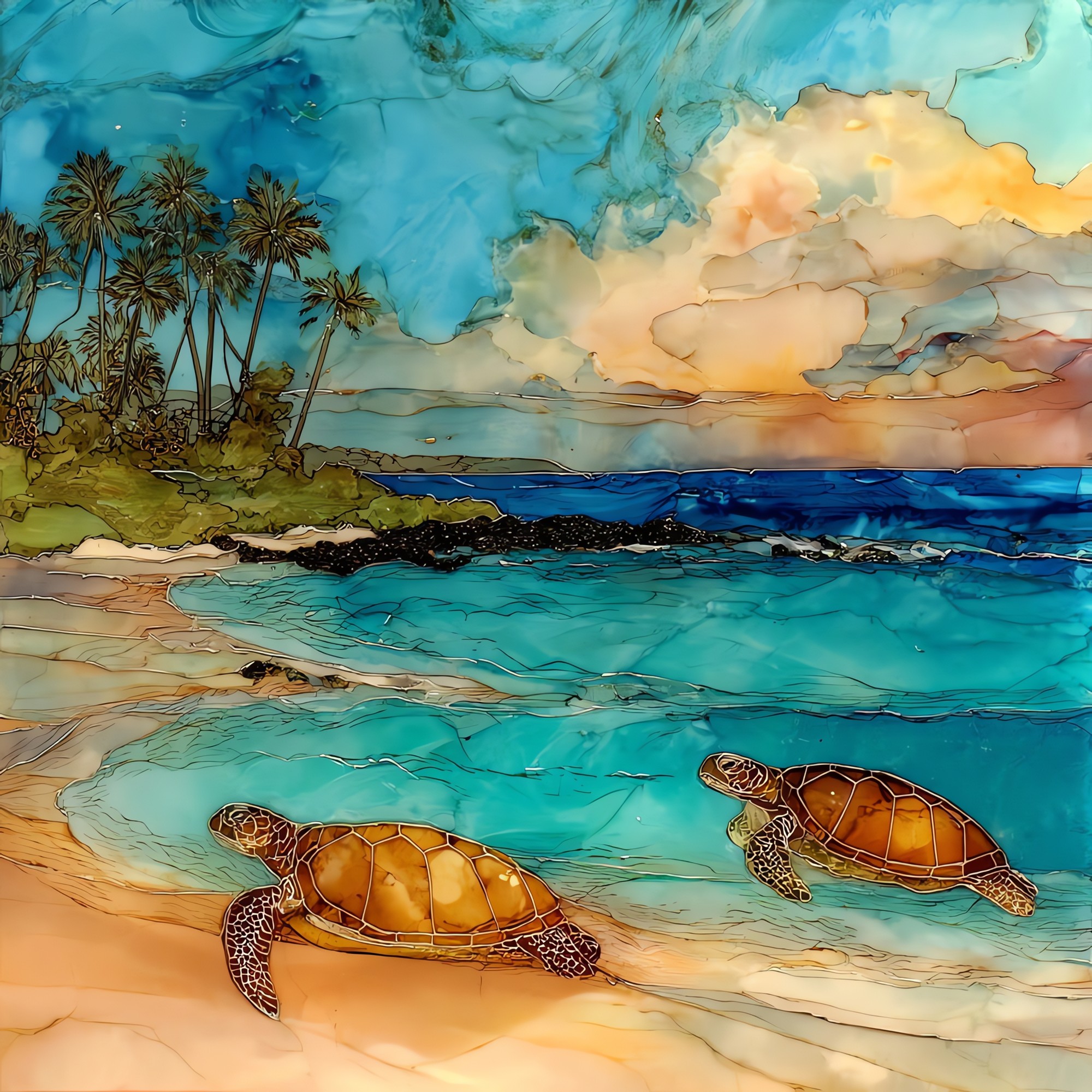
Poipu Beach Honu Kauai Ceramic Art Tile
— the old swimmer the warm sand keeps.
Not only on a wall.
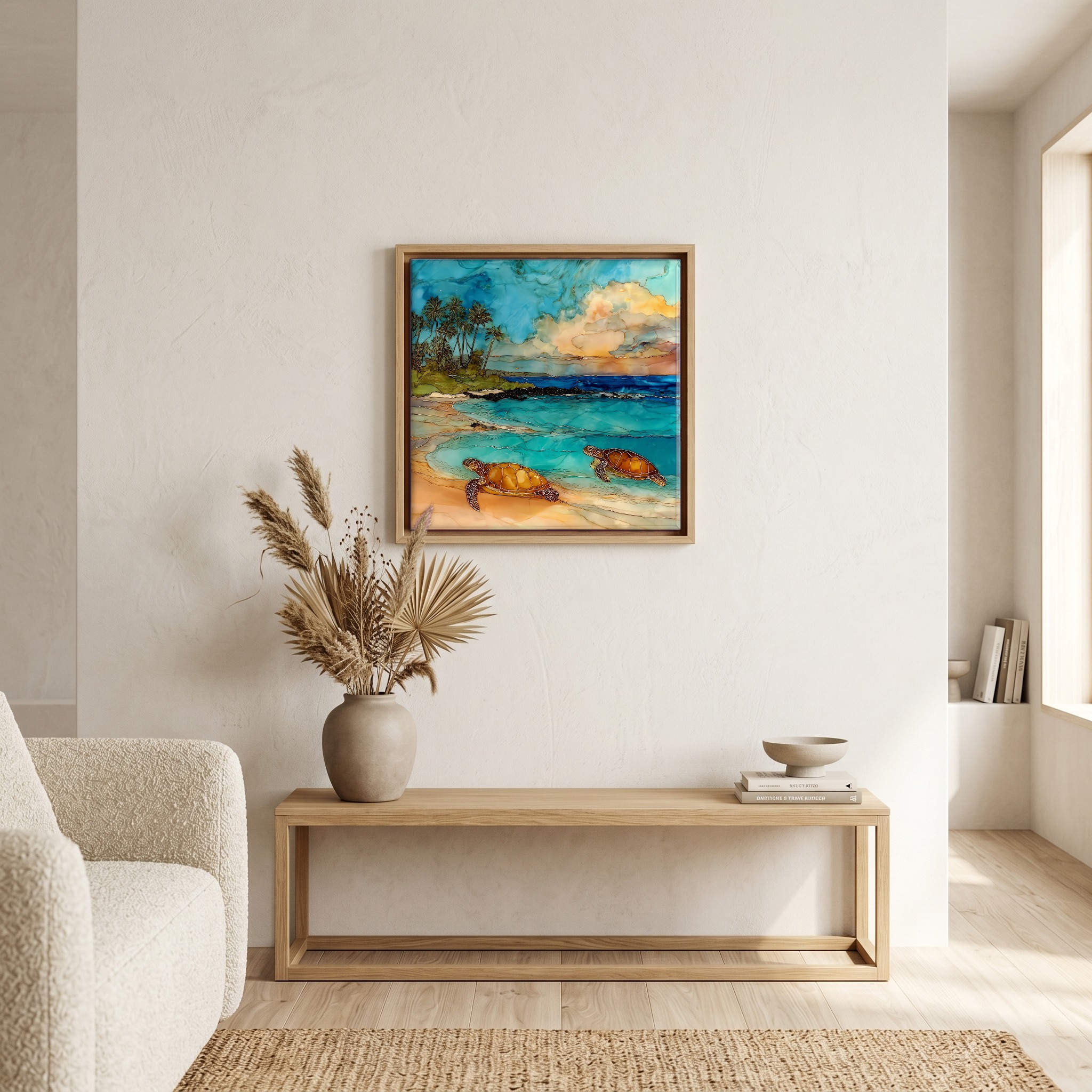
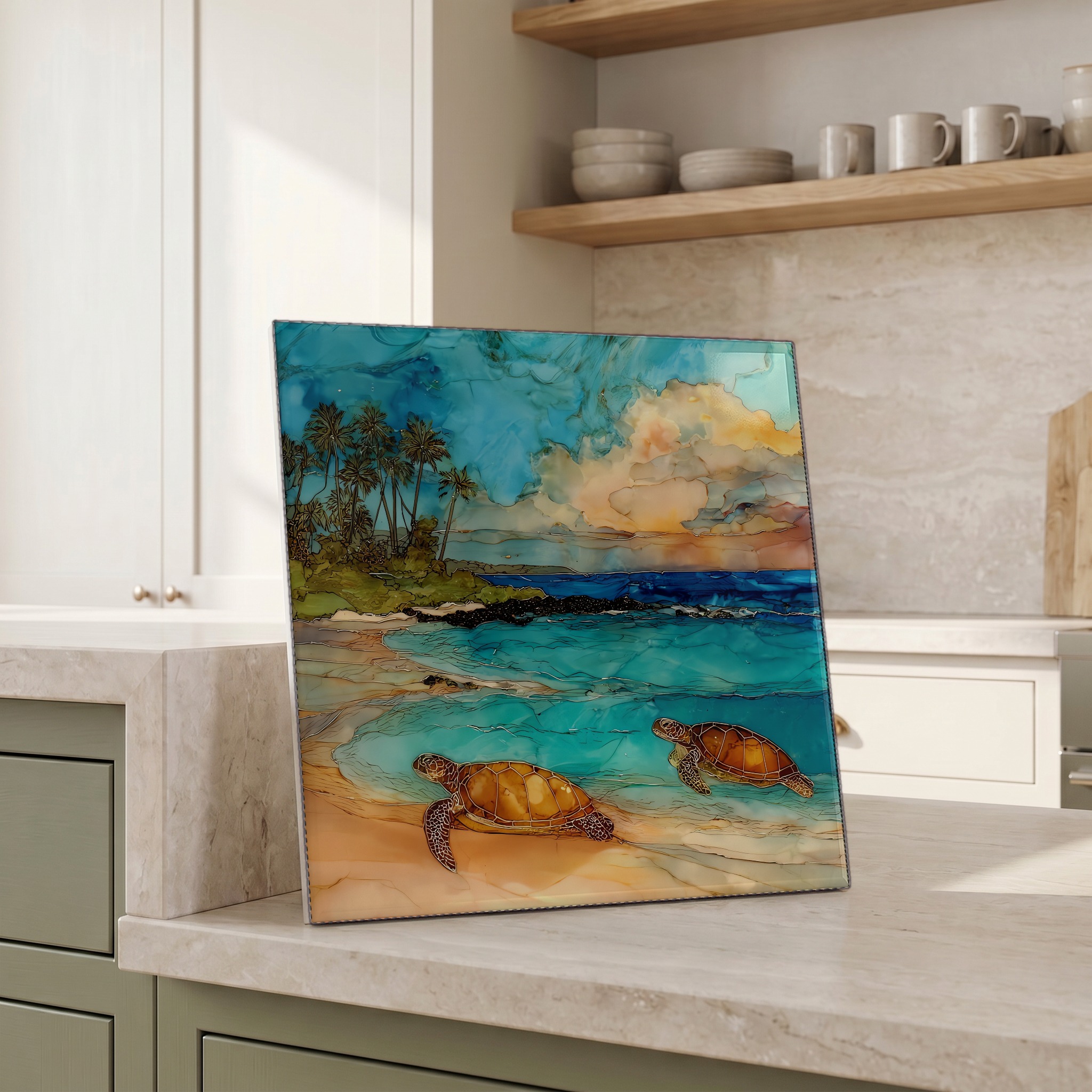
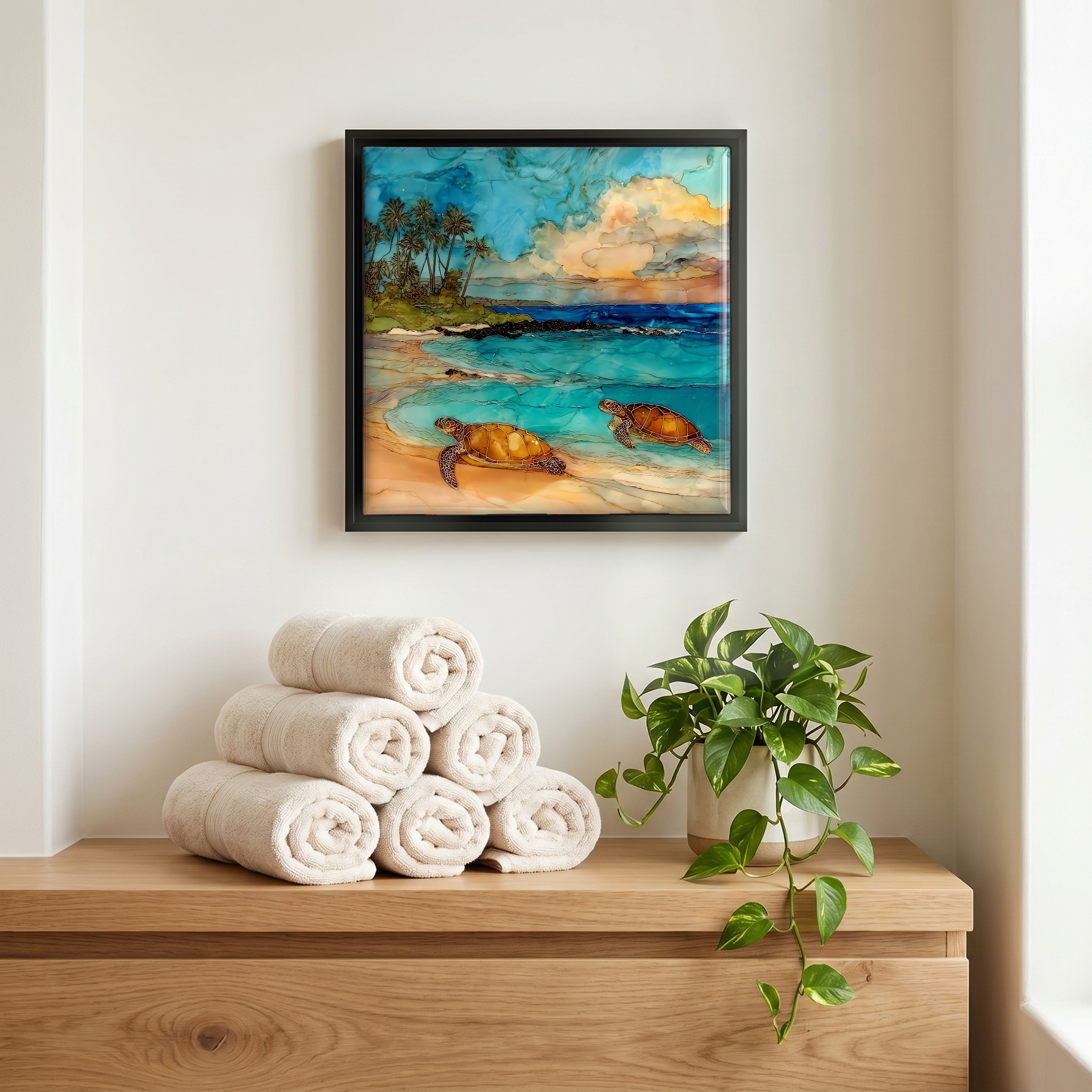
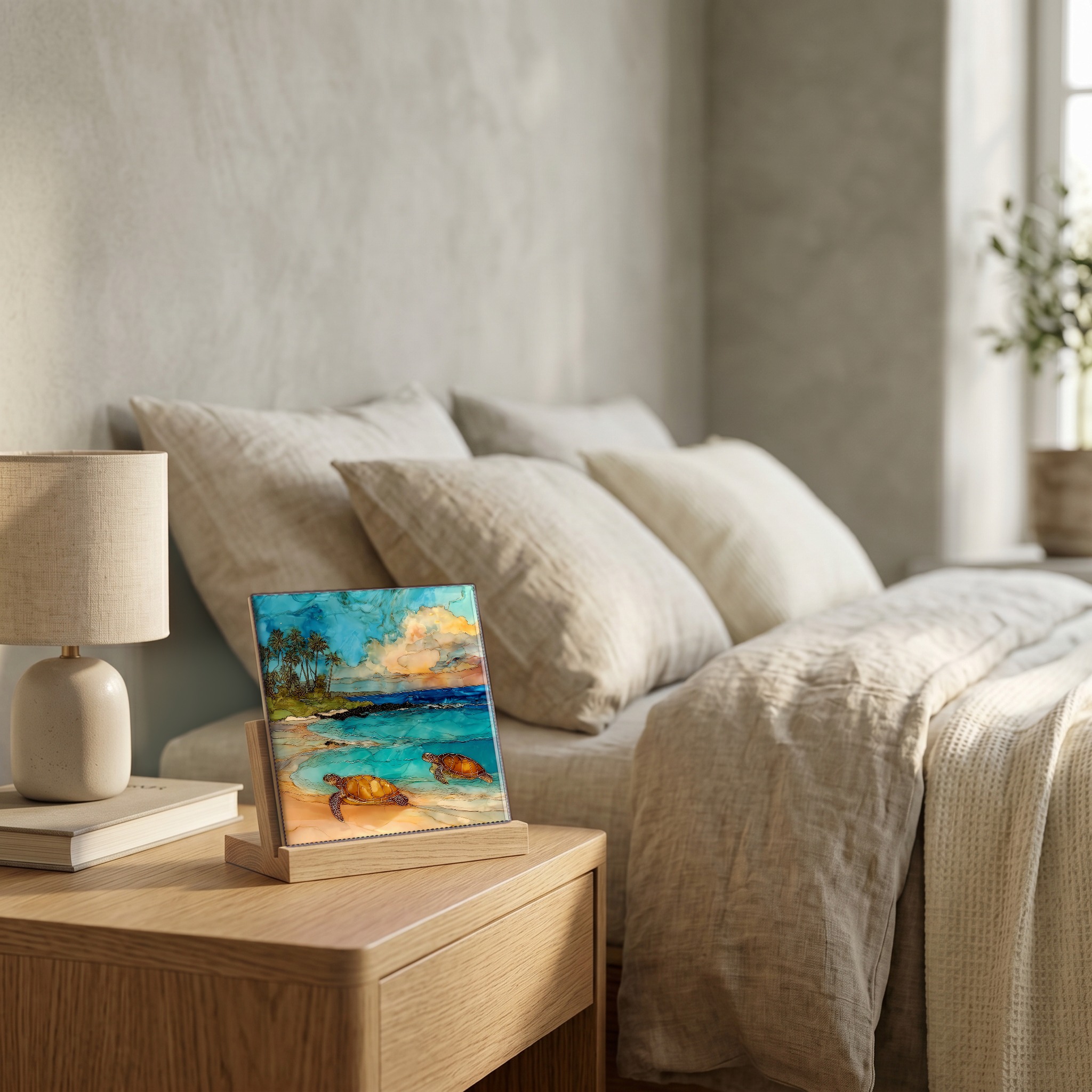
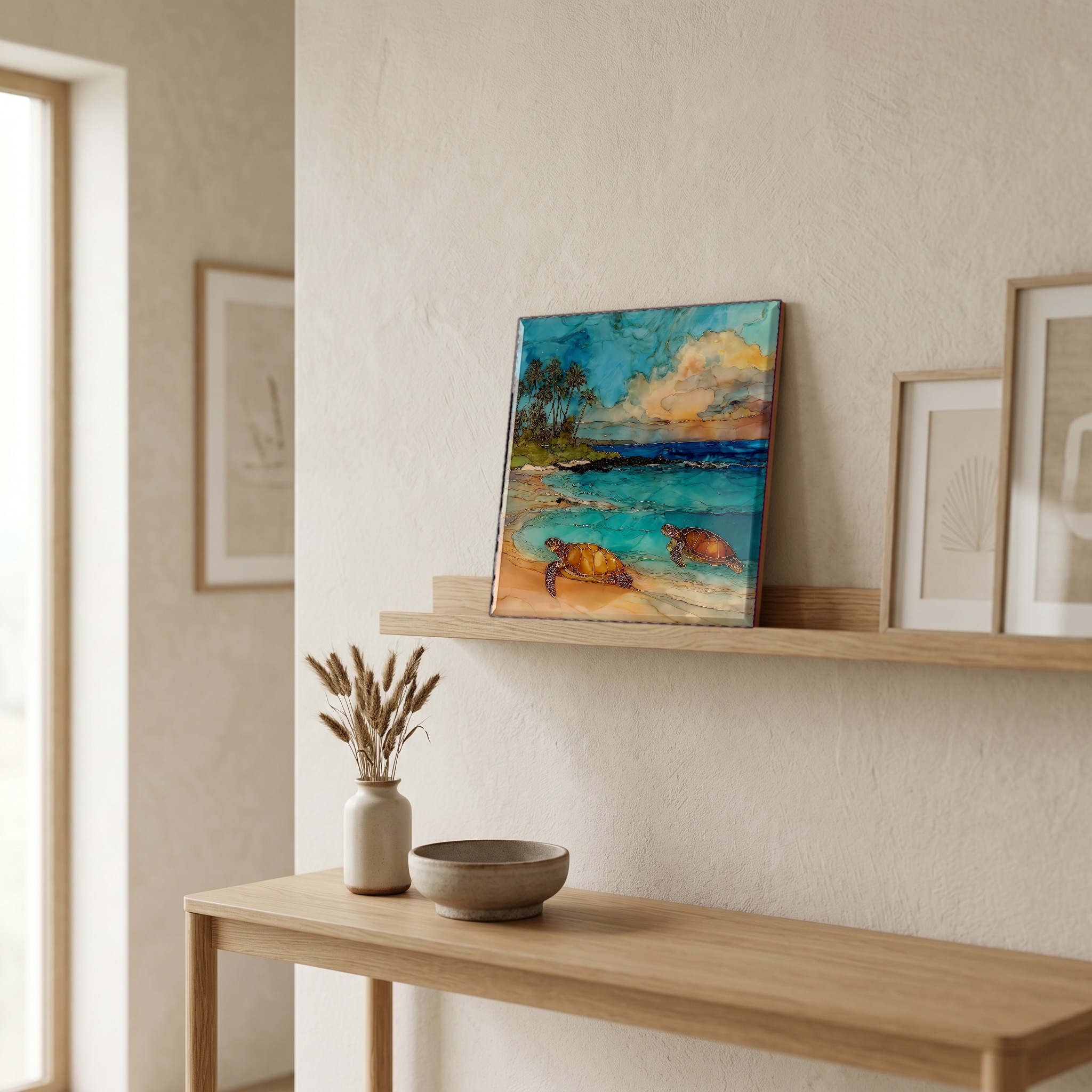
“The south shore of Kauai, on a beach the surf has cut in two. A thin sandbar reaches out to a small rock point, and the two crescents either side hold the calm water that turtles come to rest in. The honu hauls itself up after a long swim, sleeps in the warm sand, and the people on the beach learn to stand back. Federal law says ten feet. Hawaiian custom says further, and quieter. Most days there's one. Some days there's three.
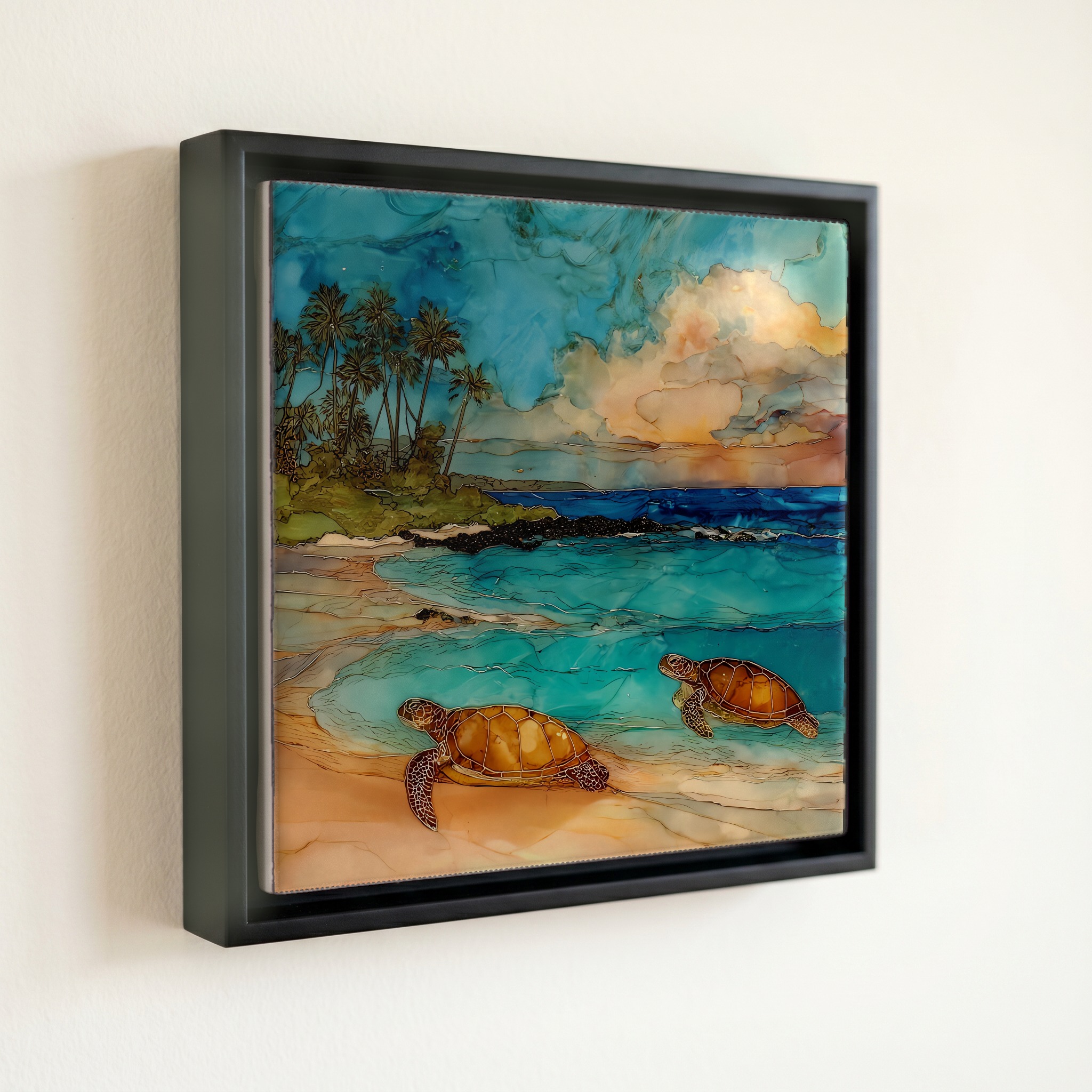
Poipu Beach Honu Kauai Ceramic Art Tile, on ceramic.
Each tile is finished by hand in our Knoxville studio. Artwork is slowly infused into the ceramic surface under high heat and pressure, and rests beneath a thin glossy finish. The colour lives in the surface, not on top of it.
Pick any four 4-inch tiles — National Parks you've been to, a Smokies set, the four seasons of one place. $ for a set of , cork-backed, ready to live on the table.
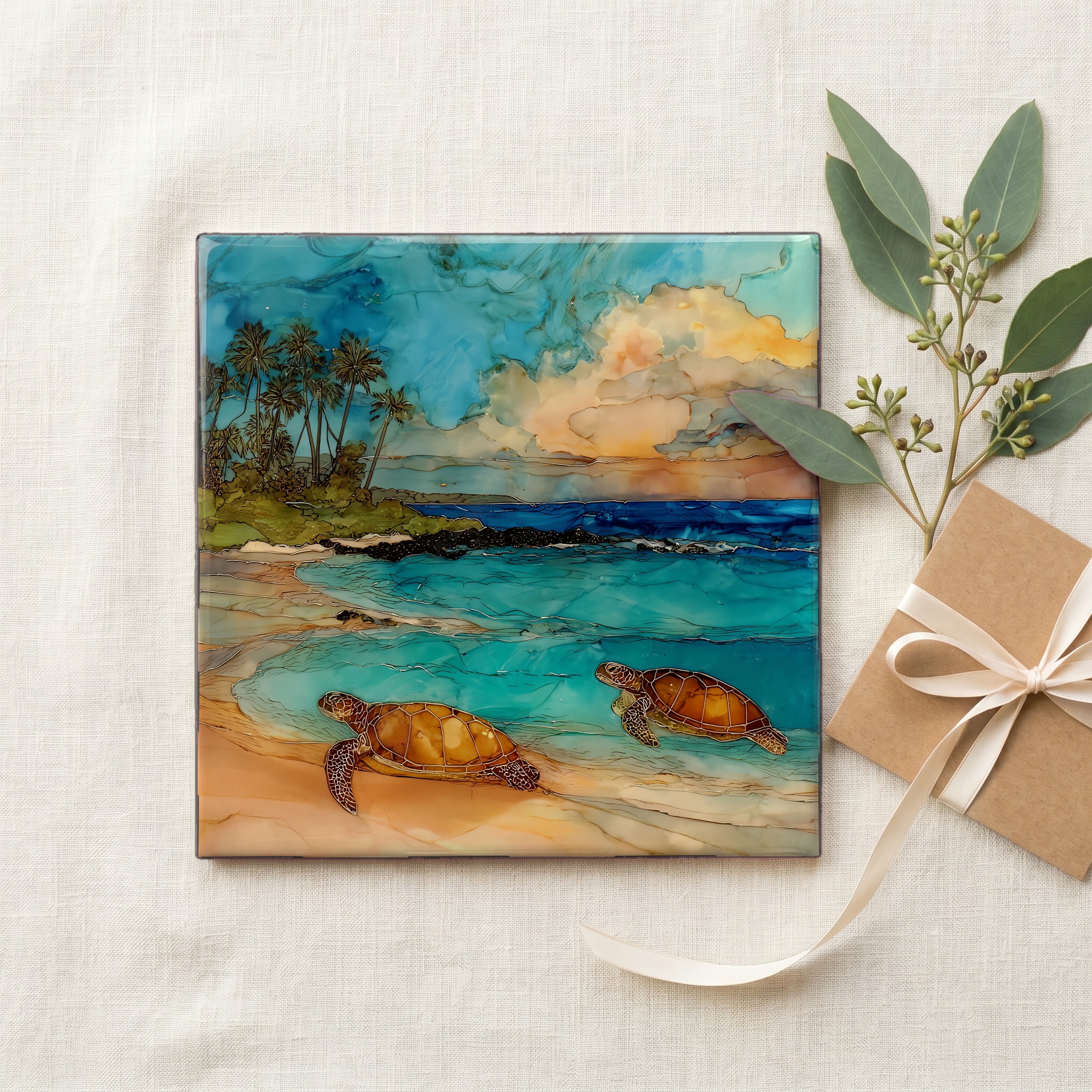
Each tile ships in a kraft box, tied with cream ribbon, with a handwritten note from the studio if you'd like to add one.
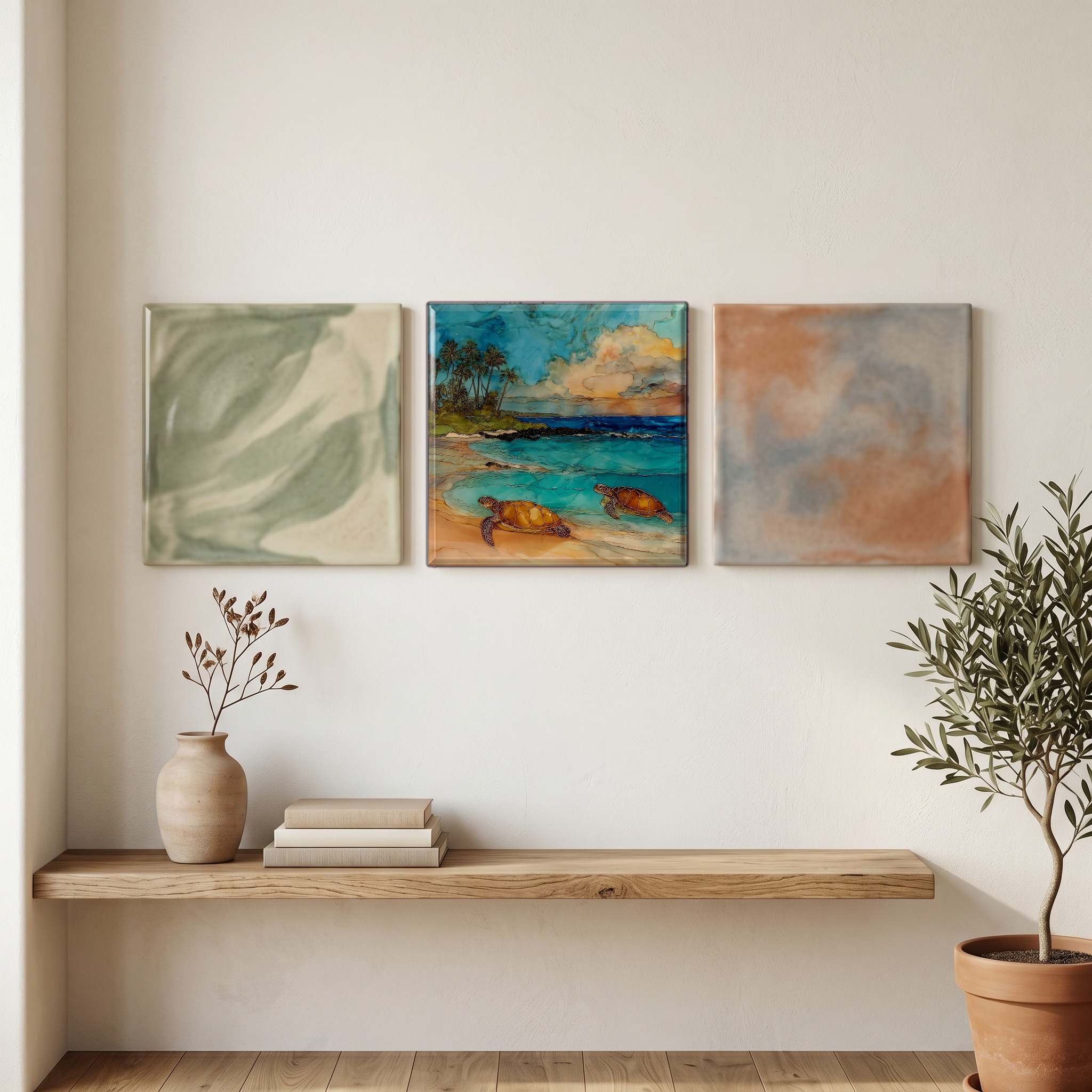
Three or five different vistas, hung together — a chapter of places you've been, or want to go.
The place, in three passes.
Poipu Beach sits on the south shore of Kauai, in the Koloa district of Kauai County, about 14 miles south of the island's main town of Lihue. The beach is split into two crescents by a tombolo, a slim sand spit that reaches out to Nukumoi Point. One side opens to the surf; the other holds the keiki pool, a small natural lagoon enclosed by a low lava-rock breakwater, safe enough for toddlers to wade. In 2001, the coastal geologist Stephen Leatherman, known as Dr. Beach, named Poipu the best beach in America. Kauai is the oldest of the main Hawaiian islands, about five million years above the sea.
The south shore of Kauai sits in the rain shadow of Mount Waialeale, one of the wettest places on earth at roughly 450 inches of rain a year. Poipu, on the leeward coast, sees a fraction of that. The water stays warm through every month of the year, in the high seventies even in February, and the offshore reef and the tombolo together break the swell so the shallows hold calm enough for new snorkelers. The reef carries parrotfish, tang, and the occasional whitetip reef shark asleep in a cave. The same calm shallows that brought generations of Hawaiian children to the keiki pool are what bring the honu ashore to rest.
The Hawaiian green sea turtle, honu, is one of the conservation success stories of the Pacific. Listed as threatened under the U.S. Endangered Species Act since 1978, the Hawaiian population has rebuilt to the point where individuals haul out daily to rest at Poipu and other beaches across the islands. The federal protocol is straightforward: stay at least ten feet back, do not touch, do not surround. Hawaiian monk seals, which also use the beach, require a fifty-foot buffer. Volunteers from the Hawaii Wildlife Fund and the National Marine Fisheries Service rope off resting turtles when one comes ashore. In Hawaiian tradition, the honu is an aumakua, an ancestral guardian; the rule and the reverence point at the same animal.