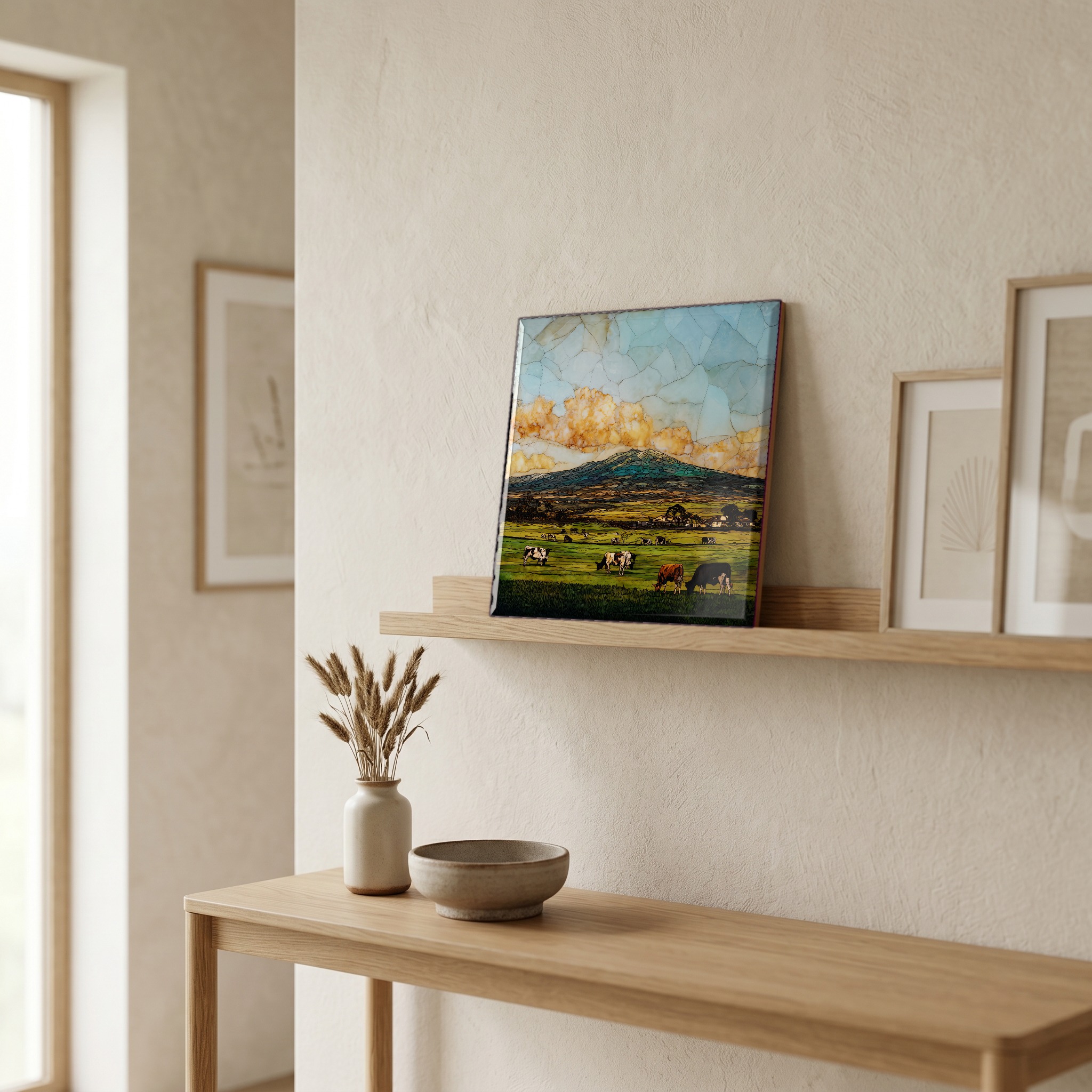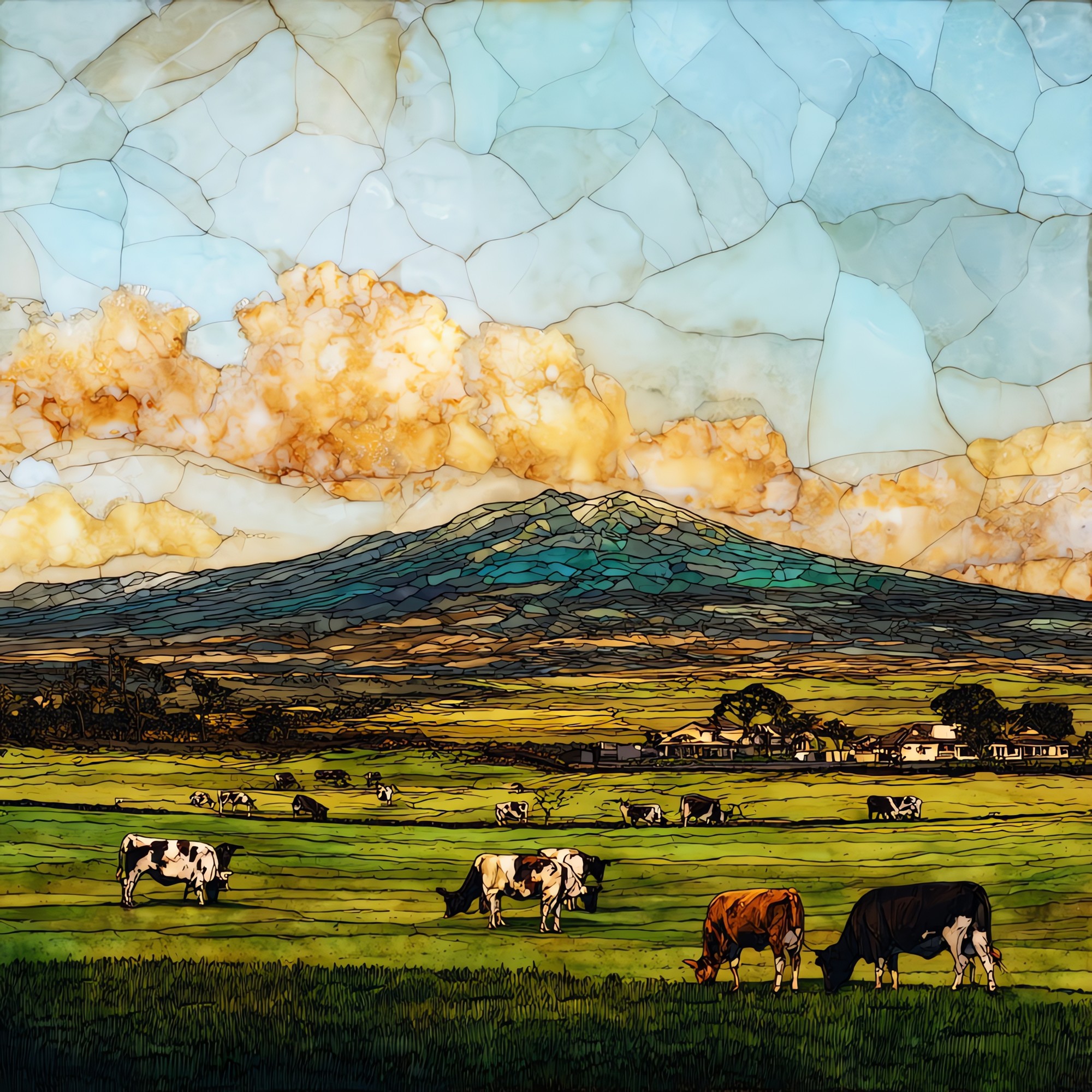
Wender·Vista
Parker Ranch Big Island Ceramic Art Tile
shown on ceramic, 12-inch tileHawaii · United States
on the Big Island, in the saddle between Mauna Kea and the Kohala Mountains

Parker Ranch Big Island Ceramic Art Tile

— the green Hawaii keeps for itself.

Where it lives

Not only on a wall.

A small tile on the nightstand catching the morning. A larger one above the fire. Yours, wherever you spend the slow hours.
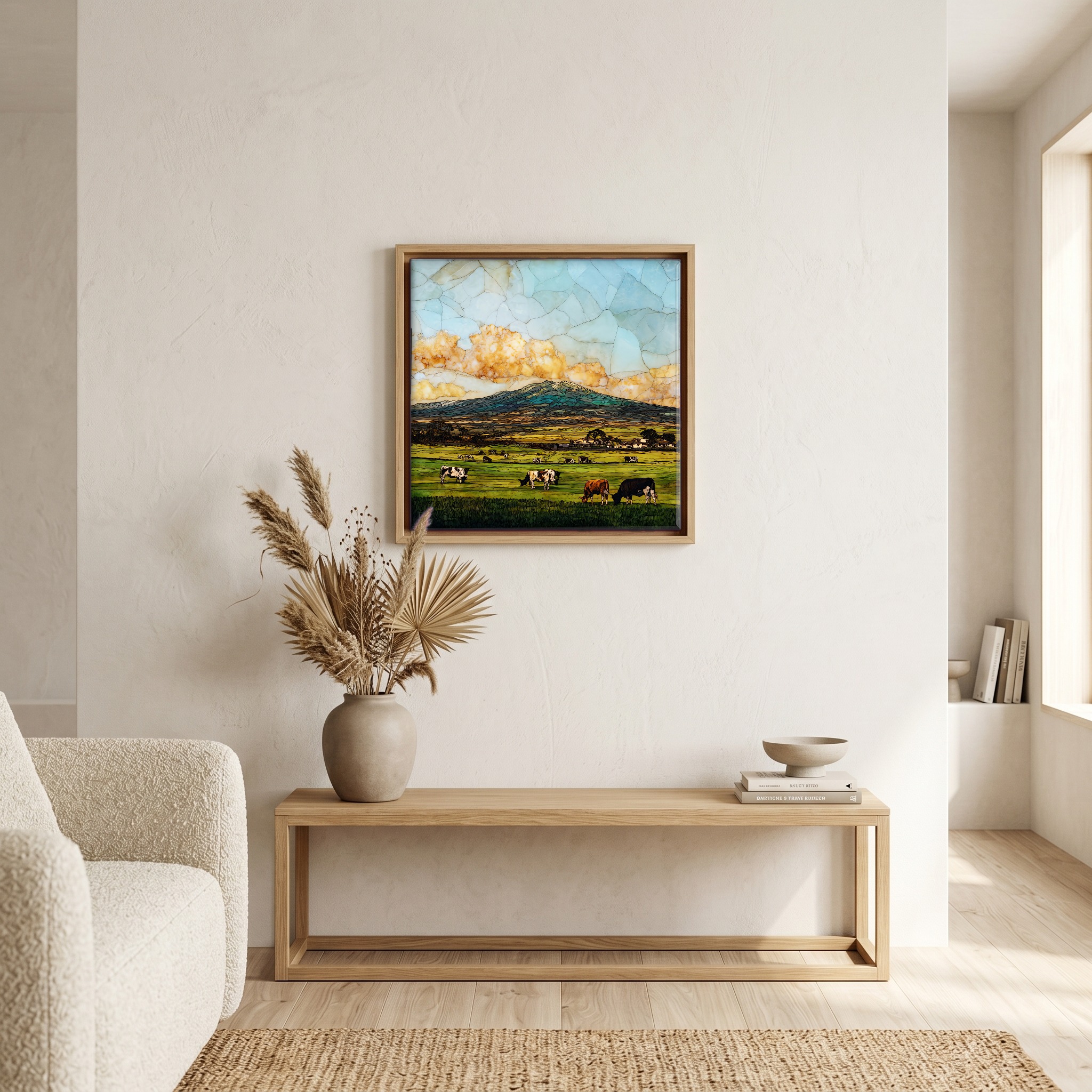
Above the bench, in a warm oak surround.
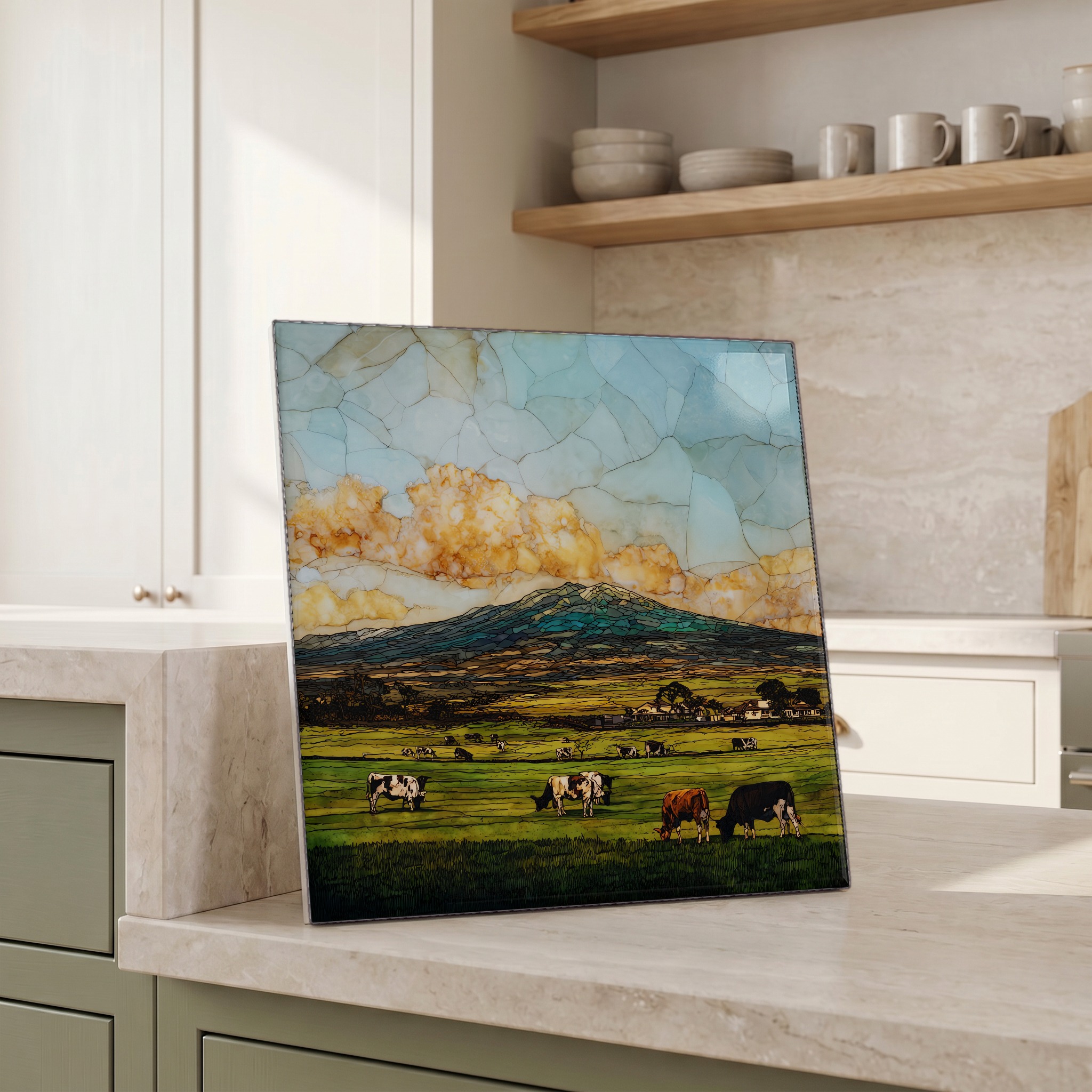
Beside the kettle, propped on the counter.
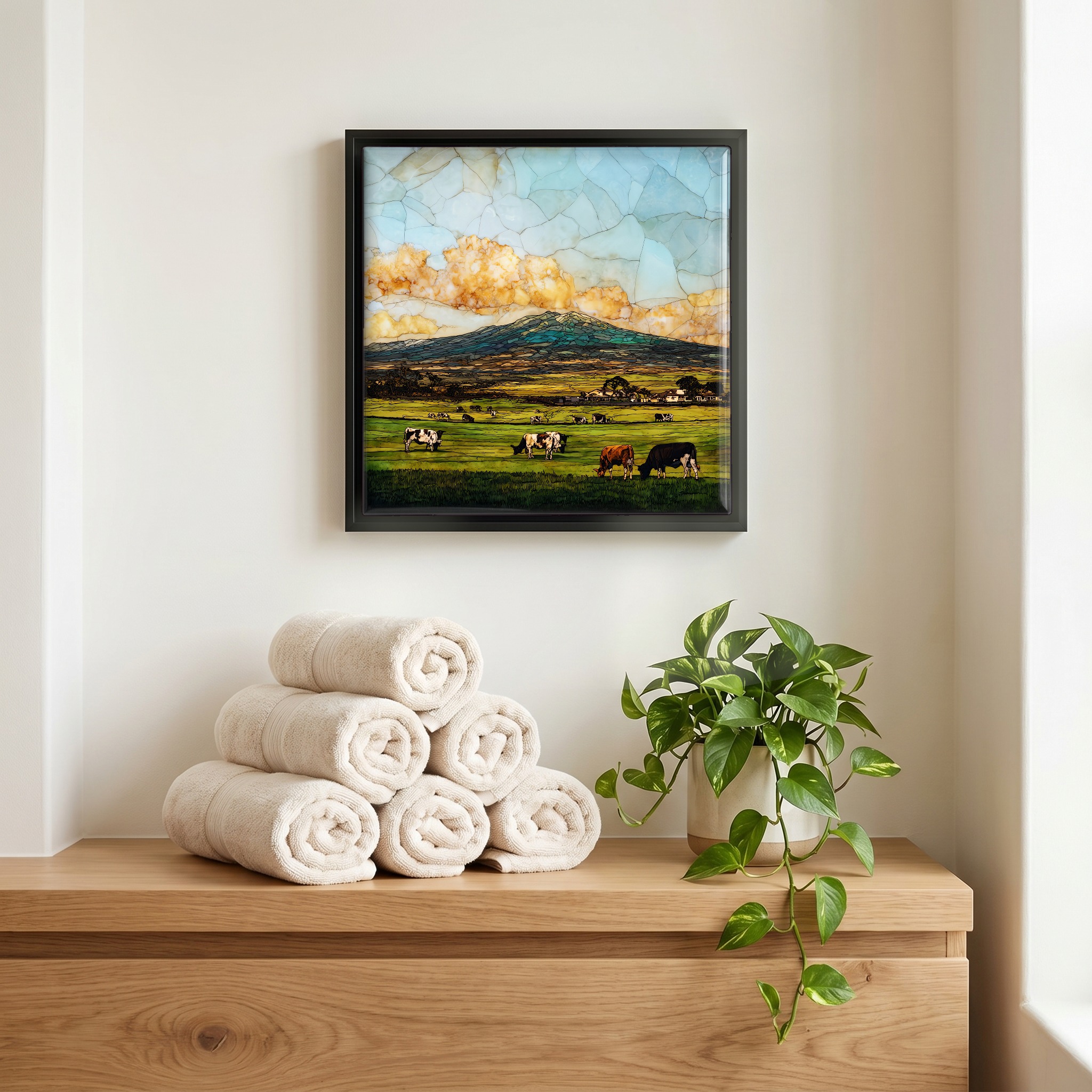
Above the linens, in a slim black surround.
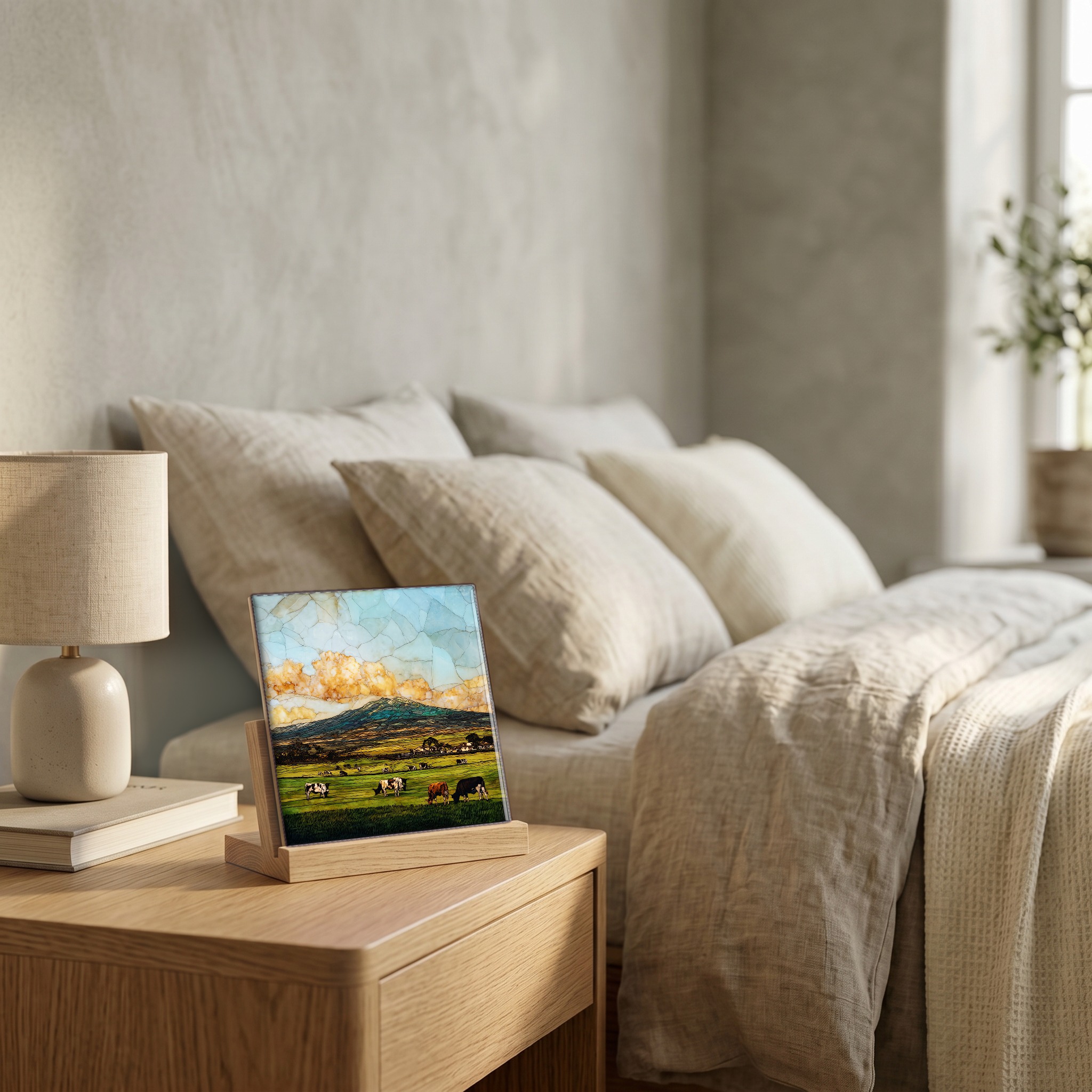
On the nightstand, on a light oak stand.
On a picture ledge, where the light comes in.
a note from the studio

Rolling pasture in the saddle between Mauna Kea and the Kohala Mountains, on the Big Island. Hawaii's biggest working cattle ranch, and one of the oldest in the United States. Founded in 1847, decades before the Texas longhorn drives north. The cowboys here are paniolo. Vaqueros came across from Mexico in the 1830s to teach Hawaiians the trade, and the word for cowboy in Hawaiian is still español, slightly bent. The grass stays green most of the year. The mist sits low in the morning. Visitors who flew in for the Kona beaches usually don't drive up.
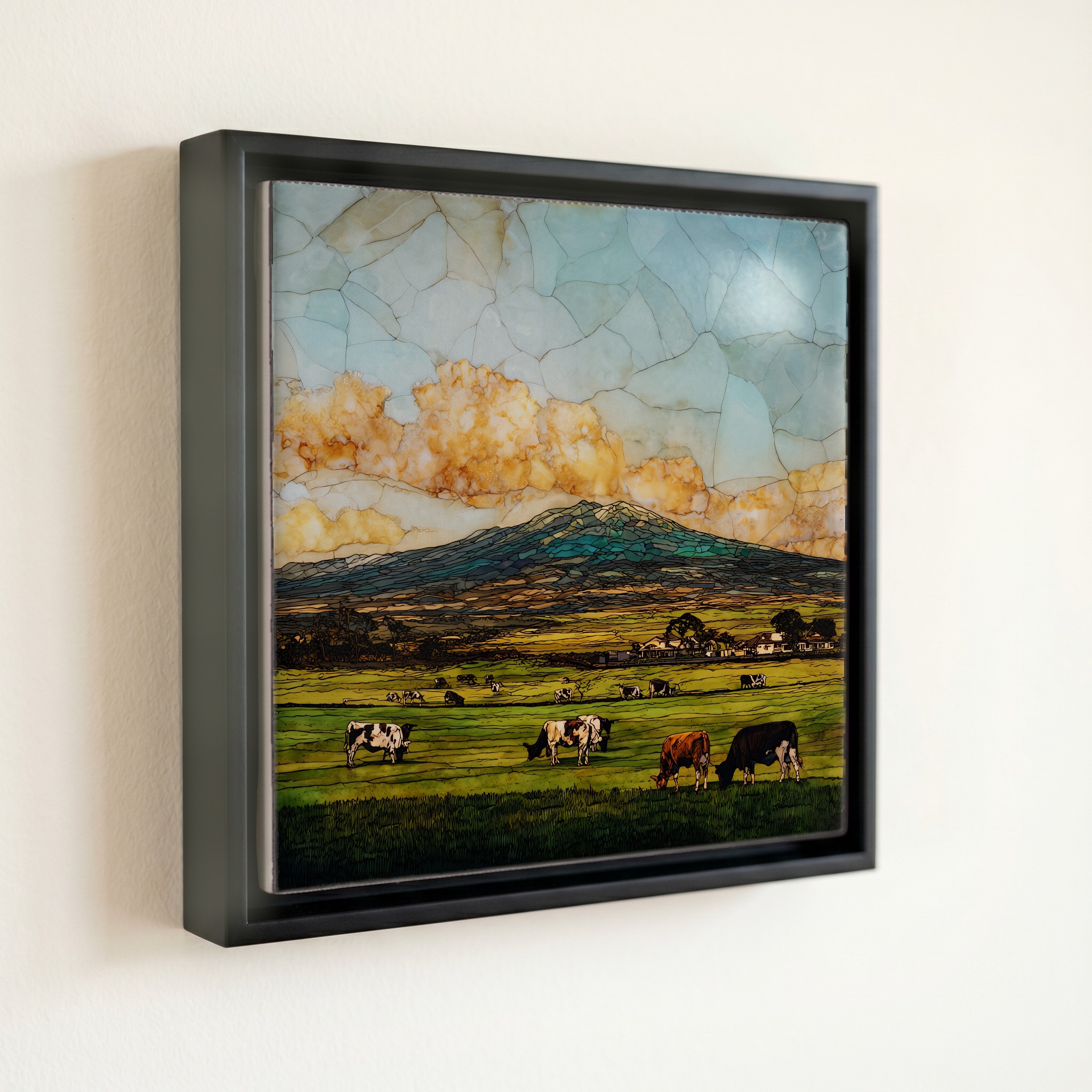
from the studio
shown in a slim black floating frame · 6 × 6 in
— bring it home

Parker Ranch Big Island Ceramic Art Tile, on ceramic.

Each tile is finished by hand in our Knoxville studio. Artwork is slowly infused into the ceramic surface under high heat and pressure, and rests beneath a thin glossy finish. The colour lives in the surface, not on top of it.

What kind of piece?
One tile — square or rectangle.
How big?
the popular one — counter, shelf, nightstand
6 × 6 in · 15 cm · 1.6 lb
Surface finish
A clear glossy finish — the artwork reads as if under resin. Ideal for show-pieces and framed wall art.
How it sits
A hidden cleat — sits ¼″ proud of the wall.
$58
Hand-finished and shipped from our studio at the foot of the Smokies. On your wall in about ten days.
size
6 × 6 in
15 cm
weighs
1.6 lb
solid in the hand
surface
ceramic, hand-finished
art rests beneath a thin glossy finish
from
Knoxville, TN
our family studio, at the foot of the Smokies
— start a Coaster Set

Pick any four 4-inch tiles — National Parks you've been to, a Smokies set, the four seasons of one place. $ for a set of , cork-backed, ready to live on the table.
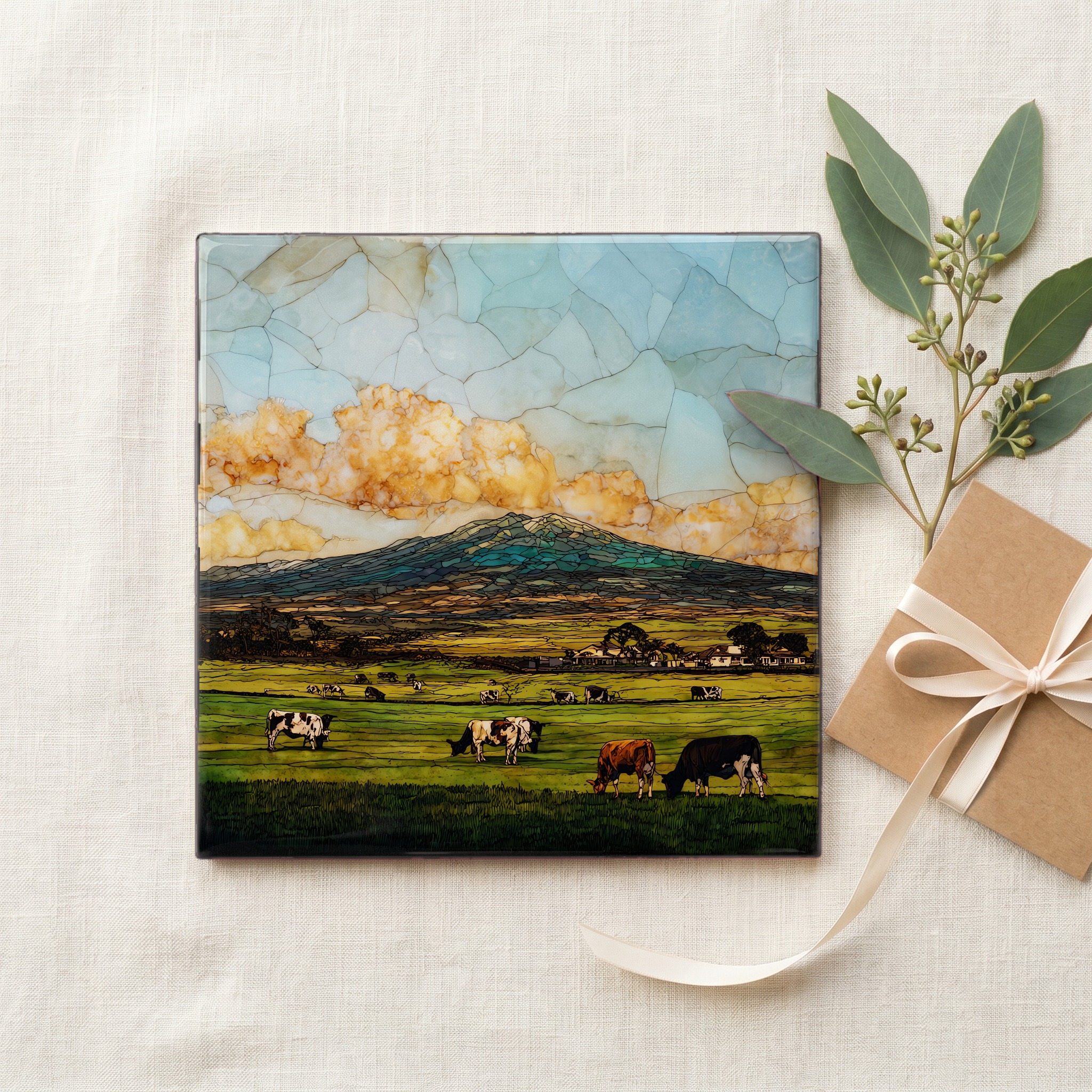
comes gift-ready
comes gift-ready

Each tile ships in a kraft box, tied with cream ribbon, with a handwritten note from the studio if you'd like to add one.
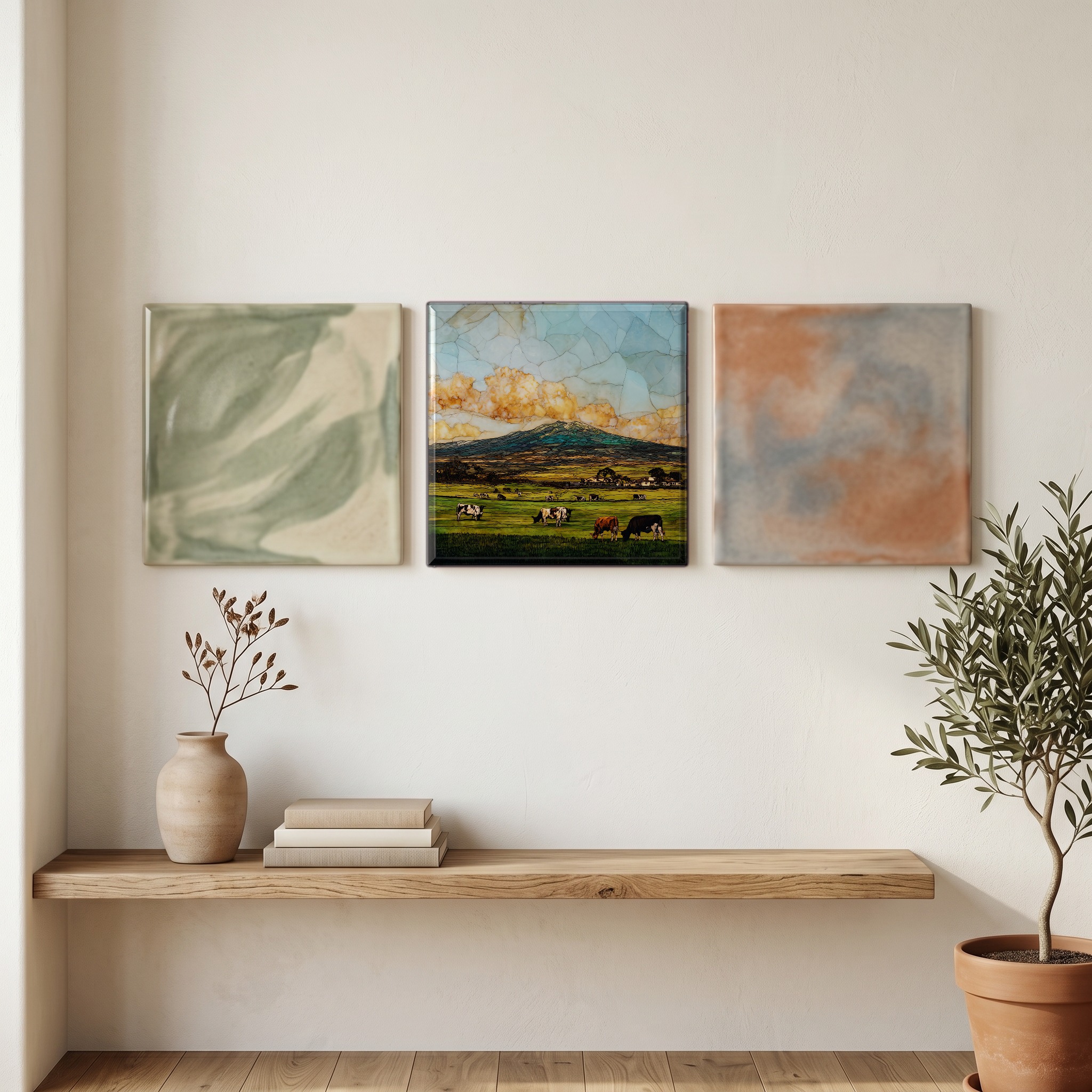
or build a grouping
or build a grouping

Three or five different vistas, hung together — a chapter of places you've been, or want to go.

about Parker Ranch Big Island Ceramic Art Tile

The place, in three passes.

A little of what's known, in case you fall down the rabbit hole — or want to go see it yourself.
the place

Parker Ranch covers about 130,000 acres on the Big Island of Hawaii, in the saddle between Mauna Kea and the Kohala Mountains. It was formally established in 1847 by John Palmer Parker, a sailor from Newton, Massachusetts who had jumped ship in Hawaii and married Kipikane, a granddaughter of King Kamehameha I. The headquarters sit in the town of Waimea, also known as Kamuela on the post office, at about 2,670 feet of elevation. It is one of the largest cattle ranches in the United States and predates the founding of the King Ranch in Texas by six years. Today the land is held by the Parker Ranch Foundation Trust; the beneficiaries are Big Island schools, hospitals, and charitable institutions, a bequest left by the last family heir, Richard Smart, at his death in 1992.

the year

Cattle came to Hawaii in 1793 as a gift to King Kamehameha I from British captain George Vancouver, who declared a ten-year kapu protecting them. By the 1830s the herds had gone feral and become a problem, so Kamehameha III brought Mexican vaqueros across the Pacific to teach Hawaiians the trade. Their word español, slightly bent in the local tongue, became paniolo, and paniolo is what Hawaiian cowboys have called themselves ever since. In 1908, three paniolo from Parker Ranch traveled to Cheyenne, Wyoming for the Frontier Days rodeo: Ikua Purdy, Eben "Rawhide Ben" Low, and Archie Ka'au'a. Ikua Purdy won the world steer-roping championship against the best of the American West and was later inducted into the National Cowboy Hall of Fame. The ranch still holds an annual Fourth of July rodeo at the Parker Ranch Arena, the oldest rodeo in Hawaii.

the air

The climate on the high pasture stays cool and wet by Hawaiian standards. Waimea sits at roughly 2,670 feet of elevation, high enough to catch the trade-wind clouds as they spill west off Mauna Kea. The result is a mist that holds through the morning and a grass that stays green most of the year. The look sits closer to the Scottish Highlands than to the rest of the state. The town carries two names: Waimea on most signs, Kamuela on the post office. The post-office form is the Hawaiian rendering of Samuel, for Samuel Parker of the ranch's founding family. Daytime highs at the headquarters run in the low 70s most of the year, with frequent afternoon showers in the wetter eastern half of town. Visitors arriving for the Kona beaches a hundred miles south usually don't drive up. The ranchers here generally wear a jacket.

where
United States · Hawaii County, Hawaii
elevation
813 m · 2,670 ft
position
20.0228° N · 155.6681° W
the neighborhood

What's nearby.

A handful of named places within an hour's walk or short drive. Some we've already painted; some we will.
28 km SE
Mauna Kea
volcano summit
22 km E
Waipi'o Valley
sacred valley
15 km W
Pu'ukoholā Heiau
Hawaiian temple
22 km SW
Hapuna Beach
white-sand beach
17 km E
Honoka'a
plantation town
20 km SW
Mauna Kea Beach
resort beach
N
Parker Ranch Big Island Ceramic Art Tile
Mauna Kea
Waipi'o Valley
Pu'ukoholā Heiau
Hapuna Beach
Honoka'a
Mauna Kea Beach
common questions

What people ask.

A few questions we get about Parker Ranch Big Island Ceramic Art Tile — and about bringing the piece home.
about the place

Parker Ranch covers about 130,000 acres on the Big Island of Hawaii, with headquarters in the town of Waimea (also called Kamuela on the post office) at roughly 2,670 feet of elevation, in the saddle between Mauna Kea and the Kohala Mountains.

John Palmer Parker founded the ranch. A New England sailor from Newton, Massachusetts, he jumped ship in Hawaii and married Kipikane, a granddaughter of King Kamehameha I. The ranch was formally established in 1847 and is among the oldest cattle ranches in the United States.

A paniolo is a Hawaiian cowboy. The name comes from español. In the 1830s King Kamehameha III brought Mexican vaqueros to teach Hawaiians cattle work, and the paniolo tradition predates the American cowboy tradition of the western United States by several decades.

Waimea catches the trade-wind clouds spilling west off Mauna Kea. The mist and rain hold most of the year on the high pasture, keeping the grass green. The climate sits closer to the Scottish Highlands than to the Kona coast a hundred miles south.

Yes. The Parker Ranch Historic Homes in Waimea can be visited by arrangement, and the annual Fourth of July rodeo at the Parker Ranch Arena is the oldest in Hawaii. The town of Waimea has shops, restaurants, and the nearby Anna Ranch Heritage Center.

The ranch is held by the Parker Ranch Foundation Trust. When the last family heir, Richard Smart, died in 1992, he left the ranch in trust for the benefit of Big Island schools, hospitals, and other charitable institutions on Hawaii Island.

Yes. In 1908, three paniolo from Parker Ranch traveled to Cheyenne for Frontier Days: Ikua Purdy, Eben "Rawhide Ben" Low, and Archie Ka'au'a. Ikua Purdy won the world steer-roping championship and was later inducted into the National Cowboy Hall of Fame.

about the piece in your home

It has been a meaningful gift for many of our customers with Big Island ties. Parker Ranch and the paniolo tradition mean something specific to families whose people worked the cattle country, and to anyone who grew up around Waimea. A Medium with a handwritten studio note carries well.

The misty greens and earth tones sit well in Mountain-modern, Western-modern, and warm Minimalist rooms. The piece reads as quiet and grounded rather than tropical, so it pairs with oak, leather, linen, and wool more naturally than with bright coastal palettes.

Western-modern has been one of the steadier residential trends since the late 2010s, and Parker Ranch reads more as the origin story of the American cowboy than as a costume of it. The piece anchors a leather-and-oak room without dominating it.

Over a standard sofa around 84 inches wide, the Large or a 4-tile Mural balances the wall. Above a console table or in a hallway, a single Medium reads better than a Large. For a feature wall, a 9-tile Mural sets the ranch at room scale.

Yes. Order the same artwork in the Dura Satin or Matte finish for any wet or vertical install: backsplash, shower wall, mudroom, or kitchen surround. The colour is slowly infused into the ceramic surface under high heat and pressure, so it does not lift or wear.

A microfibre cloth and water is all the surface ever needs. The thin glossy finish wipes clean of fingerprints and household dust. Skip ammonia and abrasive sponges. The colour lives in the surface, so cleaning never reaches it.

Yes. Every WenderVista piece is original to our studio in Knoxville, and Reid Wender chooses each place and oversees the artwork. There is no licensing or third-party imagery. One studio, one eye, one atlas of places.

if this one stayed with you

A few you might also love.

Hand-picked by the eye that found Sorapis. Same air, same kind of quiet.