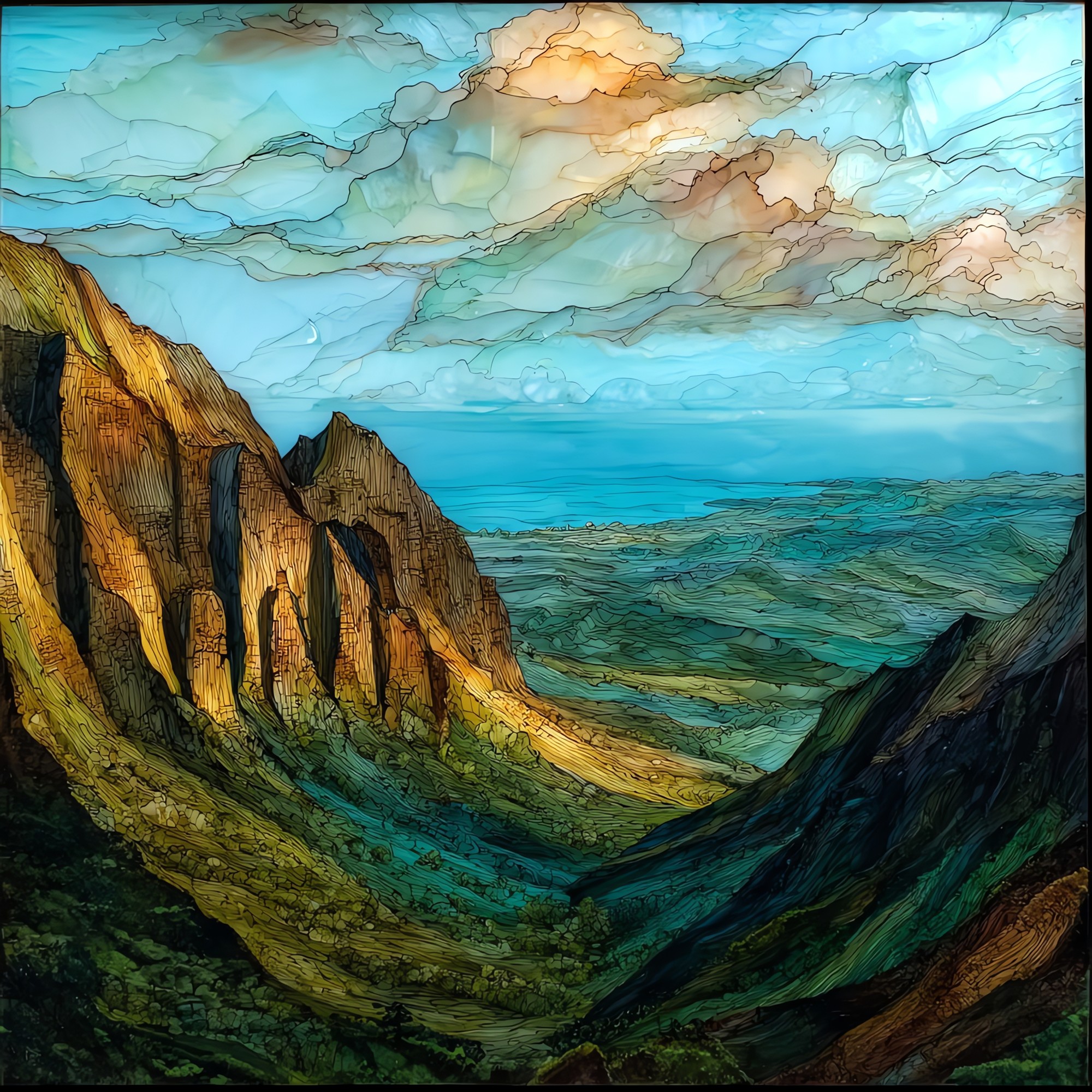
Pali Lookout Oahu Ceramic Art Tile
— the wind that holds the rain in place.
Not only on a wall.
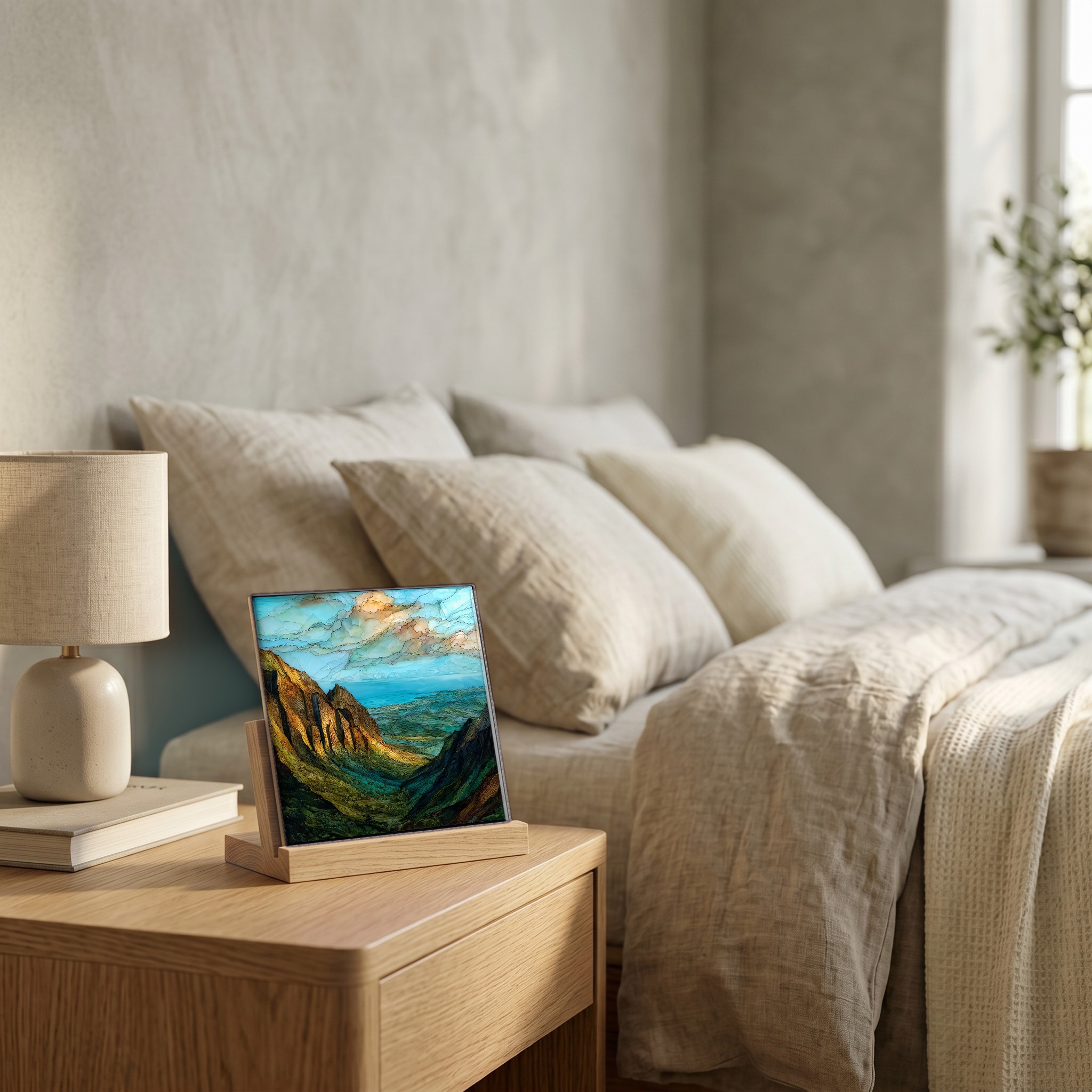
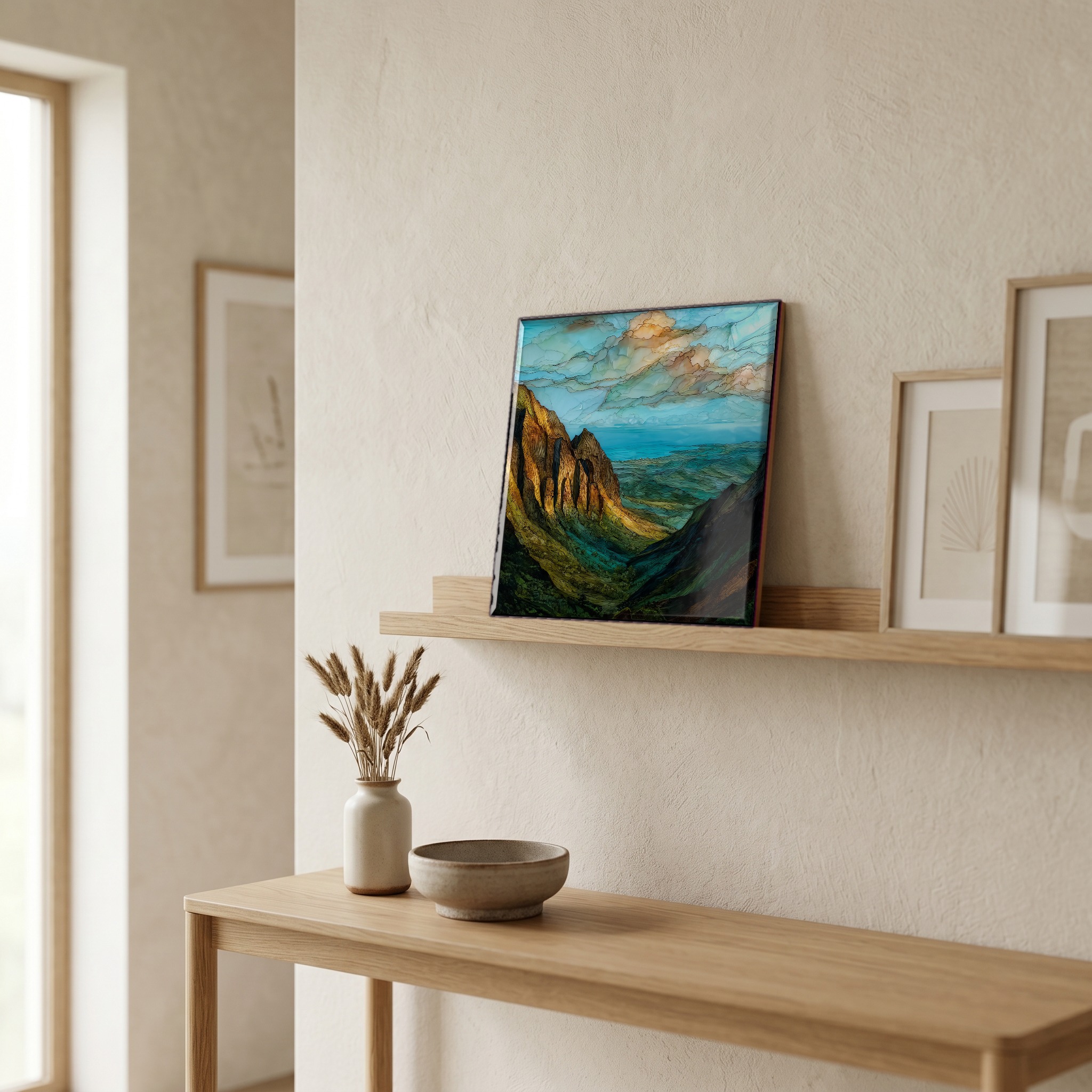
“The lookout above the windward coast of Oʻahu. The Koʻolau Range opens here in a single notch and the trade winds funnel through, hard enough on the worst days to lift rain off the cliff and back into the air. Kāneʻohe Bay sits below in the middle distance. Honolulu is the other direction, on the leeward side. Kamehameha I drove the warriors of Oʻahu off these cliffs in 1795. The road climbs there now, and the wind still finds you at the rail.
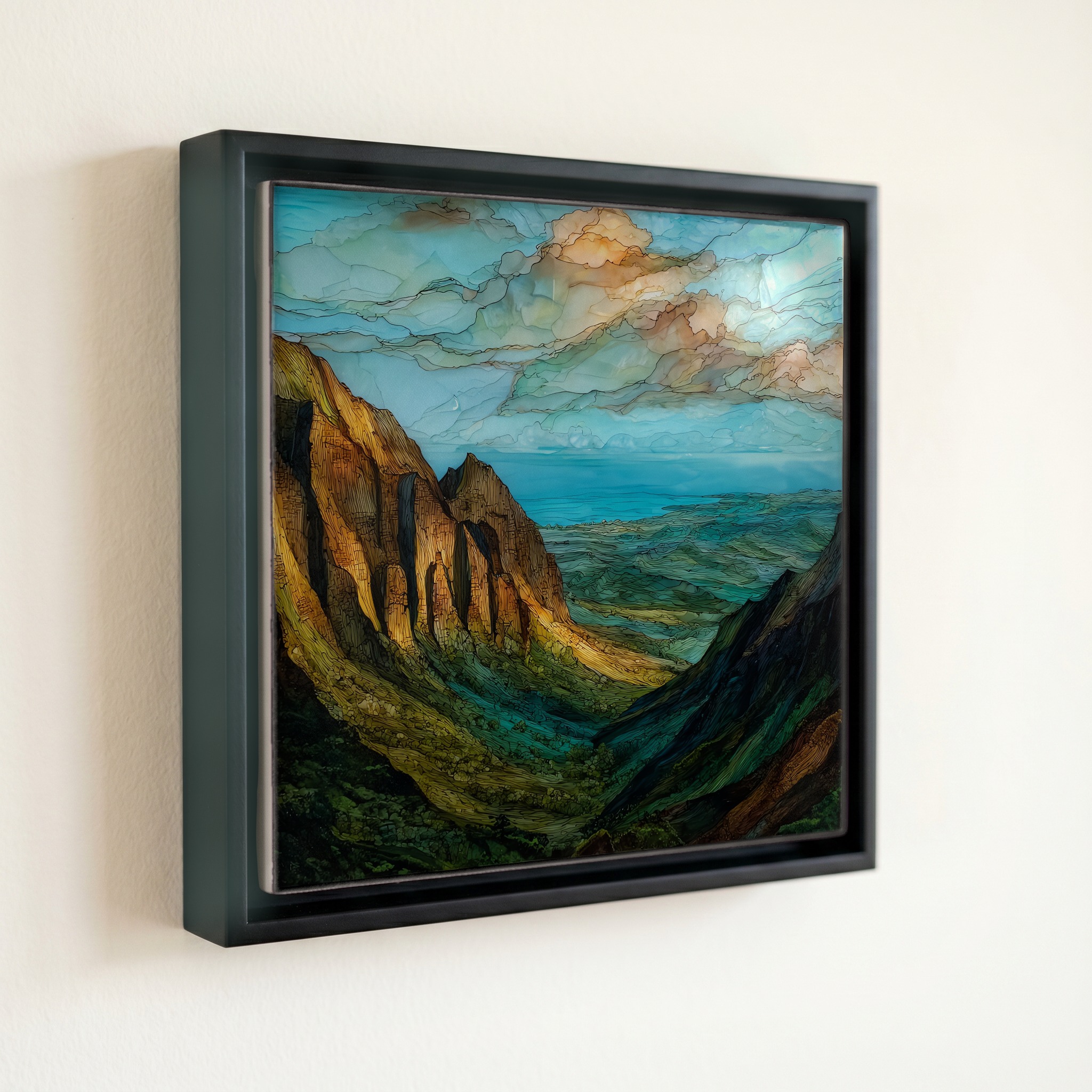
Pali Lookout Oahu Ceramic Art Tile, on ceramic.
Each tile is finished by hand in our Knoxville studio. Artwork is slowly infused into the ceramic surface under high heat and pressure, and rests beneath a thin glossy finish. The colour lives in the surface, not on top of it.
Pick any four 4-inch tiles — National Parks you've been to, a Smokies set, the four seasons of one place. $ for a set of , cork-backed, ready to live on the table.
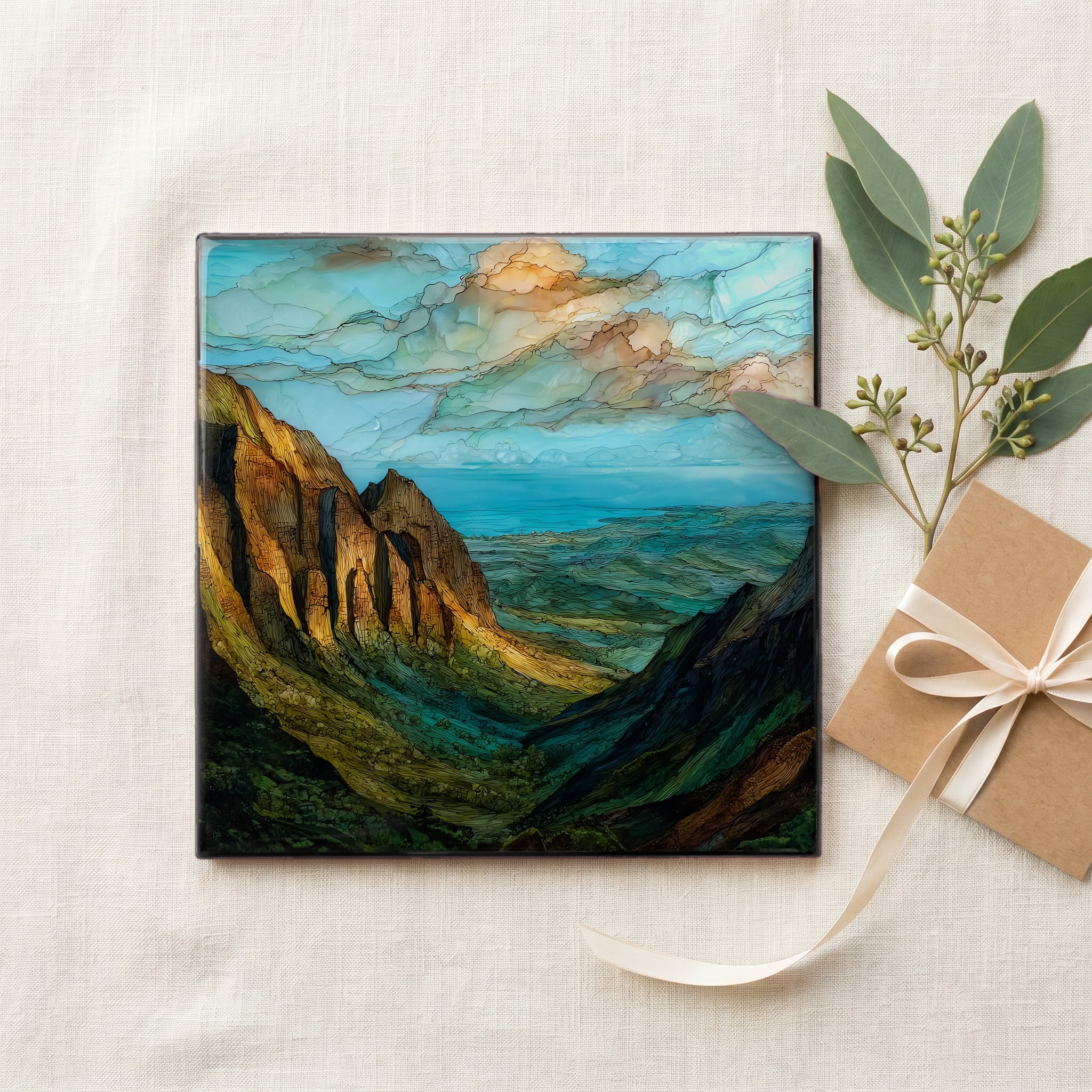
Each tile ships in a kraft box, tied with cream ribbon, with a handwritten note from the studio if you'd like to add one.
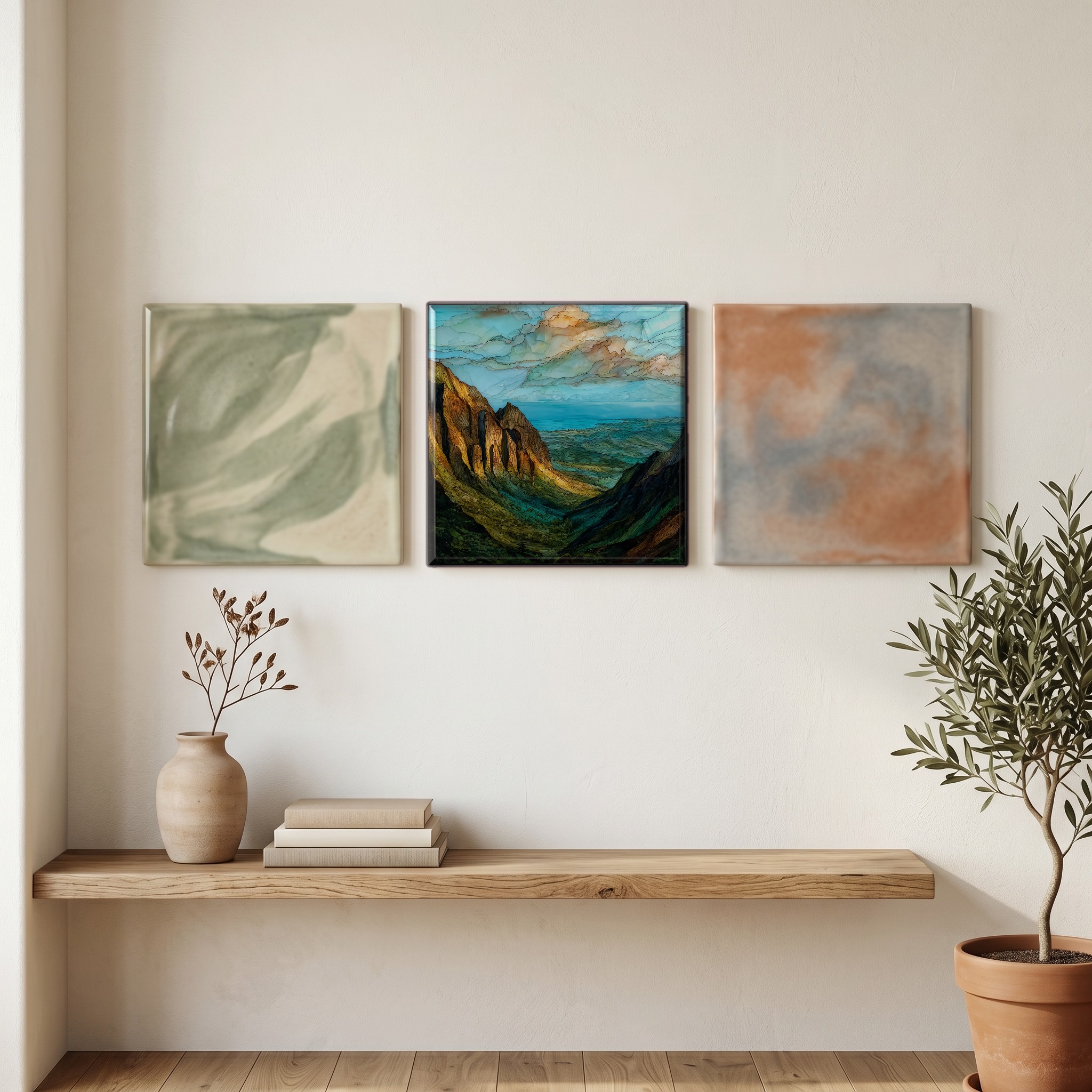
Three or five different vistas, hung together — a chapter of places you've been, or want to go.
The place, in three passes.
The Nuʻuanu Pali Lookout sits at roughly 1,200 feet (about 360 metres) in the Koʻolau Range, the eroded shield of Koʻolau Volcano, one of the two that built Oʻahu. The notch opens above Kāneʻohe Bay and the windward towns of Kāneʻohe and Kailua; Honolulu and the leeward coast lie behind. Hawaii Route 61, the Pali Highway, climbs from Honolulu through a pair of tunnels and ends a short walk from the rail. The wayside is part of Nuʻuanu Pali State Wayside, administered by Hawaiʻi State Parks. The Battle of Nuʻuanu was fought along this ridge in 1795.
The Pali is one of the windiest accessible places in the islands. The northeast trade winds, which blow across Hawaiʻi for roughly 70 percent of the year, hit the windward wall of the Koʻolau Range and compress through the single low gap above the lookout. Wind speeds at the rail are often two to three times what they are in downtown Honolulu, about six miles south. The effect is strong enough that light rain rising up the cliff face is sometimes lifted back into the air before it lands. The same mechanism makes the small waterfalls on the Koʻolau wall, visible from the highway below, appear to flow upward in heavy weather.
The lookout is open daily, generally from 6 a.m. to 6 p.m., and is reached from Honolulu via the Pali Highway, Hawaii Route 61, about a 20-minute drive. Parking is paid for non-residents (around $7 per vehicle at the rate most recently posted) and free for Hawaiʻi residents with a state ID; pedestrians enter for a small walk-in fee. The view spans Kāneʻohe Bay, Kāneʻohe, Kailua, and on clear days the offshore Mokulua Islands. Hold any hat. The Old Pali Road, closed to vehicles, drops below the lookout and is walkable for a short distance before it is gated, then continues as part of the Pali Trail used by hikers on the windward side.