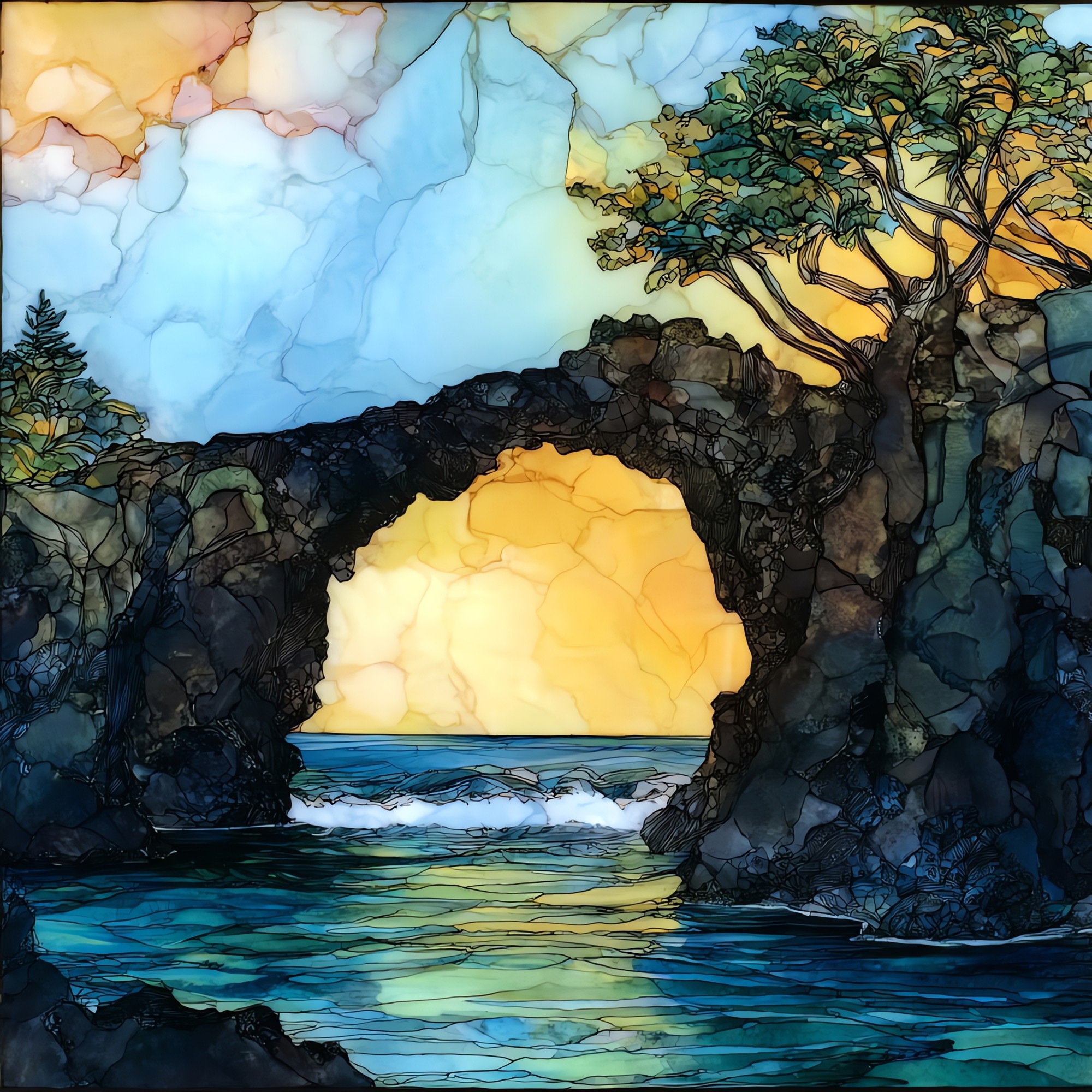
Pailoa Sea Arch Maui Ceramic Art Tile
— — black basalt the Pacific wore through.
Not only on a wall.
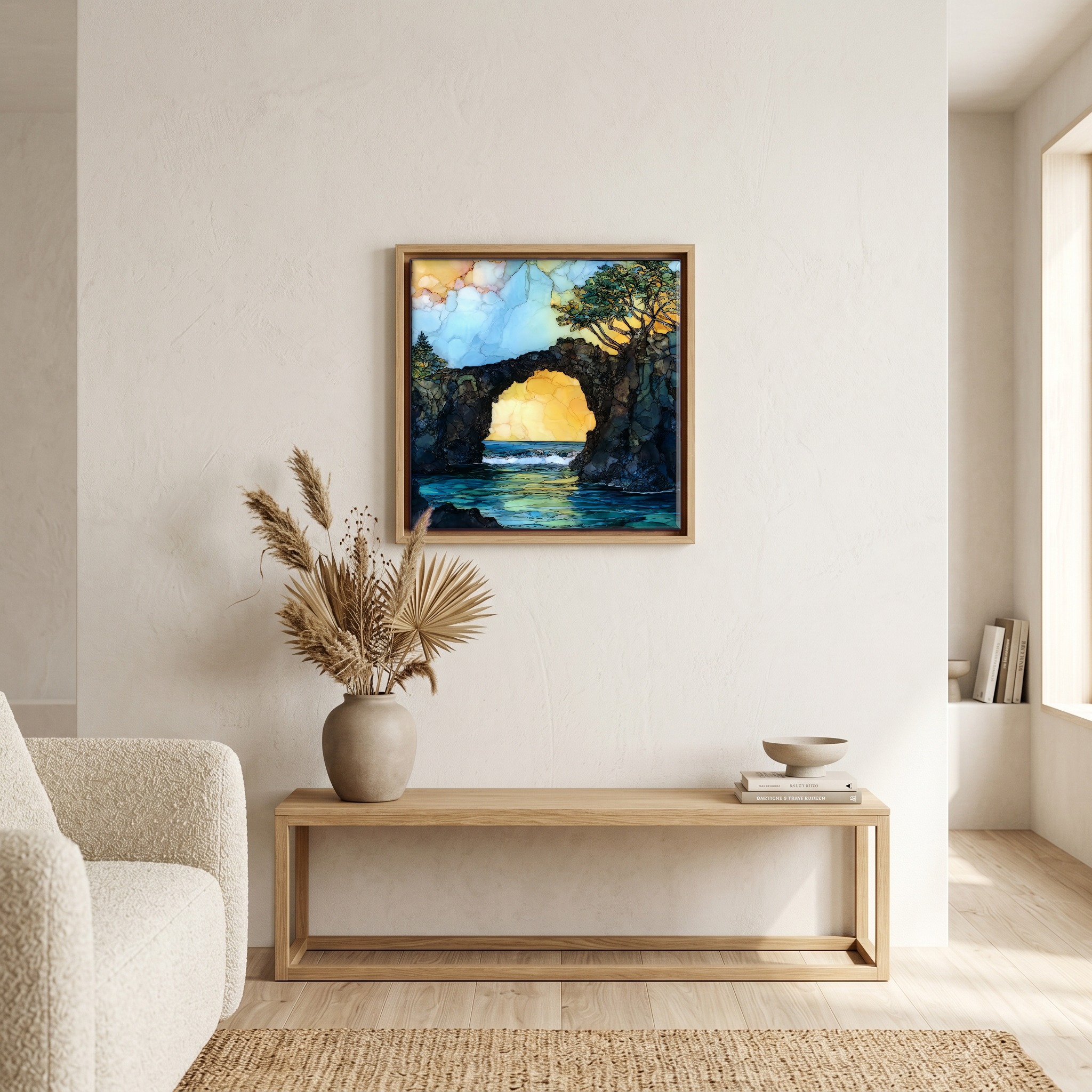
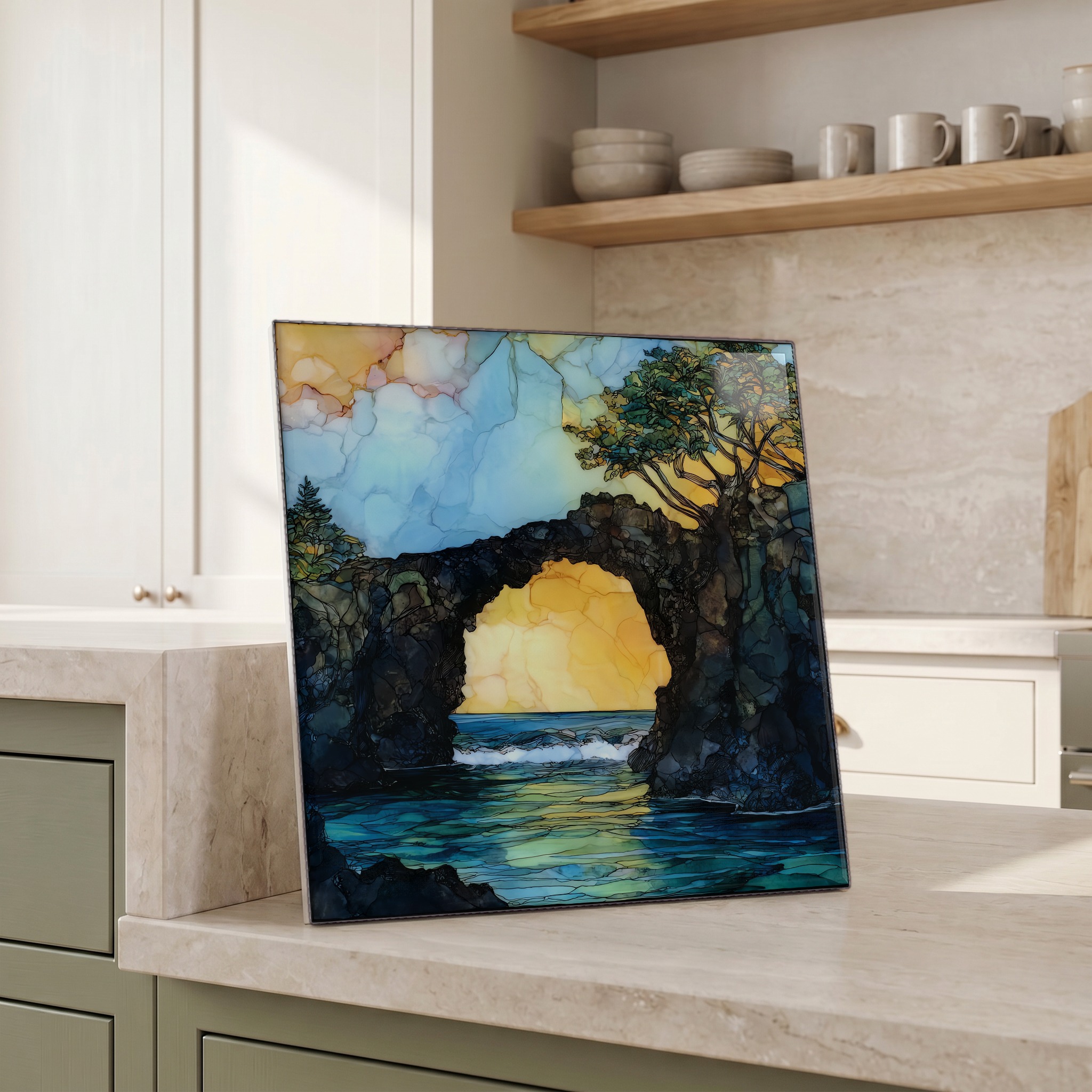
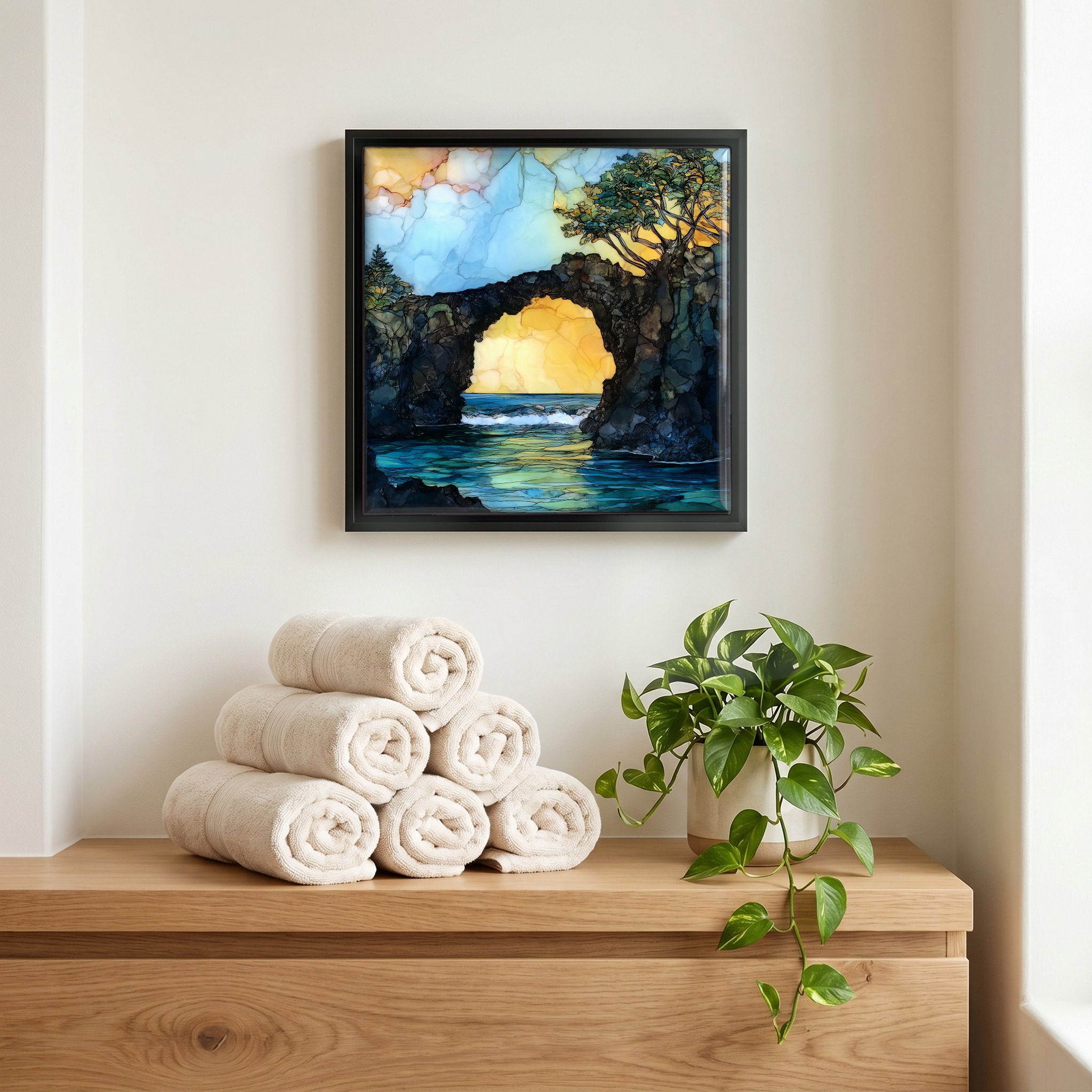
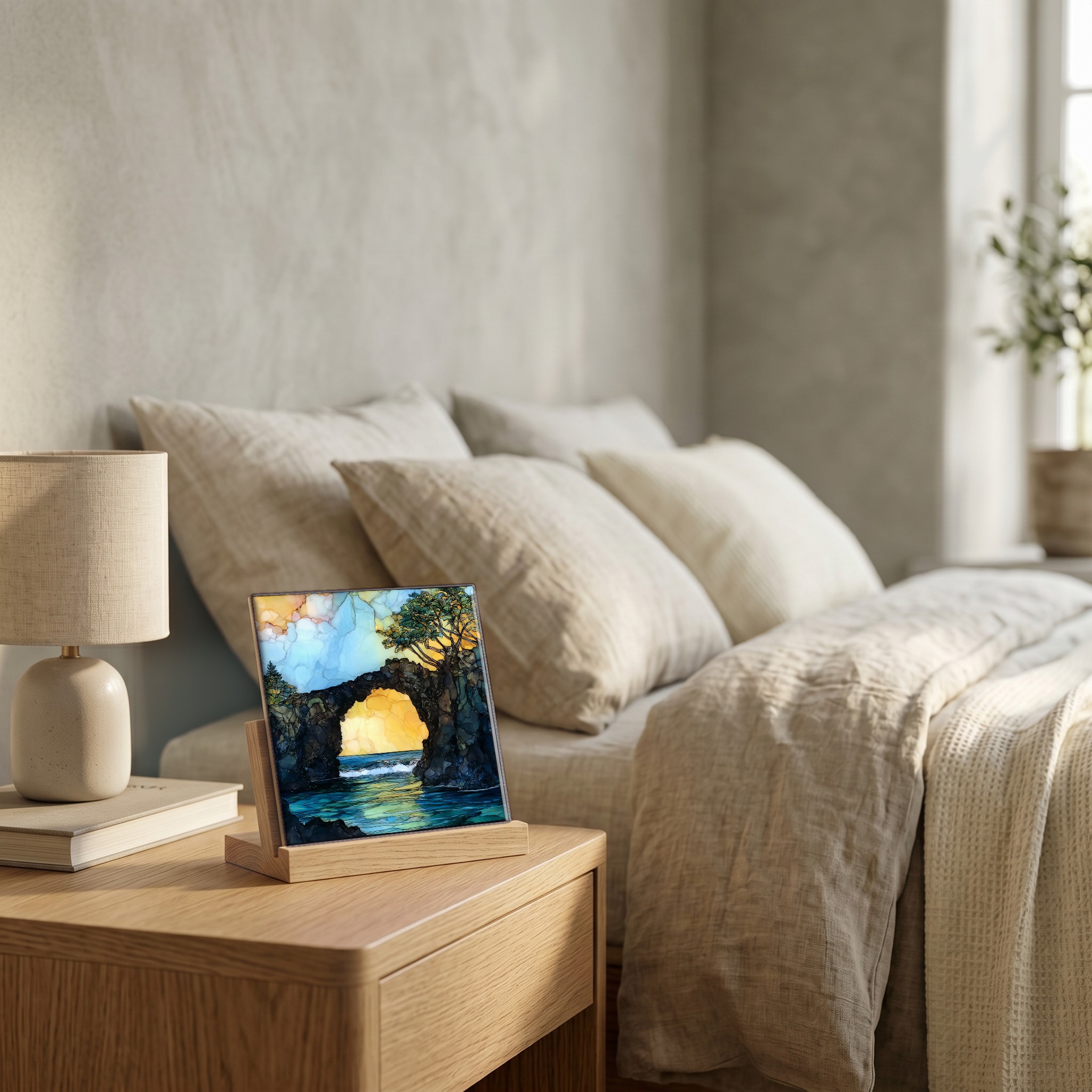
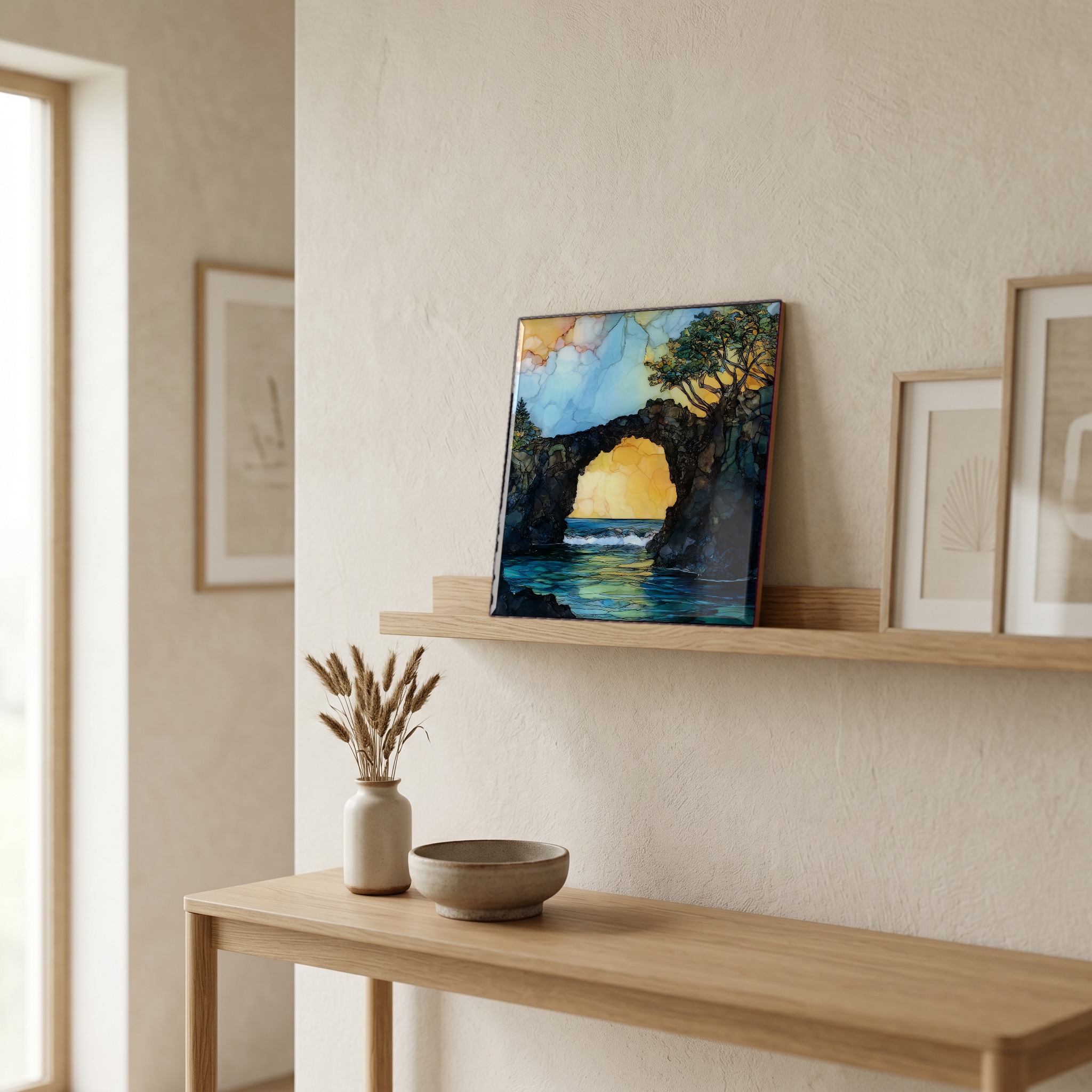
“A natural arch of black basalt at the edge of Paʻiloa Bay, on Maui's eastern coast. The lava cooled here a few centuries ago and the Pacific has been working at it ever since. Sea stacks, blowholes, a lava tube you can walk through, and this one clean opening where the swell runs in and out. Mile 32 on the Hana Highway, 53 miles past Kahului. Reservations are required for non-resident visitors. Best at low tide and the back end of the afternoon, when the basalt warms up against the cool of the water.
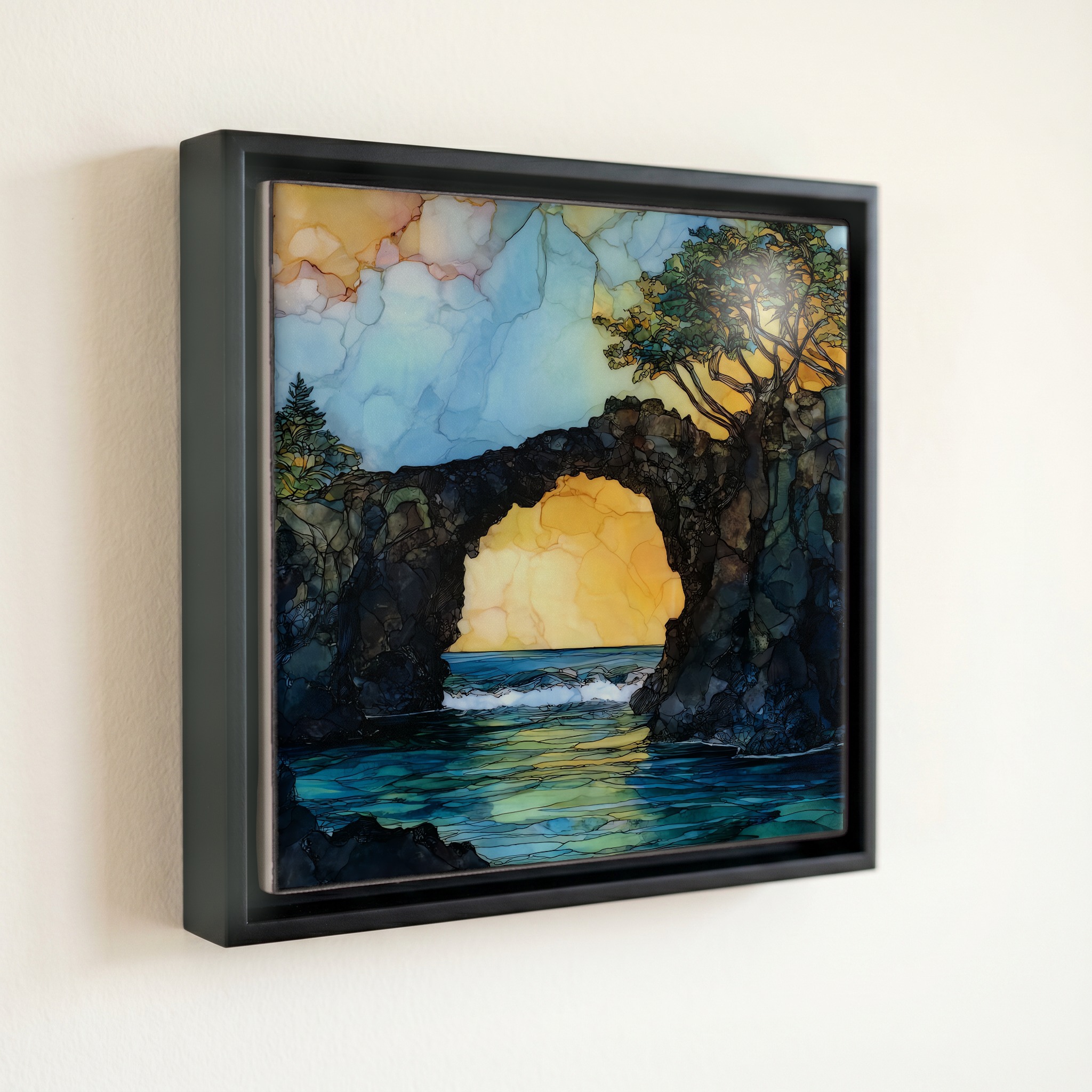
Pailoa Sea Arch Maui Ceramic Art Tile, on ceramic.
Each tile is finished by hand in our Knoxville studio. Artwork is slowly infused into the ceramic surface under high heat and pressure, and rests beneath a thin glossy finish. The colour lives in the surface, not on top of it.
Pick any four 4-inch tiles — National Parks you've been to, a Smokies set, the four seasons of one place. $ for a set of , cork-backed, ready to live on the table.
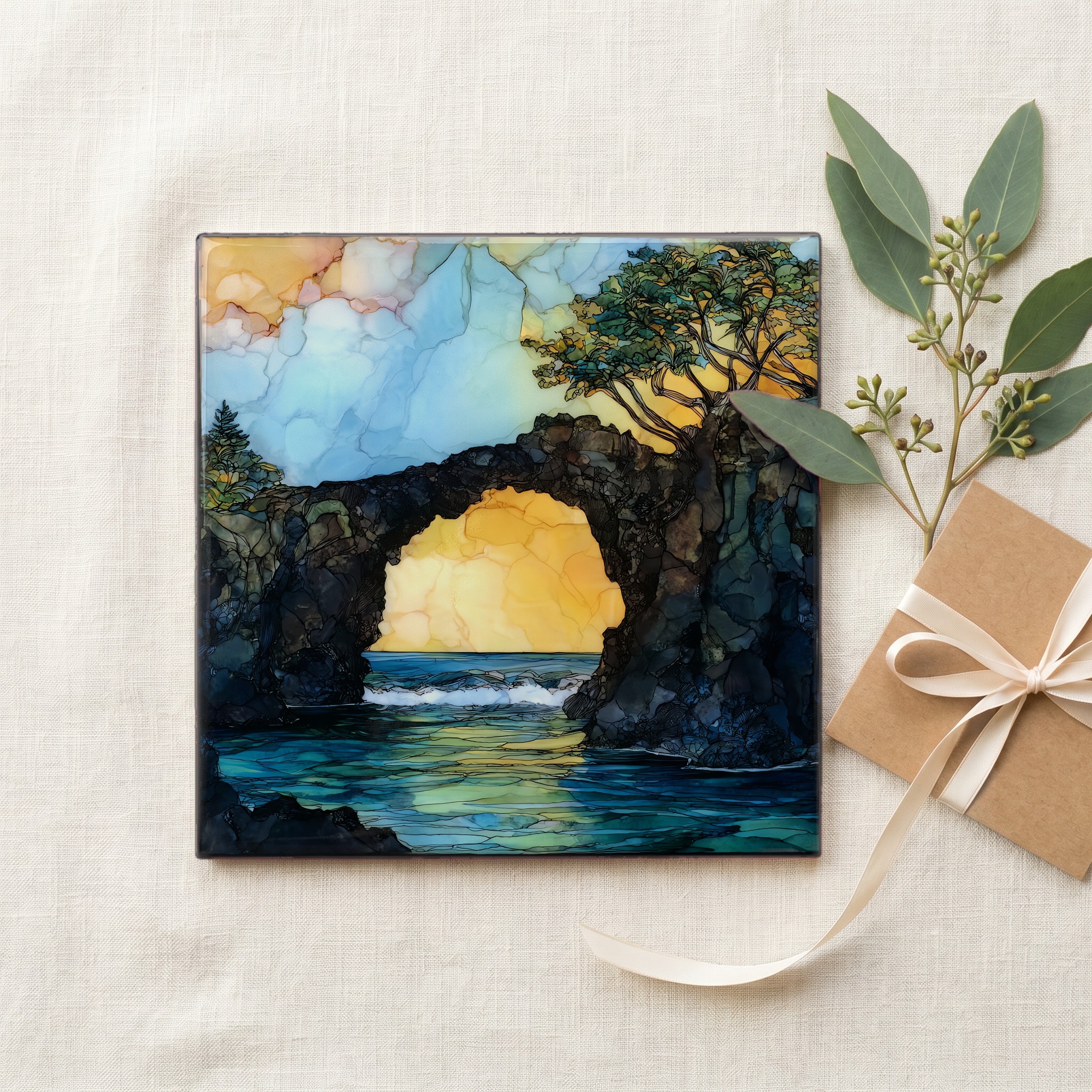
Each tile ships in a kraft box, tied with cream ribbon, with a handwritten note from the studio if you'd like to add one.
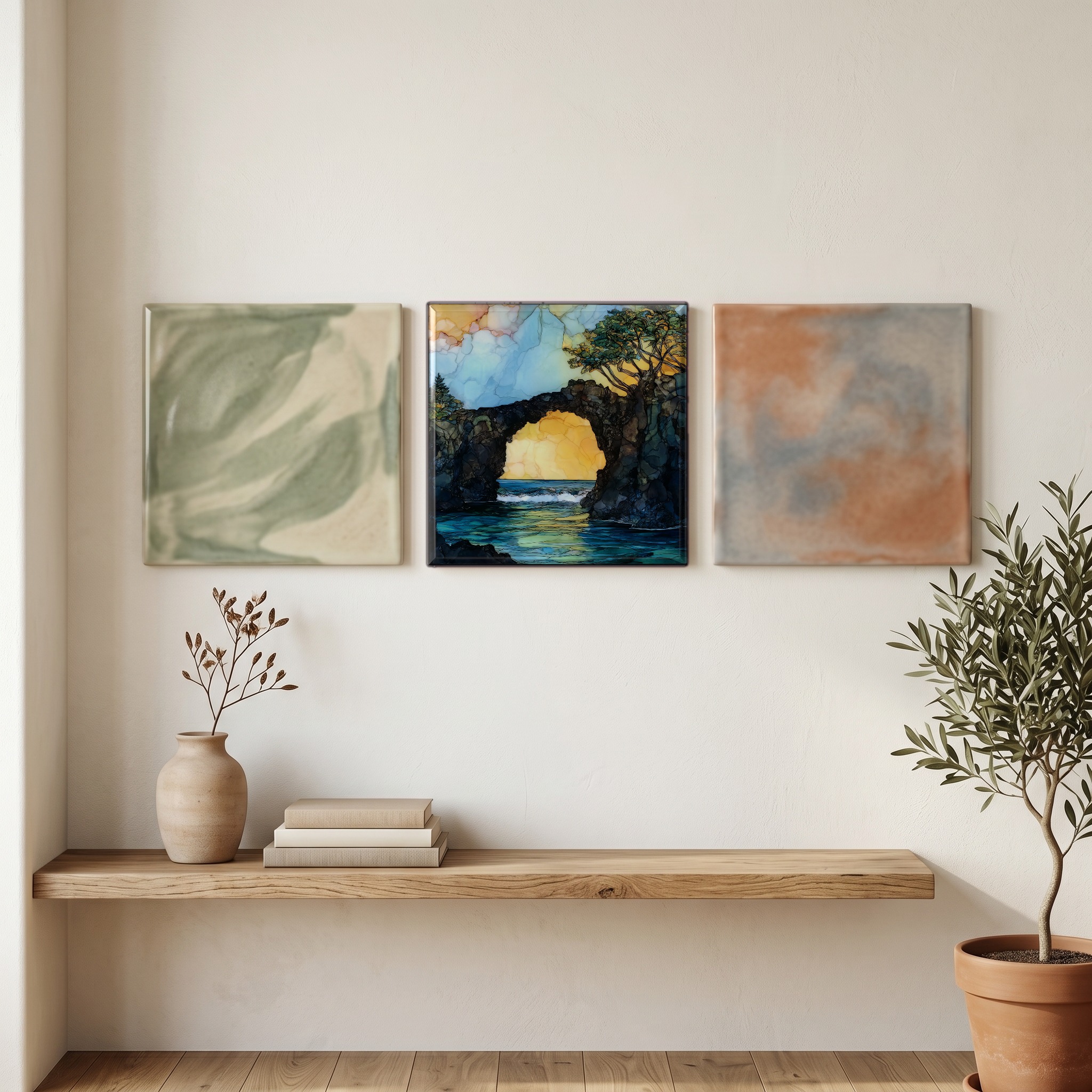
Three or five different vistas, hung together — a chapter of places you've been, or want to go.
The place, in three passes.
Paʻiloa Sea Arch sits inside Waiʻanapanapa State Park, a 122-acre coastal park near the end of the Hana Highway on Maui's eastern shore. The park is reached at mile marker 32, about 53 miles east of Kahului, just before the town of Hana. Waiʻanapanapa translates as 'glistening fresh water' in Hawaiian; the name comes from a pair of freshwater pools and caves further inland in the park. The coast itself is a low basalt headland of dark cliffs, sea stacks, blowholes, and the arch, with the well-photographed black-sand beach (Paʻiloa Beach) tucked into a small bay to the south. The park is administered by the Hawaiʻi Department of Land and Natural Resources.
The whole headland here is a basalt lava flow that hit the Pacific and broke apart in the surf. The black sand at Paʻiloa Beach is the rounded-down remains of that flow, and the arch and sea stacks are what the ocean left standing when the softer rock around them gave out. Native hala (Pandanus tectorius) holds the ground above the cliff in dense stands, the way it has for centuries. Inland, the freshwater caves that give the park its name reflect light through the same dark volcanic rock. The arch reads warmest in the last hour of light, with the cliff and the stack going amber against the blue.
Non-resident visitors must reserve and prepay online through the Hawaiʻi state parks portal before arriving; resident entry remains free. Reservations open 30 days ahead, in four daily slots: 7–10 a.m., 10–12:30 p.m., 12:30–3 p.m., and 3–6 p.m. The park is open daily from 7 a.m. to 6 p.m. Entry is $5 per person; parking is $10 per vehicle. From Kahului the drive runs two and a half to three hours each way along the Hana Highway. The reservation system was put in place to manage heavy visitor pressure on a small coastal site.