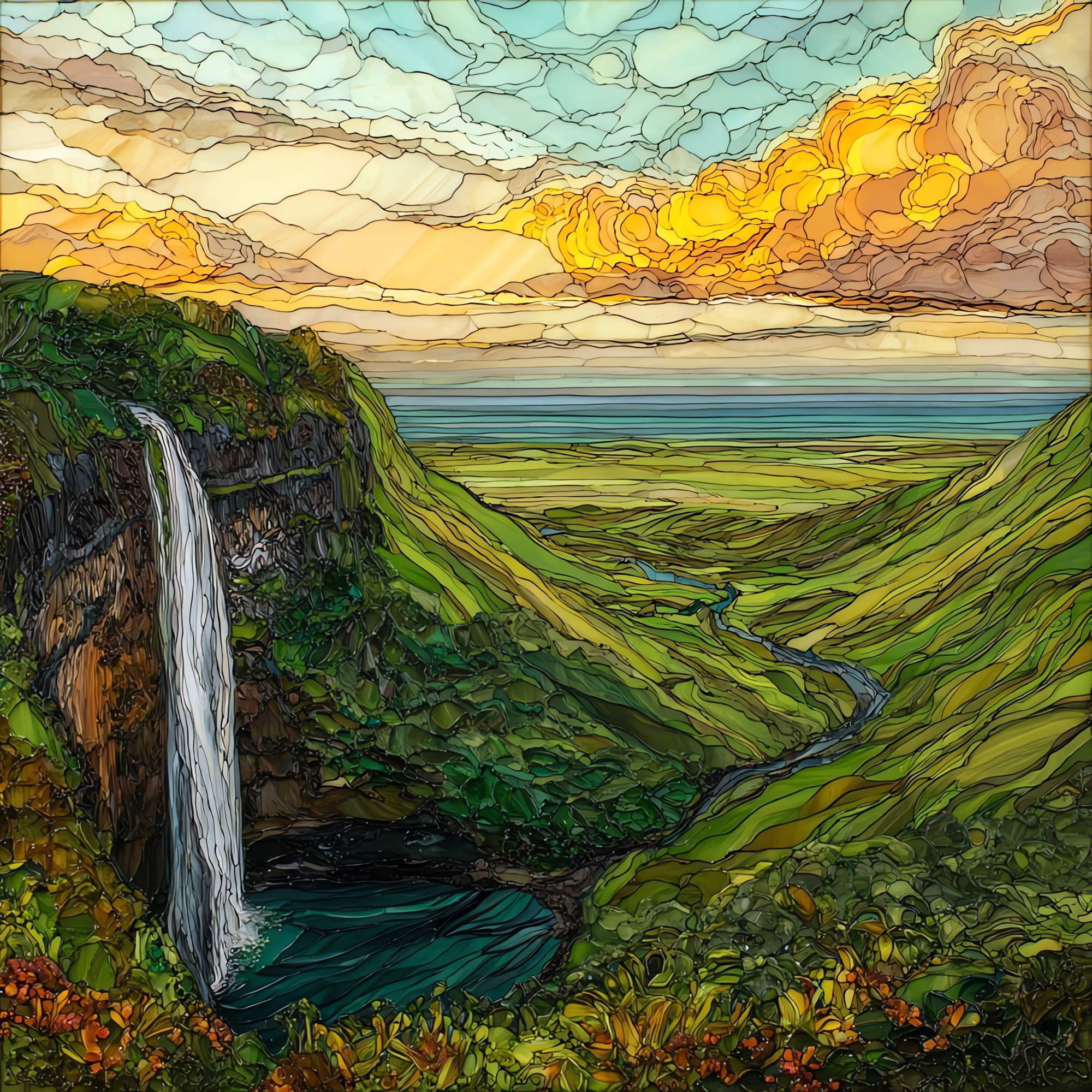
Opaekaa Falls Kauai Ceramic Art Tile
— — water rolling, the way the shrimp once did.
Not only on a wall.
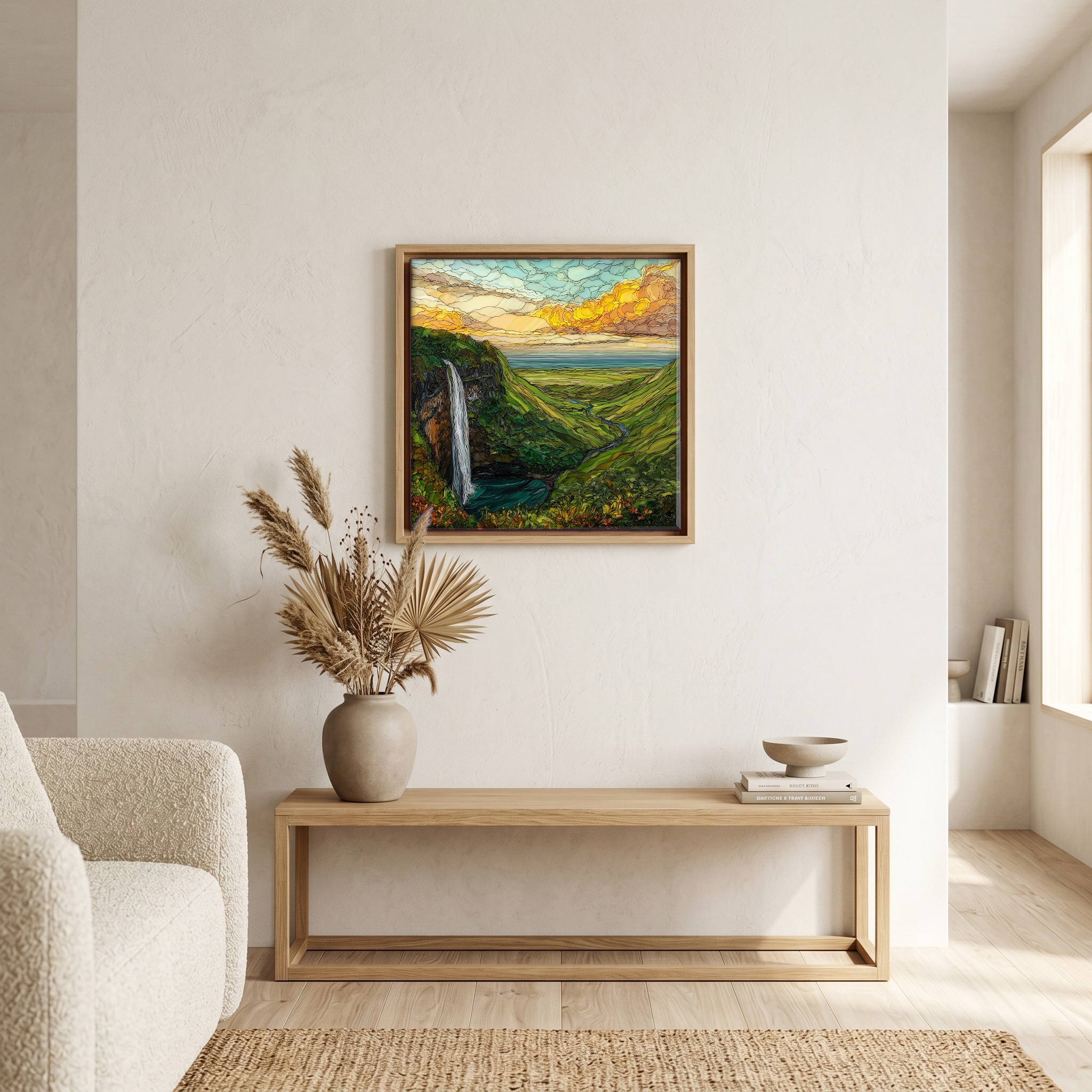
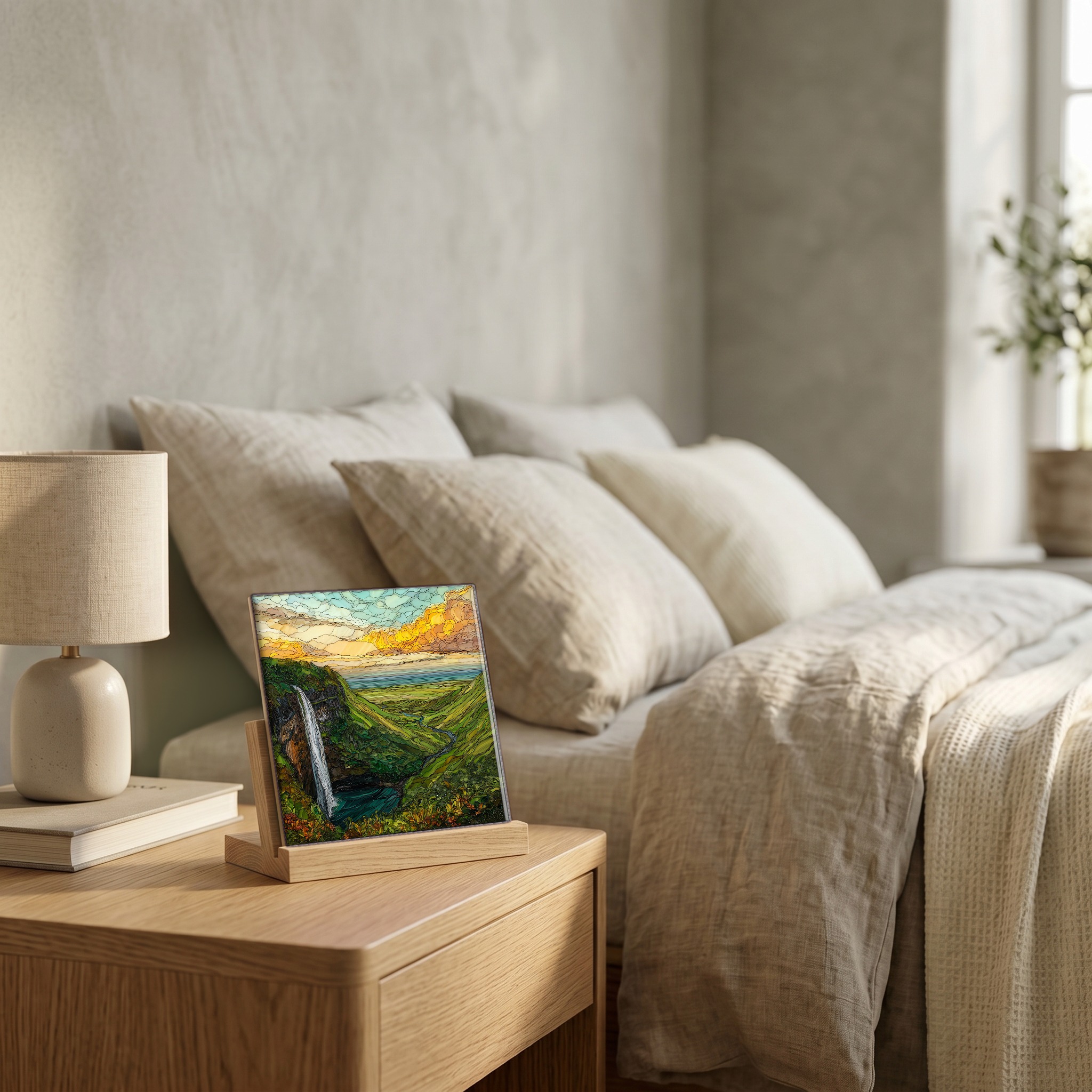
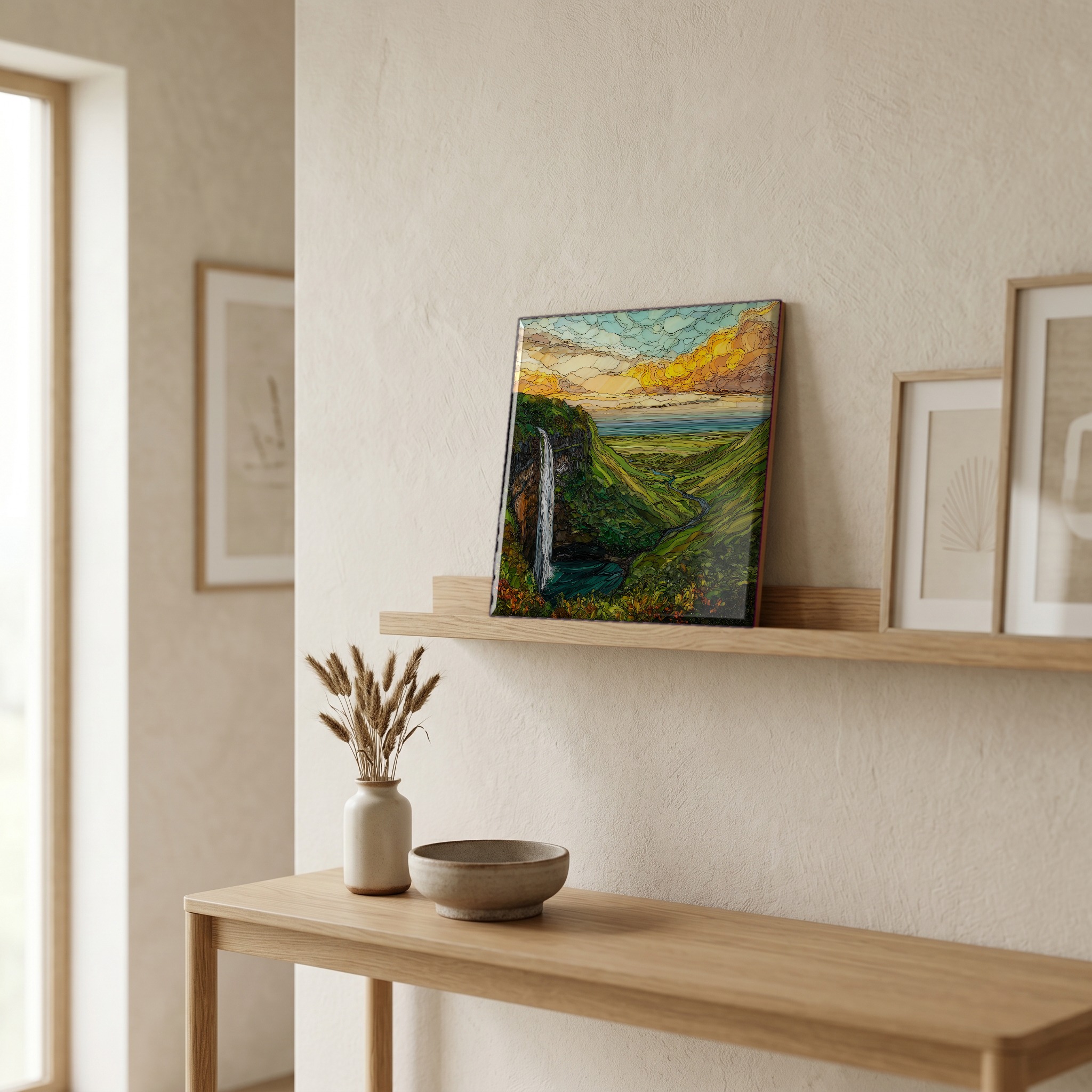
“On the east shore of Kauai, the Wailua River bends north into low hills cut by a single cascade. Opaeka'a, the rolling water. The name belongs to the native freshwater shrimp that once tumbled in the white at the base. There is a roadside lookout on Kuamoo Road, a low guardrail, and the falls drop about a hundred and fifty feet to a green pool below. Visitors pull off, look for a minute, and drive on. Across the road, the Wailua bends again toward the sea. The trade winds carry the sound up to the parking lot.
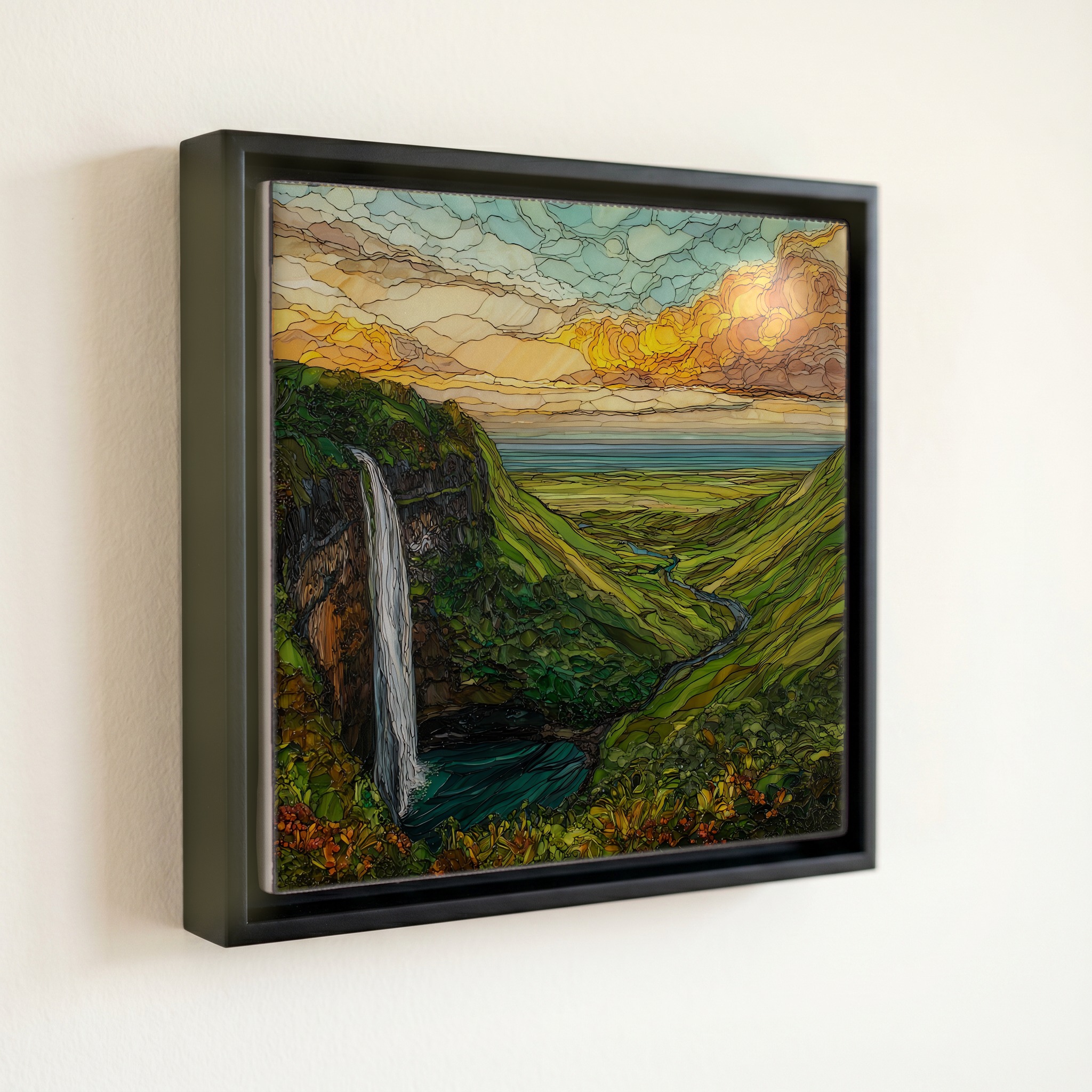
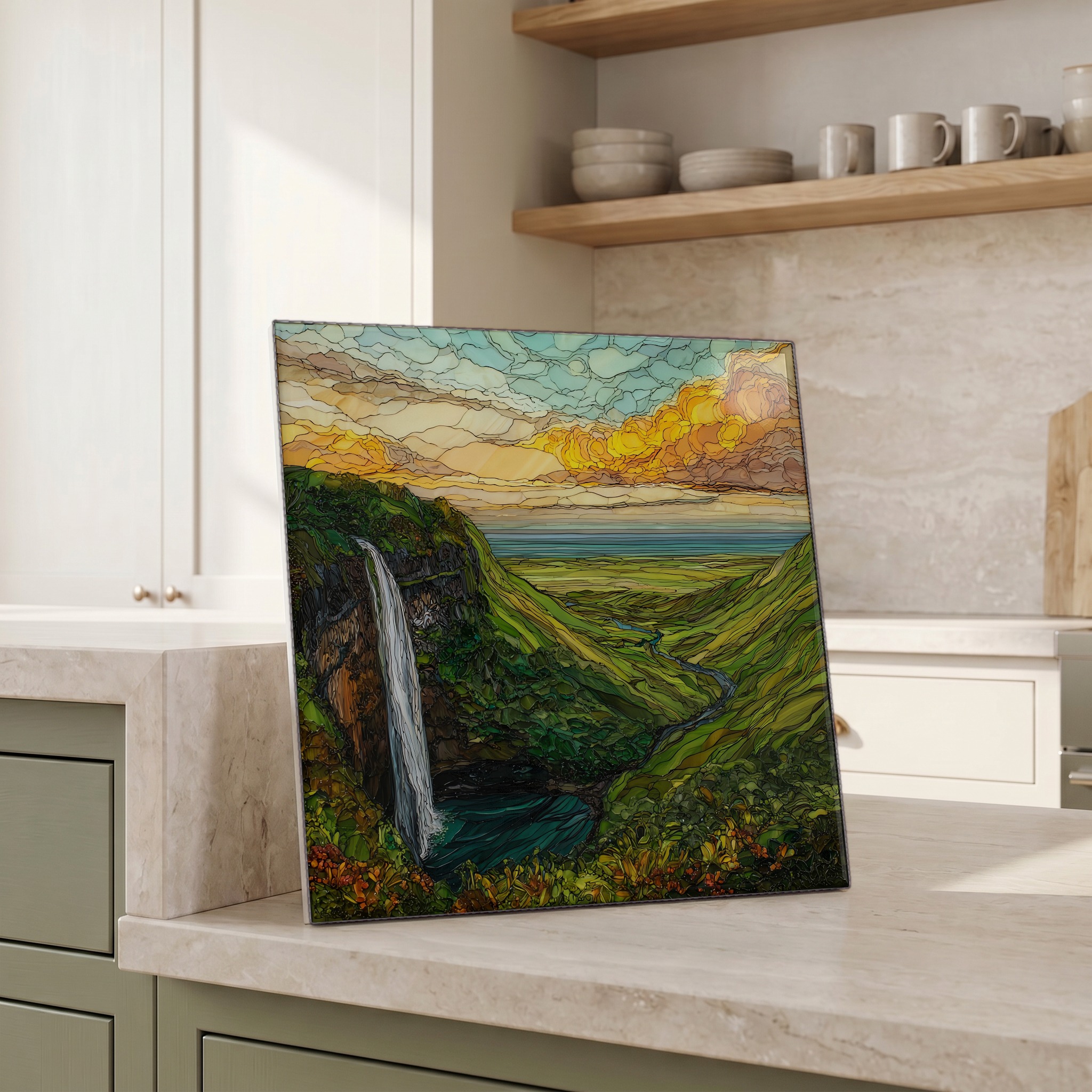
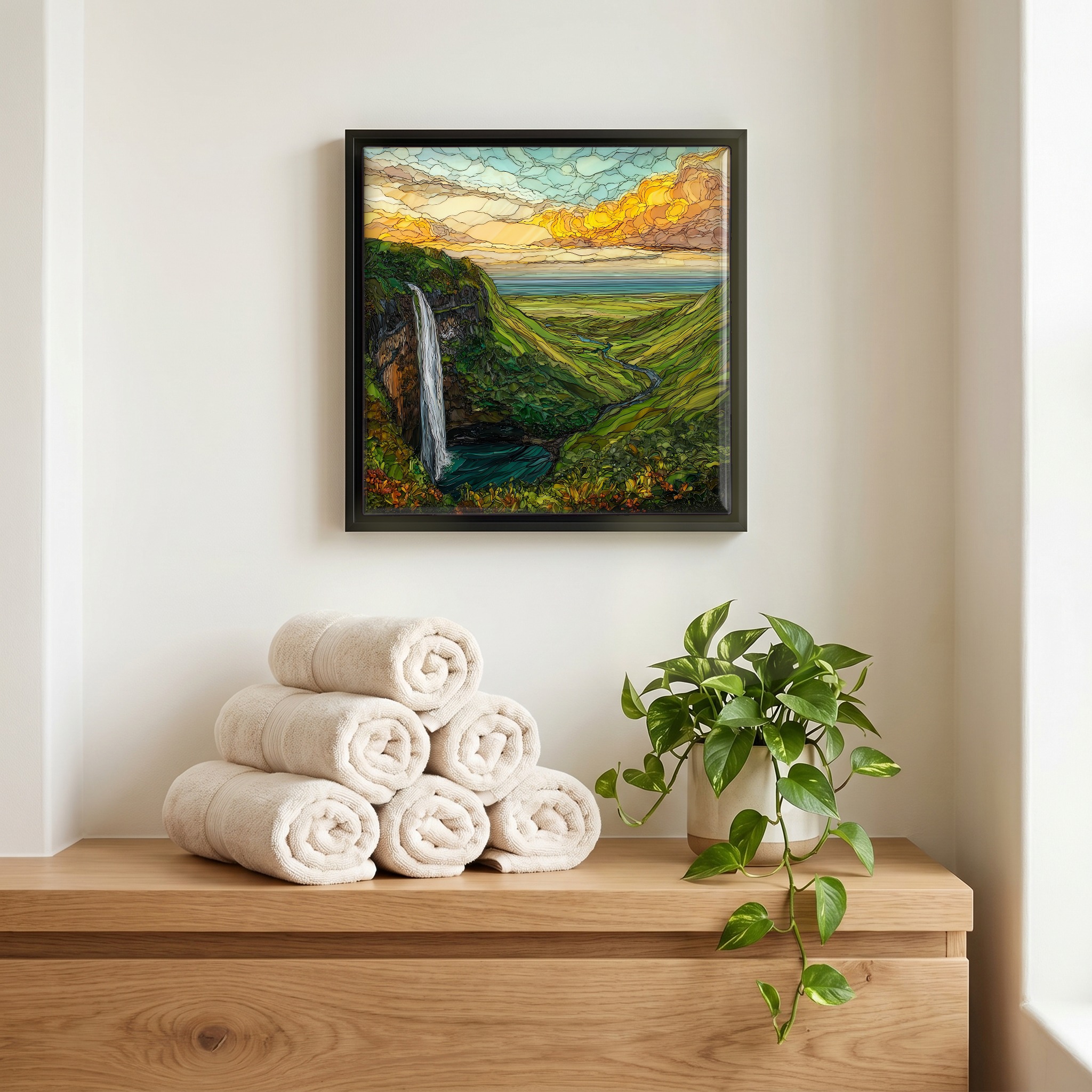
Opaekaa Falls Kauai Ceramic Art Tile, on ceramic.
Each tile is finished by hand in our Knoxville studio. Artwork is slowly infused into the ceramic surface under high heat and pressure, and rests beneath a thin glossy finish. The colour lives in the surface, not on top of it.
Pick any four 4-inch tiles — National Parks you've been to, a Smokies set, the four seasons of one place. $ for a set of , cork-backed, ready to live on the table.
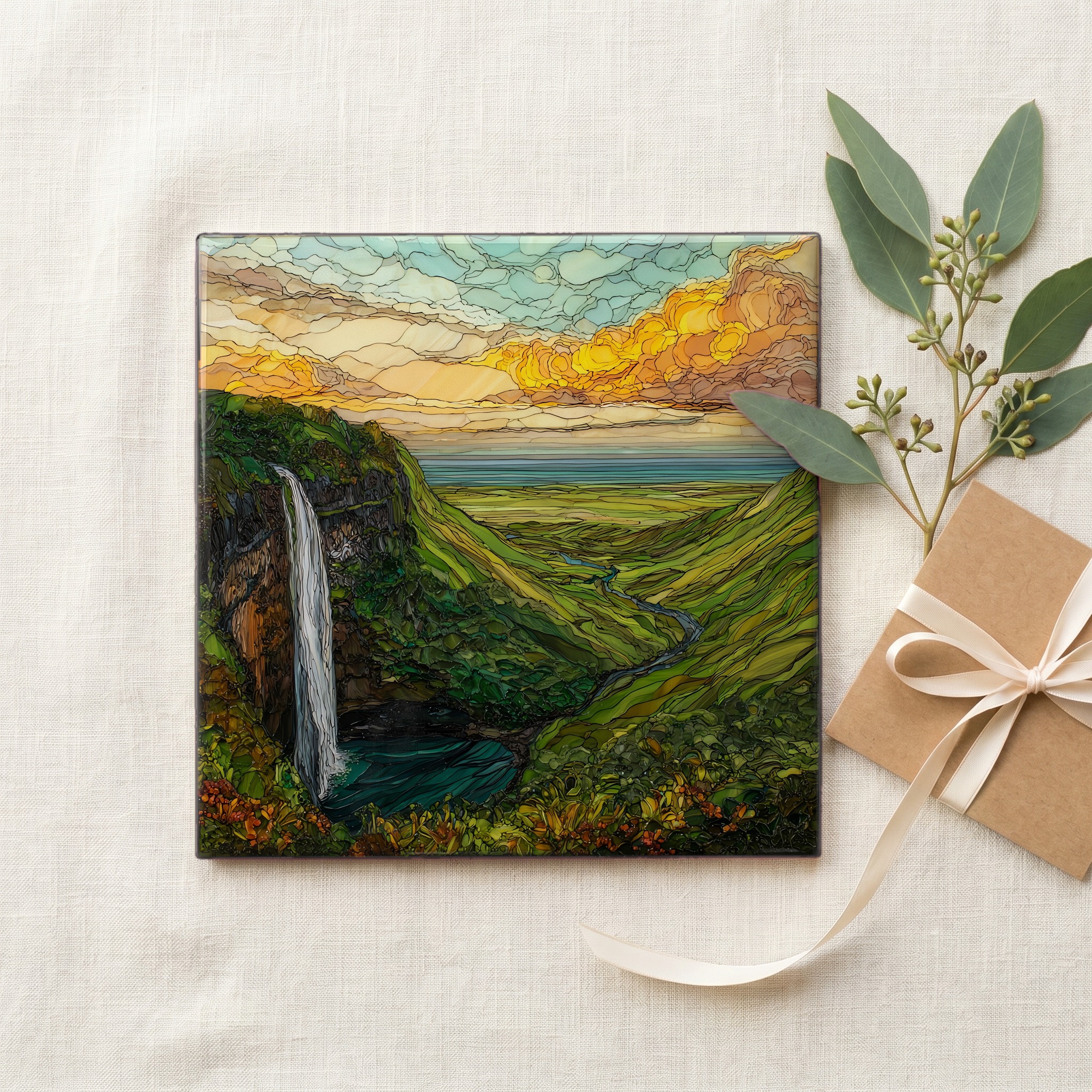
Each tile ships in a kraft box, tied with cream ribbon, with a handwritten note from the studio if you'd like to add one.
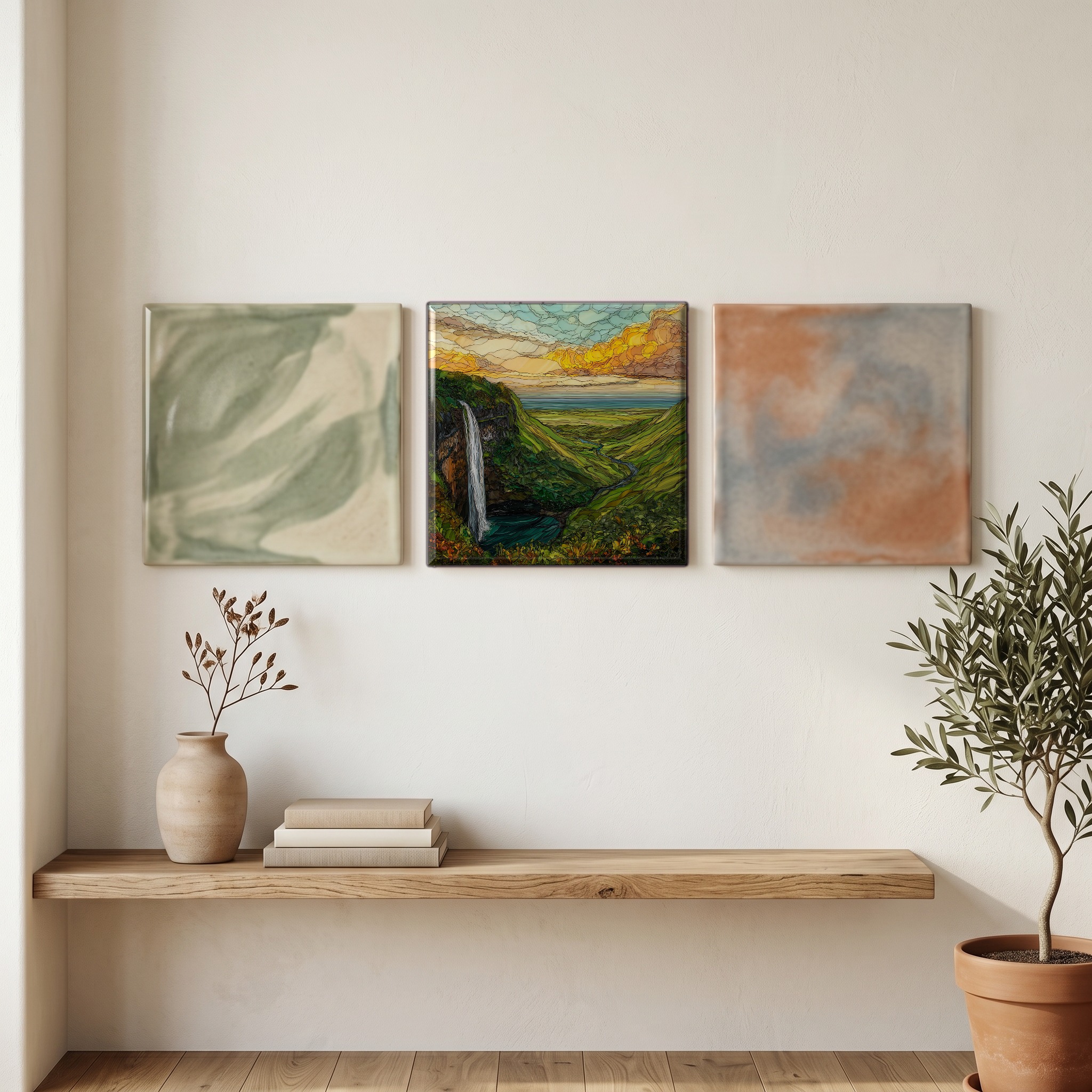
Three or five different vistas, hung together — a chapter of places you've been, or want to go.
The place, in three passes.
Opaeka'a Falls sits on the east shore of Kauai, the oldest of the main Hawaiian Islands, inside Wailua River State Park about three miles inland from the Pacific. The falls drop roughly 151 feet (46 metres) from a basalt ledge into a green pool on Opaeka'a Stream, a tributary of the Wailua River. A signed roadside lookout on Kuamoo Road (Hawaii Route 580), about a mile and a half up from Kuhio Highway, gives the standing view. The Wailua is the only navigable river in the Hawaiian Islands; a second overlook directly across the road shows the river bending toward the Pacific near the town of Wailua.
The name ʻŌpaekaʻa means 'rolling shrimp' in Hawaiian, a reference to native freshwater shrimp that once tumbled visibly in the white at the base of the falls. The population has declined sharply since the 19th century, but the name held. The cascade drops over a basalt ledge formed by ancient lava flows from Waiʻaleʻale, the eroded shield volcano at the centre of the island. The summit of Waiʻaleʻale receives more than 375 inches of rain in an average year, making it one of the wettest places on Earth. That water funnels through the Wailua watershed to feed Opaeka'a Stream continuously, swelling the falls dramatically after a storm.
The Opaeka'a Falls lookout is open to the public during daylight hours, free of charge, with a small paved parking area on the north side of Kuamoo Road inside Wailua River State Park. The standing view is from the guardrail at the rim; descending below the lookout is prohibited and has resulted in fatalities, with loose basalt and steep drops below the ledge. Across the road, a second overlook gives a view down to the Wailua River and the recreated Kamokila Hawaiian Village. The lookout is most photogenic in the morning, when the sun moves across the east-facing cliff. After heavy rain the volume can triple within a few hours.