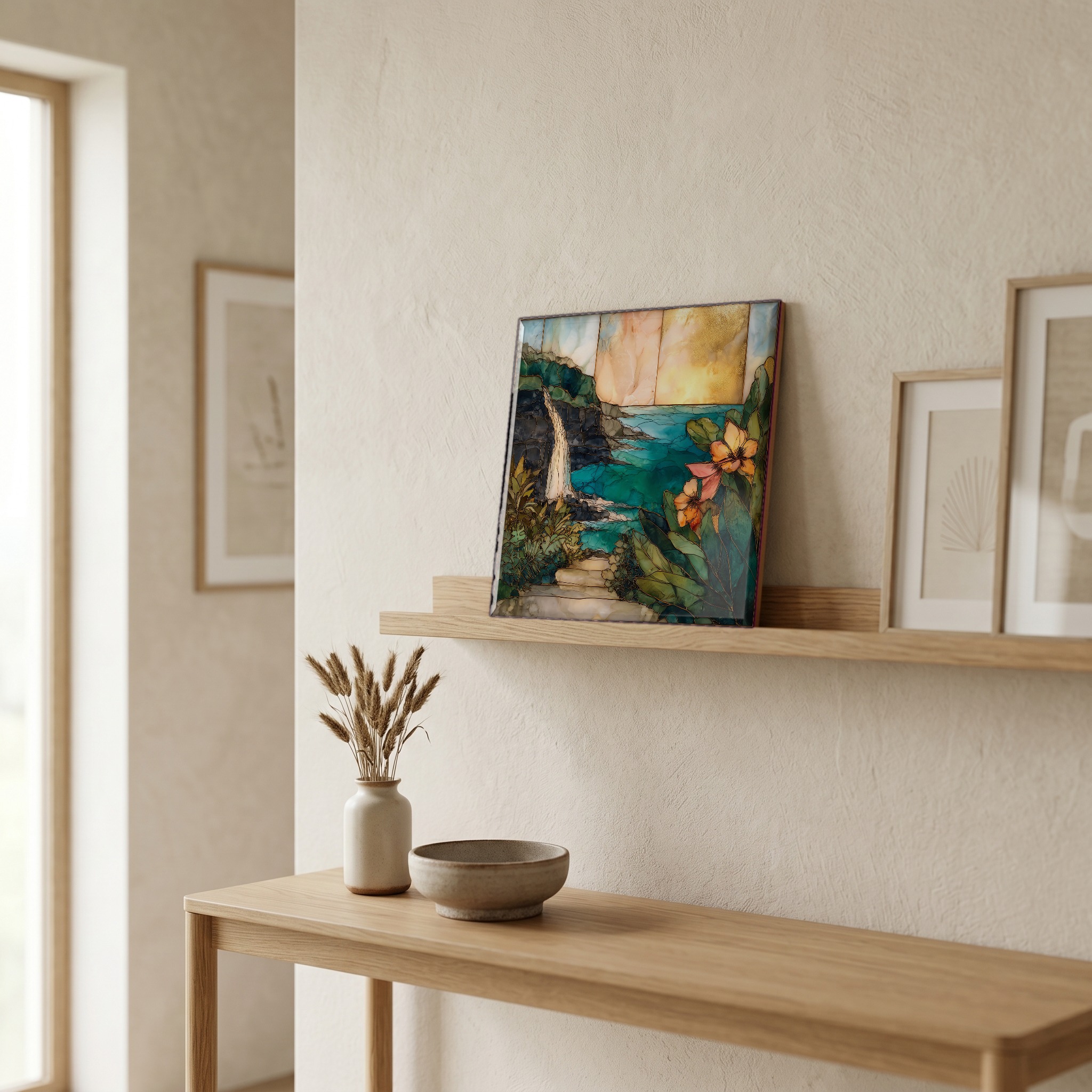
Wender·Vista
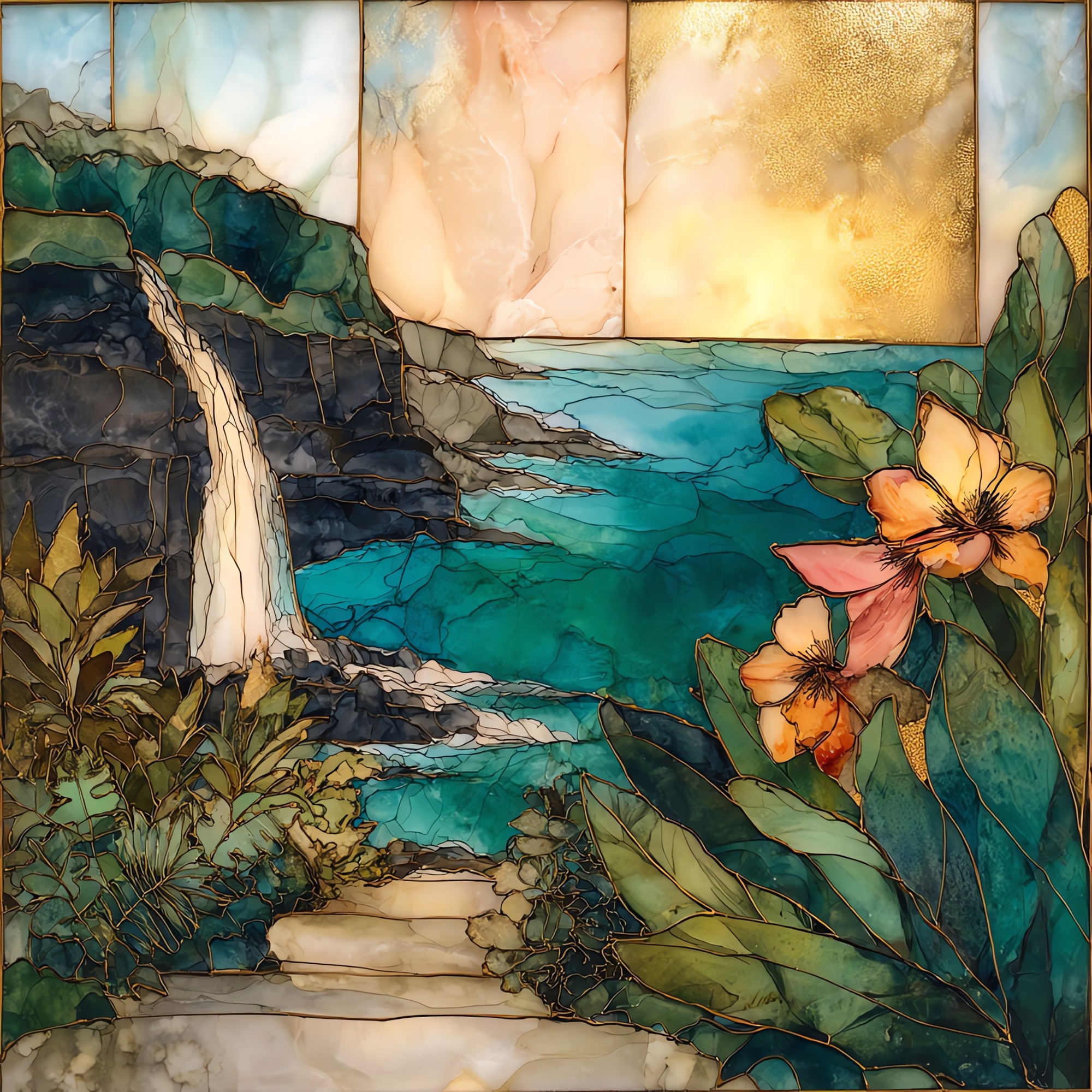
Onomea Bioreserve Big Island Ceramic Art Tile
shown on ceramic, 12-inch tileHawaii · United States
north of Hilo on the Hāmākua Coast

Onomea Bioreserve Big Island Ceramic Art Tile

— a rainforest that runs down to the sea.

Where it lives

Not only on a wall.

A small tile on the nightstand catching the morning. A larger one above the fire. Yours, wherever you spend the slow hours.
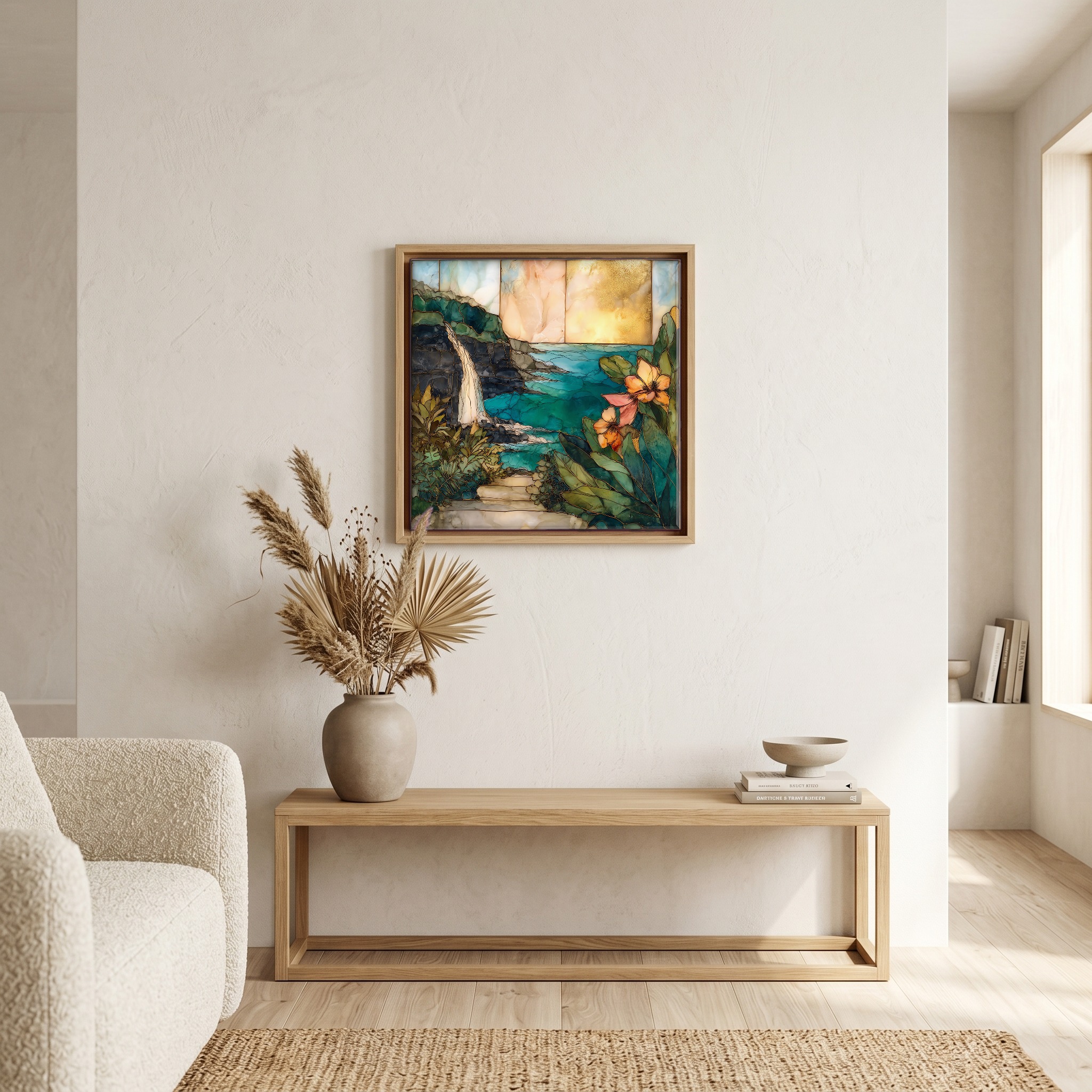
Above the bench, in a warm oak surround.
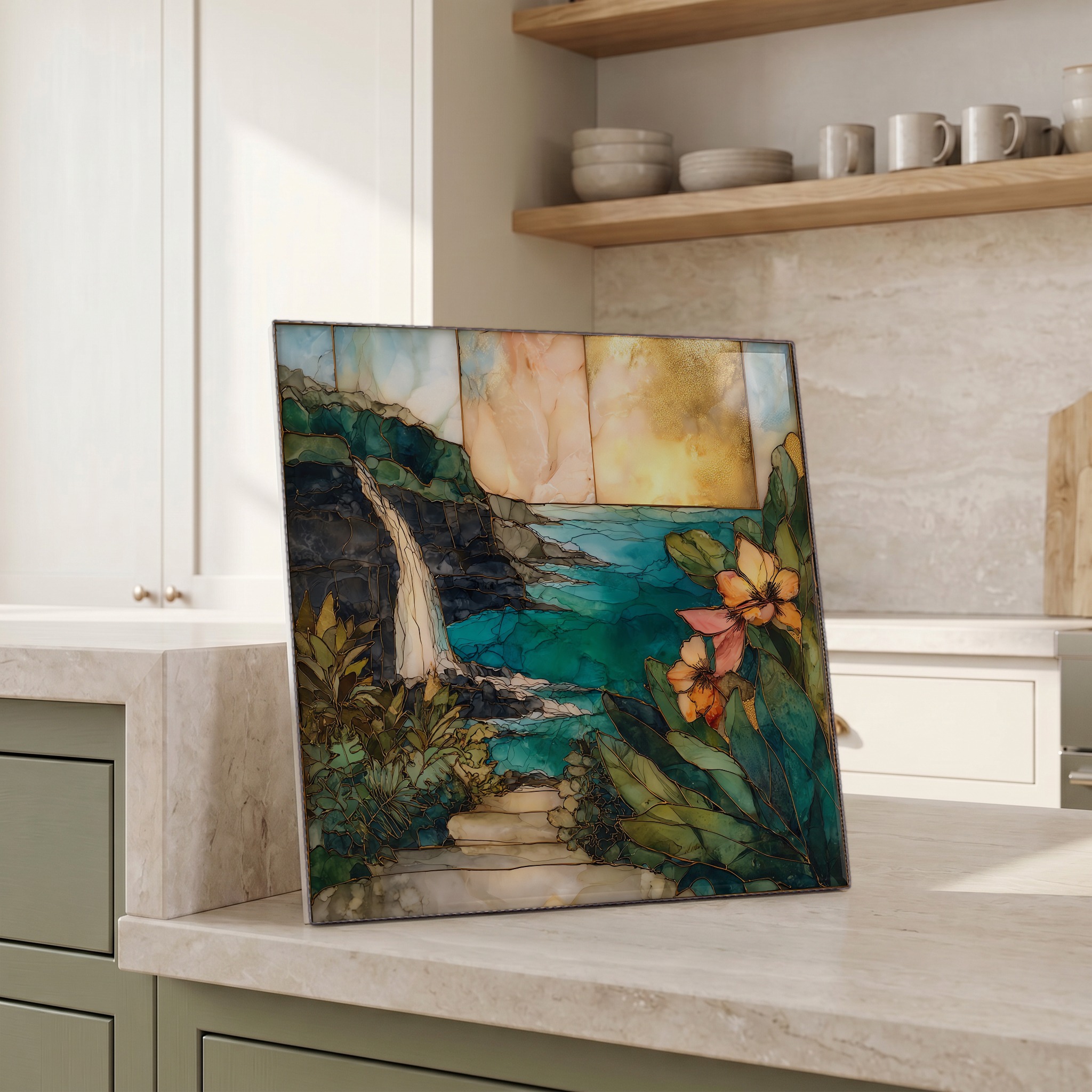
Beside the kettle, propped on the counter.
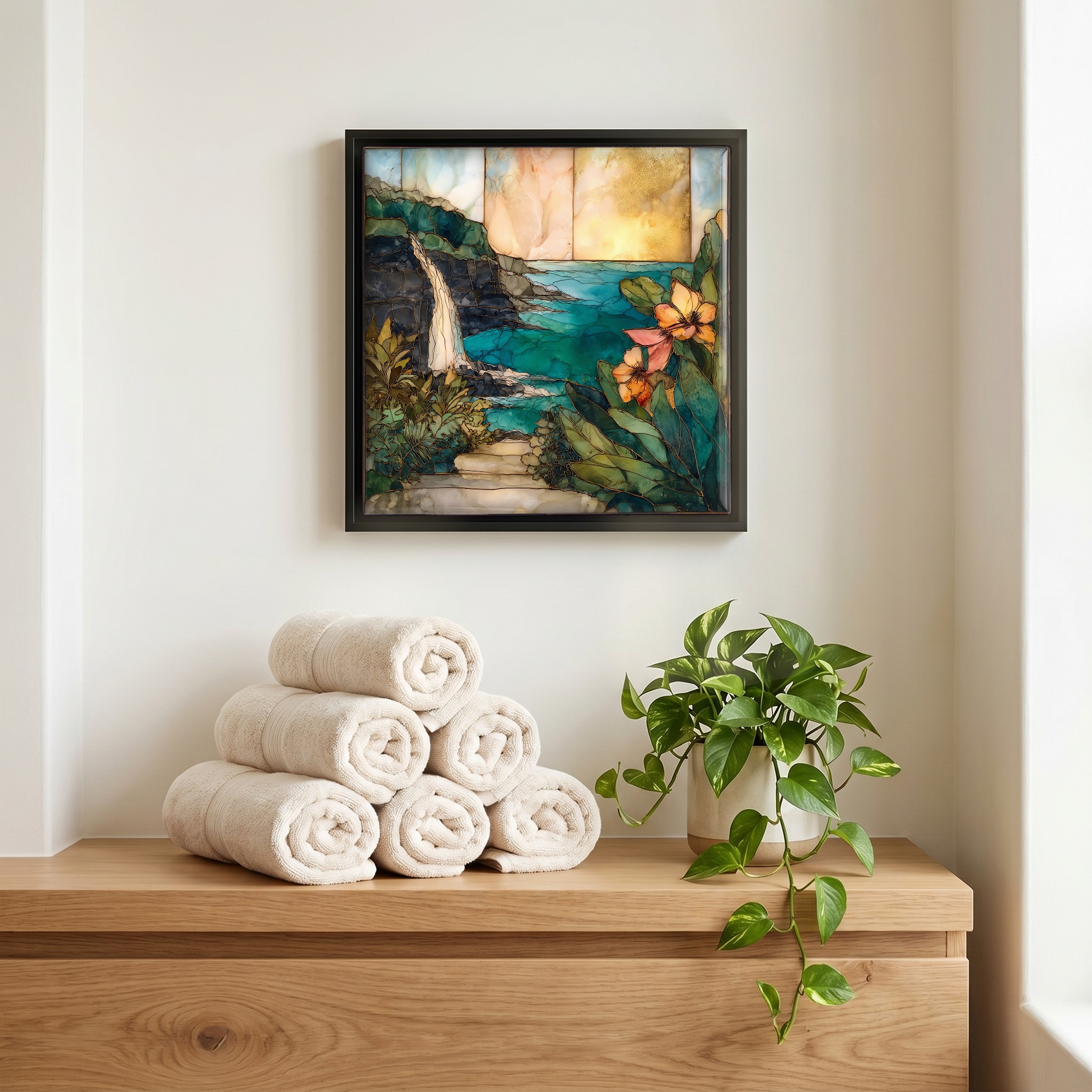
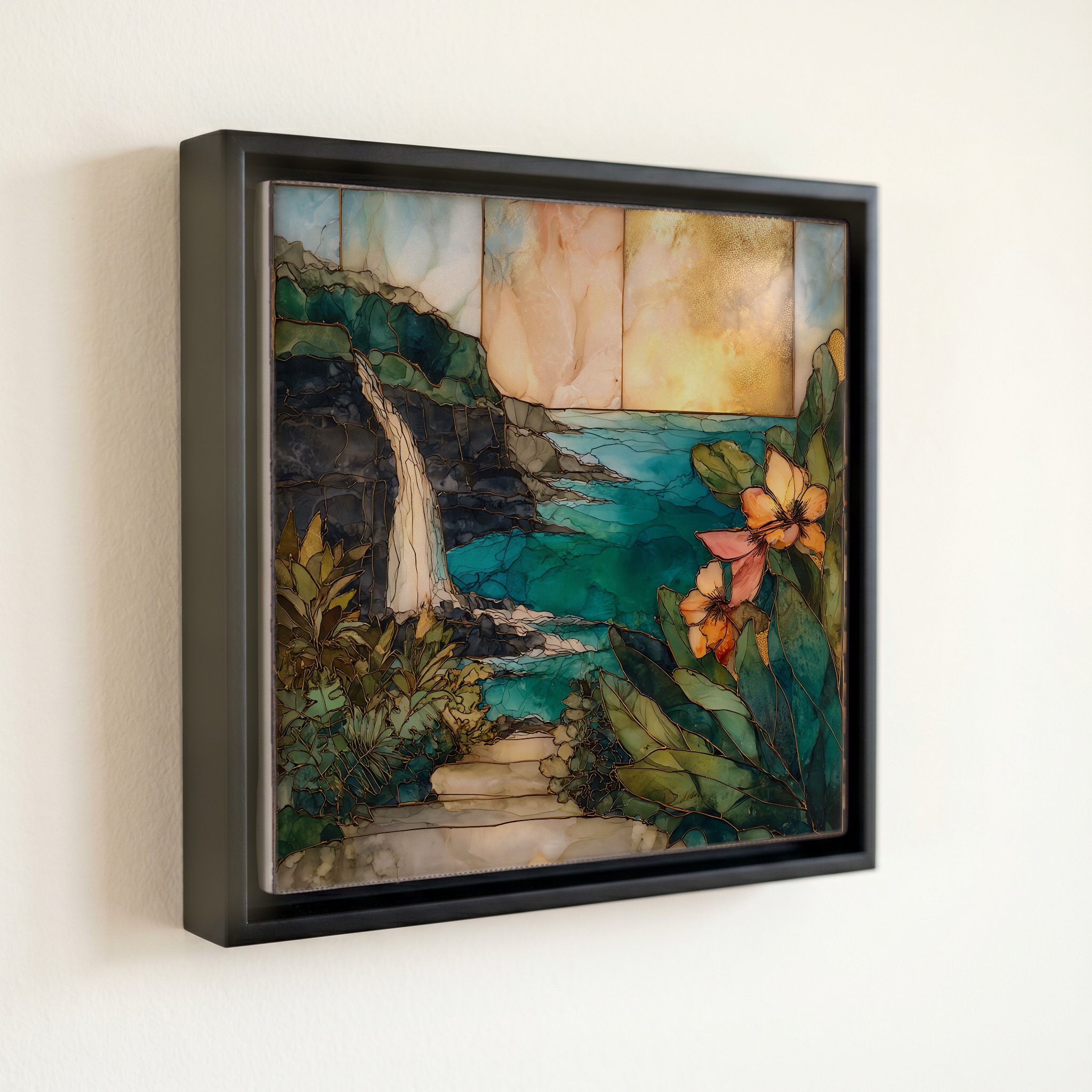
Above the linens, in a slim black surround.
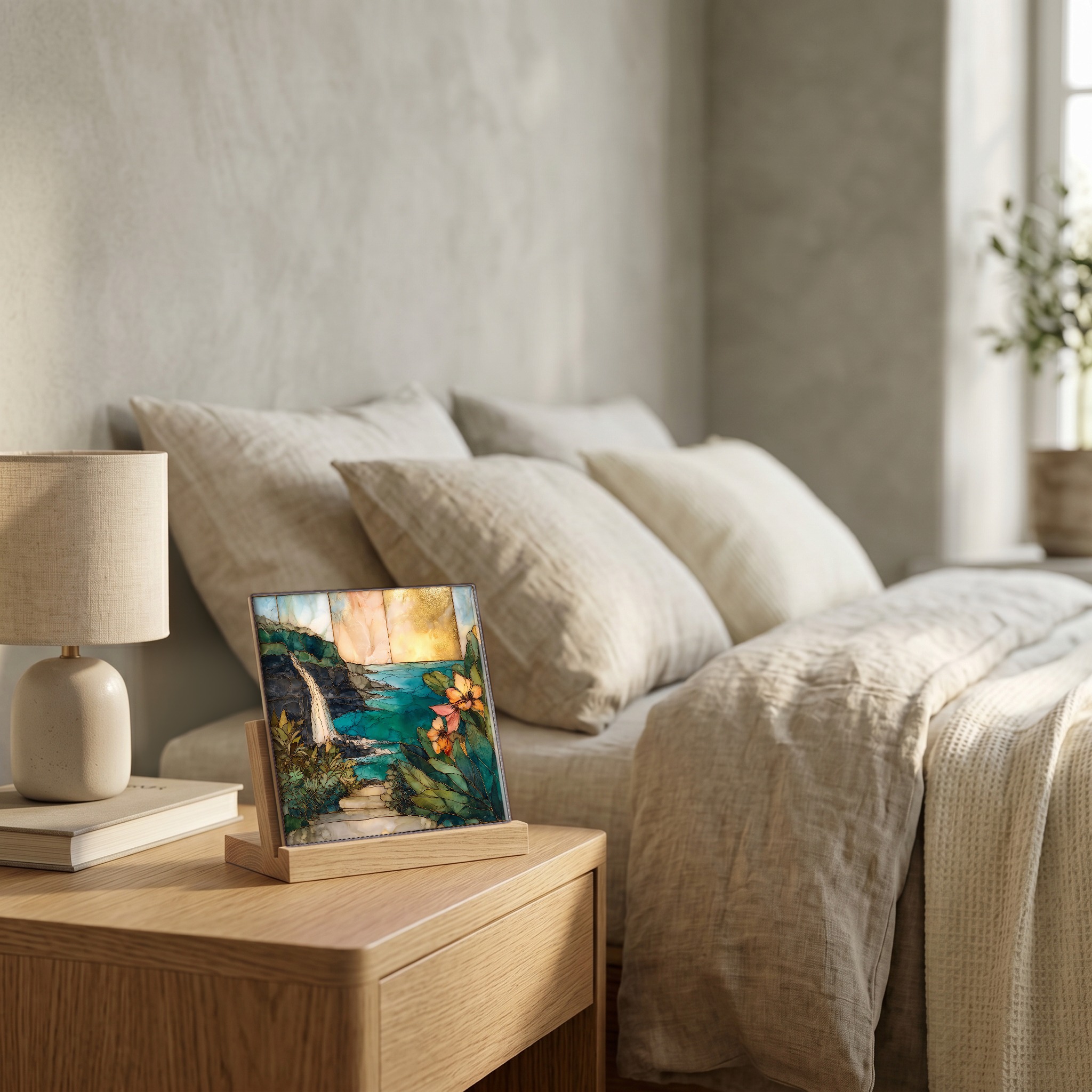
On the nightstand, on a light oak stand.
On a picture ledge, where the light comes in.
a note from the studio

A pocket of Hāmākua coast about seven miles north of Hilo, where Onomea and Alakahi streams drop off Mauna Kea and the rainforest runs all the way down to the bay. The garden Dan Lutkenhouse cut from impenetrable jungle in the late 1970s, foot by foot, sits inside that valley now: boardwalks under ginger and heliconia, an orchid house, a small waterfall, an ocean overlook where the old sea arch used to be before the '56 quake took it. The trade wind comes up the valley most afternoons. Quiet that the road above does not reach.
from the studio
shown in a slim black floating frame · 6 × 6 in
— bring it home

Onomea Bioreserve Big Island Ceramic Art Tile, on ceramic.

Each tile is finished by hand in our Knoxville studio. Artwork is slowly infused into the ceramic surface under high heat and pressure, and rests beneath a thin glossy finish. The colour lives in the surface, not on top of it.

What kind of piece?
One tile — square or rectangle.
How big?
the popular one — counter, shelf, nightstand
6 × 6 in · 15 cm · 1.6 lb
Surface finish
A clear glossy finish — the artwork reads as if under resin. Ideal for show-pieces and framed wall art.
How it sits
A hidden cleat — sits ¼″ proud of the wall.
$58
Hand-finished and shipped from our studio at the foot of the Smokies. On your wall in about ten days.
size
6 × 6 in
15 cm
weighs
1.6 lb
solid in the hand
surface
ceramic, hand-finished
art rests beneath a thin glossy finish
from
Knoxville, TN
our family studio, at the foot of the Smokies
— start a Coaster Set

Pick any four 4-inch tiles — National Parks you've been to, a Smokies set, the four seasons of one place. $ for a set of , cork-backed, ready to live on the table.
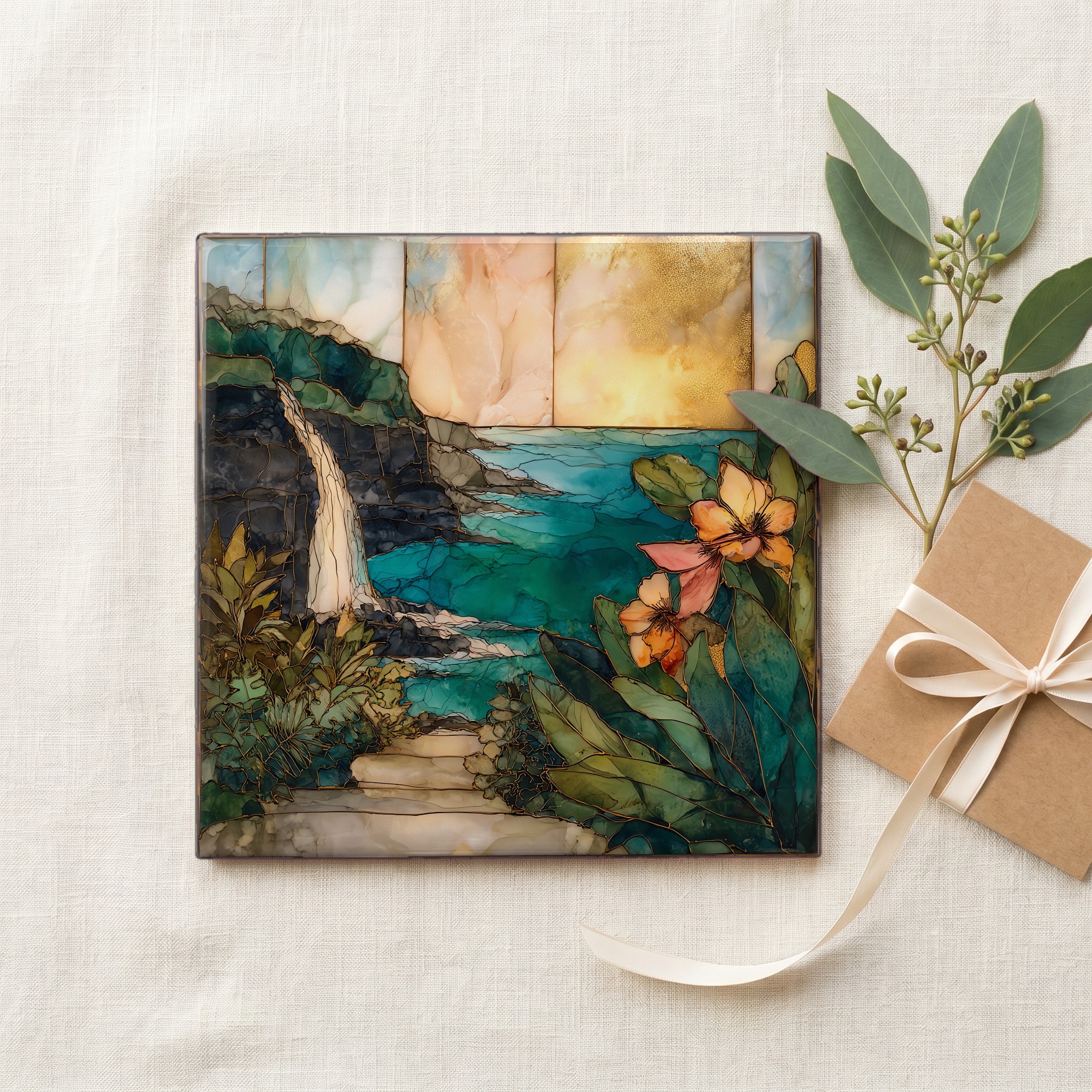
comes gift-ready
comes gift-ready

Each tile ships in a kraft box, tied with cream ribbon, with a handwritten note from the studio if you'd like to add one.
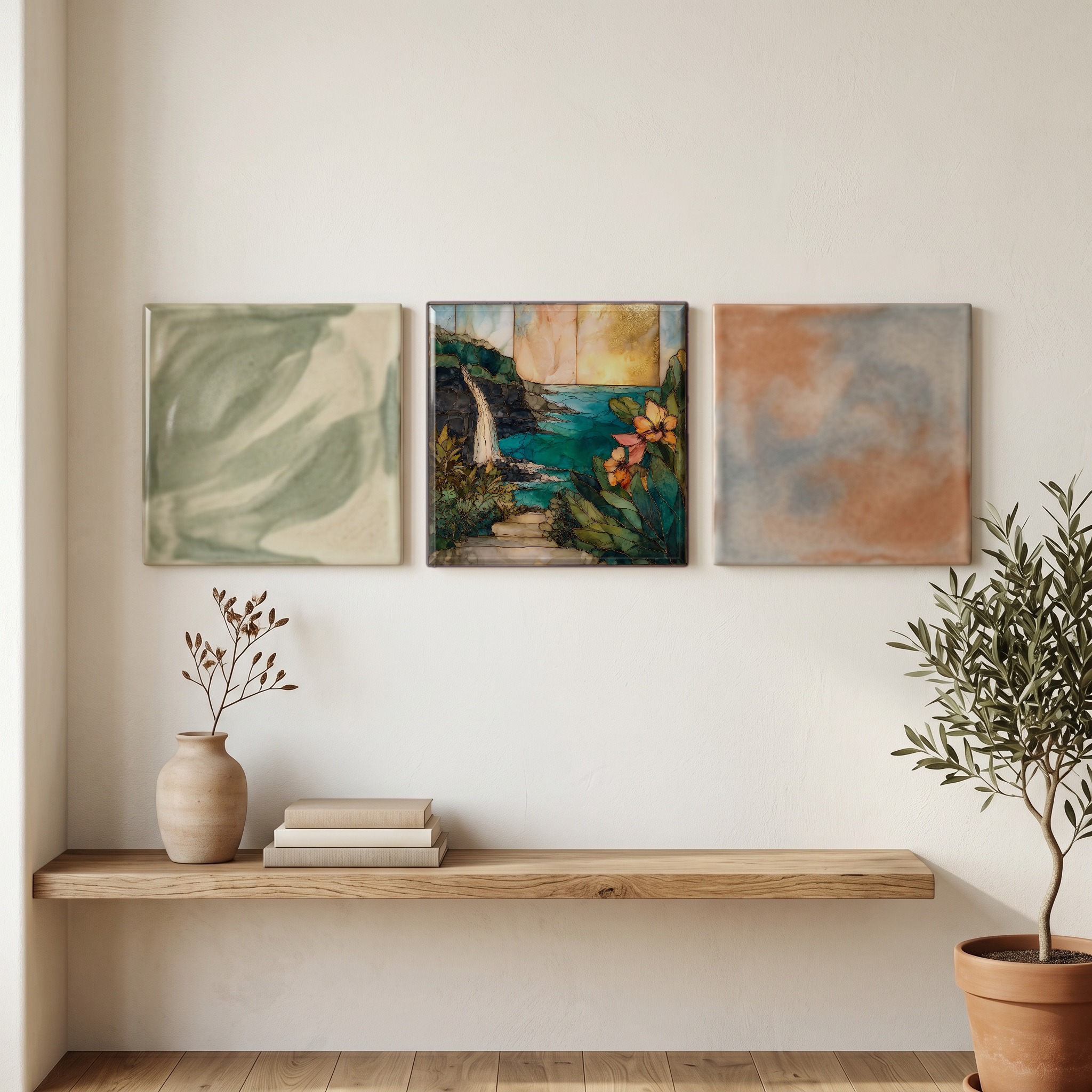
or build a grouping
or build a grouping

Three or five different vistas, hung together — a chapter of places you've been, or want to go.

about Onomea Bioreserve Big Island Ceramic Art Tile

The place, in three passes.

A little of what's known, in case you fall down the rabbit hole — or want to go see it yourself.
the place

The Hawaii Tropical Bioreserve & Garden occupies a seventeen-acre fold in Onomea Valley, about seven miles north of Hilo on the Big Island's Hāmākua Coast. The valley was cut by the Onomea and Alakahi streams as they drop off Mauna Kea, with the lower section emptying into a small Pacific bay once known as Kahaliʻi. A boardwalk leads down from the visitor centre at the top of the slope through rainforest canopy, past Onomea Falls and an orchid collection of more than 270 species, to an overlook above the water. The garden is reached from State Route 19 via a four-mile scenic detour on the Old Māmalahoa Highway, signed as the Pepeʻekeo Scenic Drive.

the water

Onomea Bay sits at the foot of the valley where two streams from Mauna Kea reach the sea. For most of the twentieth century the most photographed feature on this coast was the Onomea Arch, a wave-cut sea bridge that stood thousands of years before a 1956 earthquake brought it down. The point where it once stood is still the trail's quiet ending; the ocean works on the same lava cliffs below. Onomea Falls, a smaller waterfall on the upper grounds, never dries; tropical rain along this stretch of coast averages more than 200 inches per year, over five times the U.S. national mean.

the visit

The garden is open to the public daily and is the only public access into Onomea Valley apart from the Donkey Trail that drops down from the road above. The site sits on the Pepeʻekeo Scenic Drive, a four-mile detour off Highway 19 about seven miles north of Hilo, rejoining the highway near Papaikou. The boardwalk loop runs roughly three quarters of a mile with a steep grade; sturdy shoes are sensible and the canopy keeps the path damp. The property has been held as a nonprofit nature preserve since it opened in 1984, seven years after Dan Lutkenhouse began clearing the valley by hand.

where
United States · Hawaiʻi County, Hawaii
within
Hawaii Tropical Bioreserve & Garden
position
19.8106° N · 155.0958° W
the neighborhood

What's nearby.

A handful of named places within an hour's walk or short drive. Some we've already painted; some we will.
3 km N
Pepeʻekeo
former plantation village
14 km NW
ʻAkaka Falls State Park
442-foot waterfall
11 km SW
Rainbow Falls
Wailuku River waterfall
10 km SW
Liliʻuokalani Park & Gardens
Japanese garden on Hilo Bay
11 km SW
Downtown Hilo
harbour town
N
Onomea Bioreserve Big Island Ceramic Art Tile
Pepeʻekeo
ʻAkaka Falls State Park
Rainbow Falls
Liliʻuokalani Park & Gardens
Downtown Hilo
common questions

What people ask.

A few questions we get about Onomea Bioreserve Big Island Ceramic Art Tile — and about bringing the piece home.
about the place

On the Hāmākua Coast of the Big Island, about seven miles north of Hilo in Onomea Valley. The entrance sits on the Old Māmalahoa Highway, signed as the Pepeʻekeo Scenic Drive off State Route 19 near Papaikou.

The natural sea arch at the mouth of Onomea Bay stood for thousands of years before a 1956 earthquake brought it down. The overlook at the end of the garden's trail looks out over the cove where it stood; the lava cliffs that supported it are still visible.

Dan J. Lutkenhouse bought the seventeen-acre Onomea Valley parcel in 1977 and spent seven years clearing the overgrown jungle by hand with a small crew before opening the garden to the public in 1984.

More than 2,500 species of tropical plants, including an orchid garden of over 270 species. The collection emphasises plants of the wet tropics and the property is run as a nonprofit nature preserve rather than a botanical research institution.

No. Onomea Bay is a narrow cove with strong surge along lava cliffs and no beach for swimming or wading. The garden's trail ends at a viewing platform above the water; the bay is for looking at, not for entering.

A four-mile loop on the Old Māmalahoa Highway that leaves State Route 19 just north of Hilo and rejoins it near Pepeʻekeo. The road passes through dense Hāmākua Coast rainforest and a series of one-lane bridges; the bioreserve sits about halfway along.

Dan J. Lutkenhouse, who discovered Onomea Valley while visiting the Big Island in 1977. He moved his family from California, bought the seventeen-acre parcel, and worked the property by hand for seven years before opening it to the public in 1984.

about the piece in your home

It has carried well for customers with ties to the Hilo side of the island. Onomea is one of the green places people miss after they leave: the rainforest, the road past the gardens, the bay below. A Small or a Coaster with a handwritten note from the studio travels well.

The painting's stained-glass greens and ocean blues sit comfortably with biophilic interiors, coastal-modern rooms, and tropical-Modernist palettes. The piece holds up next to natural wood, rattan, and woven textures more than it does against high-contrast minimalist white.

Yes. Biophilic interiors lean on real plant material plus art that carries plant and water imagery; a single Large of a rainforest valley like Onomea does that work without crowding the room. It pairs naturally with a heavy houseplant program.

The single Large carries a typical sofa or console on its own. For a wider wall above eighty inches, the four-tile Mural reads at a distance. For a statement piece above a long sectional, the nine-tile Mural is the right scale.

Yes. Choose the Dura Satin or Matte finish for any humid or splash-zone install: backsplashes, showers, walk-in pantries. The colour is slowly infused into the ceramic surface under high heat and pressure, so steam and water do not affect the image.

A soft microfibre cloth and water. No abrasive sponges, no acidic cleaners. The thin glossy finish keeps fingerprints from setting, and the tile surface itself does not need sealing or special care over its lifetime.

Yes. The Onomea piece is original to Wender Studios in Knoxville, Tennessee. Reid Wender chooses the places that enter the WenderVista atlas and the studio paints each one in its own visual language; no images are licensed in.

if this one stayed with you

A few you might also love.

Hand-picked by the eye that found Sorapis. Same air, same kind of quiet.