Wender·Vista
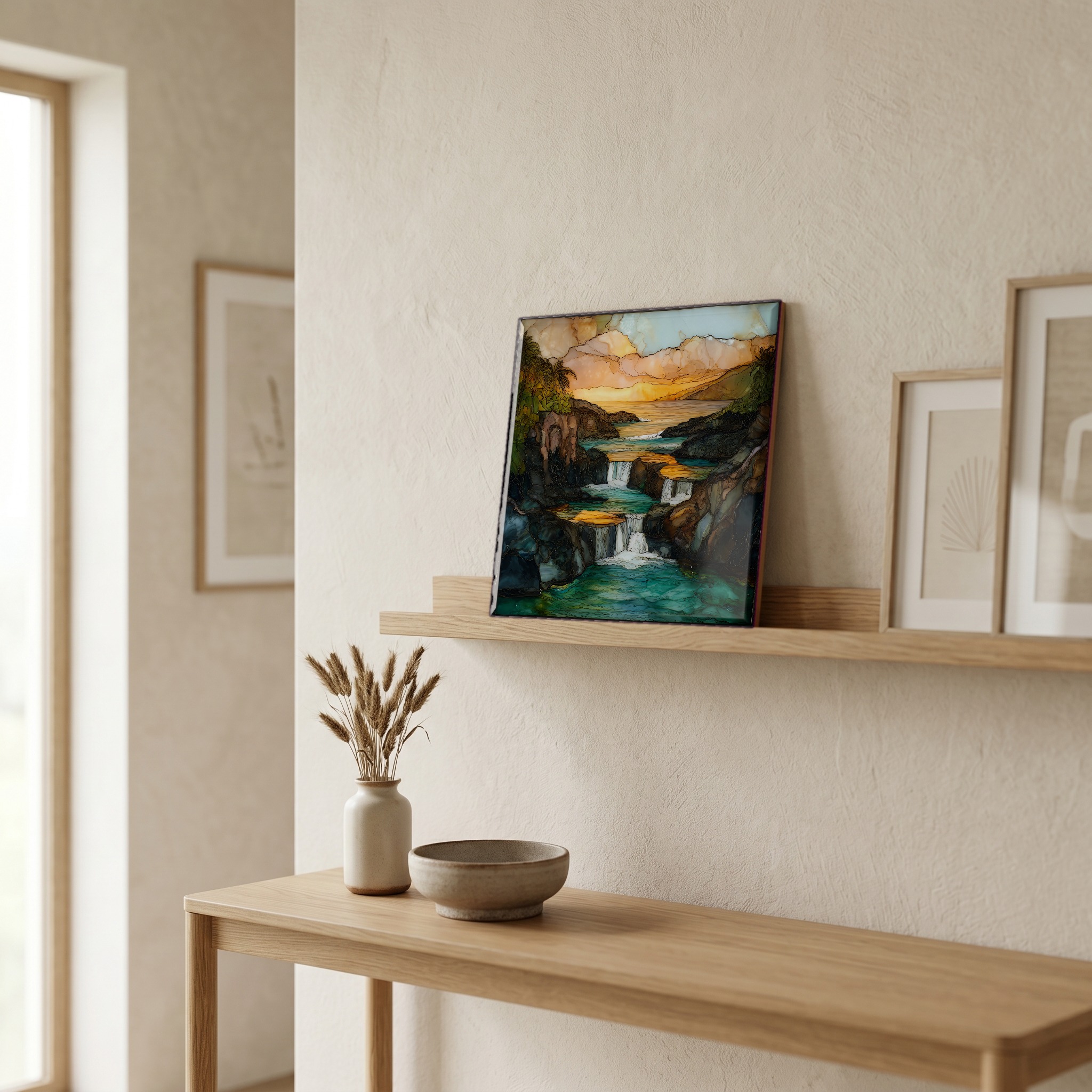
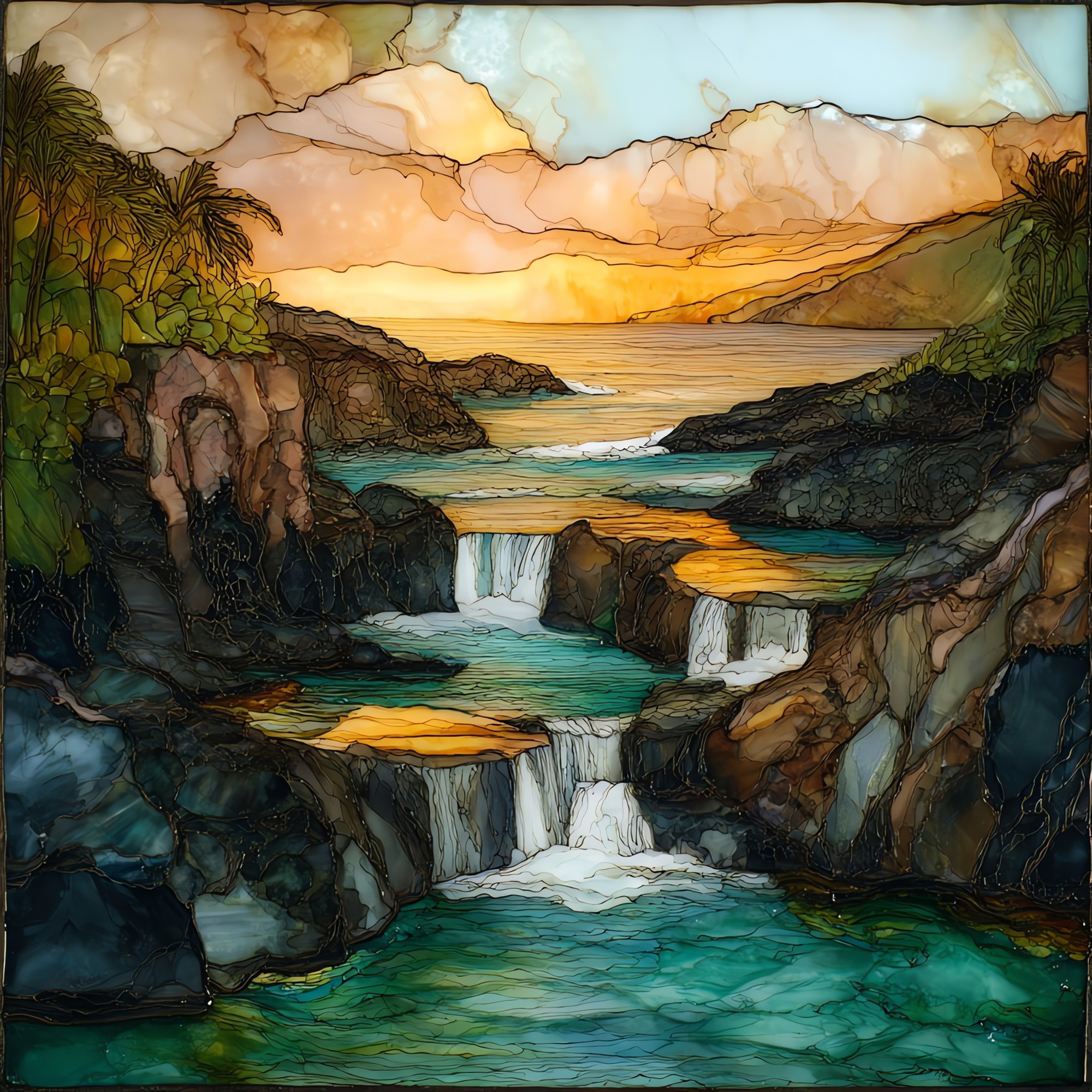
Oheo Seven Pools Maui Ceramic Art Tile
shown on ceramic, 12-inch tileHawaii · United States
past Hāna, on Maui's southeast coast

Oheo Seven Pools Maui Ceramic Art Tile

— pool to pool, the long walk to the sea.

Where it lives

Not only on a wall.

A small tile on the nightstand catching the morning. A larger one above the fire. Yours, wherever you spend the slow hours.
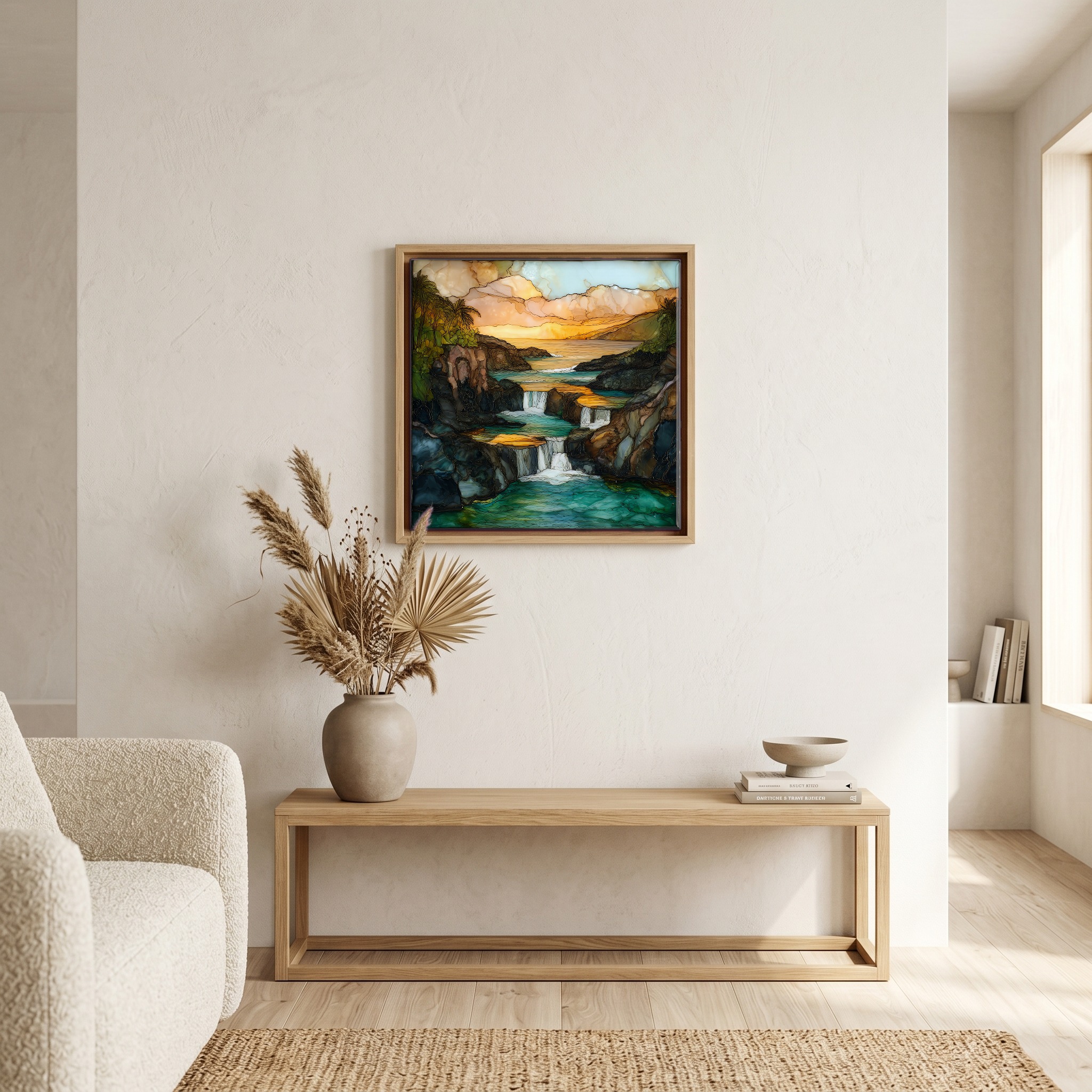
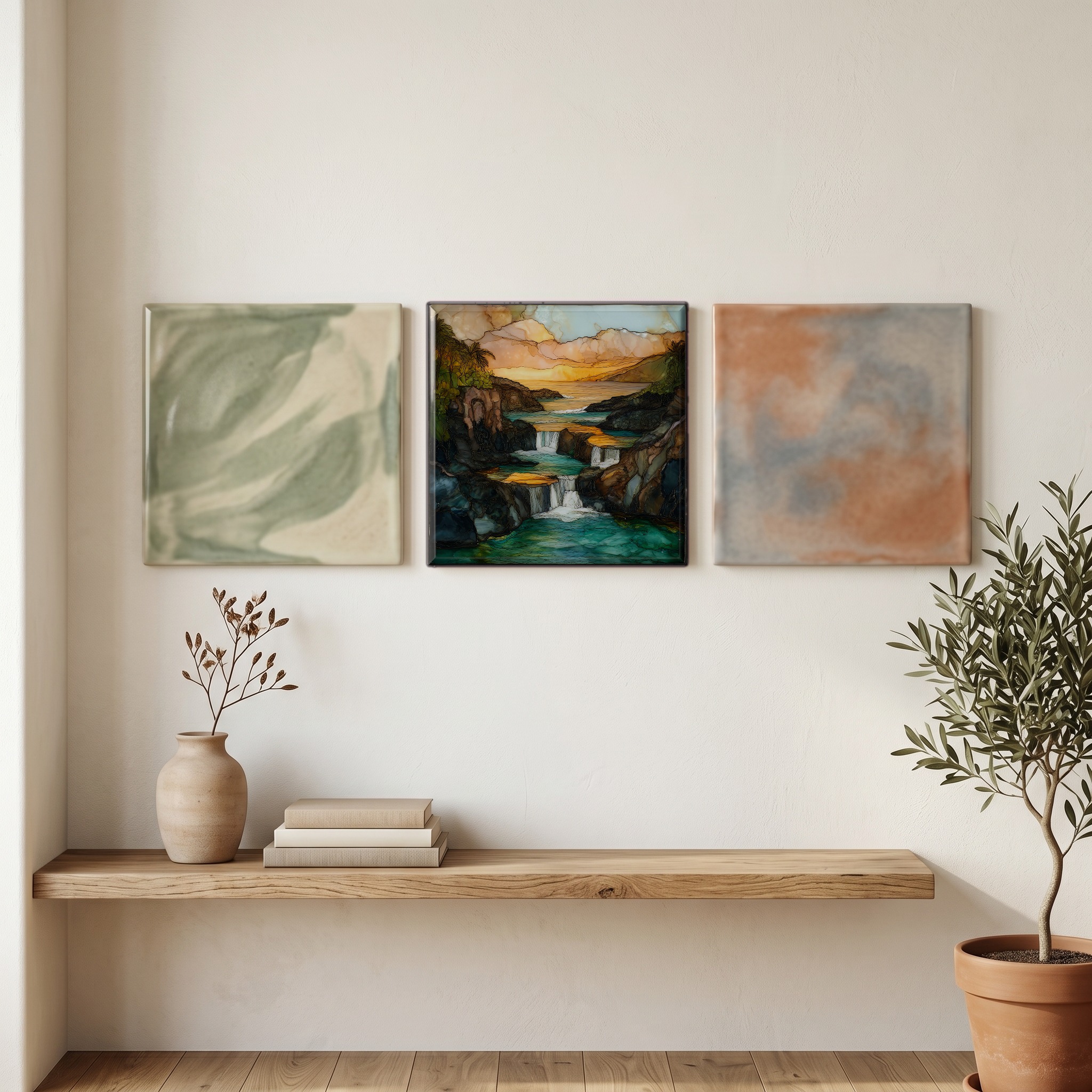
Above the bench, in a warm oak surround.
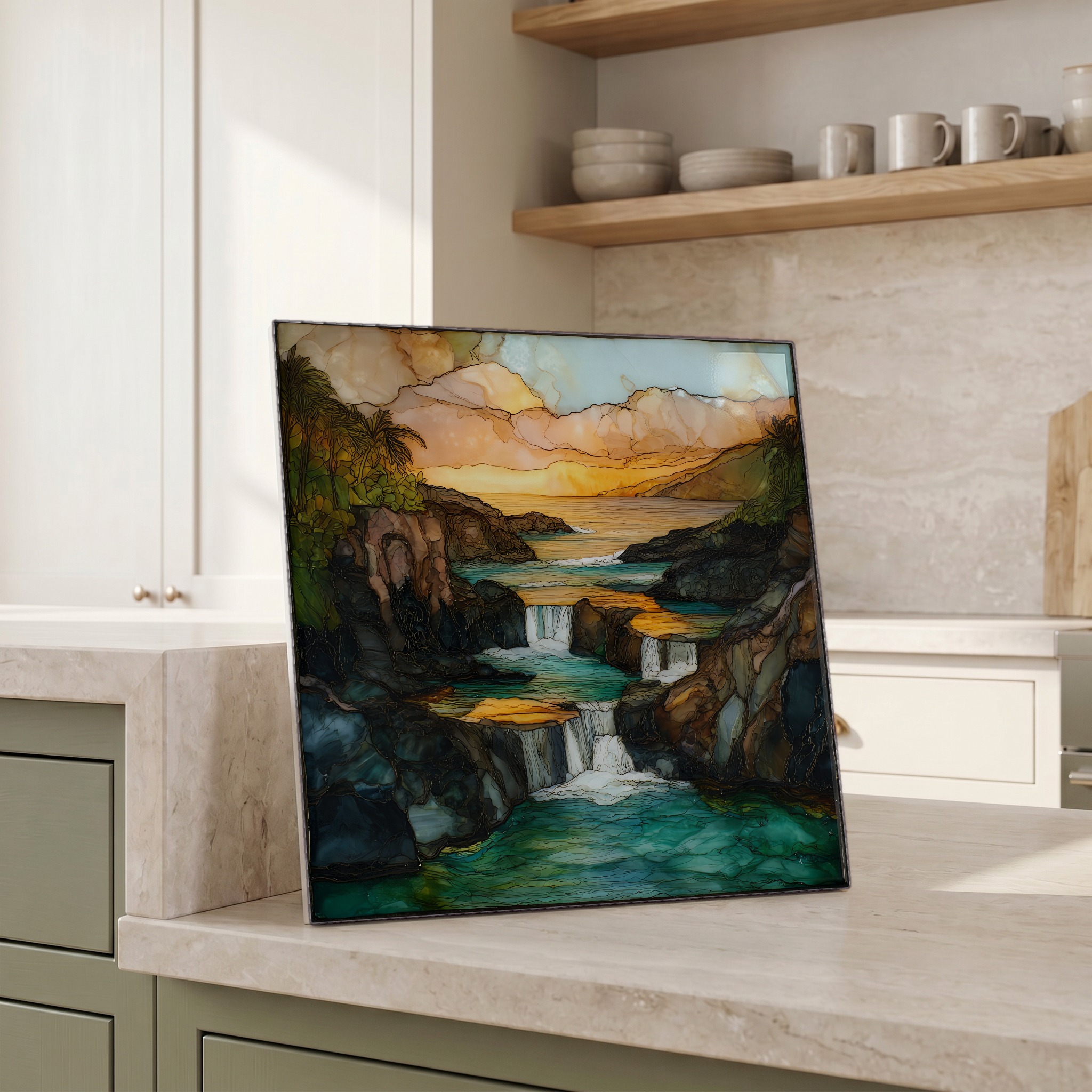
Beside the kettle, propped on the counter.
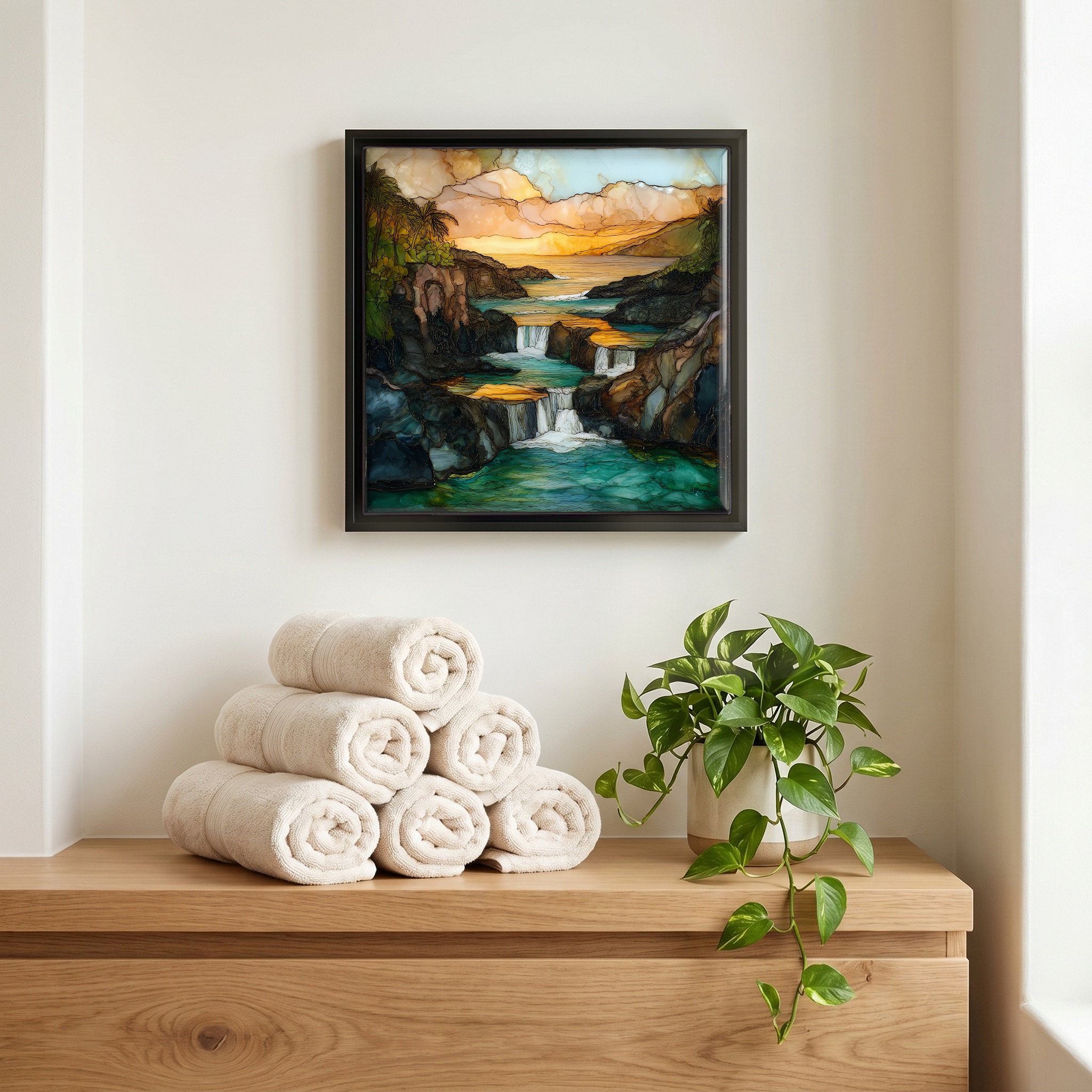
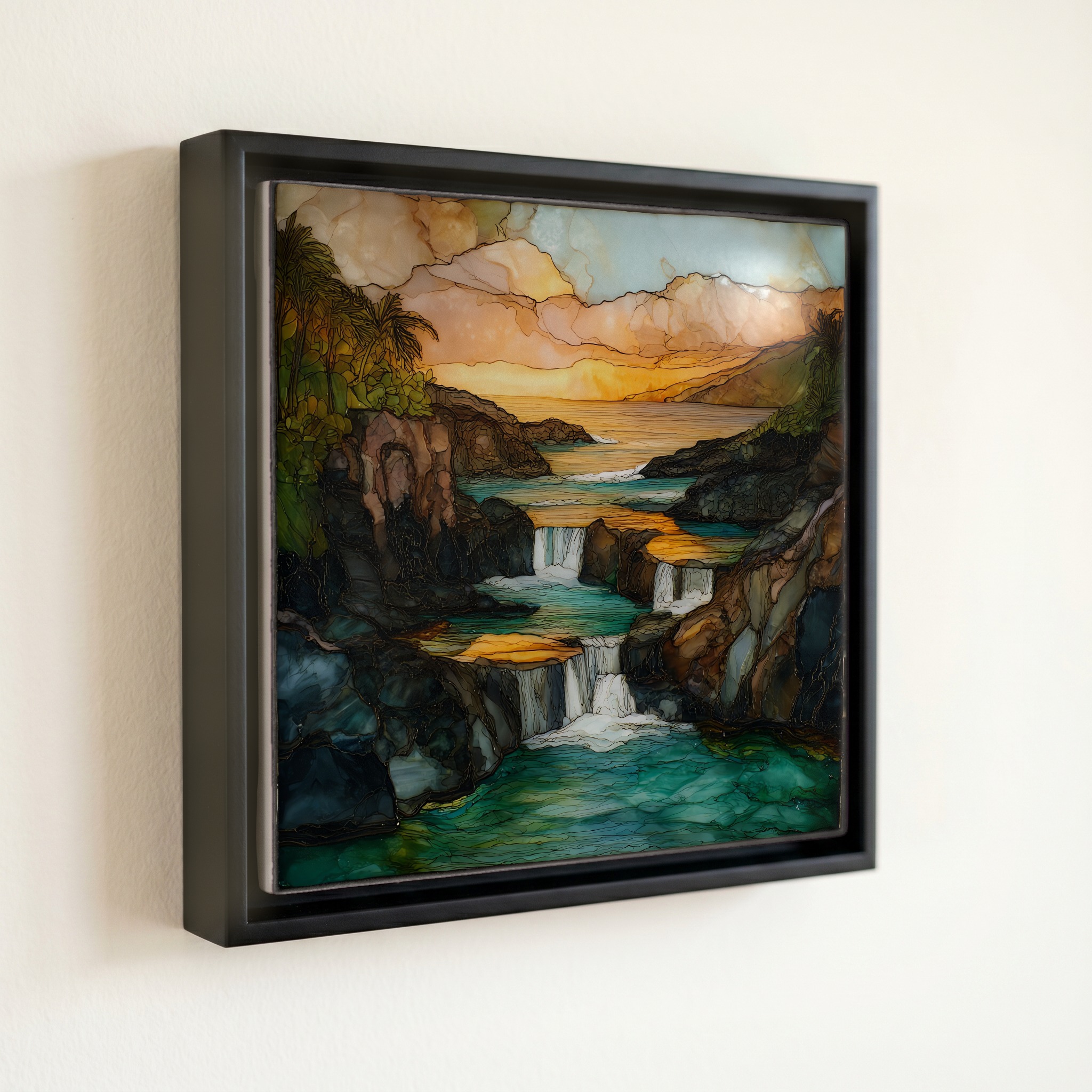
Above the linens, in a slim black surround.
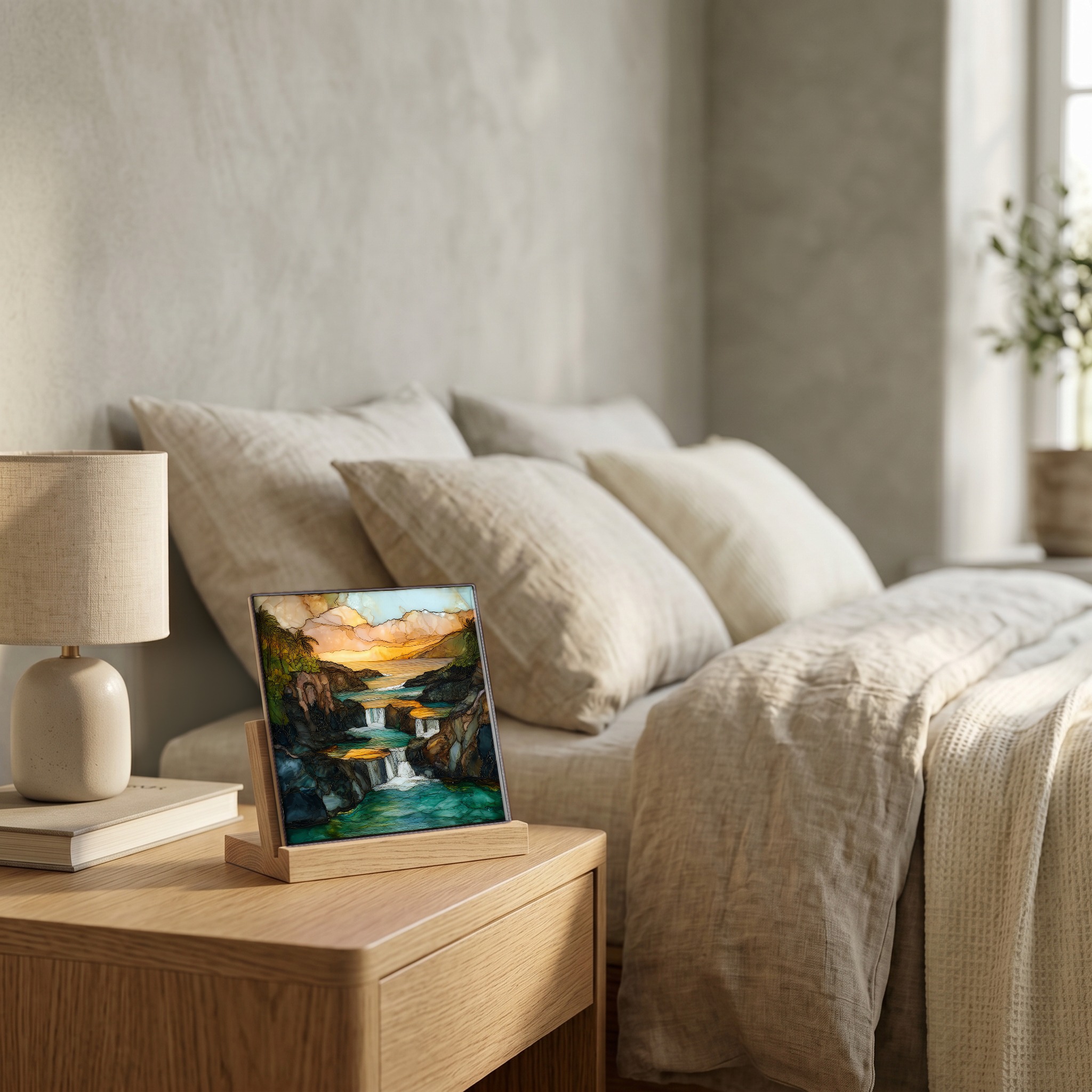
On the nightstand, on a light oak stand.
On a picture ledge, where the light comes in.
a note from the studio

The pools sit at the bottom end of Pīpīwai Stream where it meets the Pacific in the Kīpahulu district of Haleakalā National Park, a half-hour past Hāna along the southeast coast of Maui. Pools, plural: more than seven, depending on the rains, strung in a stone staircase down to the ocean. The Hawaiian name is ʻOheʻo, "something special." The "Seven Sacred Pools" name was coined by a hotel marketer in the late 1940s, and locals have been gently correcting it ever since. People come for the Pīpīwai Trail up the gulch, through a bamboo forest, to Waimoku Falls. The water does the rest.
from the studio
shown in a slim black floating frame · 6 × 6 in
— bring it home

Oheo Seven Pools Maui Ceramic Art Tile, on ceramic.

Each tile is finished by hand in our Knoxville studio. Artwork is slowly infused into the ceramic surface under high heat and pressure, and rests beneath a thin glossy finish. The colour lives in the surface, not on top of it.

What kind of piece?
One tile — square or rectangle.
How big?
the popular one — counter, shelf, nightstand
6 × 6 in · 15 cm · 1.6 lb
Surface finish
A clear glossy finish — the artwork reads as if under resin. Ideal for show-pieces and framed wall art.
How it sits
A hidden cleat — sits ¼″ proud of the wall.
$58
Hand-finished and shipped from our studio at the foot of the Smokies. On your wall in about ten days.
size
6 × 6 in
15 cm
weighs
1.6 lb
solid in the hand
surface
ceramic, hand-finished
art rests beneath a thin glossy finish
from
Knoxville, TN
our family studio, at the foot of the Smokies
— start a Coaster Set

Pick any four 4-inch tiles — National Parks you've been to, a Smokies set, the four seasons of one place. $ for a set of , cork-backed, ready to live on the table.
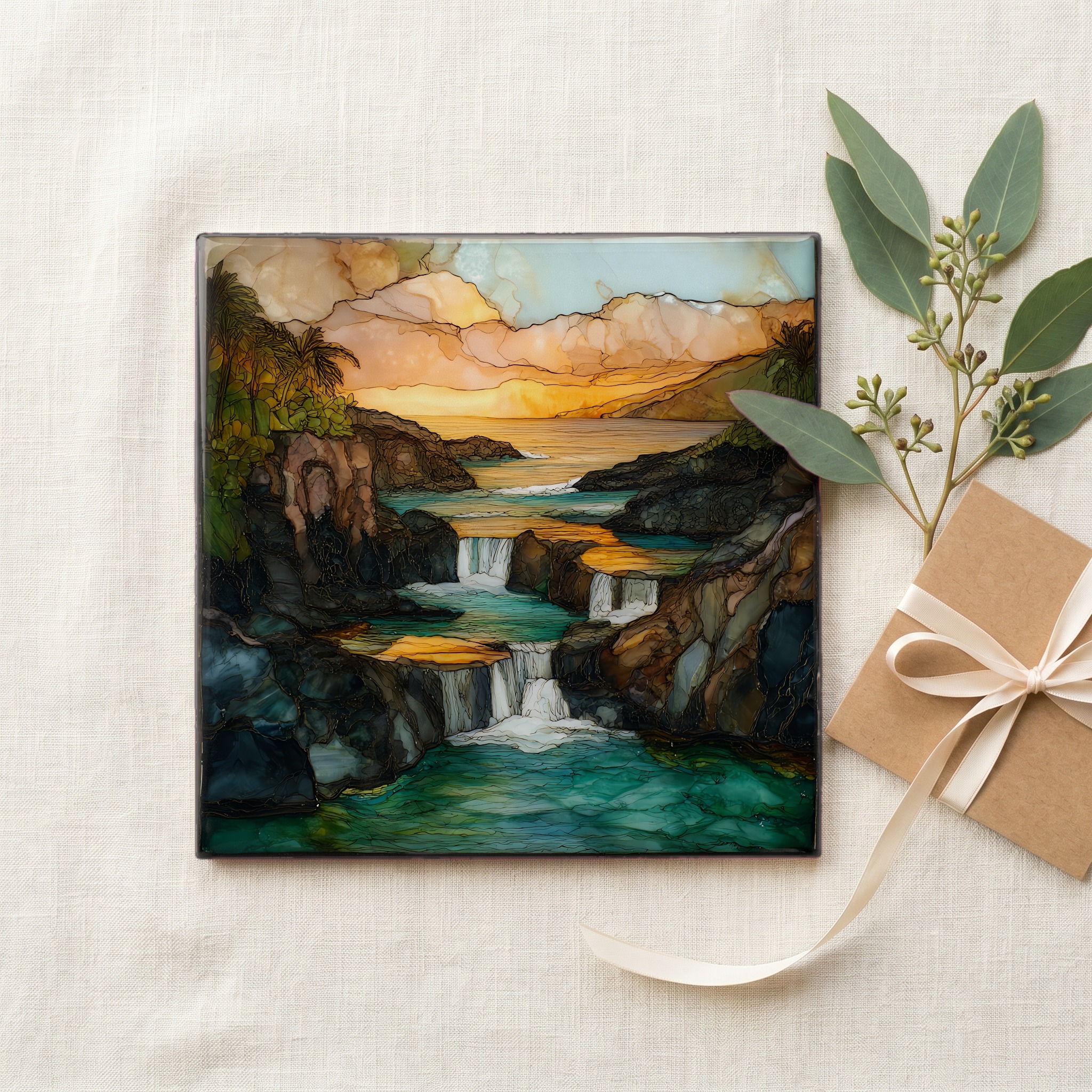
comes gift-ready
comes gift-ready

Each tile ships in a kraft box, tied with cream ribbon, with a handwritten note from the studio if you'd like to add one.
or build a grouping
or build a grouping

Three or five different vistas, hung together — a chapter of places you've been, or want to go.

about Oheo Seven Pools Maui Ceramic Art Tile

The place, in three passes.

A little of what's known, in case you fall down the rabbit hole — or want to go see it yourself.
the place

ʻOheʻo Gulch lies in the Kīpahulu district of Haleakalā National Park, on the southeast coast of Maui, roughly ten miles past the town of Hāna along the Piʻilani Highway. The district sits on the lower, ocean-side flank of Haleakalā, the dormant shield volcano whose summit rises to 10,023 feet inland; Pīpīwai Stream descends through a chain of basalt basins before emptying directly into the Pacific at Kuloa Point. The Kīpahulu district and the summit district of Haleakalā National Park belong to one park but are reached by entirely separate roads; there is no through-road over the mountain. Most visitors arrive by the long, winding Hāna Highway from Kahului.

the water

Waimoku Falls drops about 400 feet down a vertical basalt wall at the head of the Pīpīwai Trail, a four-mile round-trip from the Kīpahulu Visitor Center through a thick stand of nonnative bamboo. Half a mile in, the trail passes the Makahiku Falls overlook, where Pīpīwai Stream drops some 200 feet into a hanging valley. Below the trailhead the same stream steps down to the ocean in the chain of basins that gives ʻOheʻo its English nickname; the number of pools depends on the rains, the level of the stream, and which boulders the last storm moved. The substrate throughout is pāhoehoe and ʻaʻā basalt laid down by Haleakalā in earlier eruptive phases.

the visit

The Kīpahulu district is part of Haleakalā National Park; one entrance fee of $30 per vehicle covers both Kīpahulu and the summit district for three consecutive days, and America the Beautiful annual passes are honored. Swimming in the pools has been closed for long stretches in recent years because of flash-flood risk and rockfall above the lower basins, but the Kuloa Point loop down to the ocean overlook stays open even when the water itself is off-limits, as does the Pīpīwai Trail up to Waimoku Falls. The road from central Maui is the Hāna Highway, narrow and slow; plan three or four hours on the ground in Kīpahulu and check the park alerts page before leaving Hāna.

where
United States · Maui County, Hawaii
within
Haleakalā National Park
position
20.6612° N · 156.0438° W
the neighborhood

What's nearby.

A handful of named places within an hour's walk or short drive. Some we've already painted; some we will.
1 km N
Makahiku Falls
waterfall
3 km N
Waimoku Falls
waterfall
3 km S
Palapala Hoʻomau Church
church
16 km N
Hāna
town
50 km NW
Haleakalā Summit
shield volcano
N
Oheo Seven Pools Maui Ceramic Art Tile
Makahiku Falls
Waimoku Falls
Palapala Hoʻomau Church
Hāna
Haleakalā Summit
common questions

What people ask.

A few questions we get about Oheo Seven Pools Maui Ceramic Art Tile — and about bringing the piece home.
about the place

ʻOheʻo Gulch sits in the Kīpahulu district of Haleakalā National Park on the southeast coast of Maui, about ten miles past the town of Hāna along the Piʻilani Highway. Pīpīwai Stream steps down through the gulch and empties into the Pacific at Kuloa Point.

The name was coined to promote the area by tourism interests at the Hotel Hāna-Maui in the late 1940s. The Hawaiian name is ʻOheʻo, meaning "something special." The pools were never sacred in Hawaiian tradition, and there are usually more than seven of them along the stream.

Often, no. Haleakalā National Park has closed swimming in the lower pools for long stretches in recent years because of flash-flood risk and rockfall. Check the park's current alerts page before driving down. The Kuloa Point loop and the Pīpīwai Trail stay open even when the pools are closed.

A four-mile round-trip hike from the Kīpahulu Visitor Center up the gulch, past Makahiku Falls and through a thick stand of bamboo, to the foot of Waimoku Falls, a 400-foot ribbon down a vertical basalt wall. It is the headline walk in the Kīpahulu district.

The dry months of May through October carry the lowest flash-flood risk and the most settled weather along the Hāna coast. Winter storms can swell Pīpīwai Stream within an hour. Mid-morning, after the gate opens, is the easiest light through the gulch.

Drive the Hāna Highway around east Maui to the town of Hāna, then continue another ten miles on the Piʻilani Highway to the Kīpahulu Visitor Center. The drive from Kahului runs three to four hours one way. Many visitors stay overnight in Hāna or Kīpahulu.

Yes. A Haleakalā National Park entrance pass is $30 per vehicle and covers both the Kīpahulu district and the summit district for three consecutive days. America the Beautiful annual passes are honored. There is no separate gate fee for Kīpahulu.

about the piece in your home

It's been a meaningful gift for many of our customers with ties to Maui. The drive to Kīpahulu and the walk through the bamboo to Waimoku Falls is one of the days people remember most from the road to Hāna. A Coaster or Small with a handwritten note from the studio carries that day well.

The piece reads well in tropical-modern, coastal-modern, and jewel-tone maximalist rooms. The deep greens and the water-blue of the falling pools hold their own against rattan, teak, or pale plaster walls. The Medium or Large work best when a wall has room for the tile to sit on its own.

Yes. Biophilic design leans on living water, deep greens, and natural light, and this tile carries all three. It pairs cleanly with rattan, woven sisal, and unbleached linen, and gives a tropical-modern room a focal point that is specific to a real place rather than a generic motif.

Over a console, a single Large or a Medium reads well. For a sofa-width wall, a 4-tile Mural gives the artwork the scale to feel commissioned. For a great-room feature wall, a 9-tile Mural is the size we recommend.

Yes, with the Dura Satin or Matte finish. Both are scratch-resistant and built for vertical installation on backsplashes, shower walls, and powder-room features. The Glossy finish is for framed wall art in dry rooms.

Microfibre cloth and water. The colour lives in the ceramic surface beneath a thin glossy finish, so no special cleaner is needed and no abrasive is required. Avoid bleach-based cleaners on the Matte and Dura Satin finishes; they can dull the surface over time.

Yes. Every WenderVista piece is original to our single studio in Knoxville, Tennessee, curated by Reid Wender. The artwork is not licensed from any third party and is not sold elsewhere.

if this one stayed with you

A few you might also love.

Hand-picked by the eye that found Sorapis. Same air, same kind of quiet.