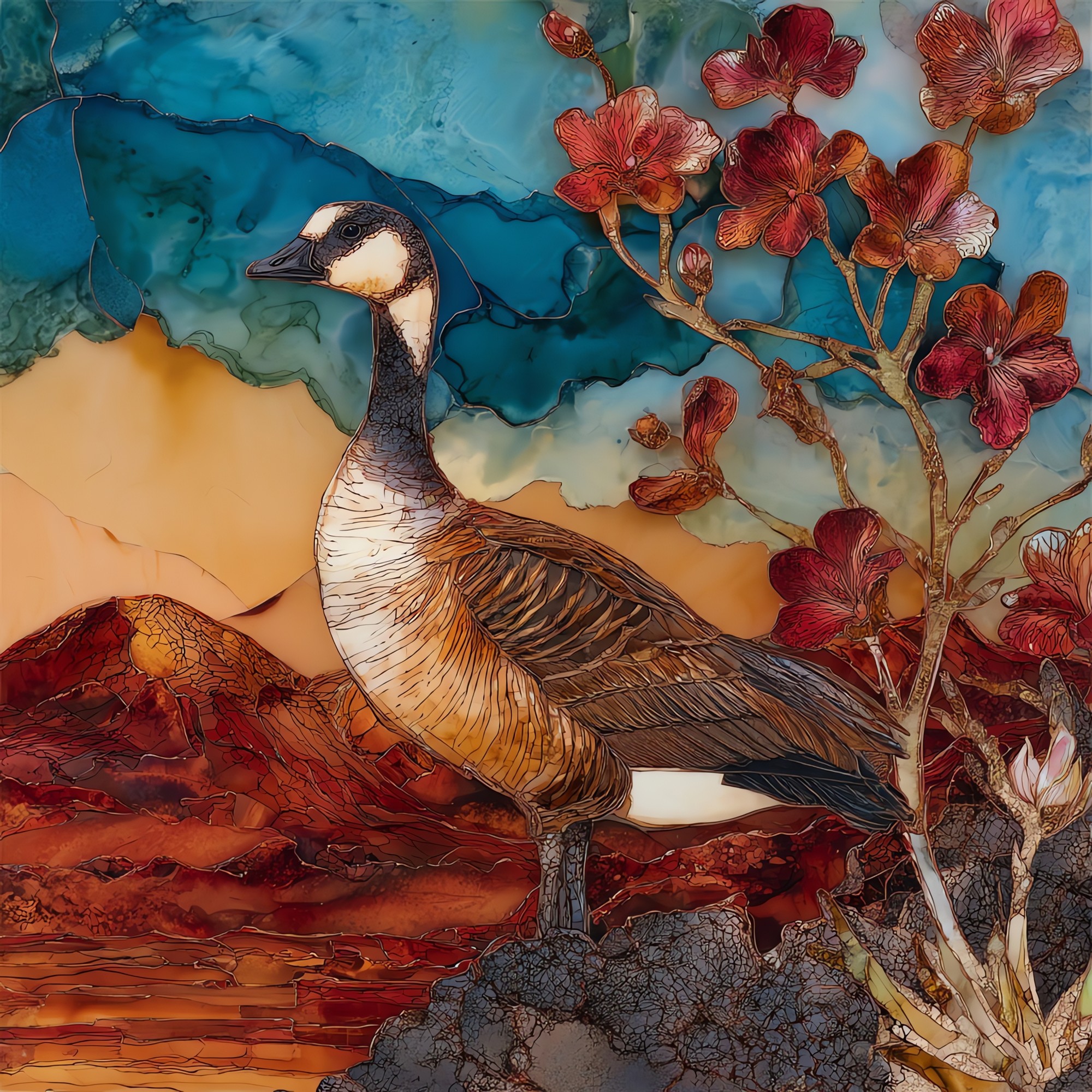
Nene Haleakala Maui Ceramic Art Tile
— a goose that learned the lava.
Not only on a wall.
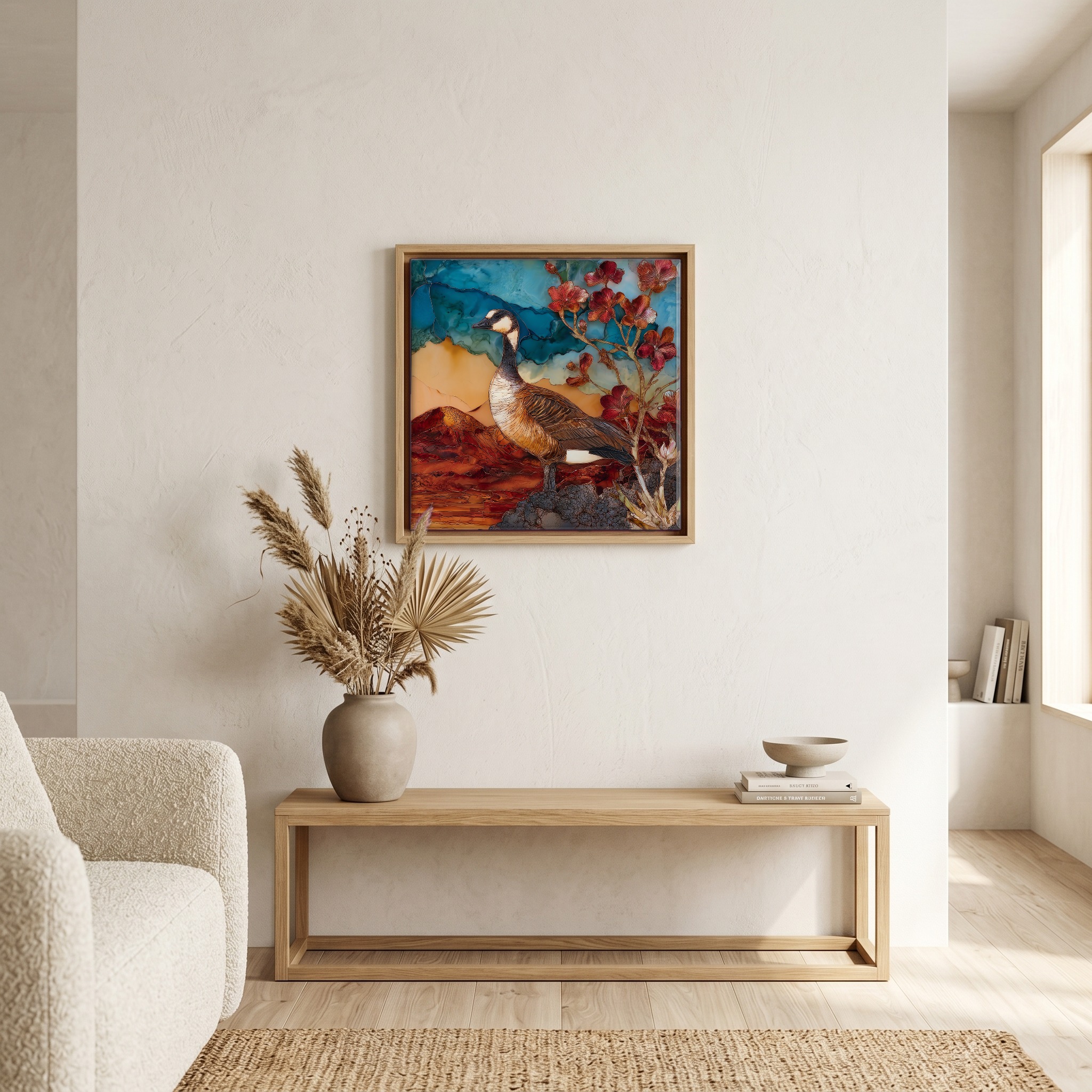
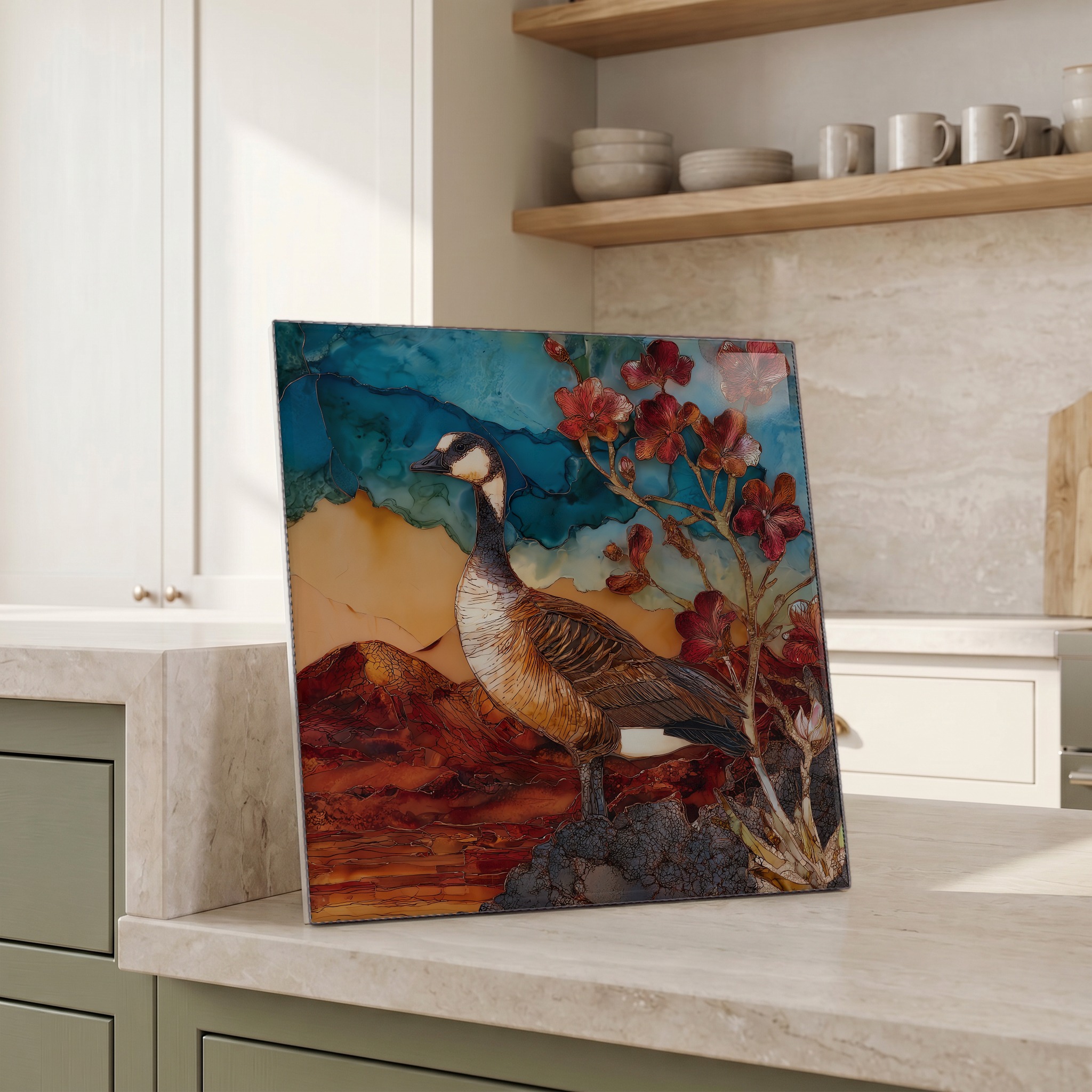
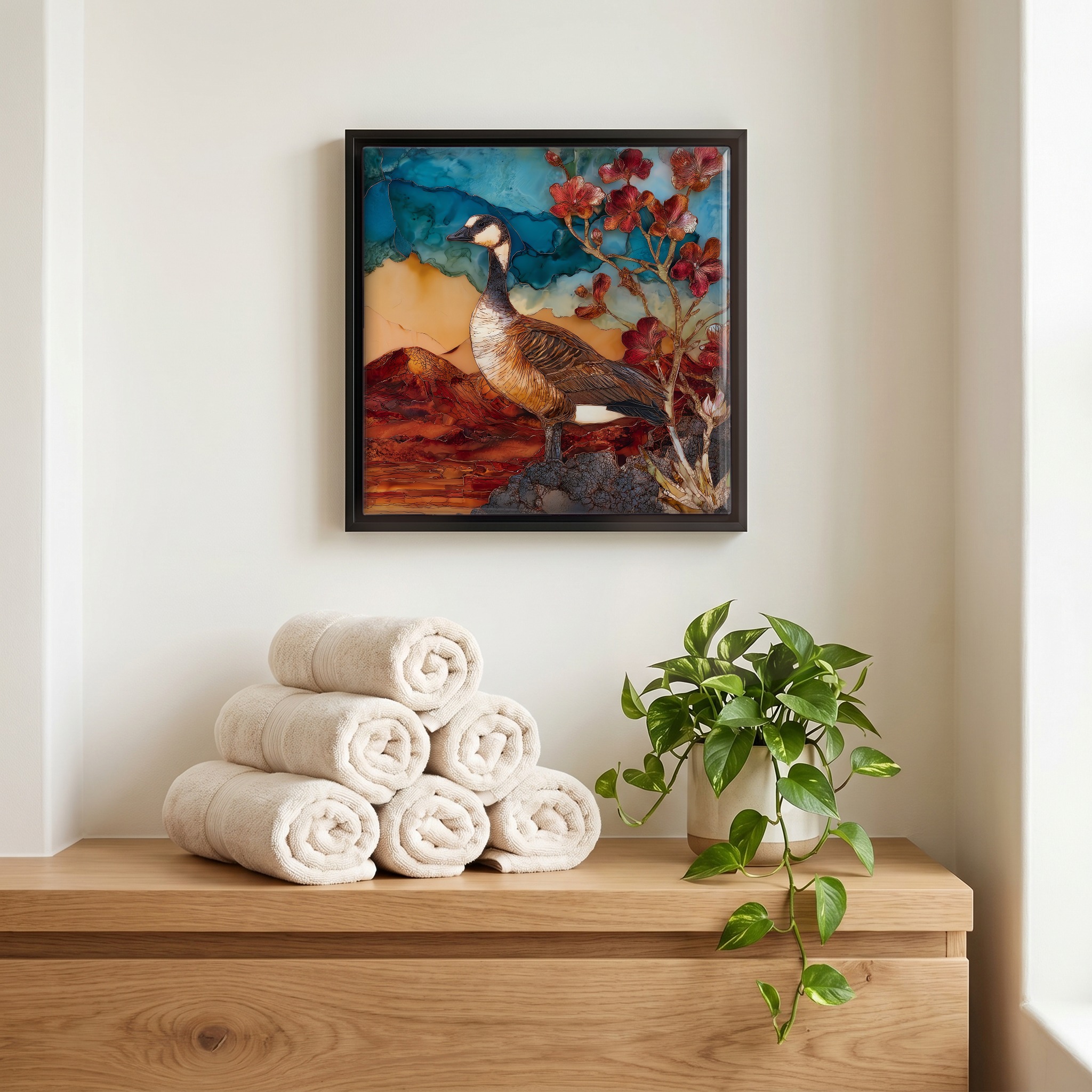
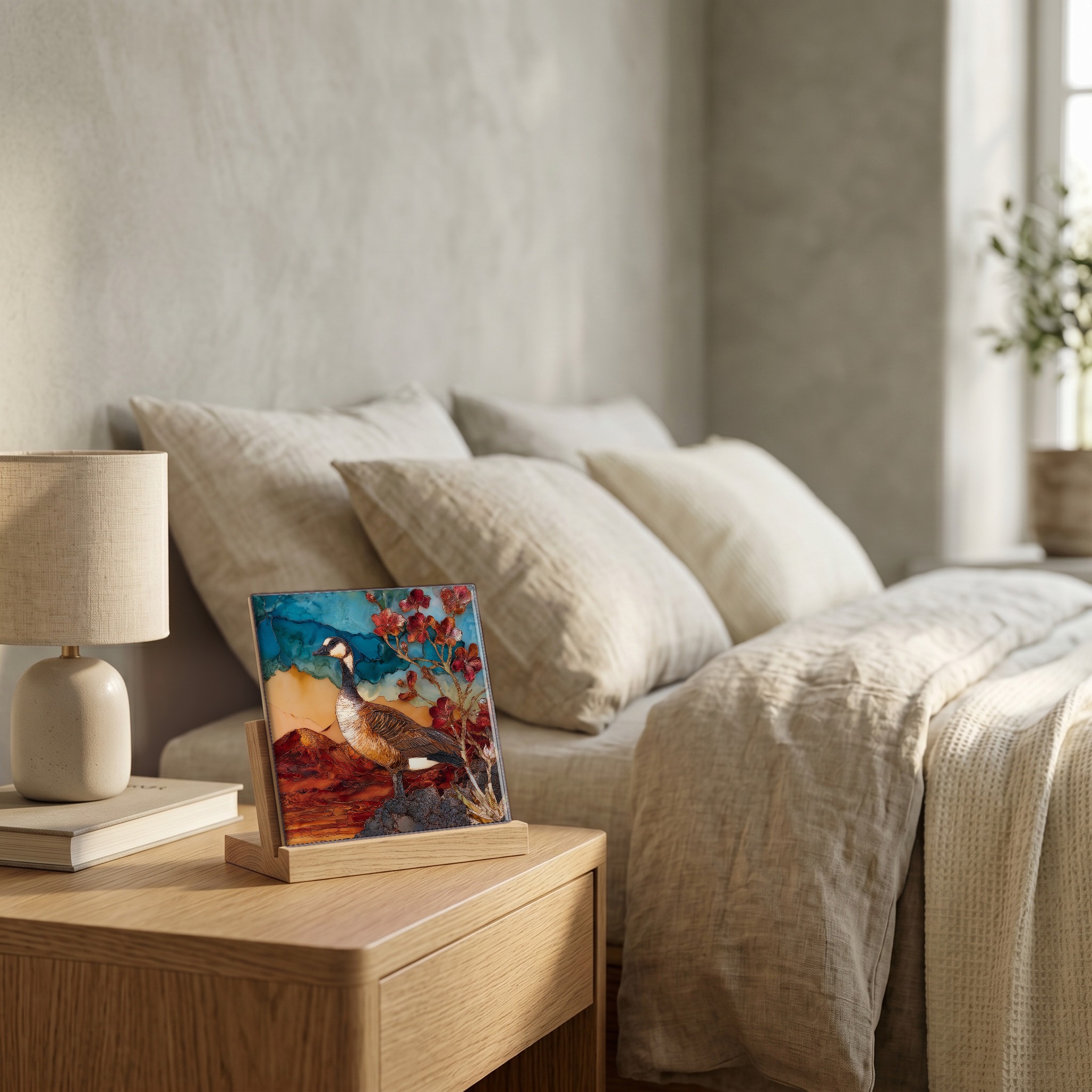
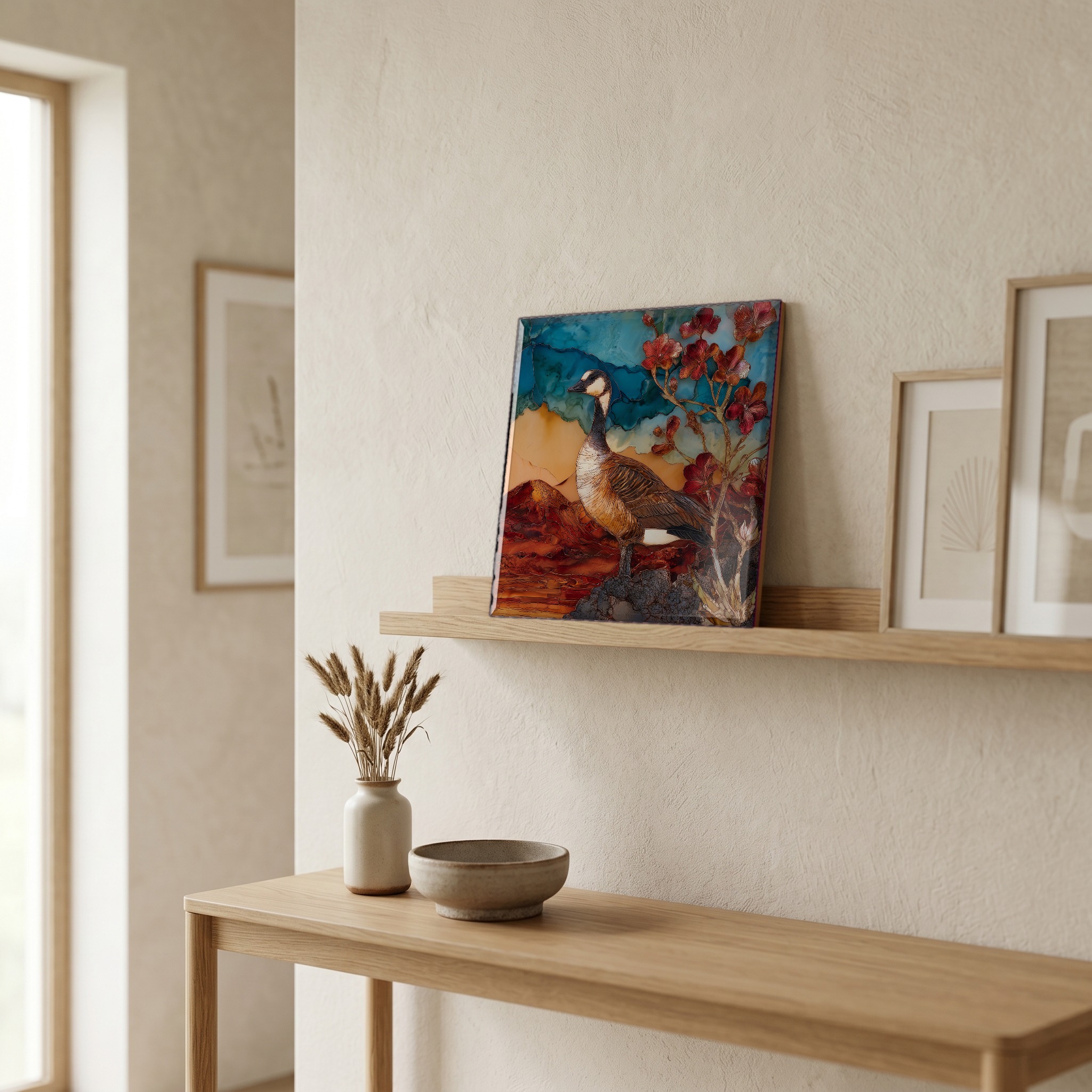
“The Nene walks the cinder above the clouds. Hawaiian goose, partially-webbed feet for the lava. By the 1950s about thirty wild birds remained. They live on the rim of Haleakala in every season, where the air is thin and the volcano is mostly quiet. The state bird of Hawaii, endemic to these islands and found nowhere else on earth. Visitors who pull off at the Park Headquarters sometimes see one walking the lot. Nobody honks. The bird takes its time.
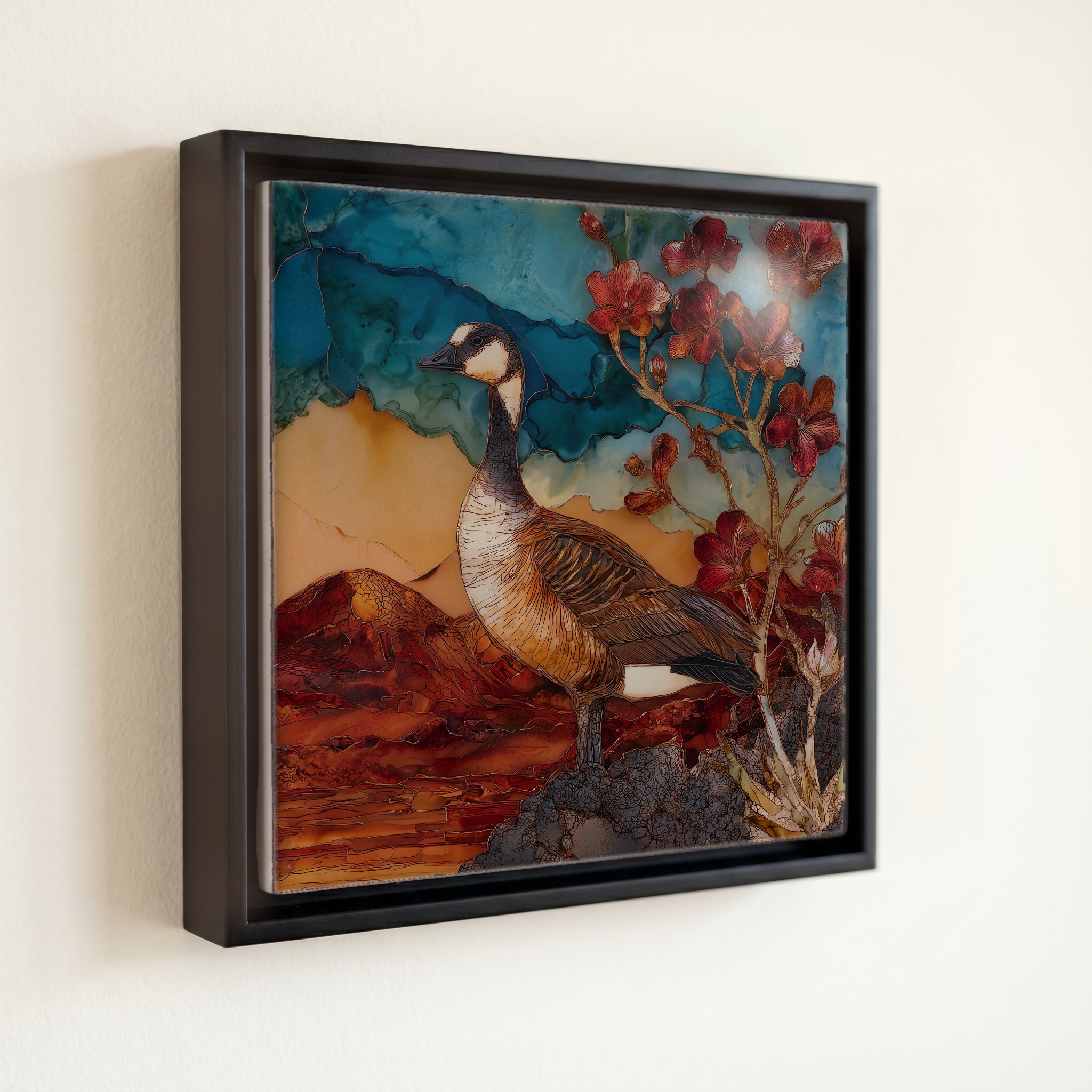
Nene Haleakala Maui Ceramic Art Tile, on ceramic.
Each tile is finished by hand in our Knoxville studio. Artwork is slowly infused into the ceramic surface under high heat and pressure, and rests beneath a thin glossy finish. The colour lives in the surface, not on top of it.
Pick any four 4-inch tiles — National Parks you've been to, a Smokies set, the four seasons of one place. $ for a set of , cork-backed, ready to live on the table.
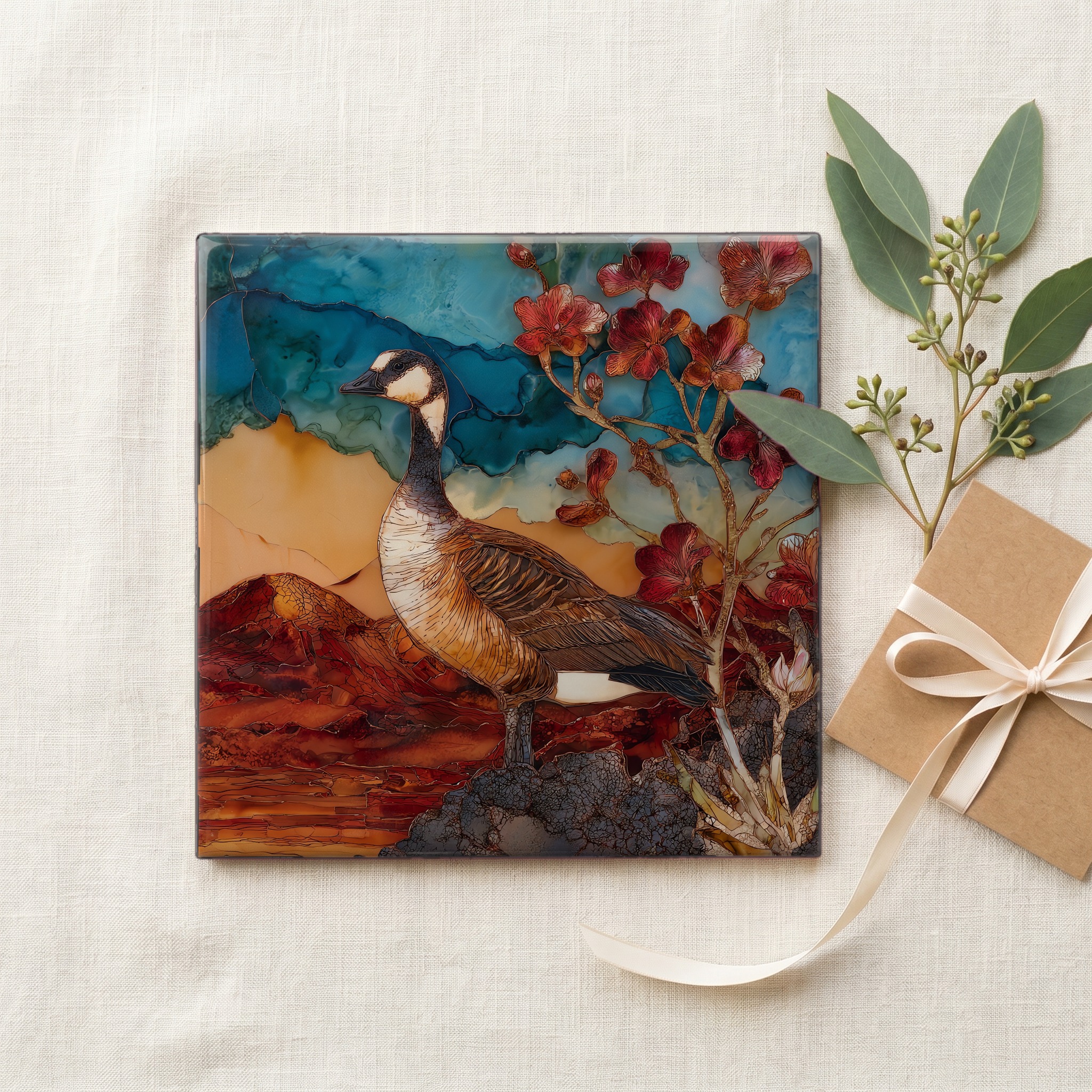
Each tile ships in a kraft box, tied with cream ribbon, with a handwritten note from the studio if you'd like to add one.
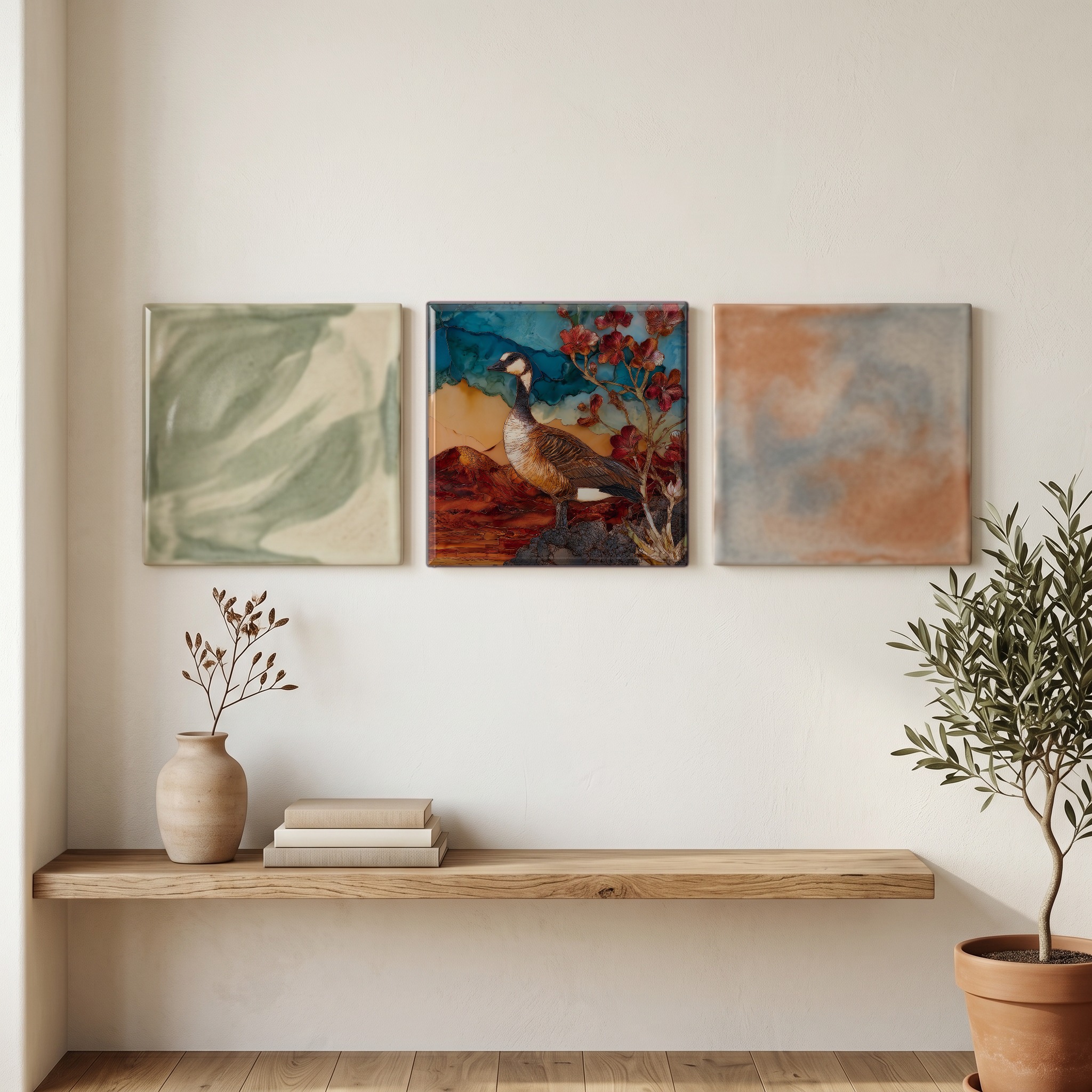
Three or five different vistas, hung together — a chapter of places you've been, or want to go.
The place, in three passes.
Haleakalā National Park covers about 33,265 acres on the island of Maui, rising from sea level at the Kīpahulu coast to 10,023 feet at the summit of the dormant shield volcano. The summit caldera measures roughly seven miles long and two miles wide, with a floor 2,600 feet below the rim. The name means "House of the Sun" in Hawaiian; the demigod Māui is said to have lassoed the sun from this peak to slow its passage. The summit district sits about 38 miles by road from Kahului, the island's main airport, by way of Crater Road's long switchback climb. The park became a separate national park in 1961, after first being protected as part of Hawaii National Park in 1916.
Above 7,000 feet, the slopes of Haleakalā shift from forest into a cinder desert. The summit air holds about two-thirds the oxygen of sea level, and ultraviolet exposure is about thirty percent stronger. Trade winds break against the eastern flank and dump their moisture on the rainforest below, leaving the summit dry, bright, and often above a sea of cloud. The Haleakalā silversword (ʻāhinahina) grows only here and on a small range of nearby slopes, holding a silvered rosette flat against the cinder for decades before sending up a single tall flowering stalk and dying. The Nene grazes among them, the same partially-webbed feet that once paddled the ancestral Canada goose's water now adapted to walk the lava.
Haleakalā National Park charges $30 per vehicle for a three-day pass; an annual park pass is $55. Sunrise viewing at the summit requires a separate reservation booked through recreation.gov, capped at the number of cars the parking lots will hold. The summit district is open 24 hours; the Kīpahulu (coastal) district closes at sunset. The drive from Kahului to the summit takes about two hours each way along Crater Road, which climbs roughly 10,000 feet in 38 miles through dozens of switchbacks. Park staff ask visitors not to feed or approach Nene, which remain federally protected under the Endangered Species Act. The best chance to see one is on the lawn at Park Headquarters or near the Hosmer Grove campground.