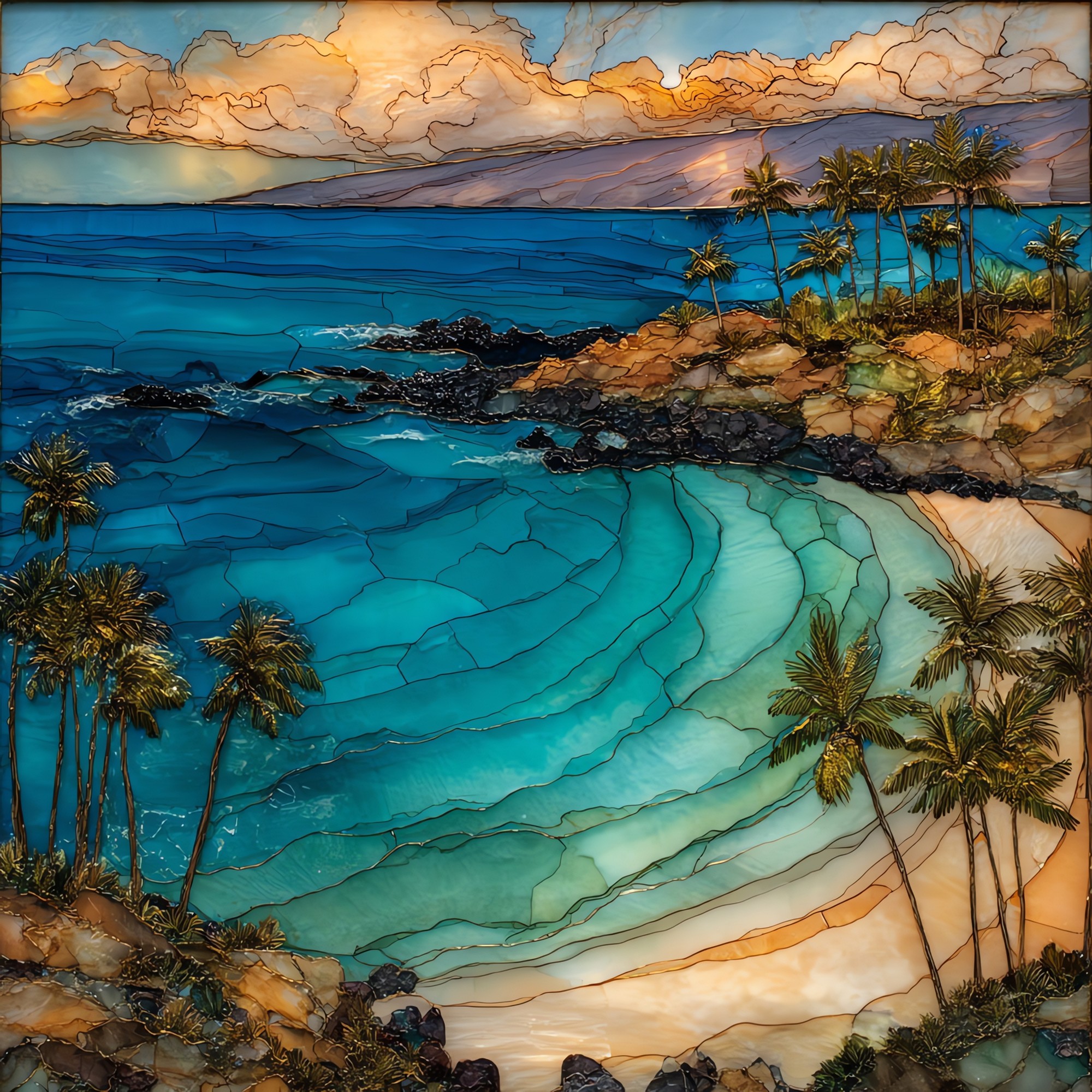
Napili Bay Maui Ceramic Art Tile
— — where the honu come in to feed.
Not only on a wall.
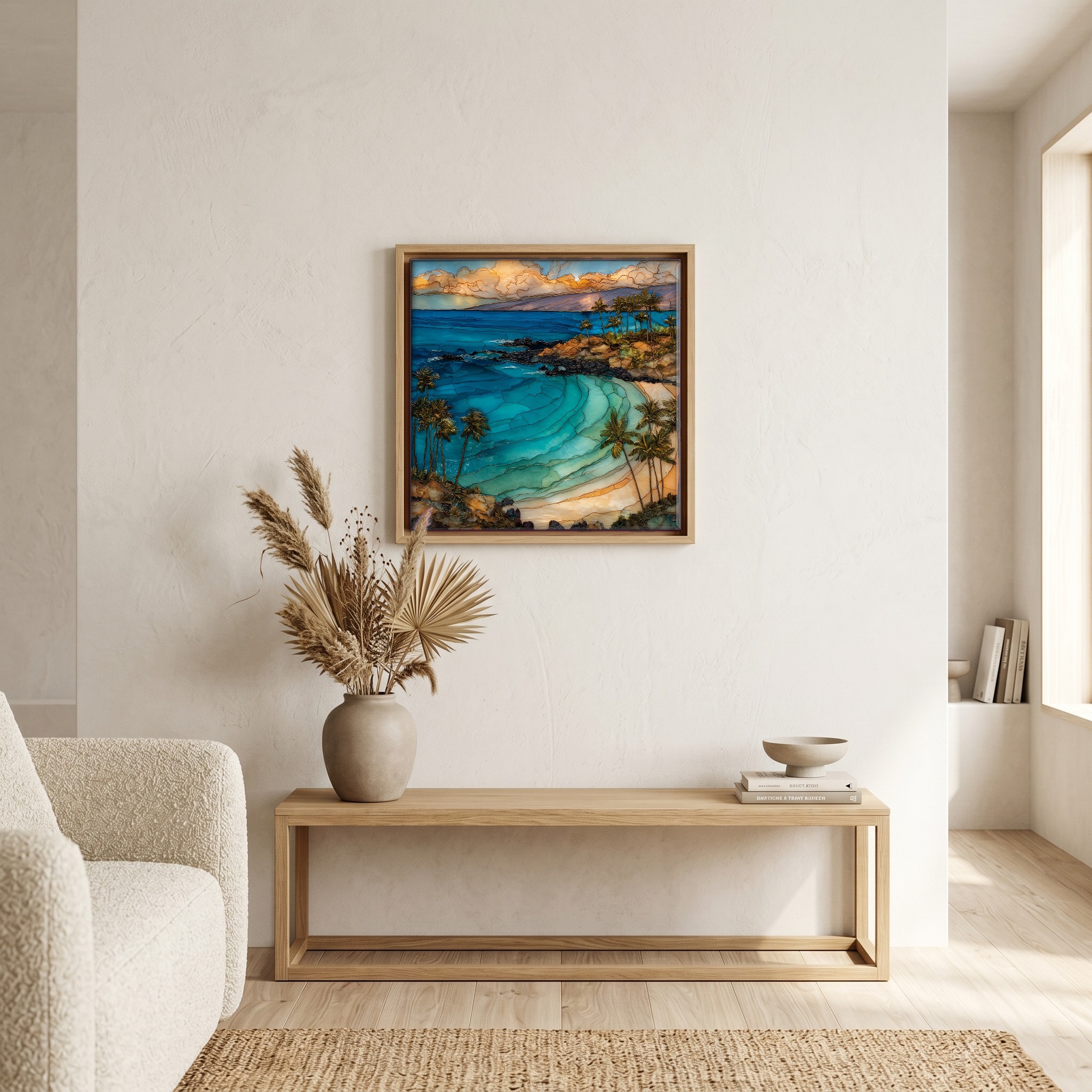
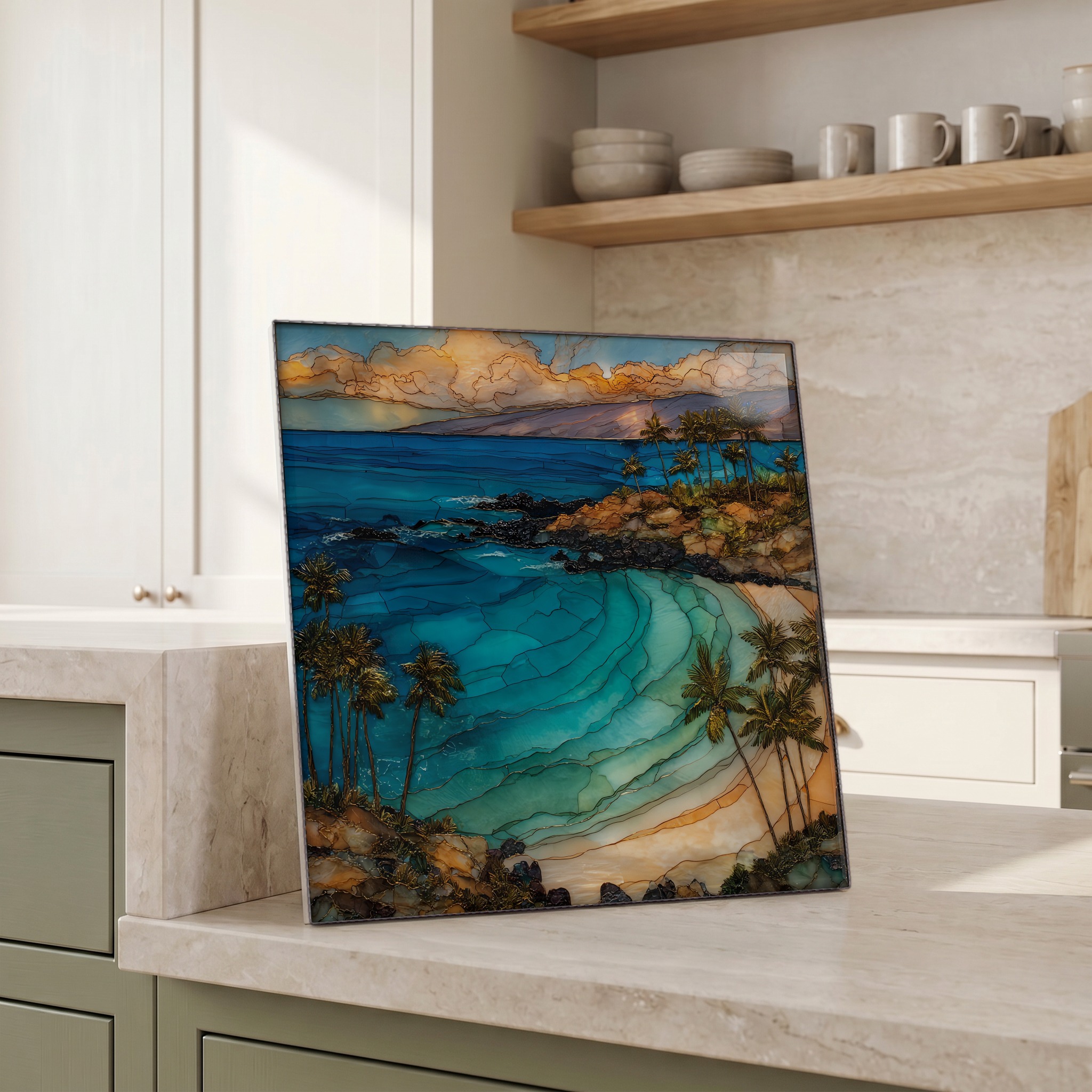
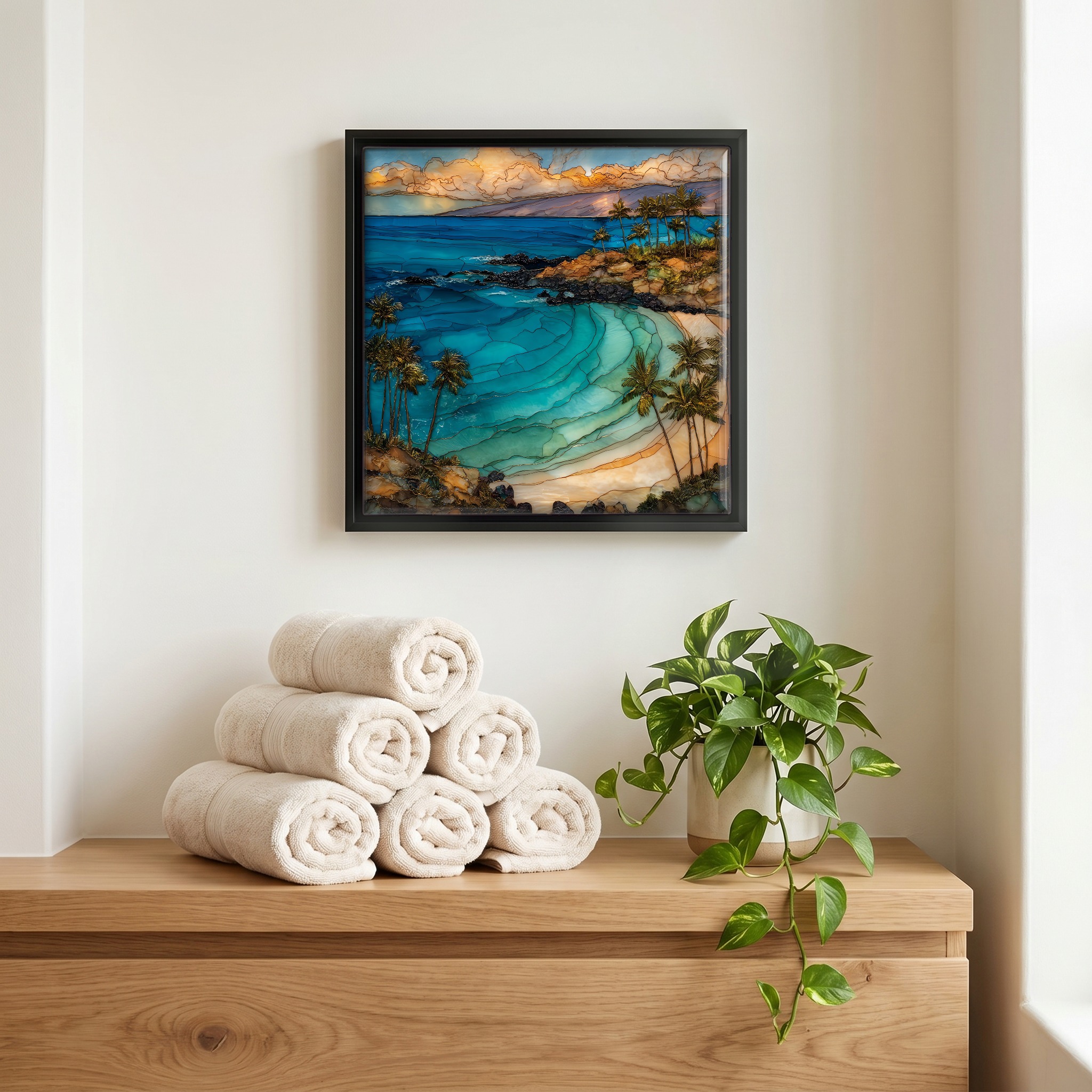
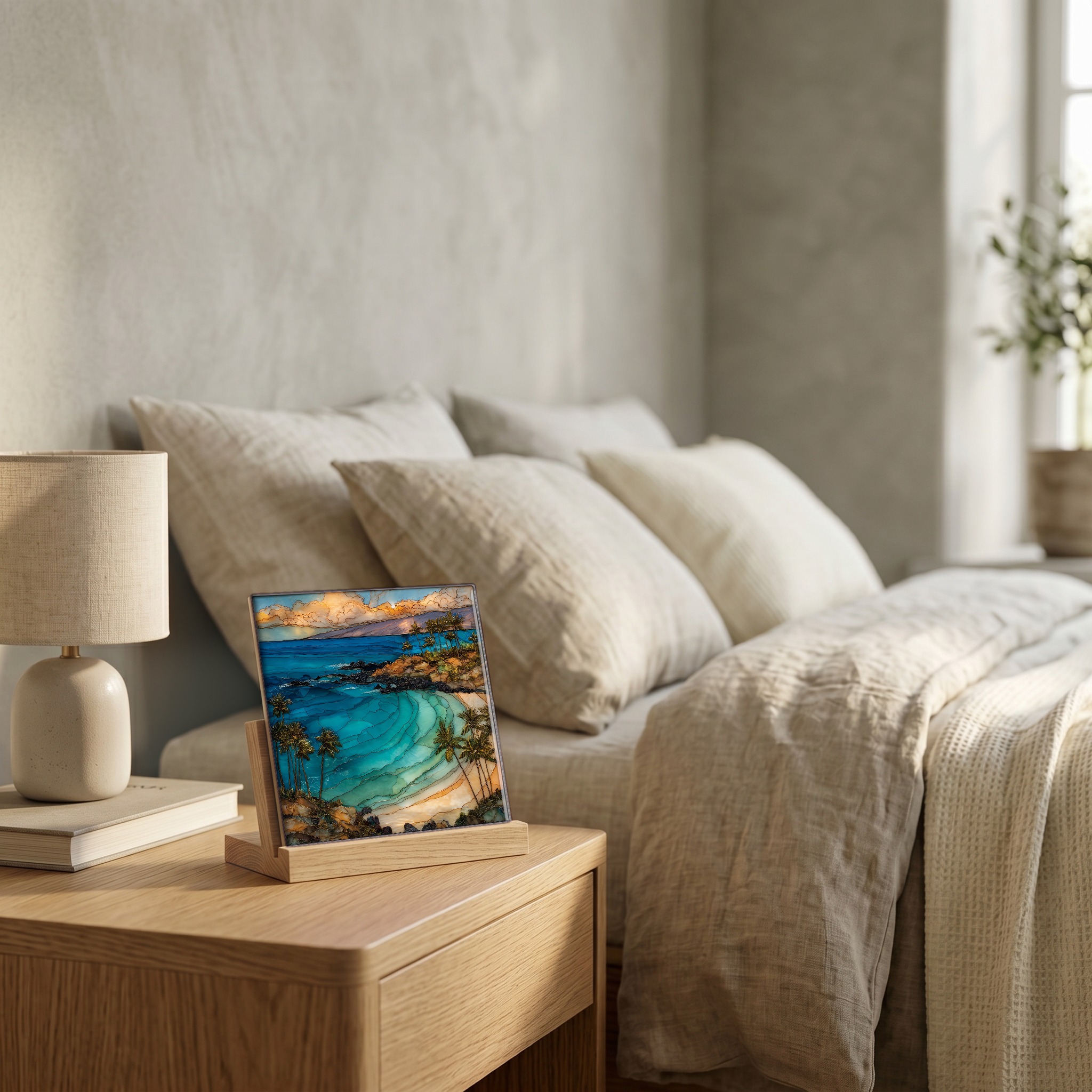
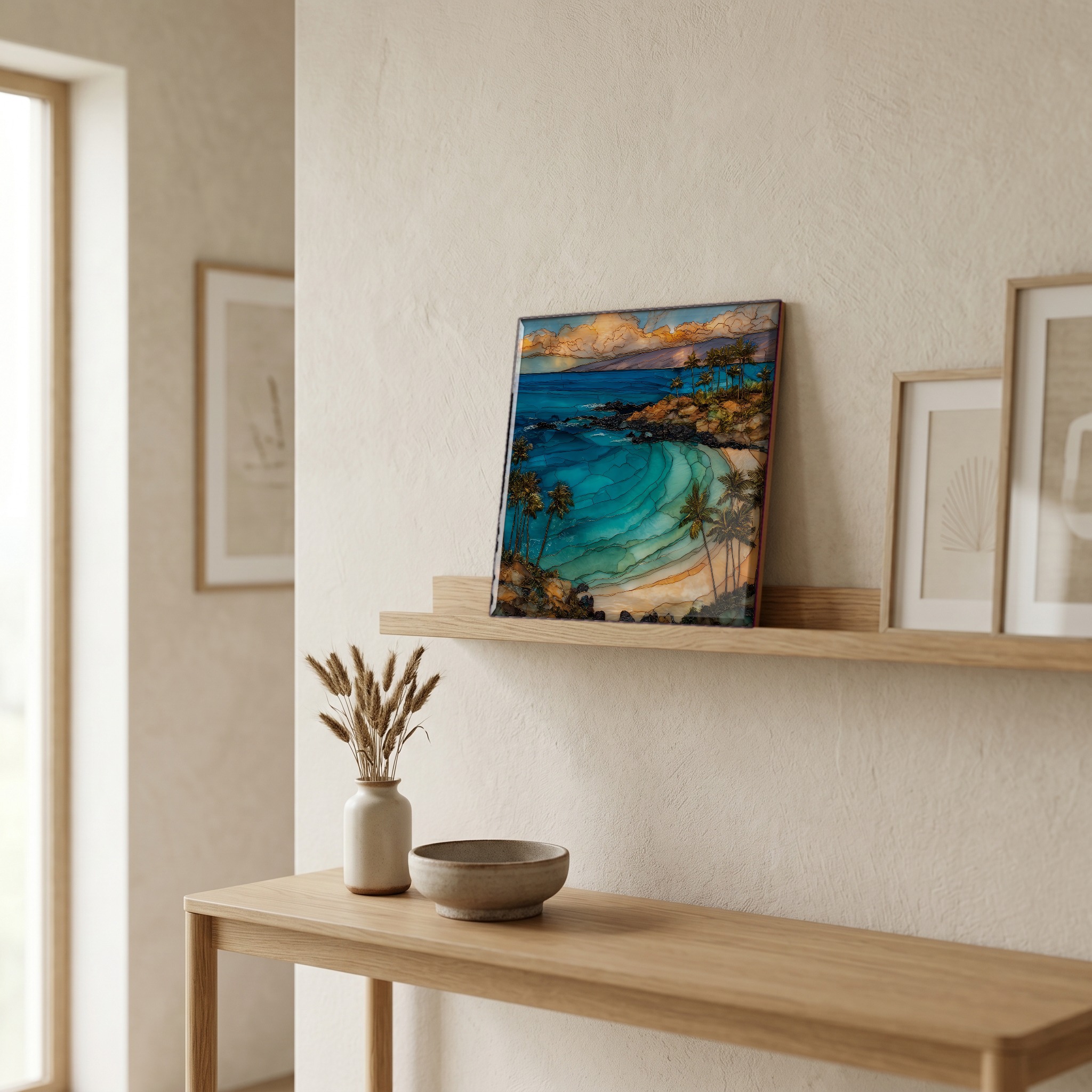
“A small crescent on Maui's northwest shore, set between Kapalua to the north and Ka'anapali to the south. The reef sits close in, keeping the water quiet through most of summer; in winter the north Pacific swell finds its way around the headland and the bay turns to whitewater. Green sea turtles graze the limu on the inside reef most mornings, sometimes hauling out on the sand to rest. Hawaiians call them honu. The Napili Kai has held the south end of the beach since 1962. From November through March, humpbacks pass the channel between Maui and Lana'i, sometimes close enough to hear from the sand.
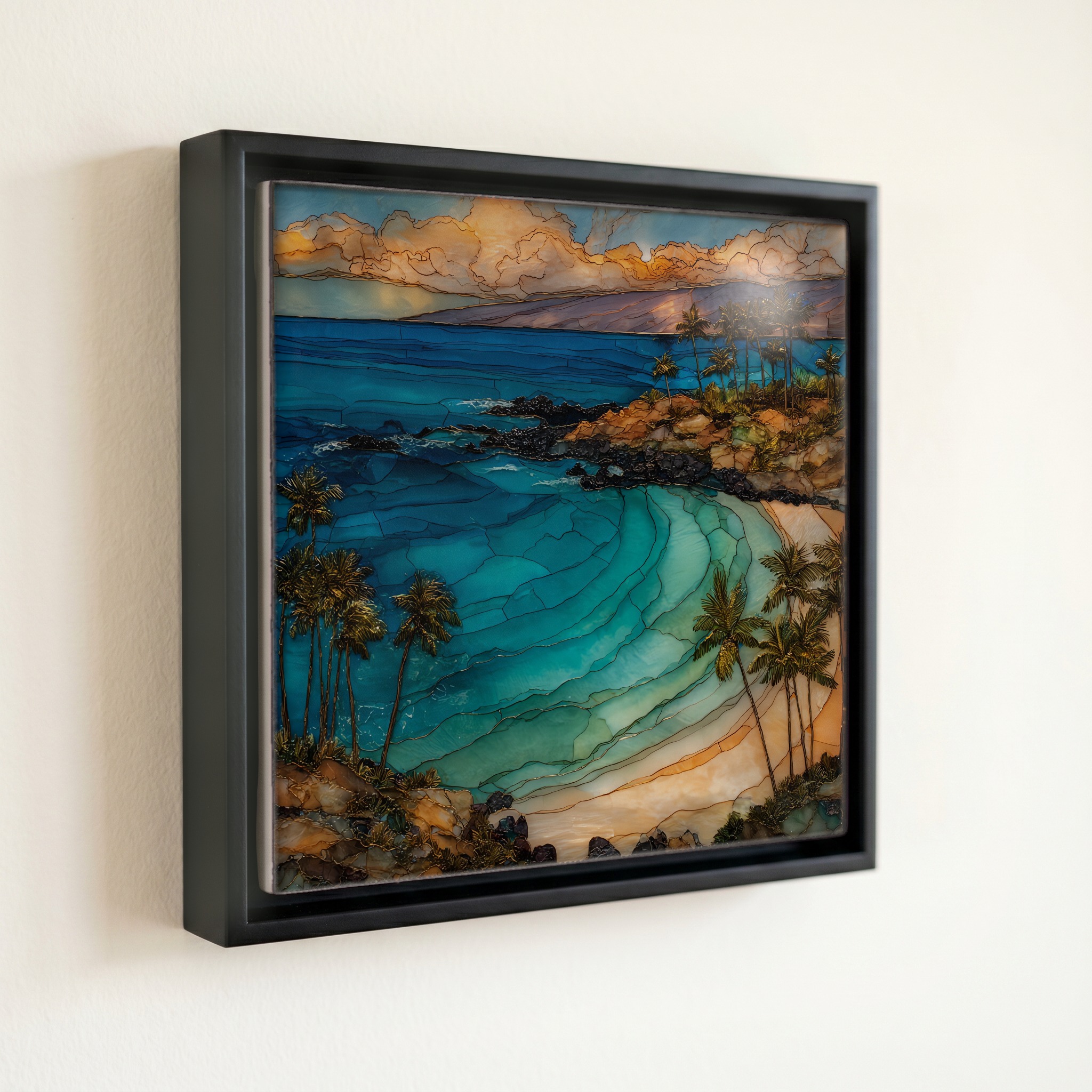
Napili Bay Maui Ceramic Art Tile, on ceramic.
Each tile is finished by hand in our Knoxville studio. Artwork is slowly infused into the ceramic surface under high heat and pressure, and rests beneath a thin glossy finish. The colour lives in the surface, not on top of it.
Pick any four 4-inch tiles — National Parks you've been to, a Smokies set, the four seasons of one place. $ for a set of , cork-backed, ready to live on the table.
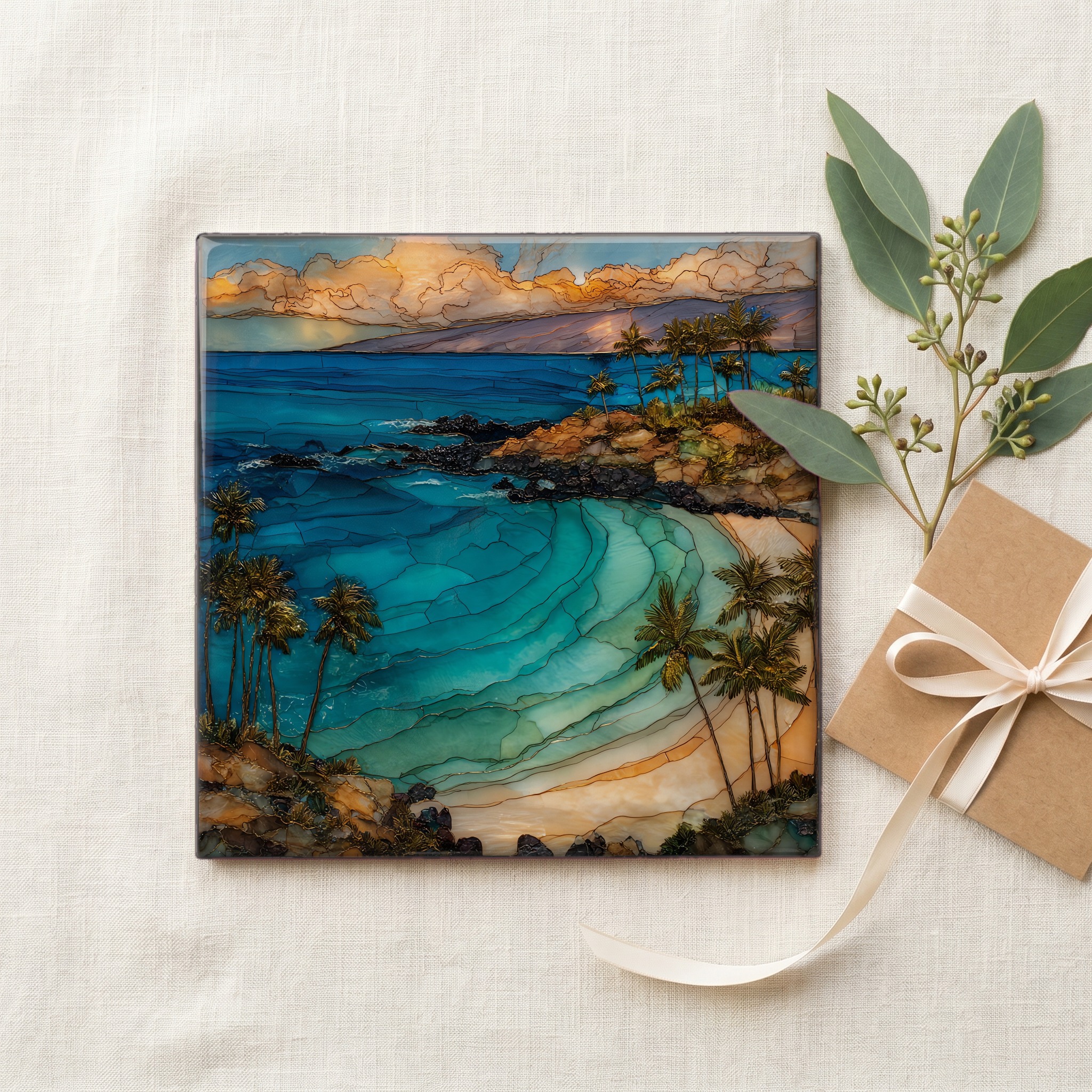
Each tile ships in a kraft box, tied with cream ribbon, with a handwritten note from the studio if you'd like to add one.
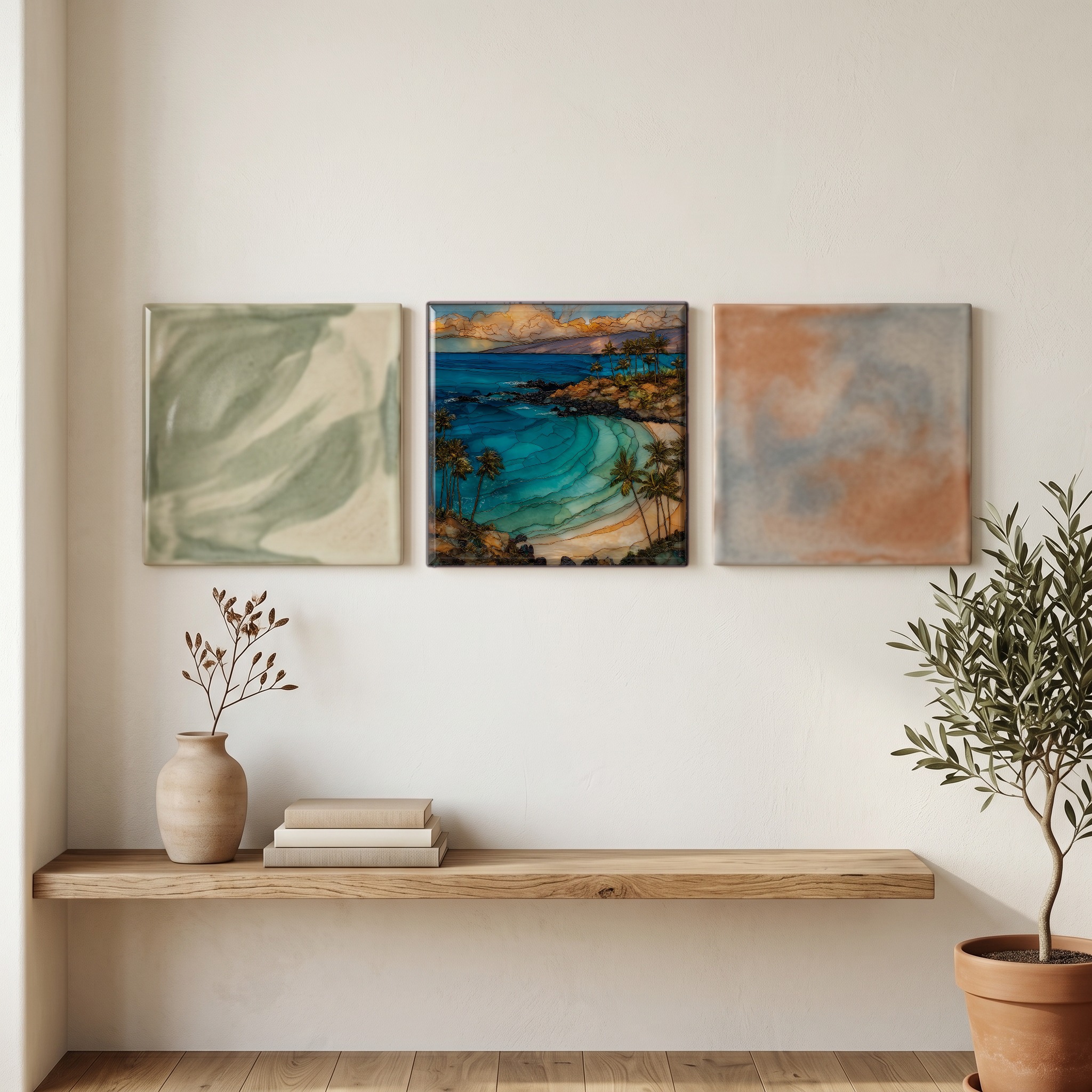
Three or five different vistas, hung together — a chapter of places you've been, or want to go.
The place, in three passes.
Napili Bay sits on the northwestern shore of Maui, in Maui County, between the Kapalua and Ka'anapali resort districts. The beach is roughly a quarter mile of white sand, fronting a shallow reef-protected cove on the leeward (kona) side of the West Maui Mountains. Access is from Lower Honoapi'ilani Road, which loops off the main Honoapi'ilani Highway (HI-30); two short public-access lanes drop between the condominium resorts to the sand. The closest commercial airport is Kahului (OGG), about 35 miles east across the island. The bay falls inside the Lahaina District, the same district that lost its historic town centre to the August 2023 wildfire.
The bay is reef-protected and shallow on the inside, with sandy stretches and coral fringes at both ends. The shape makes it one of the more reliable snorkeling spots on West Maui. Green sea turtles feed on the limu (marine algae) growing on the basalt at either point, often within a few feet of swimmers. Federal law and Hawai'i state rules require a 10-foot distance from the honu, which are listed as threatened under the Endangered Species Act. Summer visibility holds well; winter swells from the north can stir the sand and drop it sharply.
Summer, roughly May through September, is the calm season for the bay. Mornings stay flat, afternoon breezes light, the water clear over the sand. November through March brings the north Pacific swell, which wraps around the headland and can shut the bay down for swimming days at a time. The same months are humpback whale season: thousands of North Pacific humpbacks migrate to Hawaiian waters each winter, and the Au'au Channel between Maui, Lana'i, and Moloka'i holds the densest concentration. Peak sightings run January through early March, sometimes from the sand itself.