Wender·Vista
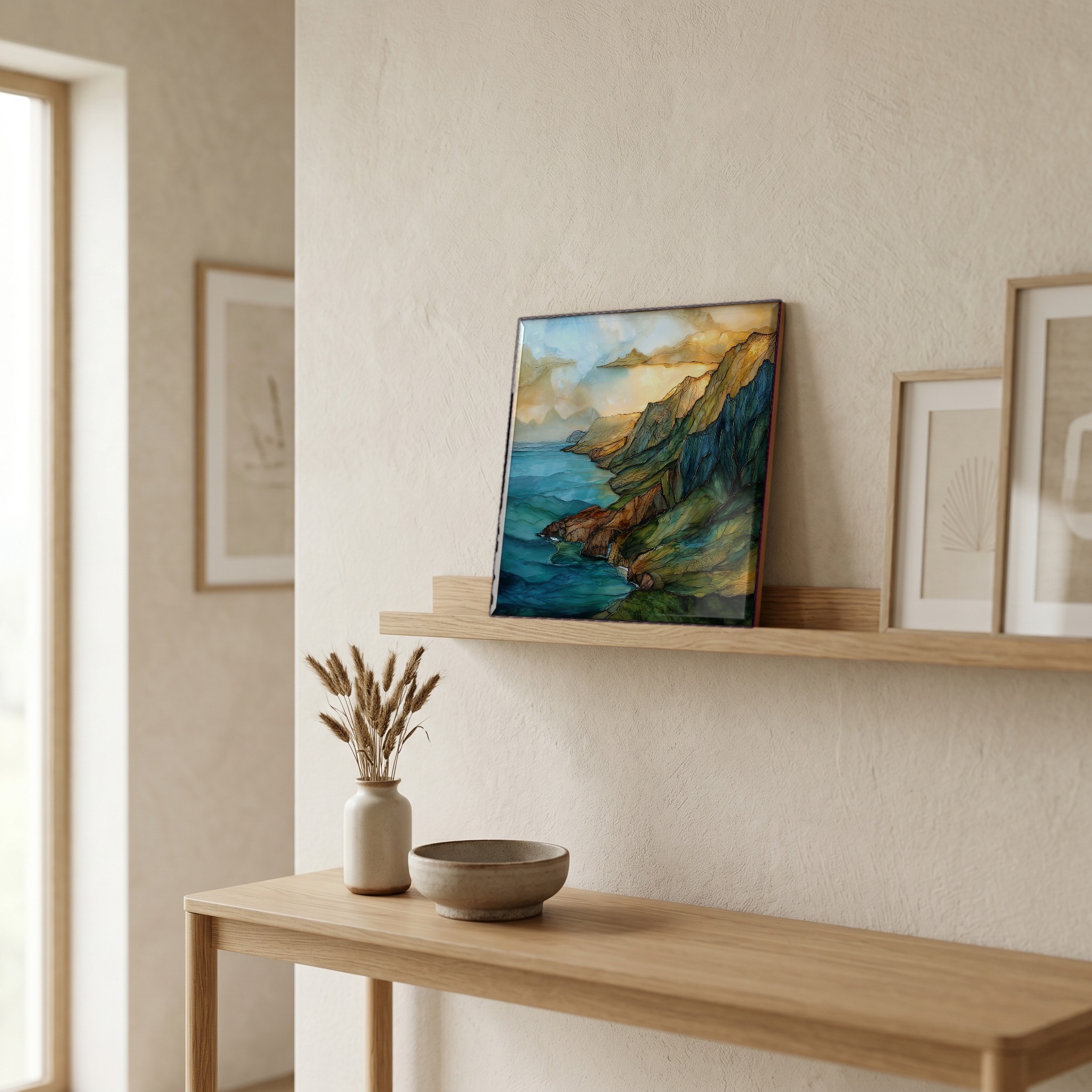
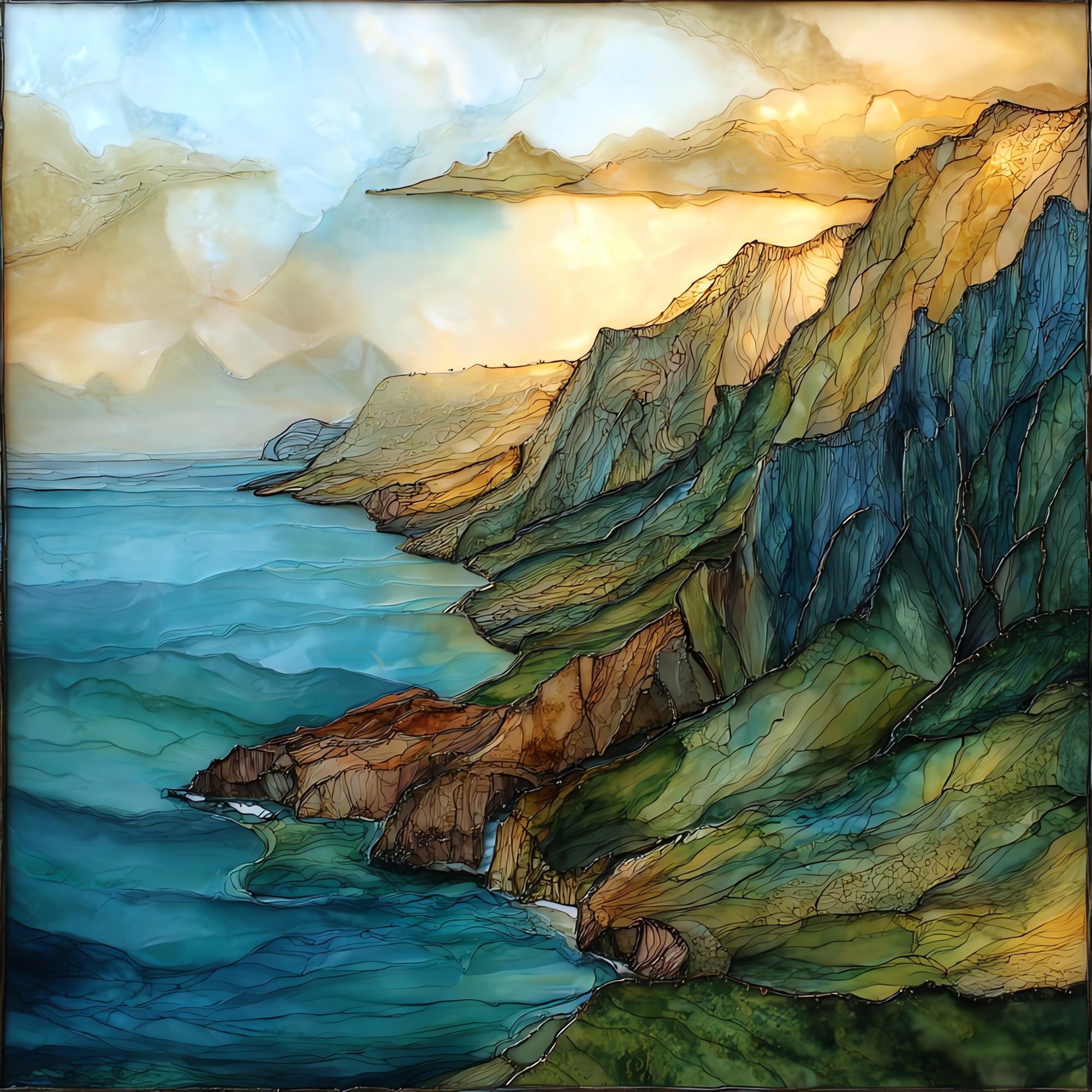
Na Pali Aerial Kauai Ceramic Art Tile
shown on ceramic, 12-inch tileHawaii · United States
the northwest cliffs of Kauaʻi

Na Pali Aerial Kauai Ceramic Art Tile

the green the road never finds.

Where it lives

Not only on a wall.

A small tile on the nightstand catching the morning. A larger one above the fire. Yours, wherever you spend the slow hours.
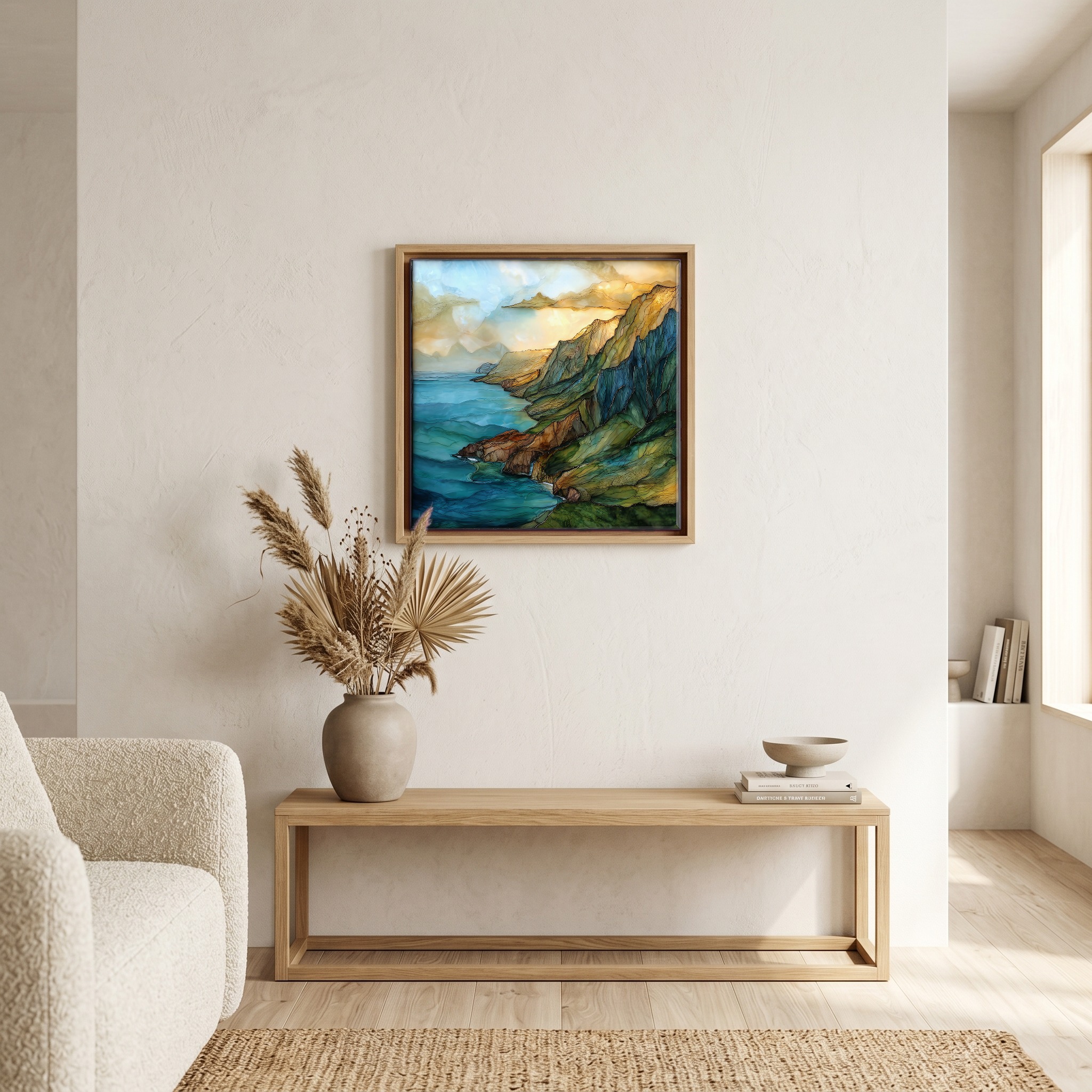
Above the bench, in a warm oak surround.
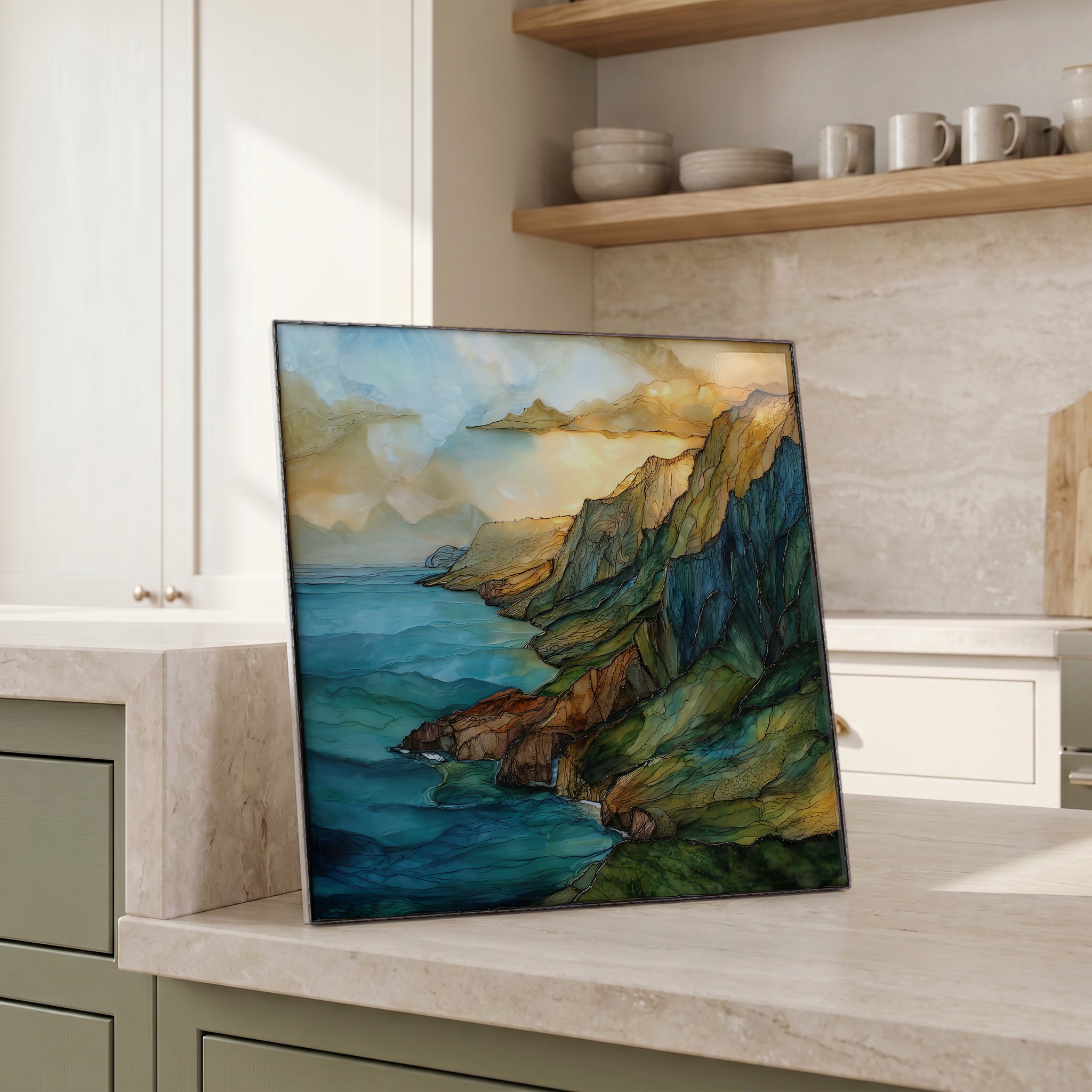
Beside the kettle, propped on the counter.
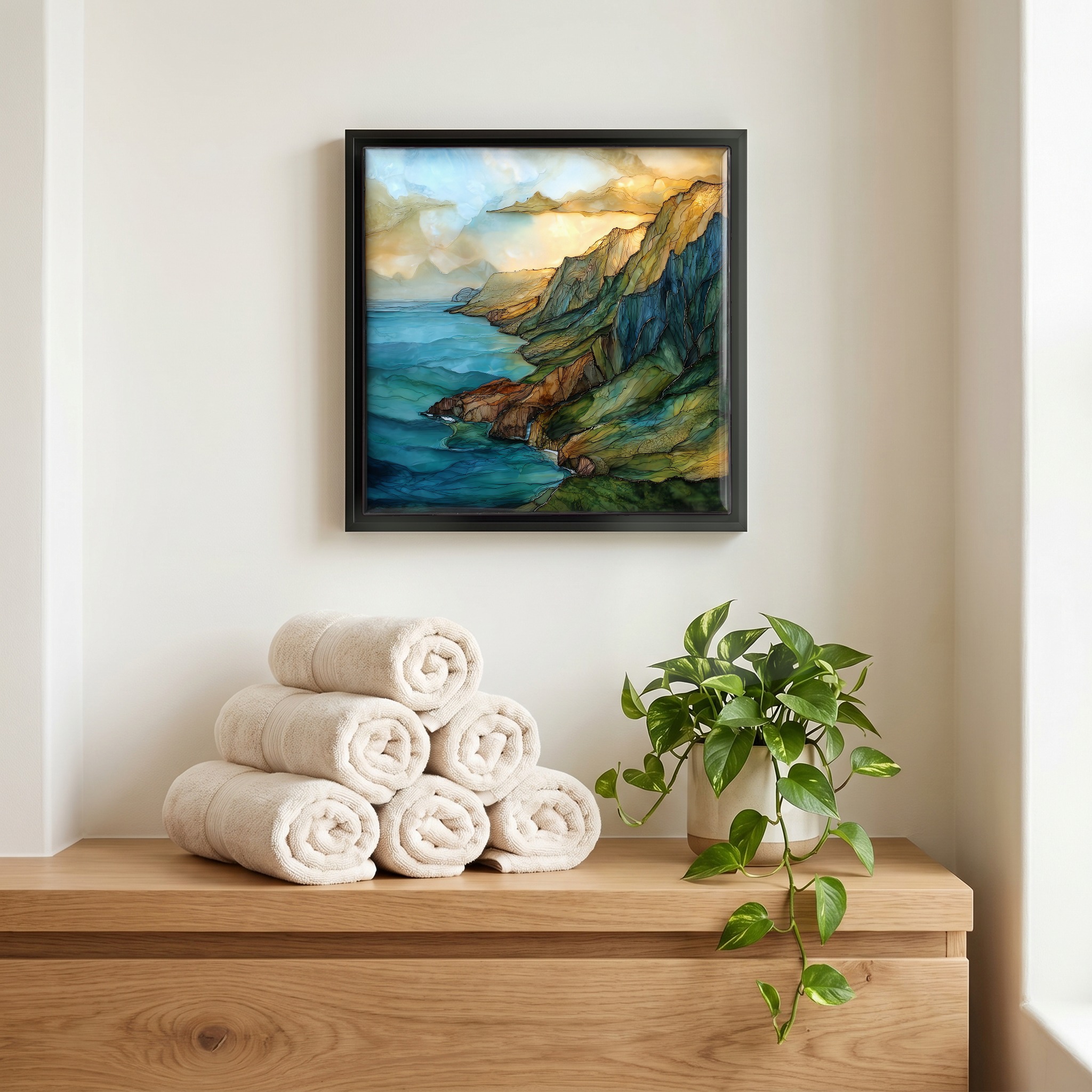
Above the linens, in a slim black surround.
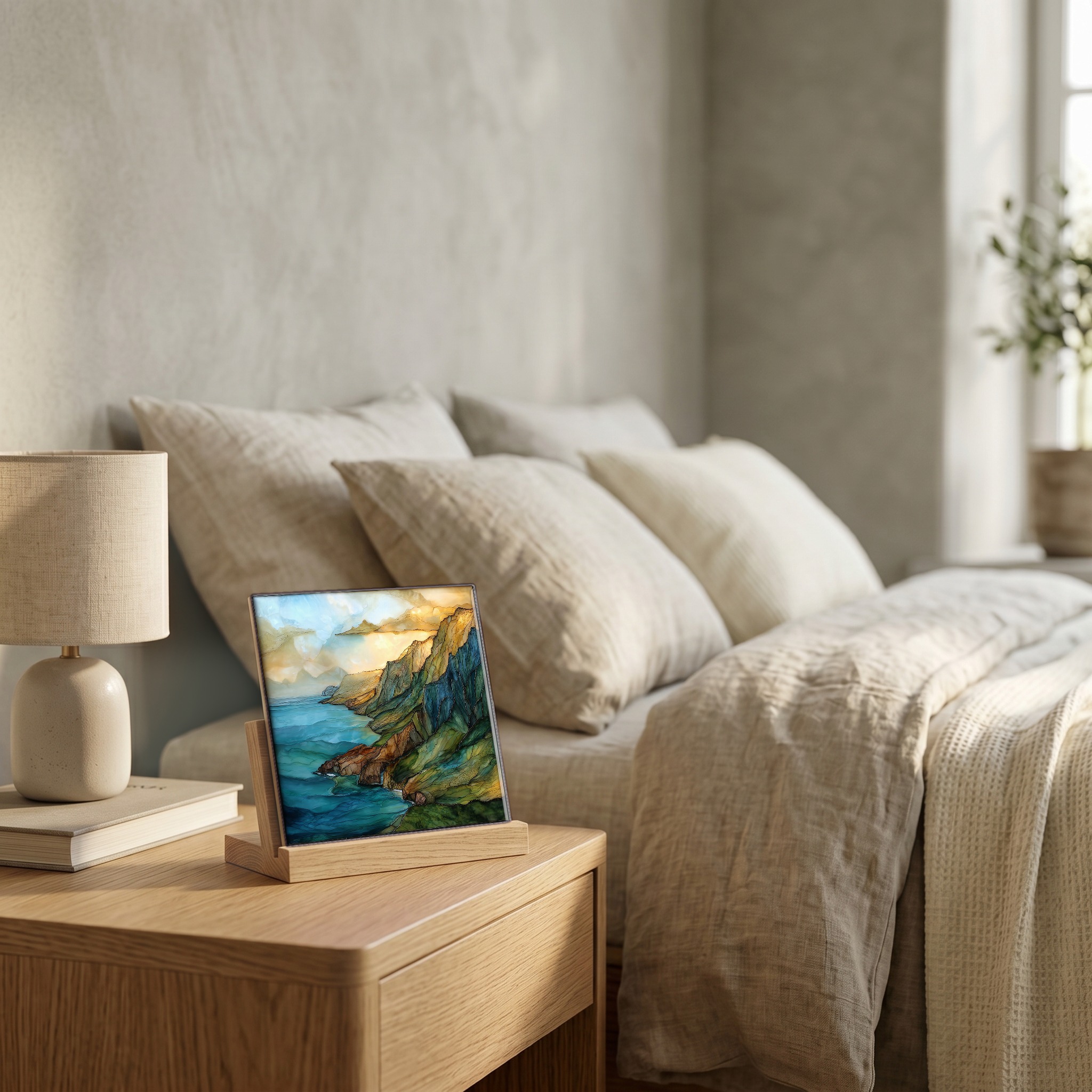
On the nightstand, on a light oak stand.
On a picture ledge, where the light comes in.
a note from the studio

Seventeen miles of cliff that no road reaches. The northwest face of Kauaʻi folds into fluted green ridges that rise four thousand feet straight out of the Pacific, visible only from the trail, the water, or the air. The interior valleys keep their waterfalls hidden from the road that circles the rest of the island. A helicopter window holds the whole coast at once. Some of the operators cut the cabin narration over Kalalau and let the place speak for a minute.
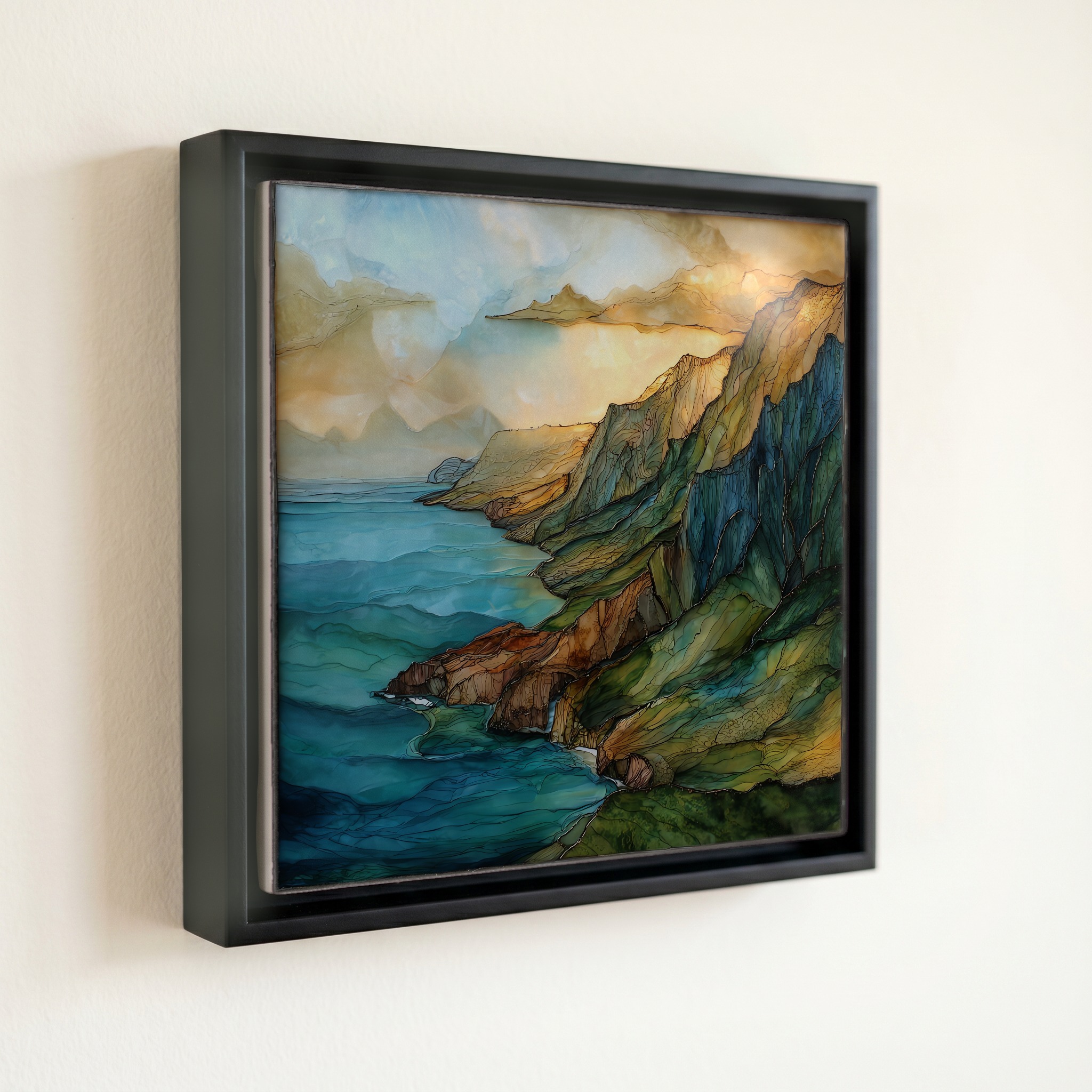
from the studio
shown in a slim black floating frame · 6 × 6 in
— bring it home

Na Pali Aerial Kauai Ceramic Art Tile, on ceramic.

Each tile is finished by hand in our Knoxville studio. Artwork is slowly infused into the ceramic surface under high heat and pressure, and rests beneath a thin glossy finish. The colour lives in the surface, not on top of it.

What kind of piece?
One tile — square or rectangle.
How big?
the popular one — counter, shelf, nightstand
6 × 6 in · 15 cm · 1.6 lb
Surface finish
A clear glossy finish — the artwork reads as if under resin. Ideal for show-pieces and framed wall art.
How it sits
A hidden cleat — sits ¼″ proud of the wall.
$58
Hand-finished and shipped from our studio at the foot of the Smokies. On your wall in about ten days.
size
6 × 6 in
15 cm
weighs
1.6 lb
solid in the hand
surface
ceramic, hand-finished
art rests beneath a thin glossy finish
from
Knoxville, TN
our family studio, at the foot of the Smokies
— start a Coaster Set

Pick any four 4-inch tiles — National Parks you've been to, a Smokies set, the four seasons of one place. $ for a set of , cork-backed, ready to live on the table.
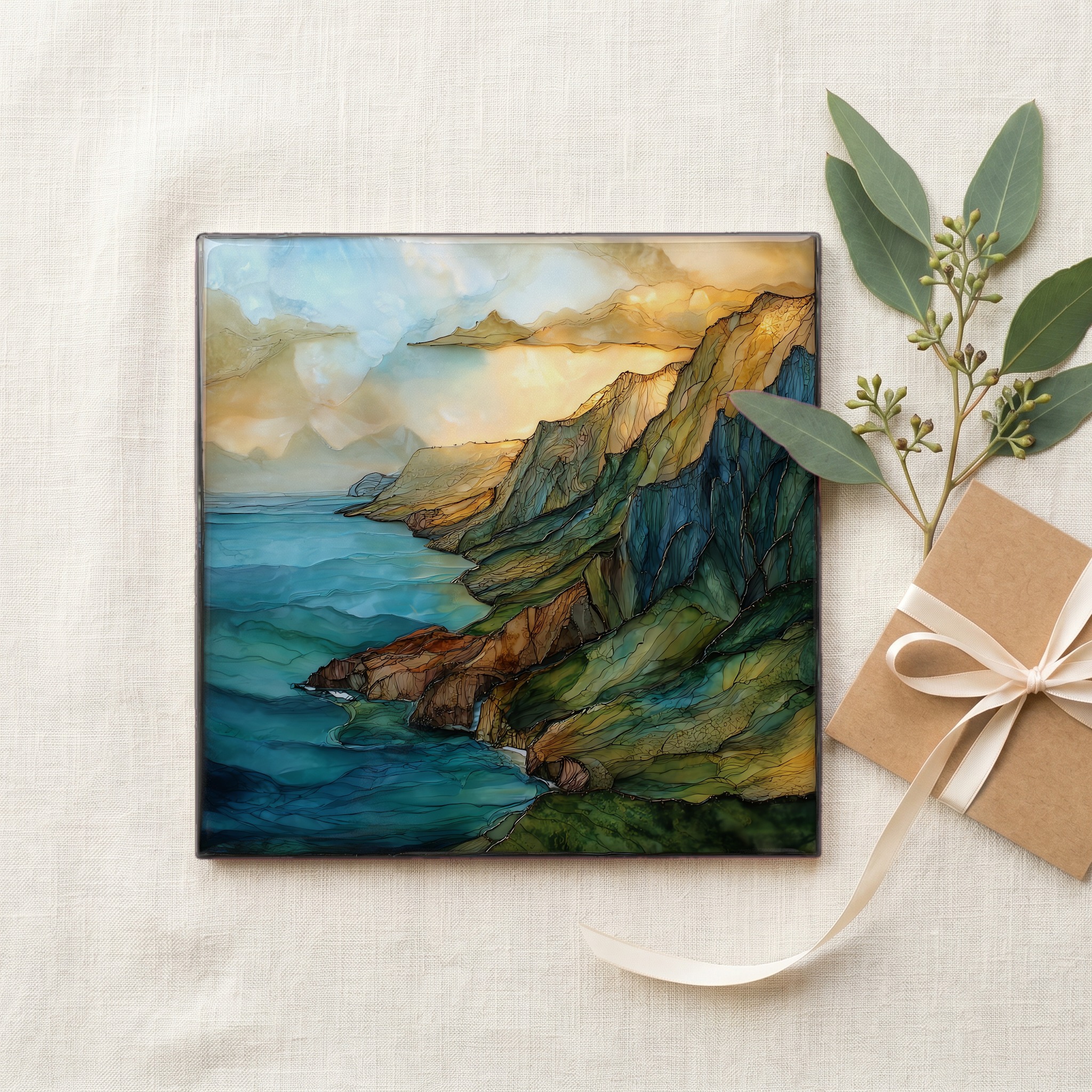
comes gift-ready
comes gift-ready

Each tile ships in a kraft box, tied with cream ribbon, with a handwritten note from the studio if you'd like to add one.
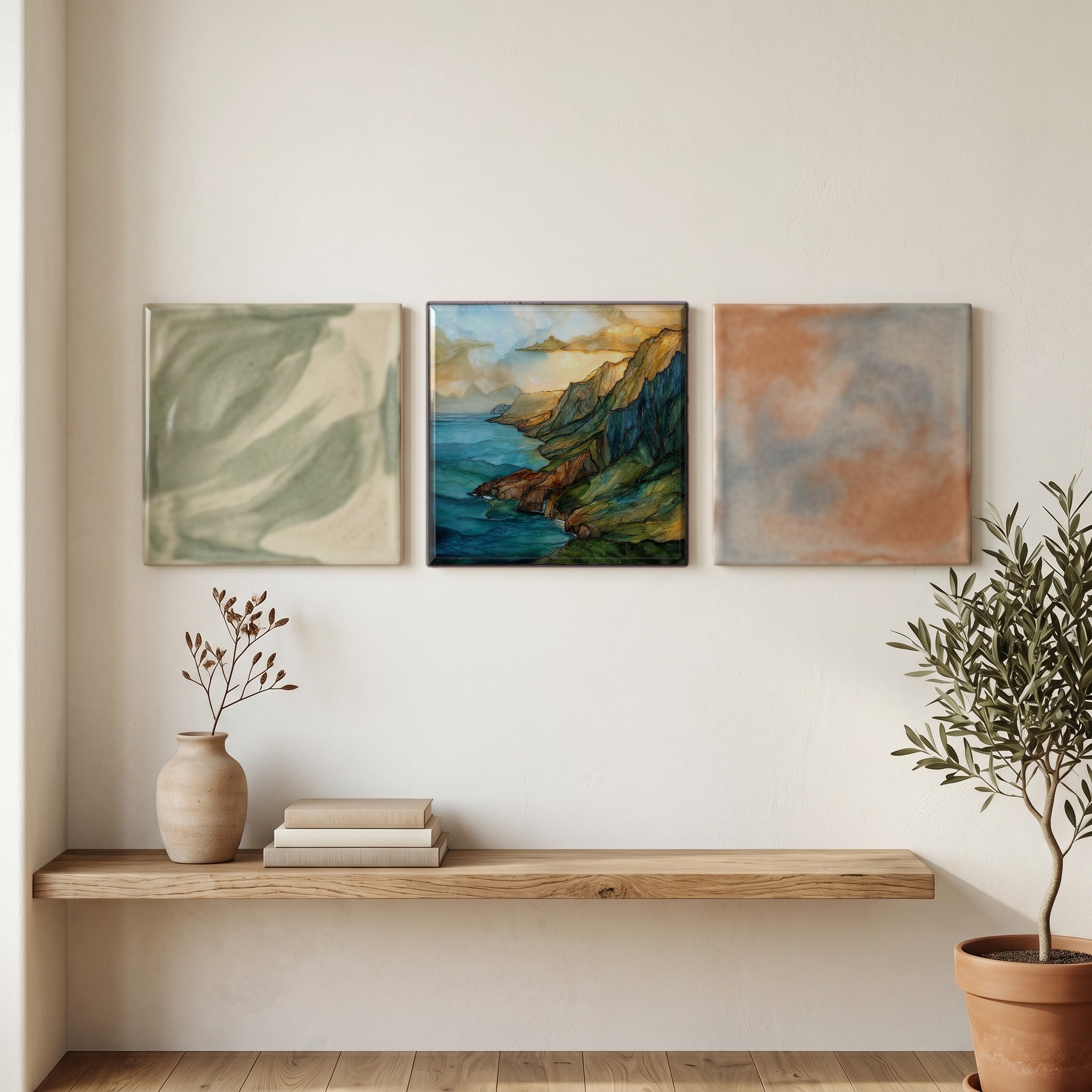
or build a grouping
or build a grouping

Three or five different vistas, hung together — a chapter of places you've been, or want to go.

about Na Pali Aerial Kauai Ceramic Art Tile

The place, in three passes.

A little of what's known, in case you fall down the rabbit hole — or want to go see it yourself.
the place

The Nā Pali Coast runs about 17 miles along the northwest shore of Kauaʻi, between Keʻe Beach in the north and Polihale State Park in the southwest. Nā pali means 'the cliffs' in Hawaiian; the wall has been carved by wind and surf since Kauaʻi formed about five million years ago as the oldest of the main Hawaiian islands. The coastline sits inside the 6,175-acre Nā Pali Coast State Wilderness Park, established in 1983 by the Hawaiʻi Department of Land and Natural Resources. No road circles it. The cliffs are reached on foot via the 11-mile Kalalau Trail, by tour boat from Port Allen on the south shore, or from the air on helicopter tours flown out of Līhuʻe and Princeville.

the air

What the aerial view shows that no other vantage can is the hanging valleys. Behind the seaward cliffs sit a series of amphitheater valleys named Kalalau, Honopū, Nuʻalolo, and Awaʻawapuhi, each cut by streams that drop into ribbon waterfalls and disappear back into the rock before reaching the sea. From the water you read the cliff face; from the Kalalau Trail you read what is underfoot; from the air the geometry resolves. Helicopter routes typically fly the coast at 1,500 to 2,000 feet above sea level, low enough to read the fluting on the pali but high enough to keep most of the rotor noise off the trail below.

— informed by Wikipedia
the visit

The coast is one of the most regulated wilderness areas in the state. The Kalalau Trail beyond Hanakāpīʻai Beach requires an overnight permit from Hawaii State Parks, capped at 60 permits per night. Day-use parking and the shuttle at Hāʻena State Park are also reservable in advance and sell out weeks ahead. Helicopter operators fly from Līhuʻe Airport in every season, with most tours running 50 to 65 minutes. Catamaran and zodiac boats leave from Port Allen from May through September, when the summer swell calms. Winter rains can close the trail without notice; the air remains the most reliable way to see the full coast.

where
United States · Kauaʻi County, Hawaii
within
Nā Pali Coast State Wilderness Park
position
22.1500° N · 159.6600° W
the neighborhood

What's nearby.

A handful of named places within an hour's walk or short drive. Some we've already painted; some we will.
1 km NE
Hāʻena State Park
state park trailhead
1 km NE
Keʻe Beach
beach trailhead
5 km E
Hanakāpīʻai Falls
waterfall
12 km SW
Honopū Arch
sea arch
17 km SW
Kalalau Beach
wilderness beach
24 km SW
Polihale State Park
state park
30 km S
Waimea Canyon
canyon
N
Na Pali Aerial Kauai Ceramic Art Tile
Hāʻena State Park
Keʻe Beach
Hanakāpīʻai Falls
Honopū Arch
Kalalau Beach
Polihale State Park
Waimea Canyon
common questions

What people ask.

A few questions we get about Na Pali Aerial Kauai Ceramic Art Tile — and about bringing the piece home.
about the place

The Nā Pali Coast runs along the northwest shore of Kauaʻi, Hawaiʻi, between Keʻe Beach in the north and Polihale State Park in the southwest. The 17-mile coastline is preserved as the Nā Pali Coast State Wilderness Park and is not accessible by road.

The pali rise as high as 4,000 feet (about 1,200 meters) above the Pacific. They are the eroded face of Kauaʻi's original shield volcano, which is roughly 5 million years old. Kauaʻi is the oldest of the main Hawaiian Islands.

Nā pali means 'the cliffs' in Hawaiian. The name is a plural form: the coast is not one cliff but a sequence of fluted ridges and amphitheater valleys carved by streams over millions of years of trade-wind rainfall.

No road circles Kauaʻi, and none reaches the Nā Pali Coast. Kūhiō Highway ends at Keʻe Beach on the north shore; Kaumualiʻi Highway ends at Polihale on the west. Everything between is reached only on foot, by sea, or from the air.

The Kalalau Trail runs 11 miles one way from Keʻe Beach to Kalalau Beach, traversing five valleys. An overnight permit from Hawaii State Parks is required beyond Hanakāpīʻai Beach at mile two, capped at 60 permits per night.

Summer, May through September, is when swells calm enough for boat tours and waterfall flow stays moderate. Helicopter tours operate in every season. Winter rains can close the trail without notice and reduce aerial visibility on the windward valleys.

Yes. Honopū Valley and its sea arch appear in the original King Kong (1976). The opening sequence of Jurassic Park flies past the Nā Pali cliffs before reaching Manawaiōpuna Falls inland. Pirates of the Caribbean: On Stranger Tides and Six Days Seven Nights both shot coastal sequences along the coast.

about the piece in your home

It's been a meaningful gift for many of our customers with ties to the island. The aerial view of Nā Pali is the one almost everyone who visits Kauaʻi wants to see, and many save the helicopter or boat tour for the last day. A Medium with a handwritten note from the studio carries the memory well.

The deep emerald greens, cobalt blue, and white waterfall threads sit well with coastal-modern interiors, biophilic palettes that lean tropical, and jewel-tone Maximalist rooms. It also reads in a Pacific-Northwest or alpine-modern space, since the green is rainforest-cool rather than Caribbean-bright.

Yes. Biophilic interiors have moved from generic palms toward specific named landscapes. The Nā Pali piece reads as living water and weathered cliff rather than abstract greenery, which is the direction biophilic design has been heading.

Above a standard 84-inch sofa, a single Large reads centered with weight to spare; for more presence, a 4-tile Mural or a 9-tile Mural holds the wall. Above a console, a Medium or a Triptych of Smalls suits most entryways.

Yes, in the Dura Satin or Matte finish. Both are scratch-resistant and stand up to humidity. The Glossy finish is for framed wall art and dry rooms. For a kitchen backsplash or a shower wall, the 4-tile or 9-tile Mural in Dura Satin is the standard recommendation.

A microfibre cloth and warm water. Avoid abrasive scrubs, ammonia cleaners, and bleach. The surface doesn't need them and they can dull the finish over time. For grouted installations, a non-acid tile cleaner used sparingly is fine.

Yes. Every piece in the WenderVista atlas is original work by Reid Wender, the curator of the studio. No licensed art, no stock photography, no third-party prints. The painting of Nā Pali was made specifically for this place and exists nowhere else.

if this one stayed with you

A few you might also love.

Hand-picked by the eye that found Sorapis. Same air, same kind of quiet.