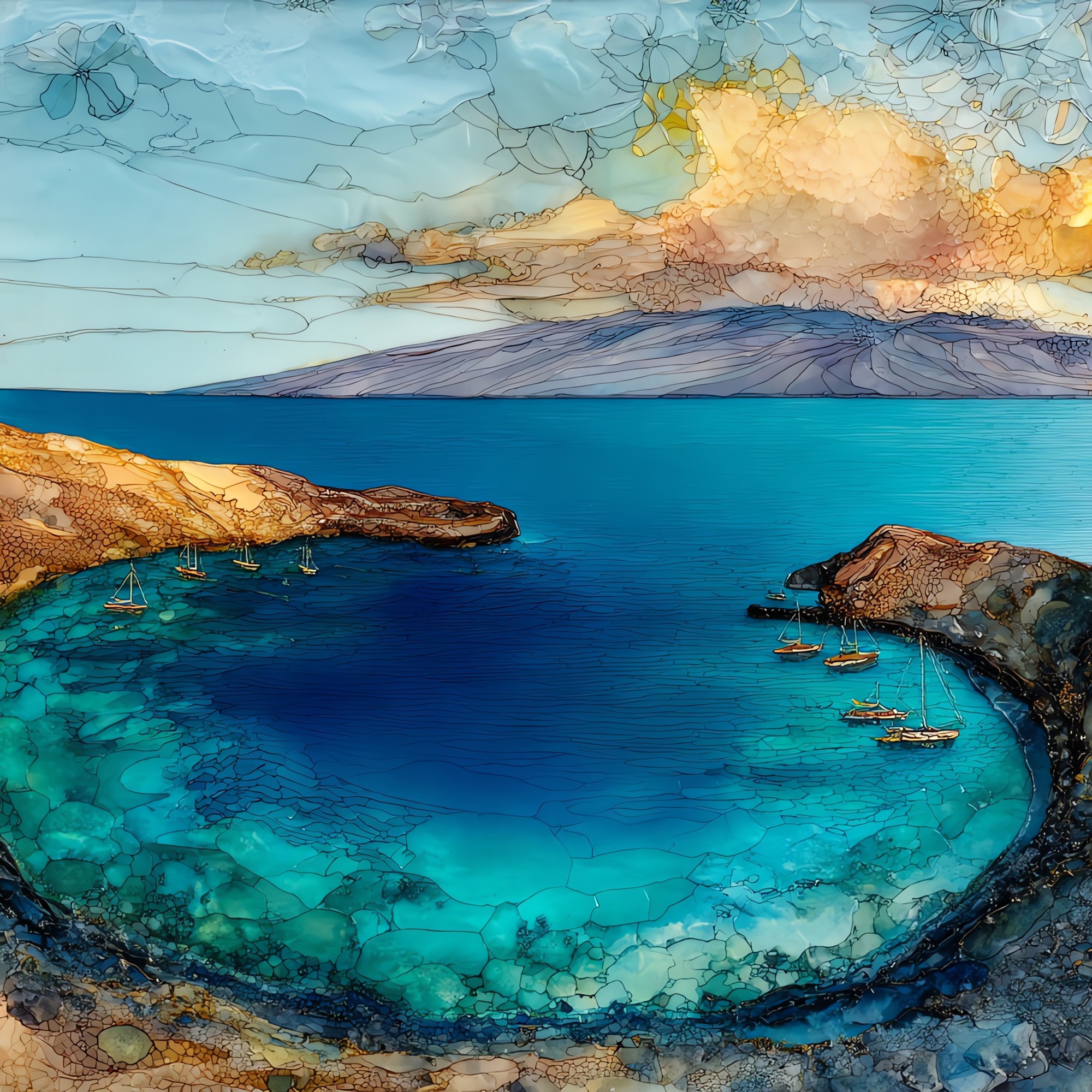
Molokini Crater Maui Ceramic Art Tile
— half a volcano, the water clear to the floor.
Not only on a wall.
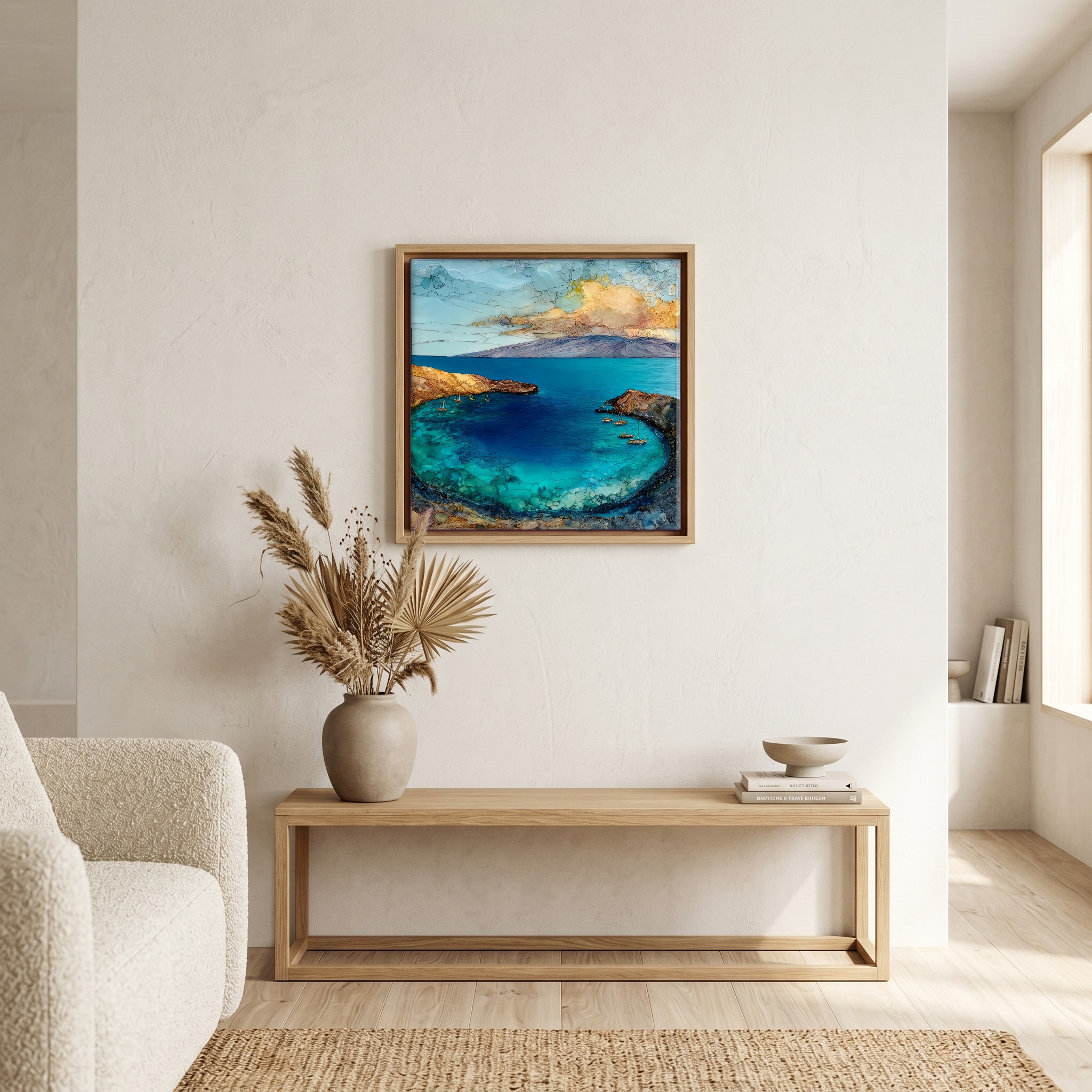
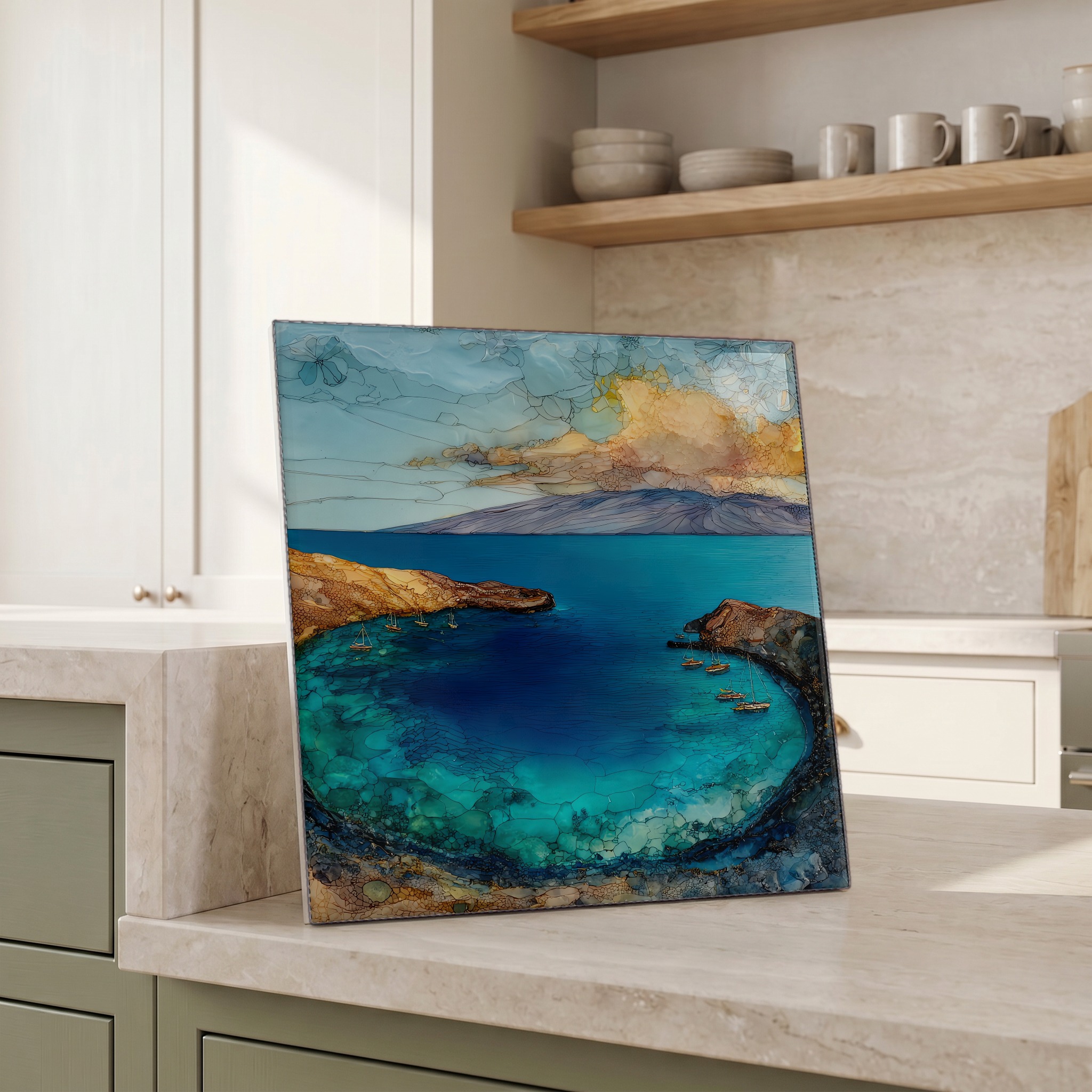
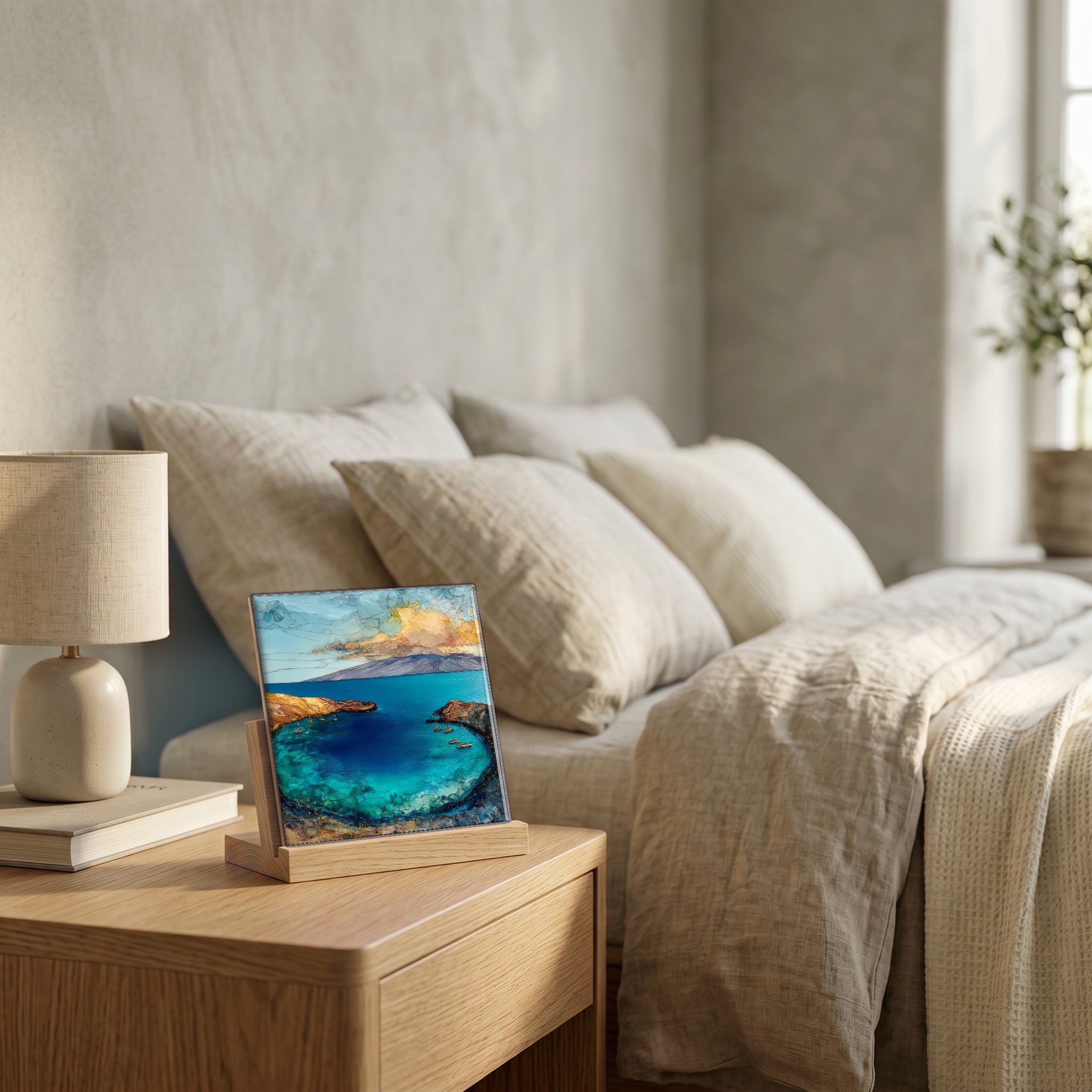
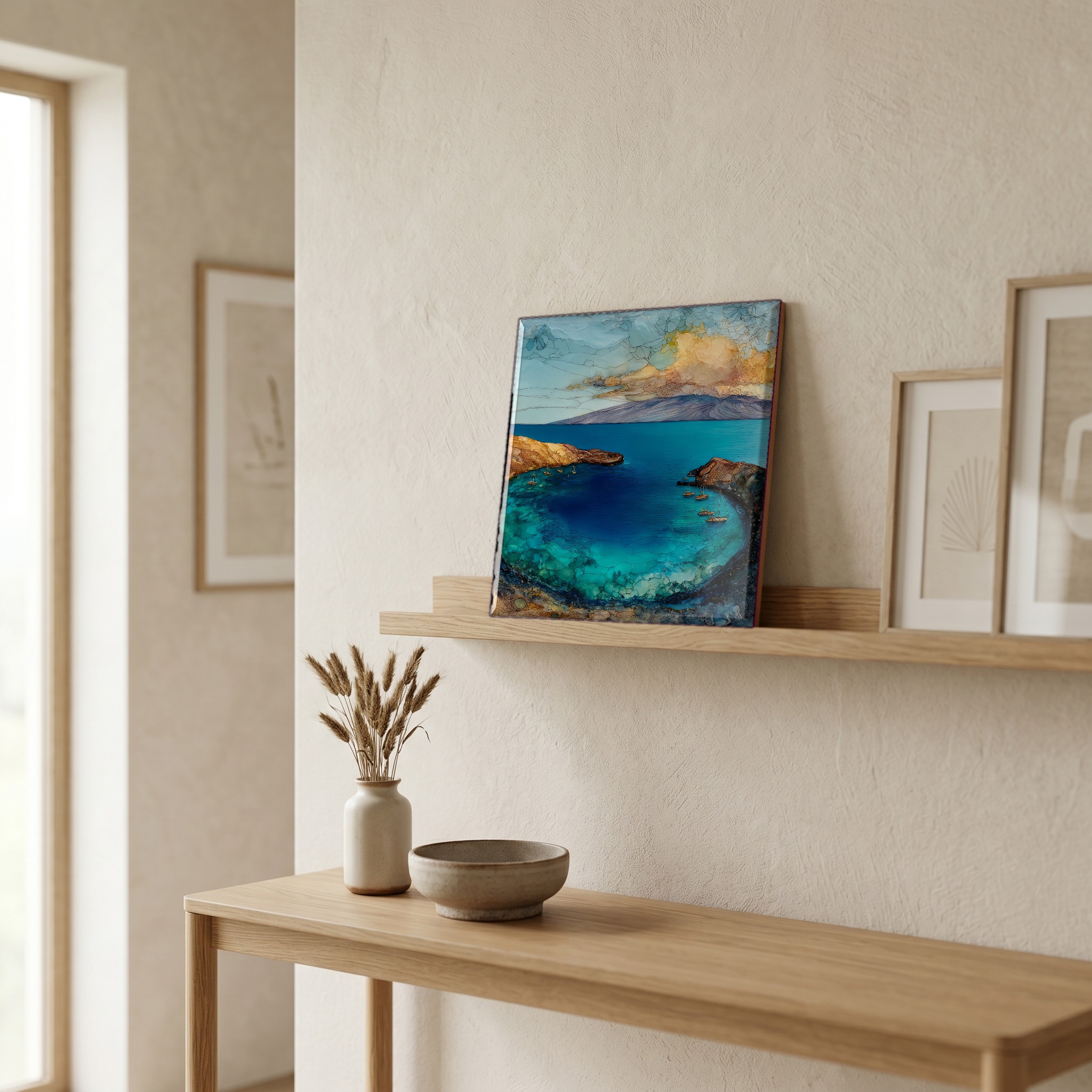
“A crescent of volcanic rim two and a half miles off the south coast of Maui. The southwest wall is gone, taken by the wind and the open sea, leaving an arc that shelters its own coral reef. Tour boats leave from Mā'alaea before first light to reach the interior while the water is still glass. The visibility runs to a hundred and fifty feet on a clean morning. Wedge-tailed shearwaters nest on the dry ridge above, undisturbed by anyone since 1977 when the state walled the place off. No one swims to it. The boat brings you, and the boat takes you home.
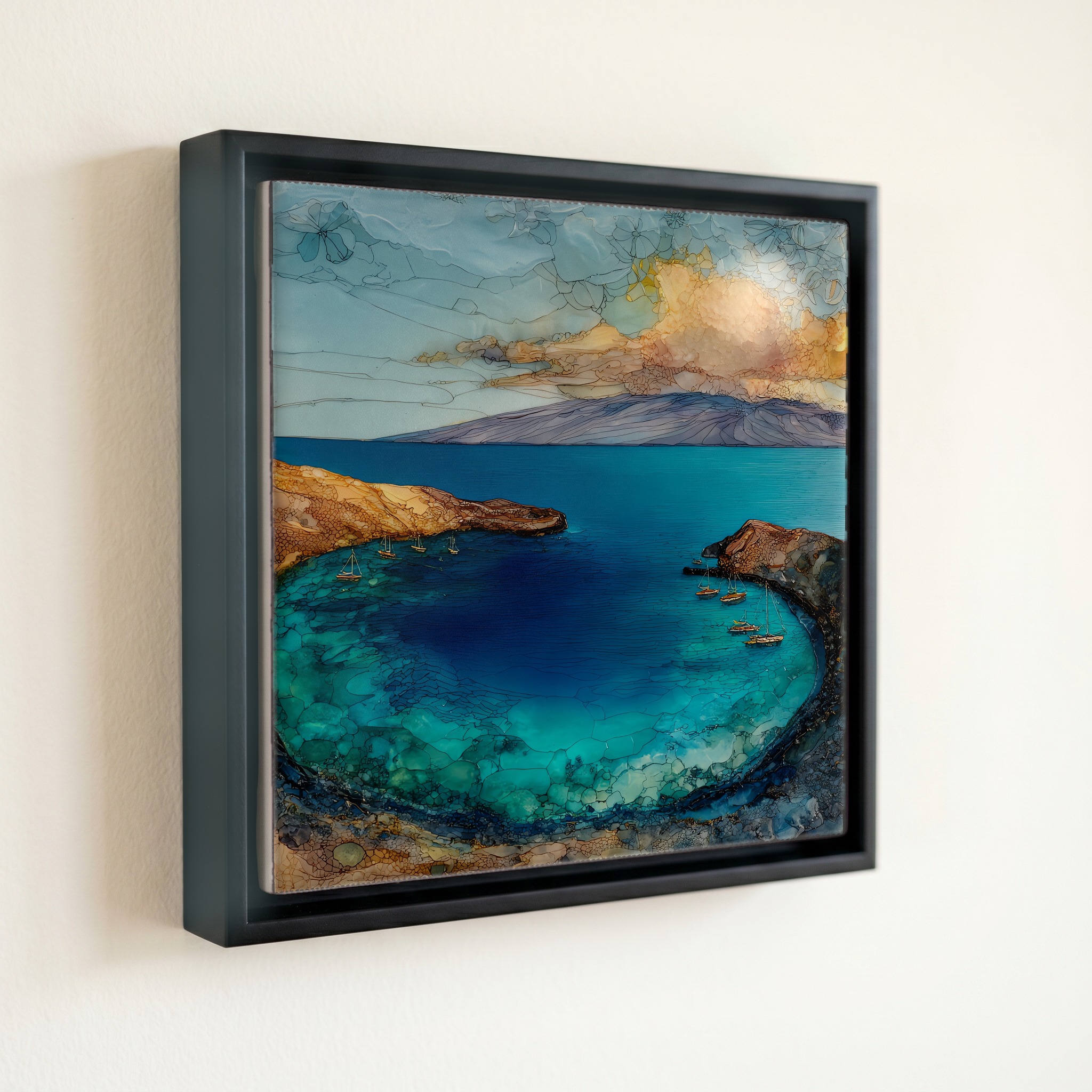
Molokini Crater Maui Ceramic Art Tile, on ceramic.
Each tile is finished by hand in our Knoxville studio. Artwork is slowly infused into the ceramic surface under high heat and pressure, and rests beneath a thin glossy finish. The colour lives in the surface, not on top of it.
Pick any four 4-inch tiles — National Parks you've been to, a Smokies set, the four seasons of one place. $ for a set of , cork-backed, ready to live on the table.

Each tile ships in a kraft box, tied with cream ribbon, with a handwritten note from the studio if you'd like to add one.
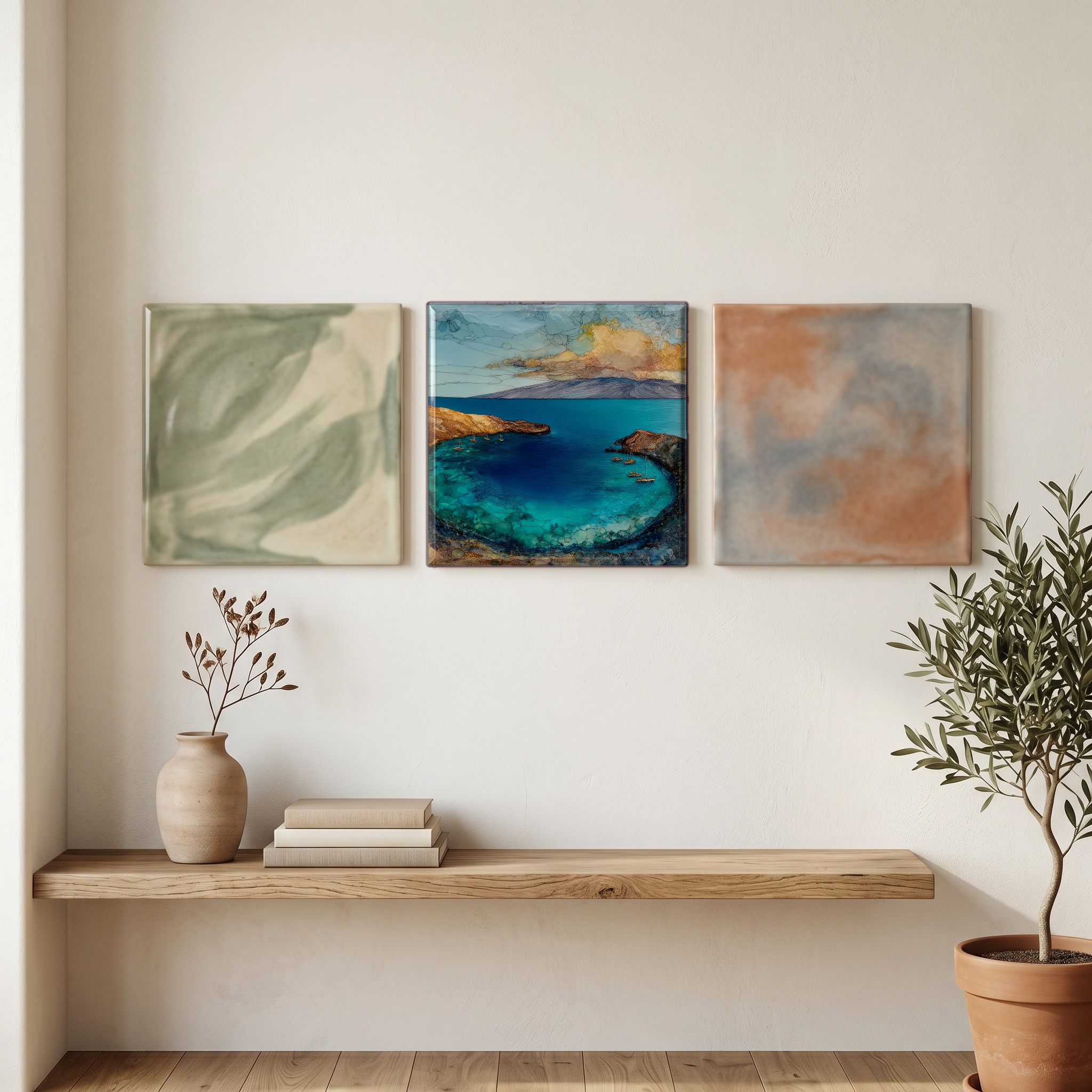
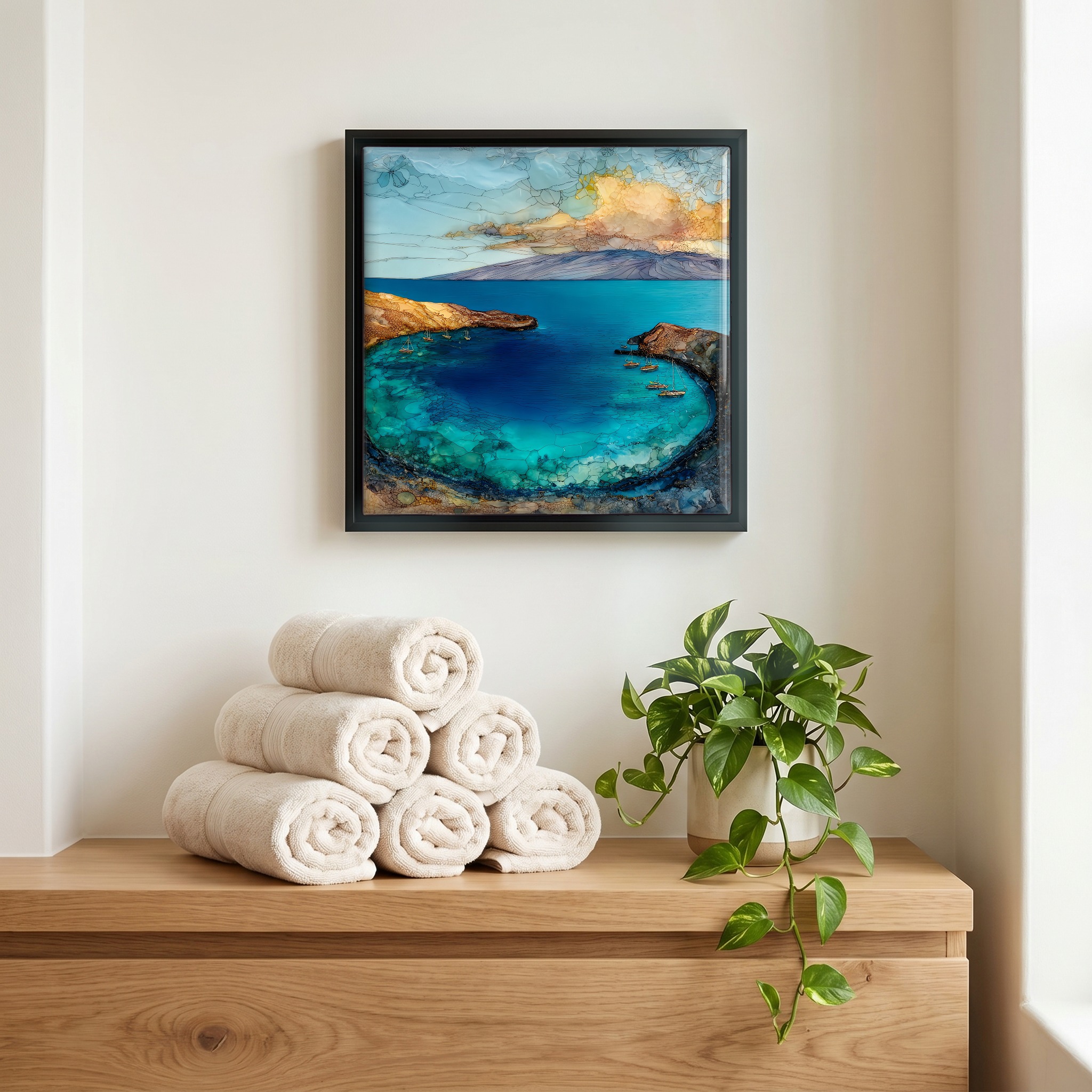
Three or five different vistas, hung together — a chapter of places you've been, or want to go.
The place, in three passes.
Molokini is a crescent-shaped tuff cone in the ʻAlalākeiki Channel between Maui and the uninhabited island of Kahoʻolawe, roughly two and a half miles off the south coast of Maui [Wikipedia]. The rim rises about 161 feet above sea level at its highest point and encloses a sheltered cove open to the northwest, the result of wave action that breached the southwestern wall over the last several thousand years. The crater is the eroded remnant of a late-Pleistocene volcanic vent dated to roughly 230,000 years ago, part of the same Maui volcanic system that built the much larger Haleakalā shield to the east [Wikipedia]. Access to the interior is by permitted commercial boat only; no swimming, anchoring on the reef, or setting foot on the islet is allowed [Hawaii DLNR].
The cove inside the crescent is one of the cleanest open-water sites in the Hawaiian Islands. Visibility commonly reaches 100 to 150 feet, and on a calm morning the floor of the inner shelf, around 30 to 50 feet down, reads as if through window glass. The water carries no river silt because there is no river on the islet, and the outer rim takes the brunt of the trade-wind swell, leaving the interior comparatively still. The reef shelters about 250 species of fish, including yellow tang, Moorish idol, parrotfish, and the occasional whitetip reef shark. Humpback whales pass through the channel between December and April [Hawaii DLNR].
Access is by permitted commercial vessel only. Tour boats leave from Mā'alaea Harbor and Kīhei before dawn to reach the crater while the water is still and the morning trades have not yet risen, typically a two-hour window from about 7:00 to 9:00 a.m. The crater has been a Marine Life Conservation District since 1977 and a State Seabird Sanctuary since 1980; no fishing, no anchoring on the reef, no setting foot on the islet, and no swimming to or from the shore [Hawaii DLNR]. The southwest backwall, outside the crescent, drops to about 300 feet and is dive-only, weather permitting.