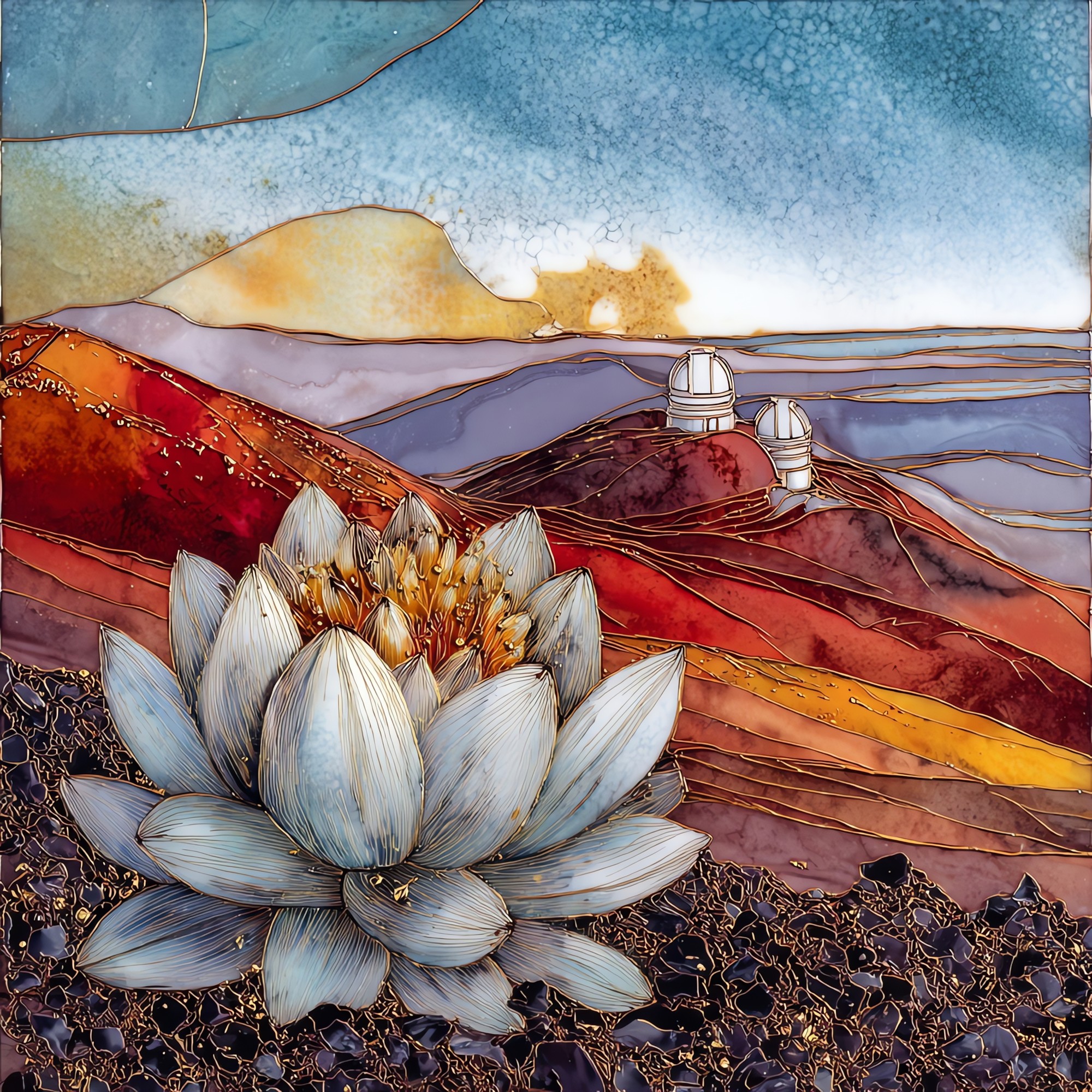
Mauna Kea Silversword Big Island Ceramic Art Tile
— — the silver that waits decades to flower.
Not only on a wall.
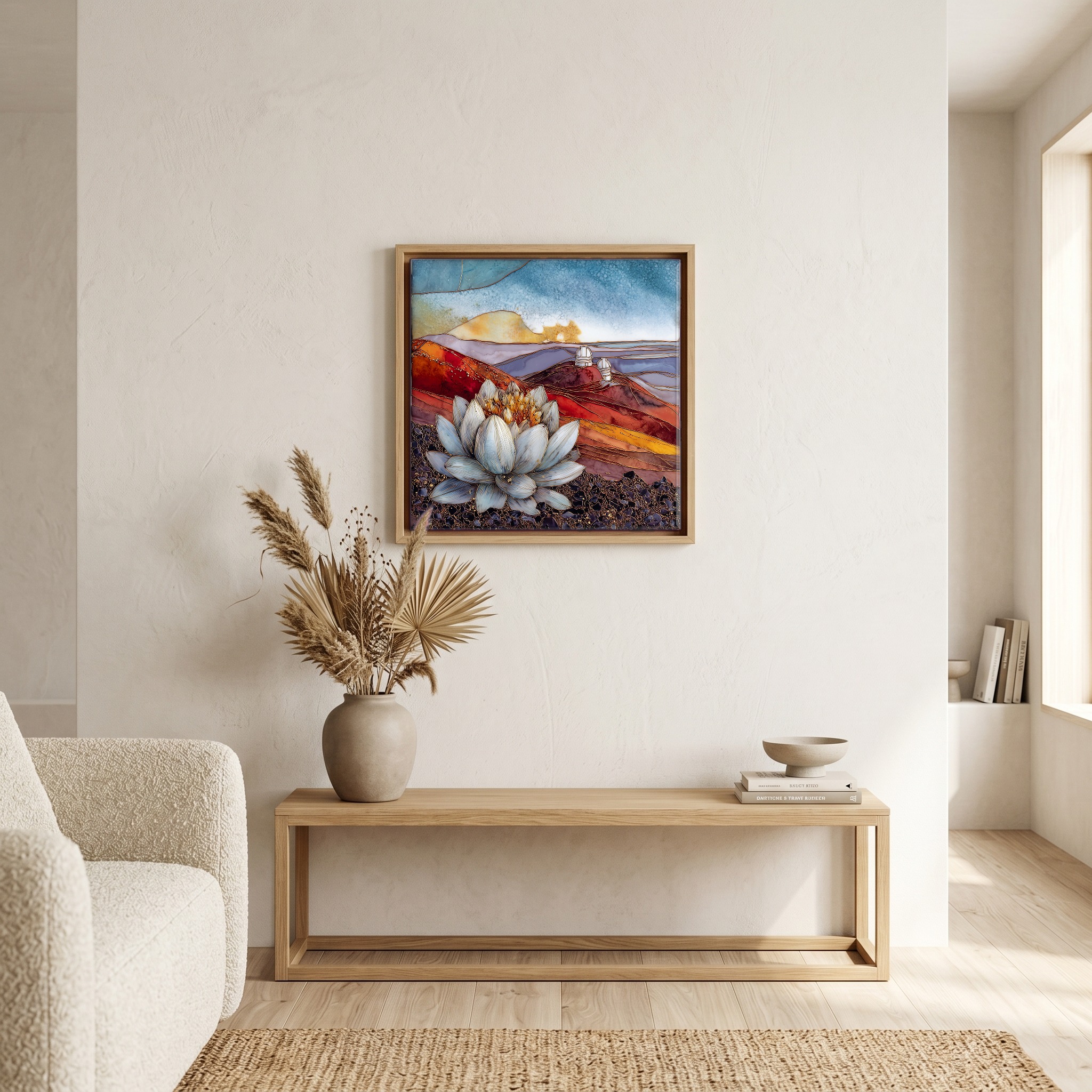
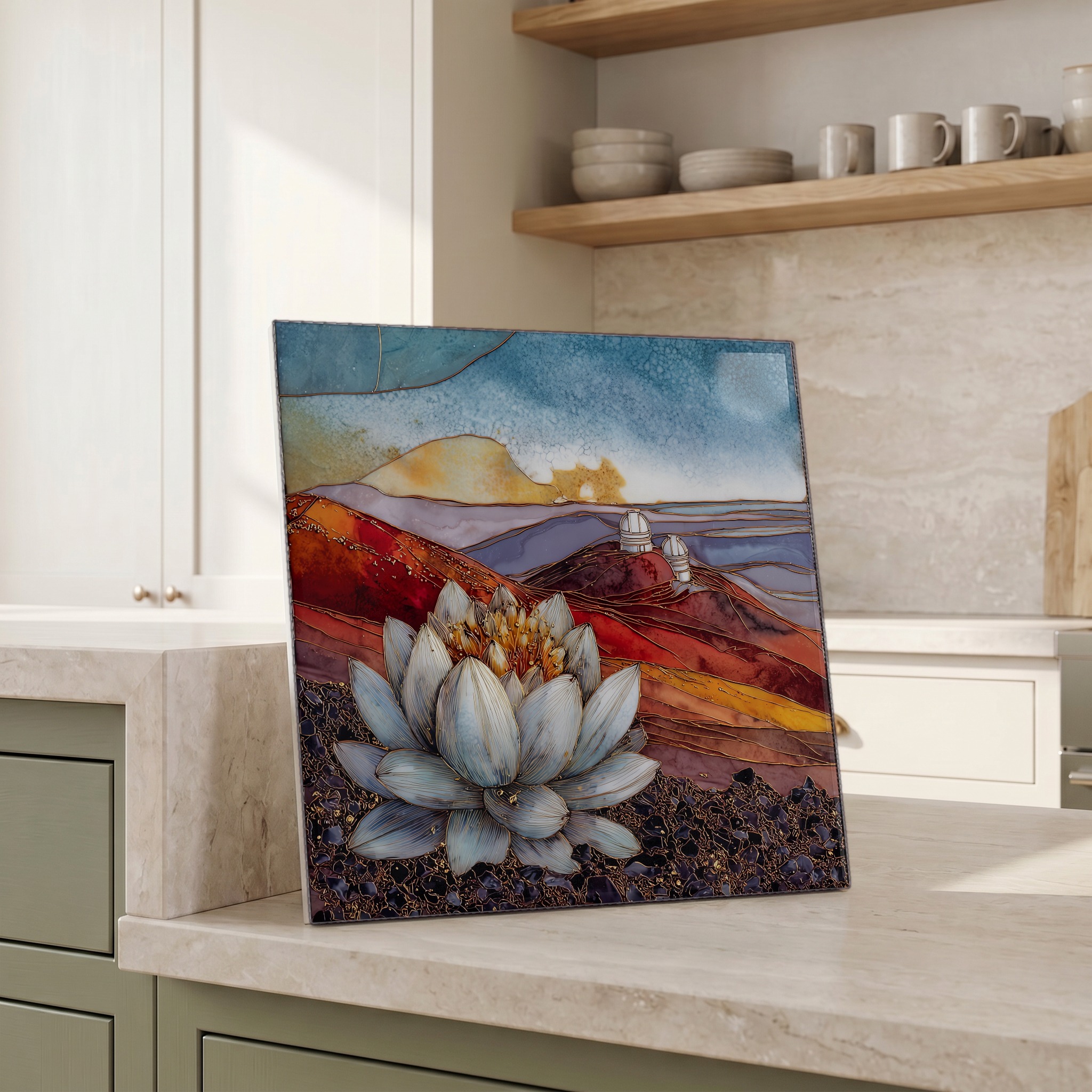
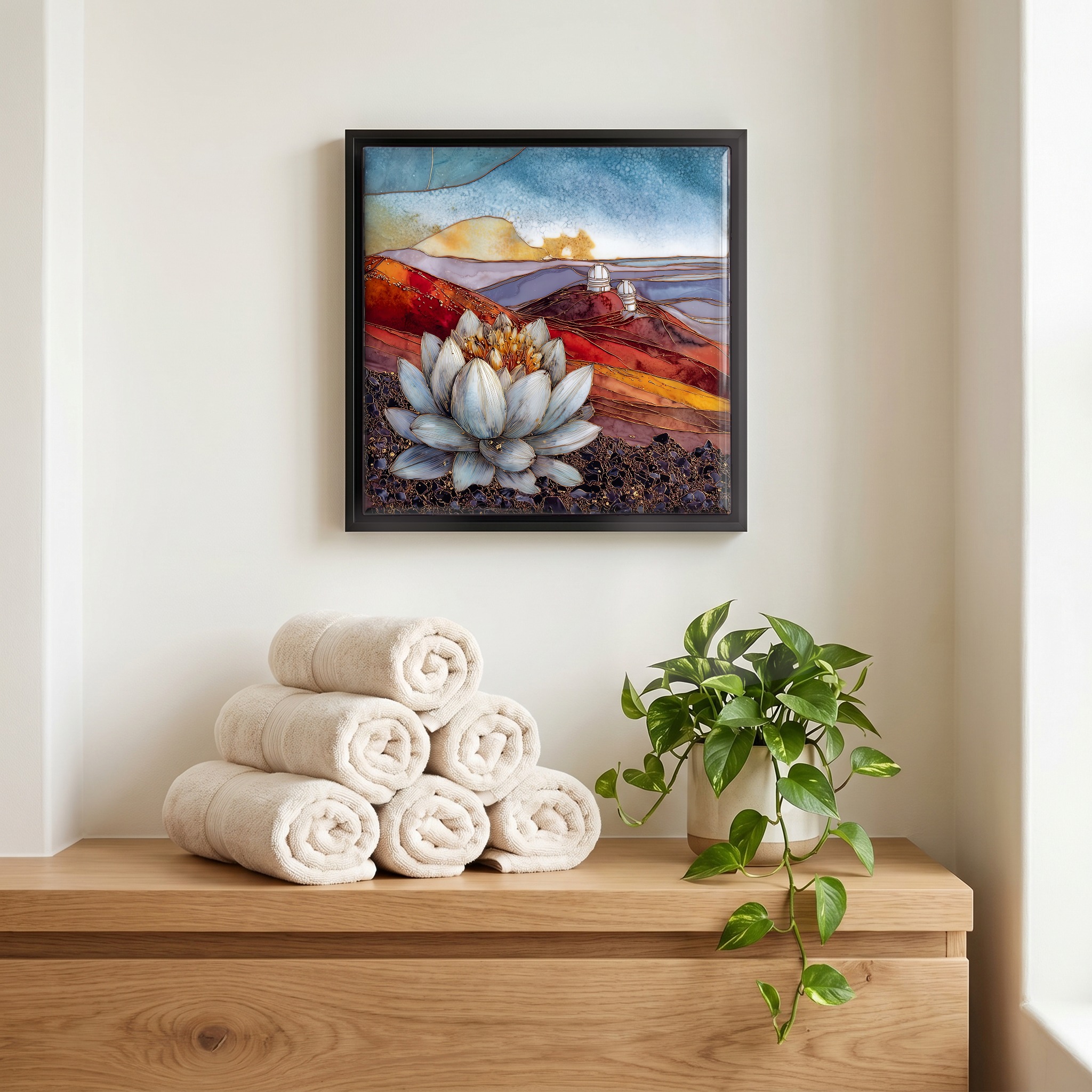
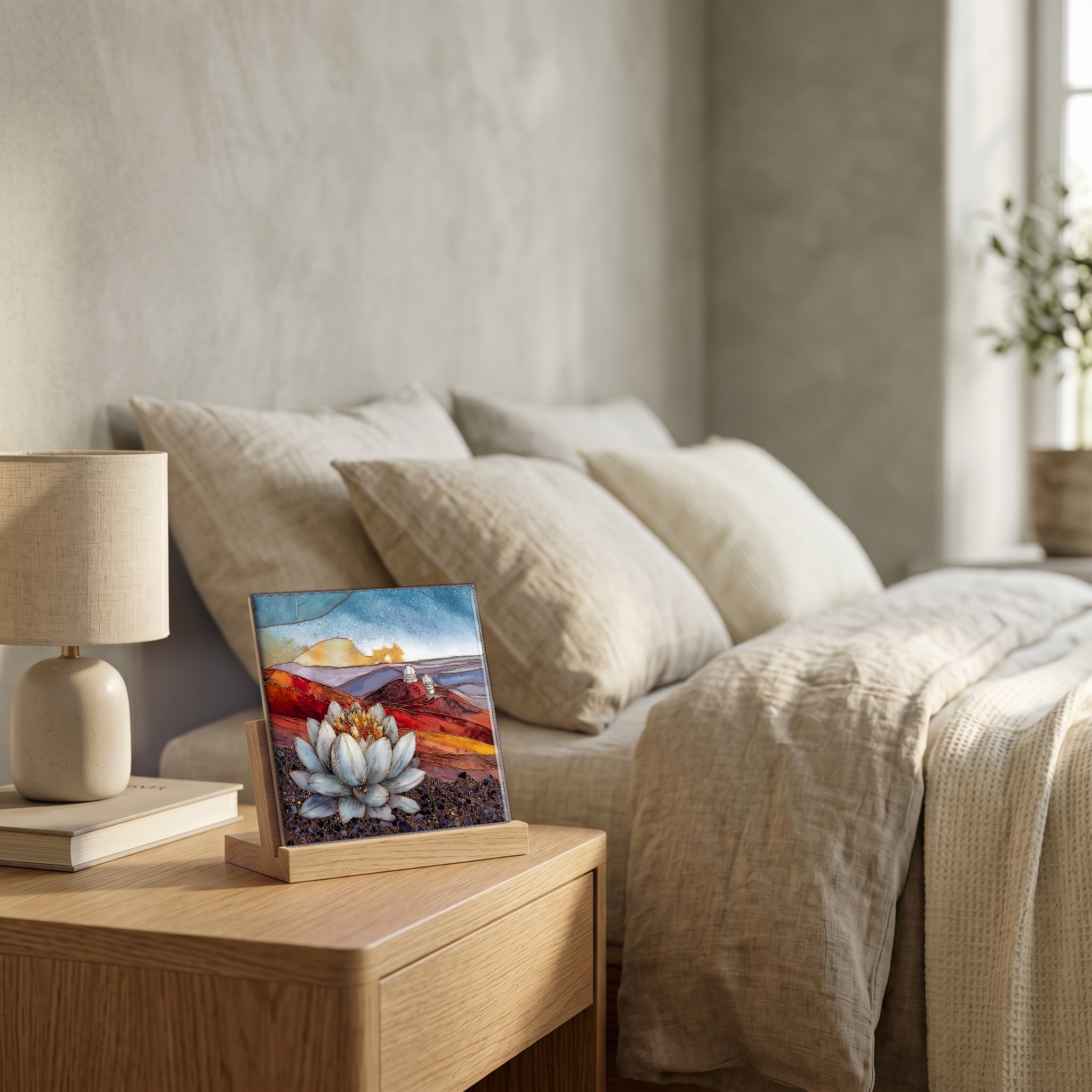
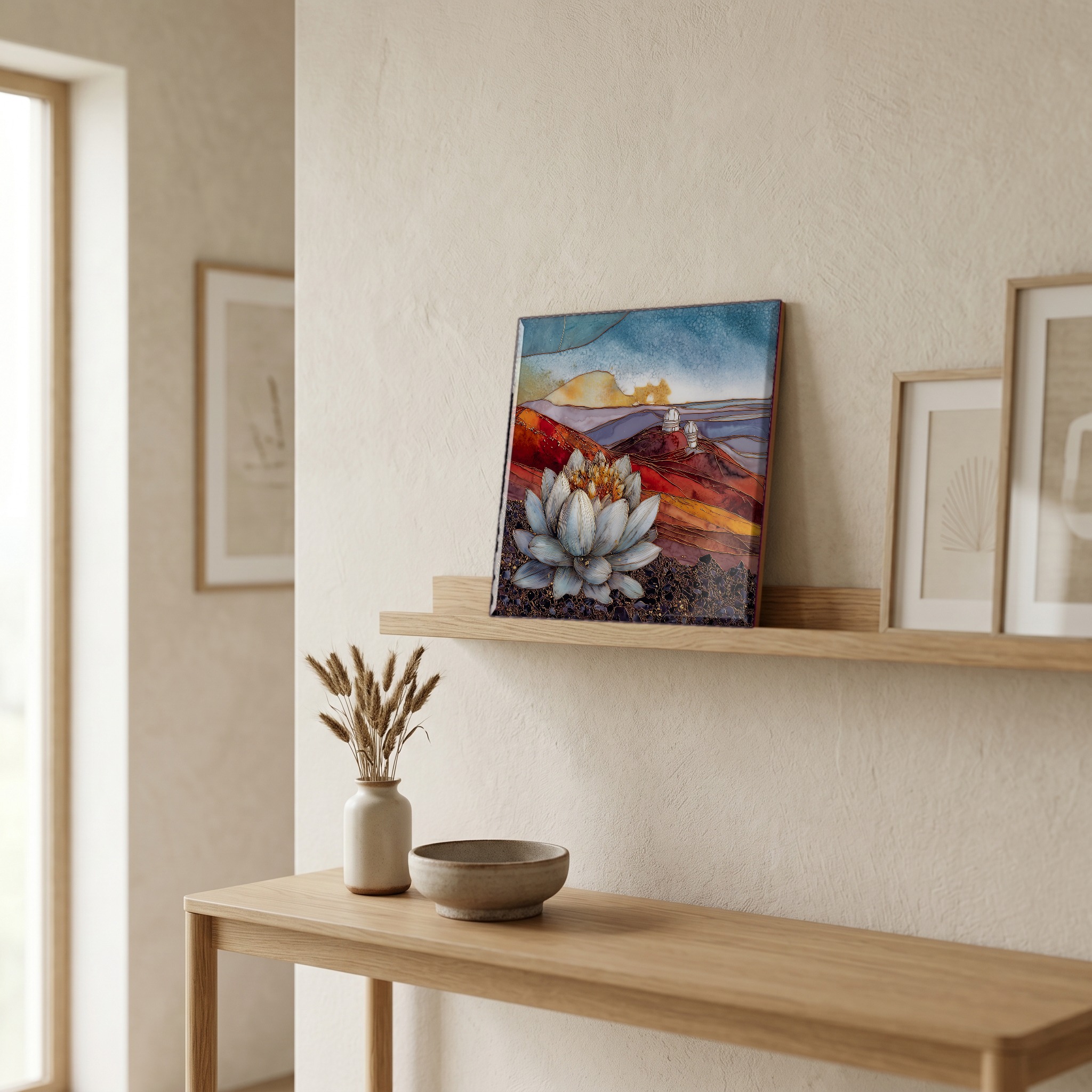
“The silversword grows only on the upper slopes of Mauna Kea, on a black stone field where it frosts most nights of the year. Silver hairs on its leaves bounce back the high-altitude sun. The plant can take fifty years or more to flower, then sends up a single stalk of purplish blooms and dies. Almost gone by the 1980s; fenced now against the mouflon, replanted by hand. The rosette holds its shape against the wind. From below it looks like a small moon caught on the stone. — from the studio
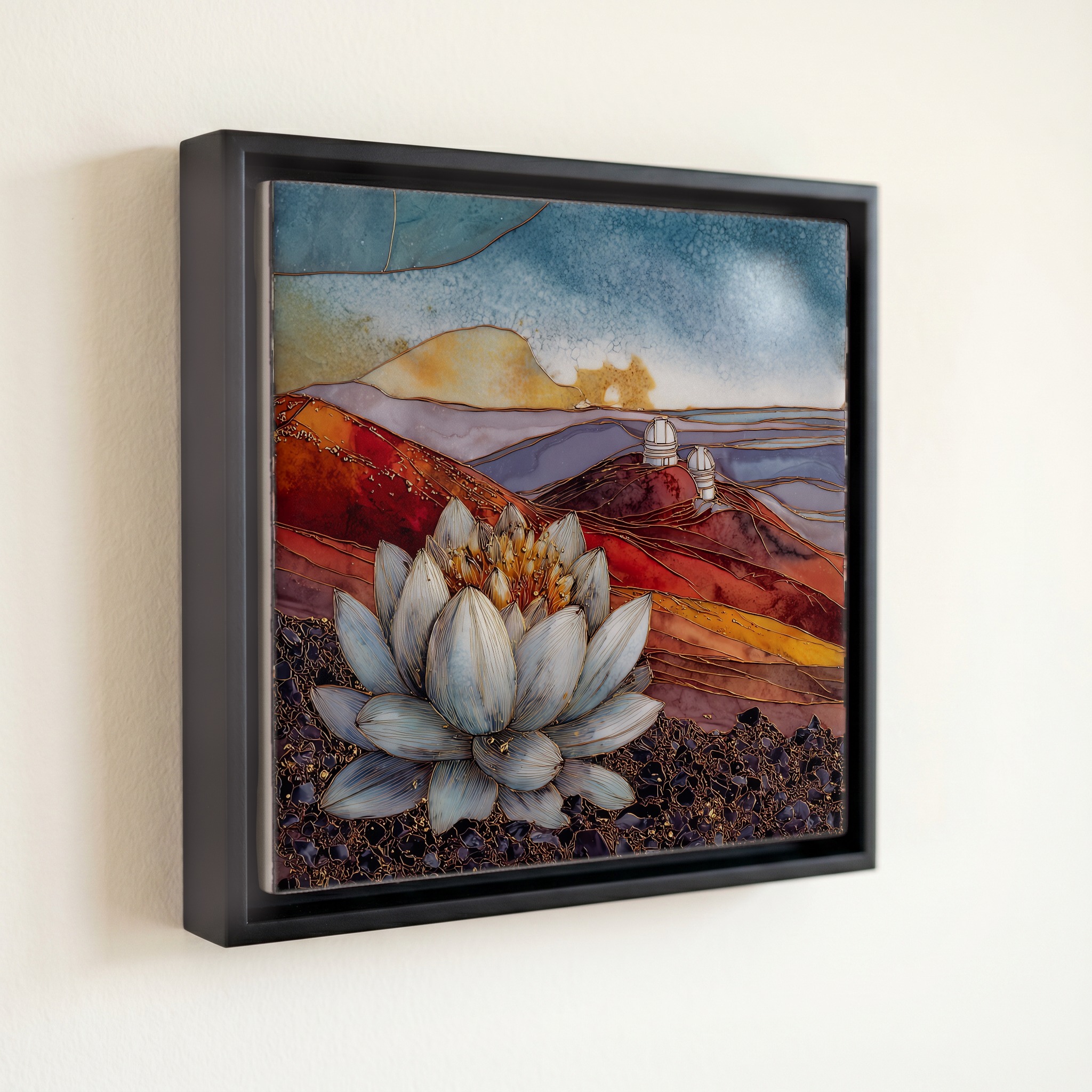
Mauna Kea Silversword Big Island Ceramic Art Tile, on ceramic.
Each tile is finished by hand in our Knoxville studio. Artwork is slowly infused into the ceramic surface under high heat and pressure, and rests beneath a thin glossy finish. The colour lives in the surface, not on top of it.
Pick any four 4-inch tiles — National Parks you've been to, a Smokies set, the four seasons of one place. $ for a set of , cork-backed, ready to live on the table.
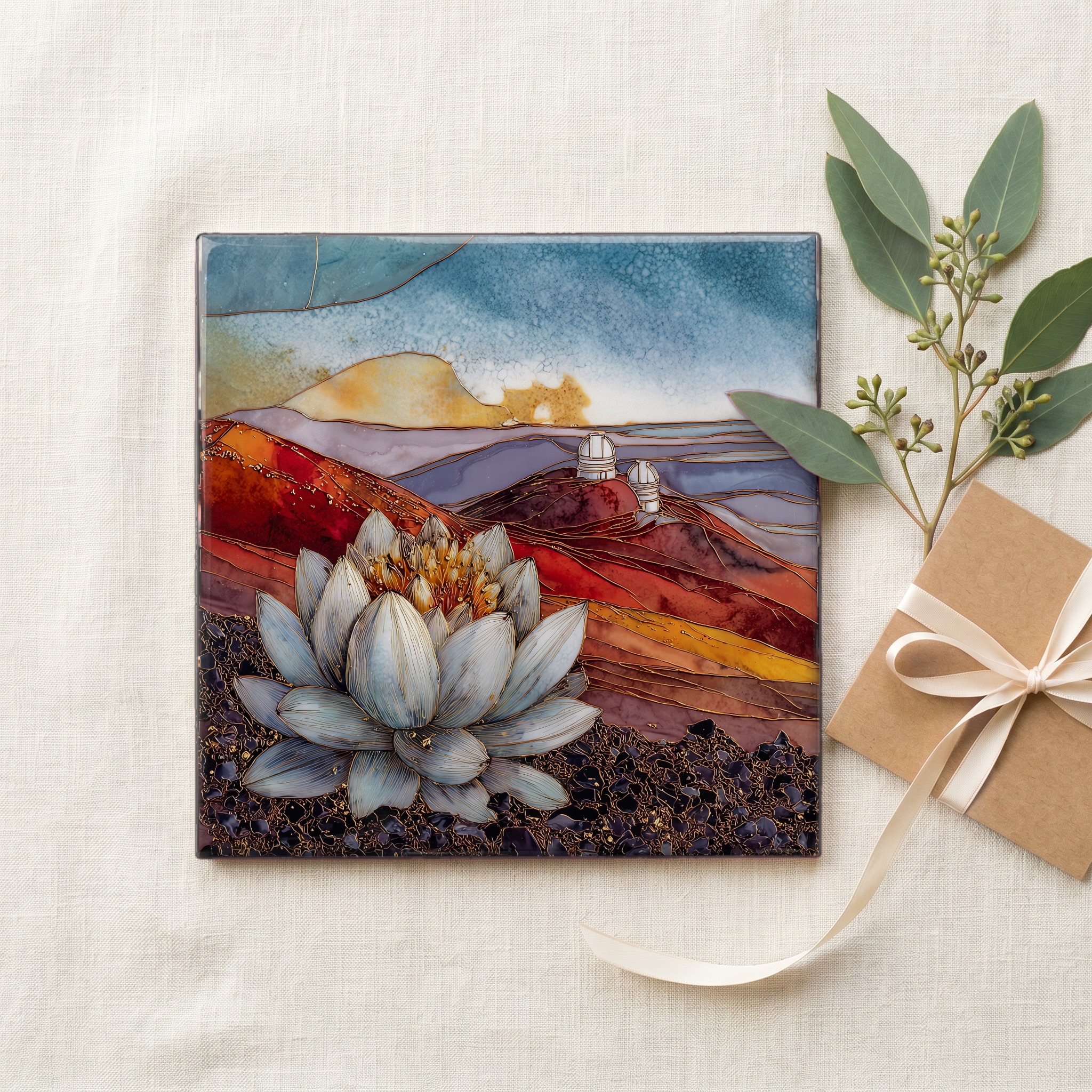
Each tile ships in a kraft box, tied with cream ribbon, with a handwritten note from the studio if you'd like to add one.

Three or five different vistas, hung together — a chapter of places you've been, or want to go.
The place, in three passes.
The Mauna Kea silversword (Argyroxiphium sandwicense subsp. sandwicense) grows only on the upper slopes of Mauna Kea on the island of Hawaiʻi. The volcano reaches 13,803 feet (4,207 m) at the summit and, measured from its base on the seafloor, is the tallest mountain in the world. The silversword's habitat sits roughly between 8,500 and 12,500 feet on the western and southern flanks, in alpine stone desert above the māmane and naio woodland. The plant was federally listed as endangered in 1986 and is protected today inside the Mauna Kea Ice Age Natural Area Reserve and a network of fenced exclosures run by the Mauna Kea Forest Restoration Project.
At 9,000 feet and above on Mauna Kea, the air is thin, dry, and ultraviolet-rich. Daytime temperatures swing forty degrees Fahrenheit or more from sunrise to noon; night brings frost roughly nine months of the year. The silversword's signature is the dense mat of silver hairs covering each leaf. They scatter the strong sun, reflect heat, and hold a thin layer of dew. The rosette shape itself collects rain and channels it down to the taproot. The same alpine band feeds the work of the Maunakea Observatories, whose telescopes sit on the summit because the air above is exceptionally still, clear, and dry. These are the conditions the silversword has adapted to.
The silversword is monocarpic. A plant flowers once and dies. A rosette grows tight and silver for decades, often fifty years or more, before sending up a single bolting stalk that can reach six feet tall and carry hundreds of purplish-red flowerheads. The bloom event lasts a single summer. After that the rosette collapses and the seeds disperse on the wind. Wild adult plants on Mauna Kea fell to roughly fifty by the mid-1980s, mostly because feral sheep and mouflon ate the seedlings. Conservation since then has rebuilt the population inside fenced exclosures through hand-pollination, seed banking, and seedling planting by the Mauna Kea Forest Restoration Project and partners at the U.S. Fish and Wildlife Service.