Wender·Vista
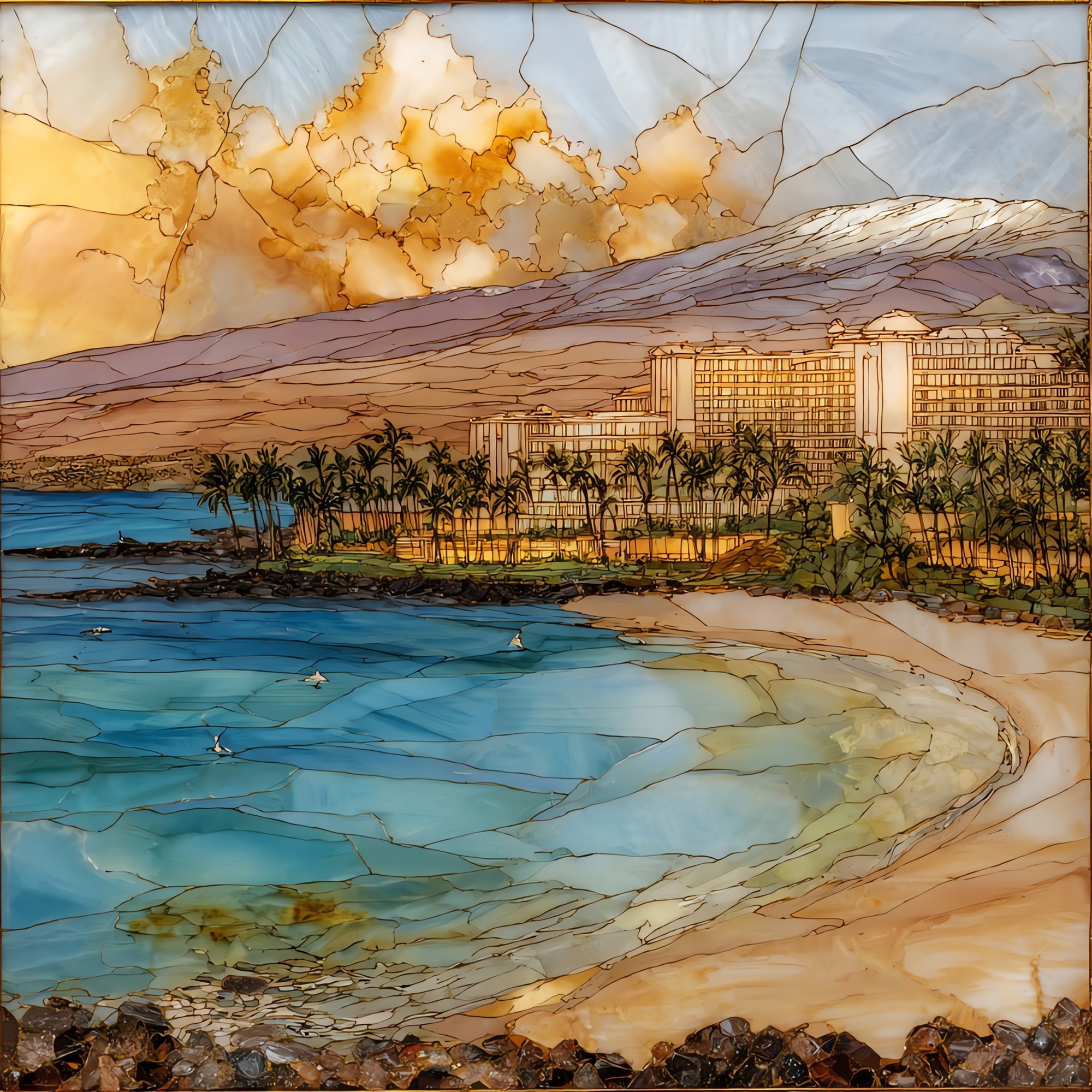
Mauna Kea Beach Hotel Big Island Ceramic Art Tile
shown on ceramic, 12-inch tileHawaii · United States
on the Kohala Coast of Hawaiʻi Island

Mauna Kea Beach Hotel Big Island Ceramic Art Tile

the white the lava lets through.

Where it lives

Not only on a wall.

A small tile on the nightstand catching the morning. A larger one above the fire. Yours, wherever you spend the slow hours.
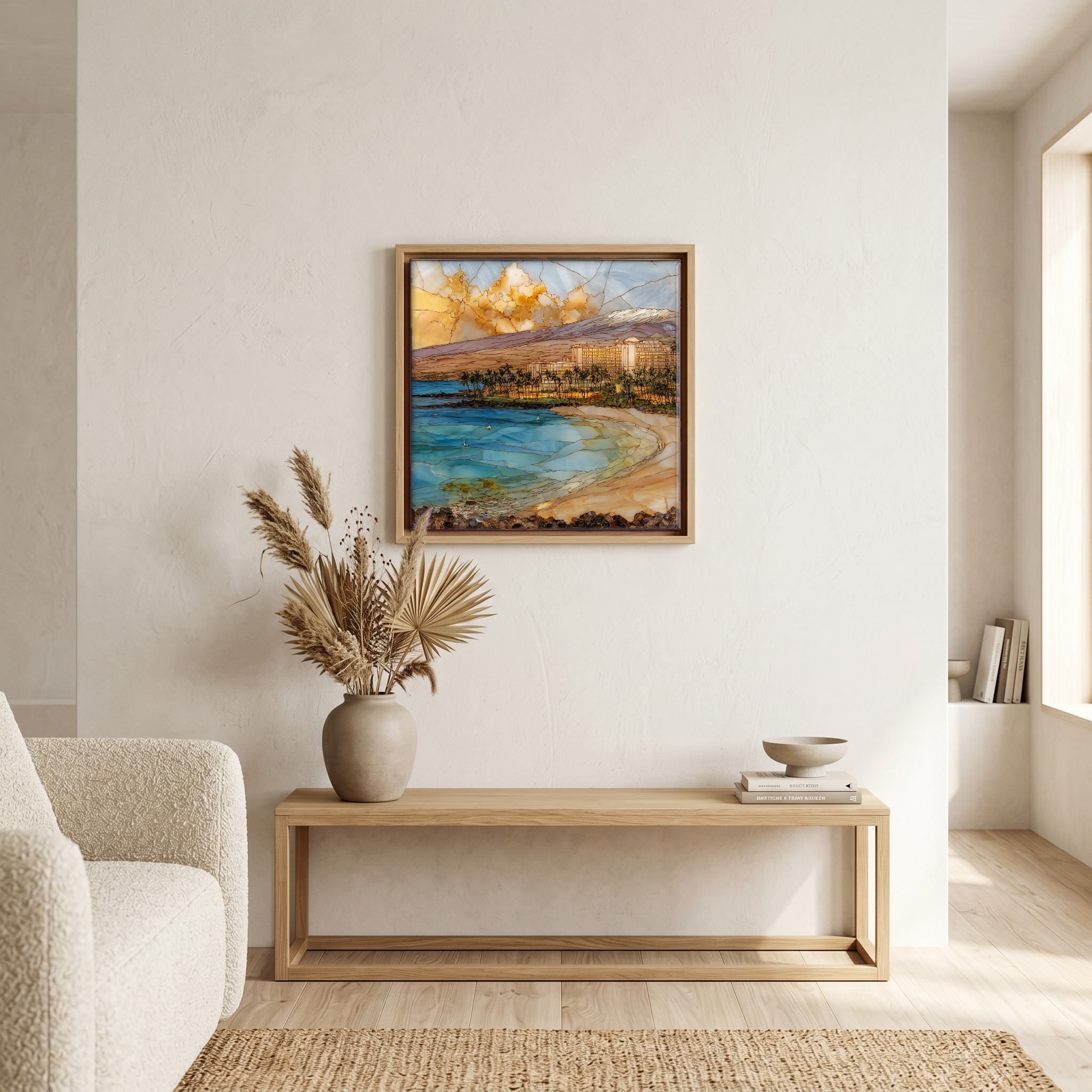
Above the bench, in a warm oak surround.
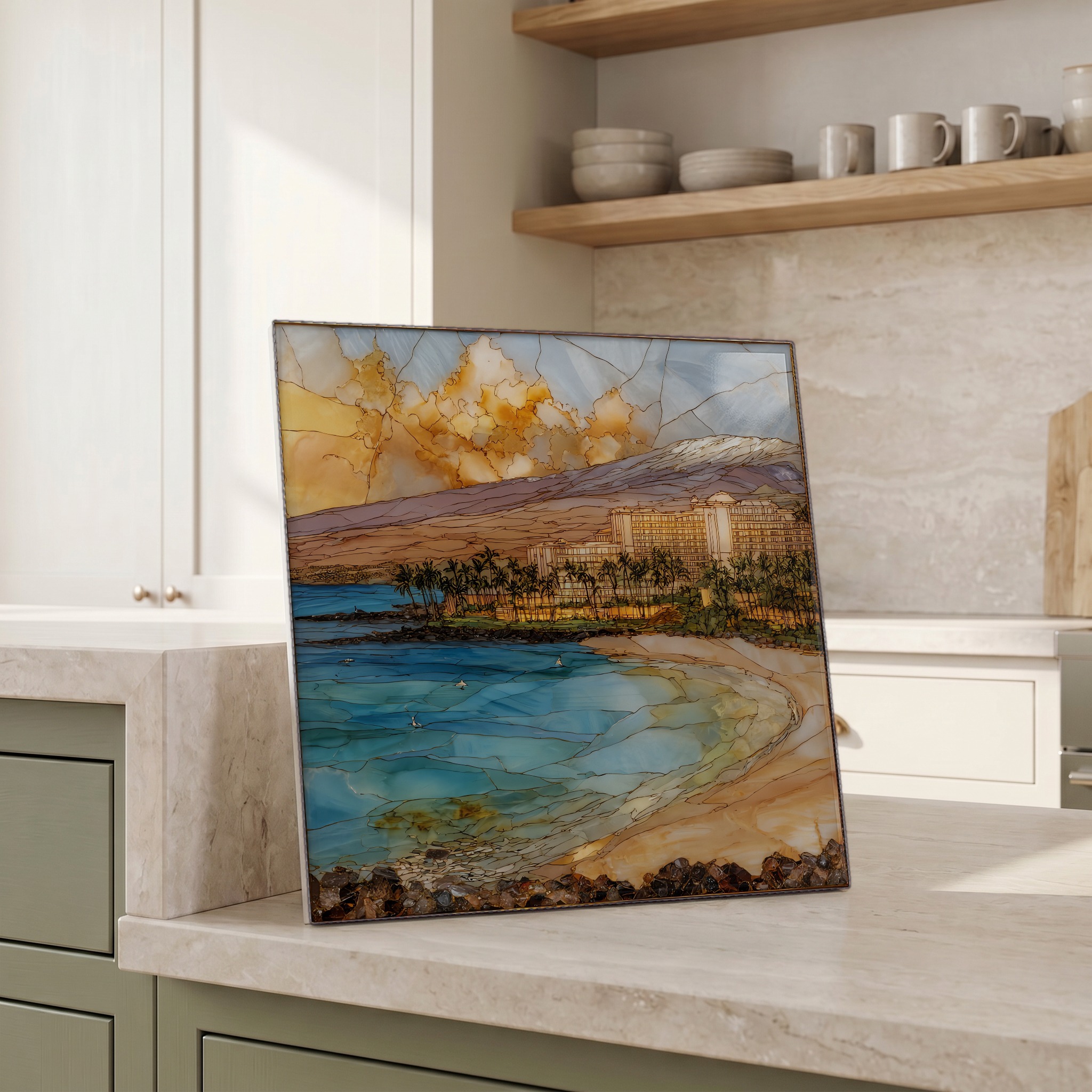
Beside the kettle, propped on the counter.
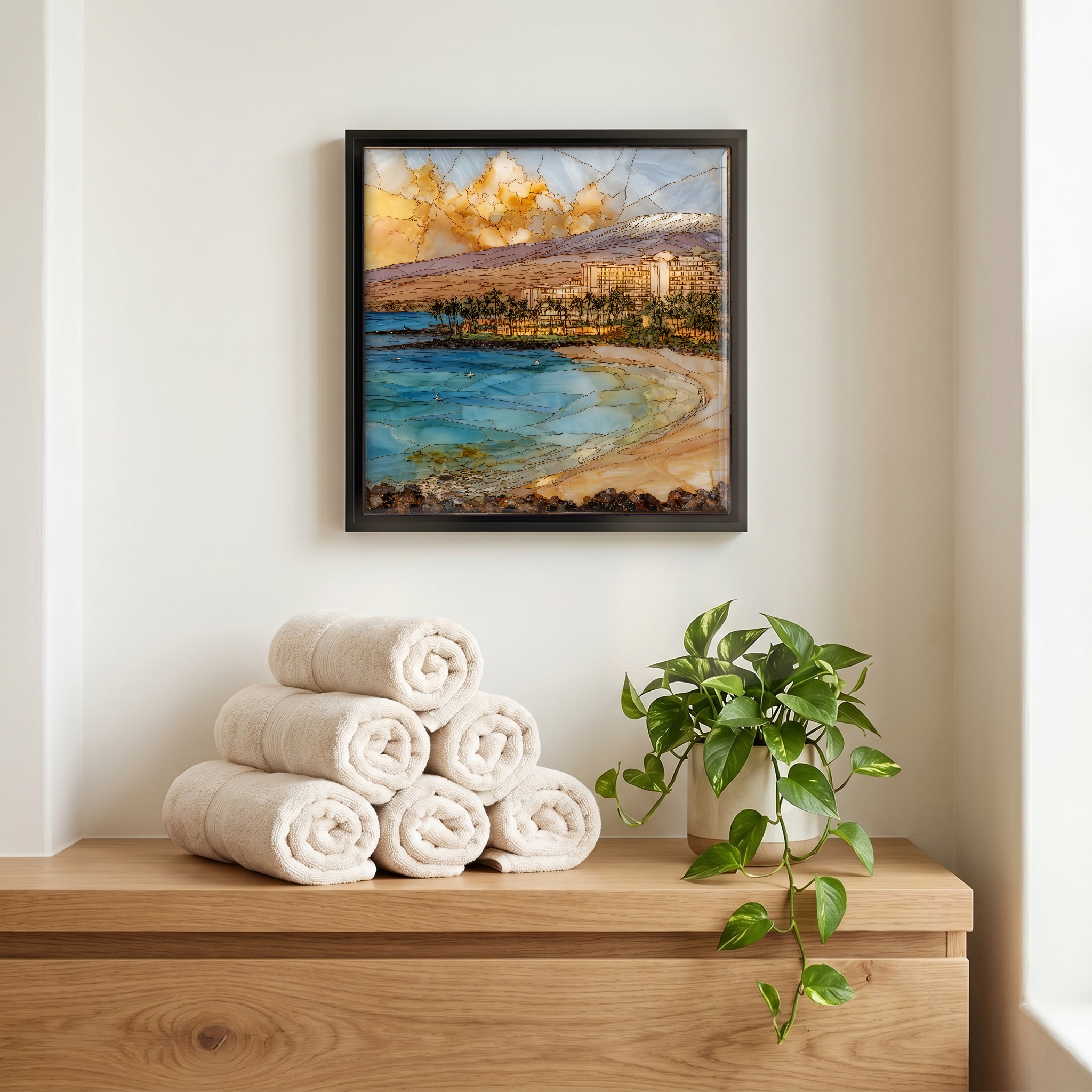
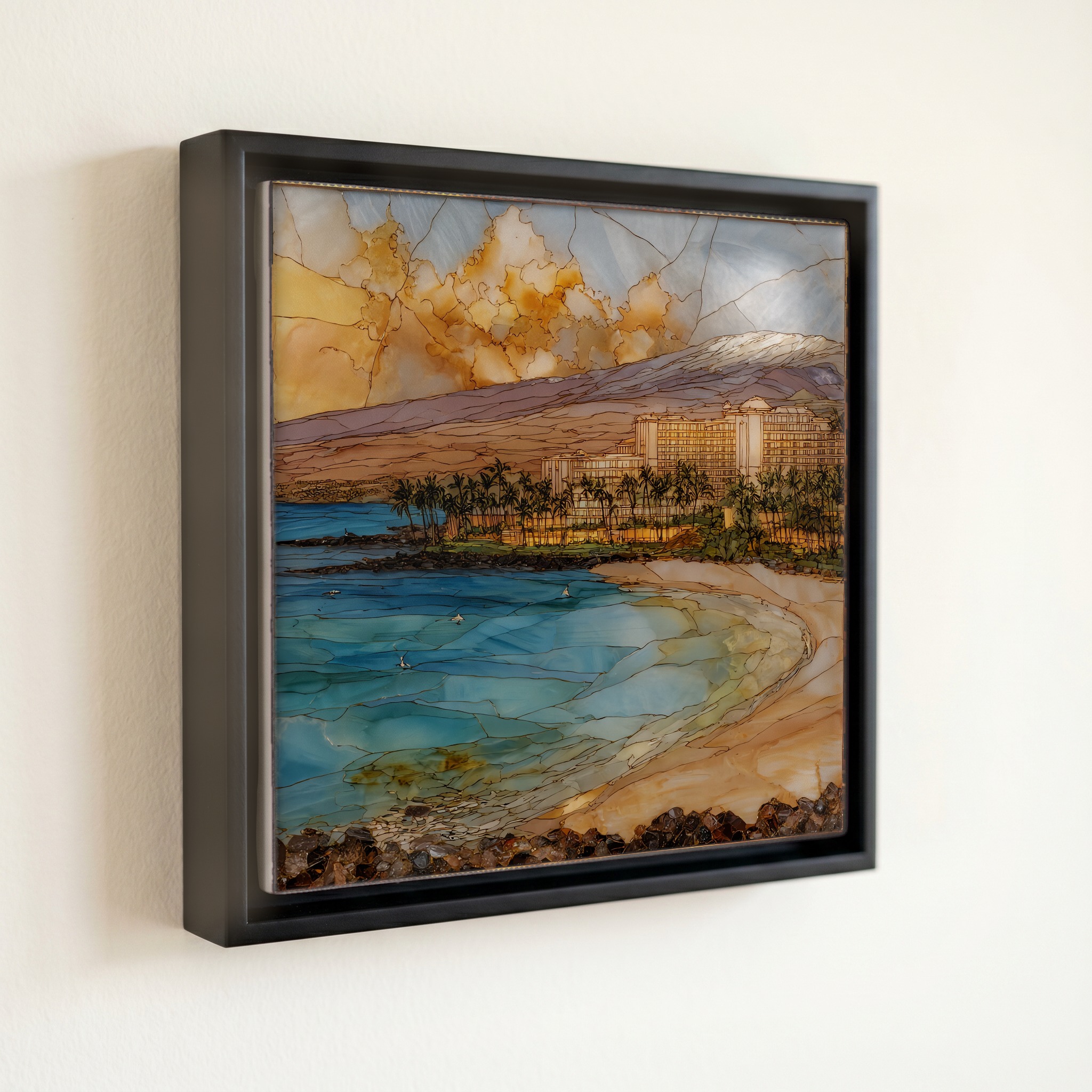
Above the linens, in a slim black surround.
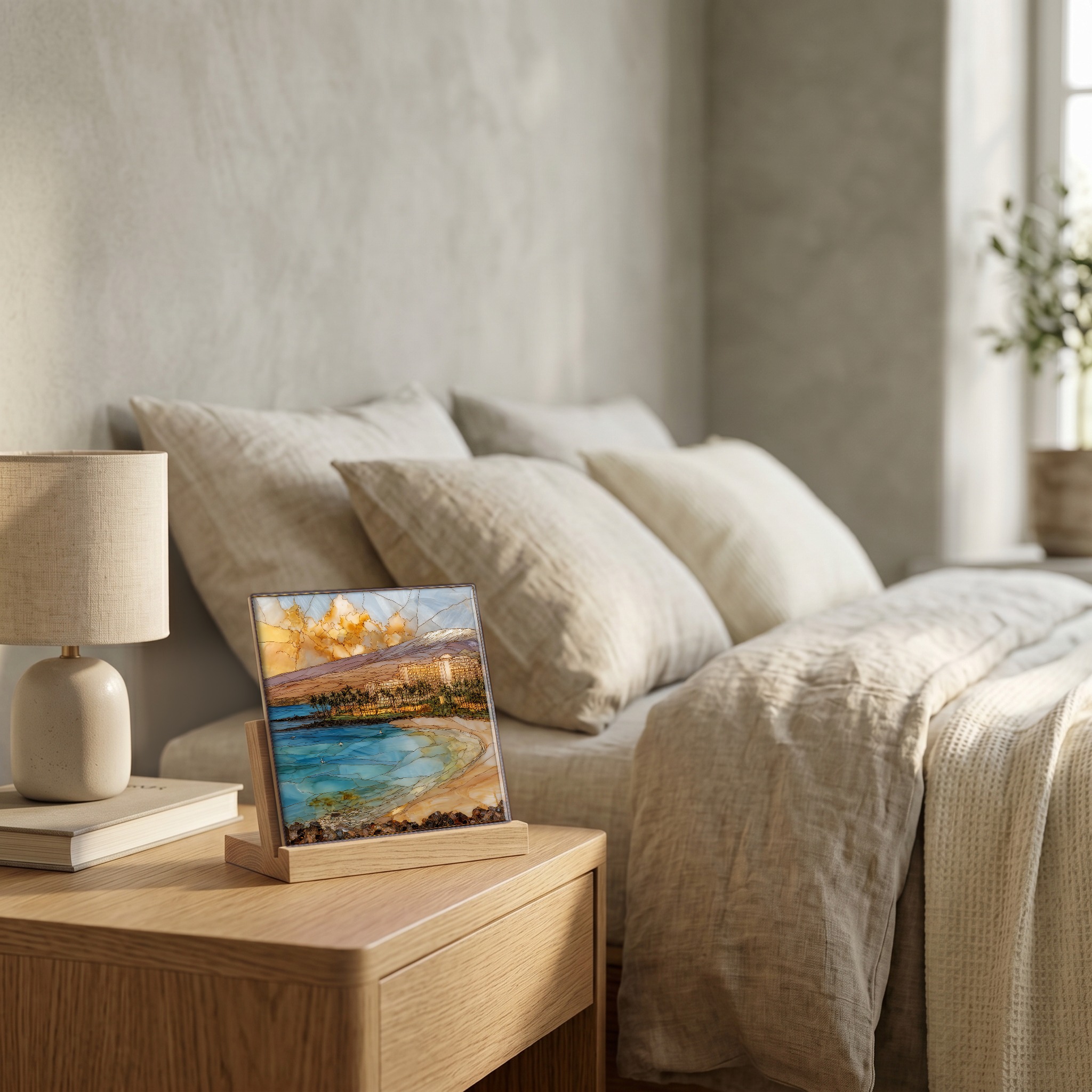
On the nightstand, on a light oak stand.
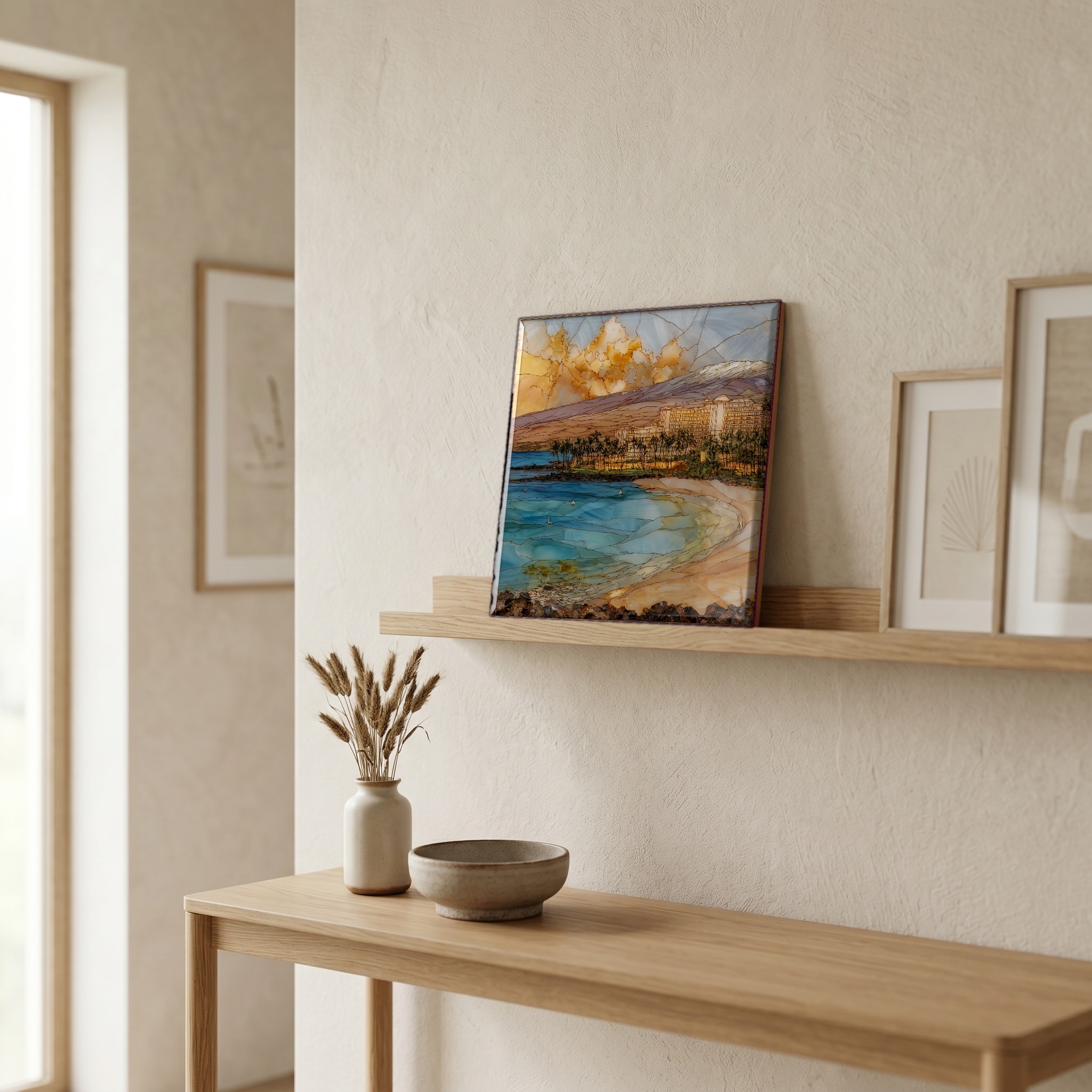
On a picture ledge, where the light comes in.
a note from the studio

A half-moon of pale sand pressed into a coast otherwise made of black lava. Hawaiians called the bay Kaunaʻoa for a small native vine that once grew on the rocks behind it. Laurance Rockefeller saw it from a boat in 1960 and opened the hotel four years later, on a stretch of Kohala Coast nobody else thought worth the water it would take to plumb it. After dark, lights from the seawall draw the manta rays in along the point. People stand at the railing and don't say much.
from the studio
shown in a slim black floating frame · 6 × 6 in
— bring it home

Mauna Kea Beach Hotel Big Island Ceramic Art Tile, on ceramic.

Each tile is finished by hand in our Knoxville studio. Artwork is slowly infused into the ceramic surface under high heat and pressure, and rests beneath a thin glossy finish. The colour lives in the surface, not on top of it.

What kind of piece?
One tile — square or rectangle.
How big?
the popular one — counter, shelf, nightstand
6 × 6 in · 15 cm · 1.6 lb
Surface finish
A clear glossy finish — the artwork reads as if under resin. Ideal for show-pieces and framed wall art.
How it sits
A hidden cleat — sits ¼″ proud of the wall.
$58
Hand-finished and shipped from our studio at the foot of the Smokies. On your wall in about ten days.
size
6 × 6 in
15 cm
weighs
1.6 lb
solid in the hand
surface
ceramic, hand-finished
art rests beneath a thin glossy finish
from
Knoxville, TN
our family studio, at the foot of the Smokies
— start a Coaster Set

Pick any four 4-inch tiles — National Parks you've been to, a Smokies set, the four seasons of one place. $ for a set of , cork-backed, ready to live on the table.
comes gift-ready
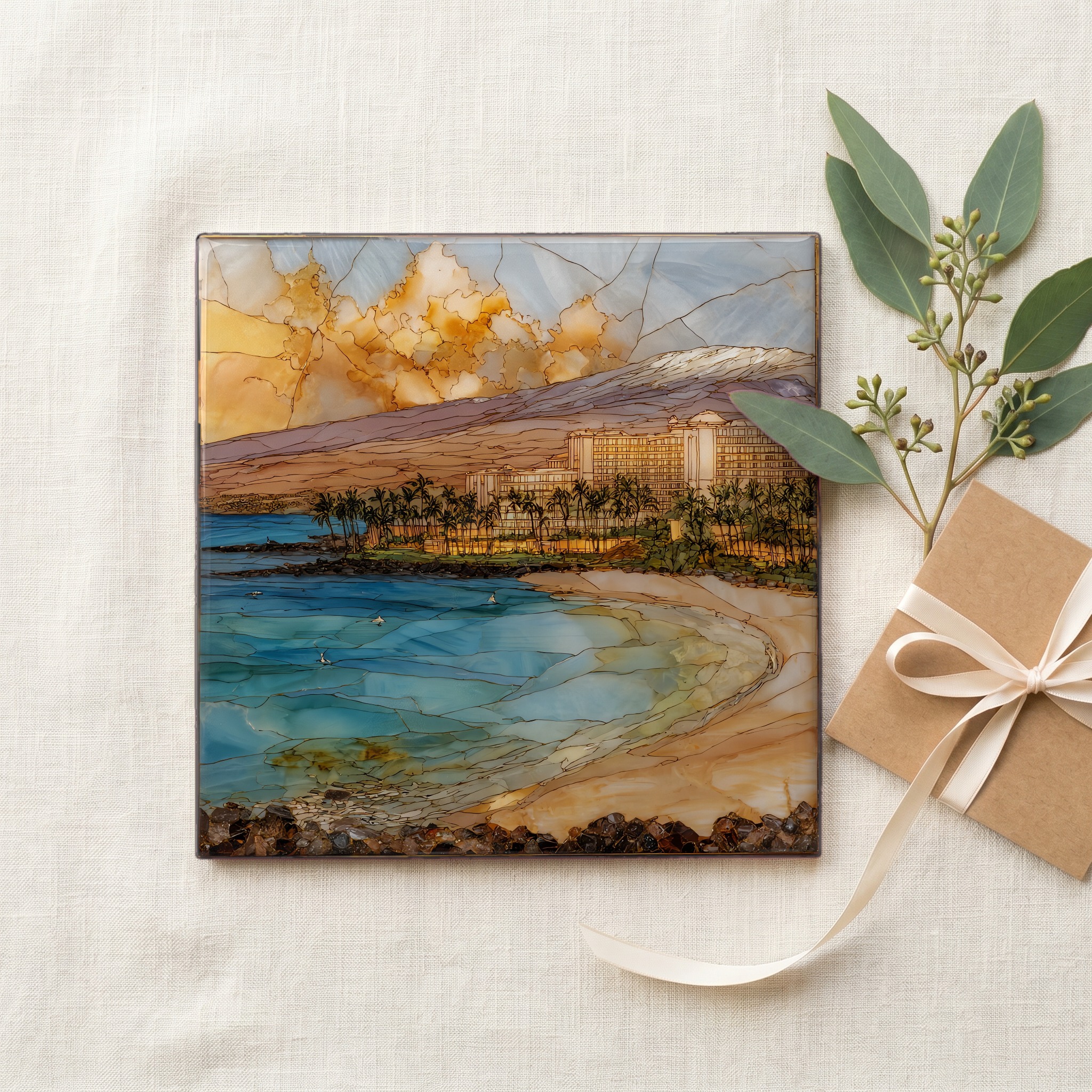
comes gift-ready

Each tile ships in a kraft box, tied with cream ribbon, with a handwritten note from the studio if you'd like to add one.
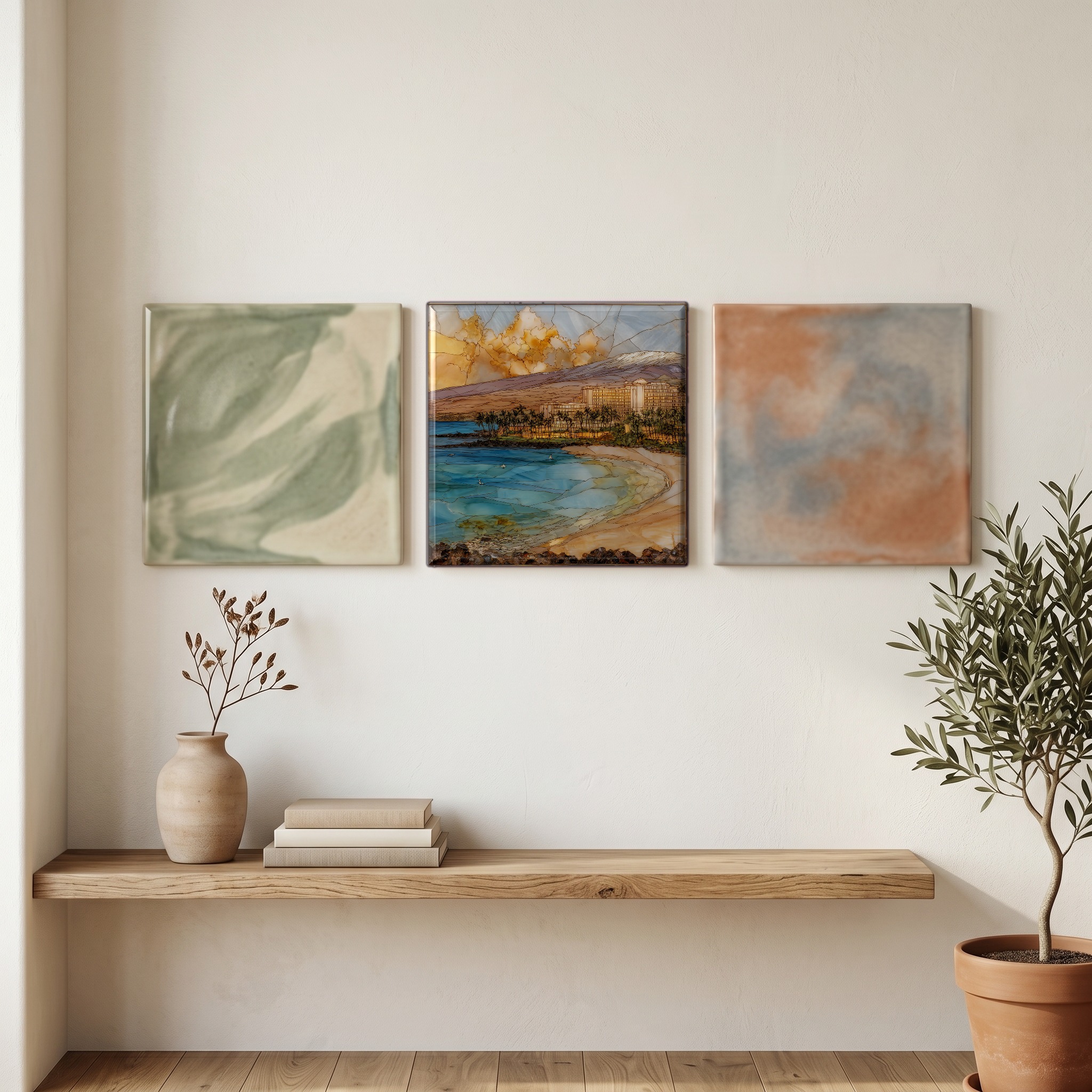
or build a grouping
or build a grouping

Three or five different vistas, hung together — a chapter of places you've been, or want to go.

about Mauna Kea Beach Hotel Big Island Ceramic Art Tile

The place, in three passes.

A little of what's known, in case you fall down the rabbit hole — or want to go see it yourself.
the place

The Mauna Kea Beach Hotel sits on Kaunaʻoa Bay on the Kohala Coast of Hawaiʻi Island, the largest of the Hawaiian islands. Laurance S. Rockefeller commissioned the hotel after Governor William F. Quinn invited him in 1960 to identify a resort site on the dry leeward coast. Rockefeller chose the bay from a boat, took a long lease on the land from the State of Hawaiʻi, and opened the hotel on July 24, 1965 [1]. The building was designed by Skidmore, Owings & Merrill, with Charles Bassett as principal architect. The companion golf course, completed in 1964, was Robert Trent Jones Sr.'s first design in Hawaiʻi [2]. The hotel is now operated under Marriott's Autograph Collection.

the stone

Beyond the beach, the hotel is known for the Pan-Pacific art collection Laurance Rockefeller assembled to fill the public spaces: roughly 1,600 pieces by the time the building opened, sourced from across India, Asia, and Oceania. The signature work is a seventh-century pink granite Buddha from southern India, set in a small landing on the way to the lobby. The architecture is mid-century modern in the tropical idiom, with open-air corridors, lava-rock walls, and no glass between the lobby and the trade winds. Skidmore, Owings & Merrill designed the building as an early demonstration that a five-star resort could leave its windows open in Hawaiʻi, with the climate doing the cooling [1].

the visit

Kaunaʻoa Bay is a public beach. Hawaiʻi law guarantees access to all shorelines below the high-water mark, and the hotel maintains a small allotment of day-visitor parking passes distributed at the gatehouse on a first-come basis from morning; arrivals after mid-morning often find them gone. The crescent is roughly a quarter-mile long, with usually-calm water and Hawaiian green sea turtles cycling through. After sunset, lights mounted on the seawall at the south end of the bay draw Pacific manta rays in to feed on plankton; the railing above has been a known viewing spot since the hotel opened in 1965 [1].

where
United States · Hawaiʻi Island, Hawaiʻi
elevation
0 m · 0 ft
position
20.0031° N · 155.8226° W
the neighborhood

What's nearby.

A handful of named places within an hour's walk or short drive. Some we've already painted; some we will.
2 km S
Hapuna Beach State Park
state beach park
8 km N
Spencer Beach Park
county beach park
10 km N
Puʻukoholā Heiau National Historic Site
national historic site
25 km E
Waimea (Kamuela)
ranching town
40 km SE
Mauna Kea (summit)
dormant volcano
N
Mauna Kea Beach Hotel Big Island Ceramic Art Tile
Hapuna Beach State Park
Spencer Beach Park
Puʻukoholā Heiau National Historic Site
Waimea (Kamuela)
Mauna Kea (summit)
common questions

What people ask.

A few questions we get about Mauna Kea Beach Hotel Big Island Ceramic Art Tile — and about bringing the piece home.
about the place

On Kaunaʻoa Bay on the Kohala Coast of Hawaiʻi Island, the leeward (dry) side of the largest Hawaiian island. The hotel is about 30 miles north of Kona International Airport and 25 km west of Waimea, between Hapuna Beach State Park to the south and Kawaihae to the north.

Laurance S. Rockefeller commissioned the hotel after Governor William F. Quinn invited him in 1960 to develop a resort on the leeward coast. Skidmore, Owings & Merrill designed the building, with Charles Bassett as principal architect. The hotel opened on July 24, 1965.

Kaunaʻoa is a small native dodder vine (Cuscuta sandwichiana) that grew on the dry rocks behind the beach. The Hawaiian name refers to the plant, not to the shape of the bay. The Mauna Kea name attached later, from the mountain visible inland to the southeast.

Yes. Hawaiʻi law guarantees public access to all shorelines below the high-water mark, including Kaunaʻoa Bay. The hotel issues a small daily allotment of day-visitor parking passes at the gatehouse, distributed from morning on a first-come basis. After they run out, public access requires walking in from a neighbouring property.

After dark, lights mounted on the seawall at the south end of the bay illuminate plankton in the water, and the plankton draws Pacific manta rays (Mobula alfredi) in to feed. The viewing railing above has been a known wildlife-watching spot since the hotel opened in 1965.

Laurance Rockefeller assembled a Pan-Pacific collection of roughly 1,600 pieces for the public spaces: Buddhist sculpture, Hindu bronzes, Polynesian artefacts, Asian textiles. The signature work is a seventh-century pink granite Buddha from south India, set in a small landing on the way to the lobby.

No. The mountain is the 13,803-foot dormant volcano whose summit holds the world's largest collection of astronomical observatories. The hotel takes its name from the same mountain, visible from the property to the southeast on clear days, but sits at sea level on the coast about 40 km away.

about the piece in your home

It's been a meaningful gift for many of our customers with ties to the hotel. The crescent of Kaunaʻoa Bay is one of the most recognised images in Hawaiian resort history, and people who have spent a week here often remember the bay specifically. A Small with a handwritten note from the studio carries well.

The colour register reads coastal-modern and Pacific-tropical. It sits well in palettes that pair driftwood and bleached oak with deeper jewel-tone water blues, and in rooms that already lean into lava-rock greys, raffia, and linen. It is too saturated for an all-white minimalist room and too painterly for a strict mid-century interior.

The painterly Voynich palette gives a coastal-modern room a richer, less generic anchor than a standard print-of-a-beach. The piece reads as art first and ocean reference second, which is closer to the direction high-end coastal-modern design has been heading since around 2024. The Large above a console is the most common configuration.

Above a standard three-seat sofa, a single Large or a four-tile Mural reads at the right scale. Above a console or a king-bed headboard, a nine-tile Mural is the most common pick. Above a narrow entry console, a single Medium centred above the surface is enough.

Yes, in the Dura Satin or Matte finish; both are scratch-resistant and tolerate steam and splashes well. The Glossy finish is for framed wall pieces away from sink lines. A Coaster Set is the most common kitchen and bar pick.

Microfibre cloth and water. The colour is slowly infused into the ceramic surface under high heat and pressure and lives beneath a thin glossy finish, so household cleaners are not needed and abrasive pads should be avoided.

Yes. Every WenderVista piece is painted in Reid Wender's hand at our studio in Knoxville, Tennessee, and is not licensed from any third-party artist or stock library. Each tile is hand-finished and individually inspected before it leaves the studio.

if this one stayed with you

A few you might also love.

Hand-picked by the eye that found Sorapis. Same air, same kind of quiet.