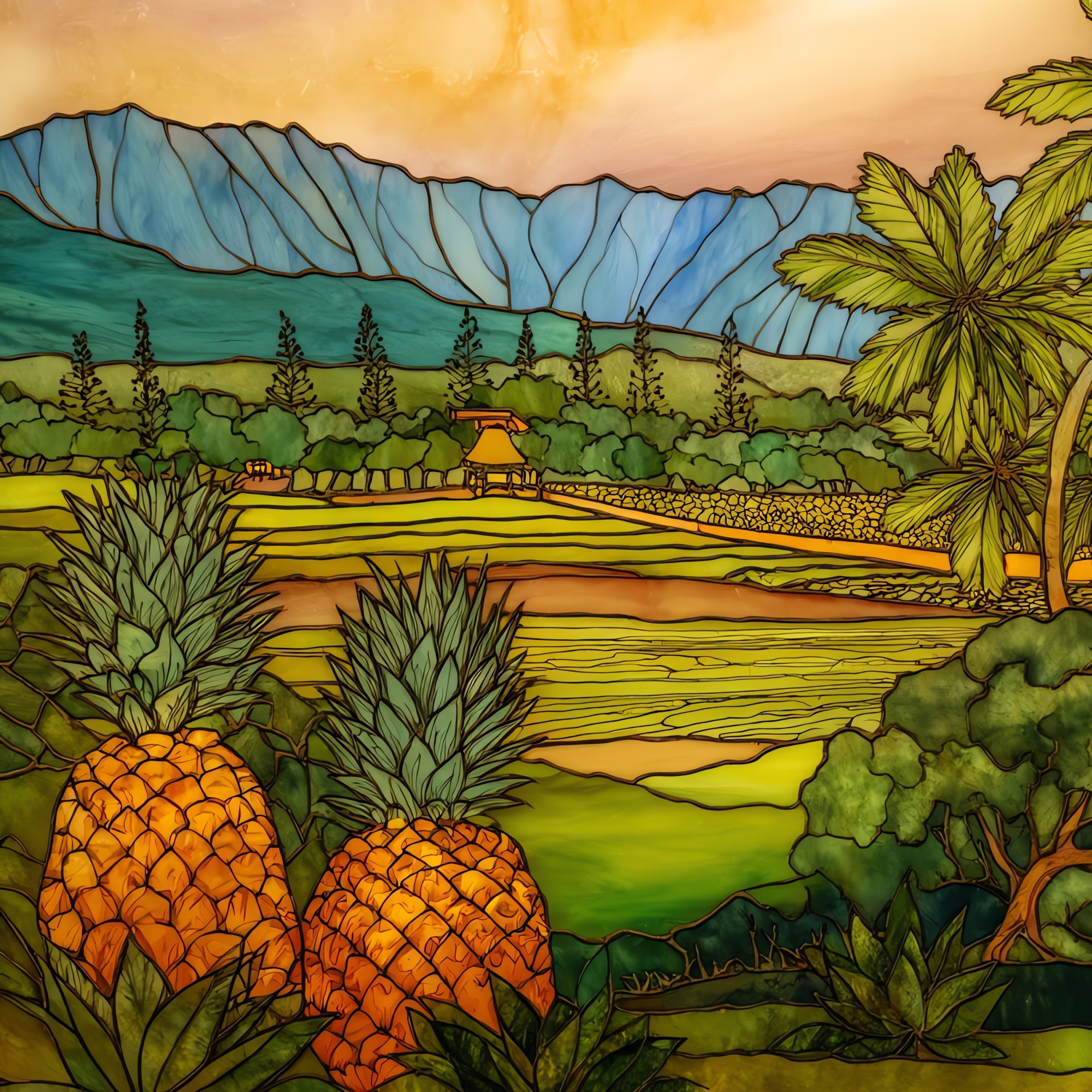
Maui Tropical Plantation Ceramic Art Tile
— the green the mountain keeps watered.
Not only on a wall.
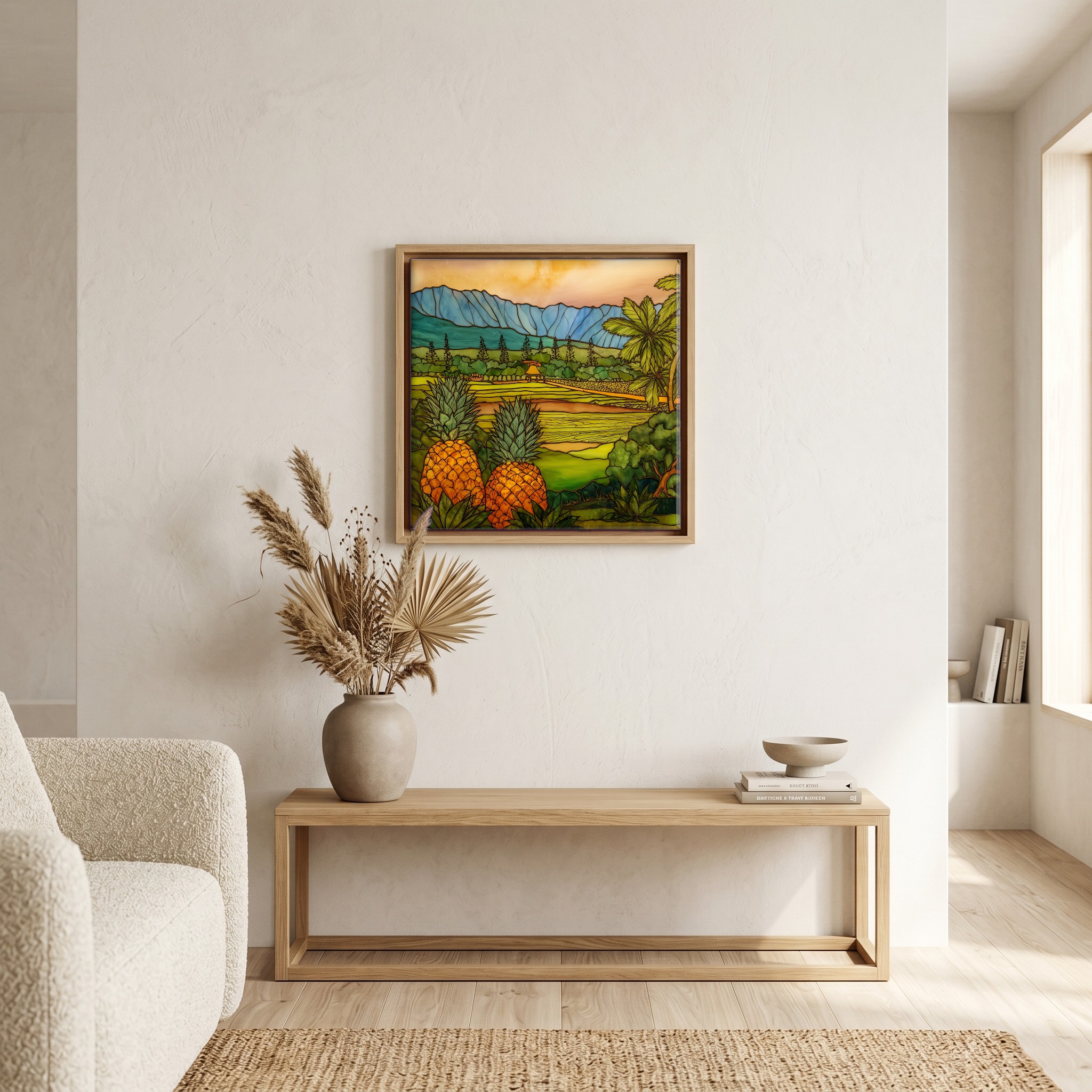
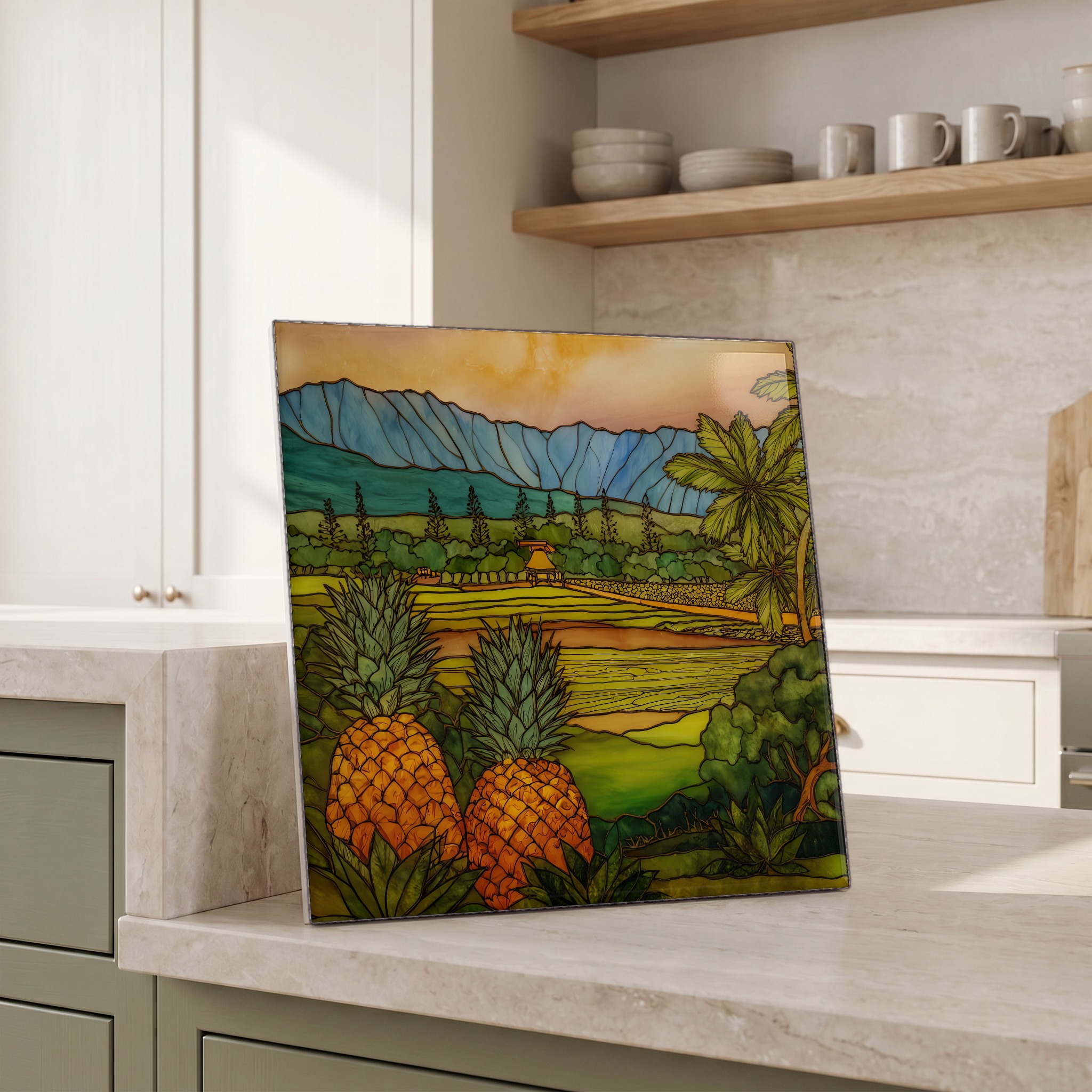
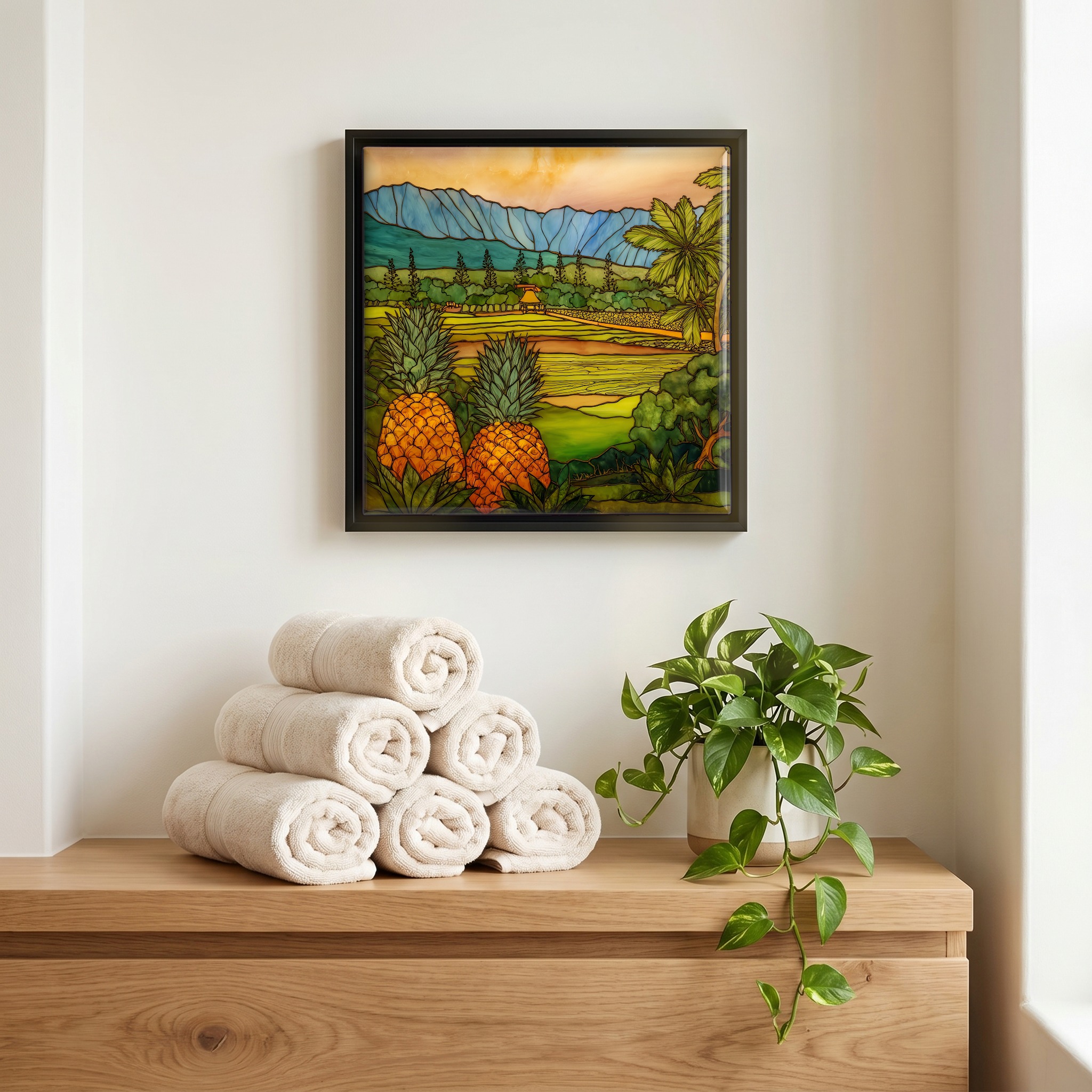
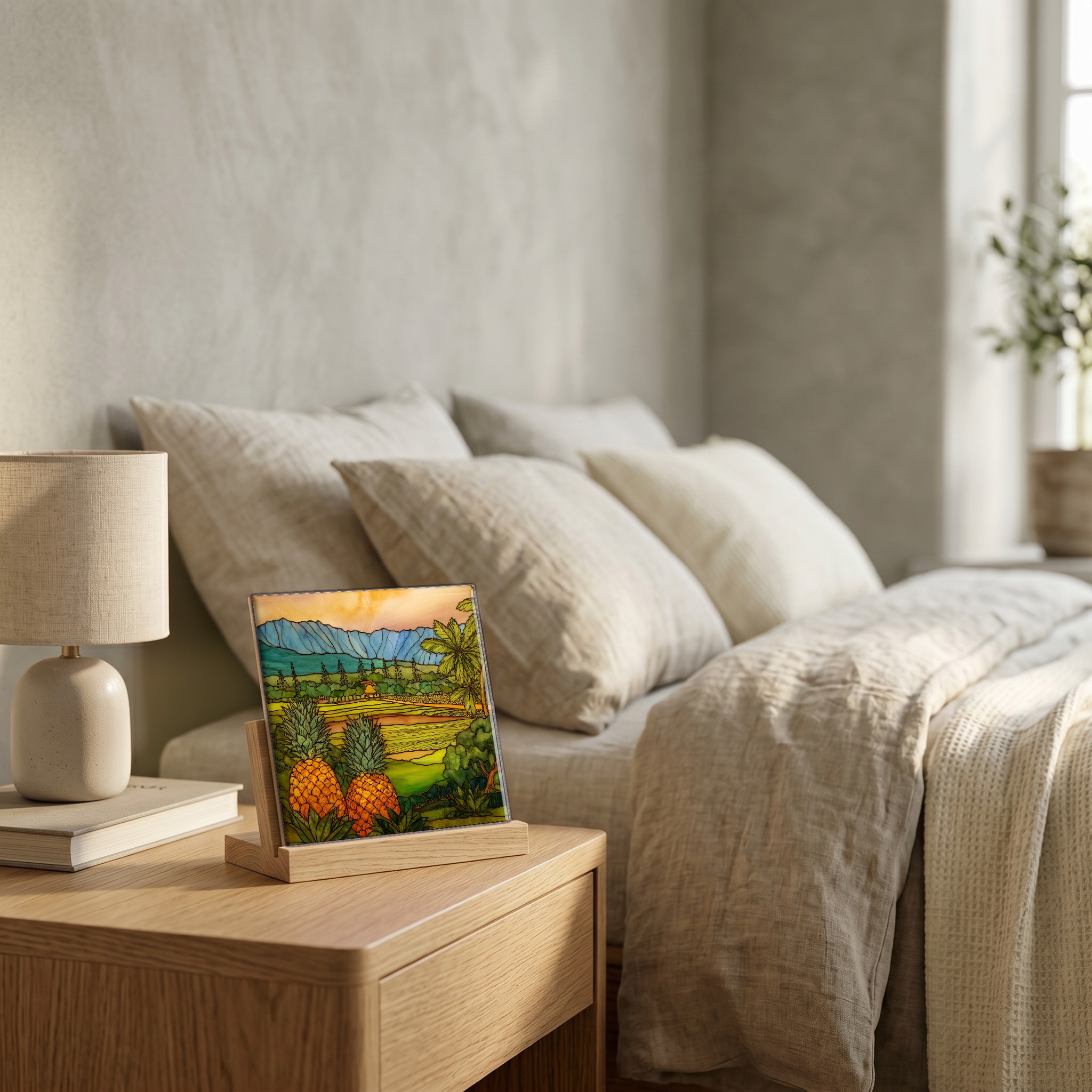
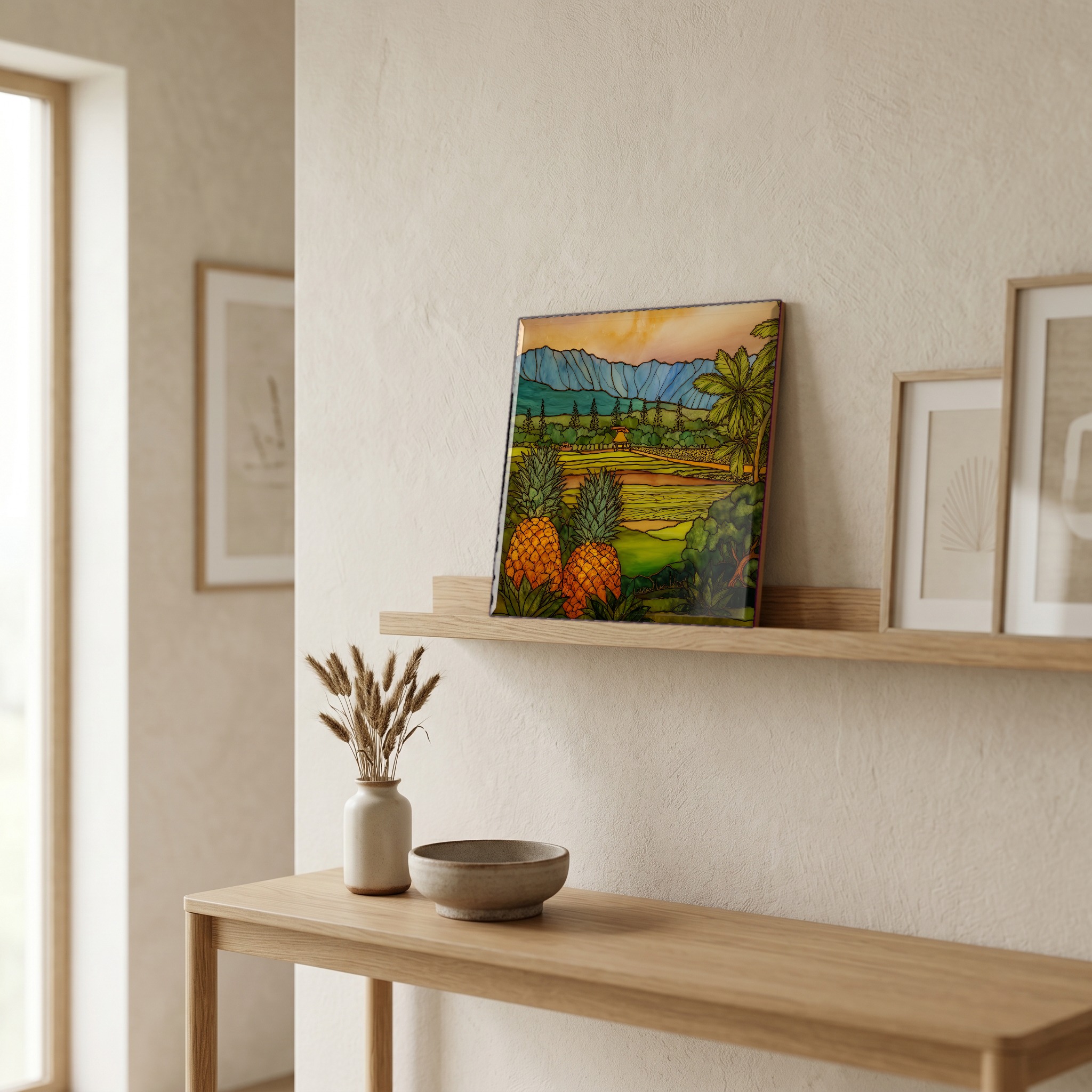
“A working plantation at the foot of the West Maui Mountains, on the Waikapū side of the central plain. Open since 1984, after the sugarcane years. Forty crops in rows now: coffee, macadamia, avocado, papaya, the things this latitude rewards. An open-air tram makes a forty-minute loop past the lagoon and into the rows. The mountain catches the trade-wind clouds and the field gets watered most mornings without anyone doing anything about it.
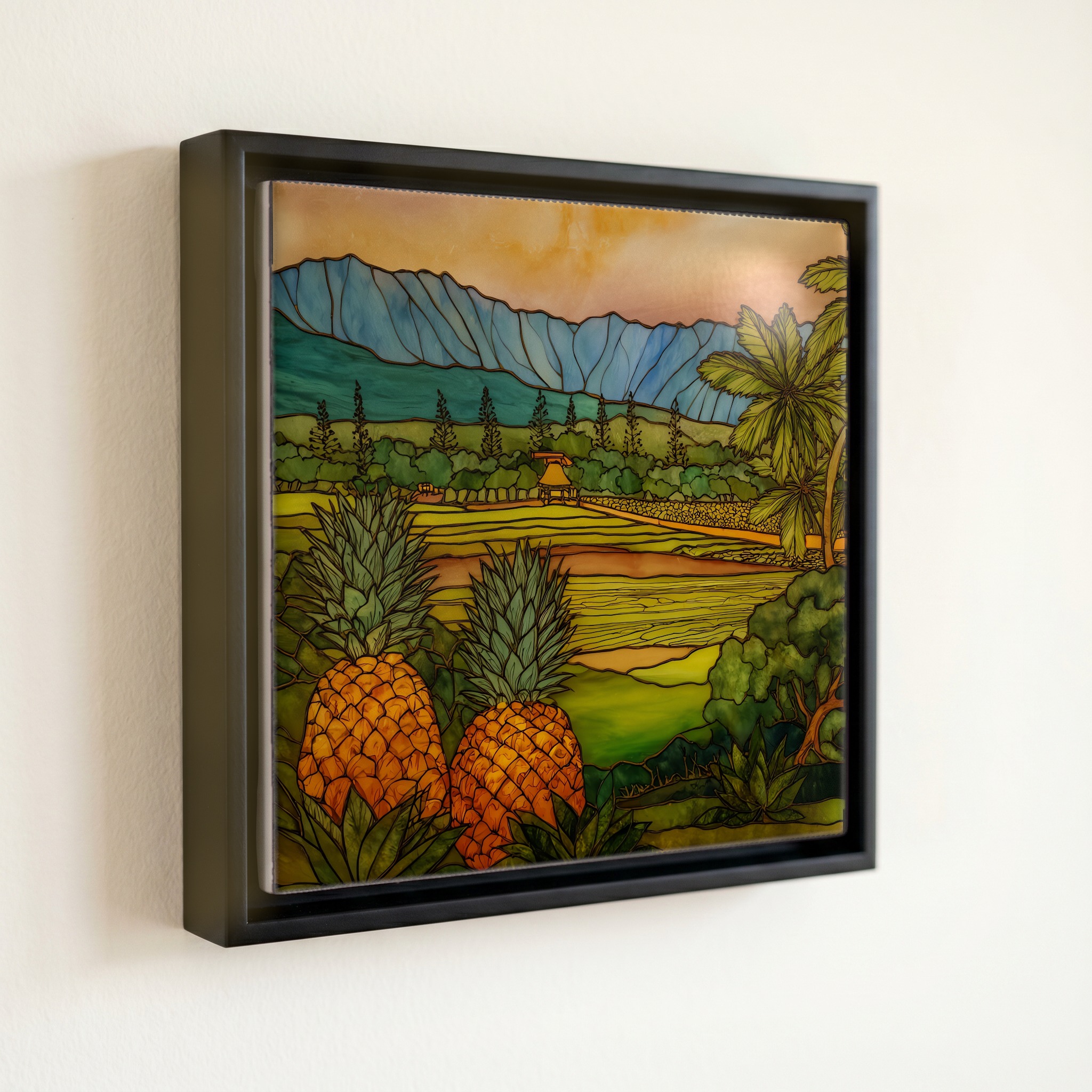
Maui Tropical Plantation Ceramic Art Tile, on ceramic.
Each tile is finished by hand in our Knoxville studio. Artwork is slowly infused into the ceramic surface under high heat and pressure, and rests beneath a thin glossy finish. The colour lives in the surface, not on top of it.
Pick any four 4-inch tiles — National Parks you've been to, a Smokies set, the four seasons of one place. $ for a set of , cork-backed, ready to live on the table.
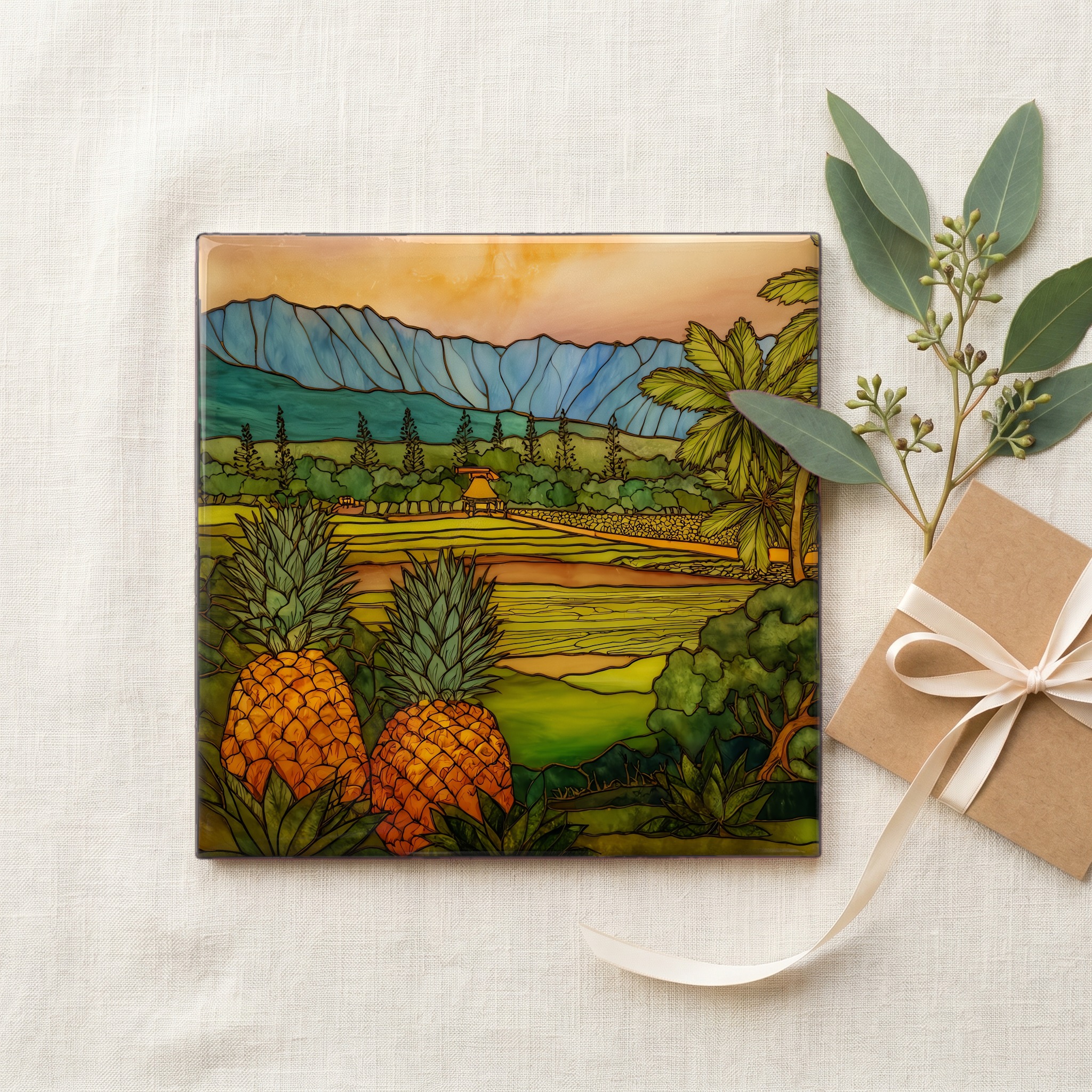
Each tile ships in a kraft box, tied with cream ribbon, with a handwritten note from the studio if you'd like to add one.
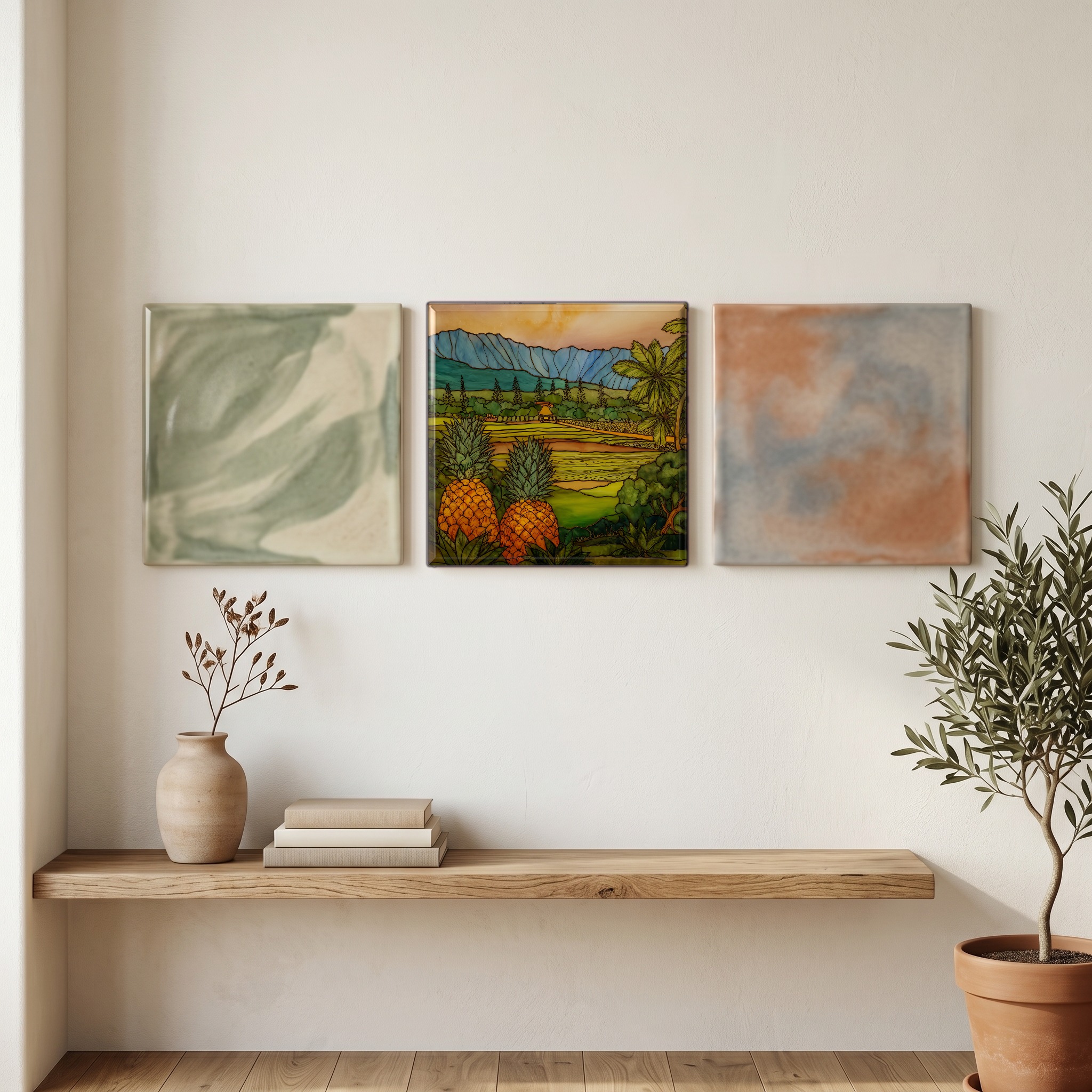
Three or five different vistas, hung together — a chapter of places you've been, or want to go.
The place, in three passes.
The Maui Tropical Plantation sits on roughly 1,800 acres in the Waikapū district of central Maui, on the leeward side of Mauna Kahalawai (the West Maui Mountains). It opened to the public in 1984, replanting land that had grown sugarcane during the long Hawaiian Commercial & Sugar era. The grounds are reached from Honoapiʻilani Highway between Wailuku and Māʻalaea Harbor, about ten miles from Kahului Airport. A central lagoon anchors the public grounds; the working farm wraps around it. The narrated Tropical Express tram makes a forty-minute loop, the only way to see the back rows of the planting from inside the property.
The greenness of Waikapū is a function of orography. Mauna Kahalawai rises to 5,788 feet at Puʻu Kukui, one of the wettest spots on Earth, with annual rainfall measured in hundreds of inches near the summit. The trade winds run east-to-west across the Pacific, hit the ridge, and drop their moisture on the windward face. By the time the air spills down onto the Waikapū side it has been wrung out, but the runoff and the cloud shadows feed the valley floor below. The plantation lives in that watered shadow, on a leeward plain that would otherwise be dry.
The grounds are free to walk; the tram is a separate ticket. The plantation is open daily, mid-morning to late afternoon. The Tropical Express loops the property in about forty minutes, narrated by a driver who points out the coffee block, the macadamia stand, the taro patch, the avocado rows, and the other forty or so crops in cultivation. A coconut-husking demonstration runs at intervals through the day. The plantation also hosts a working zipline and a country store carrying Kumu Farms produce. Most visitors come from the cruise terminal at Māʻalaea Harbor or as a stop on the road to Lahaina.