Wender·Vista
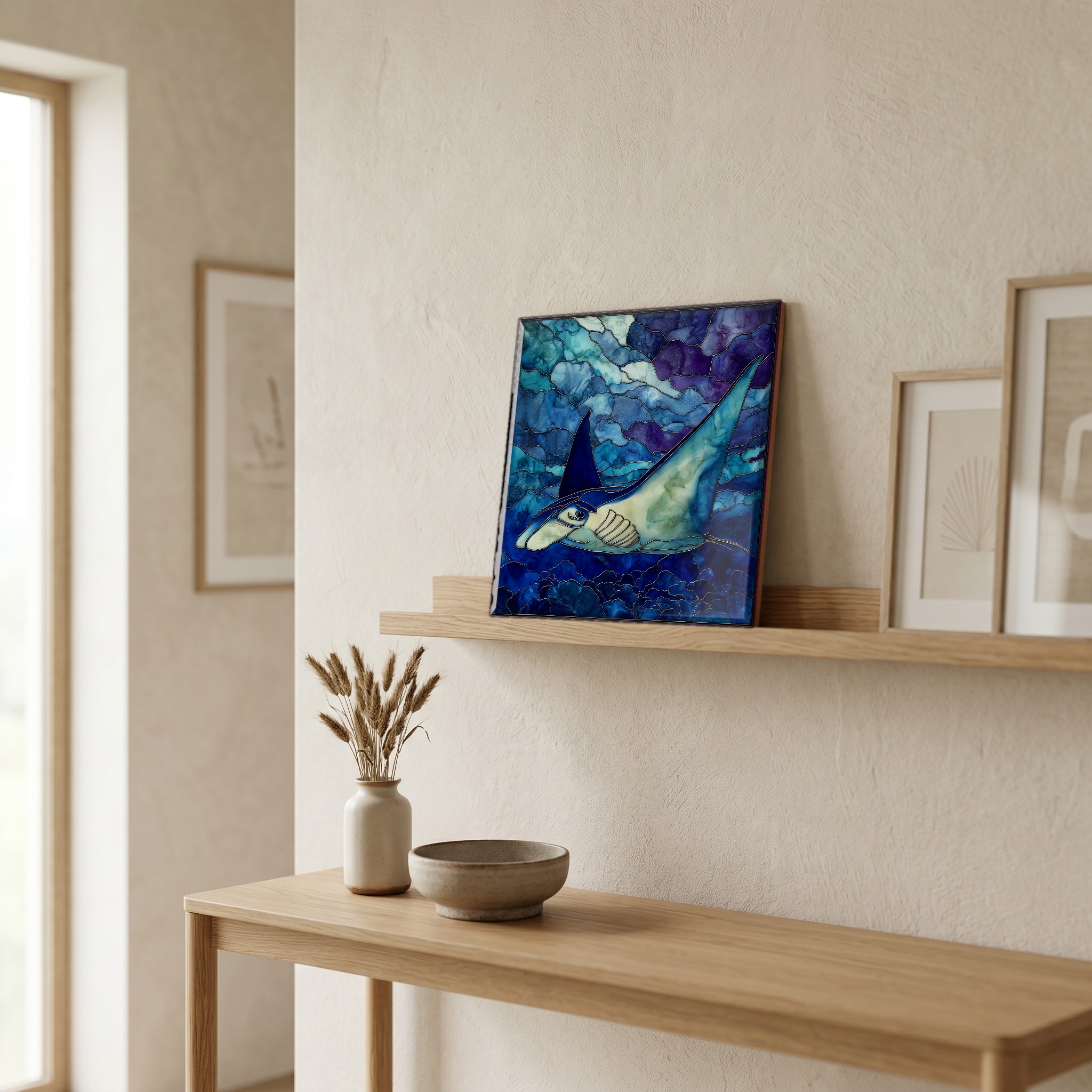
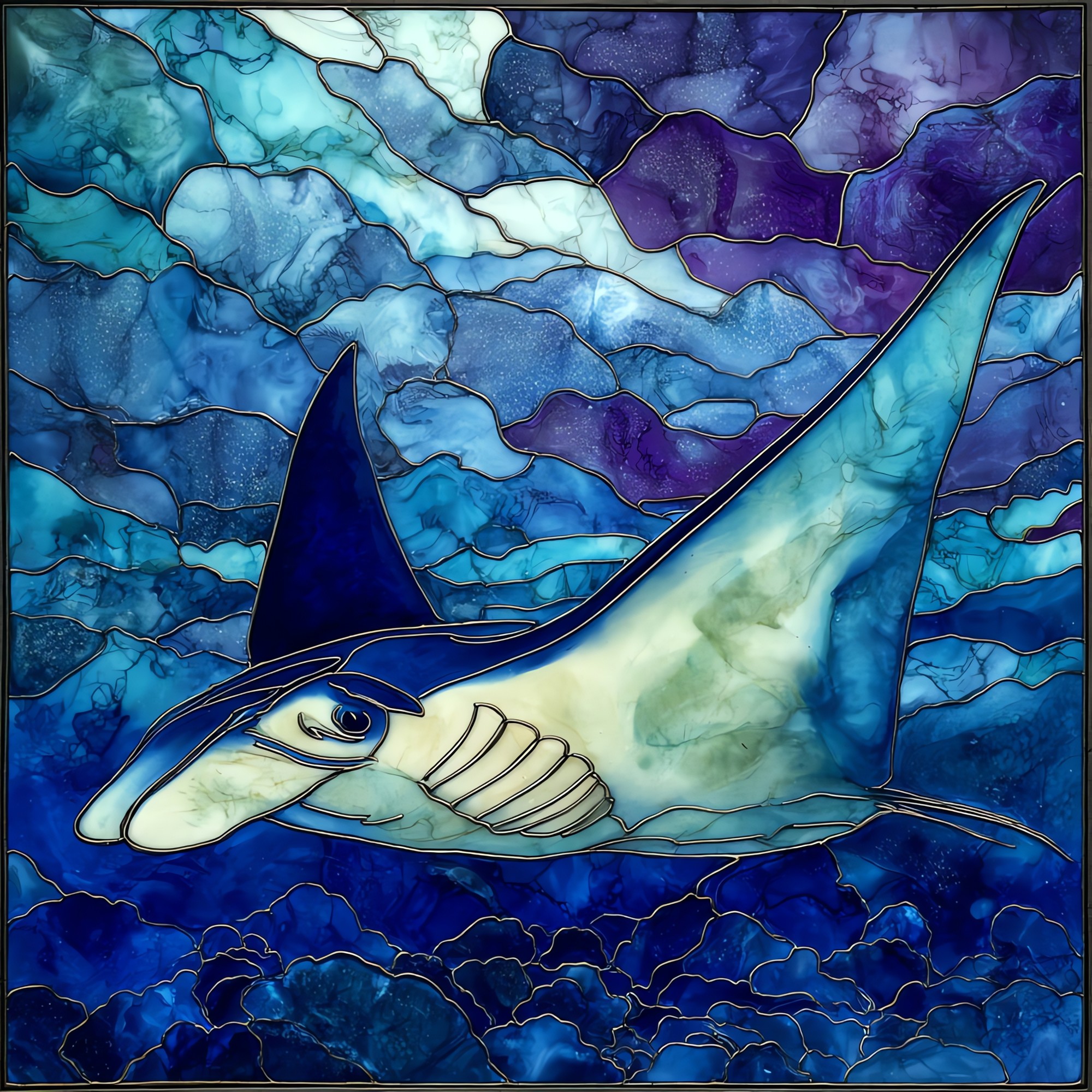
Manta Ray Kona Big Island Ceramic Art Tile
shown on ceramic, 12-inch tileHawaii · United States
off the Kona coast of the Big Island, after dark

Manta Ray Kona Big Island Ceramic Art Tile

— a wing the size of a doorway, turning in the light.

Where it lives

Not only on a wall.

A small tile on the nightstand catching the morning. A larger one above the fire. Yours, wherever you spend the slow hours.
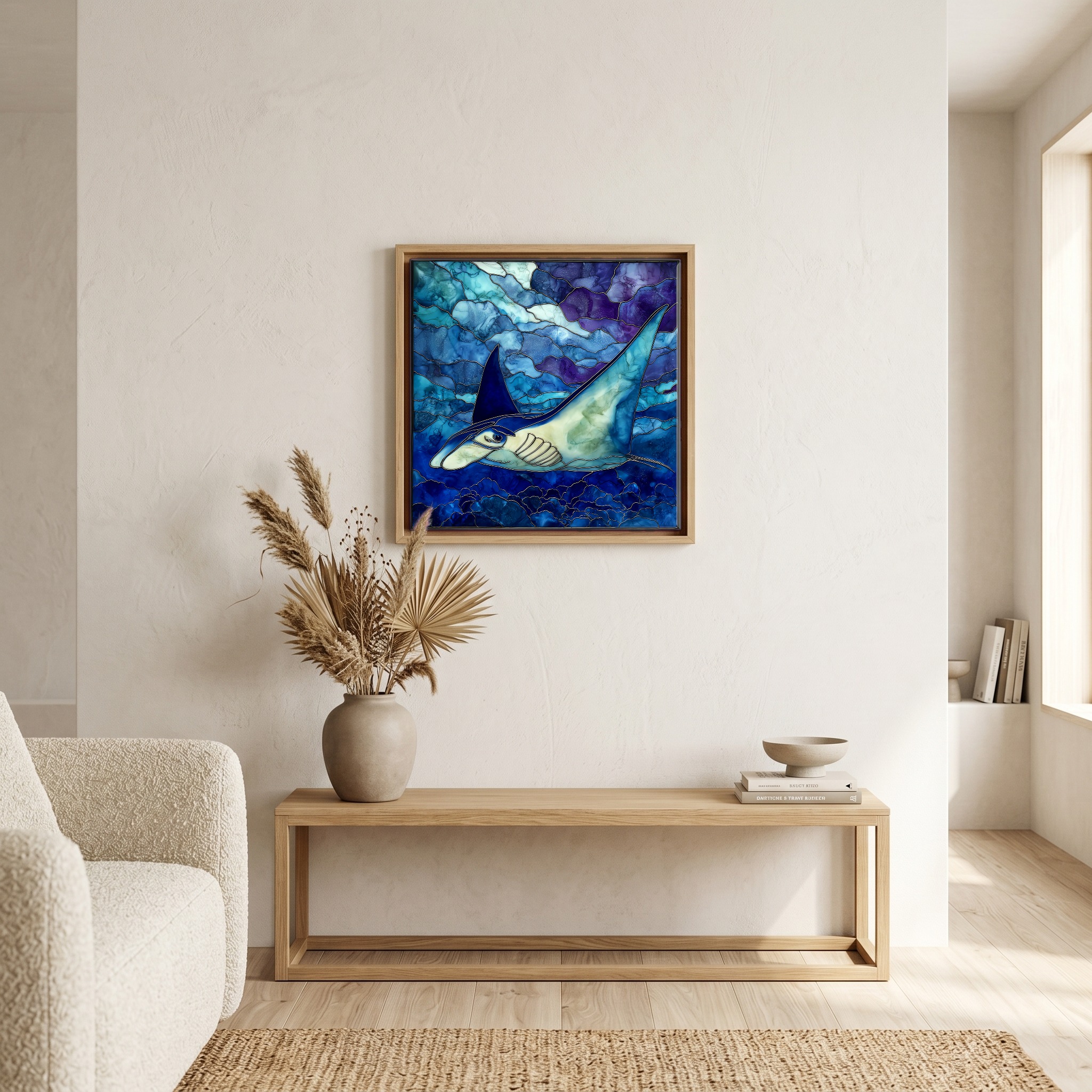
Above the bench, in a warm oak surround.
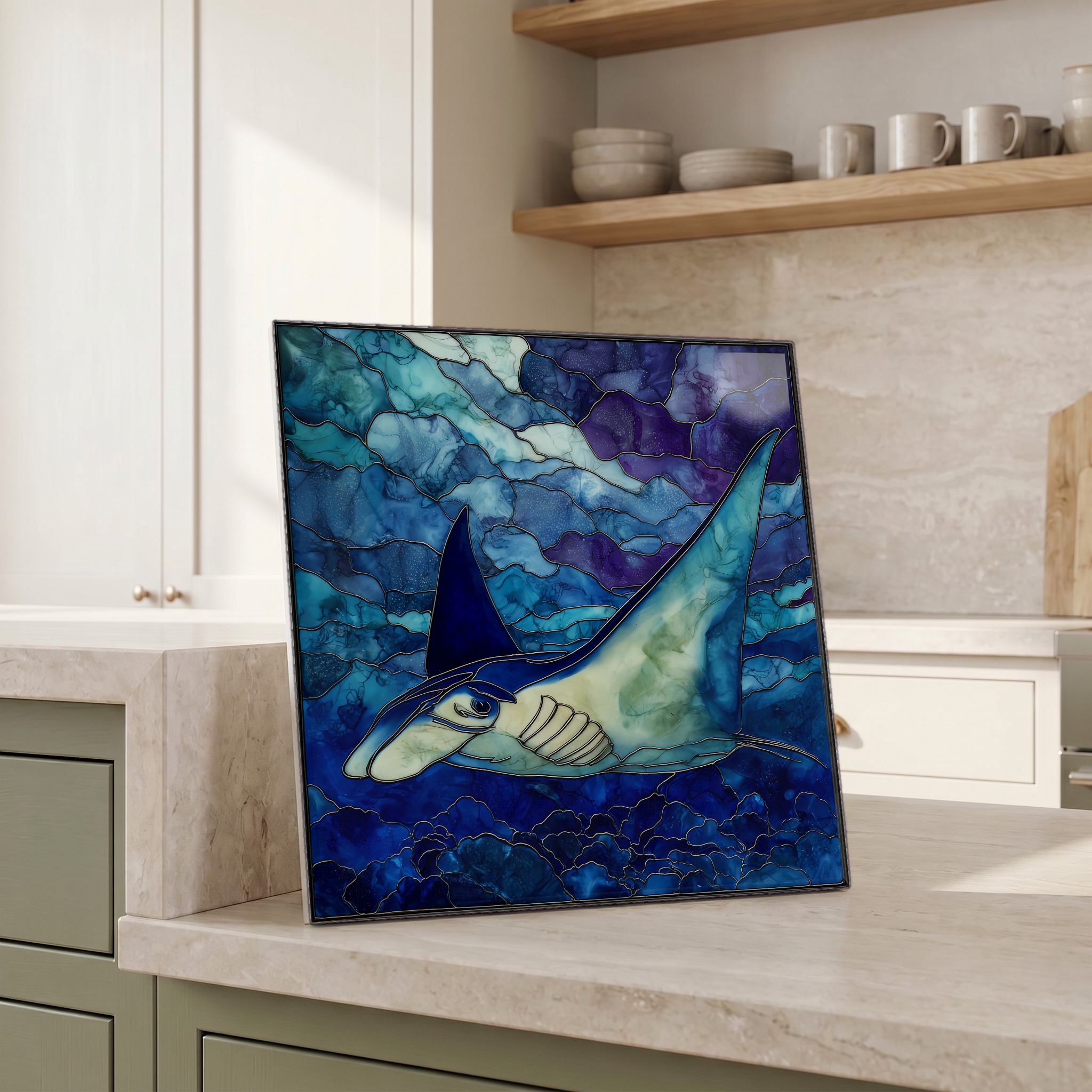
Beside the kettle, propped on the counter.
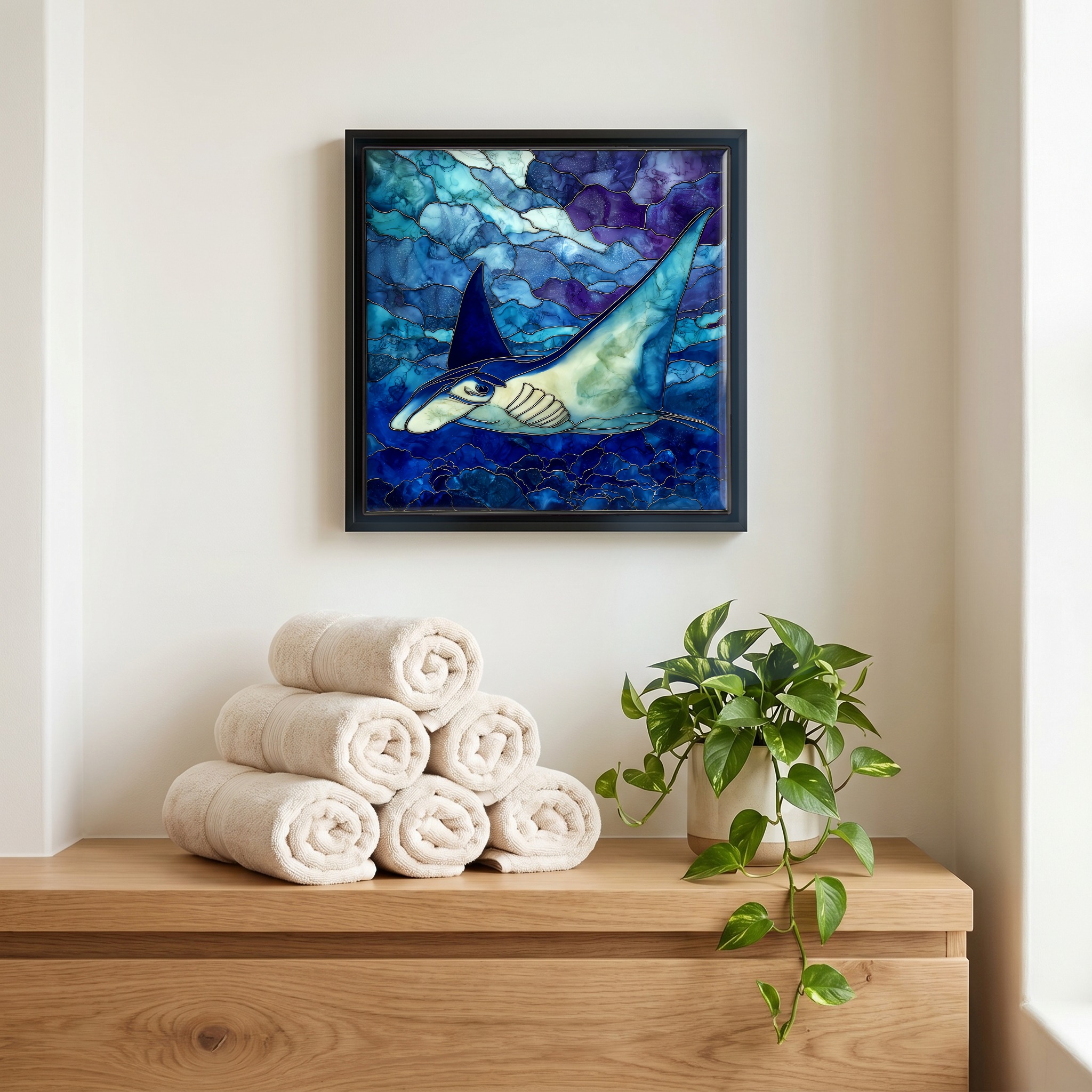
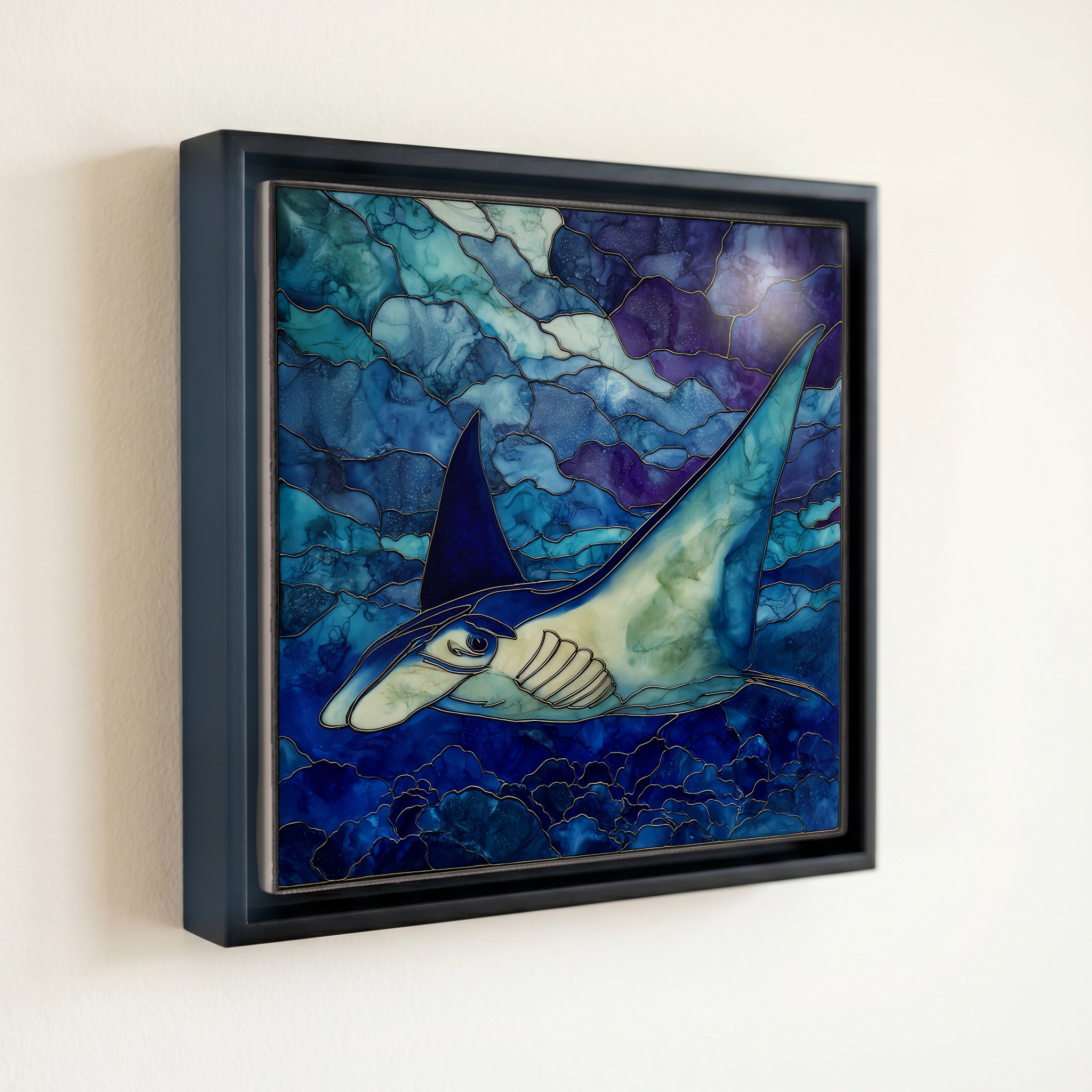
Above the linens, in a slim black surround.
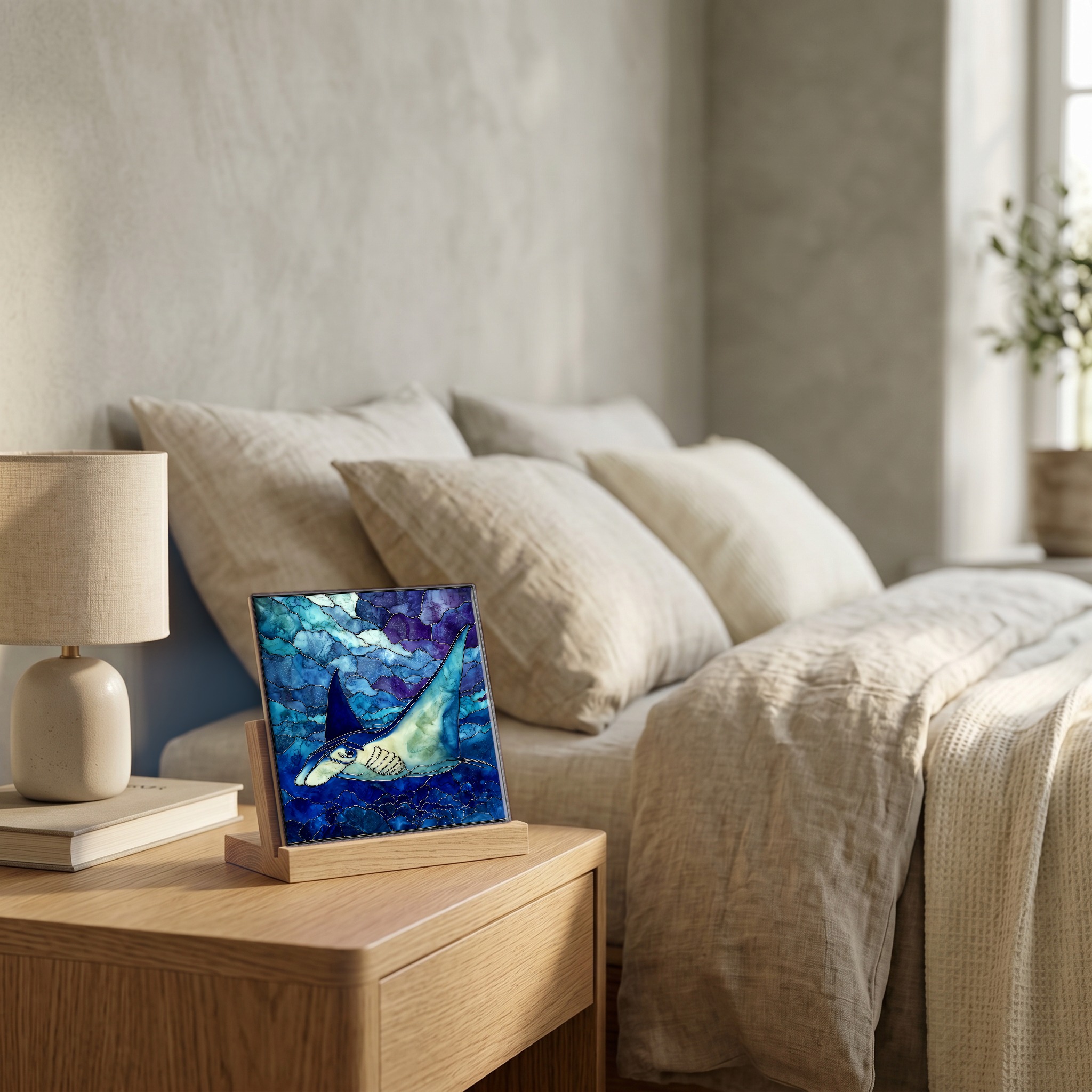
On the nightstand, on a light oak stand.
On a picture ledge, where the light comes in.
a note from the studio

Two small dive sites off the Kona coast of the Big Island. Manta Village down at Keauhou Bay, Manta Heaven up near the airport. Boats anchor after dark. Lanterns drop on a line and pull plankton up out of the dark water. The reef mantas follow. Wingspans of twelve, fourteen feet. They roll slowly through the cones of light, mouths open, then pass under and come back. Nobody on the boat talks much when the mantas are up close.
from the studio
shown in a slim black floating frame · 6 × 6 in
— bring it home

Manta Ray Kona Big Island Ceramic Art Tile, on ceramic.

Each tile is finished by hand in our Knoxville studio. Artwork is slowly infused into the ceramic surface under high heat and pressure, and rests beneath a thin glossy finish. The colour lives in the surface, not on top of it.

What kind of piece?
One tile — square or rectangle.
How big?
the popular one — counter, shelf, nightstand
6 × 6 in · 15 cm · 1.6 lb
Surface finish
A clear glossy finish — the artwork reads as if under resin. Ideal for show-pieces and framed wall art.
How it sits
A hidden cleat — sits ¼″ proud of the wall.
$58
Hand-finished and shipped from our studio at the foot of the Smokies. On your wall in about ten days.
size
6 × 6 in
15 cm
weighs
1.6 lb
solid in the hand
surface
ceramic, hand-finished
art rests beneath a thin glossy finish
from
Knoxville, TN
our family studio, at the foot of the Smokies
— start a Coaster Set

Pick any four 4-inch tiles — National Parks you've been to, a Smokies set, the four seasons of one place. $ for a set of , cork-backed, ready to live on the table.
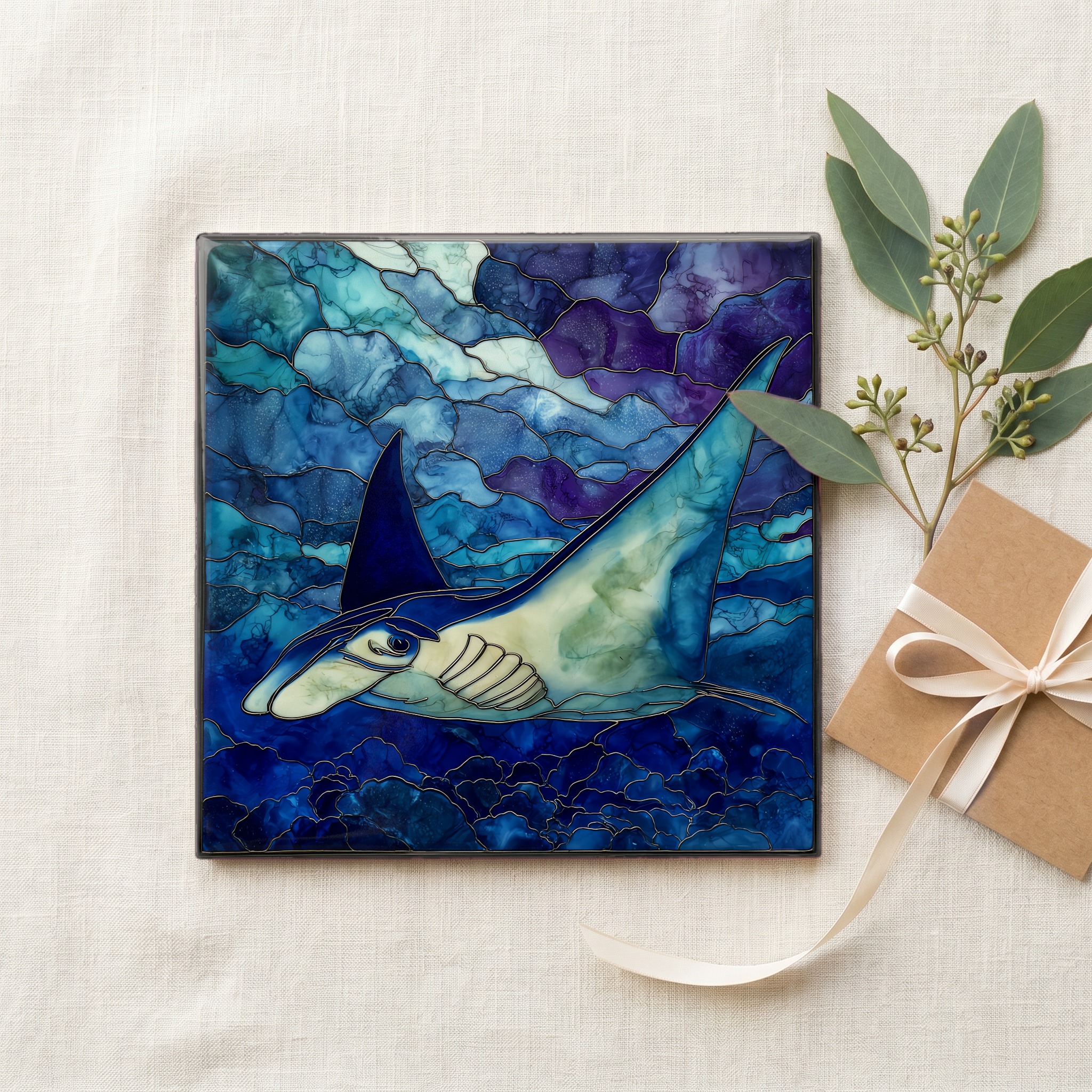
comes gift-ready
comes gift-ready

Each tile ships in a kraft box, tied with cream ribbon, with a handwritten note from the studio if you'd like to add one.
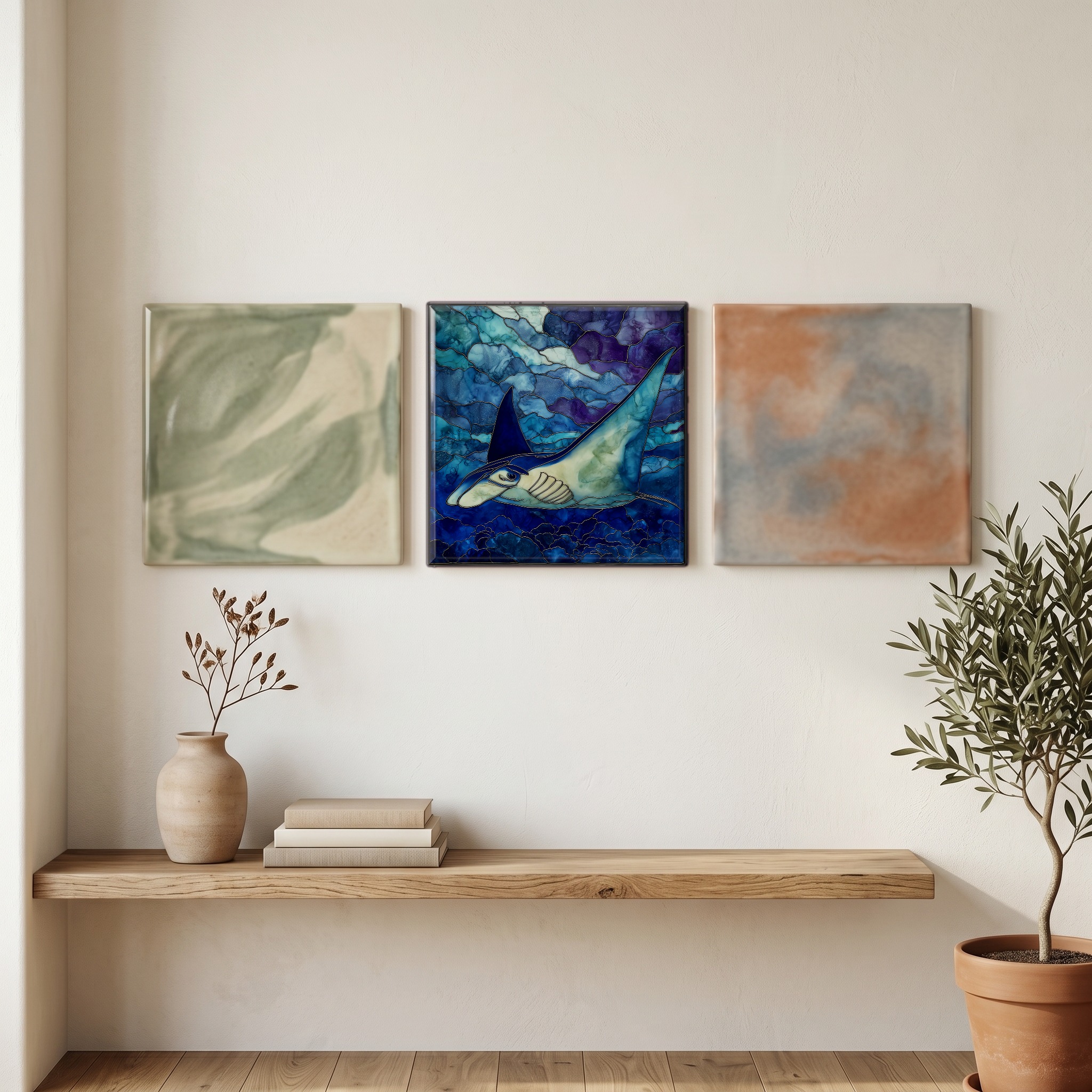
or build a grouping
or build a grouping

Three or five different vistas, hung together — a chapter of places you've been, or want to go.

about Manta Ray Kona Big Island Ceramic Art Tile

The place, in three passes.

A little of what's known, in case you fall down the rabbit hole — or want to go see it yourself.
the place

Two night-dive sites on the leeward Kona coast of Hawaii Island, the largest island in the chain at about 4,028 square miles. Manta Village sits off Keauhou Bay below the Sheraton Kona Resort, the hotel formerly known as the Kona Surf, where the aggregation was first noticed in the 1970s. Manta Heaven, also called Garden Eel Cove, sits about a mile south of Keahole-Kona International Airport on the same coast. Both are reached only by boat, mostly from Honokōhau Harbor and Keauhou Bay. The mantas themselves are reef mantas, Mobula alfredi, part of a resident Kona population tracked by the Manta Pacific Research Foundation.

the water

Reef mantas are filter feeders. They swim with their mouths held open and their cephalic fins unfurled, funneling water and zooplankton across the gills. At the Kona dive sites, boats anchor after dark and lower lanterns into the water column. The lights pull plankton up out of the surrounding dark, and the mantas follow. Adult wingspans on the Kona population run roughly ten to fourteen feet across, with a few individuals charted past sixteen. The classic feeding move is the barrel roll, a slow head-over-tail loop through the densest plankton cloud, repeated for as long as the food holds.

the visit

The sites are reached only by boat, at night, with a licensed operator out of Honokōhau Harbor or Keauhou Bay. Snorkelers float at the surface around a lit board. Divers settle on the sand at about thirty-five feet around a campfire of dive lights. Conditions are workable in most months, with winter swells the most common reason for cancellation. Touching a manta is prohibited under Hawaii state law, which has protected the species since a 2009 statute banning take or capture. The Manta Pacific Research Foundation identifies every individual by the spot pattern on the belly. The working Kona catalogue holds roughly three hundred mantas.

where
United States · Hawaiʻi County, Hawaii
elevation
0 m · 0 ft
position
19.5615° N · 155.9613° W
the neighborhood

What's nearby.

A handful of named places within an hour's walk or short drive. Some we've already painted; some we will.
at the lake
Keauhou Bay
coastal bay
10 km N
Kailua-Kona
coastal town
9 km N
Hulihe‘e Palace
historic palace
12 km N
Honokōhau Harbor
harbor
12 km S
Kealakekua Bay
historic bay
17 km S
Pu‘uhonua o Hōnaunau
national historical park
N
Manta Ray Kona Big Island Ceramic Art Tile
Keauhou Bay
Kailua-Kona
Hulihe‘e Palace
Honokōhau Harbor
Kealakekua Bay
Pu‘uhonua o Hōnaunau
common questions

What people ask.

A few questions we get about Manta Ray Kona Big Island Ceramic Art Tile — and about bringing the piece home.
about the place

On the leeward Kona coast of Hawaii Island, at two small sites. Manta Village sits off Keauhou Bay below the Sheraton Kona Resort. Manta Heaven, also called Garden Eel Cove, sits about a mile south of Keahole-Kona International Airport. Both are reached only by boat.

Boats anchor after dark and lower lanterns into the water column. The lights pull zooplankton up out of the surrounding dark, and the reef mantas come in to feed on the concentrated cloud. The aggregation was first noticed in the 1970s at the Kona Surf Hotel, where underwater lights had the same effect.

Mobula alfredi, the reef manta, a tropical and subtropical filter feeder. The Kona population is resident, not migratory, and is monitored by the Manta Pacific Research Foundation. Adult wingspans here run roughly ten to fourteen feet across, with a few individuals charted past sixteen.

The Manta Pacific Research Foundation has identified roughly three hundred individual reef mantas in the Kona aggregation. Each is catalogued by the spot pattern on the belly. Every manta carries a different pattern, the way a fingerprint is different.

No. Reef mantas have no stinger, no defensive teeth, and feed only on zooplankton. The rule for divers and snorkelers is the same: do not touch, do not chase, do not block the feeding line. The mantas do the rest.

The dive runs in every season, weather permitting. Winter swells from October through March cancel more trips than summer ones. The Kona population is resident, so the mantas are present in all months. Cancellations are about surface conditions, not the animals.

Yes. Hawaii state law has banned the take or capture of manta rays since a 2009 statute. Touching a manta in the water is prohibited under the same protections. Commercial operations are licensed and work under a code of practice coordinated with state and federal agencies.

about the piece in your home

It's been a meaningful gift for many of our customers with ties to the Big Island. The Kona dive sits on most divers' short lists, and the tile reads as the kept memory of the dive rather than a souvenir. A Small or Medium with a handwritten note from the studio carries well.

The dark water, the lantern cones, and the white-bellied wings carry across Coastal-modern, Jewel-tone Maximalist, and the deeper-toned Biophilic palettes that use ocean blues as a base. The piece reads as a quiet centrepiece rather than a beach motif. It sits well in a room with low warm light.

The piece fits the deeper, less literal coastal direction that has displaced the bleached-driftwood look. It reads closer to the ocean as a real, dark, living water. The format works in a coastal-modern room as a centrepiece without leaning on shells, ropes, or pastel palettes.

A single Large carries the wall above a standard sofa or console on its own. For a wider wall or a stronger anchor, a four-tile Mural opens the image into a larger ocean field. A nine-tile Mural is the format we recommend for a room the piece is meant to define.

Yes. The Dura Satin finish is the right pick for any wet or splash-prone wall, including bathrooms, showers, and kitchens. It carries a soft sheen and resists scratches. Matte is the same chemistry without the sheen, for rooms where you want the surface to read as flat.

A soft microfibre cloth and warm water are all the piece needs. The colour lives in the ceramic surface and is not a printed overlay, so it will not lift, fade, or peel. Avoid abrasive scrubbers and bleach-based sprays; neither is needed.

Yes. Every WenderVista piece is original to our single Knoxville studio. We do not license stock imagery, and we do not print external work onto the tile. Reid Wender chooses the place. The painting is made in the studio's visual language, and the colour is slowly infused into the ceramic surface under high heat and pressure.

if this one stayed with you

A few you might also love.

Hand-picked by the eye that found Sorapis. Same air, same kind of quiet.