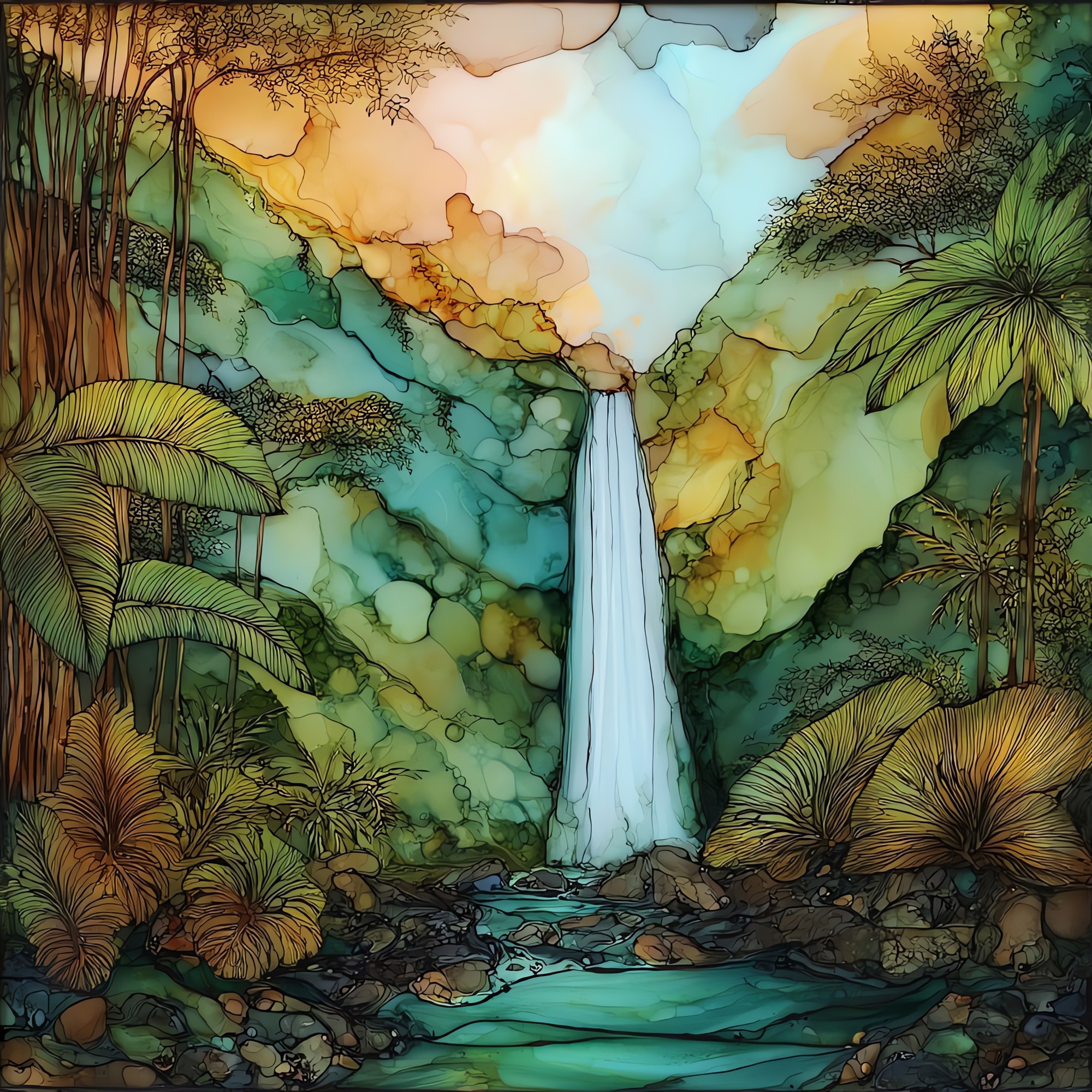
Manoa Falls Oahu Ceramic Art Tile
— a green you can hear before you see it.
Not only on a wall.
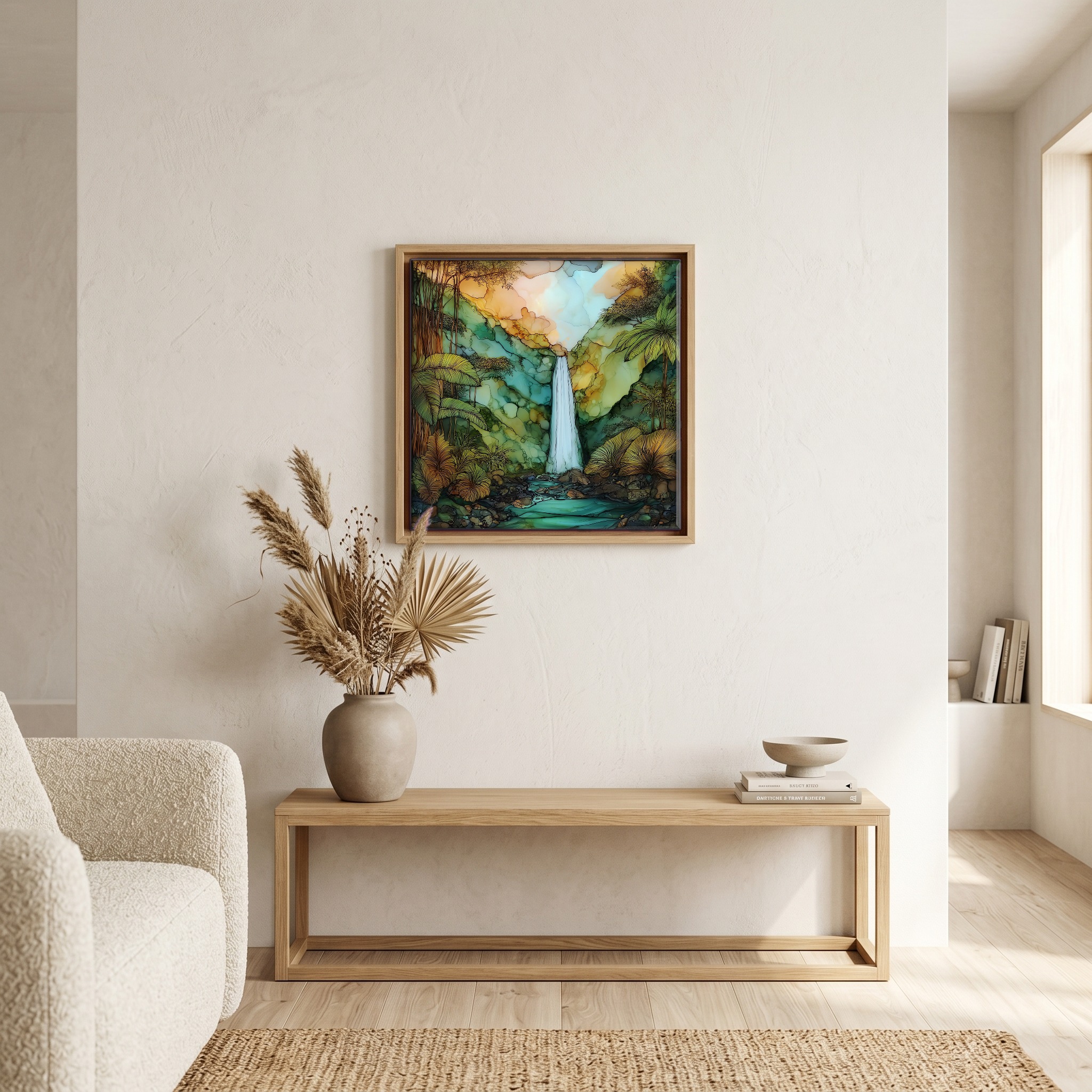
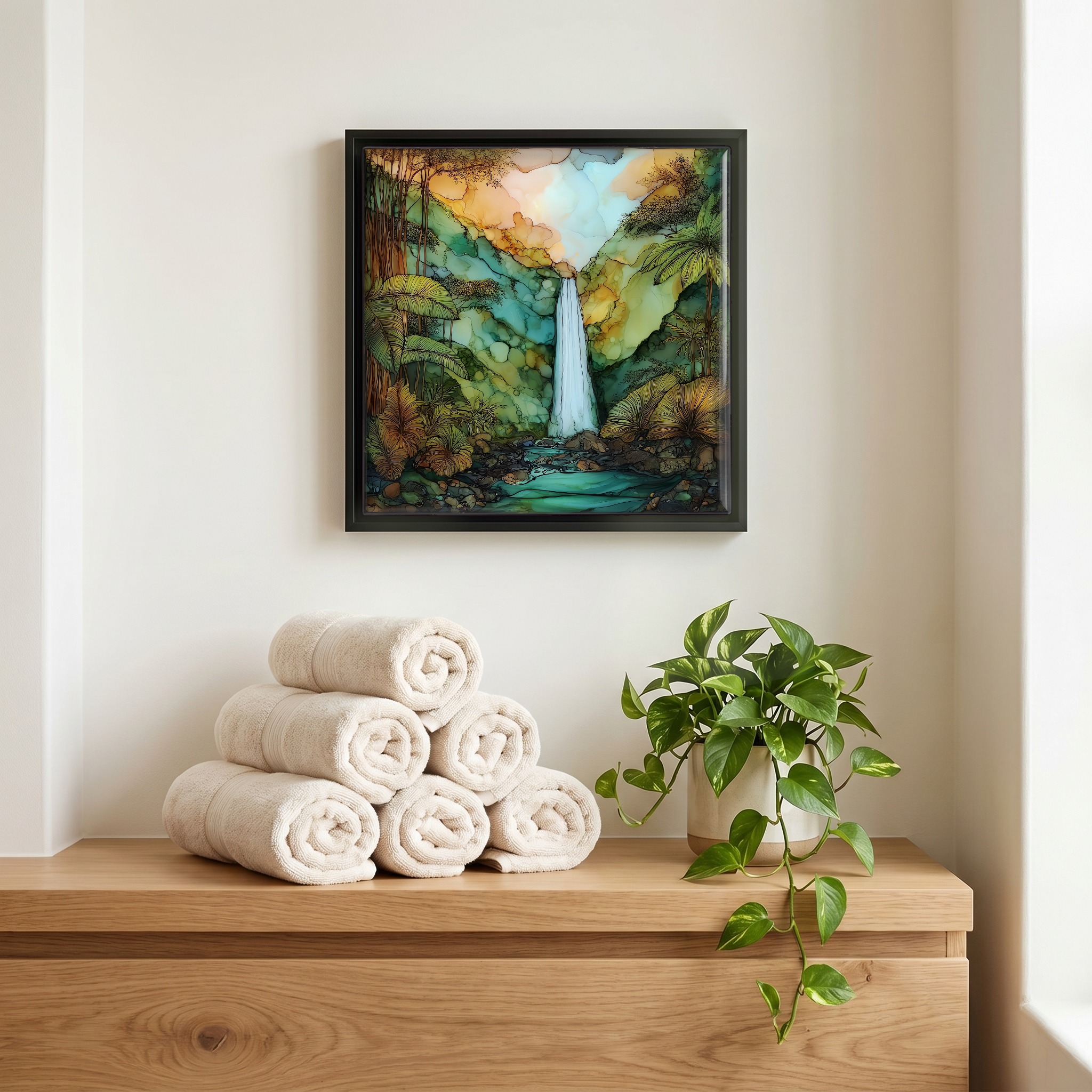

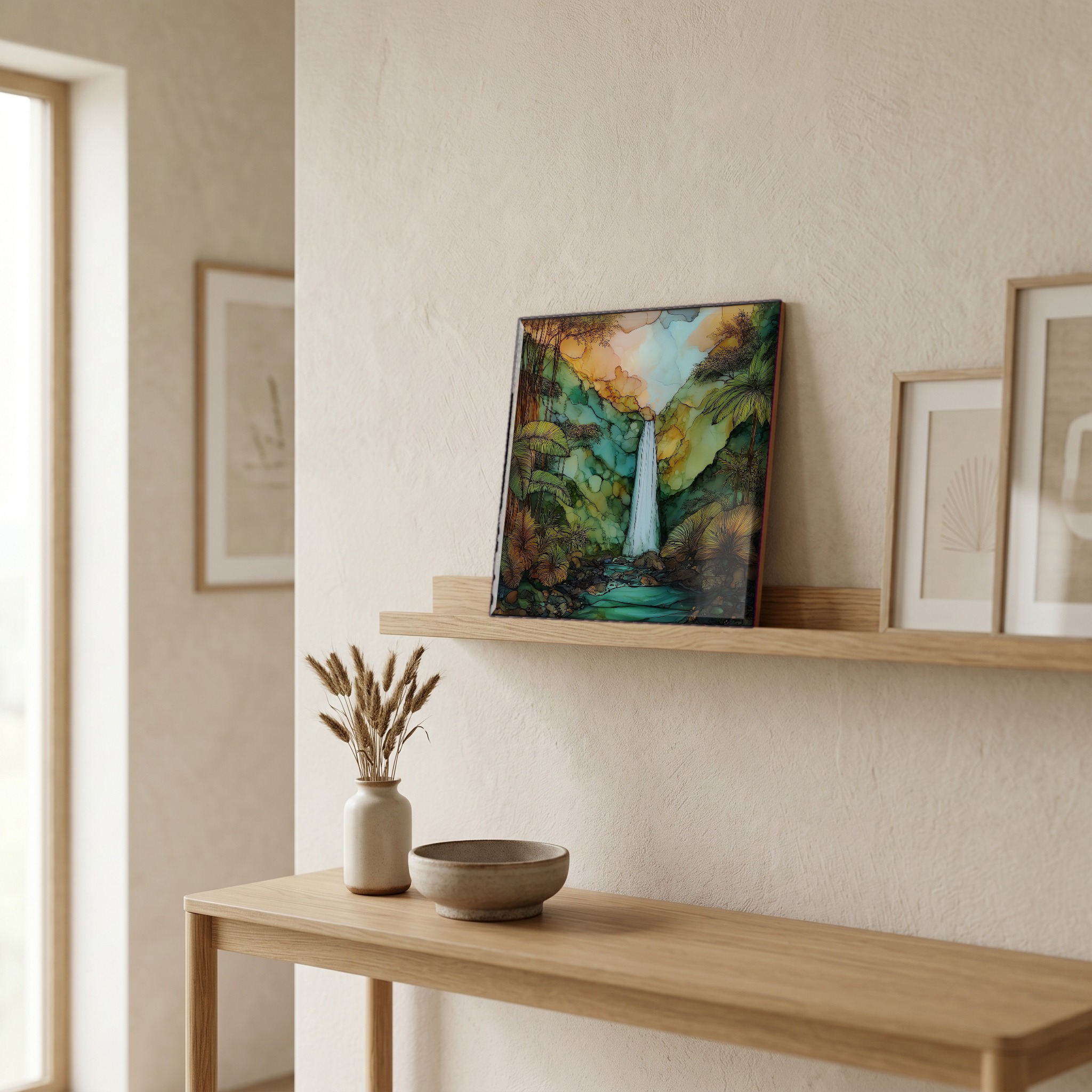
“The 150-foot ribbon at the back of Mānoa Valley, ten minutes from downtown Honolulu and a different climate entirely. The trail in is short and reliably muddy: bamboo, ginger, old eucalyptus, a low constant sound of water that gets louder before you turn the last corner. The valley above is one of the wettest places on Oʻahu, and the green is the kind that takes that much rain to make. Swimming is not permitted at the pool. Most people stay a few minutes and walk back down.
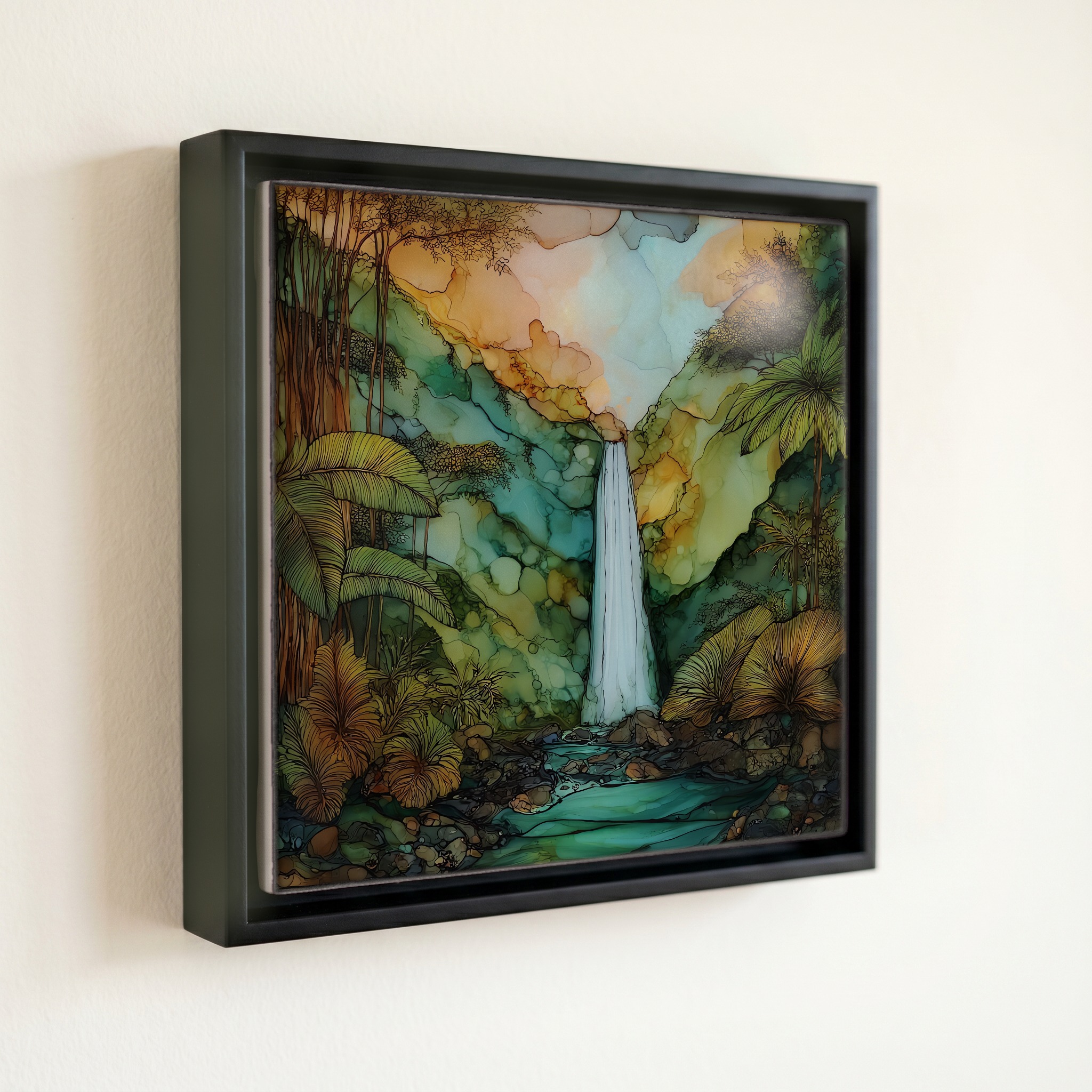
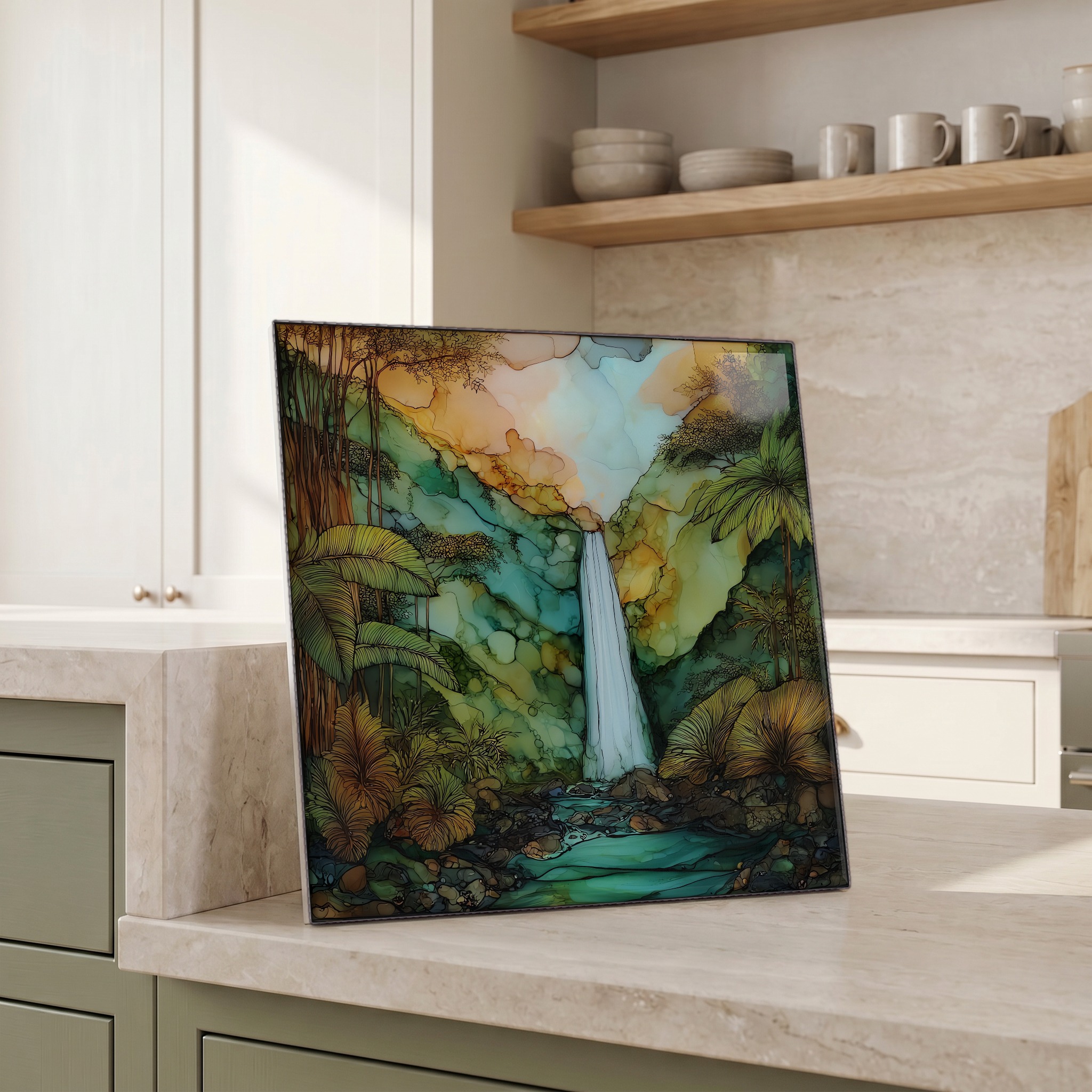
Manoa Falls Oahu Ceramic Art Tile, on ceramic.
Each tile is finished by hand in our Knoxville studio. Artwork is slowly infused into the ceramic surface under high heat and pressure, and rests beneath a thin glossy finish. The colour lives in the surface, not on top of it.
Pick any four 4-inch tiles — National Parks you've been to, a Smokies set, the four seasons of one place. $ for a set of , cork-backed, ready to live on the table.
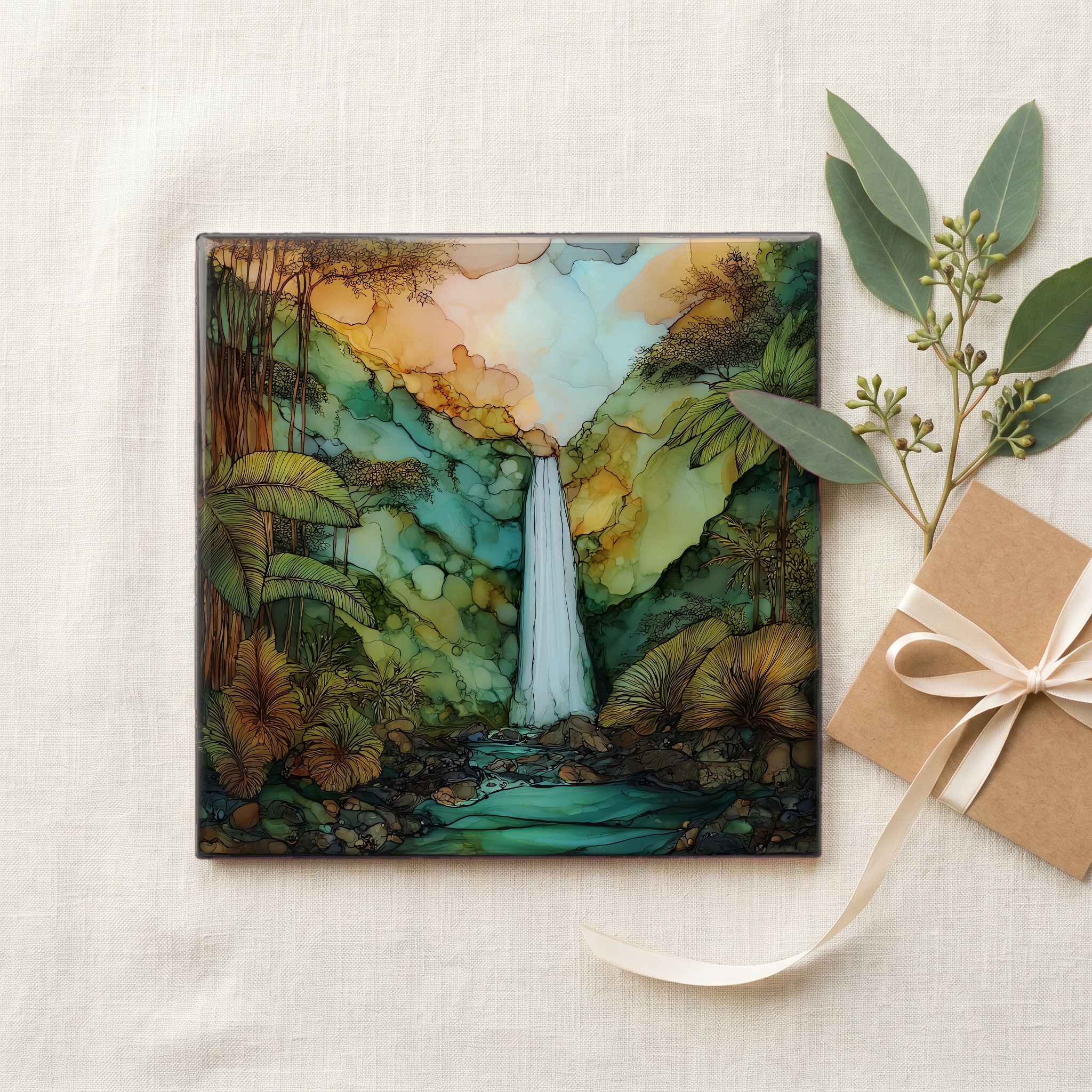
Each tile ships in a kraft box, tied with cream ribbon, with a handwritten note from the studio if you'd like to add one.

Three or five different vistas, hung together — a chapter of places you've been, or want to go.
The place, in three passes.
Mānoa Falls drops about 150 feet at the back of Mānoa Valley, roughly five miles inland from Waikiki and Honolulu in the southeastern reach of Oʻahu. The valley is held between two ridges of the Koʻolau Range, older basalt weathered into the deep amphitheatre the falls now sit at the head of. The trail begins above the Lyon Arboretum, climbs gently for about three-quarters of a mile through a forest of bamboo, hau, and Indian banyan, and ends at a viewing platform below the pool. The land is managed under the Honolulu Watershed Forest Reserve by the State of Hawaii Department of Land and Natural Resources.
Upper Mānoa Valley is one of the wettest places on Oʻahu. Long-term averages near the back of the valley exceed 150 inches of rainfall a year, fed by trade winds lifting moist air up the windward face of the Koʻolau ridge. The falls flow in every month, varying widely with the storms; after heavy rain the volume can multiply, and the pool below clouds with red sediment from the basalt slopes upstream. Swimming is not permitted. The water carries Leptospira bacteria common to Hawaiian freshwater streams, and the cliff face above the pool routinely sheds loose rock. The State posts the closure on a sign at the trailhead.
The Mānoa Falls Trail runs about 1.6 miles round-trip and gains roughly 600 feet of elevation, easy by Oʻahu standards but persistently muddy. The trailhead sits at the end of Mānoa Road, past Paradise Park and just before the Lyon Arboretum, with a paid parking lot run by a private operator. Plan an hour and a half. Closed-toed shoes are sensible; the red mud stains and dries slow. The viewing platform at the end is the legal turnaround, and the falls themselves are roped off after a long history of rockfall accidents. Mornings tend to be drier and emptier than afternoons, when the trade-wind clouds bank against the Koʻolau ridge.