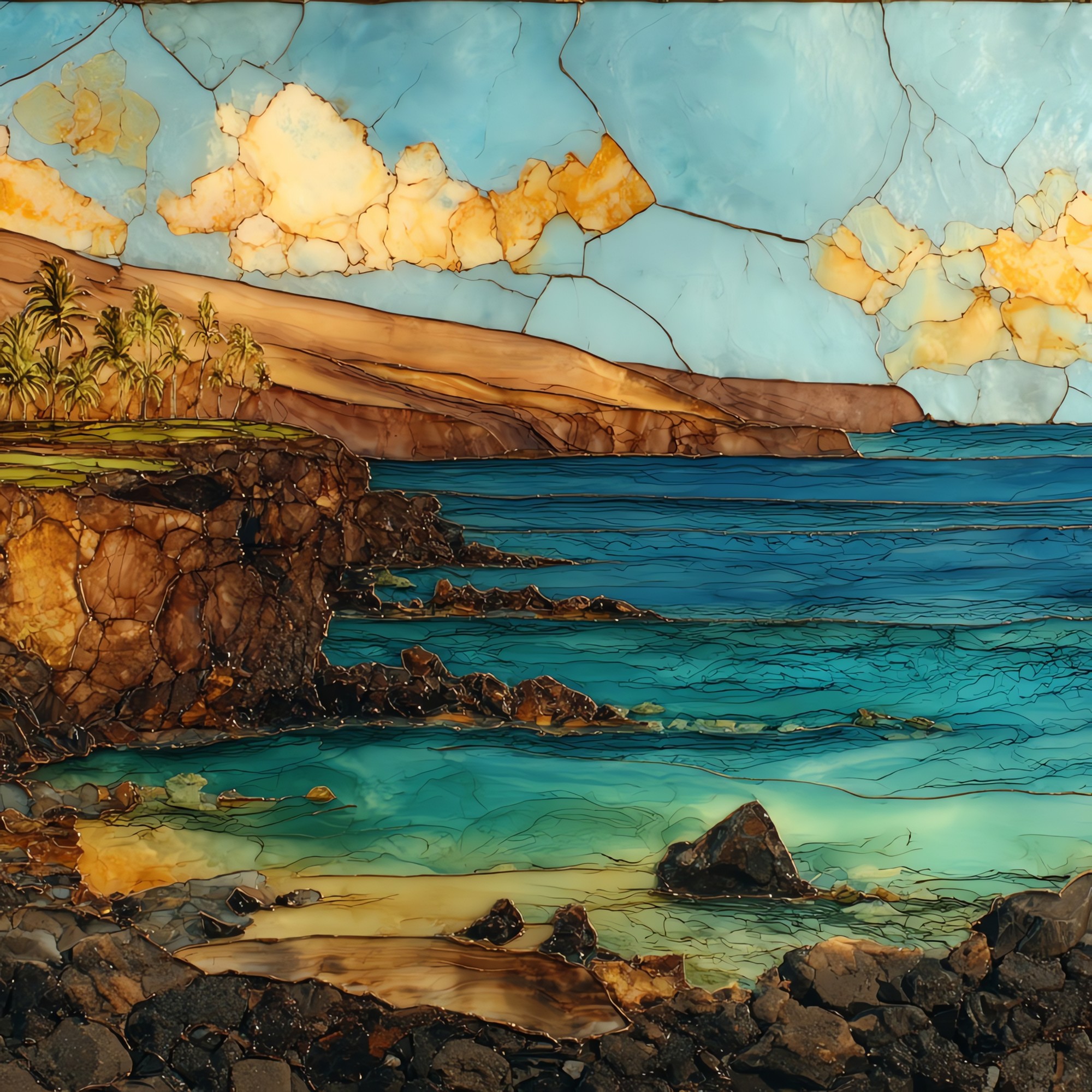
Manini Beach Big Island Ceramic Art Tile
— — the morning the dolphins come in to rest.
Not only on a wall.
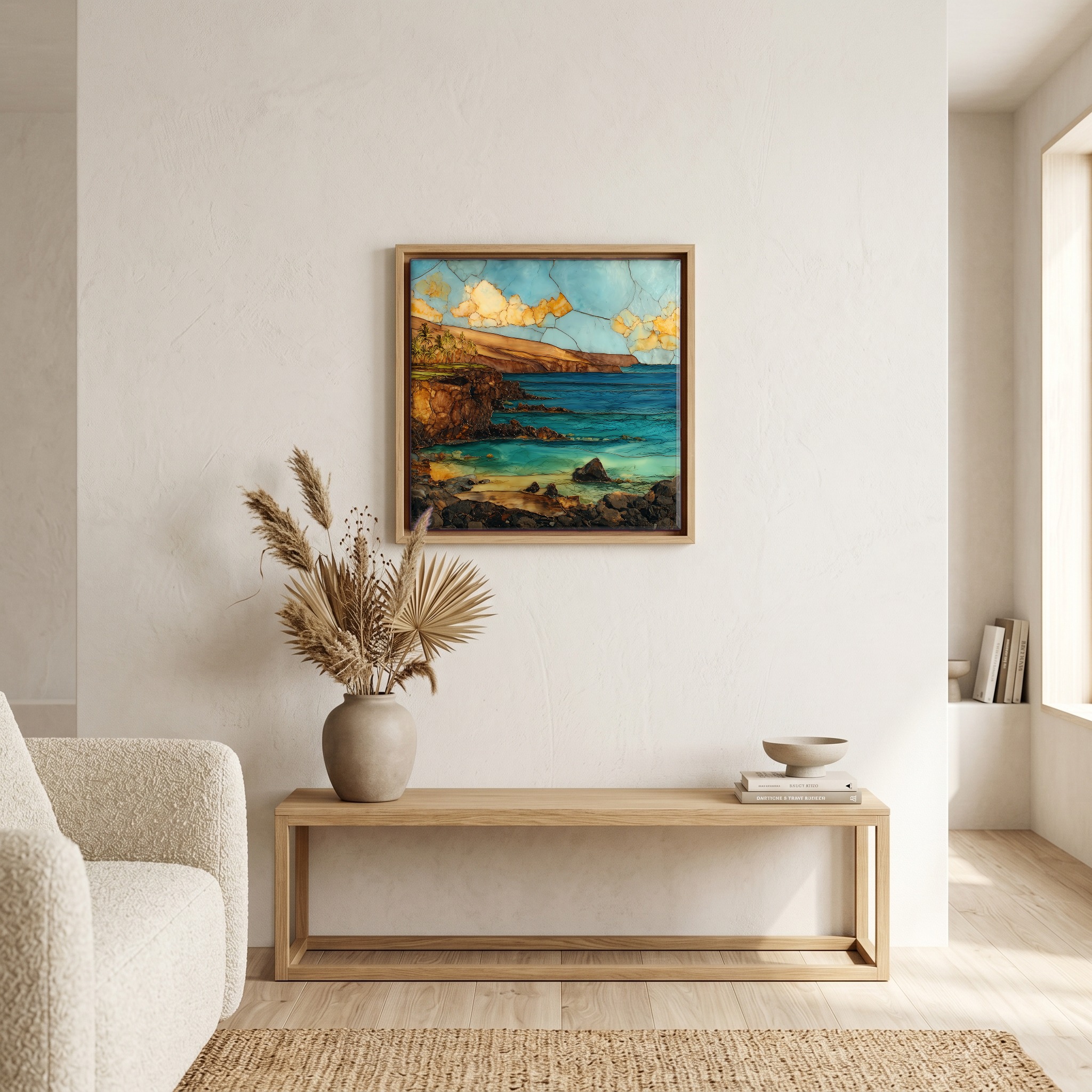

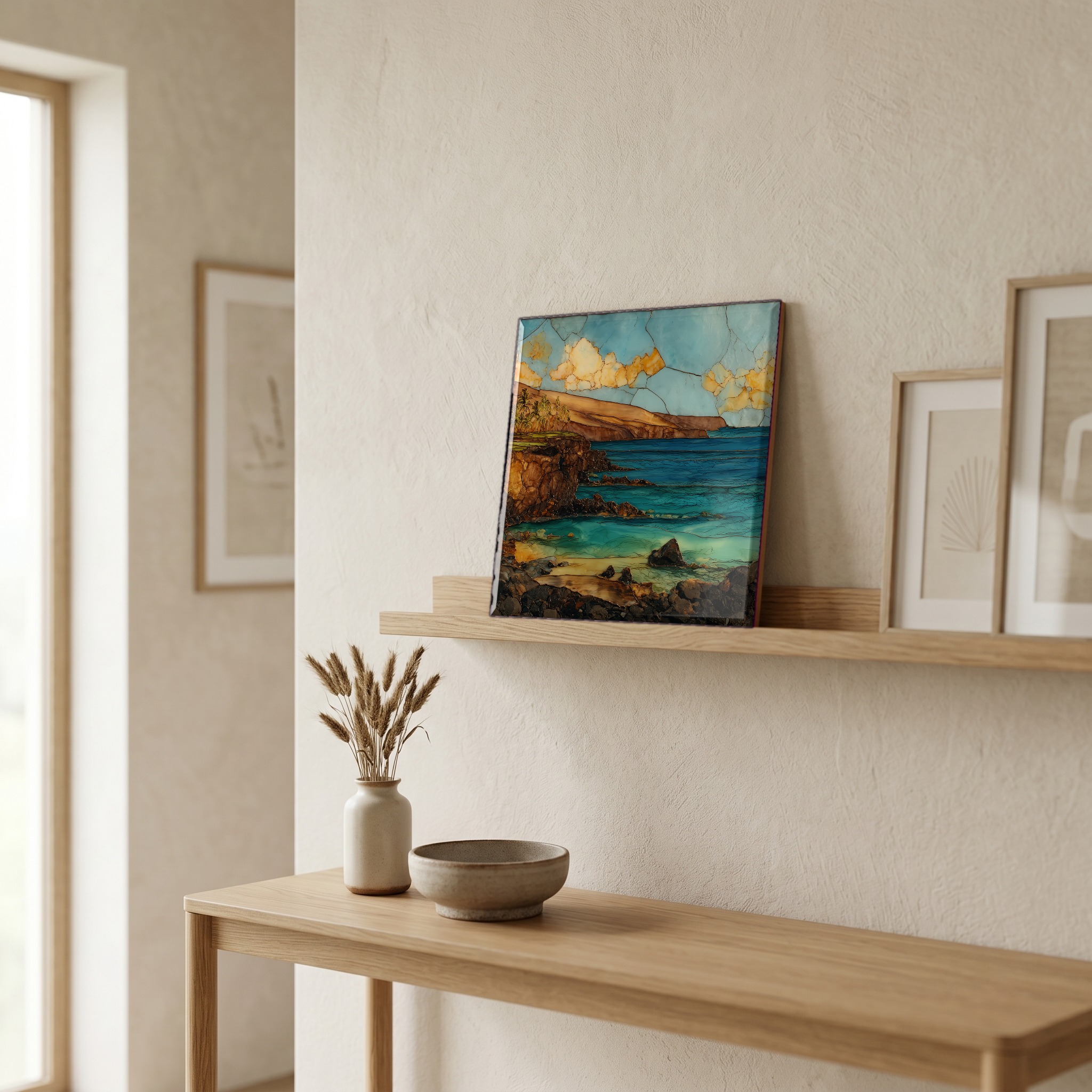
“A small park on the south side of Kealakekua Bay, on the Kona coast, looking across to the white obelisk that marks where Captain Cook was killed in February 1779. The shore is lava rock and coral rubble, with a sand channel where you can step into the water. Mornings the spinner dolphins come into the bay to rest after their night's hunt. The park holds fifty people; the parking is tight, and the regulars come early. No restrooms, no lifeguard. The bay itself has been a marine conservation district since 1969. The fish stay, and you watch.
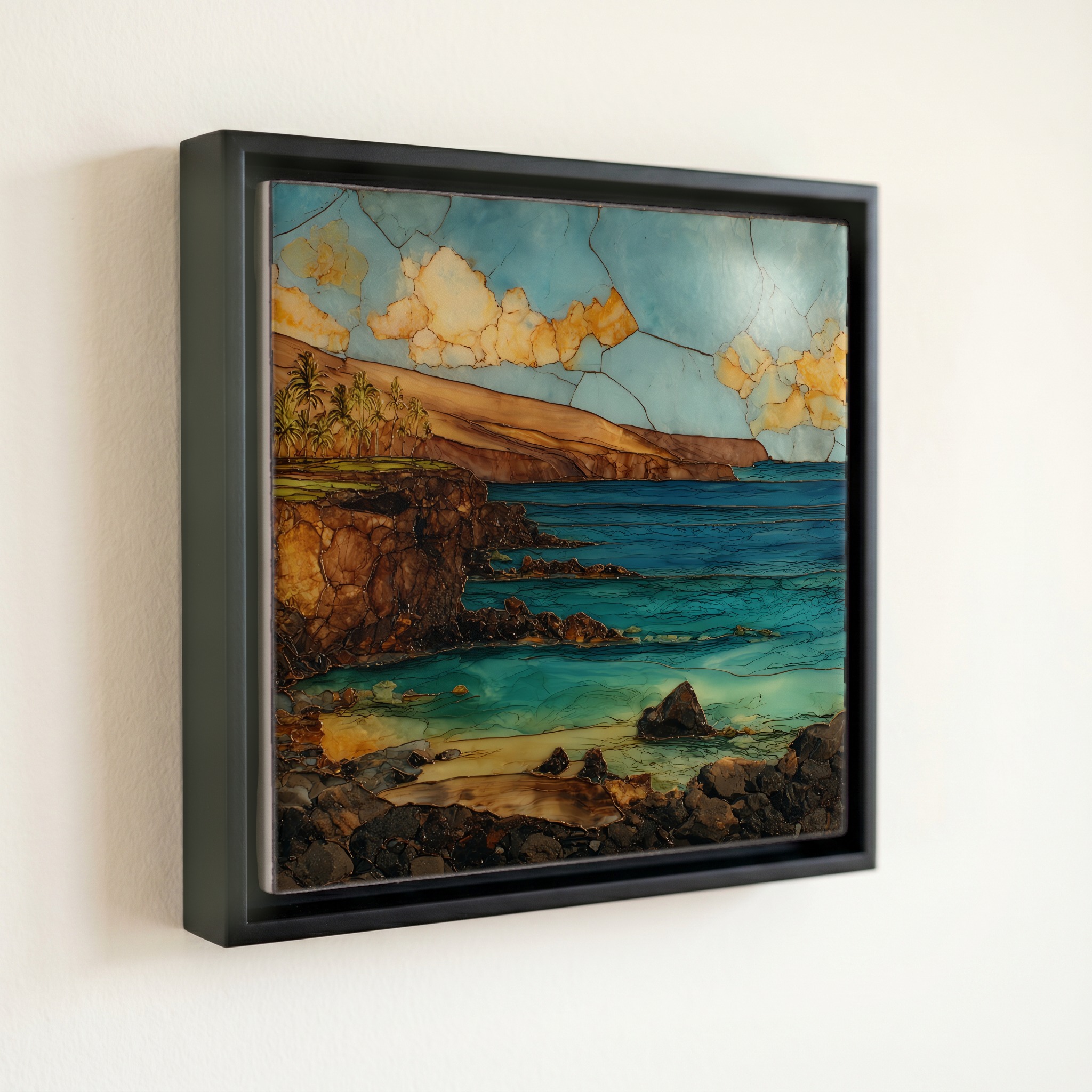
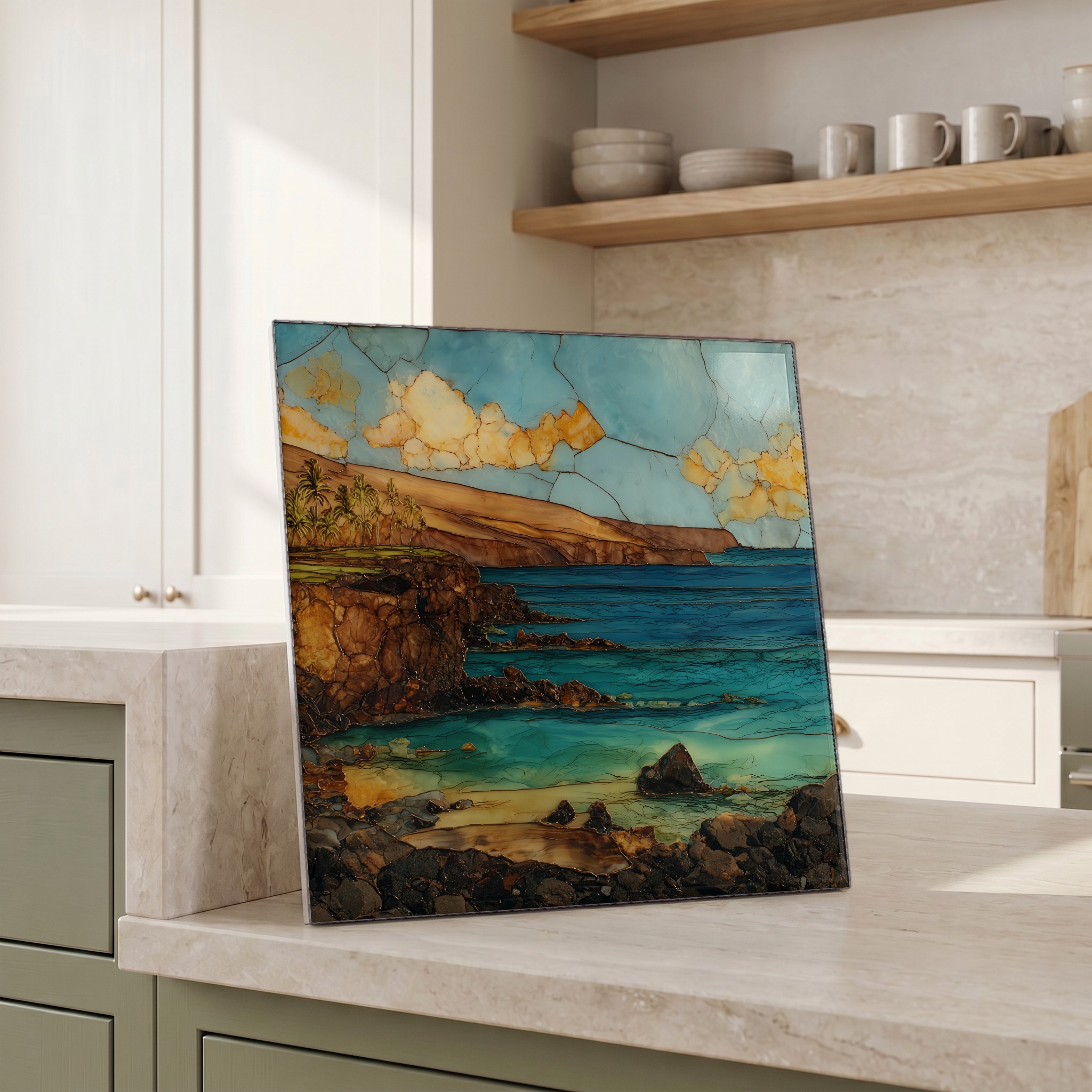
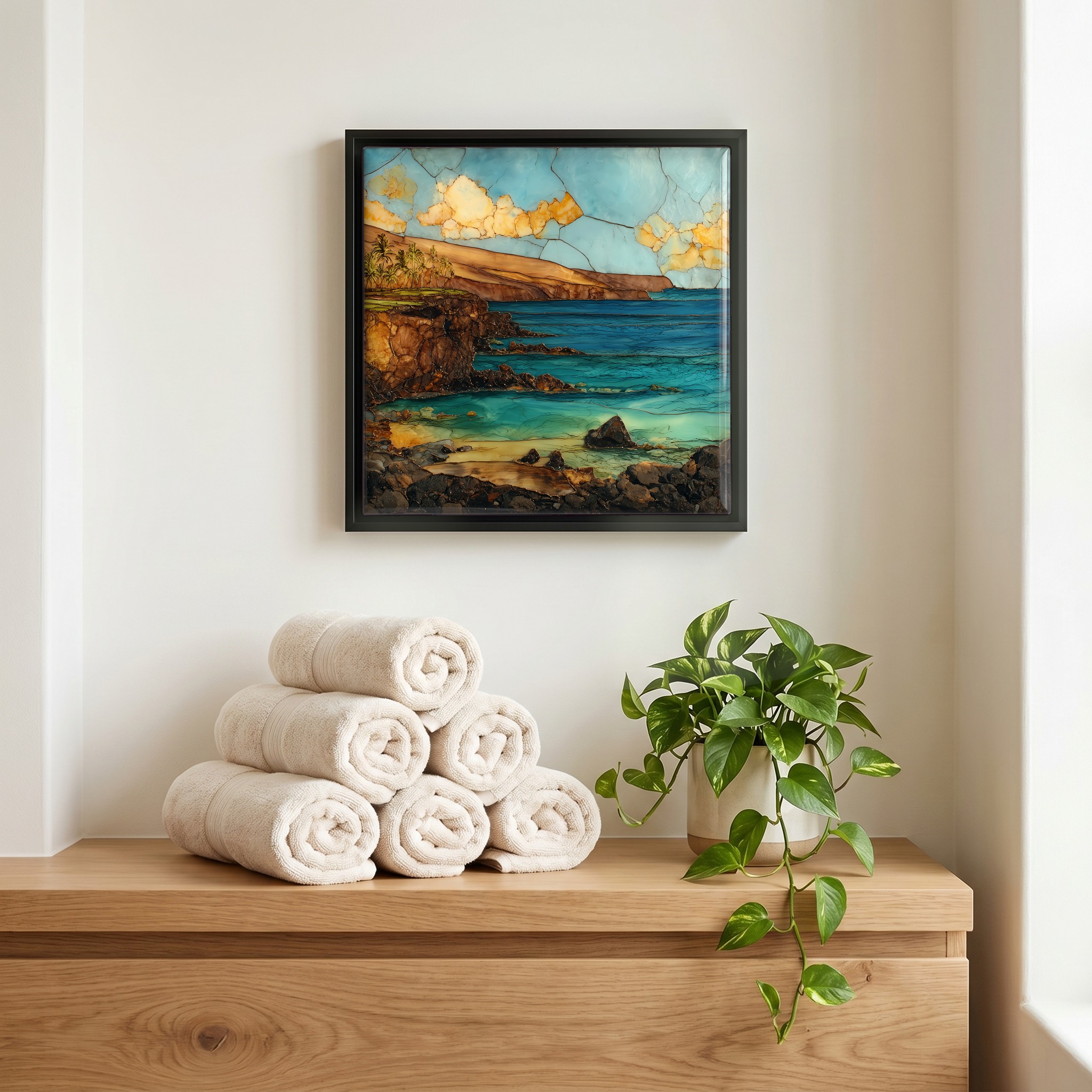
Manini Beach Big Island Ceramic Art Tile, on ceramic.
Each tile is finished by hand in our Knoxville studio. Artwork is slowly infused into the ceramic surface under high heat and pressure, and rests beneath a thin glossy finish. The colour lives in the surface, not on top of it.
Pick any four 4-inch tiles — National Parks you've been to, a Smokies set, the four seasons of one place. $ for a set of , cork-backed, ready to live on the table.
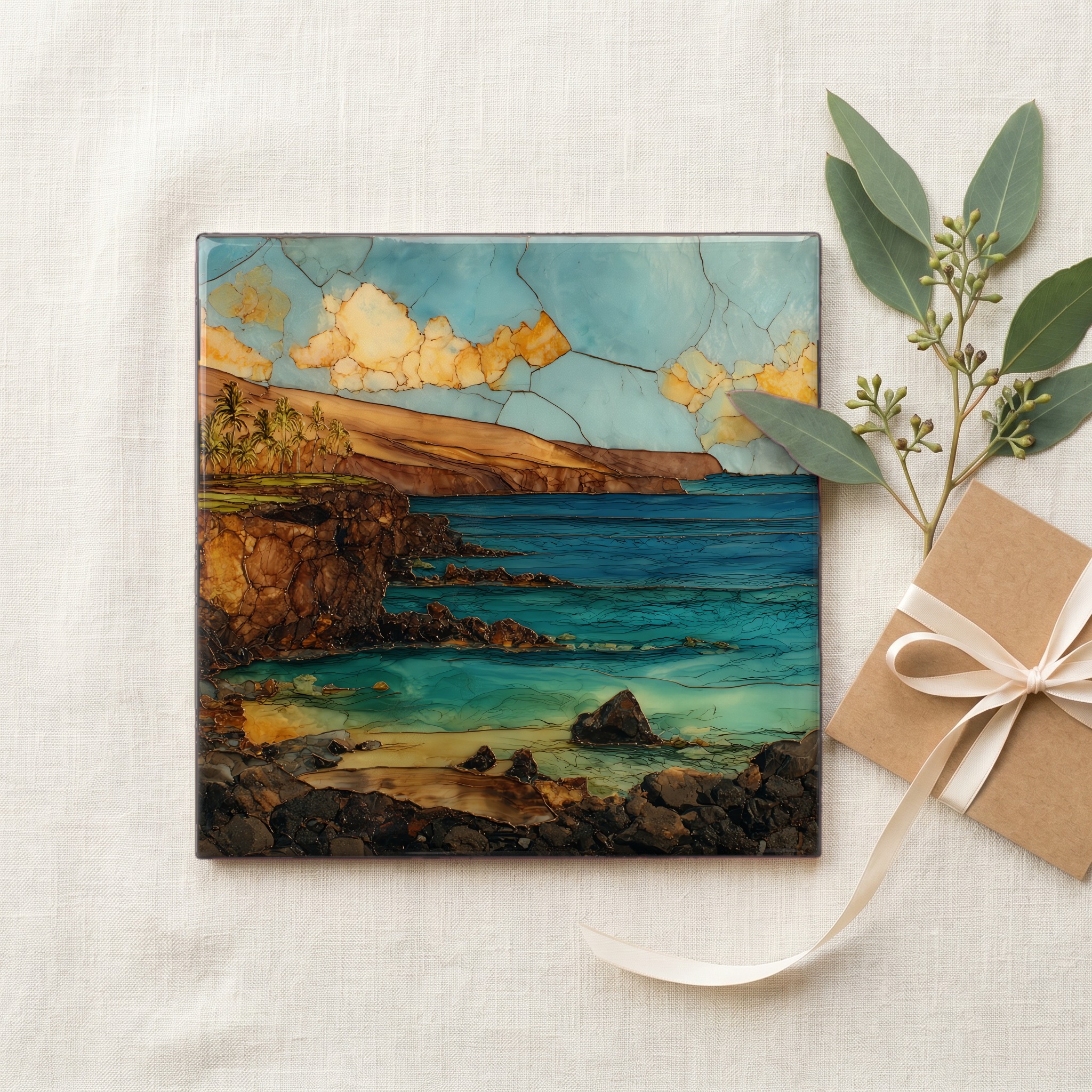
Each tile ships in a kraft box, tied with cream ribbon, with a handwritten note from the studio if you'd like to add one.
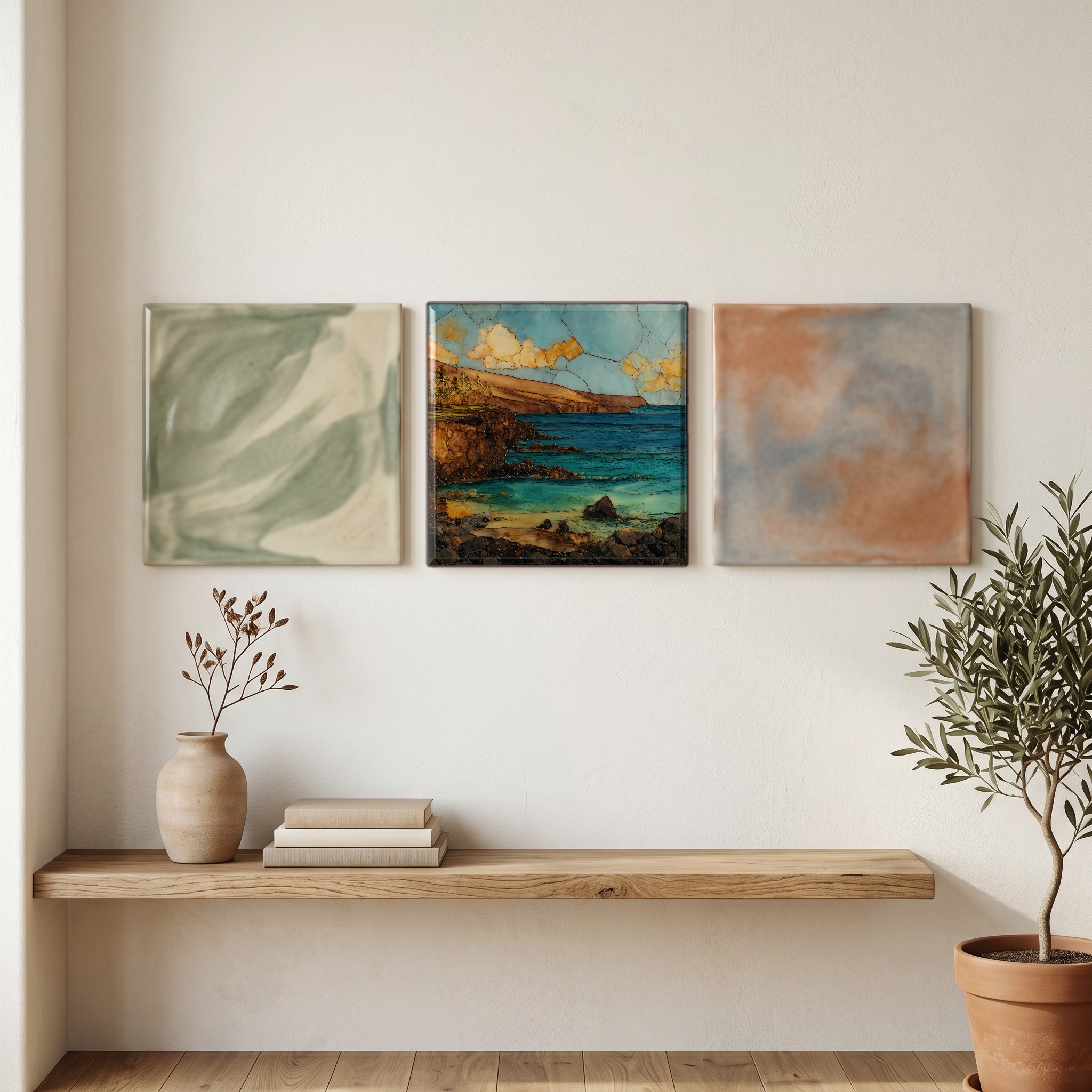
Three or five different vistas, hung together — a chapter of places you've been, or want to go.
The place, in three passes.
Manini Beach Park is a small county shoreline park on the south side of Kealakekua Bay, on the Big Island's Kona coast, about twelve miles south of Kailua-Kona. The park sits at the end of Manini Beach Road, off State Highway 160 in the village of Captain Cook. Across the bay, about a half mile to the north, the white obelisk of the Captain Cook Monument marks the spot where the British explorer was killed in February 1779. The shoreline here is lava rock and coral rubble, with one narrow sand channel that gives swimmers entry to the water. The adjacent Kealakekua Bay State Historical Park, just up the road at Nāpoʻopoʻo, holds Hikiau Heiau, an Ancient Hawaiian luakini temple.
The whole bay is a marine life conservation district, set aside by the State of Hawaiʻi in 1969 across 315 acres of water from the high-water mark to a line running from Cook Point on the north to Manini Beach Point on the south. Fishing is prohibited inside that line, and the reef has held its complexity because of it. Visibility from the sand channel runs clear on calm mornings; the right side of the channel reads as the better snorkel line. Spinner dolphins use Kealakekua as a resting bay, coming in after the night's hunt and circling the deeper water from roughly late morning into the early afternoon. Federal guidance asks swimmers and kayakers not to approach them during those hours.
The park sits at the end of a residential road; parking is limited to a dozen-odd cars, and a county sign caps the shoreline at fifty people. The regulars arrive at first light. There are grassy areas under shade trees, a few picnic tables, and a low retaining wall along the water; there are no restrooms and no lifeguard. The entry channel through the lava is narrow and slick when surf is up. Two Step at Hōnaunau, about seven miles south, is the more crowded snorkel pull-off; the Captain Cook Monument trail drops roughly thirteen hundred feet down the pali on the bay's north side and takes most of a morning to climb back out. Weekends and holidays fill the lot before nine.