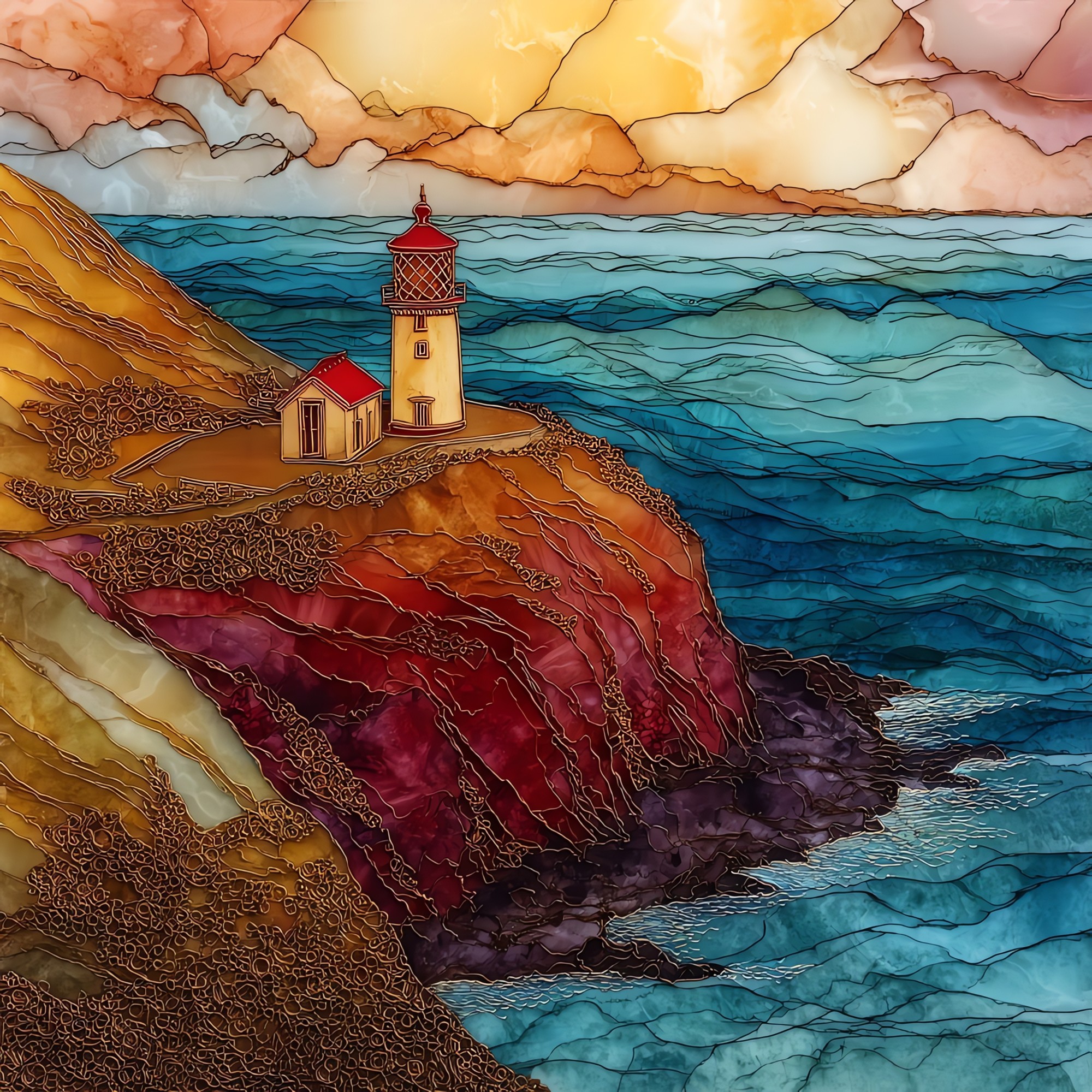
Makapuu Lighthouse Oahu Ceramic Art Tile
— — a white lantern at the edge of the wind.
Not only on a wall.
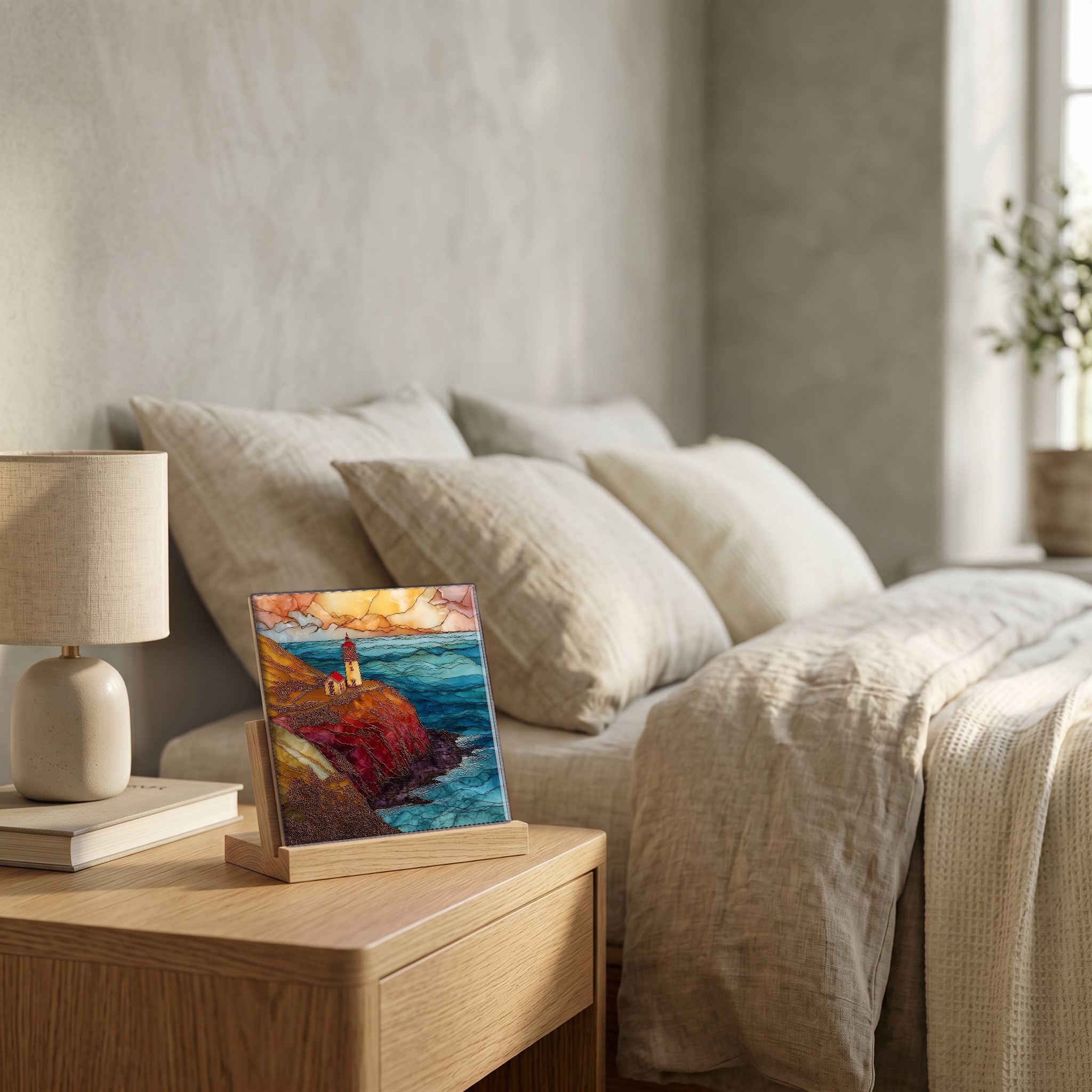
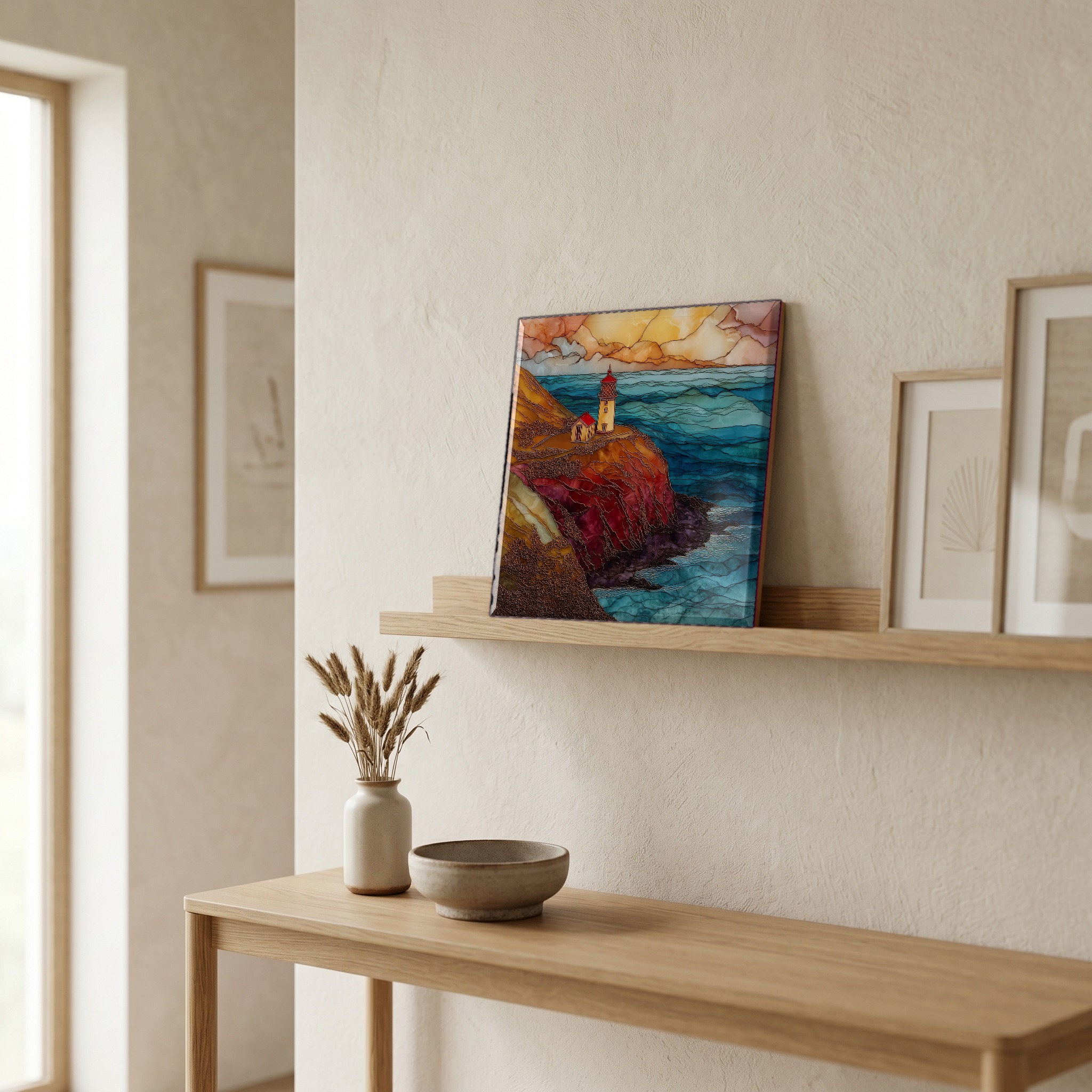
“The eastern tip of Oahu, where the paved trail climbs the Ka Iwi cliffs and the wind comes hard off the Kaiwi Channel. The lighthouse sits on the headland above the sea — small, white, fenced — with Molokai across the water and Manana ("Rabbit") Island below. Humpbacks pass through here from late December into April; the overlook benches are full on calm mornings. The light has been on since 1909. People come up early, walk slowly, and leave without saying much.
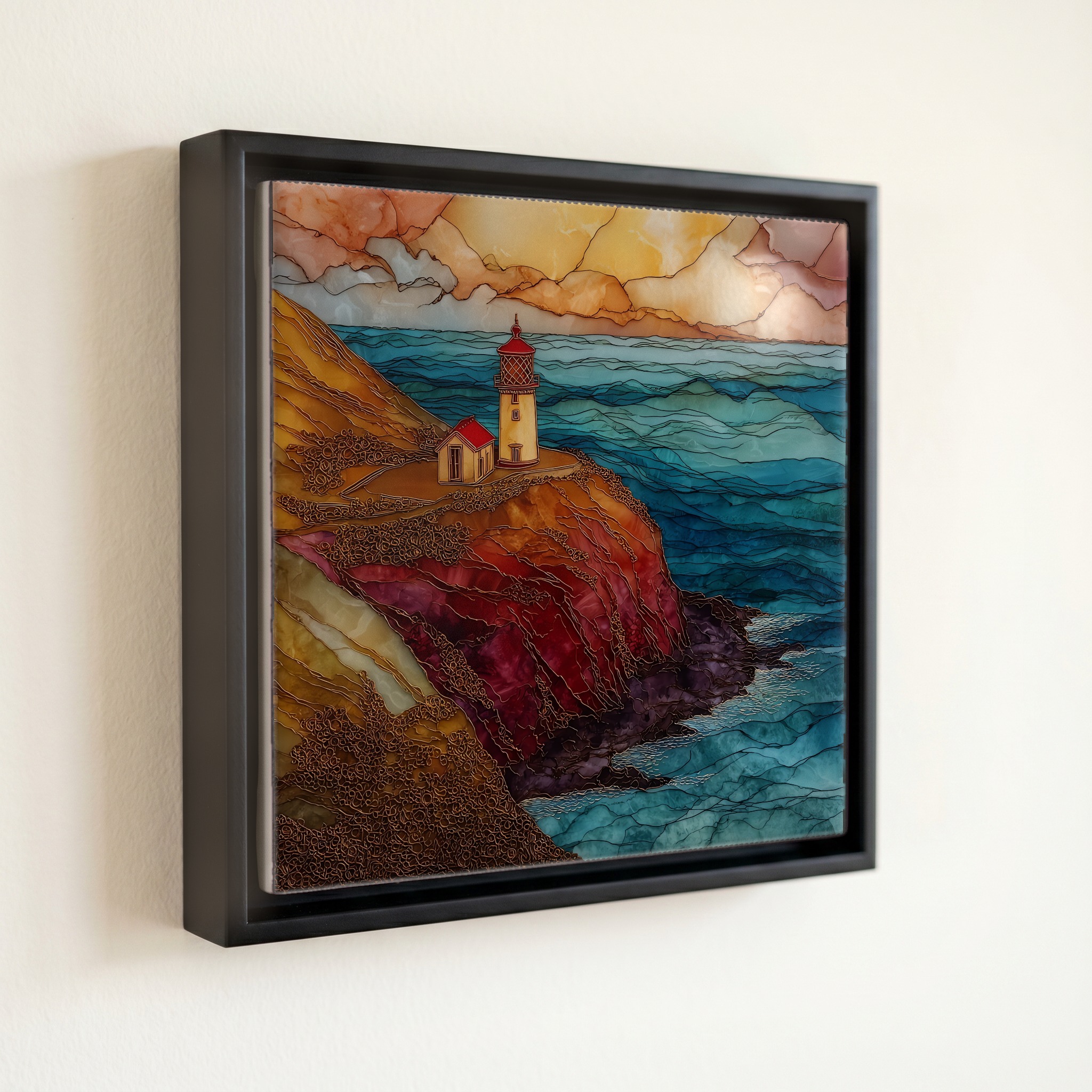
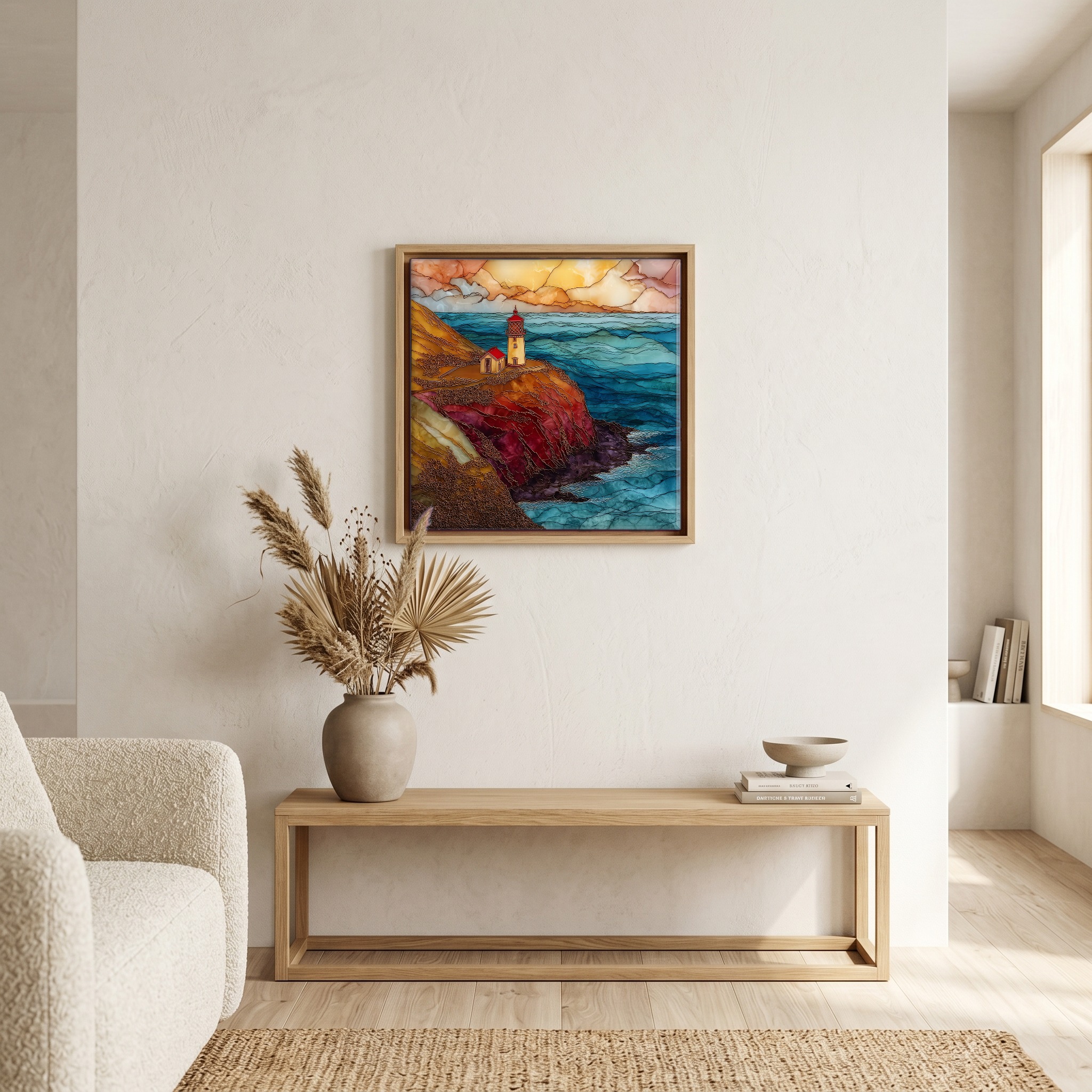
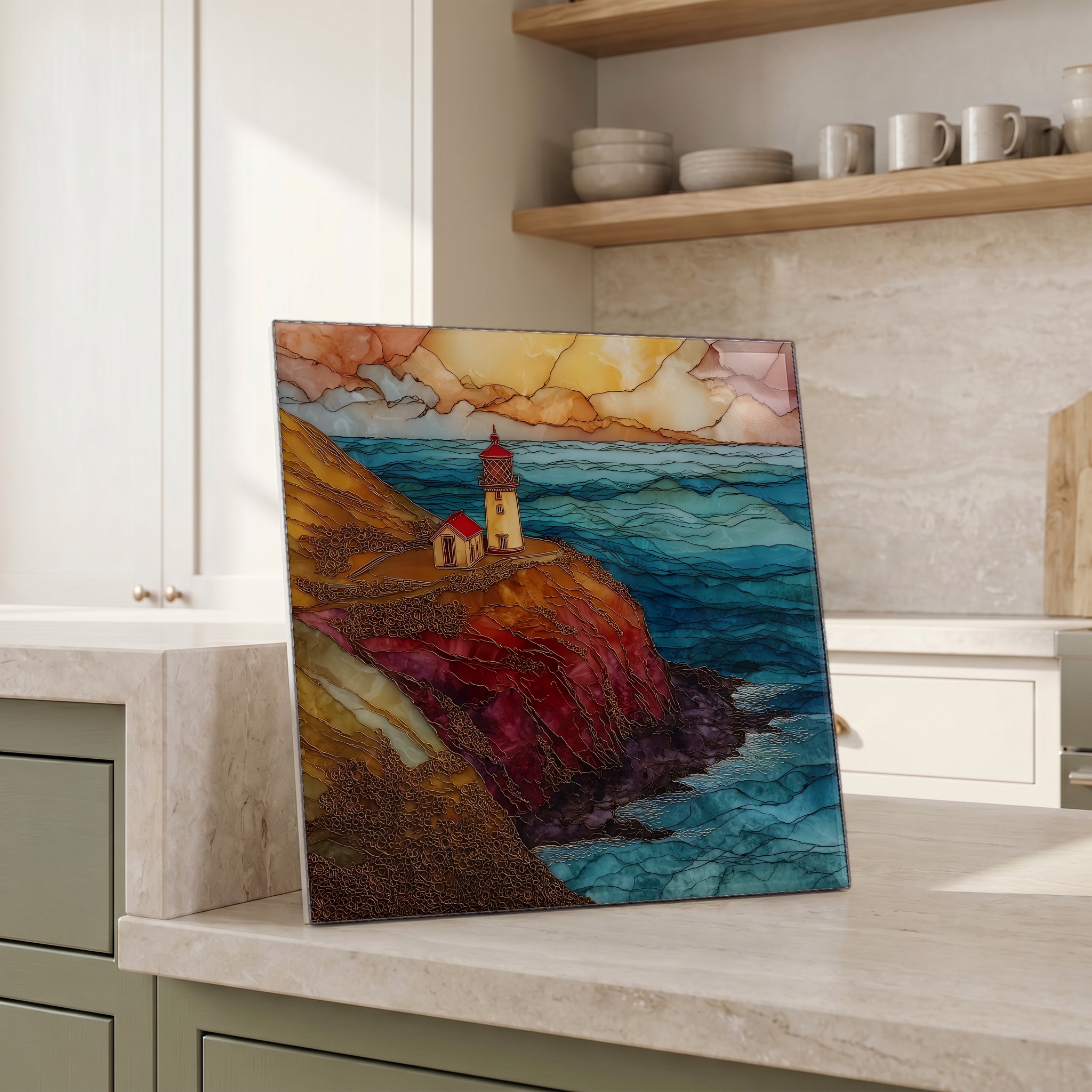
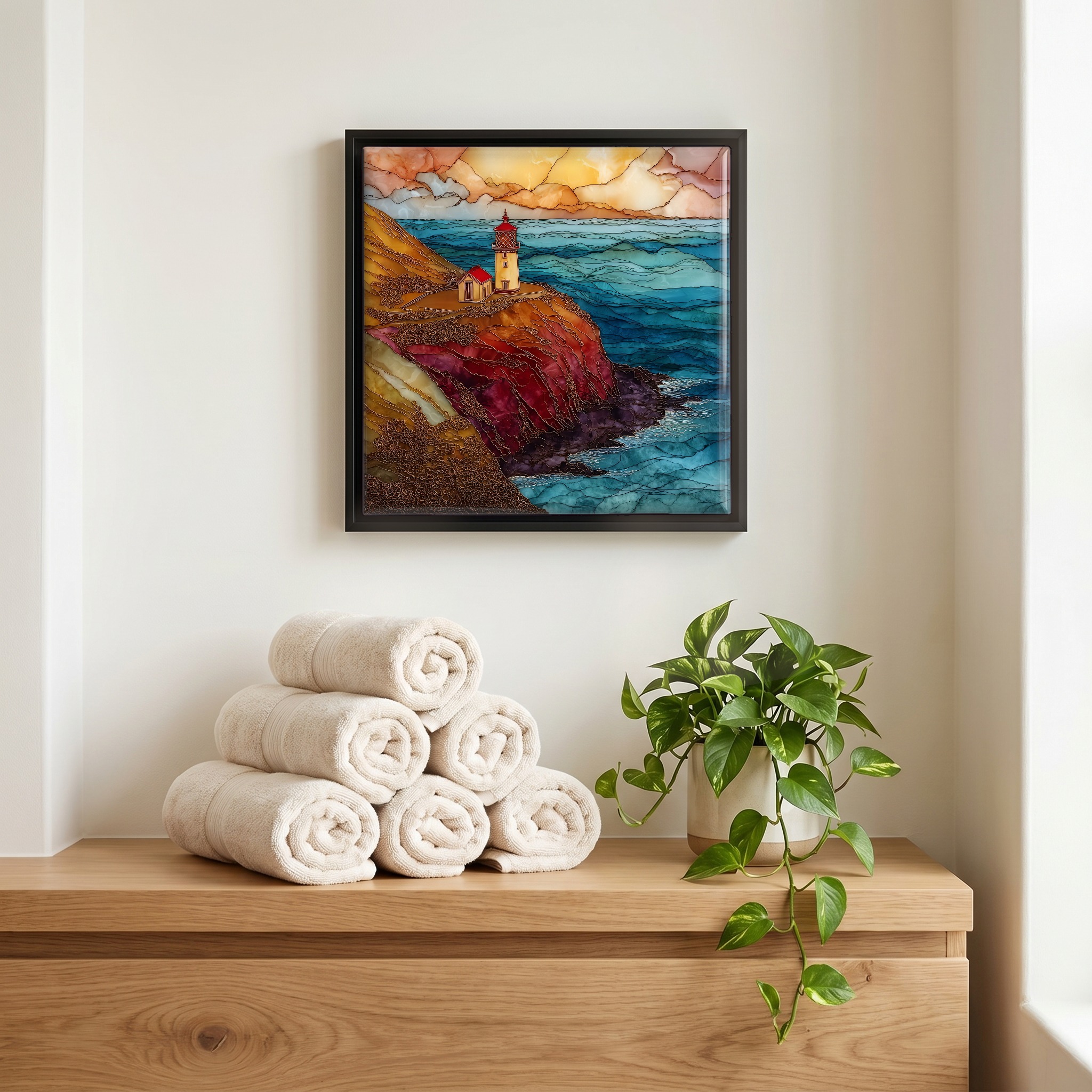
Makapuu Lighthouse Oahu Ceramic Art Tile, on ceramic.
Each tile is finished by hand in our Knoxville studio. Artwork is slowly infused into the ceramic surface under high heat and pressure, and rests beneath a thin glossy finish. The colour lives in the surface, not on top of it.
Pick any four 4-inch tiles — National Parks you've been to, a Smokies set, the four seasons of one place. $ for a set of , cork-backed, ready to live on the table.
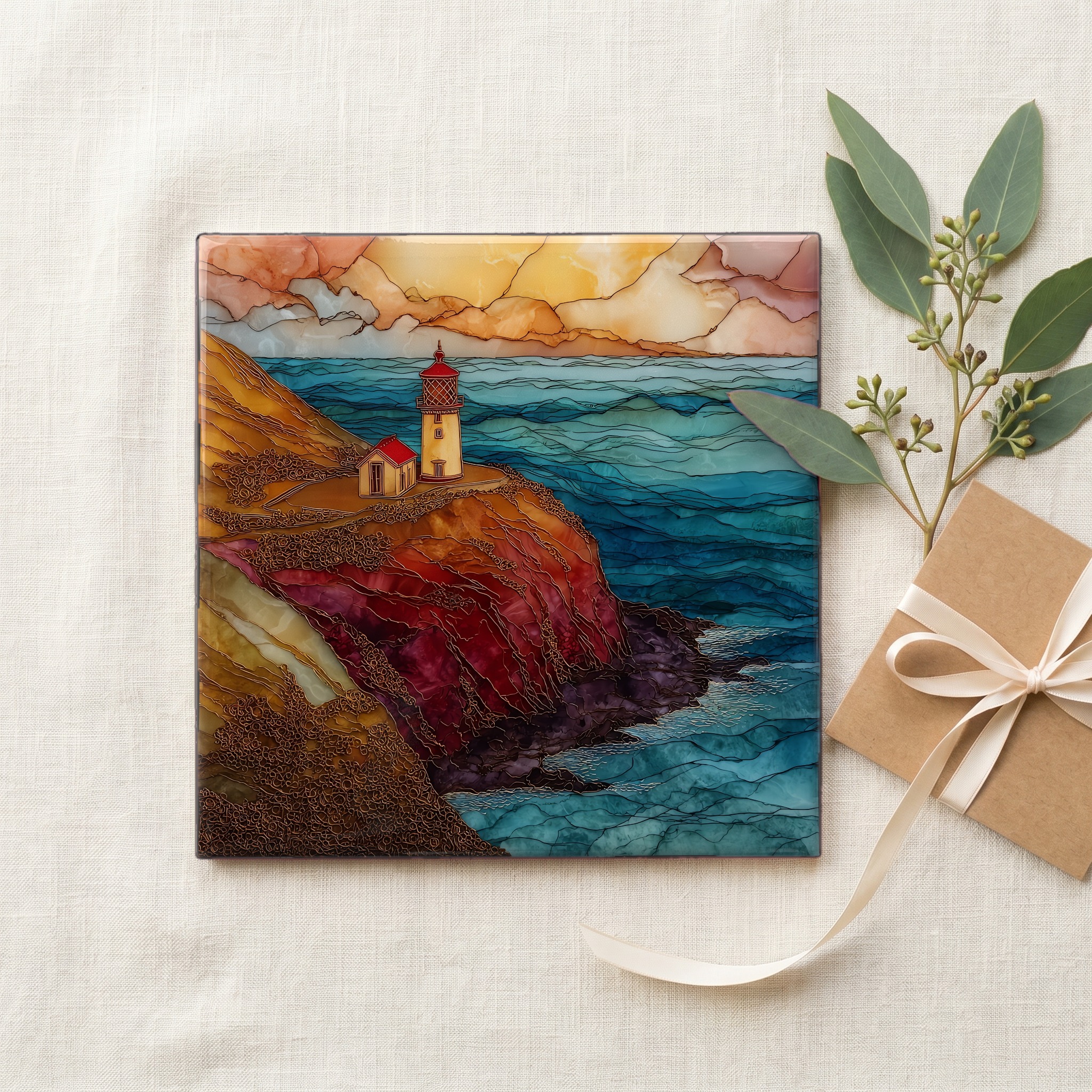
Each tile ships in a kraft box, tied with cream ribbon, with a handwritten note from the studio if you'd like to add one.
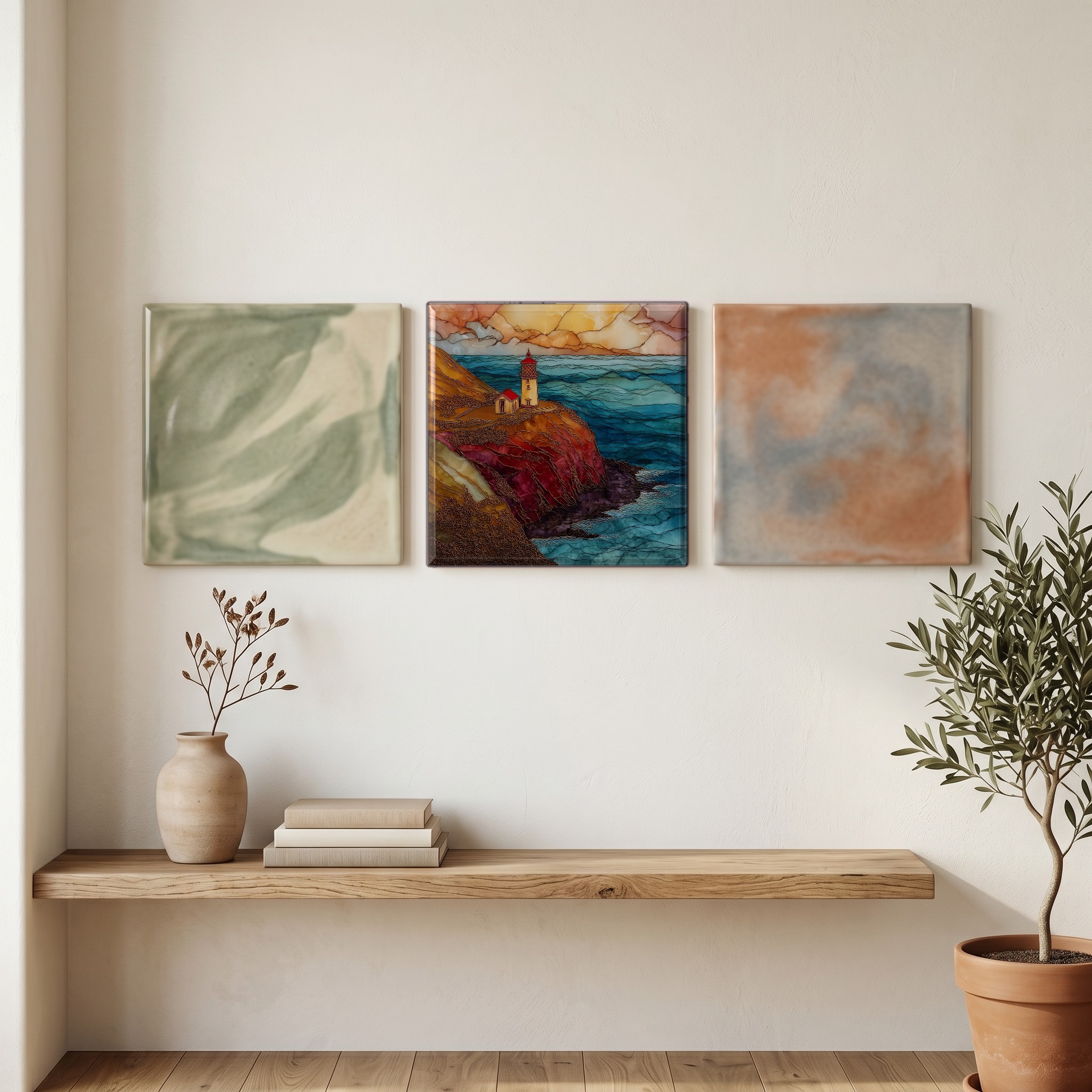
Three or five different vistas, hung together — a chapter of places you've been, or want to go.
The place, in three passes.
Makapu'u Point sits at the easternmost tip of Oahu, where the Koolau Range falls into the Pacific along the Ka Iwi coast. The lookout is reached by a 2-mile paved round-trip trail that climbs roughly 500 feet from a parking lot off Kalanianaole Highway, about 17 miles east of Waikiki. The trail and surrounding cliffs are part of the Ka Iwi State Scenic Shoreline, protected from development through a long community land campaign in the 1980s and early 1990s. Across the Kaiwi Channel, Molokai shows on clear mornings; just offshore, Manana ("Rabbit") Island and Kaohikaipu Island form a state seabird sanctuary. The light station above the trail is U.S. Coast Guard property and still in active service.
The lantern holds a hyperradiant Fresnel lens — one of the largest classical lighthouse lenses ever installed in the United States. Manufactured in Paris by Barbier, Bénard et Turenne and first lit on October 1, 1909, it was originally powered by a kerosene incandescent vapor lamp and is now driven by an electric source. The focal plane sits about 420 feet above the sea, carrying the beam roughly 28 nautical miles offshore in clear conditions. The United States Coast Guard automated the station in 1974 but kept the original lens in service — a working antique that has guided ships approaching Honolulu Harbor for more than a century.
The trailhead is at a paved lot on Kalanianaole Highway, roughly 17 miles east of Waikiki and just past Sea Life Park. The 2-mile round-trip trail is paved end-to-end and welcomes strollers; benches sit at the half-mile and one-mile marks. From the upper lookout the lighthouse is visible below, behind a locked fence — the station itself is active U.S. Coast Guard property and closed to the public. North Pacific humpback whales pass through the Kaiwi Channel from late December into April, with peak sightings in February and March. Free entry, no permit required, no shade along the climb — bring water.