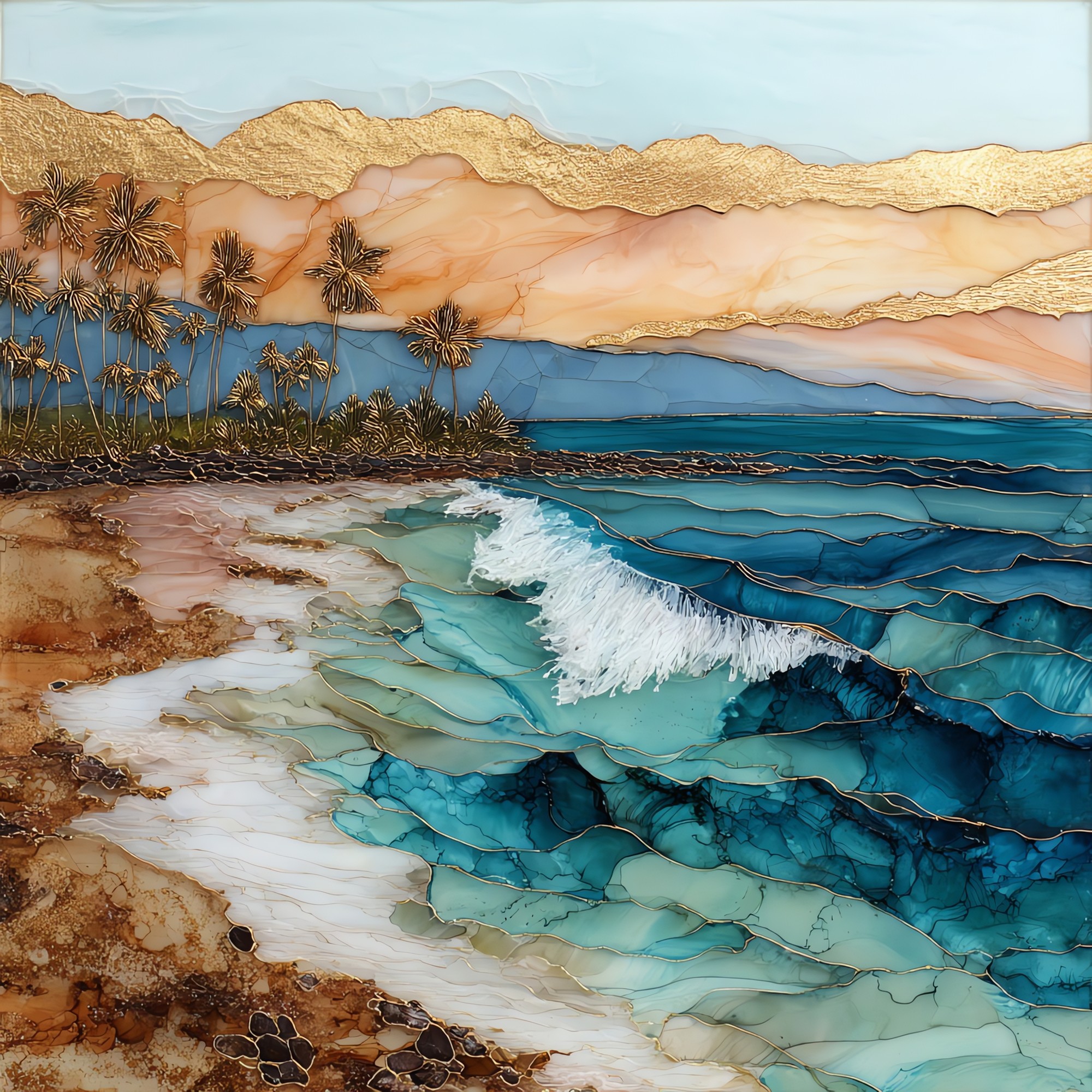
Magic Sands Big Island Ceramic Art Tile
— a beach the ocean keeps borrowing.
Not only on a wall.
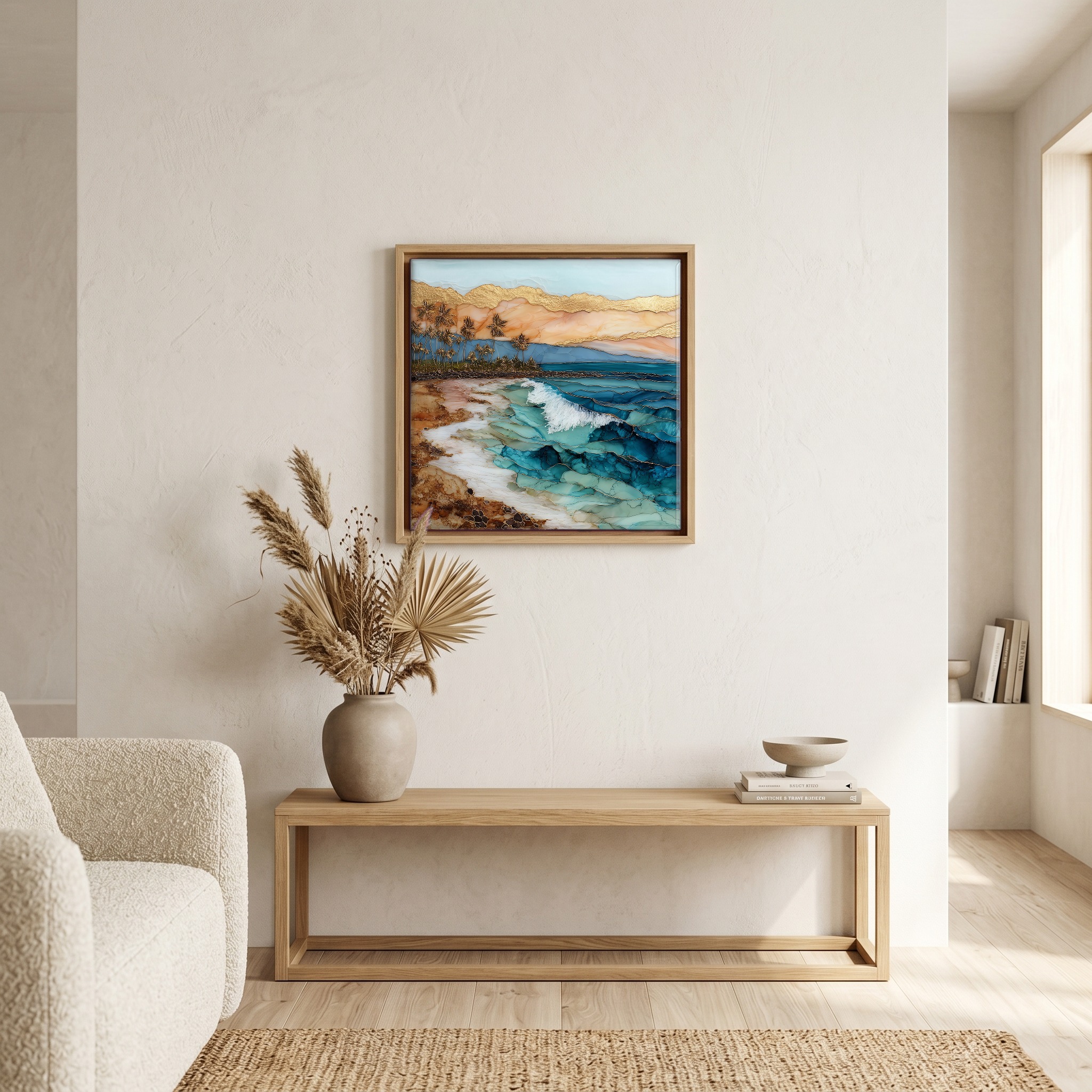
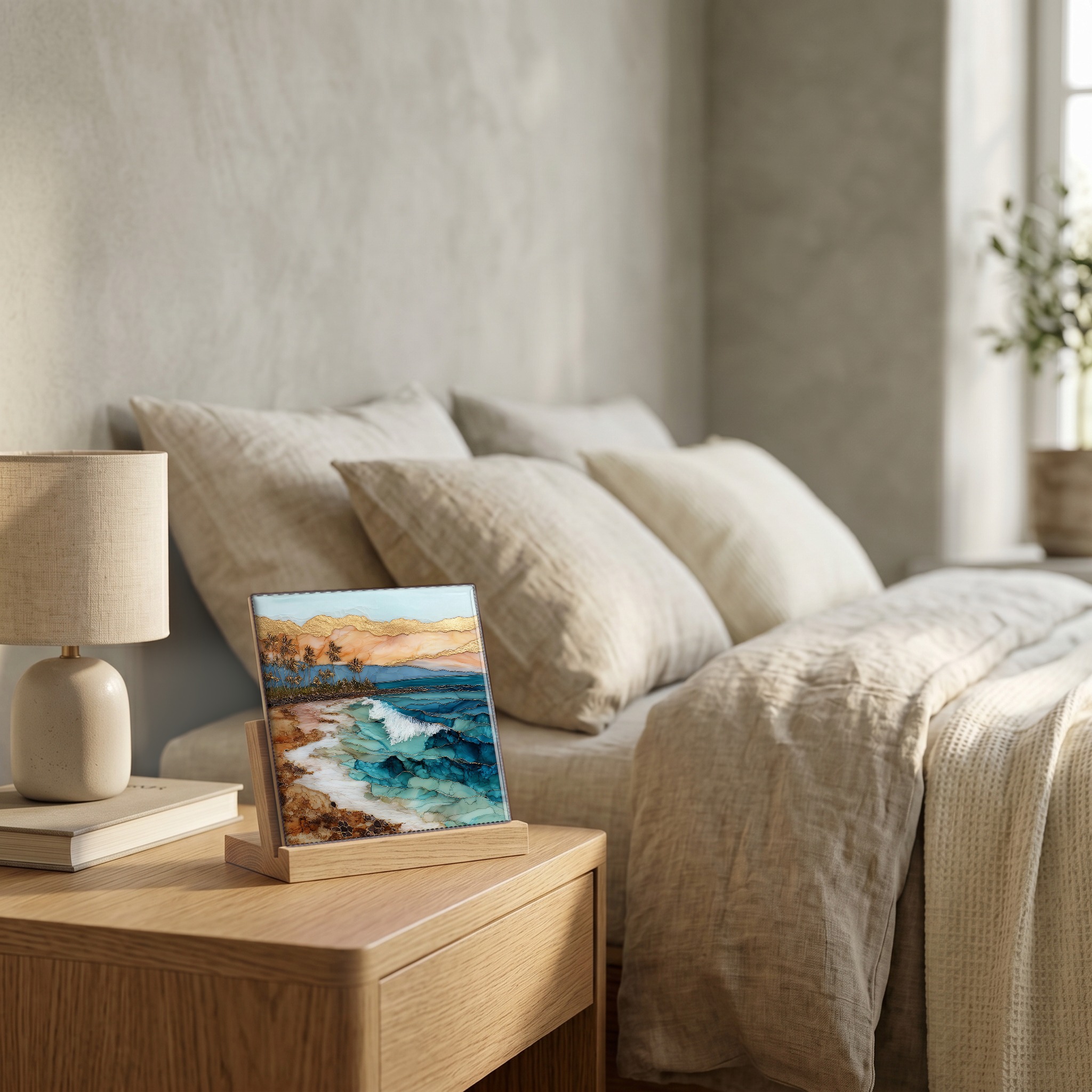
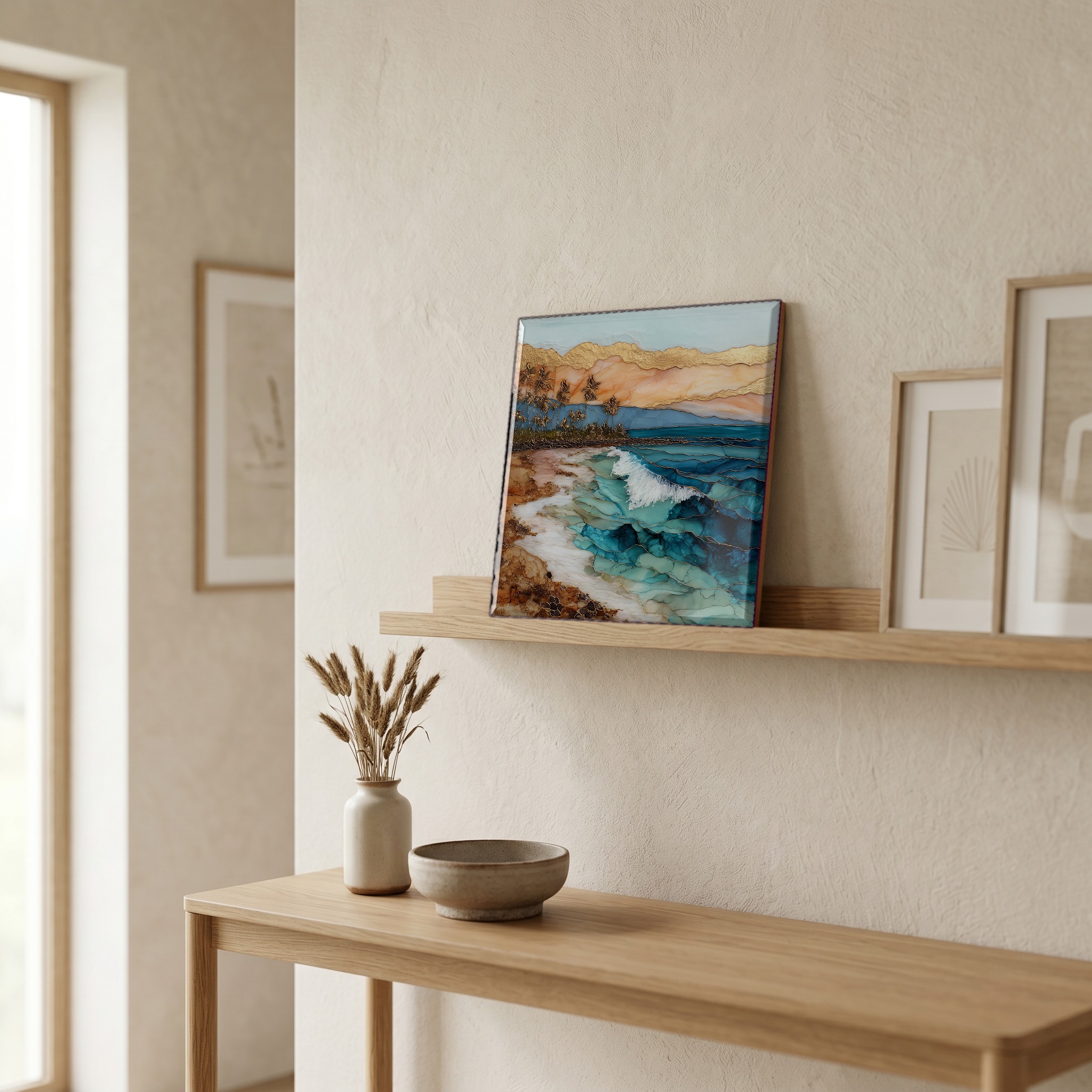
“A pocket of white sand on the western shore of Hawai'i Island, set into the lava rock south of Kailua-Kona. The Hawaiian name is La'aloa, meaning "very sacred." Locals also call it White Sands, or Disappearing Sands, because the winter swell carries the sand off the rock and the summer returns it. Bodyboarders ride the shorebreak. A pavilion, a lifeguard tower, a few palms along Ali'i Drive. The beach is rarely empty and almost never the same size twice.
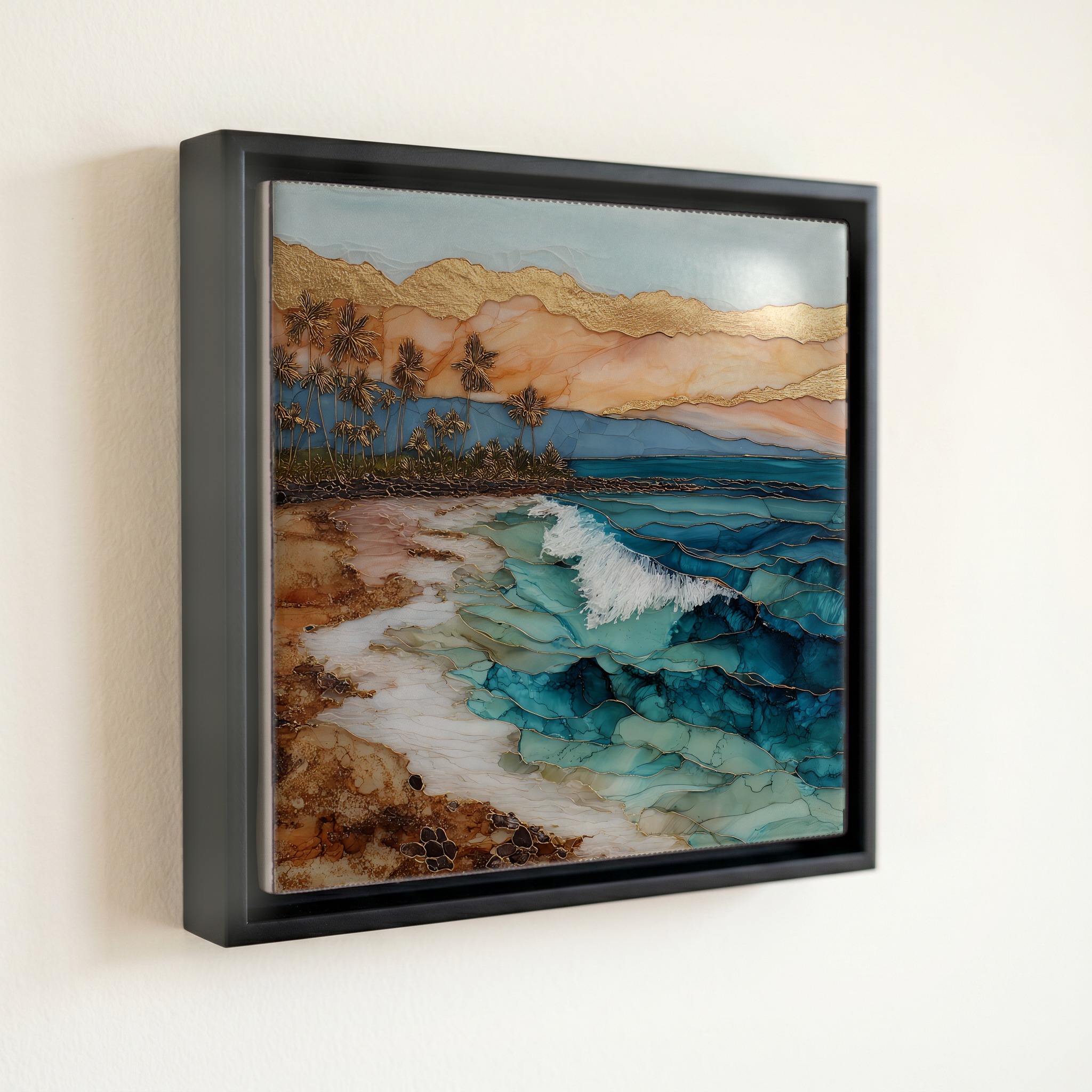
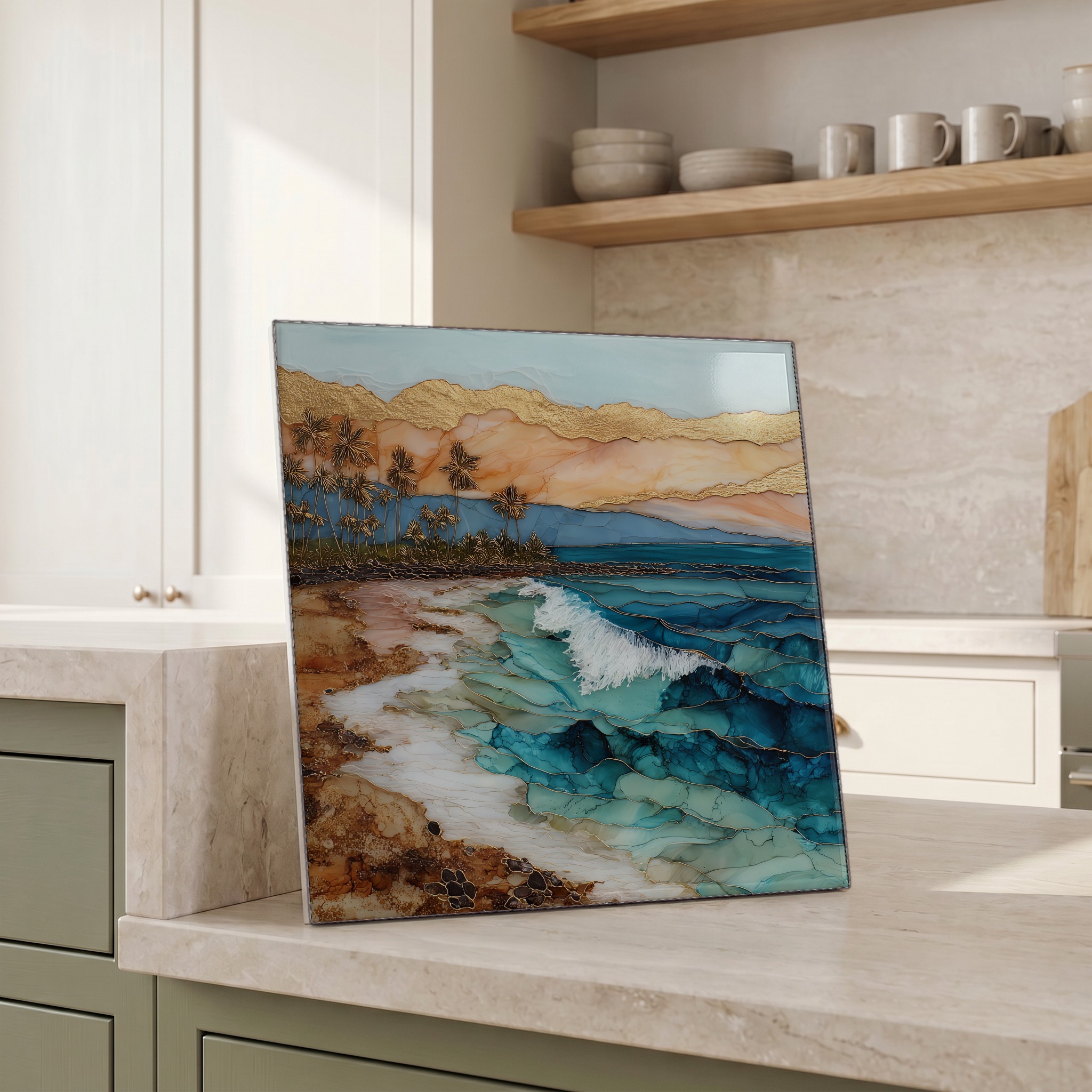
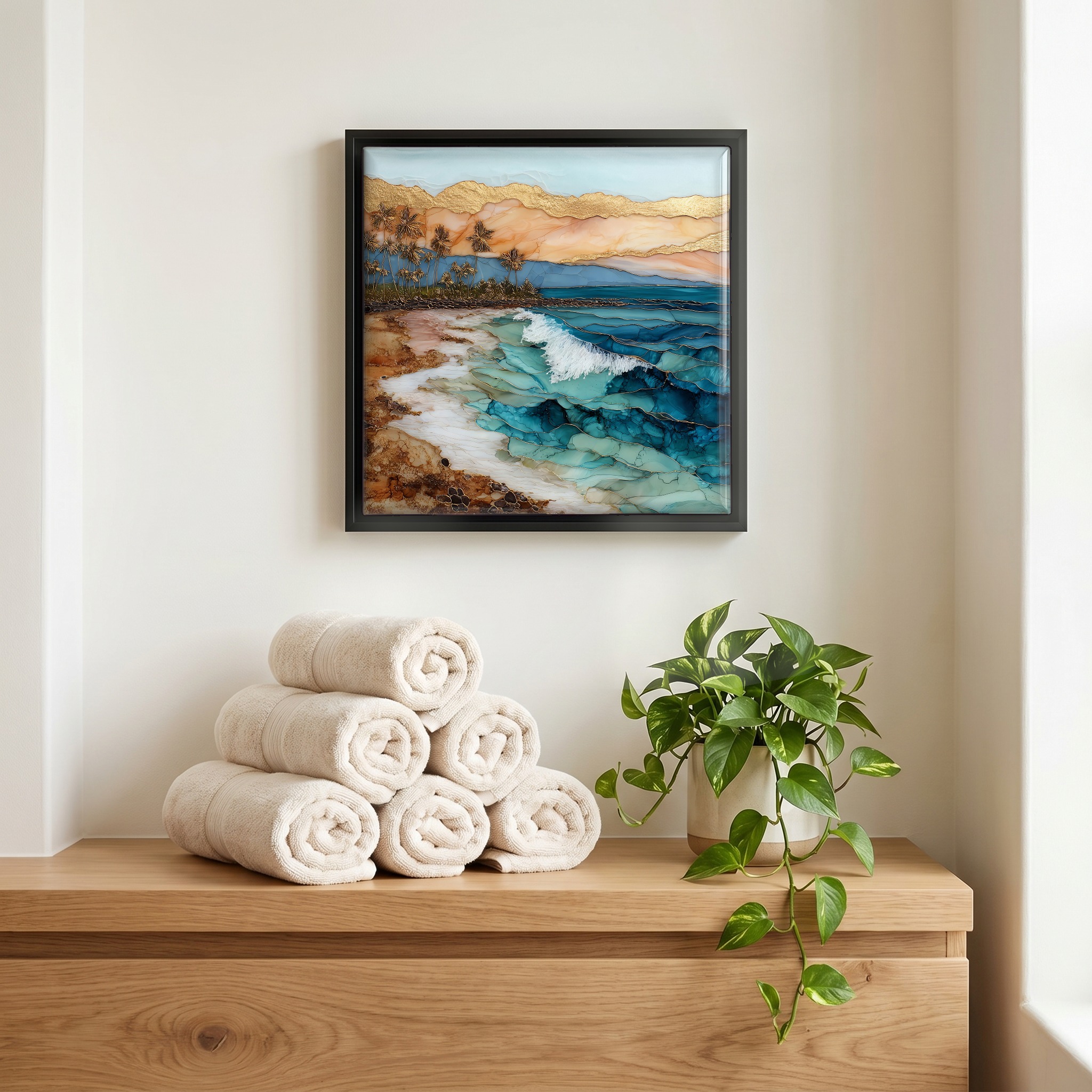
Magic Sands Big Island Ceramic Art Tile, on ceramic.
Each tile is finished by hand in our Knoxville studio. Artwork is slowly infused into the ceramic surface under high heat and pressure, and rests beneath a thin glossy finish. The colour lives in the surface, not on top of it.
Pick any four 4-inch tiles — National Parks you've been to, a Smokies set, the four seasons of one place. $ for a set of , cork-backed, ready to live on the table.
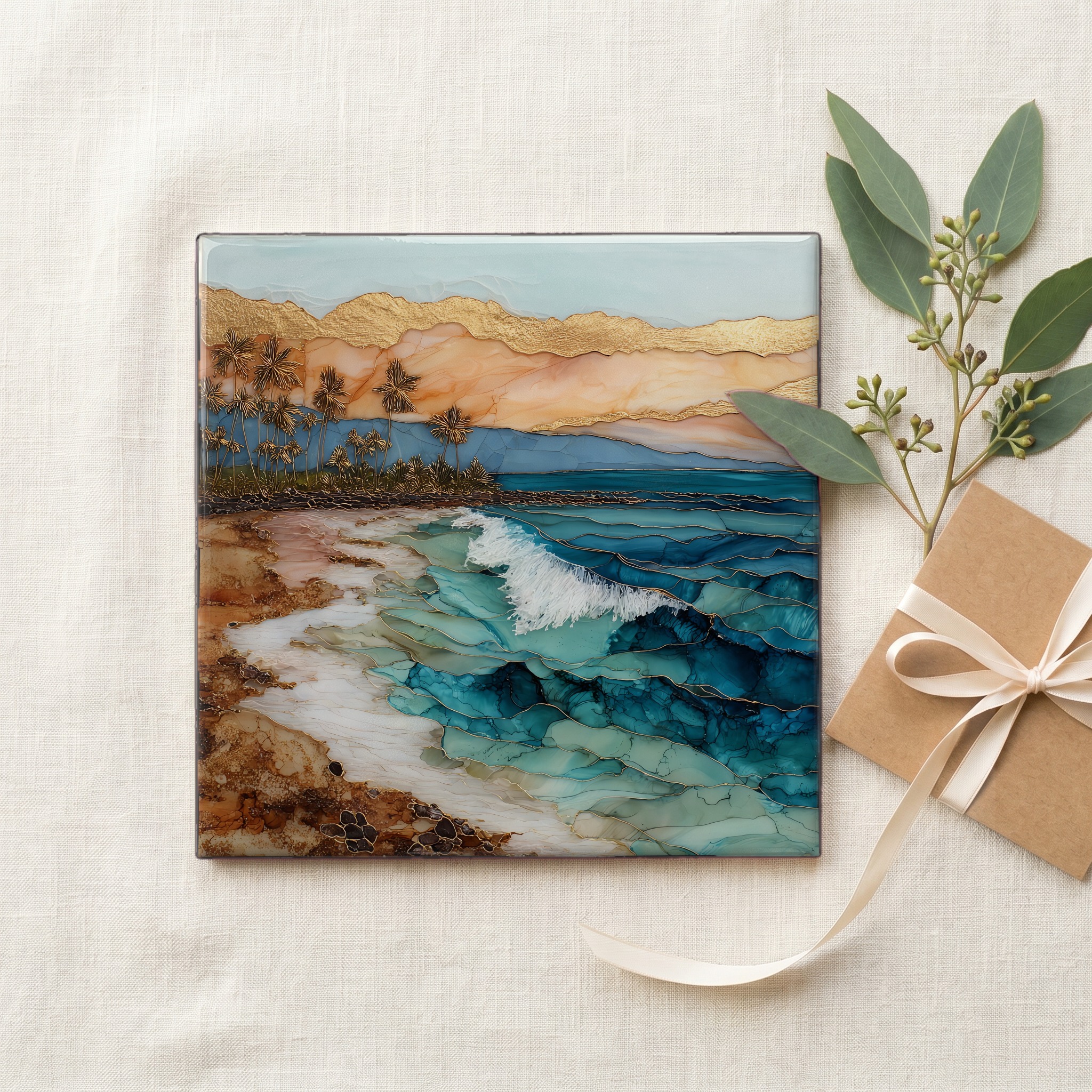
Each tile ships in a kraft box, tied with cream ribbon, with a handwritten note from the studio if you'd like to add one.
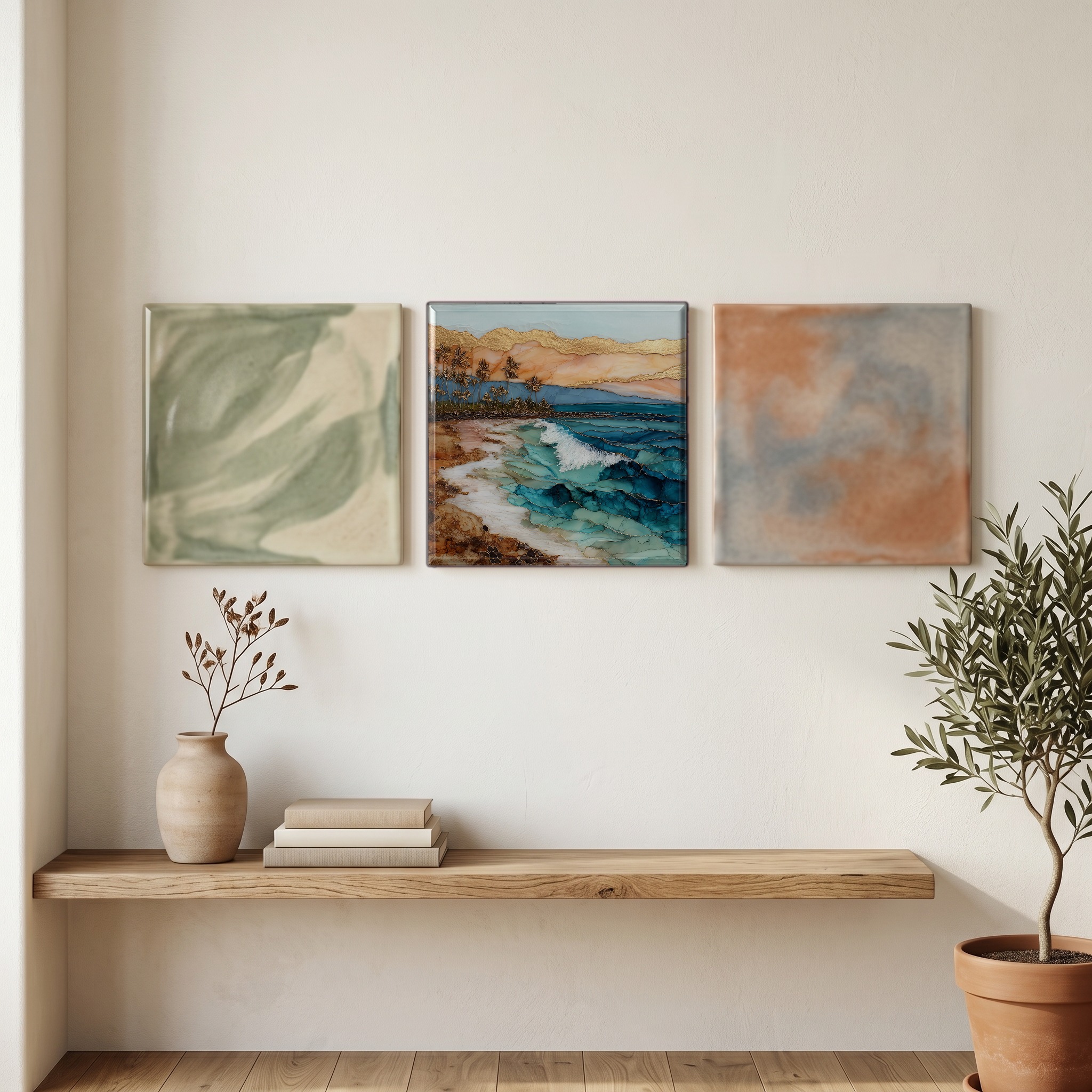
Three or five different vistas, hung together — a chapter of places you've been, or want to go.
The place, in three passes.
La'aloa Beach Park sits along Ali'i Drive about four miles south of central Kailua-Kona, on the leeward Kona coast of Hawai'i Island. The Hawaiian name La'aloa means "very sacred." The beach occupies a small cove cut into the basalt that forms most of this shoreline, with Keauhou about a mile further south and the South Kona district beyond. The park is operated by the County of Hawai'i and includes a lifeguard tower, restrooms, outdoor showers, a covered pavilion, and limited roadside parking. The shoreline lies on the lower slopes of Hualālai, the 8,271-foot volcano above Kailua-Kona, whose last eruption was in 1801.
The shorebreak at La'aloa is the reason most people come and the reason locals know it as Disappearing Sands. The Kona coast lies in the lee of Mauna Loa and Hualālai and is sheltered from the trade-wind swell that pounds the windward side of the island. What it does get is the long-period north and northwest groundswell of the winter months, which strikes the beach almost at right angles and pulls the surface sand off the underlying lava platform, sometimes overnight. Bodyboarders and skilled body-surfers ride the close-out break that follows. The County keeps a lifeguard tower posted every day because the shorebreak has injured swimmers caught by the same wave that took the sand.
The sand is reliably present from late spring through early autumn, when the swell direction is mostly southerly and gentle. Beginning in November and continuing through March, the dominant north-Pacific groundswell can strip the cove down to bare lava in a single tide cycle, and it sometimes takes weeks for the next calmer interval to return the sand. Surface water stays between roughly 75 and 80 degrees Fahrenheit, warm by mainland standards but cool against the Kona sun. Mornings are the calmest hours; the afternoon sea breeze builds steadily after about eleven. The closest open-ocean swell data come from NOAA buoy 51002, anchored offshore southwest of the Big Island.