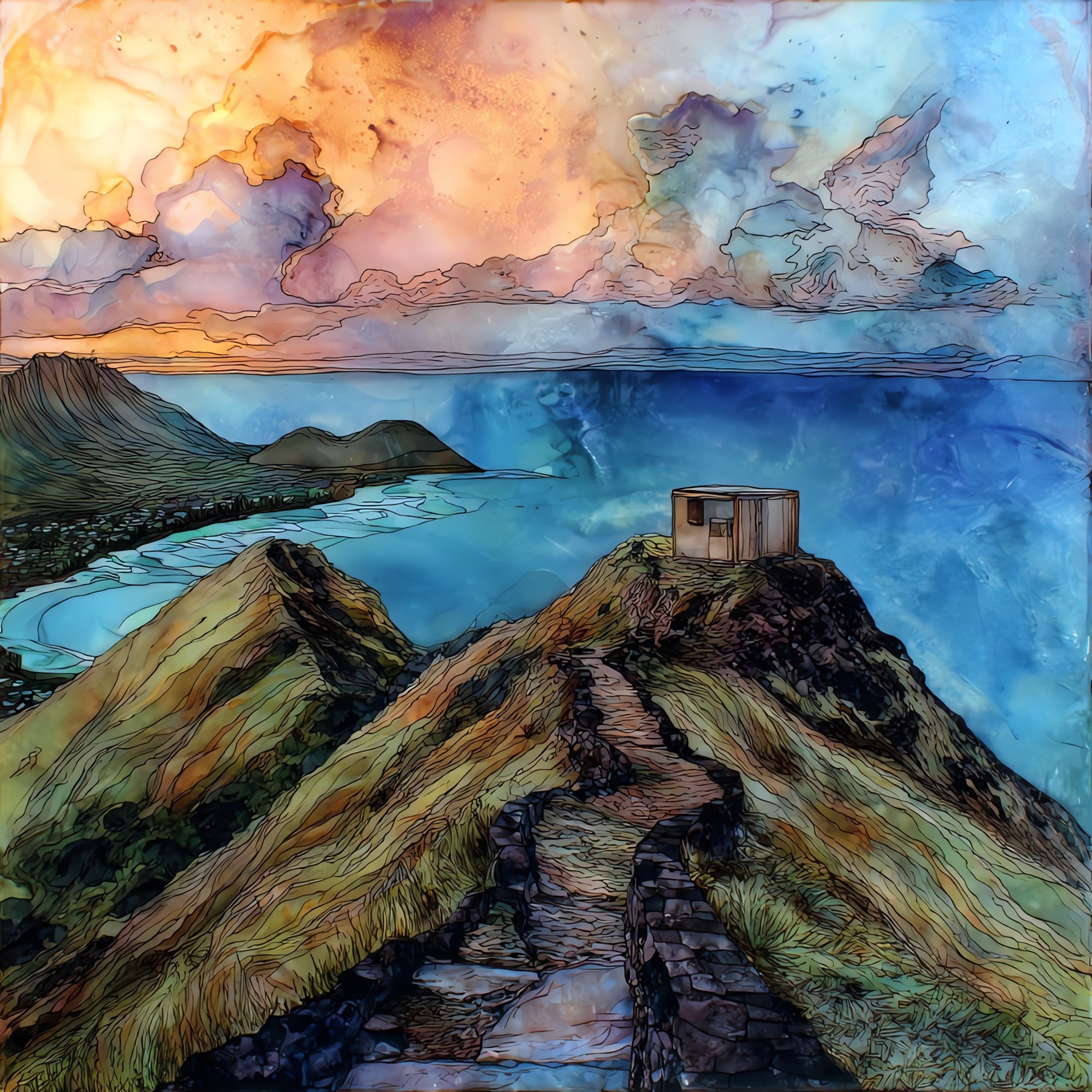
Lanikai Pillbox Sunrise Oahu Ceramic Art Tile
— — the first light over the Mokulua Islands.
Not only on a wall.
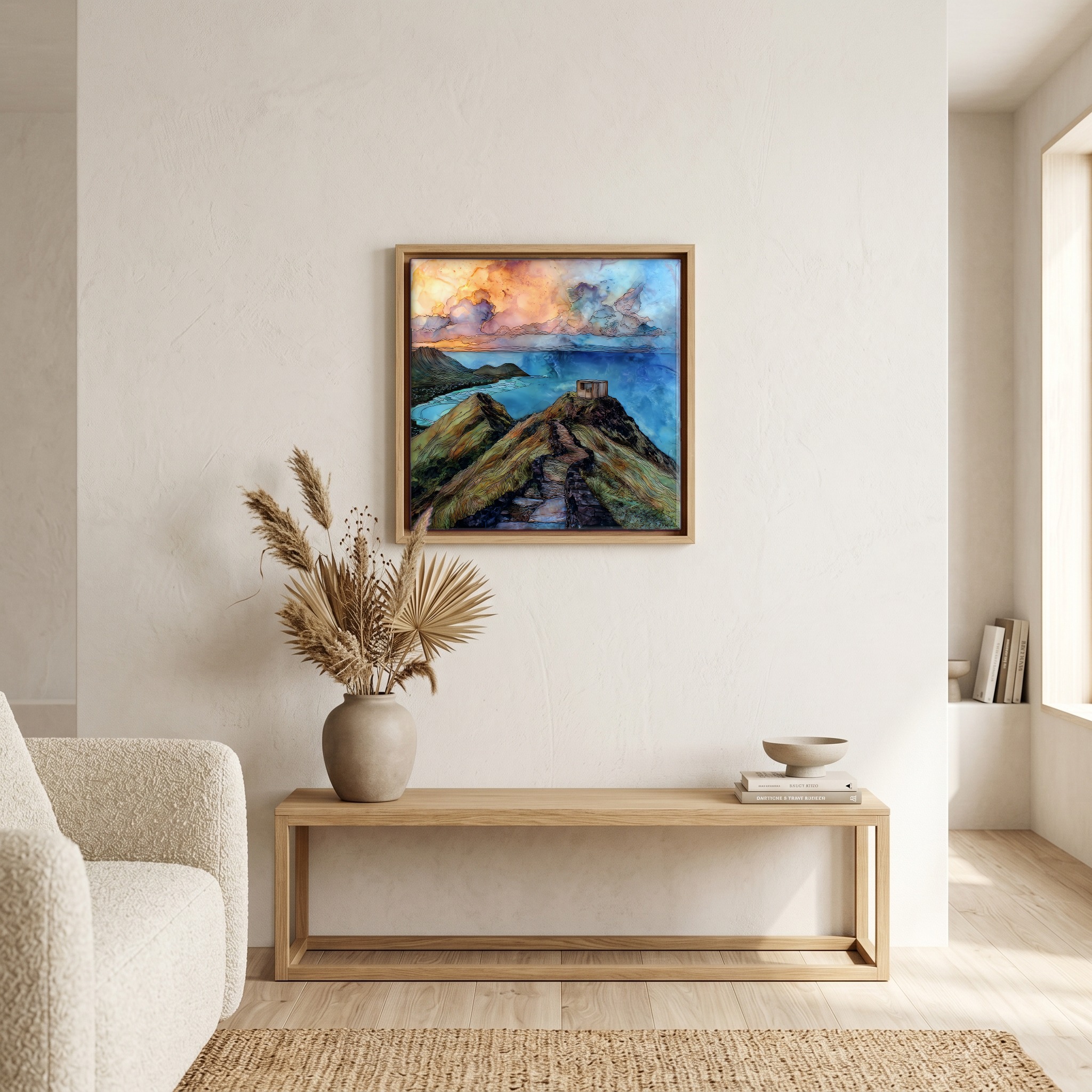
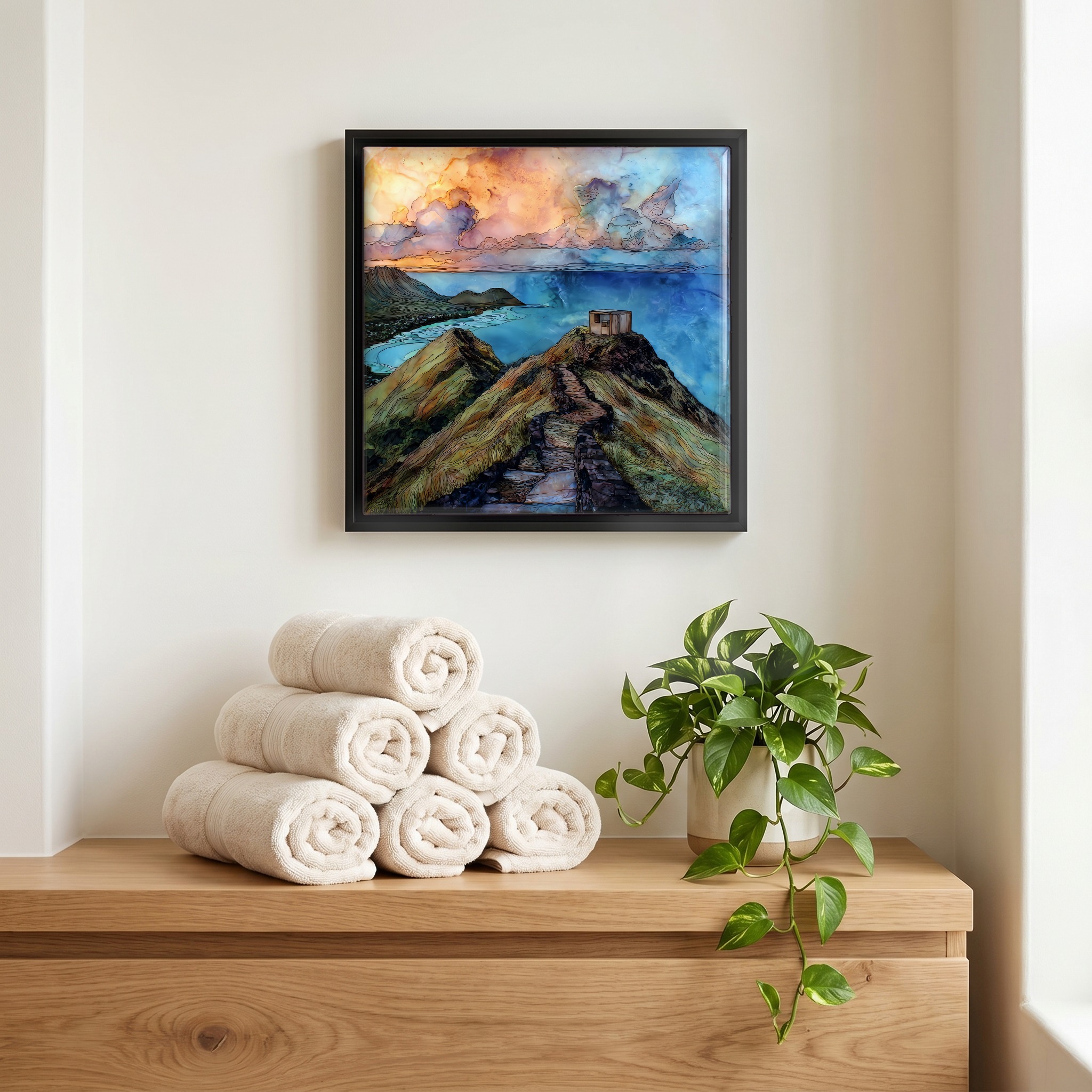
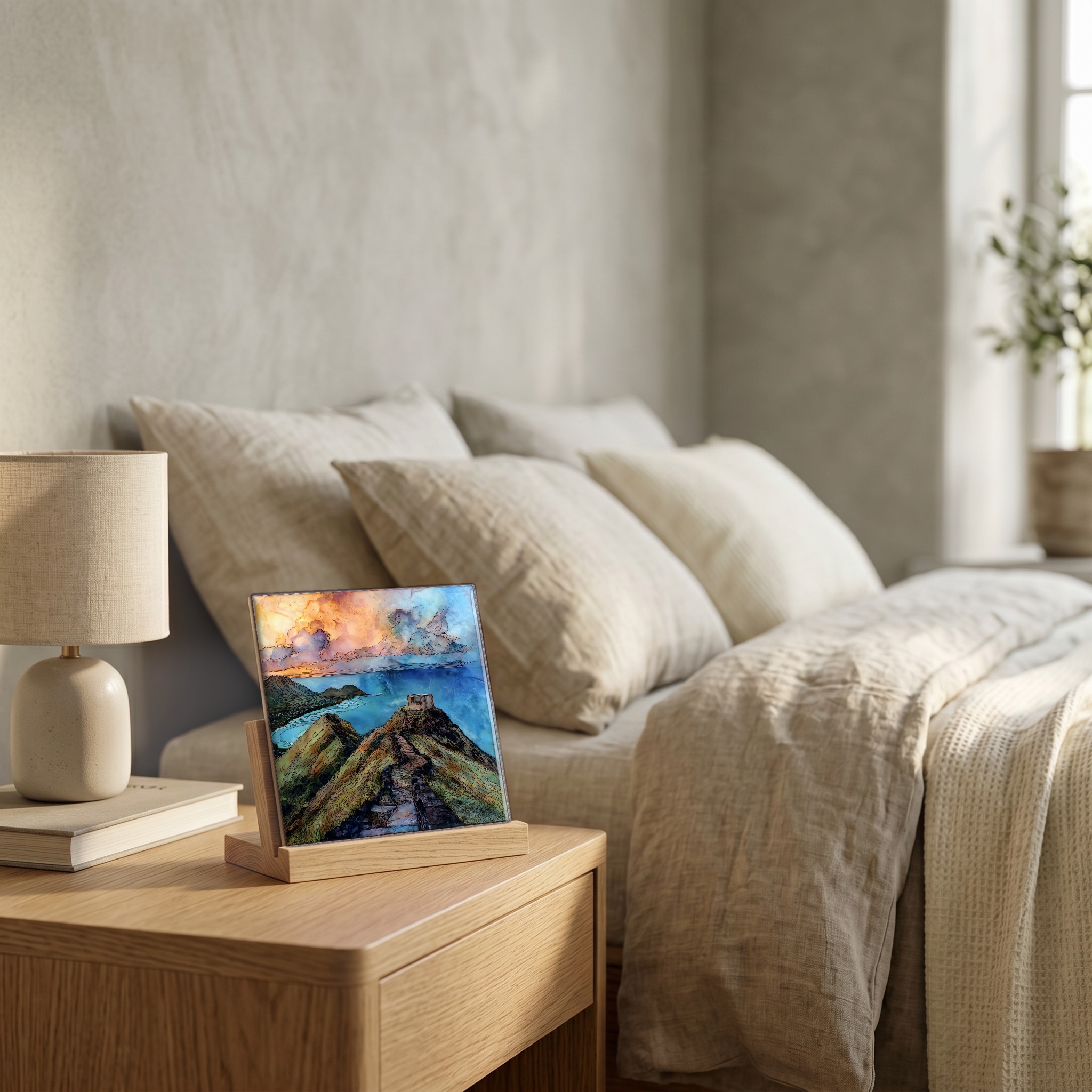
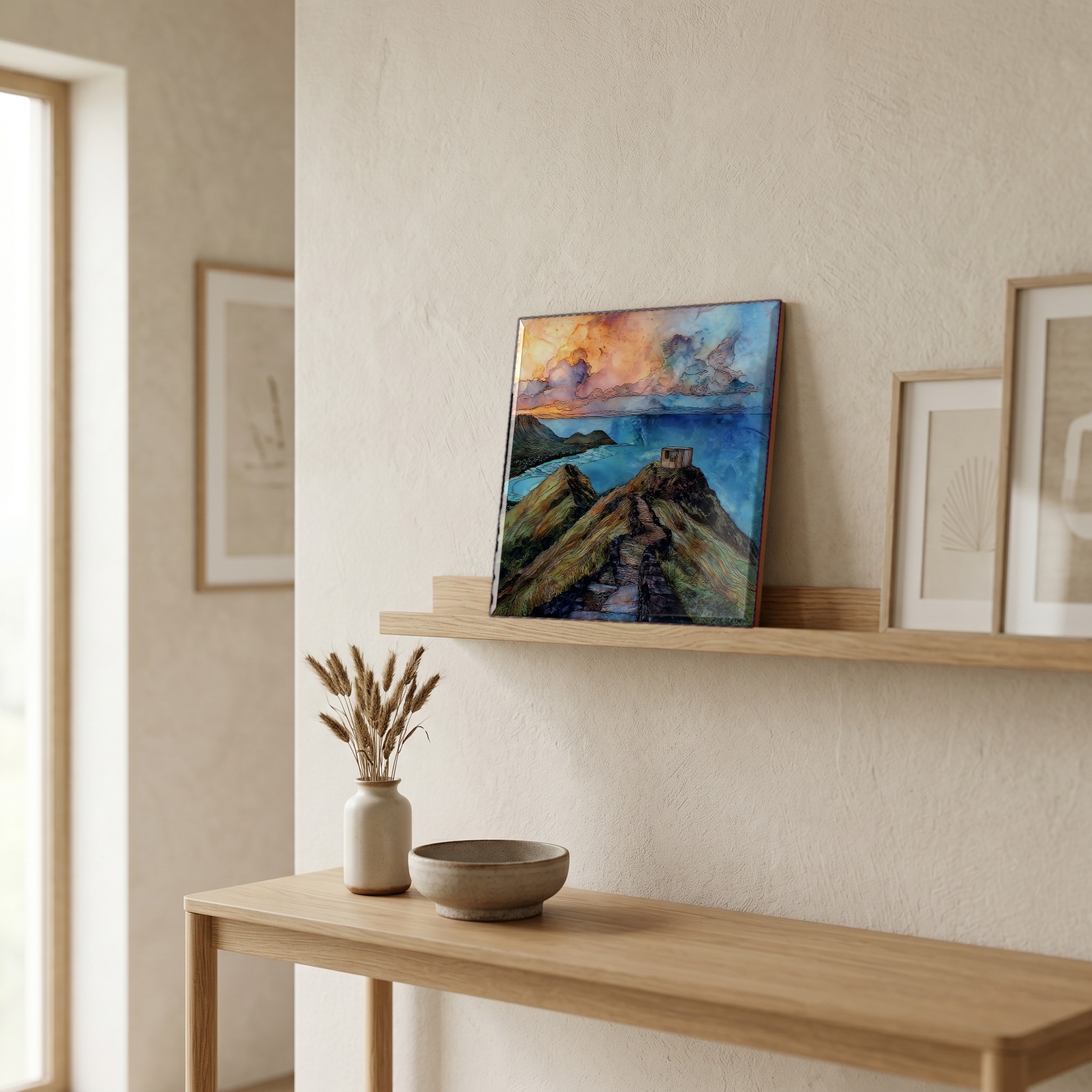
“A ridge above Kailua, on the windward side of Oahu. The trail climbs about five hundred feet through dry grass and rock to two concrete bunkers the military poured in the 1940s. They were observation posts that never saw what they were built to watch. At dawn the Mokulua Islands sit dark on the horizon while the sea behind them slowly takes its colour. Locals come up before the heat. Most come down before breakfast. The same light has been doing the same thing for eighty years.
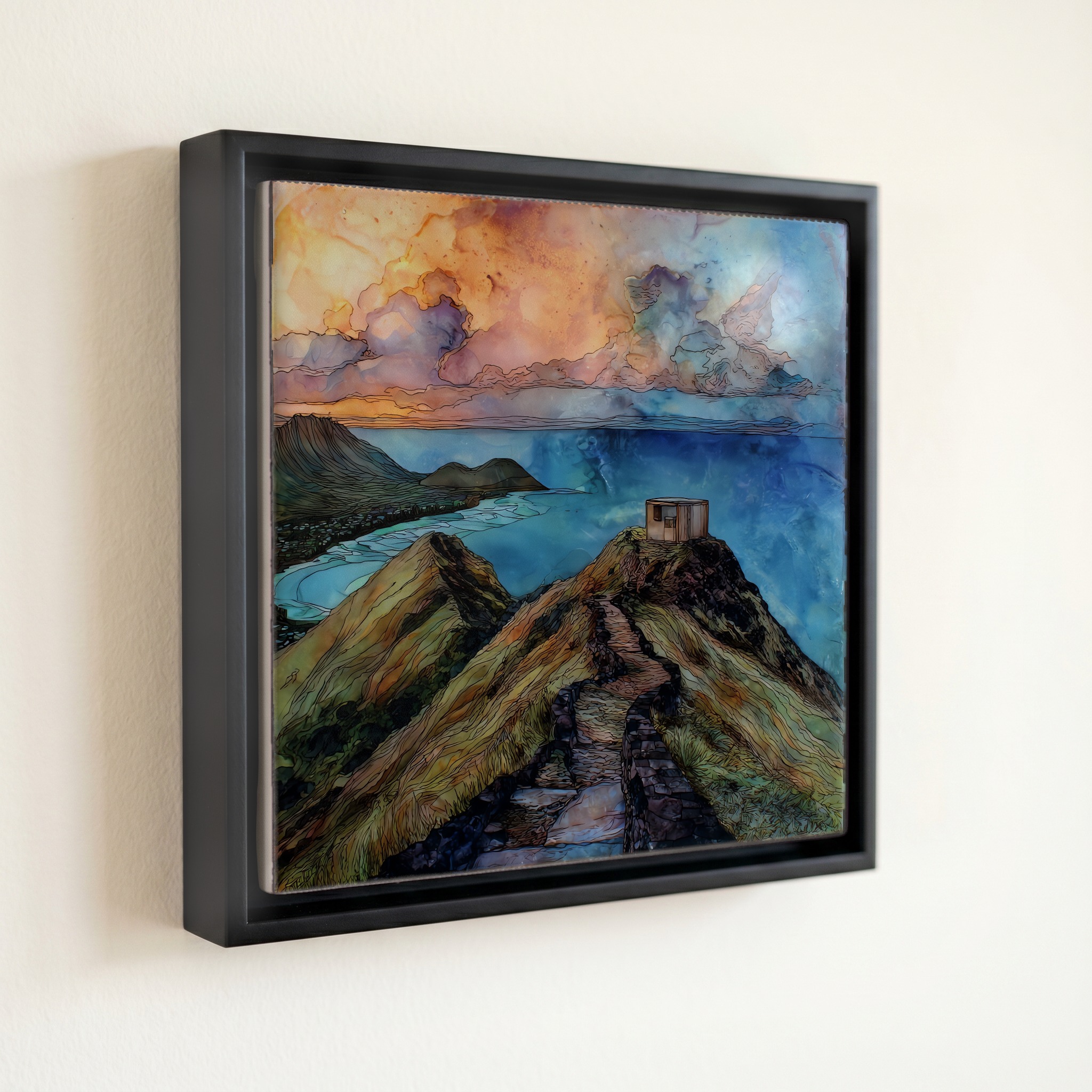
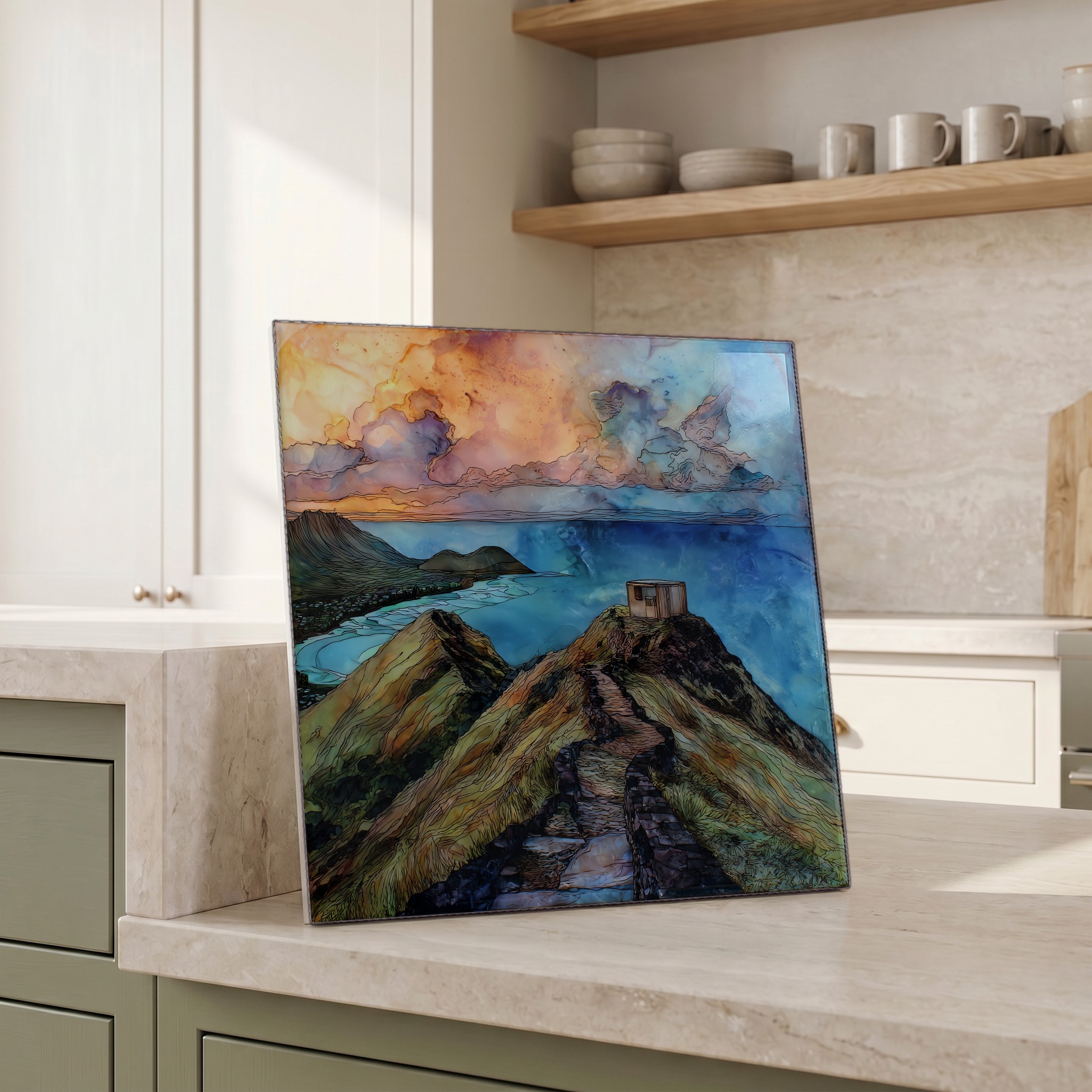
Lanikai Pillbox Sunrise Oahu Ceramic Art Tile, on ceramic.
Each tile is finished by hand in our Knoxville studio. Artwork is slowly infused into the ceramic surface under high heat and pressure, and rests beneath a thin glossy finish. The colour lives in the surface, not on top of it.
Pick any four 4-inch tiles — National Parks you've been to, a Smokies set, the four seasons of one place. $ for a set of , cork-backed, ready to live on the table.
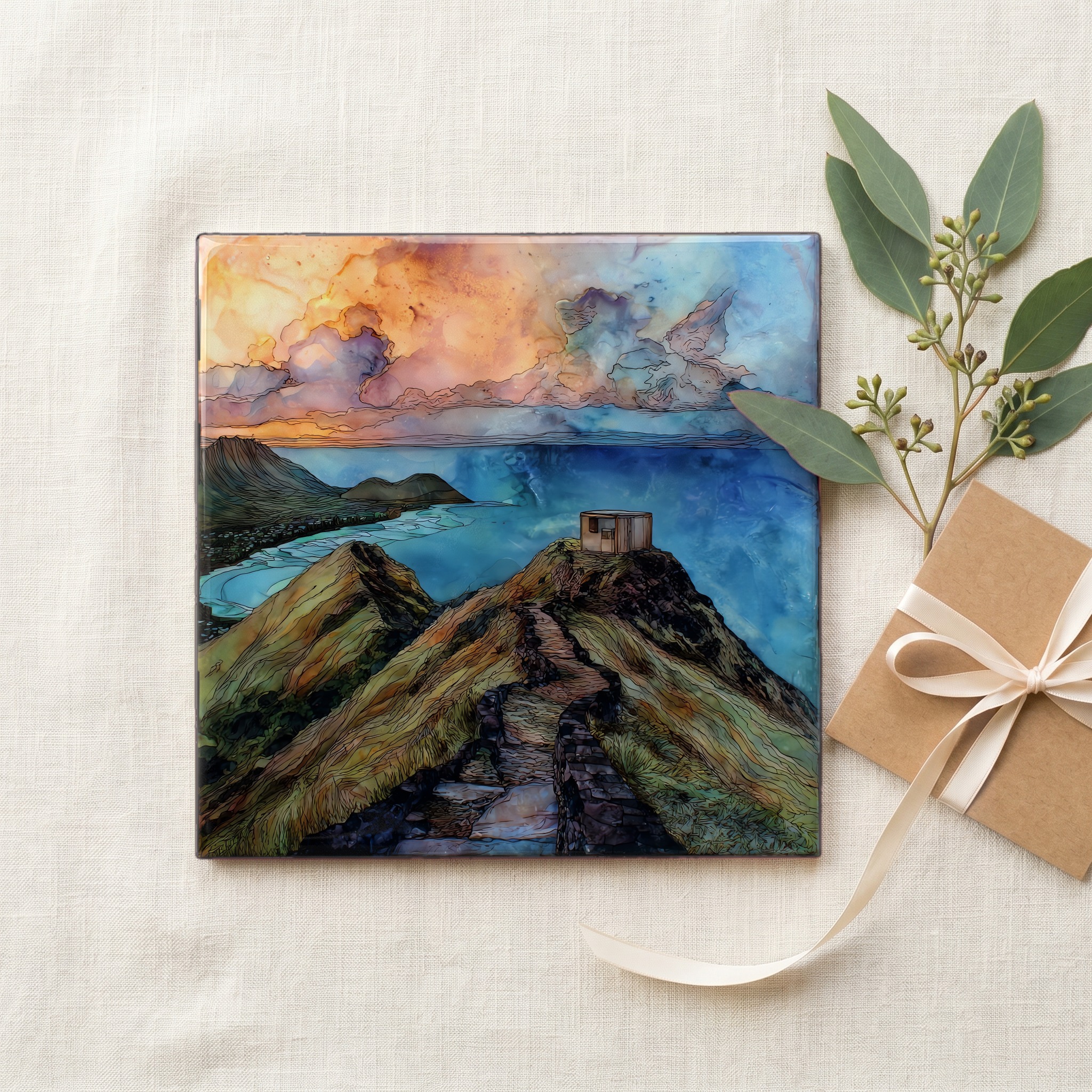
Each tile ships in a kraft box, tied with cream ribbon, with a handwritten note from the studio if you'd like to add one.
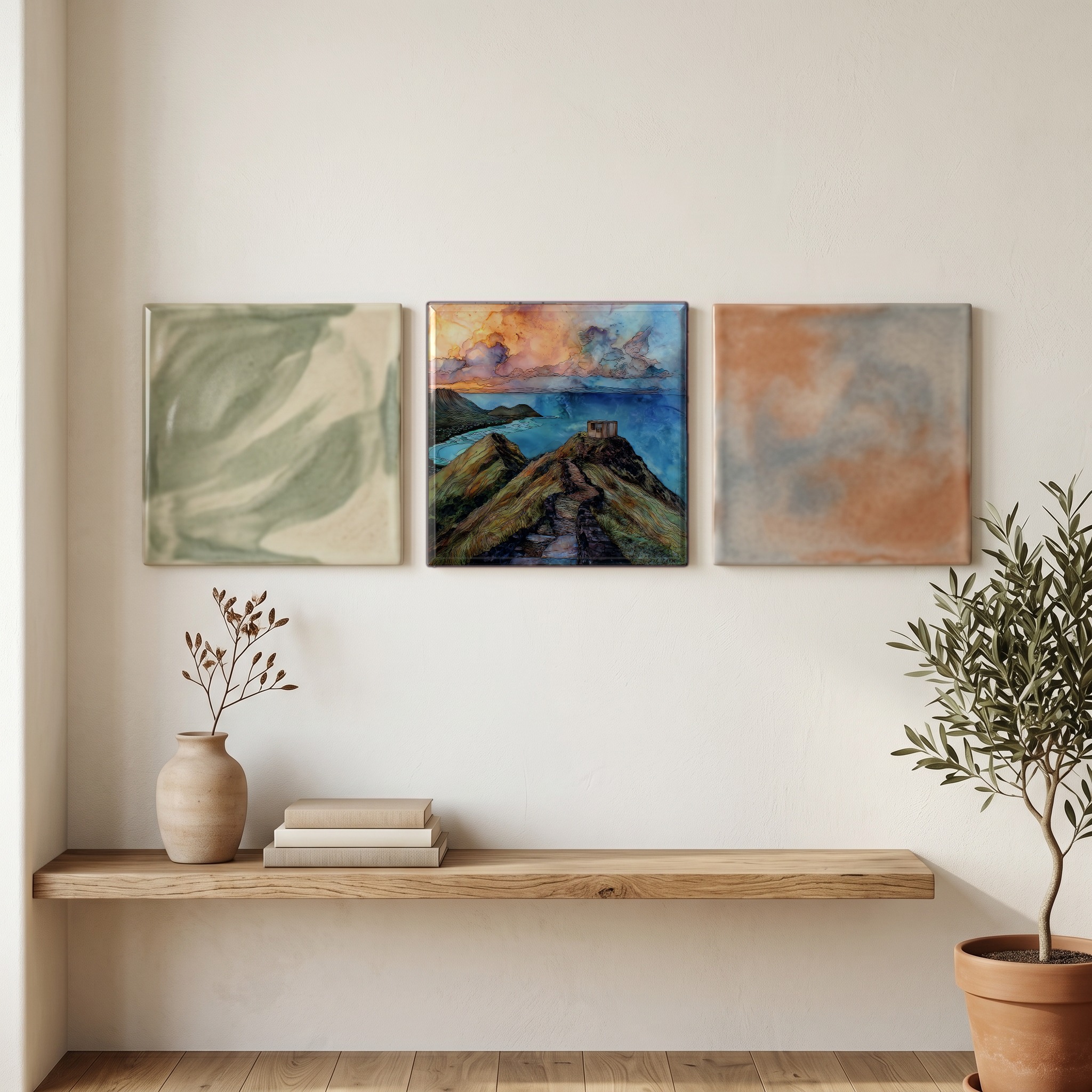
Three or five different vistas, hung together — a chapter of places you've been, or want to go.
The place, in three passes.
The Kaiwa Ridge rises above the eastern shore of Oahu, between the towns of Kailua and Waimanalo on the windward coast of the island. The trail climbs the ridge from a residential street, Kaelepulu Drive, in the Lanikai neighbourhood of Kailua. Two concrete observation bunkers sit on the ridgeline at roughly five hundred and fifty feet. The first sits about three-quarters of a mile up, the second another quarter mile beyond. The Mokulua Islands lie offshore to the east: two small basaltic remnants of the Koolau volcano, now a state seabird sanctuary administered by Hawaii's Department of Land and Natural Resources.
Lanikai faces almost due east, which puts the Mokulua Islands directly between the ridge and the rising sun. From late October through February the sun clears the southern island, Moku Iki; from March through August it tracks north and rises behind the larger Moku Nui or between the two. The hike up the unshaded ridge takes most walkers between twenty and thirty-five minutes, so trailhead departures forty-five minutes before official sunrise are typical. The trade winds reach the ridge before the light does. By mid-morning the ridge is fully exposed and hot, and the colour the photographers come for has already gone.
The two bunkers were poured during World War II, after the attack on Pearl Harbor, as observation posts watching the windward approach to the island. They are reinforced concrete with narrow east-facing slits. Neither was ever needed for the war they were built to fight. The ridge itself is Koolau basalt, the eroded remnant of the older of Oahu's two shield volcanoes, which last erupted somewhere around two and a half million years ago. The trail crosses the same red, weathered rock the bunkers were built into. Graffiti comes and goes on the concrete. The view does not.