Wender·Vista
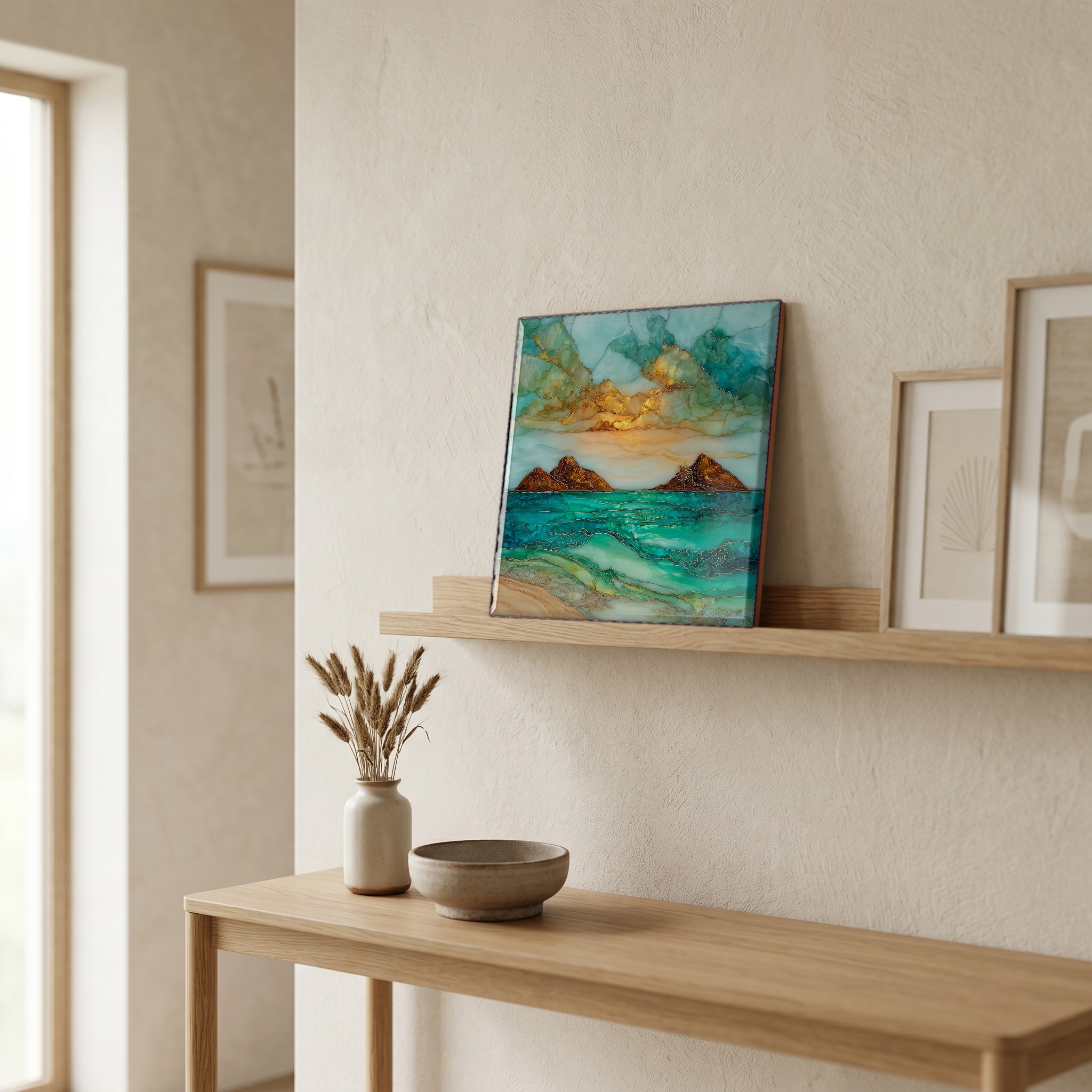
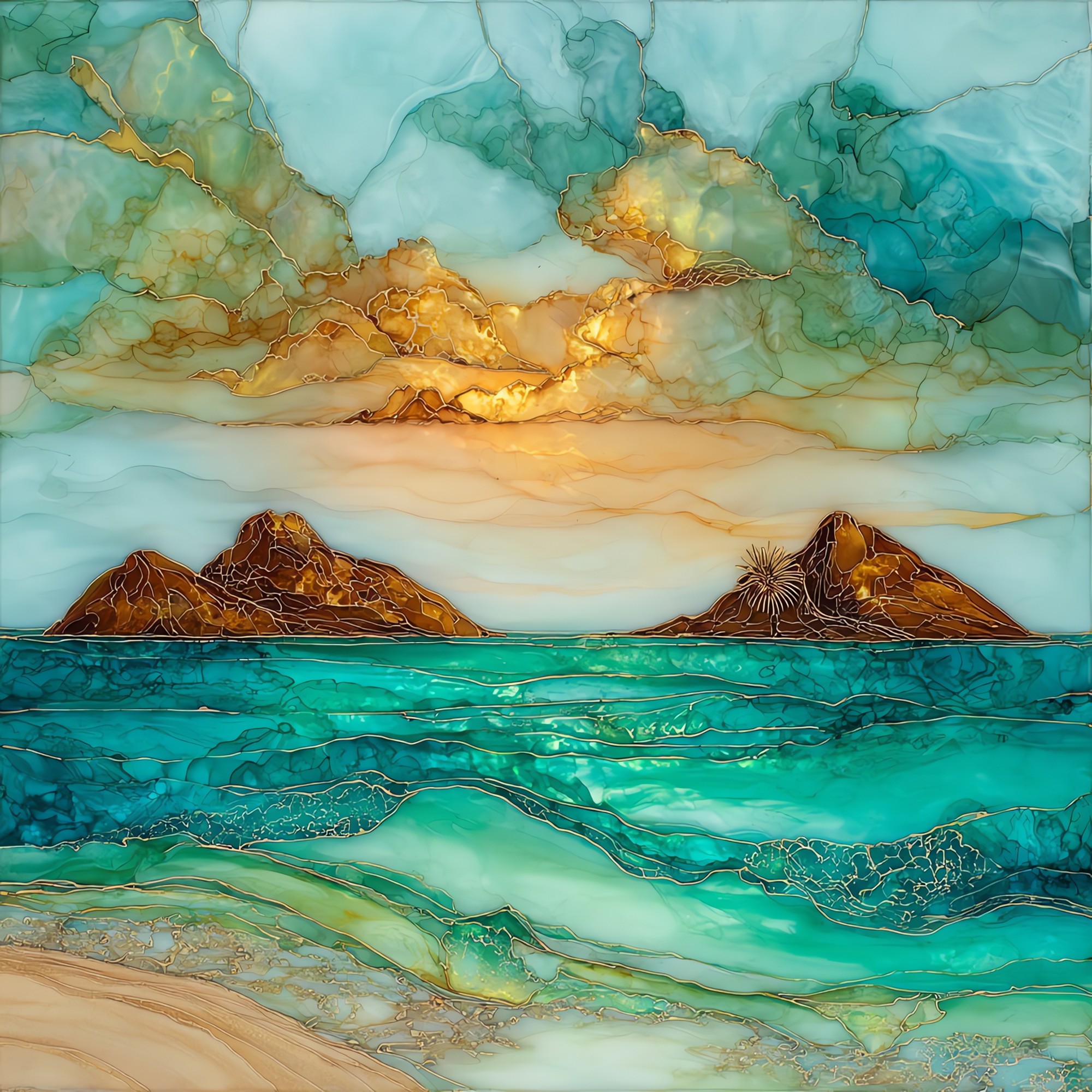
Lanikai Mokulua Oahu Ceramic Art Tile
shown on ceramic, 12-inch tileHawaii · United States
on the windward side of Oʻahu, east of Honolulu

Lanikai Mokulua Oahu Ceramic Art Tile

two islands across a sea the wind forgot.

Where it lives

Not only on a wall.

A small tile on the nightstand catching the morning. A larger one above the fire. Yours, wherever you spend the slow hours.
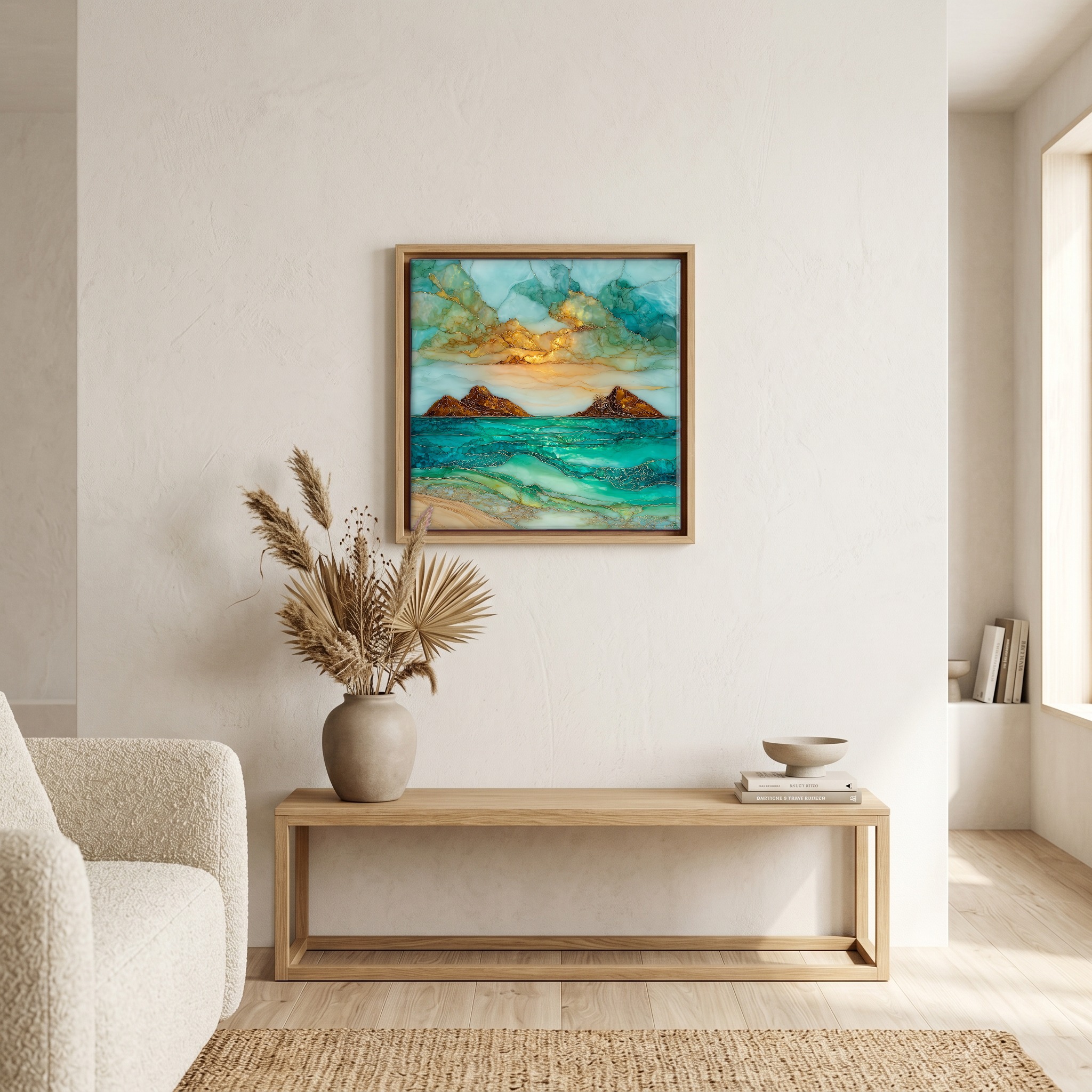
Above the bench, in a warm oak surround.
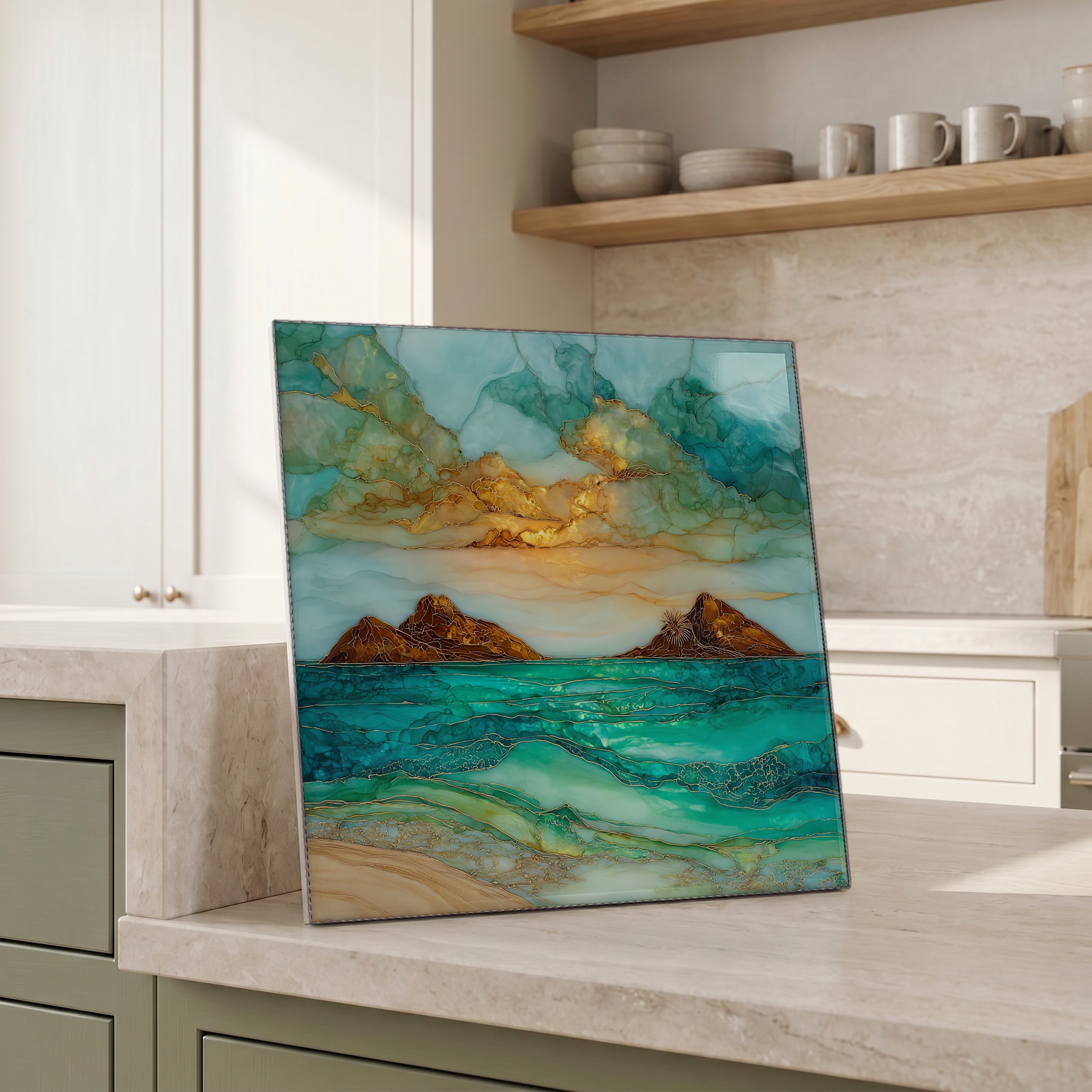
Beside the kettle, propped on the counter.
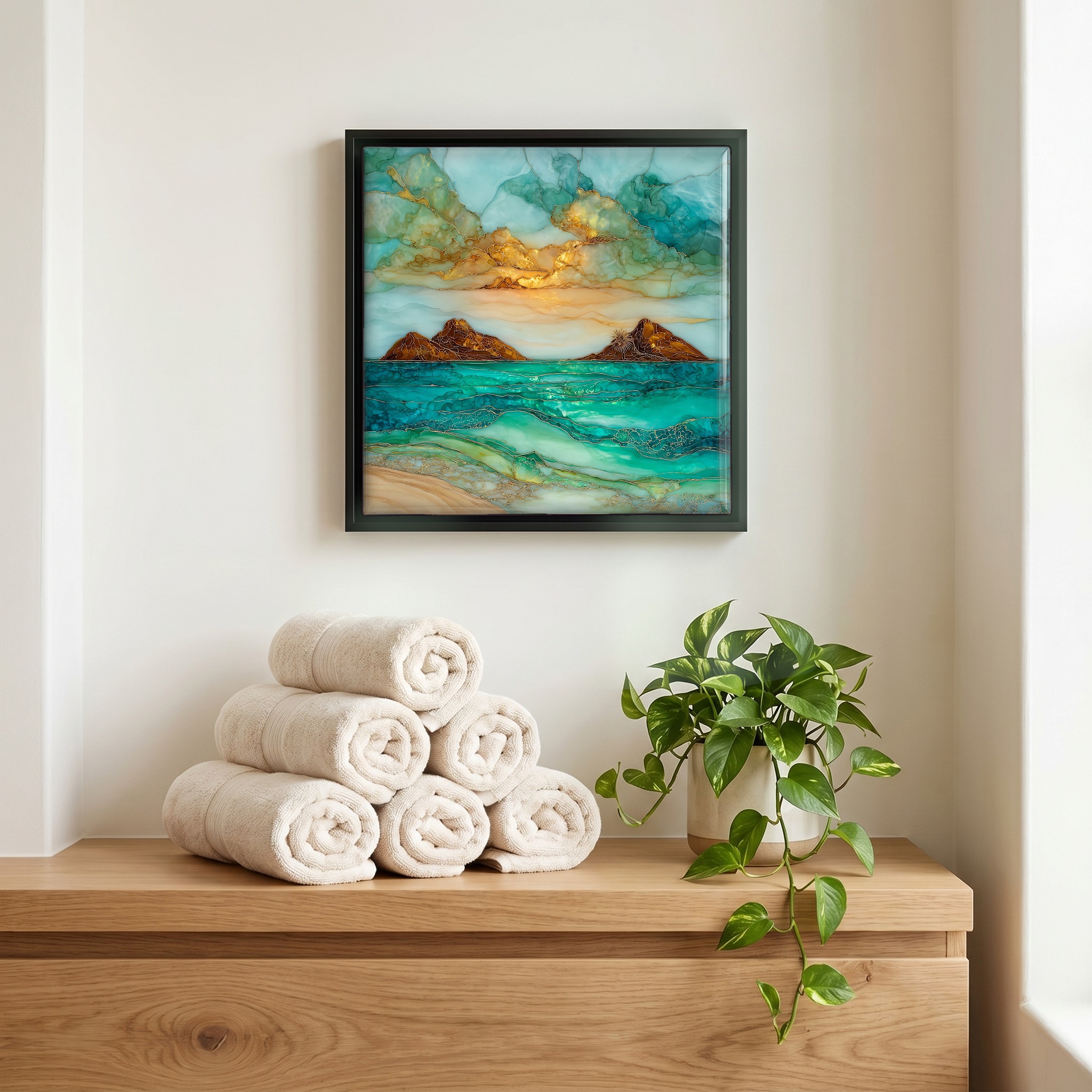
Above the linens, in a slim black surround.
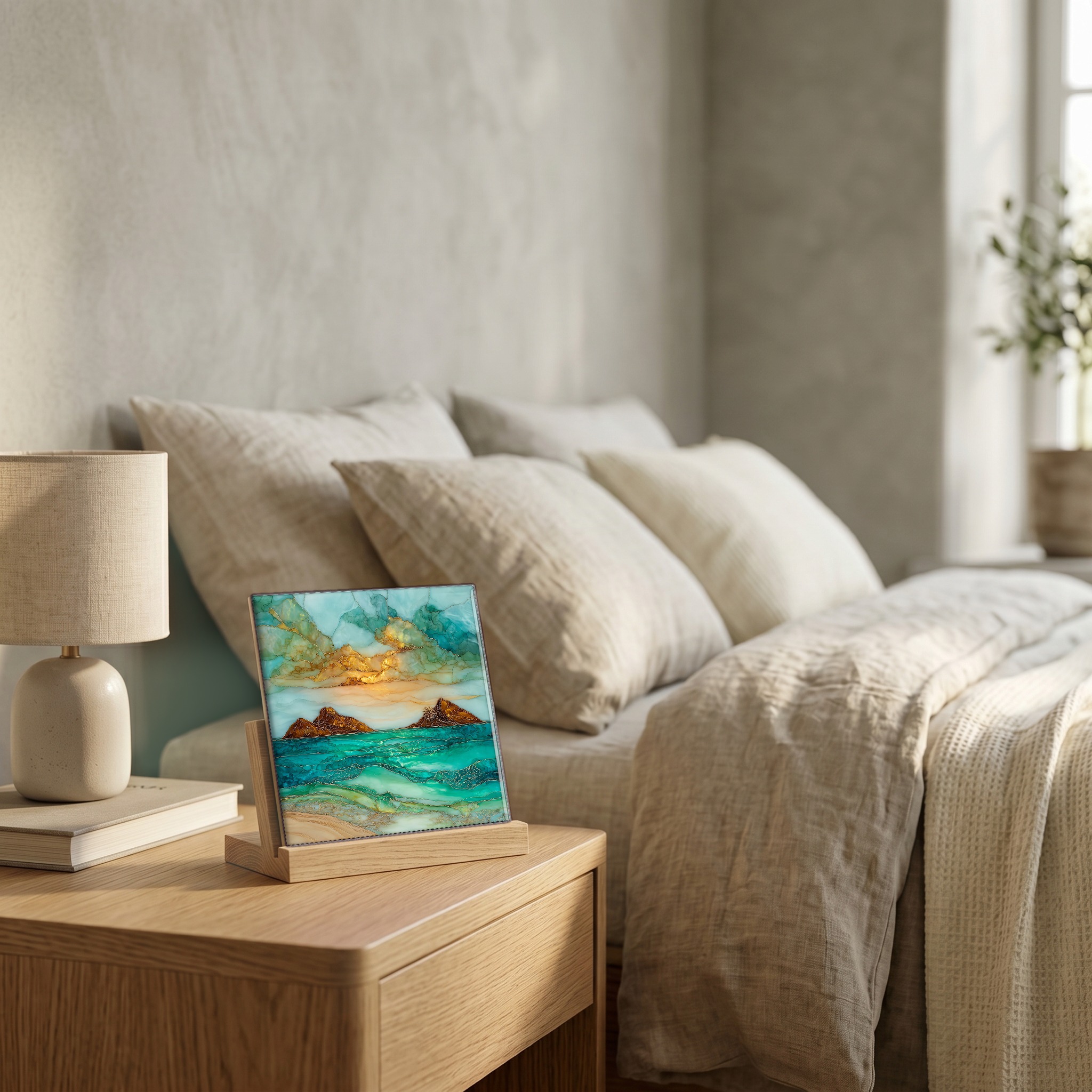
On the nightstand, on a light oak stand.
On a picture ledge, where the light comes in.
a note from the studio

A narrow strip of sand on the windward side of Oʻahu, in the Lanikai neighborhood south of Kailua. Two small islands sit offshore: Moku Nui and Moku Iki, known locally as the Mokes. A reef breaks the swell a quarter-mile out, which is why the lagoon between the beach and the islands holds the colour it does. Moku Nui has a small beach you can kayak to. Moku Iki is a seabird sanctuary and closed to landing. Sunrise is what Lanikai is for. The sun comes up behind the islands and the sea takes its colour from underneath.
from the studio
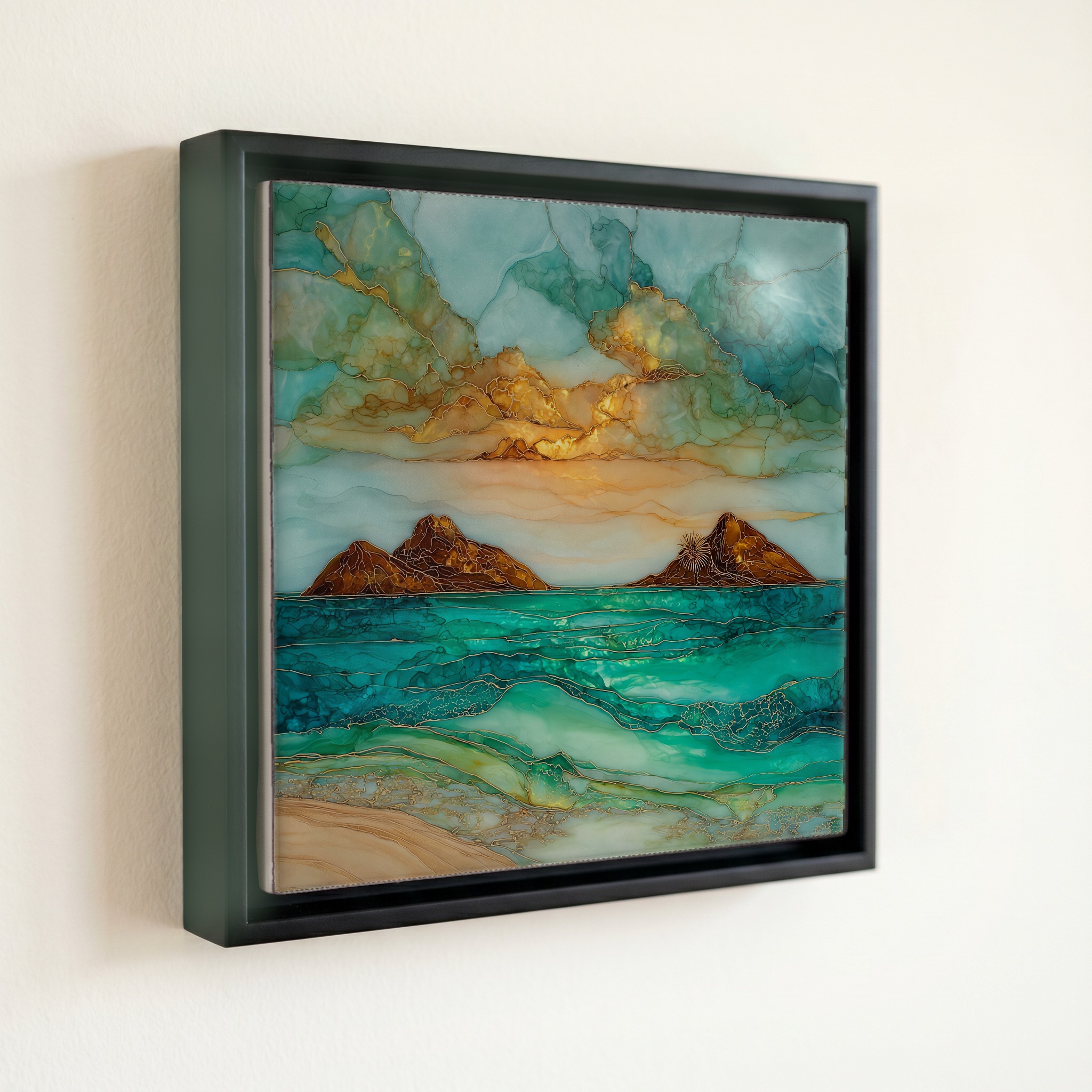
shown in a slim black floating frame · 6 × 6 in
— bring it home

Lanikai Mokulua Oahu Ceramic Art Tile, on ceramic.

Each tile is finished by hand in our Knoxville studio. Artwork is slowly infused into the ceramic surface under high heat and pressure, and rests beneath a thin glossy finish. The colour lives in the surface, not on top of it.

What kind of piece?
One tile — square or rectangle.
How big?
the popular one — counter, shelf, nightstand
6 × 6 in · 15 cm · 1.6 lb
Surface finish
A clear glossy finish — the artwork reads as if under resin. Ideal for show-pieces and framed wall art.
How it sits
A hidden cleat — sits ¼″ proud of the wall.
$58
Hand-finished and shipped from our studio at the foot of the Smokies. On your wall in about ten days.
size
6 × 6 in
15 cm
weighs
1.6 lb
solid in the hand
surface
ceramic, hand-finished
art rests beneath a thin glossy finish
from
Knoxville, TN
our family studio, at the foot of the Smokies
— start a Coaster Set

Pick any four 4-inch tiles — National Parks you've been to, a Smokies set, the four seasons of one place. $ for a set of , cork-backed, ready to live on the table.
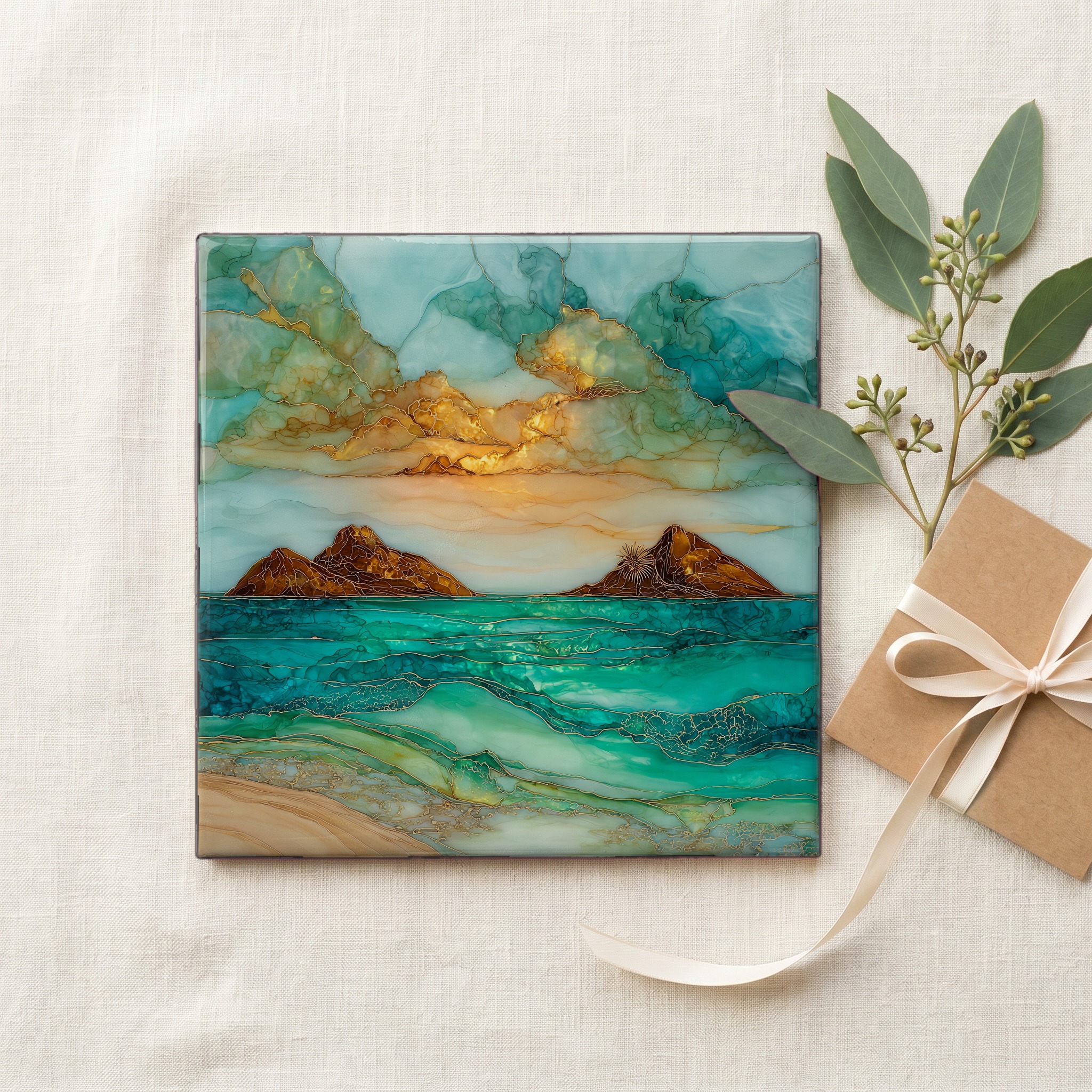
comes gift-ready
comes gift-ready

Each tile ships in a kraft box, tied with cream ribbon, with a handwritten note from the studio if you'd like to add one.
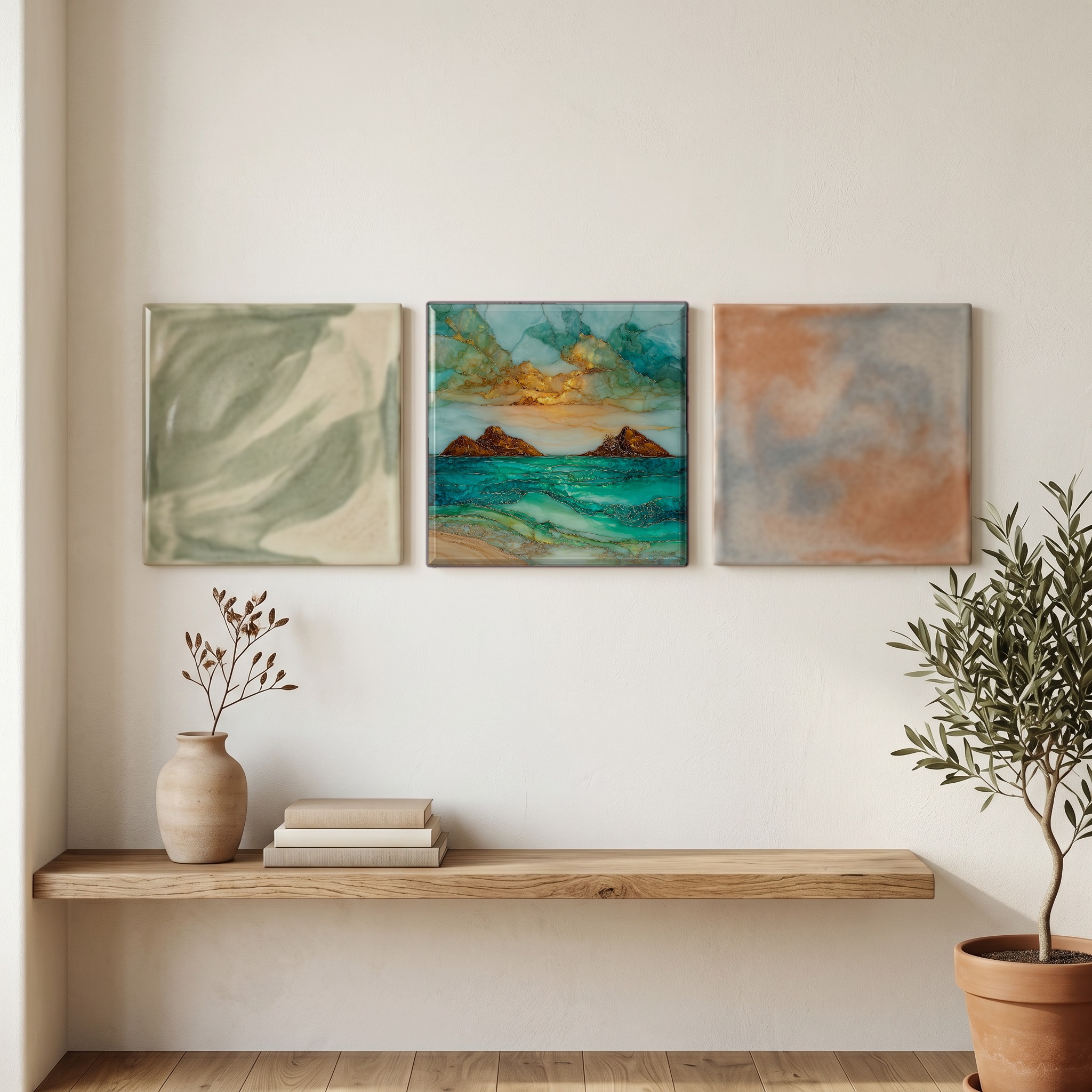
or build a grouping
or build a grouping

Three or five different vistas, hung together — a chapter of places you've been, or want to go.

about Lanikai Mokulua Oahu Ceramic Art Tile

The place, in three passes.

A little of what's known, in case you fall down the rabbit hole — or want to go see it yourself.
the place

Lanikai is a residential neighborhood on the windward (eastern) coast of Oʻahu, immediately south of Kailua town and roughly 13 miles east of downtown Honolulu over the Nuʻuanu Pali. The beach itself is about half a mile long, fronting private homes with public access through a handful of narrow shoreline rights-of-way. Half a mile offshore lie the Mokulua Islands: Moku Nui ('big island') and Moku Iki ('small island'), twin volcanic islets that are part of the Hawaiʻi State Seabird Sanctuary, administered by the Division of Forestry and Wildlife. The older Hawaiian name for the surrounding ahupuaʻa is Kaʻōhao; the name 'Lanikai' was coined in 1924 by developer Charles Frazier.

the water

The water at Lanikai is unusually calm because an offshore fringing reef breaks the open-ocean swell about a quarter-mile from the beach, leaving the lagoon between the sand and the Mokuluas flat for most of the year. The pale turquoise comes from sunlight bouncing off a shallow white-sand bottom through clear, low-sediment water, the same optical reason Caribbean and South Pacific lagoons read that colour. Kayaks launched from Kailua Beach Park cross to Moku Nui, where a small sand beach on the leeward side is the only spot where landing is permitted. The State of Hawaiʻi prohibits landing on Moku Iki.

the dawn

Lanikai faces east, which makes it one of the more reliable sunrise vistas on Oʻahu. The sun rises behind the Mokuluas for most of the year, lifting the twin silhouettes out of the dark water before the rest of the beach is awake. Civil twilight in Kailua begins about 25 minutes before sunrise, and the colour starts then. The Kaʻiwa Ridge Trail, locally the 'Pillbox Hike', climbs the ridge directly behind Lanikai and reaches the first of three World War II observation bunkers in about 20 minutes, from which the Mokuluas sit centred against the sea. The trail is open from dawn but unlit, so headlamps are standard for pre-sunrise climbs.

where
United States · Kailua, Honolulu County, Hawaiʻi
within
Mokulua Islands State Seabird Sanctuary
elevation
0 m · 0 ft
position
21.3922° N · 157.7156° W
the neighborhood

What's nearby.

A handful of named places within an hour's walk or short drive. Some we've already painted; some we will.
1 km N
Kailua Beach Park
public beach park
1 km W
Kaʻiwa Ridge (Pillbox Hike)
ridge trail
8 km NW
Nuʻuanu Pali Lookout
mountain overlook
3 km NW
Kawai Nui Marsh
freshwater wetland
13 km S
Makapuʻu Point Lighthouse
coastal lighthouse
N
Lanikai Mokulua Oahu Ceramic Art Tile
Kailua Beach Park
Kaʻiwa Ridge (Pillbox Hike)
Nuʻuanu Pali Lookout
Kawai Nui Marsh
Makapuʻu Point Lighthouse
common questions

What people ask.

A few questions we get about Lanikai Mokulua Oahu Ceramic Art Tile — and about bringing the piece home.
about the place

Lanikai is on the windward (eastern) coast of Oʻahu, immediately south of Kailua town and roughly 13 miles from downtown Honolulu via the Pali Highway. The beach faces east toward the Mokulua Islands.

The two islands are the Mokulua Islets: Moku Nui ('big island') and Moku Iki ('small island'), often shortened to 'the Mokes'. Both are protected as part of the Hawaiʻi State Seabird Sanctuary, home to nesting wedge-tailed shearwaters and other seabirds.

You can kayak to Moku Nui and land on the small leeward-side beach during daylight hours; group size and access are regulated by the State of Hawaiʻi. Moku Iki is closed to landing. Both islands are seabird sanctuaries, and staying off marked dune areas is required.

An offshore fringing reef sits about a quarter-mile from the beach and breaks most of the open-ocean swell before it reaches shore. The lagoon between the reef and the sand stays flat for most of the year, which is why Lanikai is a common swimming and kayaking beach rather than a surf beach.

The Kaʻiwa Ridge Trail, known locally as the Pillbox Hike, climbs the ridge behind the beach and reaches the first World War II observation bunker in about 20 minutes. From there the sun rises behind the Mokulua Islands. The trail is unlit, so bring a headlamp for pre-dawn climbs.

'Lanikai' is usually translated as 'heavenly sea', though the order of the Hawaiian roots (lani, kai) more accurately renders as 'sea heaven'. The name was coined in 1924 by developer Charles Frazier. The older Hawaiian name for the surrounding ahupuaʻa is Kaʻōhao.

There is no dedicated parking lot. Visitors park on Mokulua Drive and Aalapapa Drive, which are narrow residential streets, and walk through one of about a dozen public shoreline access paths between private homes. Most use the Kailua Beach Park lot and walk south.

about the piece in your home

It's been a meaningful gift for customers with Oʻahu connections. The view of the Mokuluas from Lanikai is one of the most recognised on the island. A Coaster or Small with a handwritten note from the studio works for a friend; the Medium or Large reads as a home gift for family with deeper roots on the windward side.

The Voynich palette of stained-glass blues, dawn pinks, and deep ocean greens settles into coastal-modern and tropical-modern interiors, and reads well against warm woods in a Japandi setting. It also holds its own in a jewel-tone maximalist room as the cool counterweight to terracotta and brass.

Yes. Coastal-modern is moving away from generic beach motifs like driftwood and weathered grey toward specific named places and richer colour. The Lanikai tile reads as a real coastline rather than a stylised one, which is what current coastal-modern boards on Pinterest and shelter publications are calling for.

A single Large (about 12 × 12 inches) reads from the room as a focused piece above a console. Above a standard sofa, a 4-tile Mural (roughly 24 × 24 inches) carries the wall; for a long sectional or above a king bed, a 9-tile Mural (about 36 × 36 inches) is the proportional choice.

Yes. Bathroom and kitchen installations use the Dura Satin or Matte finish rather than the Glossy. Both are scratch-resistant and stable in humidity, and both keep the colour the way the artwork was made. The Glossy is for framed wall pieces in dry rooms.

A soft microfibre cloth with plain water is enough for routine dust. For kitchen or bathroom installations, a non-abrasive household cleaner is fine on the Dura Satin or Matte finishes. Avoid abrasive pads, bleach, and acidic descalers; the colour lives in the surface and abrasion will eventually dull it.

Yes. Every WenderVista piece is created in the studio by Reid Wender. We do not license stock imagery, and no two place studies in the atlas are repeated. The Lanikai tile is part of the Hawaiʻi suite within the WenderVista atlas of more than 30,000 places.

if this one stayed with you

A few you might also love.

Hand-picked by the eye that found Sorapis. Same air, same kind of quiet.