Wender·Vista
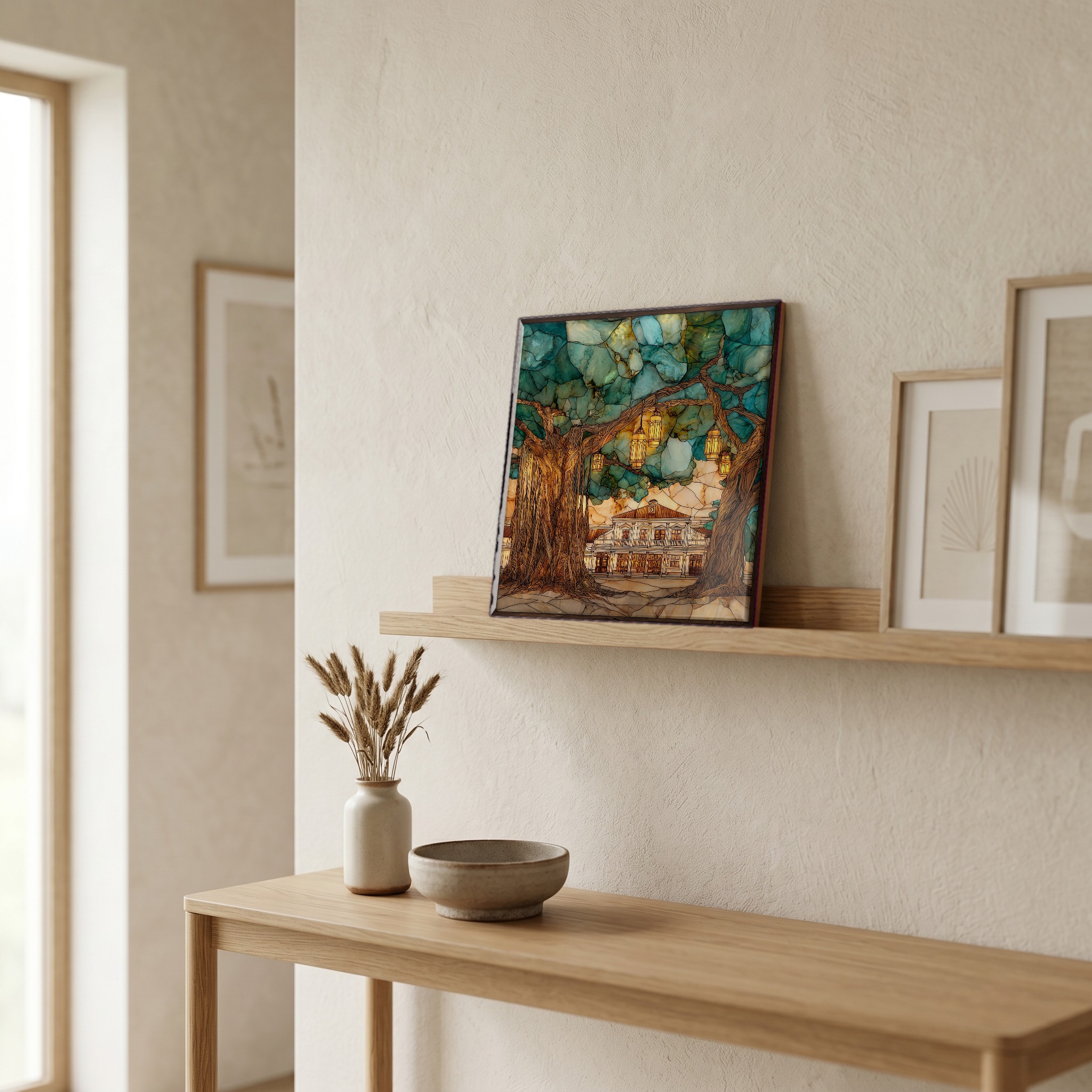
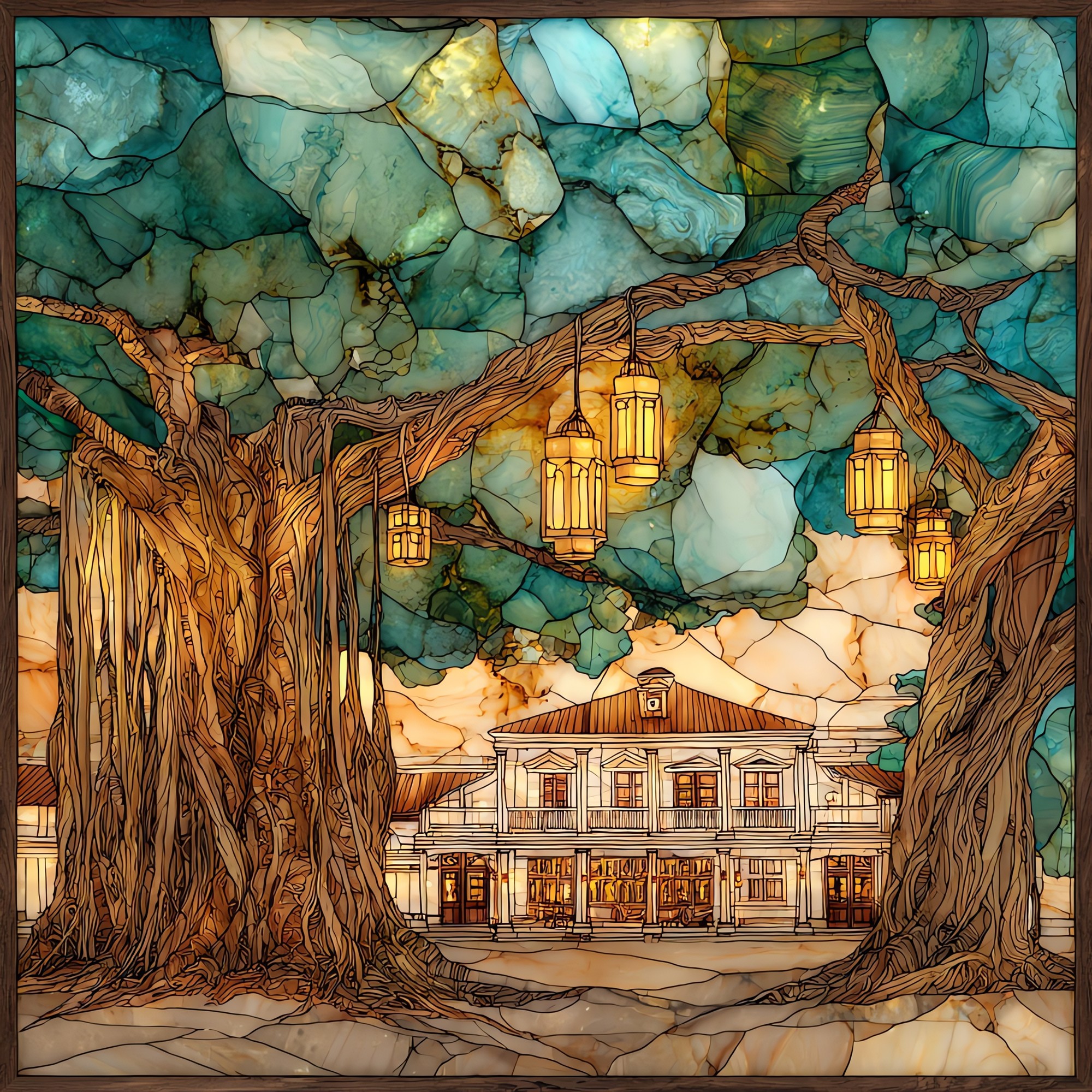
Lahaina Banyan Tree Maui Ceramic Art Tile
shown on ceramic, 12-inch tileHawaii · United States
across from Lahaina Harbor, on the western shore of Maui

Lahaina Banyan Tree Maui Ceramic Art Tile

— the shade that came back after the fire.

Where it lives

Not only on a wall.

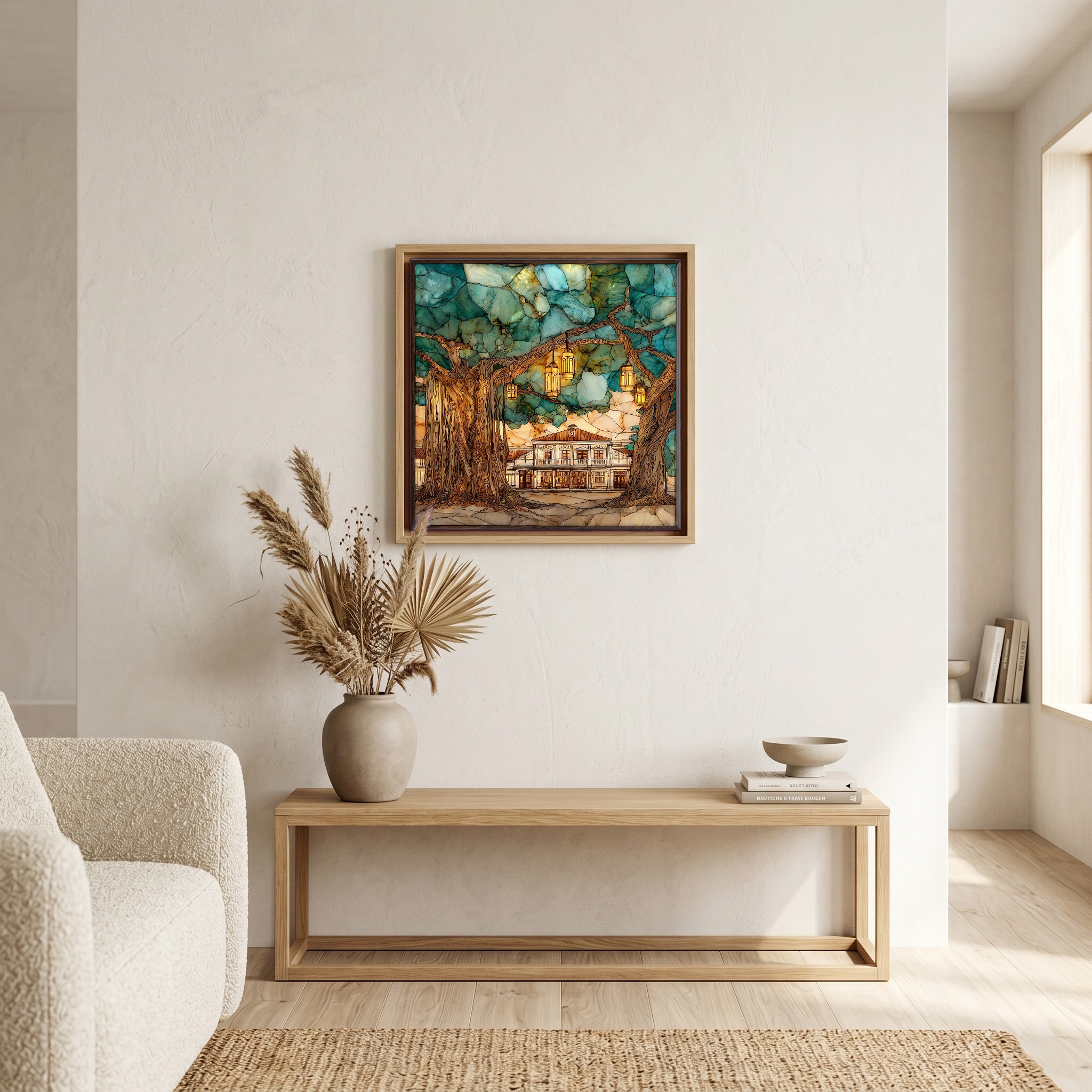
A small tile on the nightstand catching the morning. A larger one above the fire. Yours, wherever you spend the slow hours.
Above the bench, in a warm oak surround.
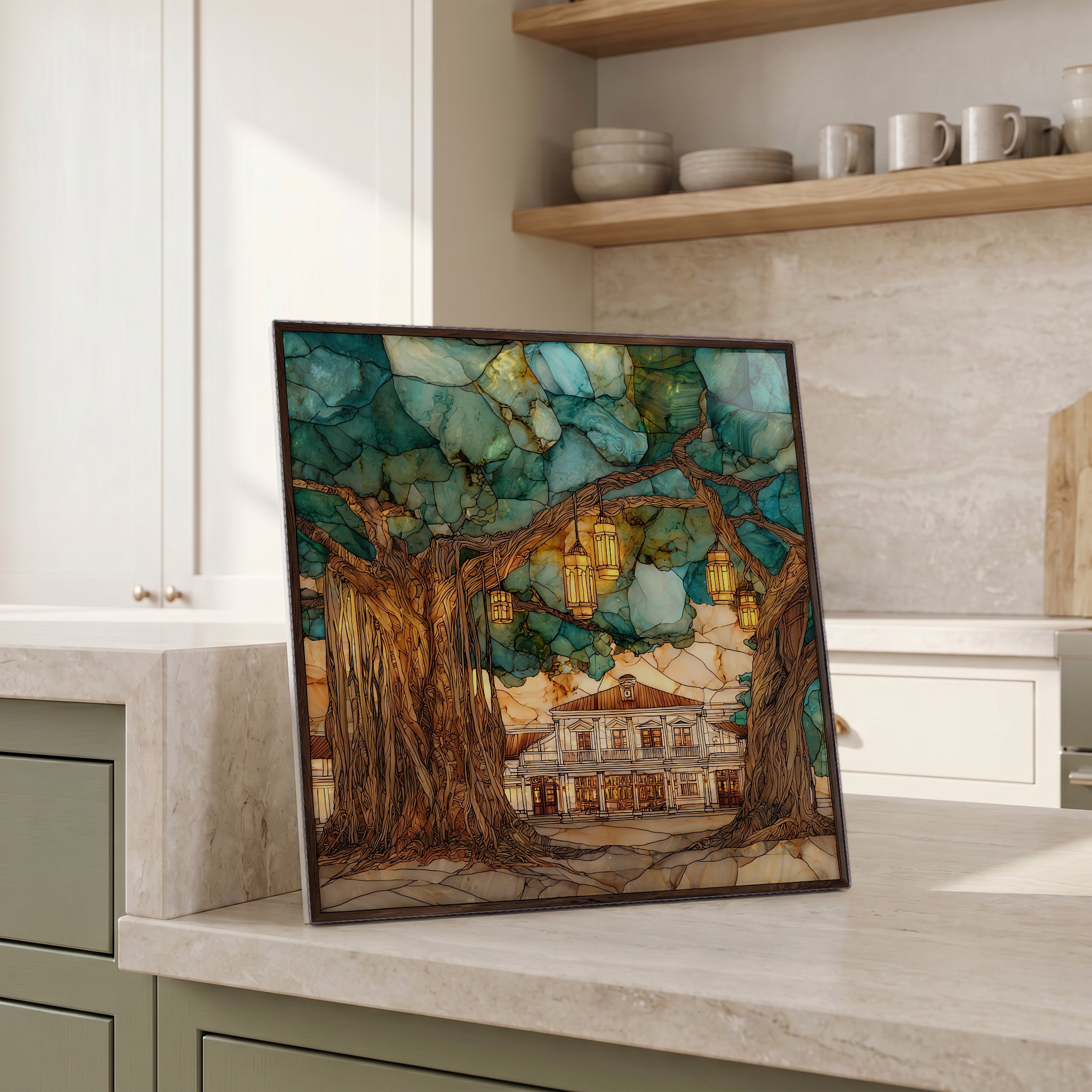
Beside the kettle, propped on the counter.
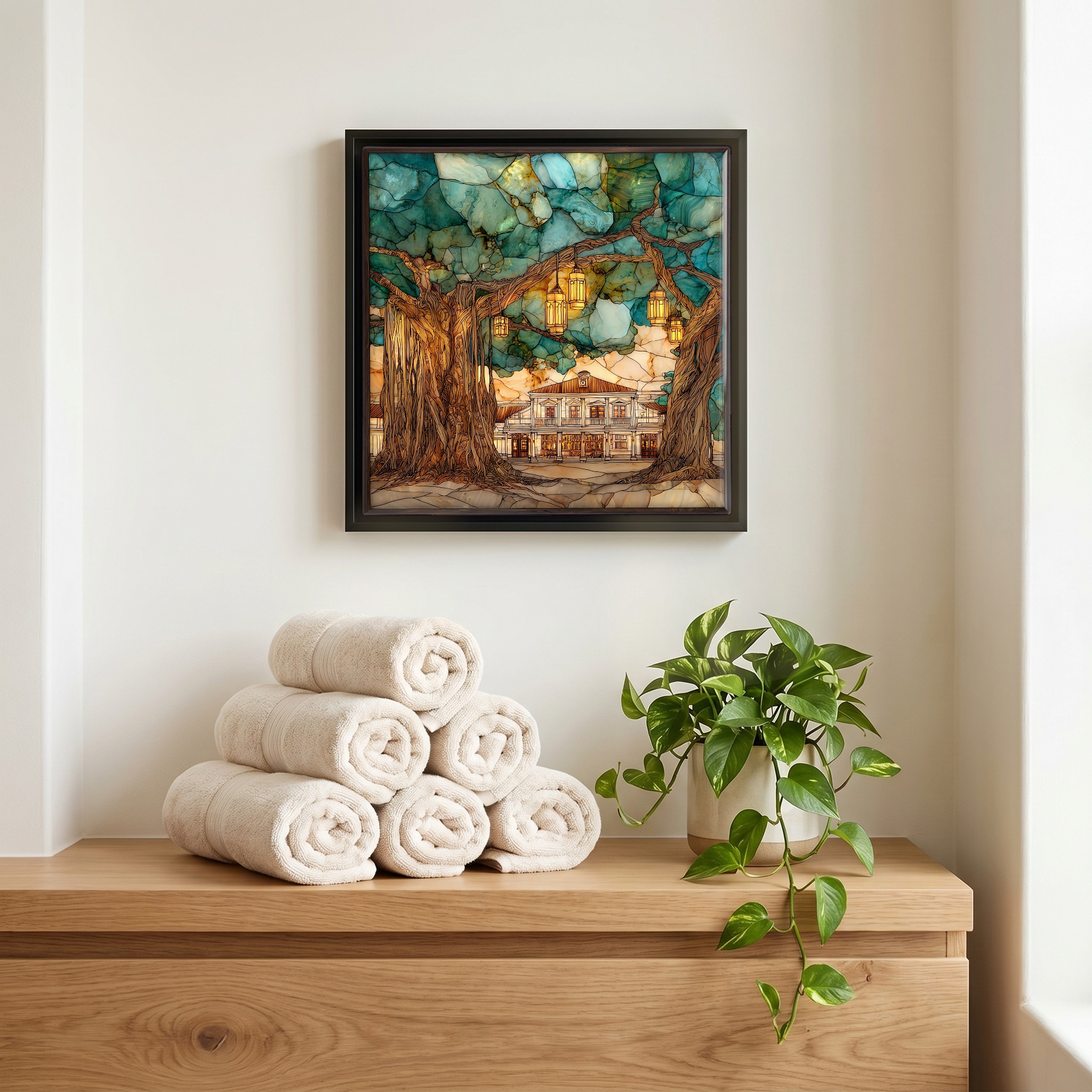
Above the linens, in a slim black surround.
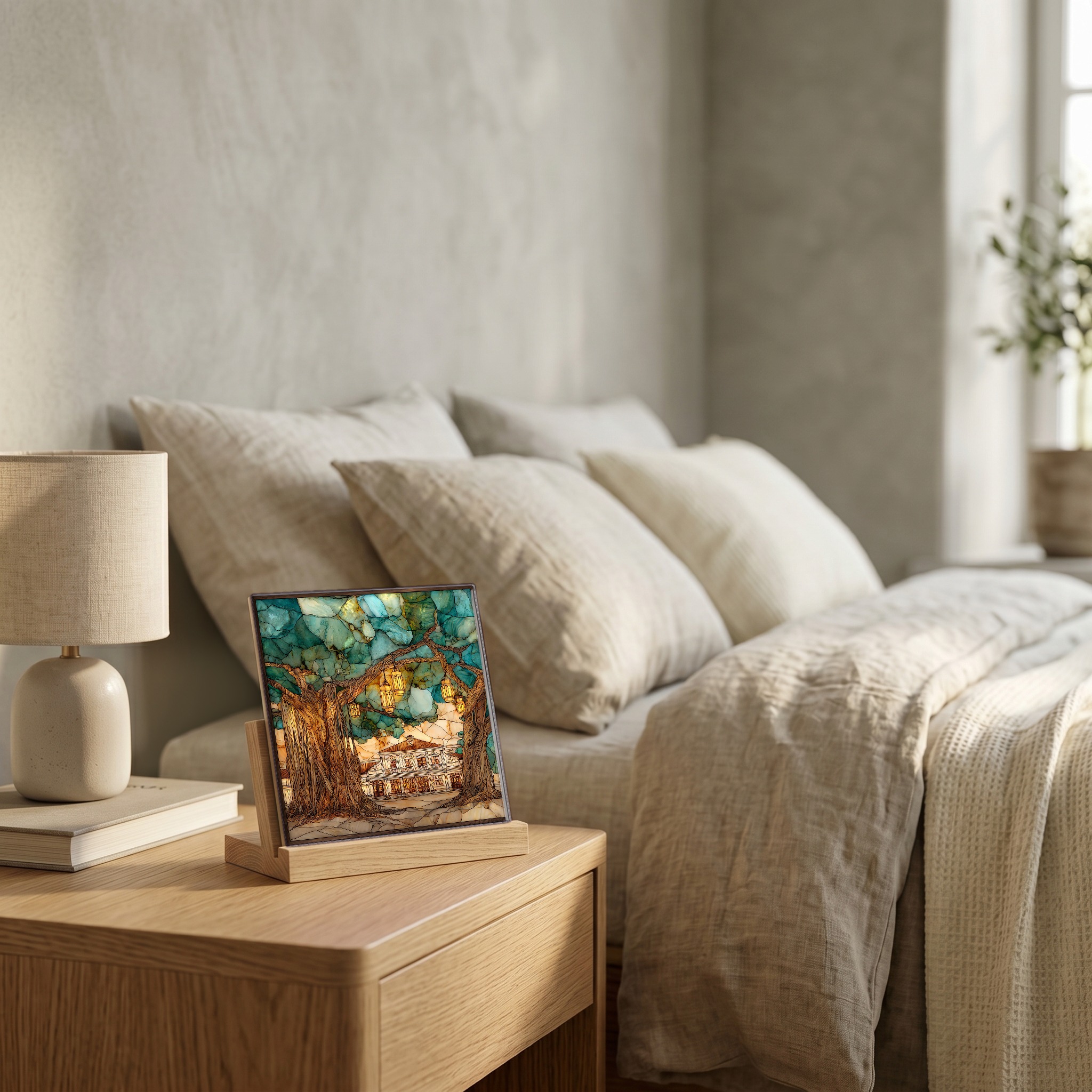
On the nightstand, on a light oak stand.
On a picture ledge, where the light comes in.
a note from the studio

One tree, sixteen trunks, a canopy that covers two-thirds of an acre. The Indian banyan in old Lahaina was planted in 1873, eight feet tall when it arrived from India. It now rises sixty feet and still spreads. The fires of August 2023 scorched it black. Arborists watered the roots through the worst of the summer. The next spring, new leaves came back along the limbs that hadn't burned through. People sit under it again.
from the studio
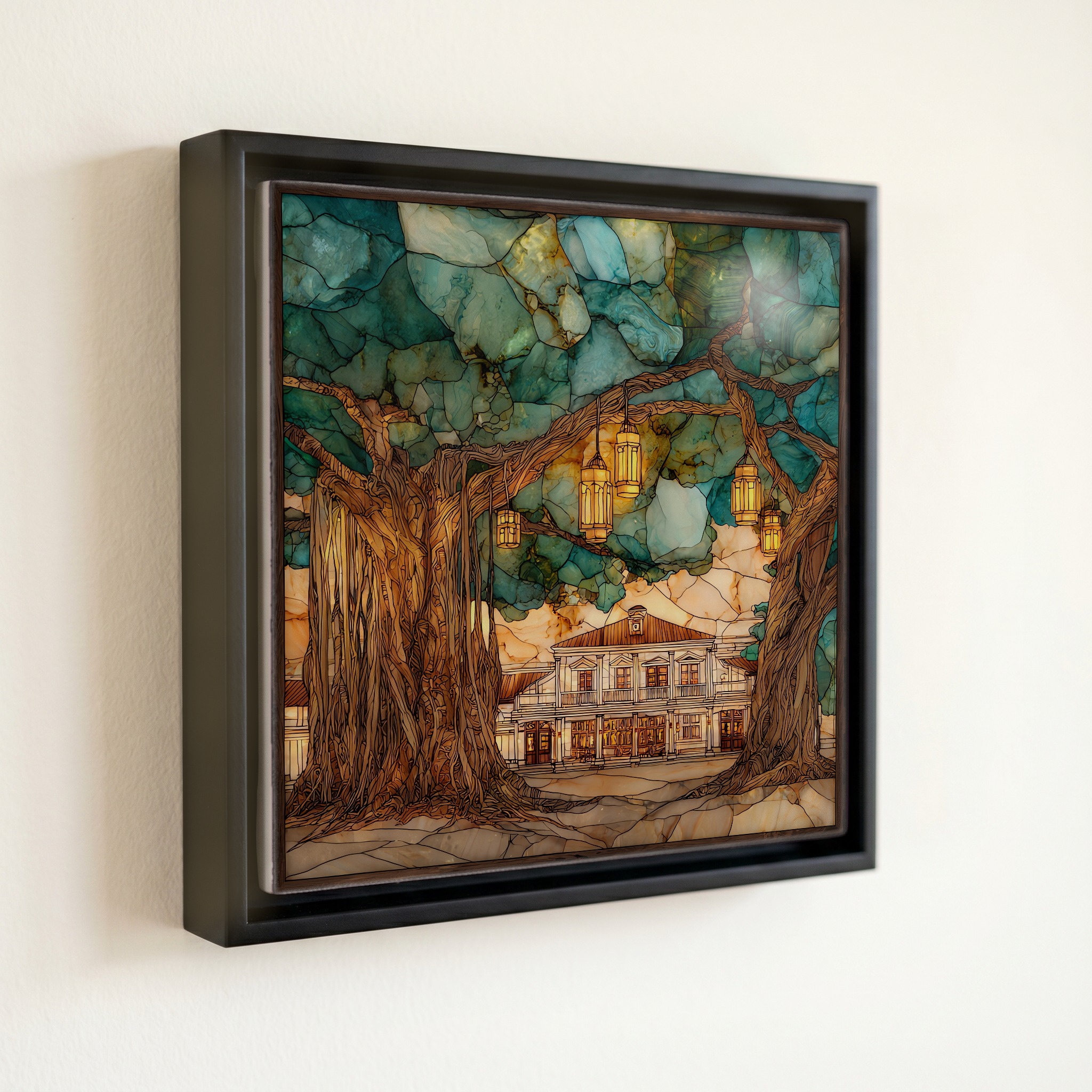
shown in a slim black floating frame · 6 × 6 in
— bring it home

Lahaina Banyan Tree Maui Ceramic Art Tile, on ceramic.

Each tile is finished by hand in our Knoxville studio. Artwork is slowly infused into the ceramic surface under high heat and pressure, and rests beneath a thin glossy finish. The colour lives in the surface, not on top of it.

What kind of piece?
One tile — square or rectangle.
How big?
the popular one — counter, shelf, nightstand
6 × 6 in · 15 cm · 1.6 lb
Surface finish
A clear glossy finish — the artwork reads as if under resin. Ideal for show-pieces and framed wall art.
How it sits
A hidden cleat — sits ¼″ proud of the wall.
$58
Hand-finished and shipped from our studio at the foot of the Smokies. On your wall in about ten days.
size
6 × 6 in
15 cm
weighs
1.6 lb
solid in the hand
surface
ceramic, hand-finished
art rests beneath a thin glossy finish
from
Knoxville, TN
our family studio, at the foot of the Smokies
— start a Coaster Set

Pick any four 4-inch tiles — National Parks you've been to, a Smokies set, the four seasons of one place. $ for a set of , cork-backed, ready to live on the table.
comes gift-ready
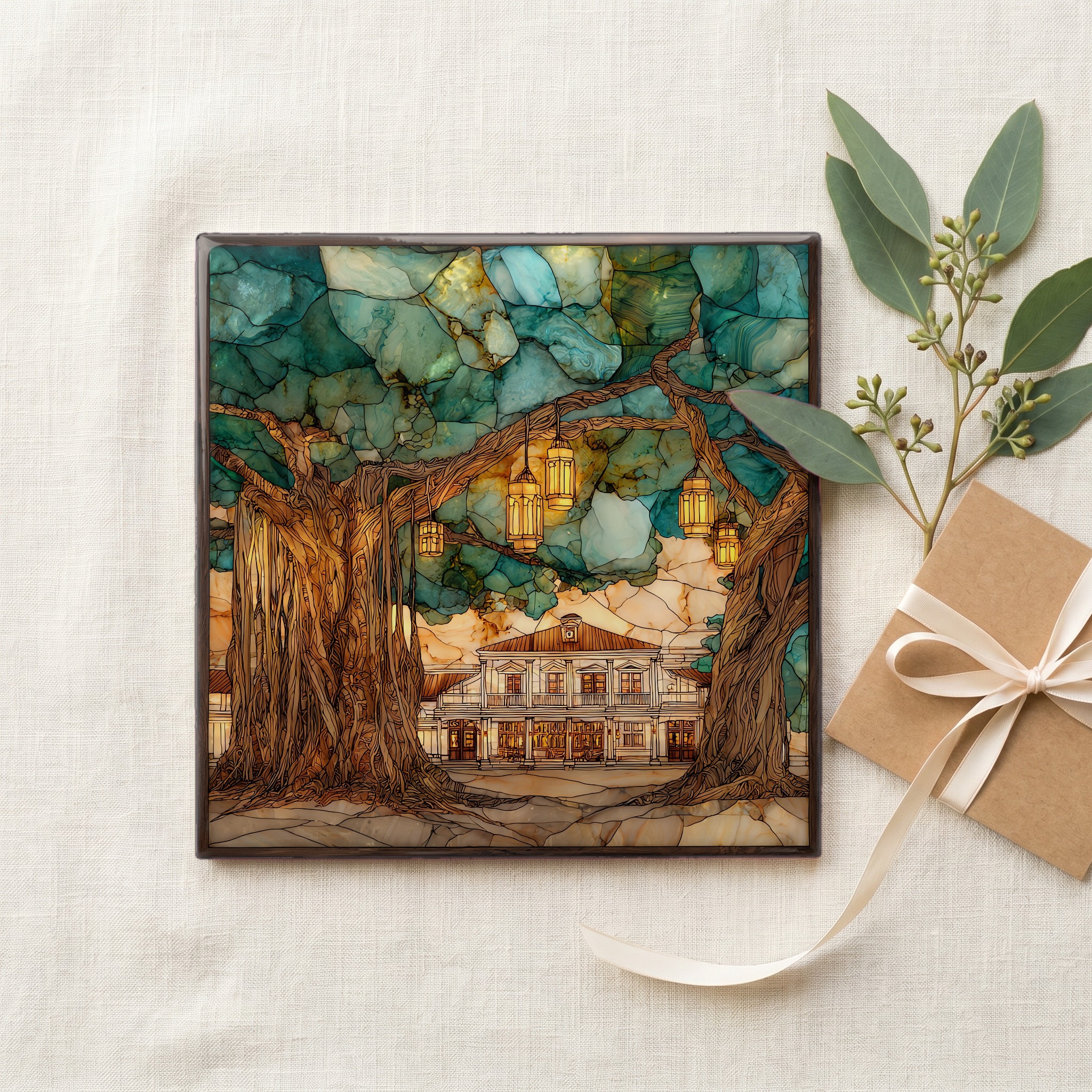
comes gift-ready

Each tile ships in a kraft box, tied with cream ribbon, with a handwritten note from the studio if you'd like to add one.
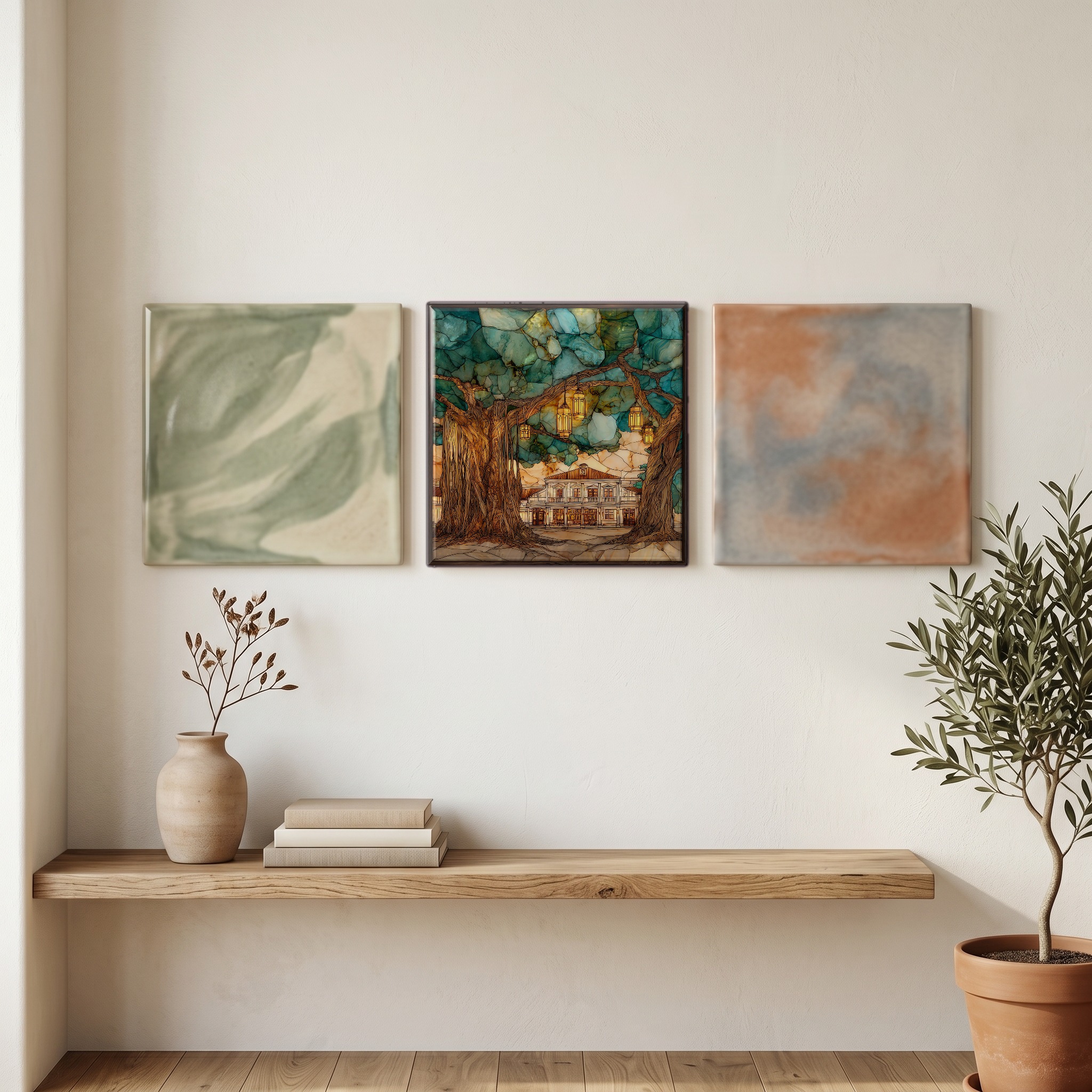
or build a grouping
or build a grouping

Three or five different vistas, hung together — a chapter of places you've been, or want to go.

about Lahaina Banyan Tree Maui Ceramic Art Tile

The place, in three passes.

A little of what's known, in case you fall down the rabbit hole — or want to go see it yourself.
the place

The Lahaina Banyan Tree stands in the central square of old Lahaina, on the leeward western shore of Maui. Planted on April 24, 1873, the Indian banyan (Ficus benghalensis) marked the fiftieth anniversary of the arrival of the first American Protestant missionaries to the Hawaiian Islands. The original sapling was eight feet tall when William Owen Smith, then sheriff of Lahaina, set it in the courthouse square. The tree now rises about sixty feet, sends down sixteen major trunks from its lateral branches, and shades roughly two-thirds of an acre. It is the canopy of a single ficus that grew into a public courtyard. The site sits inside the Lahaina Historic District, listed on the U.S. National Register of Historic Places in 1962.

the canopy

A banyan is a strangler fig that learned to be its own grove. Aerial prop roots descend from the lateral branches; where they touch ground they thicken into trunks, and the canopy spreads laterally outward. The Lahaina tree carries sixteen major trunks from a single root system and supports a crown roughly sixty feet tall, shading about two-thirds of an acre. That is the architectural opposite of a single-trunk shade tree. Ficus benghalensis is the national tree of India and the species from which the broader banyan family takes its name. The Lahaina tree is widely regarded as the largest of its kind in the United States.

the visit

Banyan Tree Park (also called Lahaina Banyan Court Park) sits at 649 Front Street, across from the harbor, in old Lahaina town. The park is publicly accessible and free, with no gates and no closing time. The Old Lahaina Courthouse, the Pioneer Inn, and Lahaina Harbor are all adjacent or within a short walk. On August 8, 2023, the wildfire that burned through much of downtown Lahaina scorched the tree but did not kill it. Arborists irrigated and treated the root system through the following months, and new growth returned along the surviving limbs in 2024. Public access to the immediate park area resumed in stages as the wider town reopens.

where
United States · Lahaina, Maui County, Hawaii
within
Banyan Tree Park
elevation
3 m · 10 ft
position
20.8721° N · 156.6776° W
the neighborhood

What's nearby.

A handful of named places within an hour's walk or short drive. Some we've already painted; some we will.
at the lake
Lahaina Harbor
small-craft harbor
at the lake
Old Lahaina Courthouse
historic courthouse
at the lake
Pioneer Inn
historic inn
at the lake
Wo Hing Museum
Chinese society hall and museum
1 km N
Lahaina Jodo Mission
Buddhist mission with Great Buddha statue
N
Lahaina Banyan Tree Maui Ceramic Art Tile
Lahaina Harbor
Old Lahaina Courthouse
Pioneer Inn
Wo Hing Museum
Lahaina Jodo Mission
common questions

What people ask.

A few questions we get about Lahaina Banyan Tree Maui Ceramic Art Tile — and about bringing the piece home.
about the place

It stands in Banyan Tree Park at 649 Front Street in Lahaina, on the western shore of Maui, Hawaii. The park sits across from Lahaina Harbor, adjacent to the Old Lahaina Courthouse and the Pioneer Inn, inside the Lahaina Historic District.

April 24, 1873. The Indian banyan was set in the courthouse square by William Owen Smith, then sheriff of Lahaina, to mark the fiftieth anniversary of the arrival of the first American Protestant missionaries to the Hawaiian Islands. The sapling was about eight feet tall on planting day.

Roughly sixty feet tall, with sixteen major trunks descending from the lateral branches and a canopy covering about two-thirds of an acre. It is widely regarded as the largest banyan tree in the United States, all grown from the single eight-foot sapling planted in 1873.

Ficus benghalensis, the Indian banyan. The species is native to the Indian subcontinent and is the national tree of India. Banyans are strangler figs that spread laterally through aerial prop roots, which descend from branches and thicken into secondary trunks over time.

Yes. The August 8, 2023 wildfire devastated downtown Lahaina and heavily scorched the tree, but the root system survived. Arborists watered and treated the tree through the following months, and new growth returned along the surviving limbs in 2024.

Yes. Banyan Tree Park is a public park with no admission charge and no gates. The Old Lahaina Courthouse and the Lahaina Heritage Museum stand in the same square. Access to the wider downtown reopened in stages as the town recovered from the 2023 fire.

A banyan grows aerial roots from its branches; where the roots touch soil they thicken into prop trunks, and the canopy keeps spreading outward. A single Ficus benghalensis can, over a century, cover an entire courtyard from one original seed. The Lahaina tree is a working example.

about the piece in your home

It has been a meaningful gift for many of our customers with West Maui ties: people who grew up in Lahaina, married under the tree, or watched it scorch in 2023 and come back the following spring. A Coaster or a Small carries especially well, often paired with a handwritten note from the studio.

The colour signature, with emerald, deep amber, and glassy blues, sits well in Coastal-modern, Tropical Maximalist, and warm Mid-century rooms. The stained-glass treatment also reads cleanly against natural wood and cream walls, where the saturated greens carry the eye across a longer wall.

Yes. The tile reads as living botanical art without the watercolour-leaf cliché that has saturated tropical wall art. It anchors a biophilic room with one distinctive subject rather than a wash of greenery, which suits both maximalist and quieter tropical-modern schemes.

Above a standard sofa, a single Large holds the wall on its own. A four-tile Mural carries a longer wall in a great room or a wide entry, and a nine-tile Mural is the right scale for a stairway wall. A console runner suits a Small or Medium tile.

Yes, in the Dura Satin or Matte finish. Both are scratch-resistant and tolerate the steam and splashes of a bathroom backsplash, a shower wall, or a kitchen vanity. The Glossy finish is reserved for framed wall pieces in dry rooms.

A soft microfibre cloth with plain water is enough for everyday dust and fingerprints. For kitchen splatter, a drop of mild dish soap in warm water is fine. The colour is slowly infused into the ceramic surface under high heat and pressure, so it does not lift with normal cleaning.

Yes. Every WenderVista piece is made in-house by Reid Wender at the studio in Knoxville, Tennessee, painted in our stained-glass and alcohol-ink visual language and hand-finished before it leaves us. We do not license or resell other artists' work.

if this one stayed with you

A few you might also love.

Hand-picked by the eye that found Sorapis. Same air, same kind of quiet.