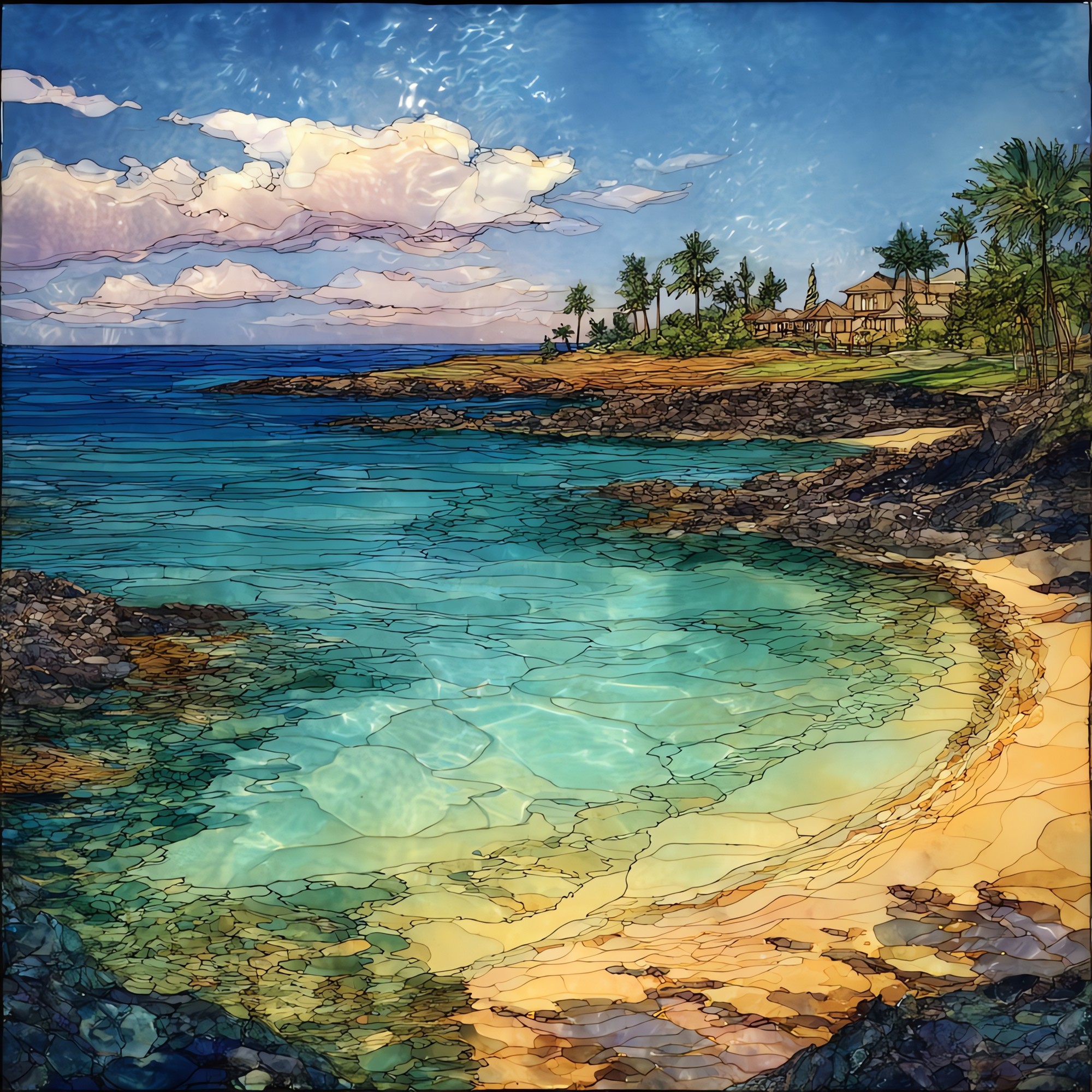
Kuilima Turtle Bay Oahu Ceramic Art Tile
— — the bay the turtles taught us the name of.
Not only on a wall.
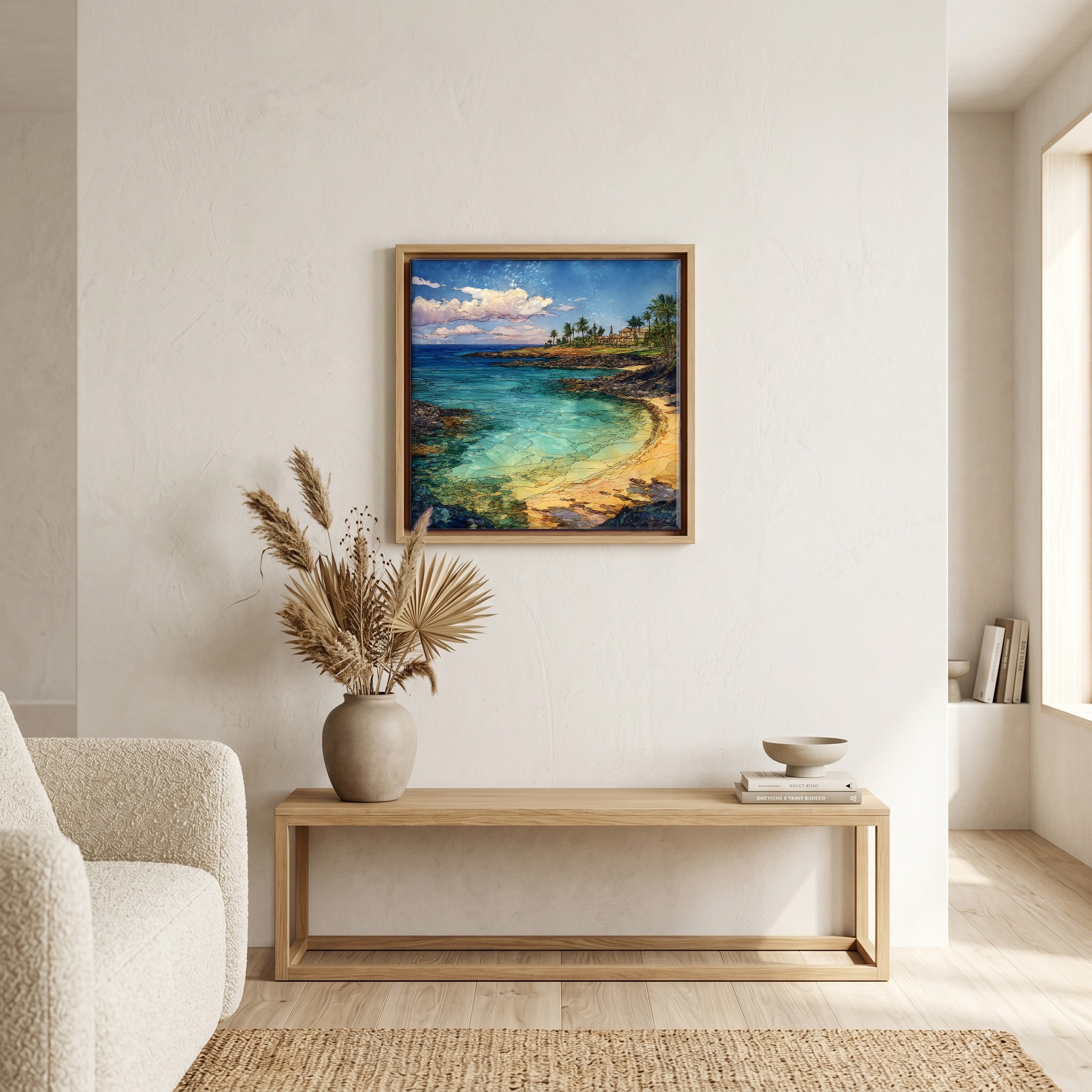
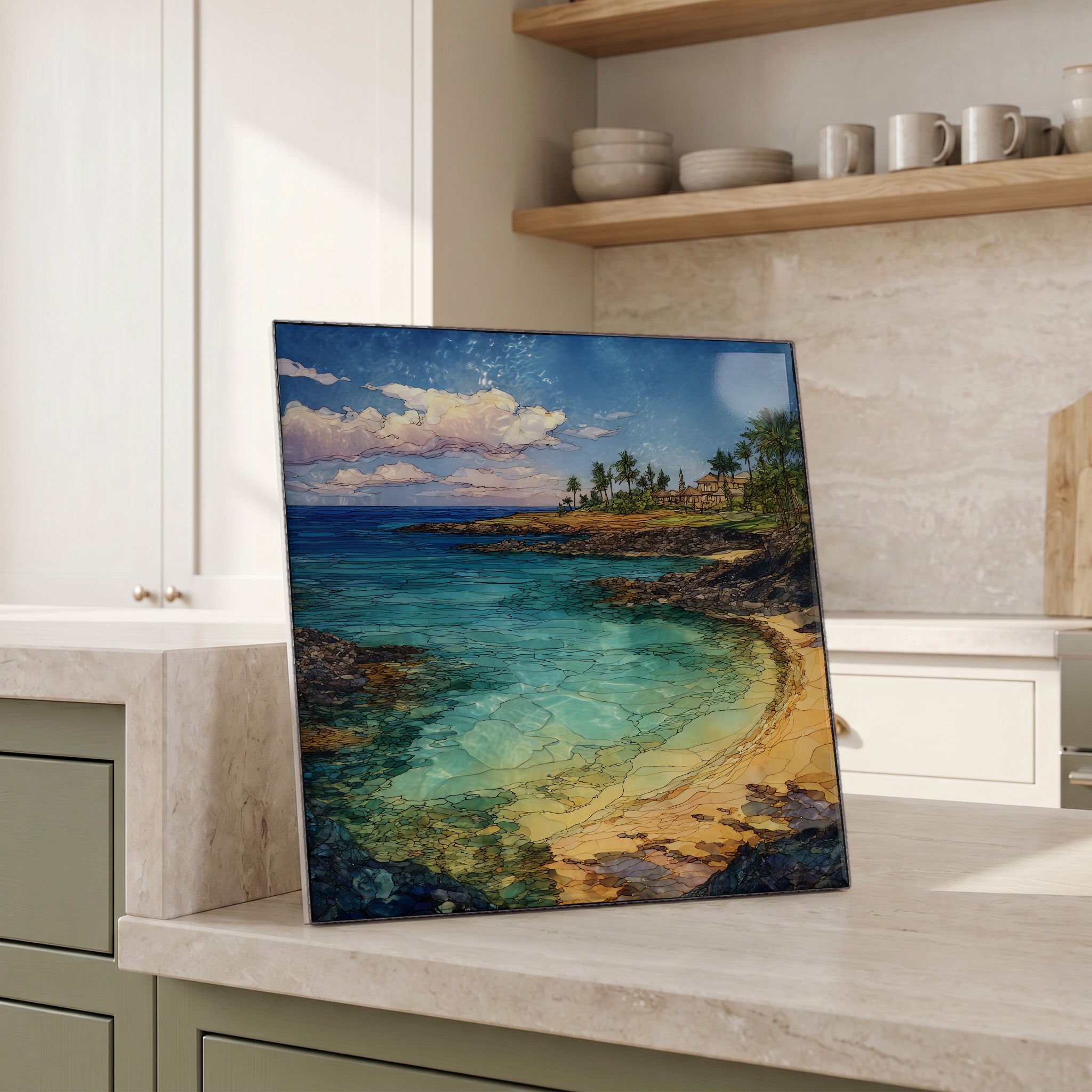
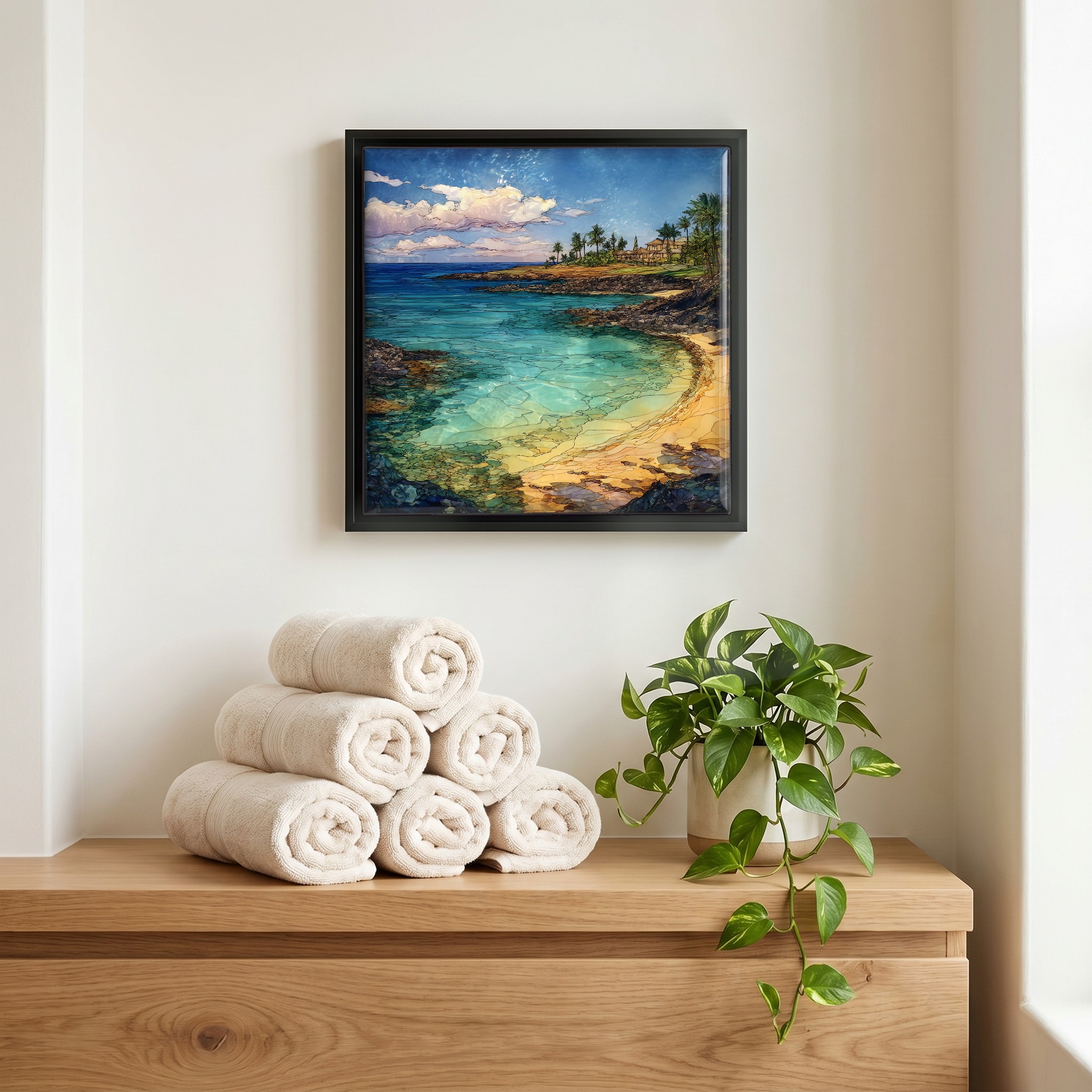
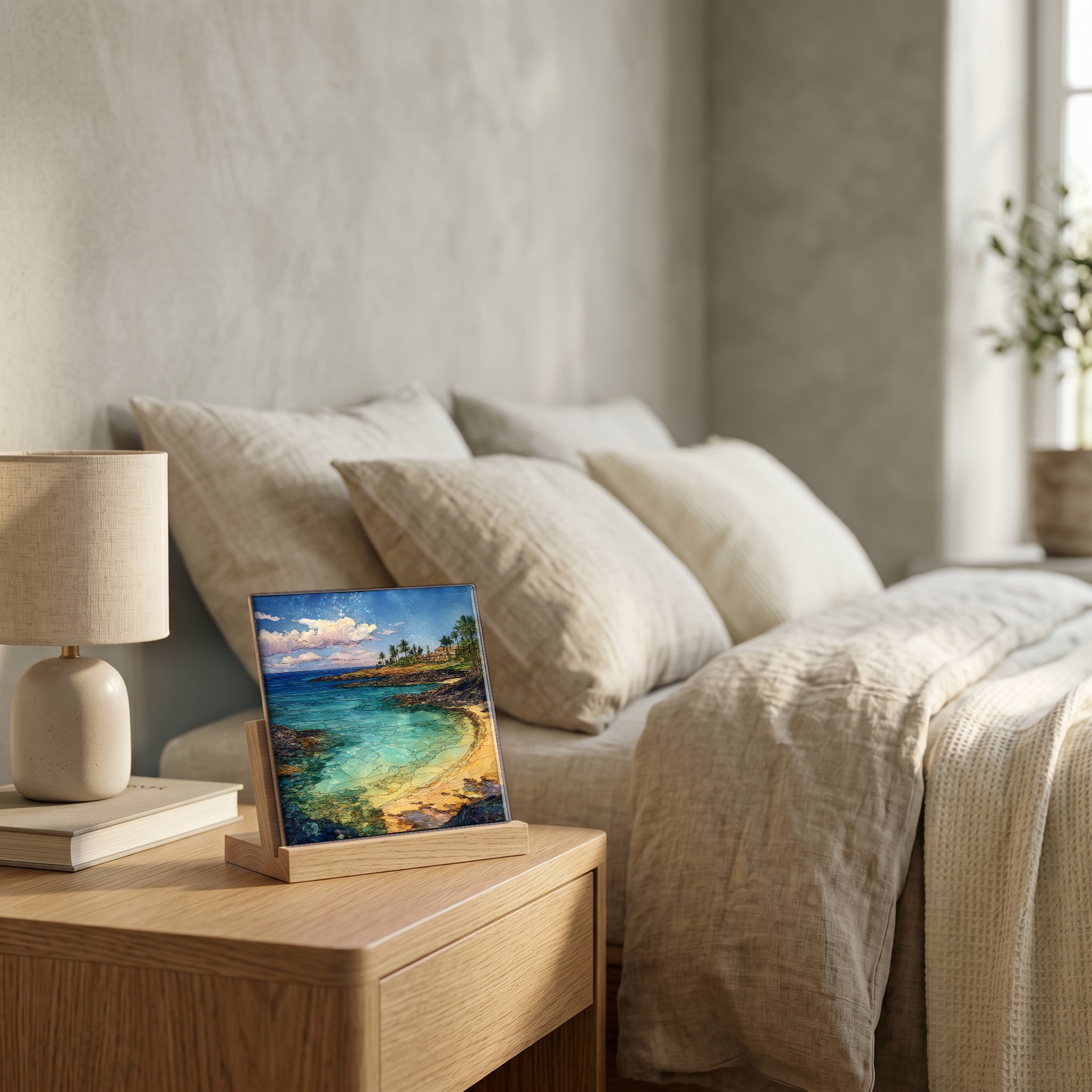
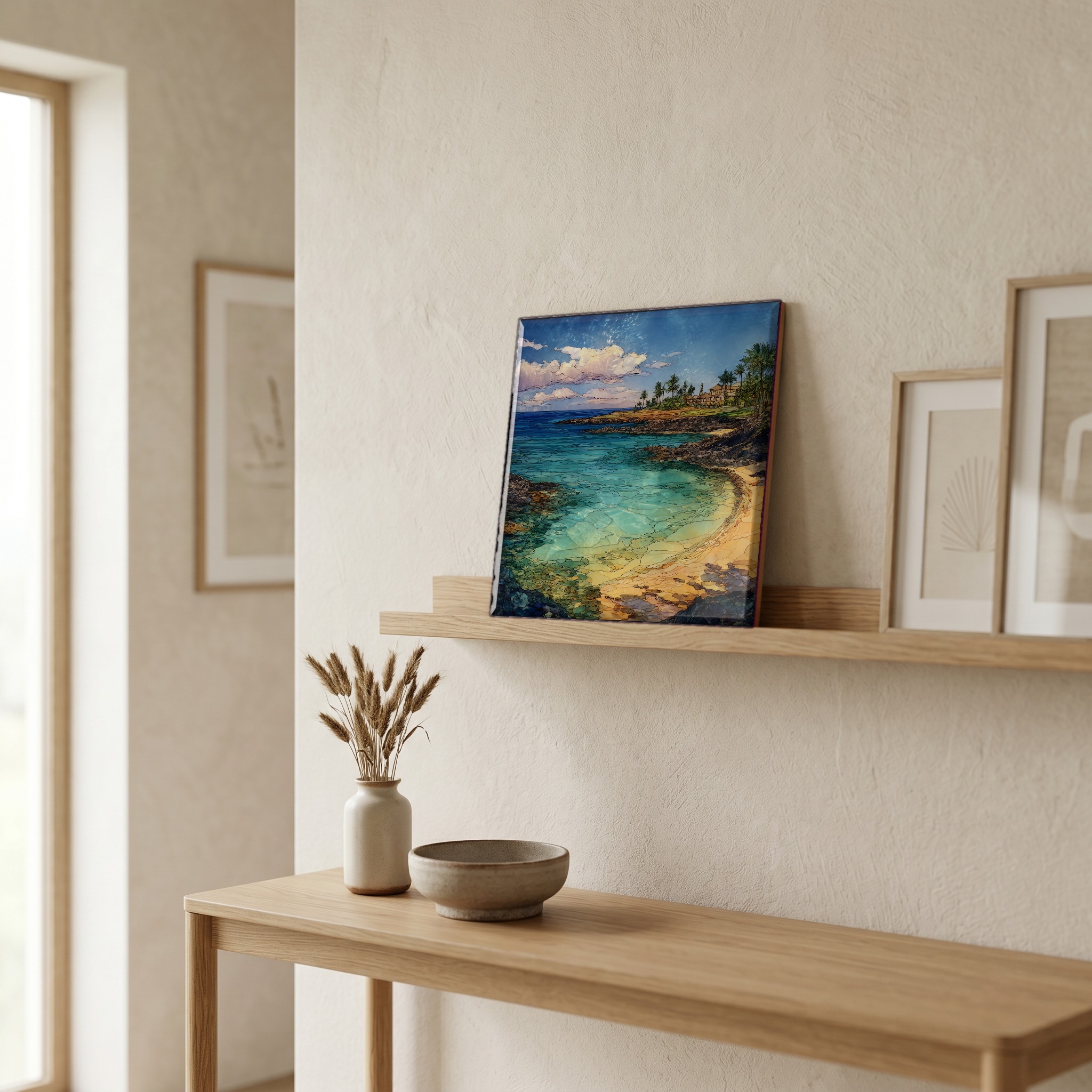
“The bay at the corner of Oʻahu's North Shore, where the coast turns east toward Kahuku Point. The name Kuilima means joining hands. A limestone reef arc a hundred yards offshore takes the open swell, so while the rest of the North Shore is closed out by winter surf, the cove inside Kuilima Point stays glassy. Honu come in to feed in the shallows most mornings, slow shadows over the white sand. Locals knew the bay as the place the turtles always returned to, and after a while the older name gave way.
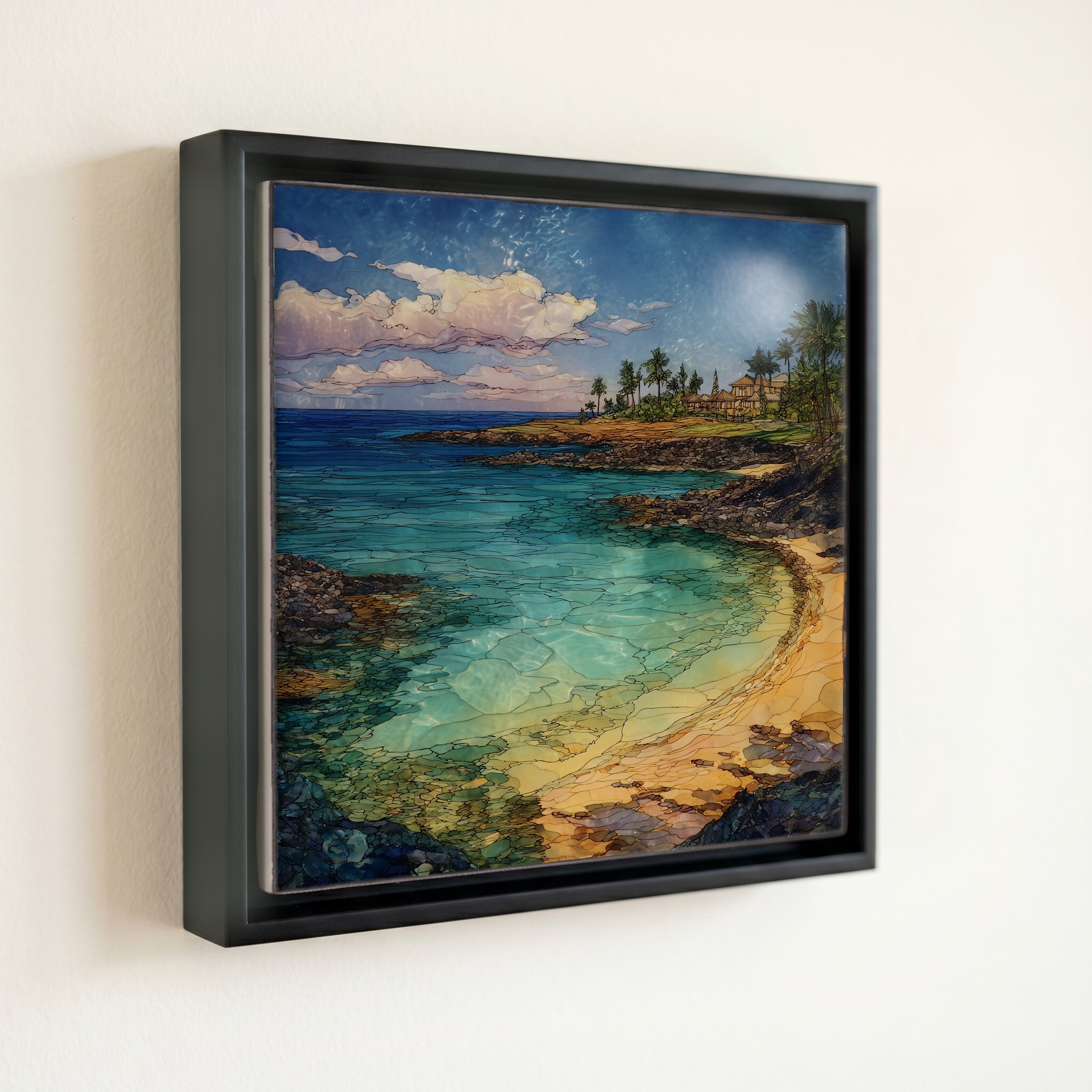
Kuilima Turtle Bay Oahu Ceramic Art Tile, on ceramic.
Each tile is finished by hand in our Knoxville studio. Artwork is slowly infused into the ceramic surface under high heat and pressure, and rests beneath a thin glossy finish. The colour lives in the surface, not on top of it.
Pick any four 4-inch tiles — National Parks you've been to, a Smokies set, the four seasons of one place. $ for a set of , cork-backed, ready to live on the table.
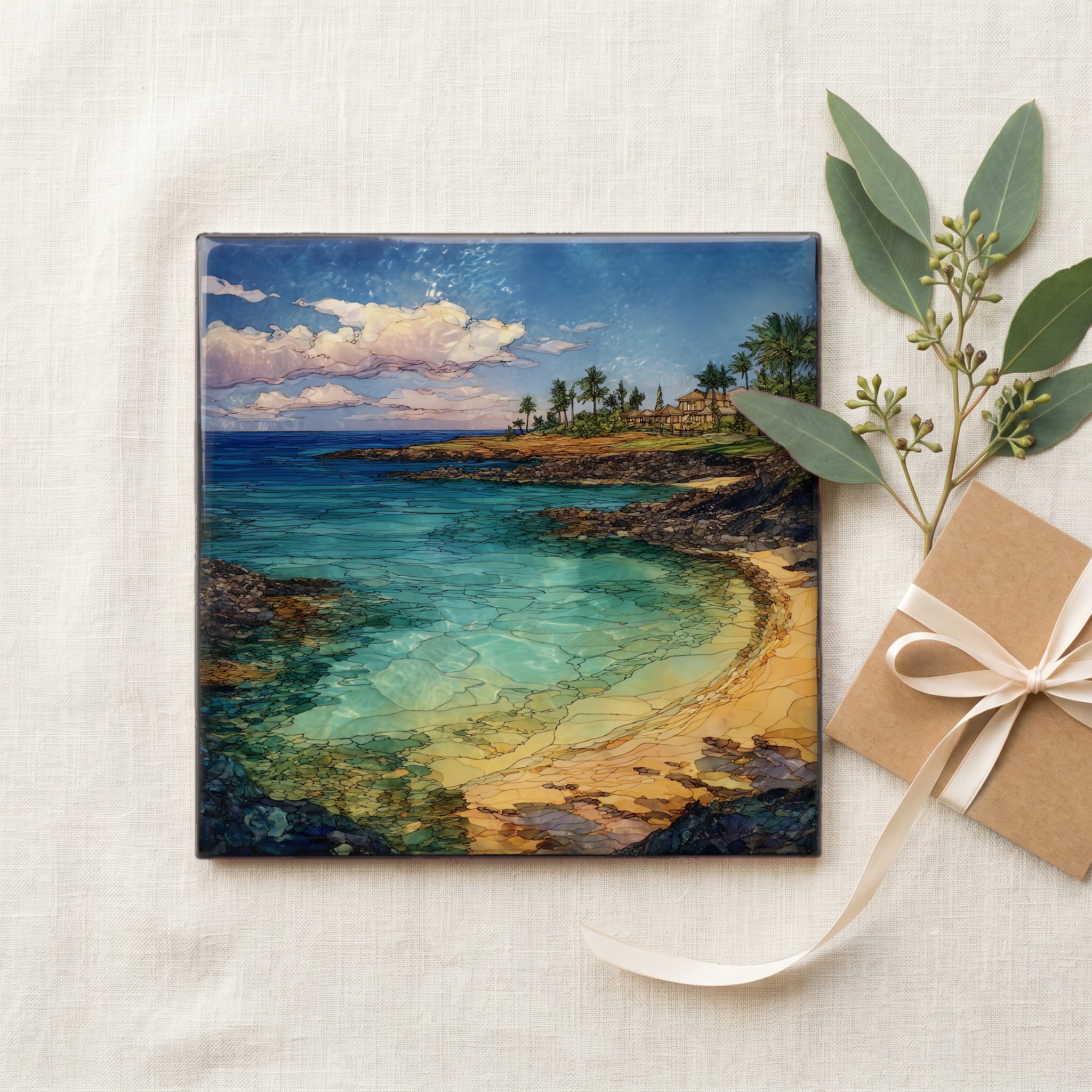
Each tile ships in a kraft box, tied with cream ribbon, with a handwritten note from the studio if you'd like to add one.
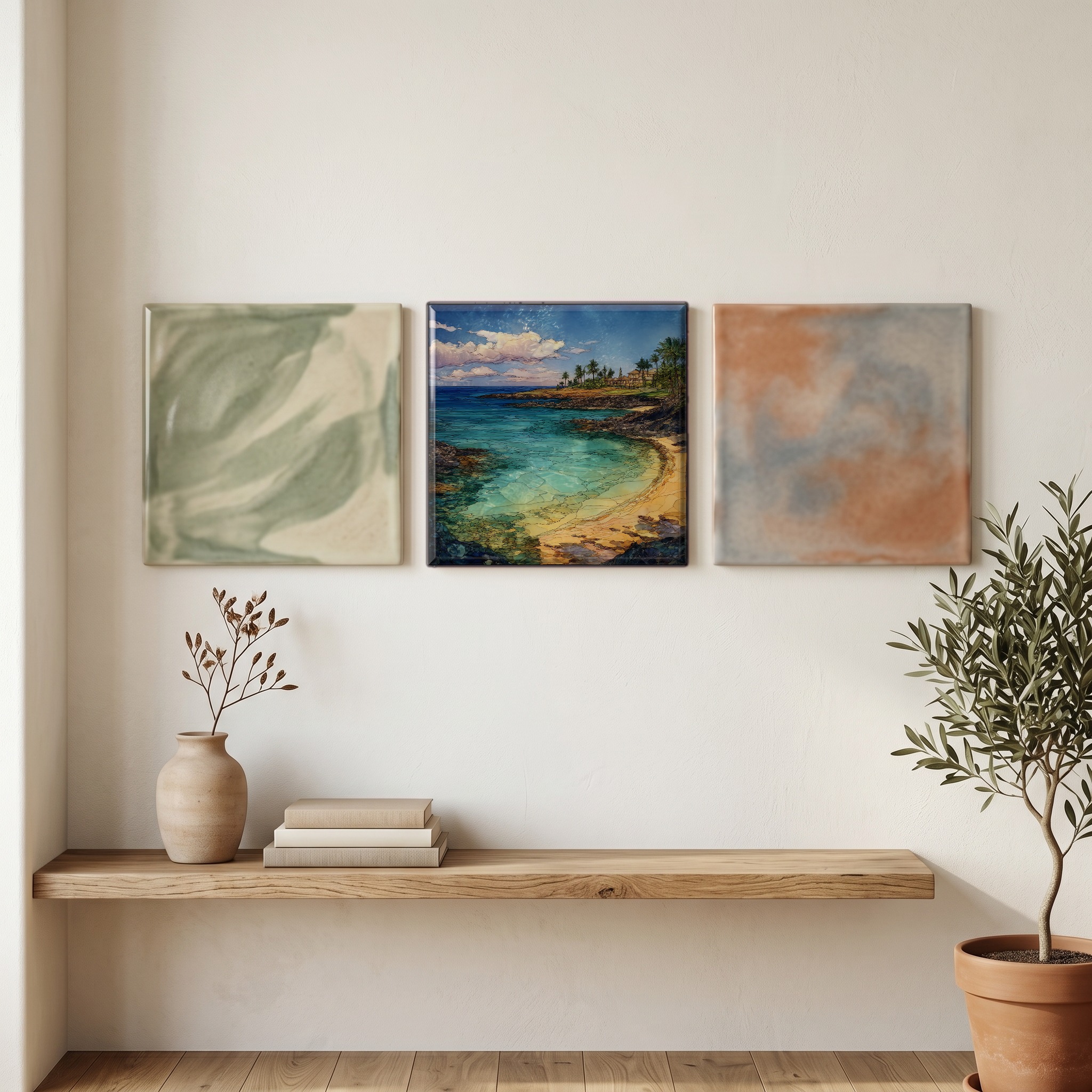
Three or five different vistas, hung together — a chapter of places you've been, or want to go.
The place, in three passes.
Kuilima sits at the northeastern corner of Oʻahu's North Shore, roughly an hour's drive from Honolulu by way of the Kamehameha Highway. The point separates Turtle Bay from Kuilima Cove and forms the seaward edge of the 840-acre resort that occupies the former Kahuku Army Airfield, used during World War II. The land was renamed by residents who watched green sea turtles return year after year to feed in the shallows; the resort itself adopted the Turtle Bay name in 1983, though the older Hawaiian word Kuilima, meaning joining hands, persists in the cove and the point. Kahuku town sits a mile and a half inland.
A limestone reef arc roughly a hundred yards offshore breaks the open swell before it reaches Kuilima Cove, which is why the inner water reads glassy on most mornings even when the rest of Oʻahu's North Shore is closed out by winter surf. The cove holds depths of about seven to ten feet at its sandy center, shallow enough for sunlight to reach the floor and bright enough that the turquoise carries. Honu, Hawaiʻi's threatened green sea turtle, feed on the algae in the shallows, most reliably before ten in the morning. The wider Turtle Bay opens west toward Protection Point along roughly five miles of broken coast.
Public access. All beaches in Hawaiʻi are open to anyone, and Kuilima Cove is reached by a short footpath through the Ritz-Carlton Oʻahu, Turtle Bay grounds at 57-091 Kamehameha Highway, Kahuku. The cove is one of the few North Shore swims that stays workable through the winter months, when surf along Sunset and Banzai Pipeline a few miles west goes to twenty or thirty feet. Honu surface mostly between dawn and mid-morning; federal protection requires snorkelers to keep at least fifteen feet of distance and never to touch or follow them. The summer sun sets over the open Pacific; in winter it drops behind the Waiʻanae Range to the southwest, lighting the point in oranges before the cove goes quiet.