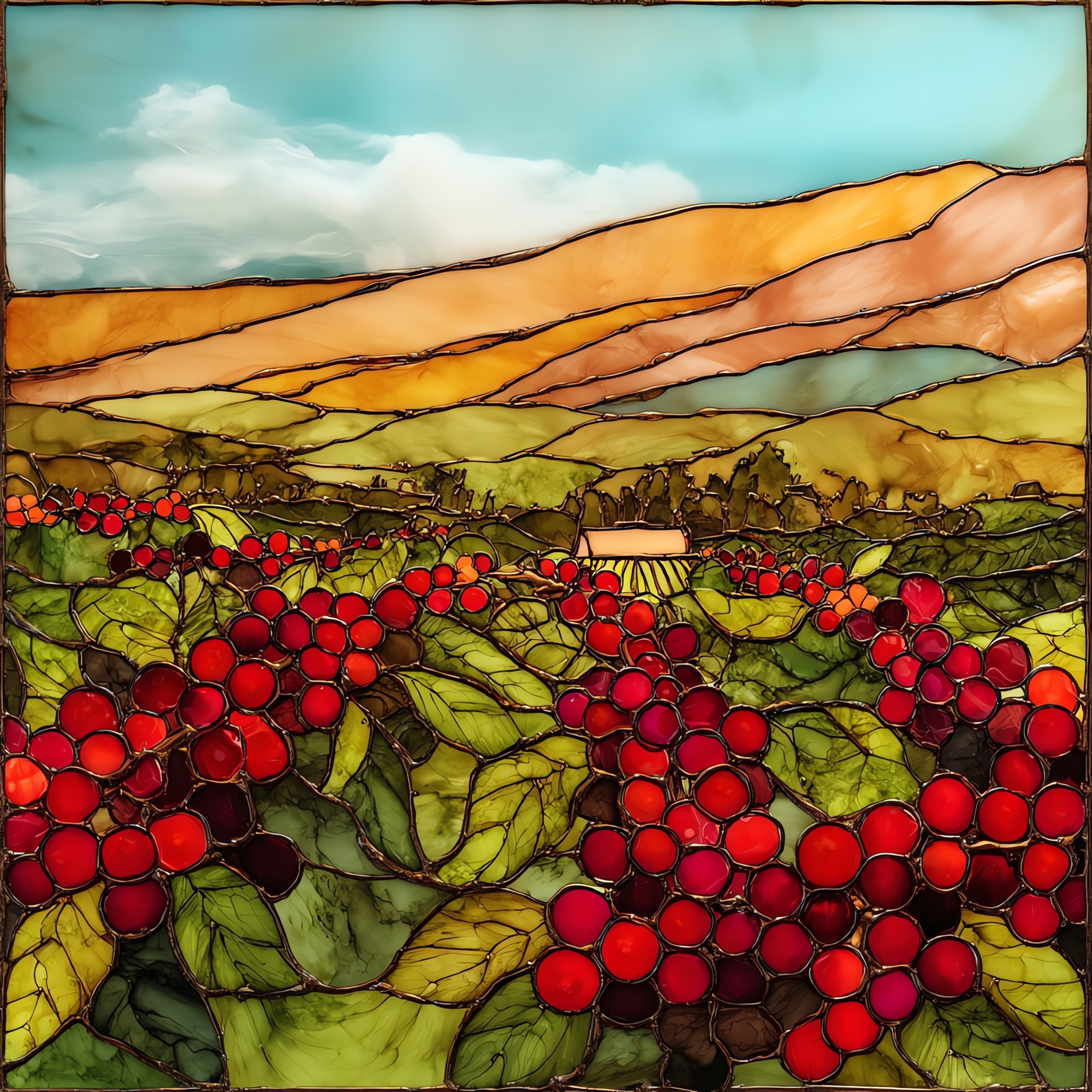
Kona Coffee Belt Big Island Ceramic Art Tile
— the morning before the cloud comes in.
Not only on a wall.

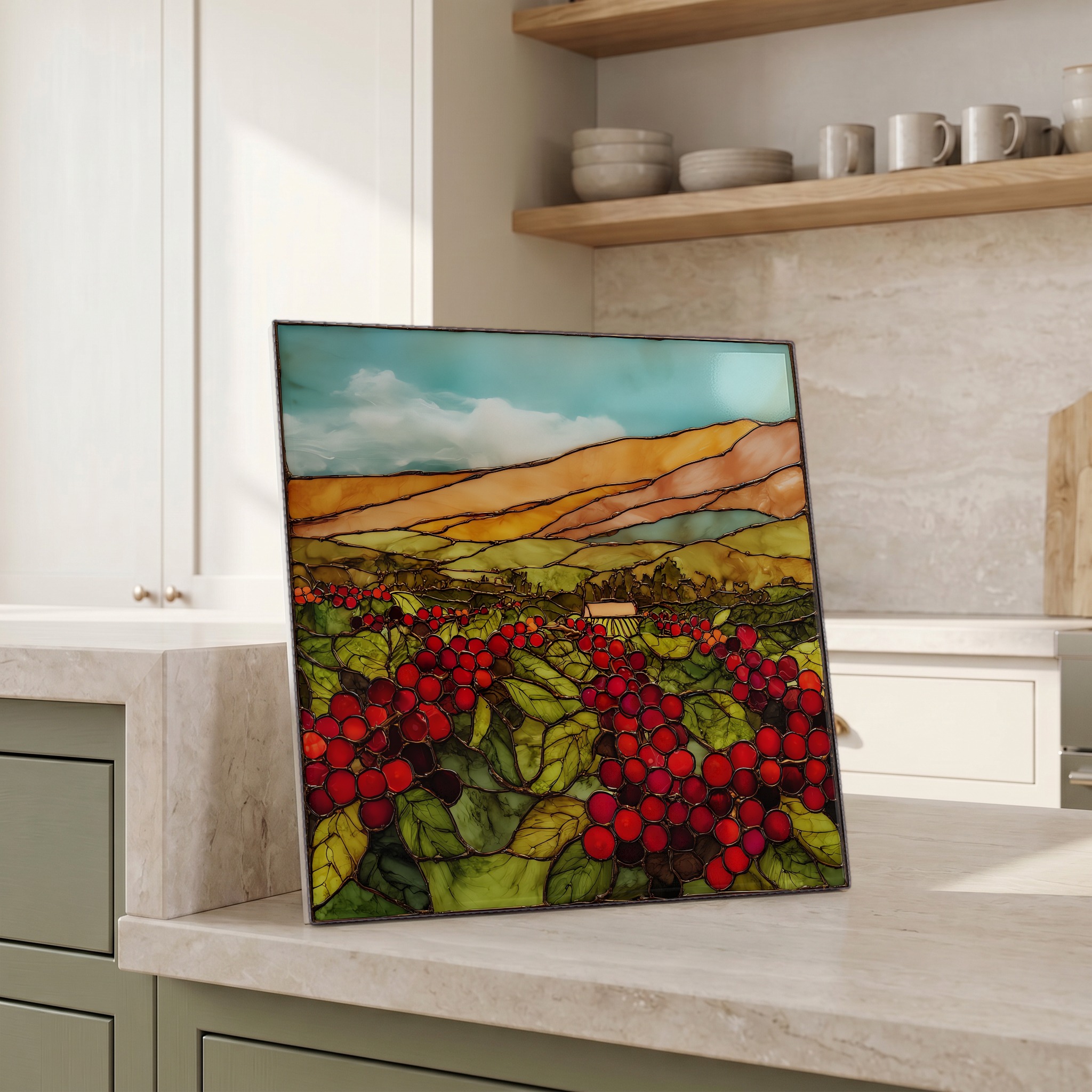


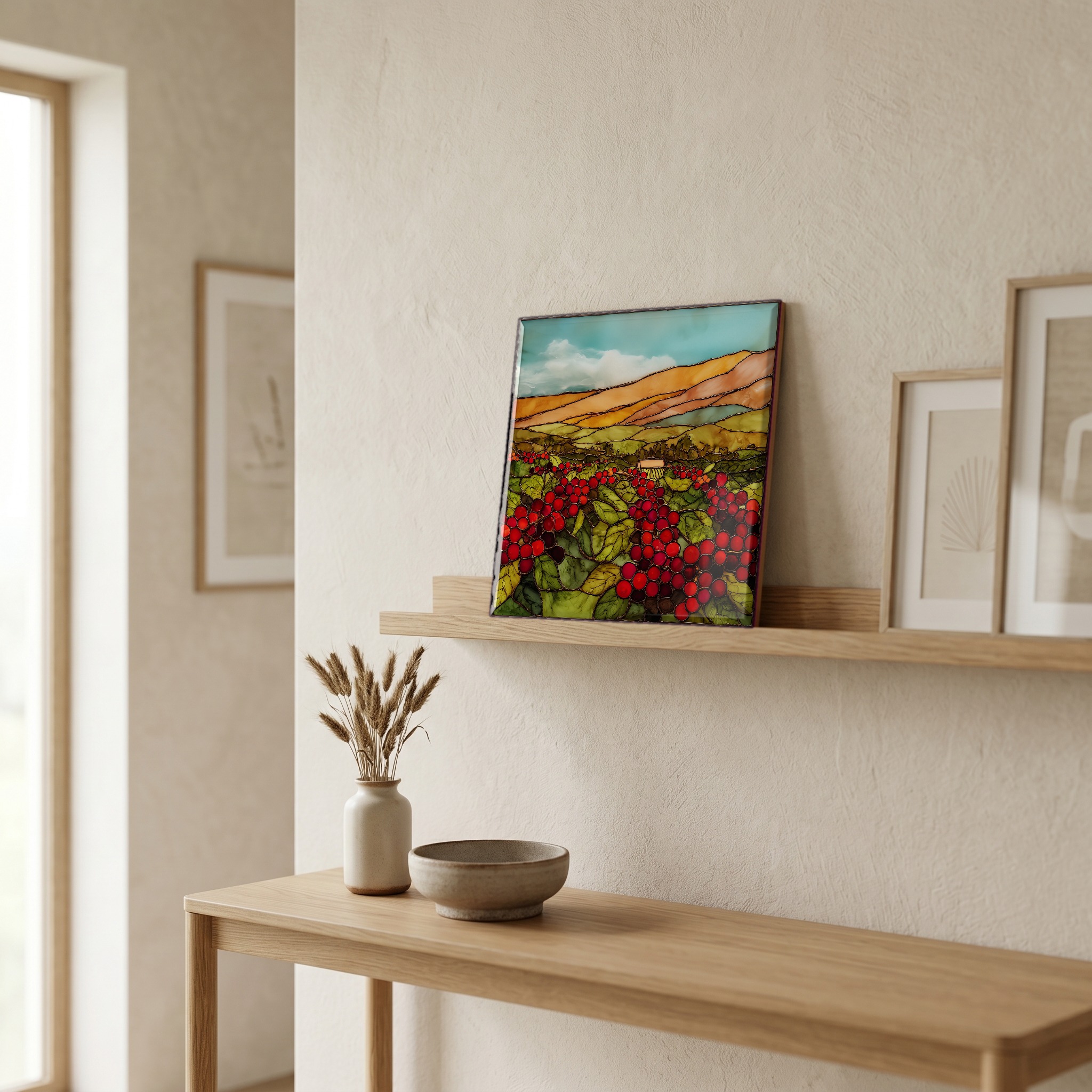
“A thirty-mile ribbon of small farms running between two volcanoes and the sea, at the elevation where the morning sun lasts just long enough. By early afternoon a soft cloud layer settles over the slope and the trees rest in shade. That same daily rhythm has made the coffee here what it is for two centuries. About eight hundred family farms still work the strip, most of them five acres or fewer. The Mamalahoa Highway runs the spine, slipping through Holualoa and Kainaliu and Captain Cook on its way south.
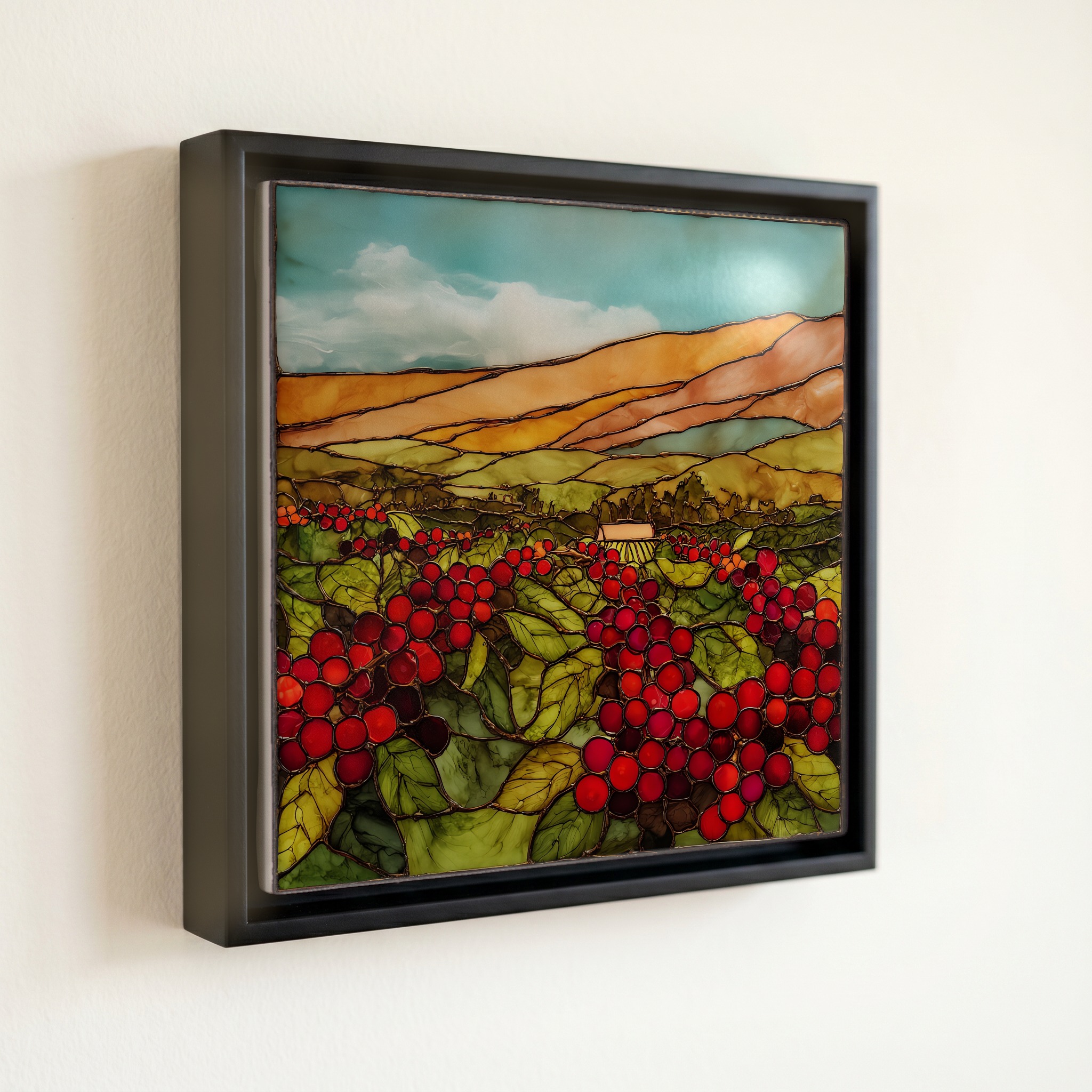
Kona Coffee Belt Big Island Ceramic Art Tile, on ceramic.
Each tile is finished by hand in our Knoxville studio. Artwork is slowly infused into the ceramic surface under high heat and pressure, and rests beneath a thin glossy finish. The colour lives in the surface, not on top of it.
Pick any four 4-inch tiles — National Parks you've been to, a Smokies set, the four seasons of one place. $ for a set of , cork-backed, ready to live on the table.
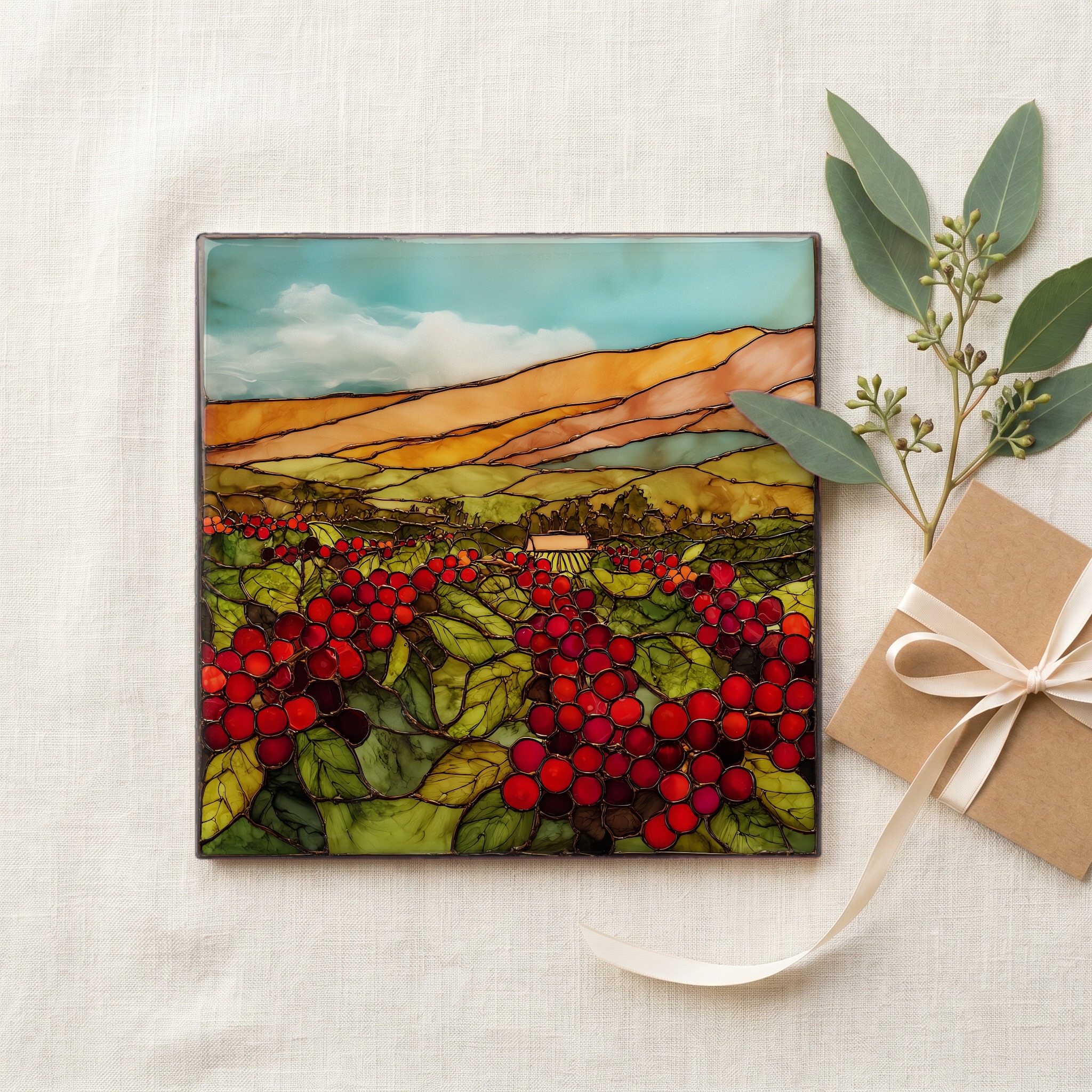
Each tile ships in a kraft box, tied with cream ribbon, with a handwritten note from the studio if you'd like to add one.
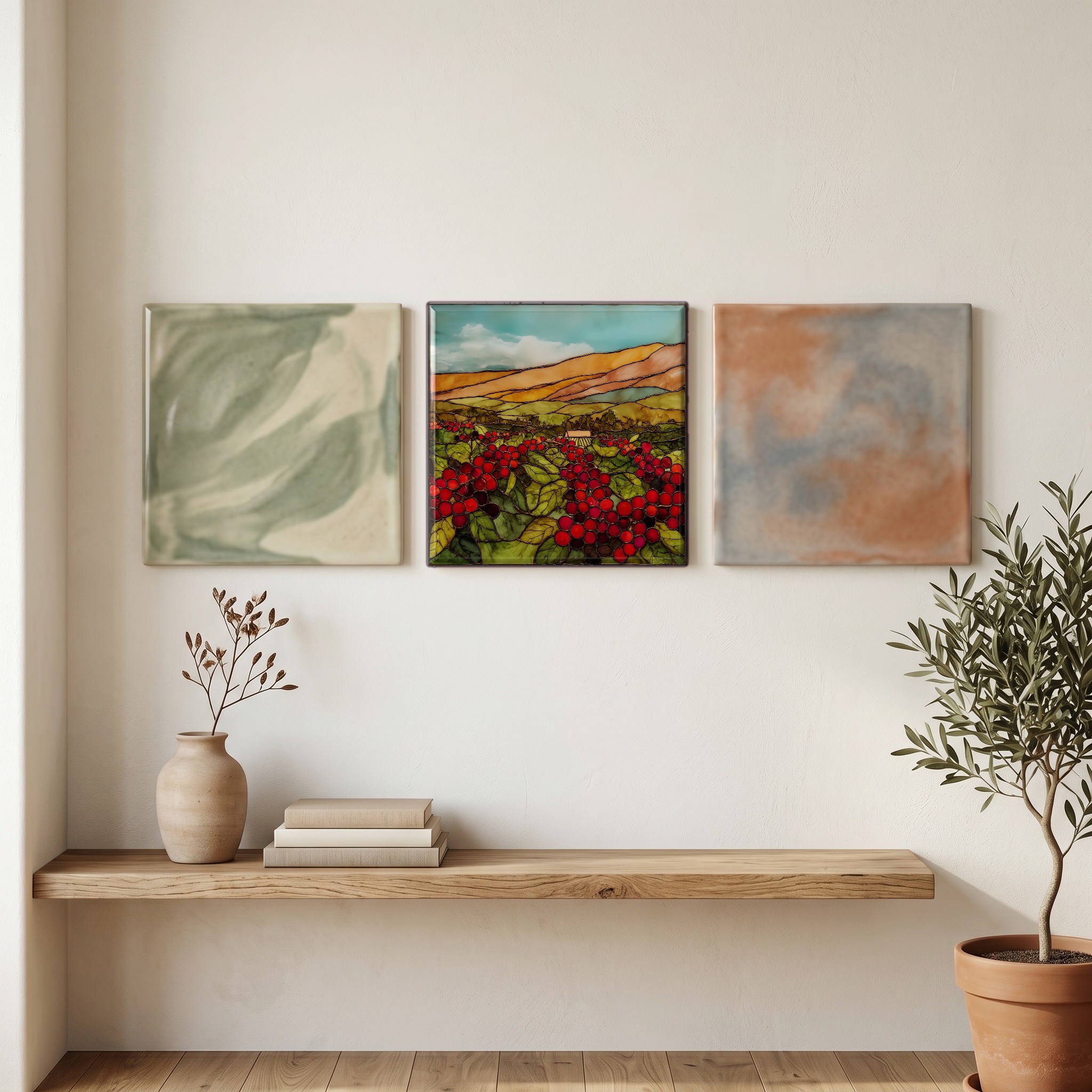
Three or five different vistas, hung together — a chapter of places you've been, or want to go.
The place, in three passes.
The Kona Coffee Belt is a narrow agricultural strip on the western flank of Hawaiʻi Island, running roughly 30 miles north to south along the leeward slopes of Hualālai (8,271 ft) and Mauna Loa (13,679 ft). The growing band sits between about 500 and 2,500 feet, where volcanic basalt soils, daily afternoon cloud cover, and warm nights produce the conditions Kona coffee depends on. The Mamalahoa Highway (Hawaii Routes 11 and 180) runs the length of the belt, threading the small towns of Holualoa, Kainaliu, Kealakekua, and Captain Cook. The district sits within Hawaiʻi County and is reached from Kona International Airport at Keāhole, about 7 miles north of Kailua-Kona.
The defining feature of Kona is its weather. Sunny tropical mornings give way, almost every afternoon, to a soft layer of cloud that drifts in off the Pacific and parks over the slopes. Growers call it the 'Kona cloud,' and they count on it to protect the trees through the hottest hours of the day. Nighttime temperatures on the slope rarely drop below 60°F. Rainfall averages 50 to 80 inches a year, most of it falling in the afternoon and evening. Coffee planted at the same latitude anywhere else in the world does not taste like this.
Kona's coffee year runs on a long, slow rhythm. Cherries ripen in waves from late August through January, and pickers walk each tree six or seven times during the season because the fruit does not ripen all at once. The harvest is followed in November by the Kona Coffee Cultural Festival, held annually since 1970 and one of the oldest food festivals in the islands. The earliest Kona coffee was planted in 1828 by the Reverend Samuel Ruggles, who carried cuttings down from Oʻahu. Today the district holds about 800 small farms, most of them between three and five acres, and almost all of them family-run.