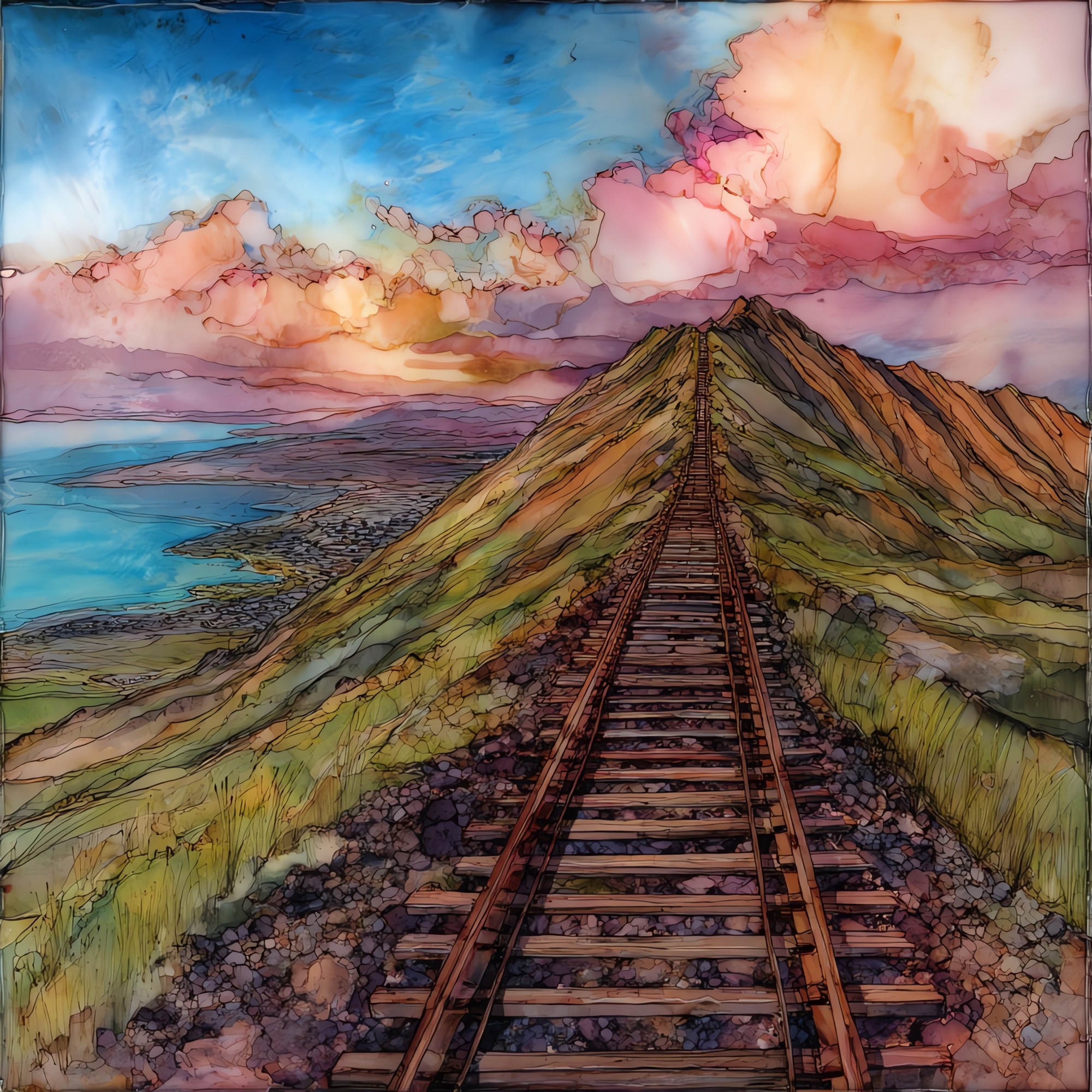
Koko Crater Stairs Oahu Ceramic Art Tile
— — a ladder up the side of a volcano.
Not only on a wall.

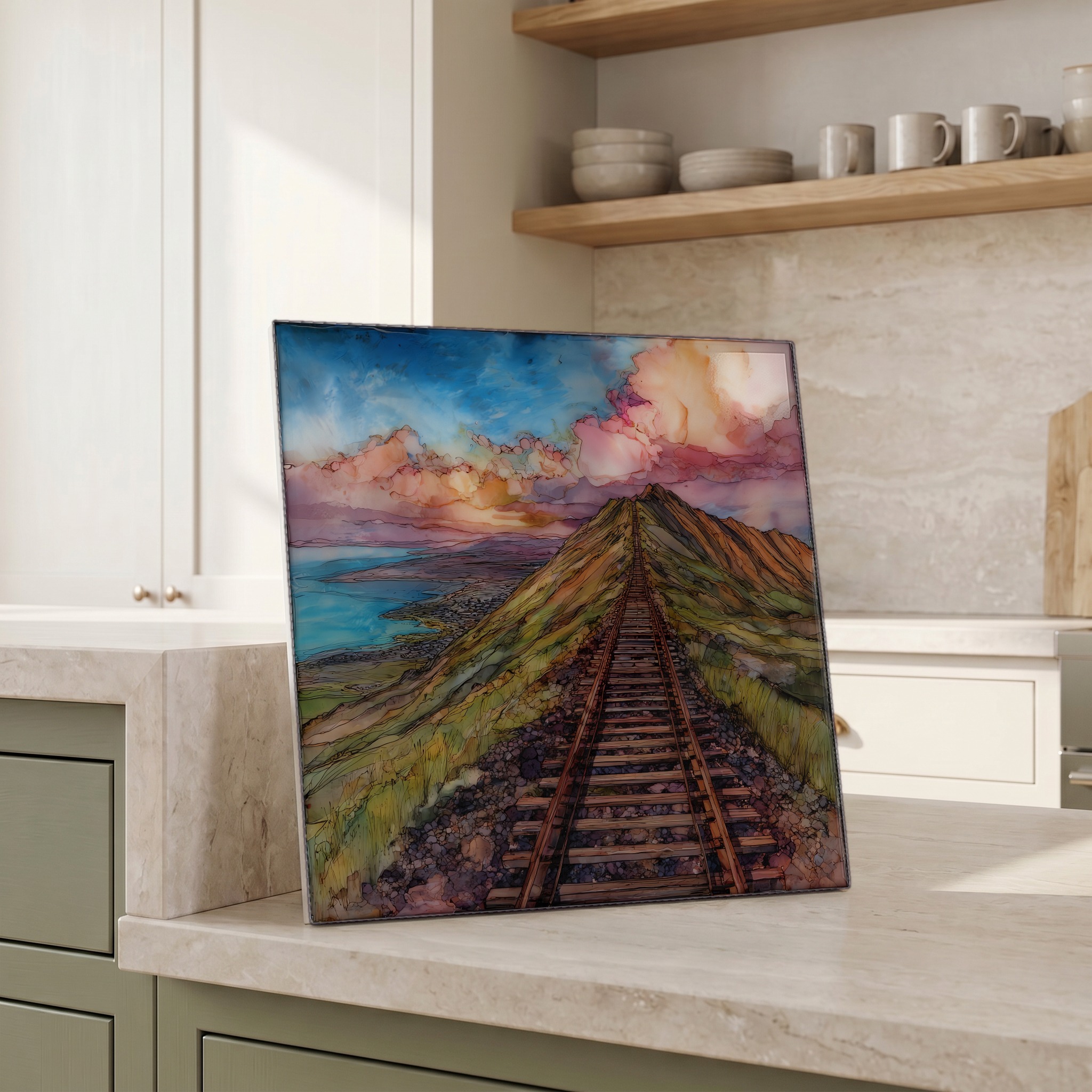


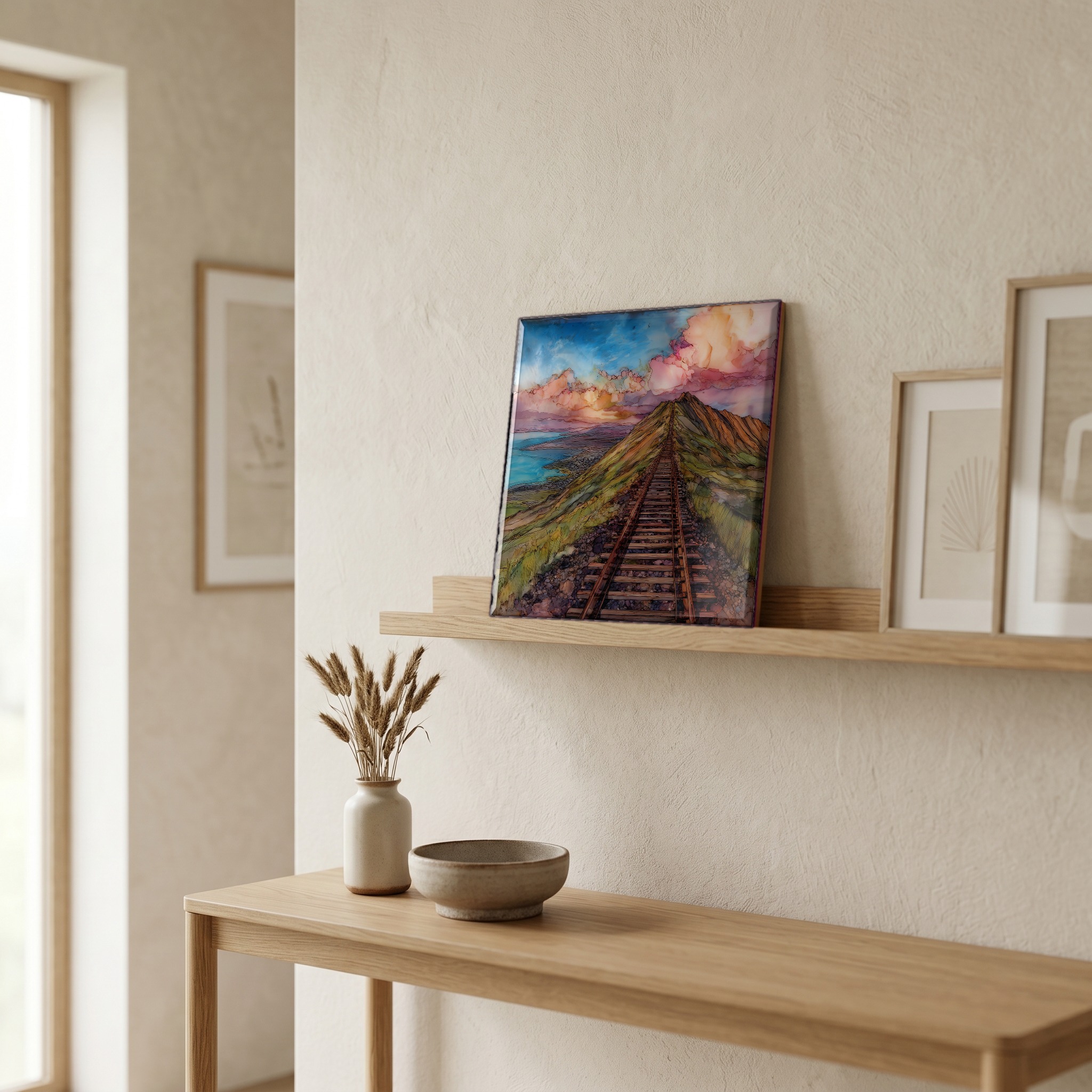
“A wartime tramway once ran supplies to a lookout at the top of Koko Crater. The Army left the railroad ties; the city kept the path. About 1,048 wooden steps climb straight up the lee side of a tuff cone above Hanauma Bay. There is no shade. Most regulars start before sunrise to beat the heat. Near the top, a section of ties spans an open gully with nothing underneath. Locals call it the bridge, and most walk around it on a bypass trail. From the rim, the view takes in Maunalua Bay, Diamond Head, and, on a clear morning, the silhouette of Molokai across the channel.
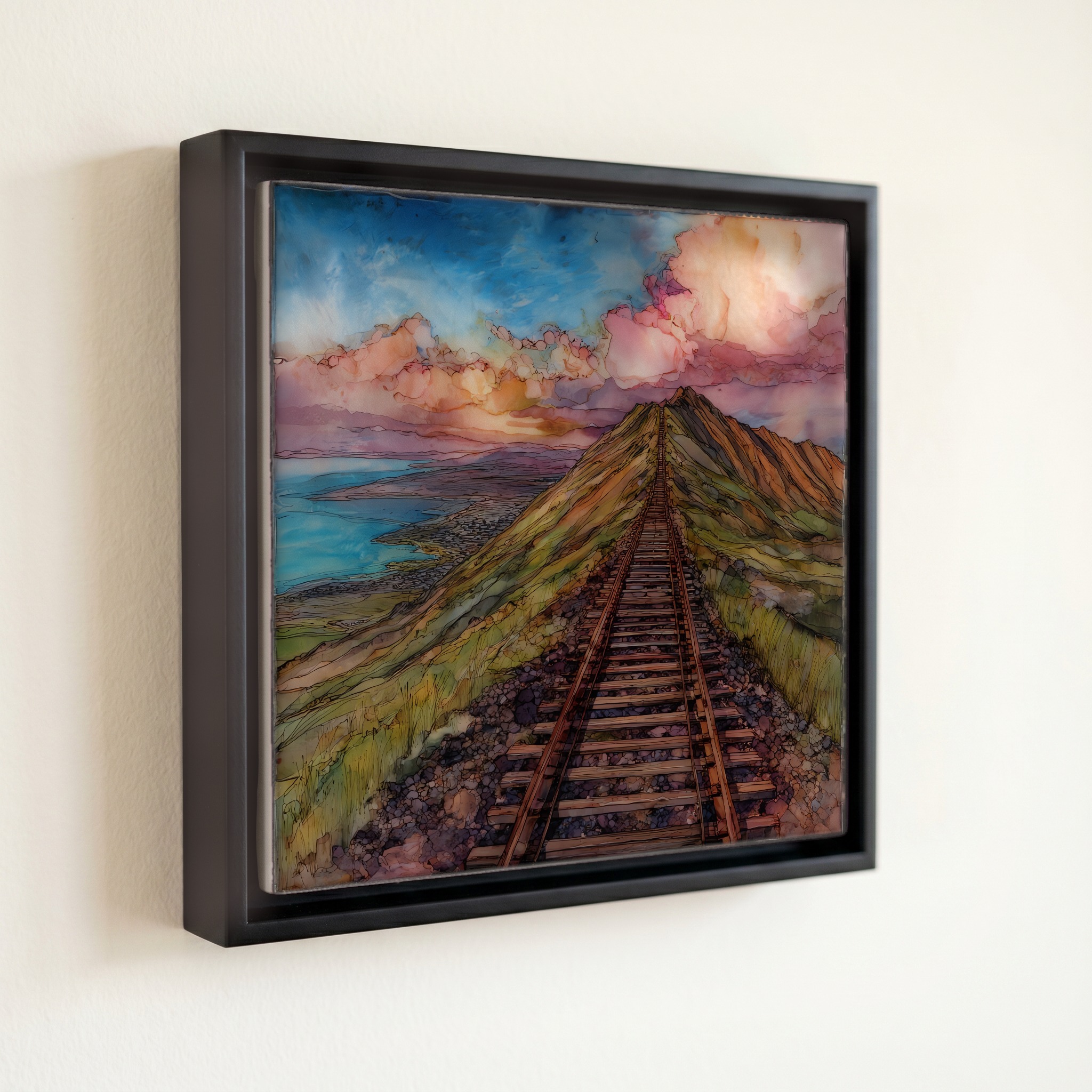
Koko Crater Stairs Oahu Ceramic Art Tile, on ceramic.
Each tile is finished by hand in our Knoxville studio. Artwork is slowly infused into the ceramic surface under high heat and pressure, and rests beneath a thin glossy finish. The colour lives in the surface, not on top of it.
Pick any four 4-inch tiles — National Parks you've been to, a Smokies set, the four seasons of one place. $ for a set of , cork-backed, ready to live on the table.

Each tile ships in a kraft box, tied with cream ribbon, with a handwritten note from the studio if you'd like to add one.

Three or five different vistas, hung together — a chapter of places you've been, or want to go.
The place, in three passes.
Koko Crater is a Pleistocene tuff cone on the southeast shore of Oahu, in the City and County of Honolulu. Its high point, Pu'u Mai, rises to about 1,208 feet (368 m) and is the summit the staircase ascends. The trailhead sits inside Koko Head Regional Park off Lunalilo Home Road, between Hanauma Bay and the Hawaii Kai marina. The U.S. Geological Survey groups the crater with the Honolulu Volcanics, the late-stage rejuvenation eruptions that built the youngest landforms on the island. The Hawaiian name for the cone is Kohelepelepe.
The staircase climbs the windward face of a vapor-explosion volcano. Koko Crater formed roughly 30,000 to 35,000 years ago, when rising magma met groundwater and seawater along the southeast coast of Oahu and blew out a cone of consolidated ash and rock fragments. Geologists place it in the Honolulu Volcanics, the late-stage rejuvenation of the much older Ko'olau shield. The same series built Diamond Head (Le'ahi), Hanauma Bay, and Punchbowl Crater. The ash is welded firm enough to hold the railroad ties and bolts the Army drove into it during the Second World War.
The trail climbs about 1,000 vertical feet in roughly three-quarters of a mile, distributed across the surviving ties of the wartime tramway. There is no shade and no water on the route. Most regulars start before sunrise. About two-thirds of the way up, the ties cross an open gully with nothing underneath; a bypass trail to the left lets hikers who prefer to skip it rejoin the line above. The lookout bunkers at the summit were built during the Second World War to watch for ships and aircraft. Parking in Koko Head Regional Park is free, and dogs are permitted on leash.